
REVIEW · NEW YORK CITY
The Story Behind NY’s Evolving Skyline An Architectural Journey Through History
Book on Viator →Operated by Kitt Garrett New York Sites & Insights · Bookable on Viator
New York’s skyline has a backstory. This on-demand architecture journey strings together centuries of building styles, from the earliest city waterfront days to today’s towers—then helps you spot the clues as you walk.
I really like how methodical and organized the narration feels, with clear street-level context so you’re not just watching quietly. I also love that you get practical “how to look” skills, like identifying common architectural designs and materials—and understanding what zoning and planning do to what gets built.
One thing to consider: it’s self-guided, so you’ll get the most out of it if you set aside time to actually walk (or at least pause and reference the downloaded guide).
Key takeaways before you start
- From Castle Clinton to Hudson Yards: you get a start-to-finish arc that connects waterfront history to modern development
- Architecture as a timeline: the story moves through recognizable styles, from Georgian and Federal to Gothic Revival and modern periods
- Urban planning basics: you’ll learn how zoning and air-rights thinking shaped what rises where
- A downloadable document: you can bring the tour map/record to your phone so you don’t have to rely on memory
- Good for locals and first-timers: locals often get more context for what they’ve been seeing all along
- Small-group framing: priced per group (up to 15) and run as a private activity for your group
In This Review
- How a Two-Hour Architecture Story Turns Into a Self-Guided Walk
- Castle Clinton National Monument: Where the Story Starts at the Water
- From Old Styles to Modern Towers: The Architectural Timeline You Can Spot
- Zoning, Air Rights, and the Waterfront Shuffle: How the City Plans Its Future
- Walking From Start to Finish: Castle Clinton to 20 Hudson Yards
- How to Use the Downloaded PDF So the Tour Stays With You
- Price and Value: $25 Per Group Makes This Feel Like a Steal
- Who This Tour Suits Best (and Who Might Not Love It)
- Small Logistics That Actually Matter for a Smooth Experience
- Should You Book This Architectural Journey Through History?
- FAQ
- How long is the Architectural Journey Through History?
- What is the price?
- Is it a live guided tour?
- Where does the tour start and end?
- Do I need a paper ticket?
- Can I download something to use during my walk?
- Is it private for my group?
- Is the tour near public transportation?
- What is the cancellation policy?
How a Two-Hour Architecture Story Turns Into a Self-Guided Walk
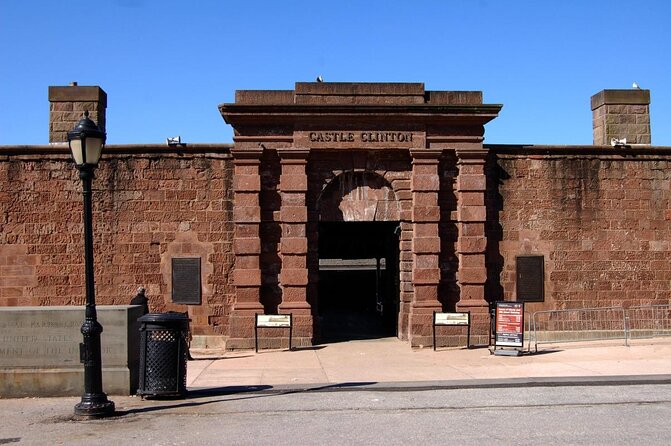
This experience is built for people who like their travel in two parts: first the brain, then the street. You’ll use an on-demand video approach to learn the story behind New York’s evolving skyline, and then you can follow a self-guided walking route at your own pace.
It runs about 1 hour 58 minutes, and you don’t have to join a live group at a set time. That flexibility matters in NYC, where plans get hijacked by weather, subway delays, or your own curiosity about a doorway that looks too interesting to ignore.
The tour centers on a simple idea: buildings are not random. In New York, they’re shaped by money, politics, technology, and zoning rules—plus the people who fought for landmark protections and neighborhood identity. When you understand that, you start looking up with a different mindset.
Castle Clinton National Monument: Where the Story Starts at the Water

Your starting point is Castle Clinton National Monument at 10 Broadway, New York, NY 10004 (the tour notes the stop as 10 minutes, and it’s marked free with an admission ticket). Even if you never thought of this spot as an architecture gateway, it makes sense: it anchors the city’s early waterfront role as a hub for trade and commerce.
From here, the tour frames New York as a place that kept changing its architectural language every time its needs changed. You’ll hear about how the city grew from a small Dutch settlement into a global metropolis—and how that growth pushed new building styles into the streets.
This stop also sets up the “why” behind the look. Instead of treating style as decoration, you learn to connect it to the era that produced it: materials, design choices, and city priorities. That’s the difference between noticing a façade and actually understanding it.
A practical tip: plan to spend a few extra minutes at the start, not just to locate yourself, but to get your bearings. The tour’s whole approach depends on you training your eye, and a waterfront beginning is the best place to do that in a city where everything is always moving.
You can also read our reviews of more tours and experiences in New York City.



From Old Styles to Modern Towers: The Architectural Timeline You Can Spot
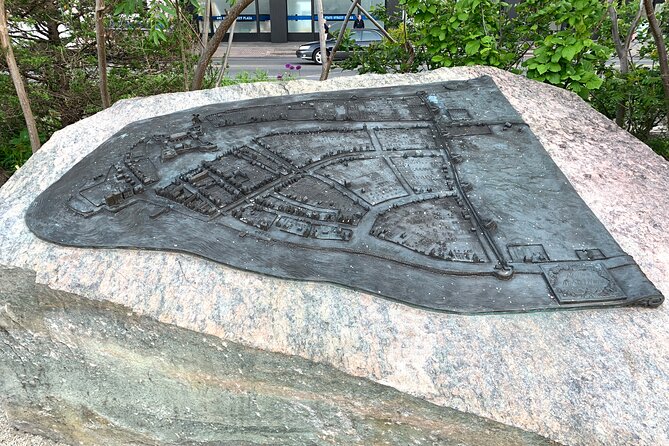
A big reason people rate this tour so highly is that it doesn’t stay abstract. It gives you a set of mental hooks for what you’re seeing.
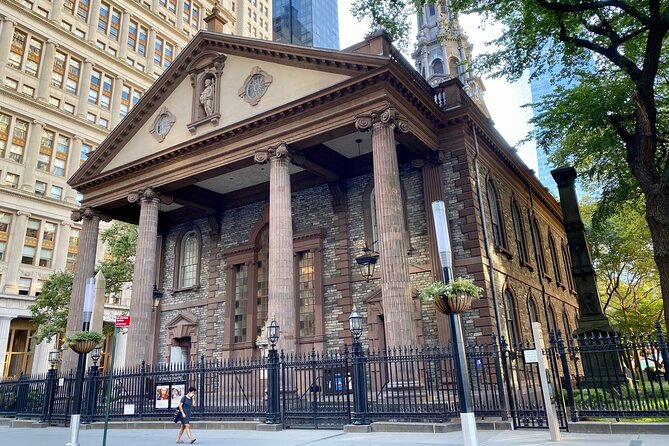
You’ll move through a long list of architectural styles and eras, including Georgian, Federal, Greek Revival, Romanesque Revival, Italianate, Renaissance Revival, Gothic Revival, Queen Anne, and Neo-Classical, then onward to the modern skyline. That sequence is useful because it helps you classify buildings you might pass daily without realizing you’re looking at a historical “chapter.”
Here’s the real value: once you know the basics of these styles, you’ll start asking better questions as you walk.
- What kind of ornamentation is this building using, and does it match the era?
- What materials stand out, and what does that suggest about the time and technology?
- Why would a neighborhood support a certain kind of building at that moment?
The tour also trains you to identify design elements rather than only famous landmarks. That means you can enjoy the architecture even when you’re not near a single “wow” sight. In a city where the best view might be on the side street you almost skipped, that skill pays off.
Zoning, Air Rights, and the Waterfront Shuffle: How the City Plans Its Future
If architecture is the visible story, zoning is the behind-the-scenes plot twist. This is where the tour gets especially practical, because the skyline you see today is the result of rules, negotiations, and incentives.
You’ll get an explanation of how zoning and planning shape where skyscrapers rise, how neighborhoods change, and how parks and public spaces fit into the larger picture. You’ll also hear about how public and private partnerships can turn waterfront areas from industrial zones into places people actually want to visit and hang out.
One of the more interesting concepts mentioned in the tour discussions is air rights—the idea that development isn’t only about the land footprint; it can be about transferring building potential. That concept helps you understand why New York can look inconsistent block-to-block: the height and massing you see can be tied to decisions made across parcels.
And here’s a key “think like a planner” takeaway: the city doesn’t just grow upward because it can. It grows upward because it’s organized to allow certain kinds of density, and that density then reshapes local streets, transportation, and public space expectations.
Walking From Start to Finish: Castle Clinton to 20 Hudson Yards

The tour gives a clear ending point: 20 Hudson Yards, New York, NY 10001, which is also called out as a solid practical place to stop because it has shopping, restaurants, and restrooms.
Even though the tour is framed as a walking experience through neighborhoods, you don’t need to treat it like a timed race. The smart move is to use the tour as a sequence of “look here, notice this, then keep going.” That keeps the route from feeling like homework.
Since the data you’re given focuses on the start and the overall architectural themes through to Hudson Yards, you should plan to spend extra attention in the areas where you can actually see the contrast:
- older forms and older street patterns
- newer towers and the way they relate to their surroundings
- transitions where industrial-to-recreational waterfront change shows up in the feel of the streets
If you’re the kind of person who hates getting lost, you’ll probably like having the downloadable document on your phone. It’s meant to act as a street companion so you can reference addresses and key points as you go.
How to Use the Downloaded PDF So the Tour Stays With You
This experience isn’t just meant to be watched. It comes with a way to carry the tour notes with you—an export you can download to your device.
That matters because New York architecture is full of déjà vu. You’ll see a roofline and think, I’ve seen that before—then you’ll walk past the building and miss the clue. The PDF-like record helps you slow down at the right moments and reconnect what you learned in the video to what you’re looking at outdoors.
My advice: before you start walking, skim the document quickly just to see the flow—then use it like a prompt, not a script. You’re aiming for curiosity, not a checklist.
If you like taking photos, there’s also a fun add-on mentioned in the tour context: you can upload pictures into the free Tripcast app to build a memory book. It’s a simple way to keep your architecture notes attached to real images, which is the fastest path from “I watched a video” to “I understand this city.”






Price and Value: $25 Per Group Makes This Feel Like a Steal
The price is listed as $25.00 per group (up to 15). Even if you split it in your head, that’s usually far cheaper than the classic per-person walking tour model.
Why that matters: this kind of architecture tour has the highest value when you share it with people who enjoy looking. A family group, a small group of friends, or even a couple who wants to avoid paying separate fees can get a lot out of one purchase.
And the format helps the value story. Because it’s on-demand and self-guided, you’re not paying for a strict clock. If you pause to read a plaque, or you take five extra photos of a façade pattern, you’re still using the same ticket.
Also, it’s described as a private activity where only your group participates. That’s a quiet but real benefit in New York, where group sizes can feel like crowd control. Here, you can keep your pace.
Who This Tour Suits Best (and Who Might Not Love It)
This works best if you like architecture as a form of storytelling. If you enjoy seeing how the past sits on top of the present—what changed, what stayed, and why—this tour will feel like it gives you a superpower: the ability to read buildings.
It’s also great for:
- first-time visitors who want context before they start making their own skyline observations
- New York locals who want better explanations for the “why” behind what they see regularly
- people who like structured narration, especially when it includes specific locations and reasons for design choices
It might feel less satisfying if you want a purely outdoor, step-by-step guide with constant spoken commentary on-site. This experience is more about teaching you what to look for and then letting you move through the city on your own.
Small Logistics That Actually Matter for a Smooth Experience

You’ll receive confirmation at the time of booking. The tour is marked as having a mobile ticket and access is designed for on-demand viewing.
The start and finish locations are clearly defined:
- Start: Castle Clinton National Monument, New York, NY 10004
- End: 20 Hudson Yards, New York, NY 10001
It’s also noted as near public transportation, and service animals are allowed. Most travelers can participate, and because it’s private to your group, it’s easier to keep together.
One practical caution: since it’s non-refundable and can’t be amended, don’t buy it if you’re still uncertain about whether you’ll be able to use the experience in the timeframe you planned.
Should You Book This Architectural Journey Through History?
I’d book it if you want New York architecture to make sense, not just look impressive. For $25 per group, you’re getting a structured narrative through major building eras and you’re also learning a set of skills—how to identify styles and how planning decisions shape what rises over time.
I’d skip it only if you’re seeking a fully guided, live, point-to-point walk with constant real-time commentary. This works better as a “watch, then walk with new eyes” setup.
If you’re the kind of traveler who enjoys looking up and asking why a building looks the way it does, this one is a very efficient use of your time—and it turns your next stroll into something smarter.
FAQ
How long is the Architectural Journey Through History?
The tour duration is listed as about 1 hour 58 minutes.
What is the price?
It costs $25.00 per group, up to 15 people.
Is it a live guided tour?
No. It’s described as an on-demand video and self-guided walking tour.
Where does the tour start and end?
The tour starts at Castle Clinton National Monument, New York, NY 10004, and it ends at 20 Hudson Yards, New York, NY 10001.
Do I need a paper ticket?
No. The tour uses a mobile ticket.
Can I download something to use during my walk?
Yes. A document of the virtual tour can be downloaded to your device.
Is it private for my group?
Yes. It’s listed as a private tour/activity, with only your group participating.
Is the tour near public transportation?
Yes. It’s noted as being near public transportation.
What is the cancellation policy?
The experience is non-refundable and cannot be changed for any reason. If you cancel or ask for an amendment, the amount you paid will not be refunded.