REVIEW · SALEM
Salem Merchants and Mansions Guided Architecture Walking Tour
Book on Viator →Operated by Witch City Walking Tours · Bookable on Viator
Salem’s merchants tell the best story. This architecture walking tour swaps most of the spooky detours for the streets, houses, and money trail that shaped Salem for centuries, including stories tied to the Witch House. I like that you get a licensed guide who connects building details to real Salem change, and I like that it stays outdoor and walkable without you needing separate paid entries at most stops. One caution: there are no public restrooms on the route, and you’ll be standing for long stretches.
You’ll start at 32 Derby Square and end near the Bewitched Sculpture. It runs about 1 hour 30 minutes to 2 hours, usually drawing people who want a strong introduction to Salem beyond the obvious witch-lore highlights—especially if you enjoy history told through architecture. The max group size can be up to 40, so it’s best if you’re comfortable sharing sidewalks and hearing through an active walking pace.
In This Review
- Key Things I’d Notice on This Salem Merchants and Mansions Tour
- Why This Tour Works So Well for First-Timers in Salem
- Derby Square Start to Bewitched End: The Walk’s Shape and Pace
- From Old Town Hall to the Custom House: Merchants, Spice Trade, and Hidden Clues
- Derby House and Narbonne House: How Architecture Shows Wealth Growth
- Daniels House and Salem Common: From Early Wet Ground to Second Empire Swagger
- Hawthorne Hotel, Church Street, and St Peter’s: The Town’s Beliefs in Brick
- Peabody Essex Museum From the Outside, Then Witch City Mall and the Bewitched Statue
- Price and Value: Is $36 a Good Deal for an Architecture Walk?
- Practical Tips That Make This Walk Easier (and More Fun)
- Who Should Book This Tour (and Who Might Want a Different Option)
- Should You Book This Salem Merchants and Mansions Architecture Walk?
- FAQ
- How long is the Salem Merchants and Mansions Guided Architecture Walking Tour?
- How much does the tour cost?
- Where does the tour start and where does it end?
- What language is the tour offered in?
- Does the tour enter any buildings or cemeteries?
- Is admission included at the stops?
- Does the tour run in bad weather?
- Are dogs and service animals allowed?
- Are there public restrooms on the tour route?
- Can children join the tour?
Key Things I’d Notice on This Salem Merchants and Mansions Tour
- Licensed historian-style guides with a storytelling focus (names you may hear include Topher, Seán, and Henry)
- Outdoor-only route: no building or cemetery entry, so you’re moving and viewing the whole time
- Architecture you can actually spot: First Period changes, plus Georgian/other styles tied to merchant wealth
- Salem Common explained with specifics, from marshy early ground to later fashionable Second Empire and Greek Revival buildings
- Pop-culture moments used as wayfinding, like Hocus Pocus cues and the Bewitched statue
- Dog-friendly with service animals allowed, plus a mobile ticket for smooth check-in
Why This Tour Works So Well for First-Timers in Salem
Salem can feel like two different cities at once: the witch-tour version, and the older working-city version where trade, wealth, and religious life left physical marks. This tour leans hard into the second one, using architecture as your “map” for understanding how Salem grew.
You’re not just seeing pretty facades. You’re getting short, clear stories that help you read what you’re looking at. That includes how merchant money shaped neighborhoods, how styles evolved as homes were expanded, and why certain civic spaces—like Salem Common—became the place to be.
At $36 per person for about 1.5–2 hours, it’s a fair price for a guided walk focused on interpretation (not museum time). Most of what you’ll get is “guide-hours” and meaning-making, which is exactly what’s hard to do on your own when you’re trying to connect buildings to history quickly.
If you want the easy-to-book, structured way to get your bearings fast—this is a strong choice.
Derby Square Start to Bewitched End: The Walk’s Shape and Pace
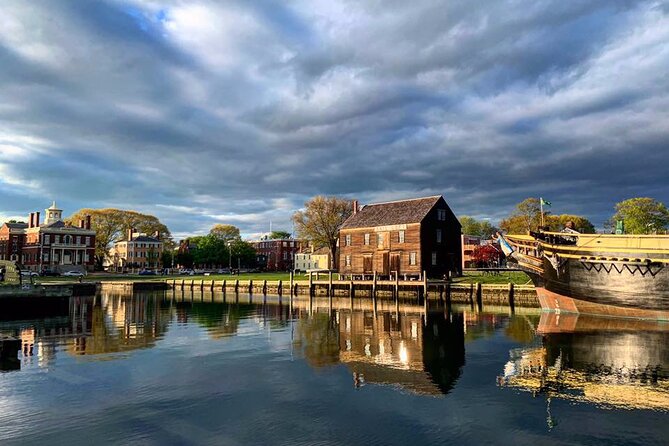
You’ll meet at 32 Derby Square in Salem. The tour begins at 11:00 am, and it ends at the Bewitched Sculpture area. That matters because it lets you finish near a cluster of Salem’s familiar sights without needing to immediately backtrack.
The pacing is designed for a lot of stops in a short window, with individual viewpoints lasting roughly 5 to 10 minutes each. On paper, that might sound quick. In practice, it’s ideal if you hate long museum waits and prefer learning while you walk.
Two practical notes you’ll want to plan for:
- You won’t have public restrooms on the route. Bring water, and use facilities before you start.
- This is rain or shine. Salem weather changes quickly, so comfortable shoes and a layer you can adjust are key.
Also, the group can be up to 40. If you prefer quieter, small-group tours, you might feel the difference in crowding. If you’re fine with a lively sidewalk group, you’ll likely appreciate how many locations you cover in a compact time block.
From Old Town Hall to the Custom House: Merchants, Spice Trade, and Hidden Clues
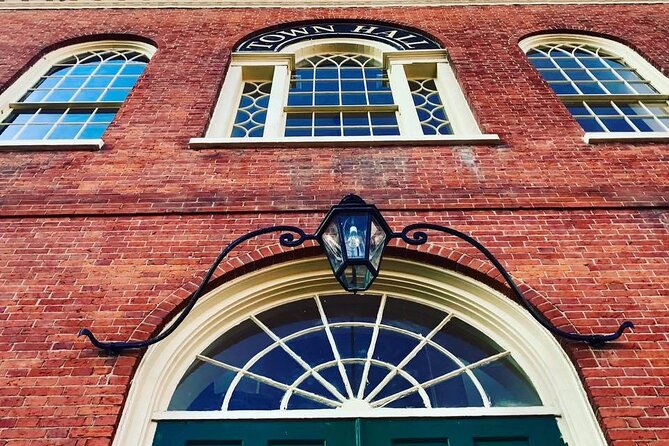
The tour starts at Salem Old Town Hall, a logical first stop because it sets the civic tone. It helps you shift your brain from spooky legends to real city infrastructure—where decisions got made and reputations got built.
From there, you head toward the waterfront history with the Custom House stop. This is where the “merchant” part gets specific. You’ll hear about Salem’s spice trade and the meaning behind the city’s motto—plus a helpful point about the old ship-building yard location.
That ship-yard detail is the kind of thing you can easily miss walking by. Here, you’re told where it used to be in relation to the open space and nearby furniture—near where you’ll find the Adirondack chairs at the far end of that area. Even if you don’t memorize coordinates, it changes how you look at the waterfront district afterward.
The guide also points out how you can see mansions from near Derby Wharf. That’s a good lesson in itself: Salem’s wealth wasn’t hidden away in the countryside. It sat close to the economic engine.
Derby House and Narbonne House: How Architecture Shows Wealth Growth
Two of the most useful stops come right in the middle: the Derby House and the Narbonne House.
At the Derby House, you’ll focus on Georgian architecture and how a building that looks straightforward can still reflect major wealth and power. The goal here is teaching you to see simple lines as a statement. Georgian style is known for symmetry and proportion, and when you connect that to merchant rise, it becomes clear why Salem’s successful tradesmen would want their homes to read as stable and established.
Then you move to the Narbonne House, where the emphasis shifts to how older houses were changed over time. This is a great stop if you like seeing history layered rather than frozen. The guide explains how 17th-century First Period architecture could be added to and modified so the home could grow—without erasing its earlier structure.
If you’ve only ever seen “original vs. remodeled” blurbs online, you’ll likely find this approach practical. It trains your eye to look for differences in construction and expansion when you see Salem homes on your own later.
Daniels House and Salem Common: From Early Wet Ground to Second Empire Swagger
The Daniels House Historic Site gets you another quick architecture-and-life lesson. Expect a short discussion tied to what you’re looking at, with the guide focused on interpreting the place rather than asking you to read a lot of signage.
Then the tour reaches Salem Common, and this is one of the best turning points because it’s about a space, not just buildings.
Here’s what makes this stop valuable: the guide explains how Salem Common evolved. You’ll hear how it began as marshy pools and unusable ground in the 17th and early 18th centuries, then transformed over time into the manicured pleasure park of the 19th century. After that, it becomes Salem’s fashionable district—essentially the city’s late surge of wealth—where you see styles like Second Empire and Greek Revival.
This isn’t just trivia. It’s a big clue to understanding why certain kinds of homes and institutions cluster around particular areas. Salem didn’t develop randomly. Land conditions and prestige spaces guided where people wanted to live and show status.
You’ll also get a Hocus Pocus-style cue at the Common: the old school location is pointed out, but the guide keeps it from turning into pure pop-culture sightseeing. It works as a memory hook while the architecture and city planning explanation carries the stop.
One more detail: Salem Common includes an admission ticket component as part of the experience. That’s a nice plus for value because it means at least one stop isn’t just “look from outside.”
Hawthorne Hotel, Church Street, and St Peter’s: The Town’s Beliefs in Brick
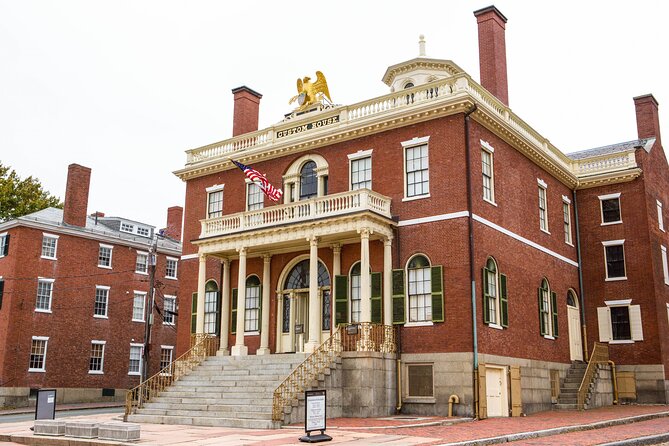
After Salem Common, the route continues into more architecture-focused streets.
At the Hawthorne Hotel, you get a quick architecture discussion—enough to make you notice details rather than pass by it as just another downtown building. It’s the kind of stop that’s short but effective: a guide points, you look closer, then you walk away seeing more than when you arrived.
Next comes Church Street, another photo-friendly spot with architecture comments and easy learning-by-watching. The tour then reaches Saint Peter’s Episcopal Church, where the guide touches on Salem’s unique religious heritage.
That religious heritage piece matters because it connects buildings to community life. In Salem, faith and social structure played out in where people worshipped and how institutions were built. Even if churches aren’t always high on your personal list, this stop can help you understand the city’s character beyond the famous witch-era storylines.
Peabody Essex Museum From the Outside, Then Witch City Mall and the Bewitched Statue
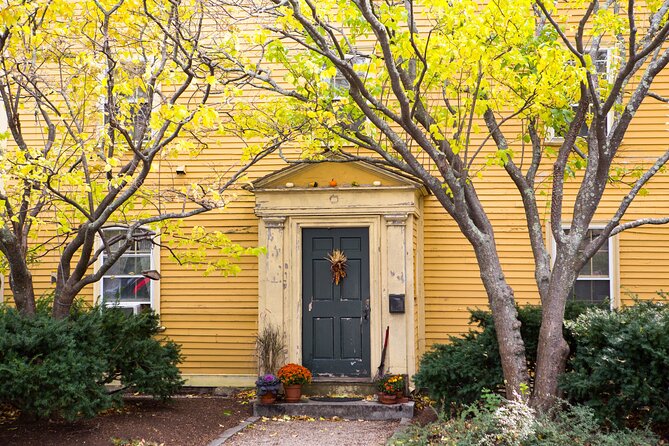
You also get views and commentary around the Peabody Essex Museum. Importantly, you’re not going inside on this tour—this is an outdoor-only format. Still, it’s a helpful stop because the museum sits at the crossroads of “big cultural institution” and “Salem’s maritime and merchant legacy,” and the guide uses it to keep the theme consistent.
Next, the tour moves to Witch City Mall, another quick architecture-oriented look. The point isn’t the mall itself as an attraction; it’s that the guide uses it as a recognizable landmark while continuing to teach you what to look for.
Then you finish at the Bewitched Statue of Elizabeth Montgomery. This is a lighter, fun end to the walk—especially if you like when a tour nods at pop culture but doesn’t let it take over the main lesson. It gives you a satisfying closing image and a clear endpoint near where the tour ends.
Price and Value: Is $36 a Good Deal for an Architecture Walk?
For $36 per person over about 1.5–2 hours, you’re paying for:
- a licensed guide with an architecture focus,
- interpretation that connects multiple historic places into one story,
- and a route designed to be walkable and efficient.
What you don’t pay for here is indoor admissions. The tour doesn’t enter buildings or cemeteries, and many stops note admission isn’t included. So you’re not being asked to buy a stack of tickets just to keep learning.
One stop does include an admission ticket component at Salem Common, which nudges value in your favor.
The practical trade-off is time on your feet. If you can stand comfortably and you like learning through a guided route, this pricing makes sense. If standing is hard for you, the same structure can feel demanding.
Practical Tips That Make This Walk Easier (and More Fun)
Here’s how to set yourself up for a smooth experience:
- Wear comfortable shoes. The tour is outdoor, stop-and-go, and built around short explanations.
- Plan for no public restrooms. Use one before you meet.
- Bring layers. Rain or shine is part of the deal.
- Use the mobile ticket. It’s listed as part of the format, which usually means quick check-in.
- Expect a larger group (up to 40). If you want front-row access to the guide, arrive a few minutes early and stand where you can see.
- Bring a phone camera, but also take a moment to just look. The guide’s job is to point out what matters; your job is to keep your eyes open after they point.
Good news for animal lovers: the tour is dog friendly, and service animals are allowed.
Who Should Book This Tour (and Who Might Want a Different Option)
This is ideal if you:
- want a strong Salem orientation beyond witch lore,
- enjoy architecture as a way to understand history,
- like short, focused explanations at multiple stops,
- and prefer an outdoor walk you can do in a single morning window.
It may not be the best fit if you:
- can’t stand for long periods, since the route is stop-heavy and outdoor,
- want a slow, sit-down pace with long indoor time,
- or hate busier group dynamics from a tour size up to 40.
If you’re traveling with kids, note that children must be accompanied by a ticketed adult.
Should You Book This Salem Merchants and Mansions Architecture Walk?
Yes—if your goal is to understand Salem fast, with a guide who connects money, growth, and building styles in a way you can still remember later. The best part is that you’re not forced into a one-note Salem. You get merchant-world context, architecture cues you can reuse on future walks, and even a few pop-culture touchpoints that don’t drown out the facts.
If you’re the type who enjoys asking why a city looks the way it does, this tour will likely feel like a shortcut. If you’d rather stick to purely spooky stories or mostly indoor attractions, you might want a different Salem experience that leans more heavily into those themes.
FAQ
How long is the Salem Merchants and Mansions Guided Architecture Walking Tour?
It runs about 1 hour 30 minutes to 2 hours (approx.).
How much does the tour cost?
The price is $36.00 per person.
Where does the tour start and where does it end?
The tour starts at 32 Derby Square, Salem, MA 01970 and ends at the Bewitched Sculpture, Salem, MA 01970.
What language is the tour offered in?
The tour is offered in English.
Does the tour enter any buildings or cemeteries?
No. It is an outdoor-only activity, and you do not enter buildings or cemeteries.
Is admission included at the stops?
Most stops do not include admission tickets. Salem Common is listed as having an admission ticket included.
Does the tour run in bad weather?
Yes. The tour runs rain or shine and does not cancel for weather.
Are dogs and service animals allowed?
Yes. The tour is dog friendly, and service animals are allowed.
Are there public restrooms on the tour route?
No. There are no public restrooms on the tour route, so you’ll want to plan accordingly.
Can children join the tour?
Children must be accompanied by a ticketed adult.