REVIEW · AUSTIN
Downtown Austin Historical Architecture Walk
Book on Viator →Operated by Nitty Gritty City Tours of Austin · Bookable on Viator
Stone and brick tell Austin’s story. This Downtown Austin Historical Architecture Walk strings together government-era buildings, eclectic Victorian neighborhoods, and the commercial streets that grew around them, all in about 1 hour 45 minutes.
I especially like the fact that you go inside The Driskill, not just admire it from the sidewalk. I also like how the route stops at the Bremond Block for a focused walk through well-preserved Victorian homes, plus a guide who keeps your questions moving.
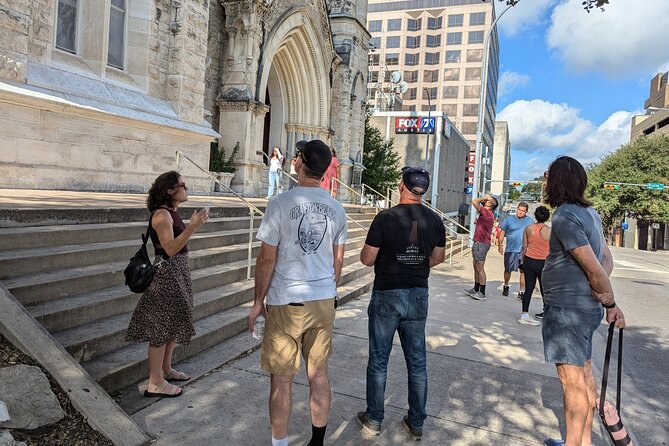
One drawback to plan around: much of the tour is from the outside, so if you’re hoping for repeated indoor stops, this is more of a see-it-and-learn-it walking experience than an all-access museum day.
In This Review
- Key highlights you’ll care about
- Getting oriented at 103 E 5th St.
- Price and what you actually get for $56
- Stop 1: The Driskill’s interior and architectural “through-lines”
- Stop 2: Bremond Block and the feel of a preserved neighborhood
- Stop 3: Heman Marion Sweatt Travis County Court House (Art Deco outside viewing)
- Stop 4: The Texas Governor’s Mansion and the “why is this here?” lesson
- Stop 5: Texas State Capitol exterior stories from the south lawn
- Stop 6: Saint Mary Cathedral and the “unique construction” angle
- Stop 7: Capitol Complex Visitors Center—the odd one you remember
- Stop 8: The 1915 theatre ornamentation across the street
- What this tour feels like in real time
- Why the guide matters (and how Emily raises the bar)
- Should you book this Downtown Austin architecture walk?
- FAQ
- How long is the Downtown Austin Historical Architecture Walk?
- Where does the tour start?
- What time does the tour start?
- How much does the tour cost?
- Is there a mobile ticket?
- Does the tour include an inside stop?
- Are admissions included?
- How many people are in the group?
- What language is the tour guide?
- Is the tour dependent on weather?
Key highlights you’ll care about
- Inside stop at The Driskill: a rare chance compared with the mostly-outdoor pacing
- Bremond Block Victorian homes: a concentrated look at post–Civil War-era residential architecture
- Art Deco courthouse viewing: quick, good context without getting stuck in the details
- Texas Capitol exterior story time: south lawn views with architecture “tales” explained for you
- A lot of variety in under 2 hours: government to homes to entertainment in one tight route
- Small group size: up to 25 people, which helps questions stay on track
Getting oriented at 103 E 5th St.
The tour starts at 103 E 5th St., Austin, TX 78701, with an ending back at the same meeting point. The start time is 9:45 am, which is a smart choice: you get daylight for photos and easier walking before the hottest part of the day.
This is a guided walk with an English-speaking guide and a mobile ticket. With a cap of 25 travelers, you’ll get more back-and-forth than you would on a big bus-style tour.
You can also read our reviews of more tours and experiences in Austin.

Price and what you actually get for $56
At $56, the value is mainly in two places: the expert guidance and the one meaningful indoor moment. Every listed stop is paired with free admission on the tour plan, and the itinerary’s “inside” pick is The Driskill, where you can actually step into an architectural landmark.
Most of the other highlights are outside viewing stops, which keeps the day efficient. That makes the price easier to justify if your goal is to understand Austin’s architecture fast—without spending hours hopping between separate museums.
Stop 1: The Driskill’s interior and architectural “through-lines”
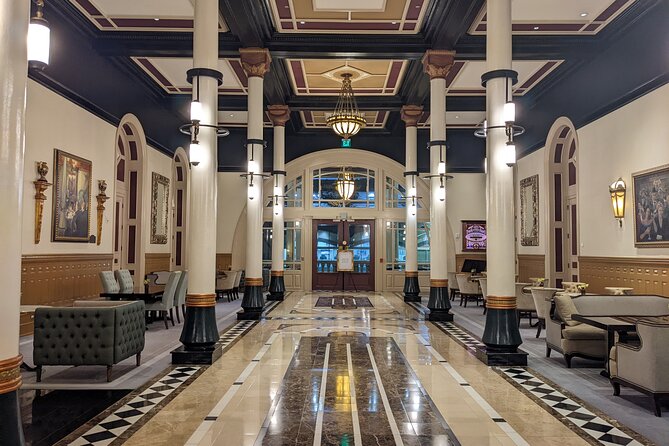
You’ll kick off at The Driskill, and this is the stop you’ll remember. The tour is designed so this is the one place you go inside, with a free admission ticket included in the experience.
The guide focuses on what inspired the building’s architecture, including how the style ideas shaped the property over time. The best part here is that you’re not just looking at pretty details—you’re learning how those choices connect to the eras that came before and after, so the rest of the walk makes more sense.
If you like historic hotels, ornate interiors, or architecture with stories, this first stop sets the tone. If you’re expecting a long museum-style interior tour, keep your expectations modest: it’s still a walking tour schedule, not a half-day building crawl.
Stop 2: Bremond Block and the feel of a preserved neighborhood
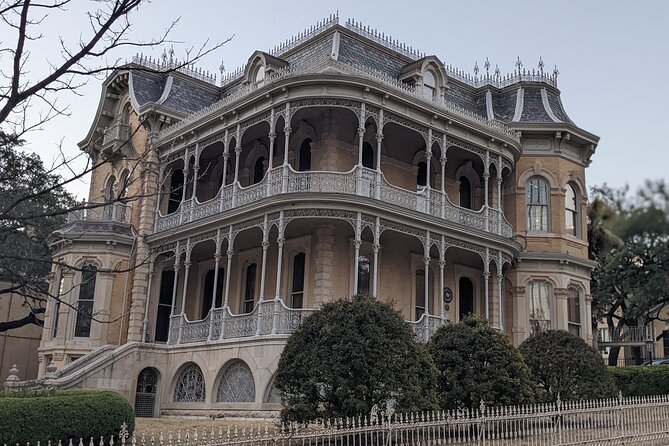
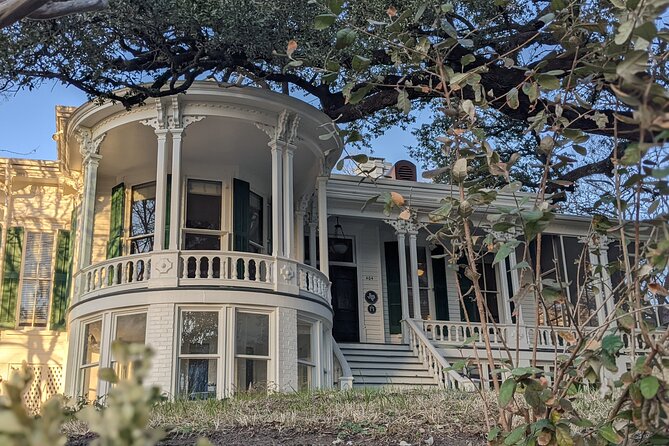
Next up is the Bremond Block, where you stroll through a well-preserved stretch of Victorian homes and learn about how their architecture evolved. You’re not racing through this part—you’re getting a block-level sense of what the neighborhood looked like when it first developed.
One reason this stop lands well is because the homes are the kind you can’t fully appreciate from just one photo. Seeing the frontage, proportions, and decorative cues in sequence makes the lessons stick.
And it’s not just “Victorian, period.” You’ll get context that helps you place these homes after the Civil War, which changes how you interpret what you’re seeing. It turns the walk from sightseeing into a timeline you can read with your eyes.
Stop 3: Heman Marion Sweatt Travis County Court House (Art Deco outside viewing)
From there, you’ll shift to the Heman Marion Sweatt Travis County Court House. You’ll admire it from outside and learn about it as a monument of predepression Art Deco.
This is a good example of how the tour balances pace and depth. Even though the stop is shorter, the guide’s goal is to help you notice what makes Art Deco feel different from older styles—cleaner geometry, a more modern attitude, and an emphasis on decorative form that reads even at street level.
If you’re the type who likes to spot architectural “tells,” this is an easy win. If you prefer long stops, treat it as a quick catalyst: you’ll come away with enough vocabulary to recognize the style later around town.
Stop 4: The Texas Governor’s Mansion and the “why is this here?” lesson
At the Texas Governor’s Mansion, you’ll get a perspective shift. From your viewpoint, it can seem out of place among the government and commercial buildings—but that’s exactly the point.
You’ll learn that about 100 years ago those surrounding blocks were covered in houses, including some larger than the Governor’s Mansion. That framing matters because it helps you understand downtown not as a static picture, but as something that changed with economic growth and shifting priorities.
This stop works especially well if you like urban history: the idea that buildings you see now have a different origin story than you assume based on where they sit today.
Stop 5: Texas State Capitol exterior stories from the south lawn
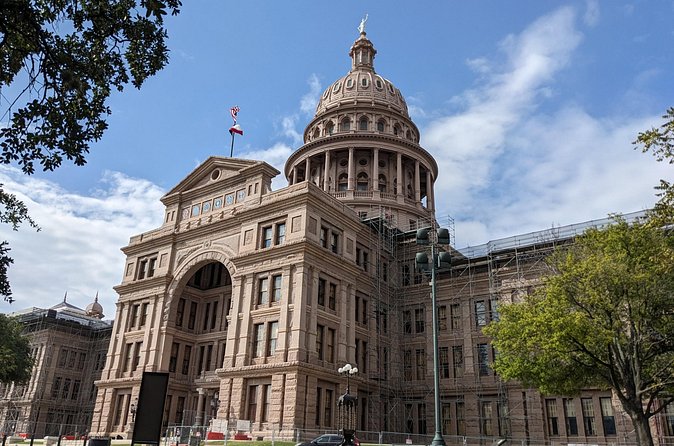
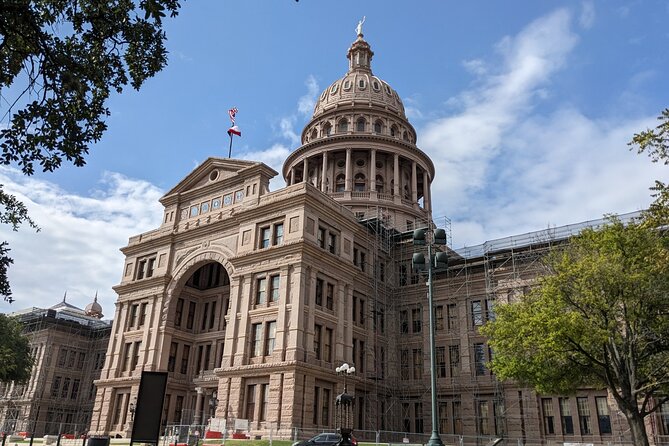
The walk then reaches the Texas State Capitol, and yes, there’s a reason people wax poetic here. The tour notes it as the largest State Capital building in the country, and it leans into the idea that the architecture carries stories—told from the south lawn.
You won’t be inside for this part, but you do get explanation that’s timed to what you can actually see. That outdoor setup is helpful: the guide can talk about materials, layout choices, and stylistic cues without asking you to cross into slower, museum-like pacing.
If your goal is to understand why Austin’s civic center feels monumental, this is the stop for that. If you’re the type who wants lots of interior artifacts and exhibits, you might consider pairing this with a separate Capitol visit later in your trip.
Stop 6: Saint Mary Cathedral and the “unique construction” angle
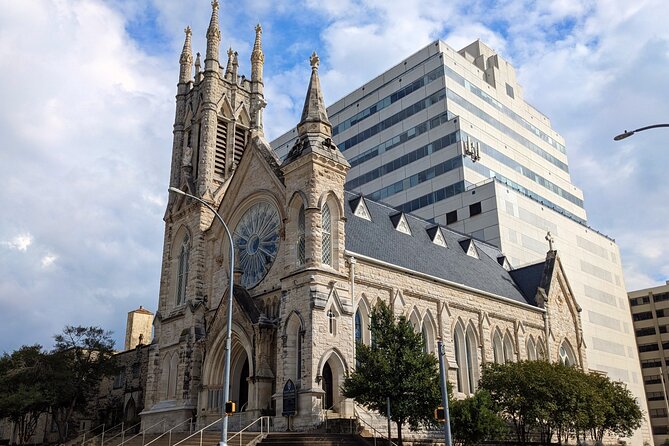
Next is Saint Mary Cathedral. This one is outside viewing again, with the guide explaining the Cathedral’s history and its unique construction.
Even in a short stop, a “construction” focus changes how you look. Instead of treating the building like a backdrop, you start paying attention to how the structure communicates its purpose—shape, massing, and the way the architecture holds its identity as you walk around it.
If you’re interested in religious architecture, or just like buildings that feel different in the way they’re built, you’ll probably enjoy this stop more than you expect given the time.
Stop 7: Capitol Complex Visitors Center—the odd one you remember
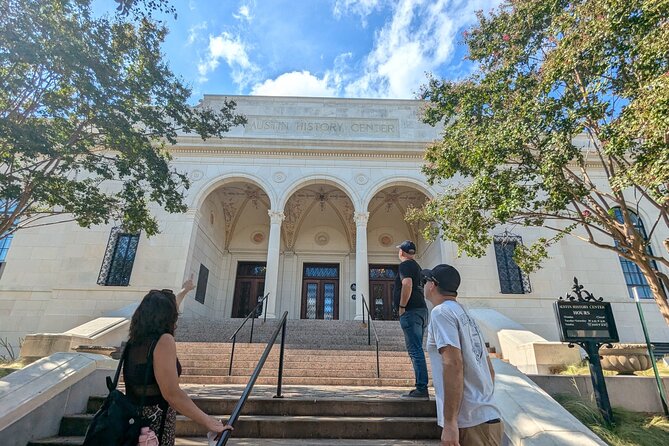
At the Capitol Complex Visitors Center, you’ll hear a quick contrast lesson. It doesn’t fit the look of its neighbors, and the guide points out that it’s the oldest—and possibly strange—state building still standing in Austin.
This stop is useful because it helps you read the whole area as a collection of layers, not one uniform “Capitol style.” You’ll learn how different eras can sit side by side, and how that changes the atmosphere of the blocks around them.
It’s also a nice reminder that architecture isn’t only about grand facades. Sometimes the most interesting thing is the building that doesn’t match the expected pattern.
Stop 8: The 1915 theatre ornamentation across the street
You wrap the walking route with a look toward the theatre building from 1915, focusing on the ornamentation you can see from across the street. The emphasis here is visual—what to look for, and how to recognize the style choices at a glance.
This last stop is brief, but it gives your brain a cooldown. After government, courts, mansions, and churches, you end with an entertainment-facing facade detail, which helps the day feel complete rather than abruptly cut.
What this tour feels like in real time
The schedule is built for pace: about 20 minutes at each of the first two big stops, then roughly 10 minutes at several others, with a shorter final viewpoint. In other words, you get time to understand the key architectural contrasts without losing half a day.
The tour is designed for moderate physical fitness, so wear comfortable shoes and plan for a steady walk. Since you’ll be outside for most of it, you’ll also want weather awareness. The good news: it’s short enough that even if you’re not a marathon walker, you’re still likely to finish feeling good.
Small-group size helps, too. With a maximum of 25 travelers, questions don’t vanish into the crowd. That matters because the guide’s job isn’t just to read facts—it’s to answer what you’re noticing as you go.
Why the guide matters (and how Emily raises the bar)
One standout from the guide experience: people repeatedly highlight the impact of the guide, specifically Emily. The common theme is clarity and follow-up—answering questions well, and even adding extra local suggestions when it fits your interests.
That’s not just “nice customer service.” It changes the tour from a one-time view into a better plan for the rest of your Austin day. If you’re someone who likes having a few good next steps, that’s a real part of the value.
Should you book this Downtown Austin architecture walk?
Book it if you want a fast, organized way to understand downtown Austin architecture—and you like the idea of one meaningful interior stop paired with several high-impact exterior viewpoints. The $56 price makes the most sense when you’ll take advantage of the guide’s explanations and you’re ready to walk.
Skip it (or consider something else) if you’re craving long indoor museum time at multiple locations. Since most stops are outside, this is best for people who enjoy street-level architecture and learning what to look for as you move.
If you’re planning a first Austin trip and you want your bearings fast, this is one of the smarter ways to do it—especially with The Driskill inside visit and the Bremond Block Victorian walk.
FAQ
How long is the Downtown Austin Historical Architecture Walk?
It lasts about 1 hour 45 minutes.
Where does the tour start?
The meeting point is 103 E 5th St., Austin, TX 78701.
What time does the tour start?
The start time is 9:45 am.
How much does the tour cost?
The price is $56.
Is there a mobile ticket?
Yes, the tour uses a mobile ticket.
Does the tour include an inside stop?
Yes. The tour goes inside The Driskill.
Are admissions included?
The tour plan lists free admission tickets for the stops that include admission, including The Driskill.
How many people are in the group?
The tour has a maximum of 25 travelers.
What language is the tour guide?
The tour includes an English guide.
Is the tour dependent on weather?
Yes. It requires good weather, and if it’s canceled due to poor weather, you’ll be offered a different date or a full refund.