REVIEW · NEW YORK CITY
Manhattan Architecture Yacht Cruise
Book on Viator →Operated by Classic Harbor Line NYC · Bookable on Viator
Some cities are best seen from water. This Manhattan architecture cruise trades land lines for AIA narration and photo angles you can’t get from sidewalks. You’ll cruise on a 1920s-style yacht with commentary from the American Institute of Architects (AIA) New York Chapter, plus a complimentary drink that makes the whole thing feel like good value.
Two things I like a lot: you get architecture talk tied to real landmarks as the boat circles the island, and the ride keeps you comfortable whether you’re watching from the observation cabin or the open bow. The narration can be run by speakers like John, Ginny, Jenny/Jennie, or Doug, and they tend to keep the story flowing even when conditions are gray.
One consideration: a full circumnavigation isn’t guaranteed. Rarely, the Spuyten Duyvil train bridge can be inoperable, and river closures can affect the route, with no refunds if the cruise can’t fully complete the loop.
In This Review
- Key things you’ll notice on this Manhattan architecture yacht cruise
- A 1920s yacht, not a slow ferry: the feel of the cruise
- The AIA narration: how the story stays clear (and why that matters)
- Where the cruise goes first: Financial District details from the water
- Liberty and the Ellis Island area: photo angles that feel unfair
- The 18-bridge sweep: why the bridges are more than filler
- East River and Chrysler Building moments: when the skyline snaps into focus
- Lower East Side and more neighborhoods: learning without reading a guidebook
- Upper West Side to the George Washington Bridge: the long view north
- Choosing where to sit: open bow vs observation cabin
- Beverages, food, and what the included drink changes
- Price and value: why $113.23 can make sense
- Who this cruise fits best (and who should skip it)
- Should you book this Manhattan architecture yacht cruise?
- FAQ
- How long is the Manhattan Architecture Yacht Cruise?
- What does the ticket price include?
- Is a beverage included, and what can I choose?
- Is food included on the cruise?
- Is this cruise in English?
- Is the cruise suitable for children?
- Will the boat always fully circle Manhattan?
- Where do I meet for the cruise?
- Are service animals allowed?
- Do I need to worry about conversation during the tour?
Key things you’ll notice on this Manhattan architecture yacht cruise
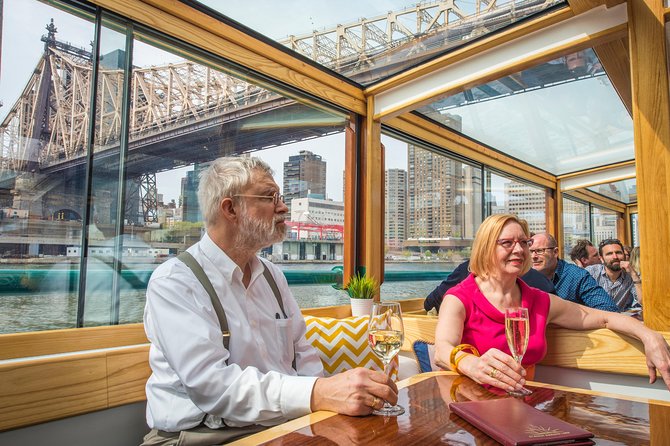
- AIA-led narration: commentary is provided by members of the American Institute of Architects (AIA)
- 1920s-style yacht vibe: classic boat feel, with options to view from inside or out
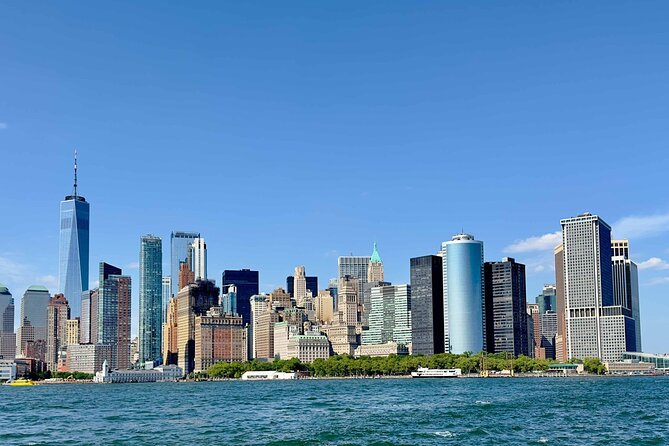
- Big photo moments: Statue of Liberty, One World Trade Center area, and skyline views from the water
- 18 bridge pass-by highlights: including Brooklyn, Manhattan, and Williamsburg Bridges
- Limited but comfy group size: capped at 80 travelers, and conversation is kept at a reasonable level so everyone can hear
A 1920s yacht, not a slow ferry: the feel of the cruise
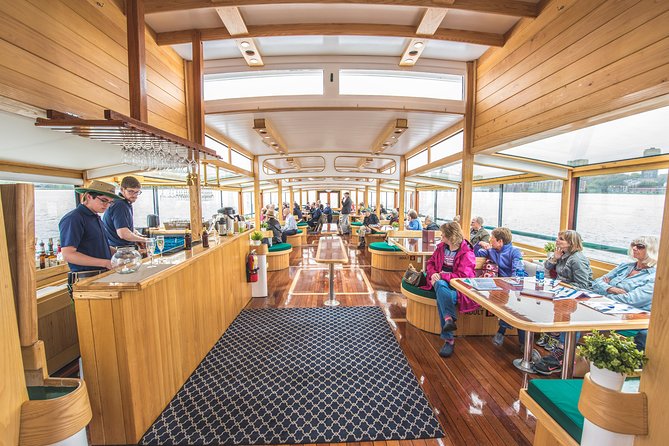
This is the kind of New York activity that changes your perspective fast. Instead of squeezing past tour groups on land, you settle in on a classic yacht and let the city move around you. The boat has an indoor cabin for shelter and warmth, but the best views often happen outside when the weather is kind.
The style matters here. A 1920s-style yacht isn’t just a marketing line; it’s a big part of why the cruise feels like an event. You’re not standing in a cramped line of strangers at a bus window. You’ve got sightlines, airflow, and that calm “moving viewpoint” effect that makes architecture click.
You can also read our reviews of more tours and experiences in New York City.



The AIA narration: how the story stays clear (and why that matters)
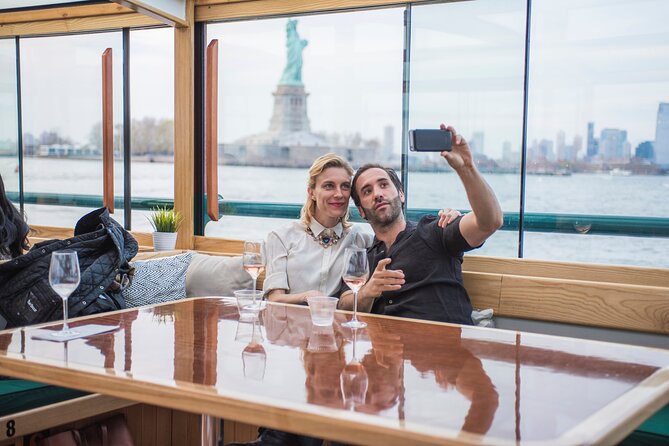
What makes this cruise more than a scenic loop is the way it’s narrated. You’ll get live commentary from an AIA New York Chapter member as you pass neighborhoods and landmarks. The narration covers what you’re seeing—buildings, waterfront structures, and major development areas—so you’re not just “looking at tall stuff.”
Also, it’s heavily narrated, and the operator asks for conversation to stay reasonable so you can hear the guide. That’s a plus if you like learning and a mismatch if you want a quiet, social cruise. If your group tends to chat nonstop, plan on bringing that down a notch.
Friday departures have a special note too: on select Fridays, the narration theme can focus on Climate Change, Resiliency, Sustainable Architecture, and the future of NYC. If that topic appeals, it’s worth checking with the operator for the exact theme on your date.
Where the cruise goes first: Financial District details from the water
You start at Classic Harbor Line, Chelsea Piers Pier 62 in Manhattan. Once you board, you head into a loop that builds from the older, denser layers of the city. Early on, the narration connects you to the Financial District—explaining the buildings that define the area while you cruise around Manhattan.
This is one of the practical advantages of the boat: you get to see massing and spacing without craning over shoulders. From the waterline, skyscrapers read differently. You can spot how street-level density rises into tower forms, and you can track how the shoreline shapes the skyline.
There’s also a specific landmark moment with the Woolworth Building as you cruise around Manhattan. Seeing it from the water gives you a clearer sense of its height and presence than you’d get from a sidewalk corner.
Liberty and the Ellis Island area: photo angles that feel unfair
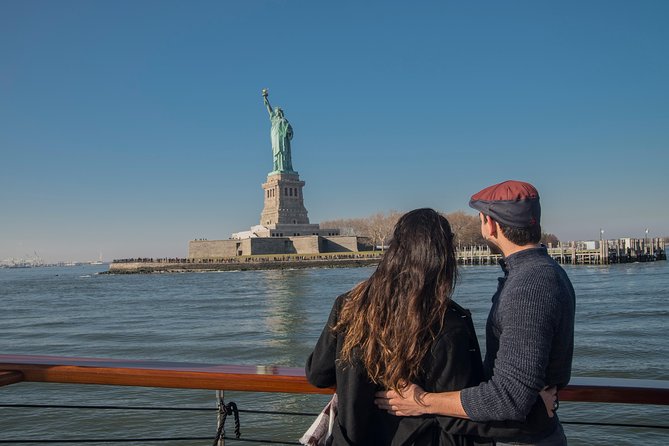
Later, the boat brings you into one of the most photogenic zones in the harbor. Up-close views of the Statue of Liberty are part of the experience, and you’ll be able to watch from either the observation cabin or the open bow. The boat placement matters: you’re close enough to feel like you’re part of the scene, not just photographing a dot at the edge of the frame.
If you care about photos, this is when you’ll want to position yourself where you can see freely. People often underestimate how much easier it is to frame Liberty when the boat gives you a stable, moving vantage point rather than you hunting for a fixed spot on land.
You’ll also catch the area near Ellis Island from the water. Even if you don’t stop for museum time, the cruise gives context through the narration, which helps connect the waterfront to the big history of New York.
The 18-bridge sweep: why the bridges are more than filler
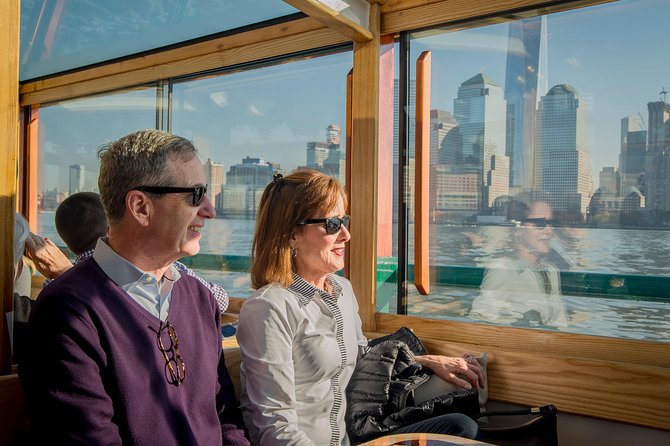
One of the biggest checklist wins is the bridge circuit. This is a 2.75-hour cruise that includes passing under all 18 bridges that connect Manhattan to the outer boroughs, New York, and New Jersey. That includes the Brooklyn, Manhattan, and Williamsburg Bridges—plus others you’ll only really appreciate once you see how they span the water and organize movement.
Bridges are practical city infrastructure, but they also function like design statements. From the deck, you can see how their shapes relate to skyline angles and shoreline lines. It turns the “water tour” into a city-engineering lesson.
Also, this is where wind and daylight matter for your comfort. If the day is chilly, the cabin is your friend. If the day is clear, outside becomes the main event.




East River and Chrysler Building moments: when the skyline snaps into focus
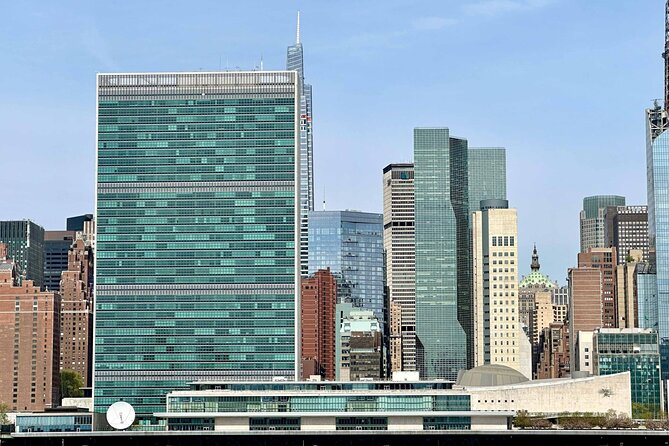
As the cruise continues, you’ll get major payoff along the East River. The narration calls out the Chrysler Building as you head up the East River. This is one of those landmarks that looks best when you can see it from a distance plus a slight angle, which the water naturally provides.
The East River portion also gives you a strong sense of how Manhattan faces multiple horizons at once—shorelines, parks, and built structures all layered into one view. If you’re the type who wants to understand the city’s geography, the boat route makes that easier than most land itineraries.
Lower East Side and more neighborhoods: learning without reading a guidebook
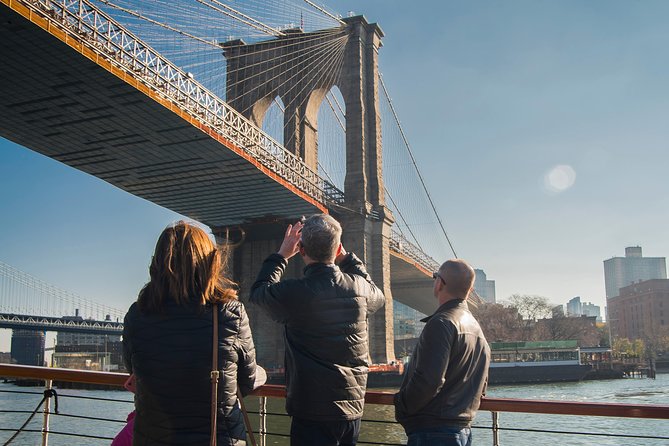
In addition to the big-name attractions, you’ll also get commentary tied to the Lower East Side. You’ll hear about buildings that make up the neighborhood as the boat circles around Manhattan.
This part is valuable because it fills in the “in-between” spaces. New York feels like a collection of neighborhoods, but from the ground it’s easy to miss the way areas transition. From the water, those transitions become visible: shoreline changes, building forms shift, and the skyline reconfigures neighborhood by neighborhood.
Upper West Side to the George Washington Bridge: the long view north
You’ll cruise along the Upper West Side next, with narration about historic sites and newer waterfront features. This section helps you understand that Manhattan isn’t one uniform skyline. The city changes as the boat keeps moving, and the guide ties those changes back to architecture and development.
Then comes the northern pass: you’ll go under the George Washington Bridge, the landmark connection between Manhattan and New Jersey. Seeing it from the water gives you a scale that’s hard to grasp from street-level. It’s not just a bridge you cross; it’s a massive connector that shapes how the city breathes at the edge of the island.
Choosing where to sit: open bow vs observation cabin
You’ll get to see landmarks from both the observation cabin and the open bow, so you can pick your comfort level. If it’s warm, outside is where the skyline feels closest and the photos tend to be best. If it’s cold, the cabin is the practical move.
There’s also a real-world note from experience reports: window clarity can matter on winter or bad-weather days. On a cold, windy day, you may deal with fogging or spray that affects how sharp your pictures look through glass. If your main goal is photography, plan to spend time on the open sections when weather allows.
Beverages, food, and what the included drink changes
The ticket includes one complimentary beverage with no extra cost: you can choose a beer, a glass of wine, or a soft drink. That sounds small, but it changes the mood. You’re not thinking about where to stop for a drink before your sightseeing window closes.
Food is available for purchase on board, and you can bring light snacks if you want something extra. In rough weather, having a simple snack plan keeps you comfortable without turning the cruise into a restaurant schedule.
Price and value: why $113.23 can make sense
At about $113.23 per person for roughly 2 hours 45 minutes, this cruise isn’t the cheapest way to see Manhattan. But you’re paying for three things that cost time and effort on land: boat-based proximity to landmarks, a structured architecture narration led by AIA professionals, and a route that takes you around the island with major bridge passes.
Also, the cruise assigns seating by table. You can choose private section seating or communal seating at checkout. If you’re traveling with people you want to stick with, private seating can be worth it for comfort and smoother viewing. If you’re traveling solo or want to meet people, communal can be a fine way to keep things social.
Who this cruise fits best (and who should skip it)
This is best for adults and older kids who want architecture context, not just city sightseeing. The operator notes it isn’t for children under 12 due to the heavily narrated format.
It also fits well if you:
- like learning while you see
- prefer photos from the water rather than crowded waterfront sidewalks
- want a structured route that keeps you moving without effort
It might be frustrating if you:
- need lots of quiet conversation
- expect a total guarantee that every part of the circumnavigation will happen exactly as planned
- have mobility needs that require careful seating coordination, since boarding and viewing can vary by boat and seat position
In one reported case, someone requested seating for a mobility concern but still ended up placed in a spot that made seeing the sights harder. If you have special seating requirements, coordinate in advance so your view isn’t an afterthought.
Should you book this Manhattan architecture yacht cruise?
I’d book this if you want a smarter way to see Manhattan: water views plus AIA narration that connects skyline scenes to real architectural thinking. It’s also a great “shared experience” for couples and groups because the boat setting feels special without being overly formal.
Skip it if your priority is quiet relaxation with minimal talking, or if your trip depends on a perfect circumnavigation path with no possible route changes. The cruise is designed for learning and seeing, not for total spontaneity.
If you like the idea of getting the big names—Woolworth, Chrysler Building, Statue of Liberty, One World Trade Center area—and also passing all 18 bridges, this is one of the most efficient ways to do it in a single sitting.
FAQ
How long is the Manhattan Architecture Yacht Cruise?
It runs about 2 hours 45 minutes.
What does the ticket price include?
You get narration by an AIA New York Chapter member, assigned table seating where you can choose private section or communal seating, and one complimentary beverage.
Is a beverage included, and what can I choose?
Yes. Your complimentary drink can be a beer, a glass of wine, or a soft drink.
Is food included on the cruise?
No. Food selections are available for purchase on board. If you bring food, keep it to a light snack.
Is this cruise in English?
Yes, the experience is offered in English.
Is the cruise suitable for children?
It’s not recommended for children under 12 because it’s a heavily narrated tour experience.
Will the boat always fully circle Manhattan?
A full circumnavigation is not guaranteed. Rare issues like the Spuyten Duyvil train bridge being inoperable can affect the route, and river closures can also occur.
Where do I meet for the cruise?
The meeting point is Classic Harbor Line, Chelsea Piers, Pier 62, New York, NY 10011.
Are service animals allowed?
Service animals are allowed. Emotional Support animals and pets are not permitted.
Do I need to worry about conversation during the tour?
Yes. It’s a heavily narrated tour, and you’ll need to keep conversations at a reasonable level so you can hear the narration clearly.