REVIEW · PRAGUE
Prague: Private Prague Art Nouveau and Cubism Tour
Book on GetYourGuide →Operated by Prague Articulate · Bookable on GetYourGuide
Prague looks different when you chase style, not statues. This private, Art Nouveau-to-Cubism walk turns early 20th-century design into a story you can actually follow. You start at the rebuilt Central Train Station from 1909 and move through Prague’s New Town with a guide who explains why these styles exploded, then why World War I changed the direction.
I love how the route mixes famous names with quick detours to smaller architectural details you’d otherwise miss, then ties them together with clear context. The other big win is the guide work: Max and Eva are highlighted for making the subject easy to see, with answers that stay grounded in art and history. One possible drawback: the pacing may feel long for people who hate spending lots of time on foot, especially toward the end.
In This Review
- Key highlights you’ll feel on the day
- Art Nouveau and Cubism in Prague: why this tour clicks
- Central Station 1909: the smartest way to begin your modern Prague reading
- New Town Art Nouveau walk: Prague’s Belle Epoque details you can actually spot
- Jubilee Synagogue: a meaningful early stop
- Quick detours: the “slow down” moments
- Municipal House: where Art Nouveau energy feels official
- House of the Black Madonna: a quick stop with a bigger lens
- Wenceslas Square: included, but not the whole point
- Off-the-tourist-cycle architecture: when the guide changes what you notice
- The tram shift to Vyšehrad: Cubism gets its own stage
- Vyšehrad Cubism circuit: Three Cubist Houses and more
- Three Cubist Houses: the moment Cubism feels real
- Kovařovicova vila: modern preservation meets historical design
- Cubist house Vyšehrad č. p. 98: a final close look before you roll back
- Time on your feet: what the pacing feels like
- Guides Max and Eva: what their teaching style adds
- Value check: is $84 per person a good deal?
- Who should book this Prague Art Nouveau and Cubism tour
- Should you book it?
- FAQ
- How long is the tour?
- Where do I meet the guide?
- What languages are available?
- Is it a private tour?
- Is public transportation included?
- Is the tour wheelchair accessible?
- What should I bring?
- Is it suitable for children?
- Can I get a full refund if I cancel?
Key highlights you’ll feel on the day
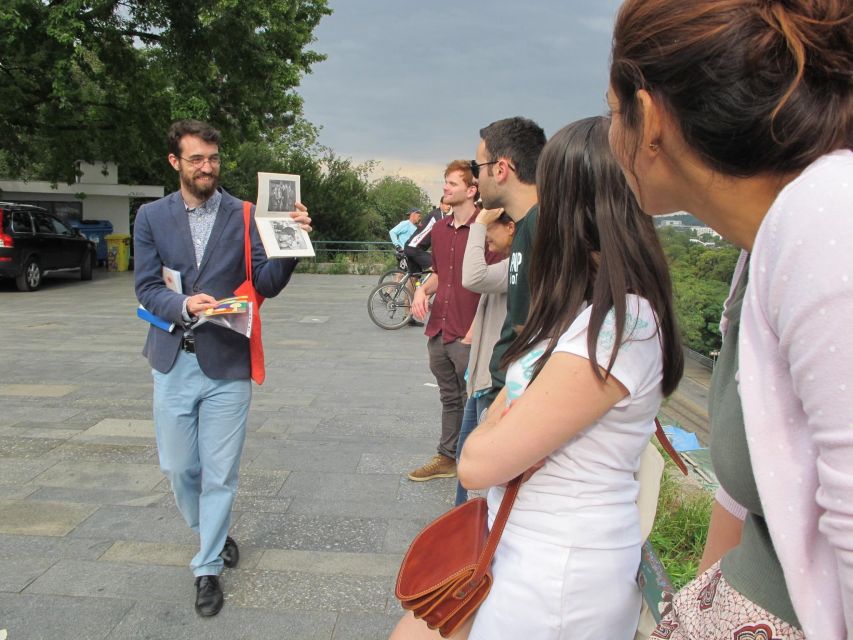
- Start at the restored 1909 Central Train Station and use it as your “modern Prague” reference point
- Learn Art Nouveau as the bridge from 19th-century styles to modern aesthetics
- See Cubism as a revolt against Art Nouveau, and then watch how history disrupts fashion
- Get transport support built in: included public transit, plus trams near the end
- Reach the Vyšehrad area for bolder Cubist architecture rather than staying only in the center
- Guides like Max and Eva focus on clear explanations and real architectural evidence
Art Nouveau and Cubism in Prague: why this tour clicks
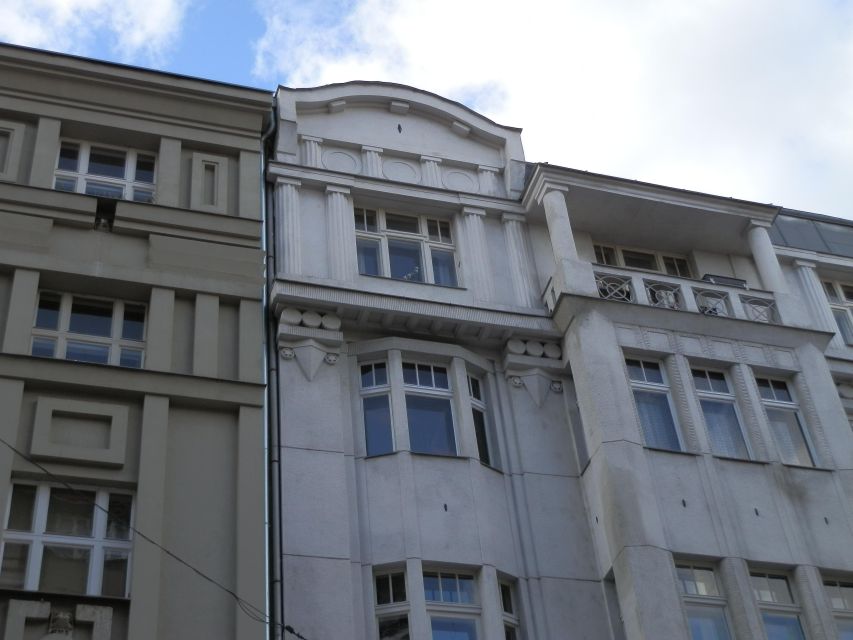
This tour is for people who want Prague beyond postcards. Instead of treating buildings like trophies, you learn to read them like clues—first to Art Nouveau’s big ideas, then to Cubism’s pushback.
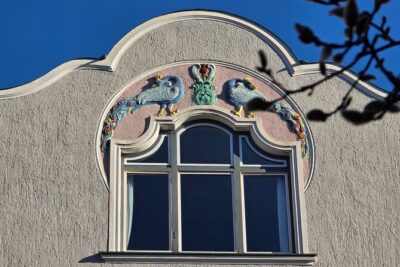
Art Nouveau in Prague isn’t just decoration. It’s a design attitude that grew out of 19th-century taste and tried to break away from older rules. Your guide connects those dots with what you’re looking at: curves, ironwork, façade rhythms, and that sense that the whole street could have a personality.
Then comes Cubism—less as a school assignment and more as a reaction. The story you’ll hear frames Cubism as a revolt against Art Nouveau, which makes the contrast you see in the city feel earned, not random. And you’ll also get the historical reality check: both styles struggled to keep their momentum through the upheavals around World War I.
You can also read our reviews of more tours and experiences in Prague.

Central Station 1909: the smartest way to begin your modern Prague reading
Meeting at Prague’s Central Train Station puts you in the right mindset from minute one. The starting point is tied to the station’s early 20th-century world—specifically the reconstructed Central Train Station from 1909—so you don’t start in “old-town mode.” You start in modern mode, then follow that mindset across the city.
Plan to find your guide on Platform No. 1, middle, carrying a red folder. If you’re standing there thinking, Where do I look? you’re not alone. Use the platform as your anchor: once you spot the red folder, the rest is easy.
This beginning also matters because it trains your eye. Before you even hit New Town streets, you learn to pay attention to style choices—what they were trying to do, and who they were speaking to at the time.
New Town Art Nouveau walk: Prague’s Belle Epoque details you can actually spot
After the station stop, the day shifts into an on-foot flow through Prague’s New Town. You’ll cover a lot of ground, but it’s broken into short segments with a guide telling you what to watch for—so it doesn’t feel like you’re just walking and hoping.
Jubilee Synagogue: a meaningful early stop
You’ll start the New Town section with a visit timed to get you thinking about style and identity, beginning at the Jubilee Synagogue. Even if you only catch part of it during the brief stop, the point here is context: Art Nouveau didn’t appear in a vacuum. It grew in a city where different communities shaped the visual language of urban life.
Quick detours: the “slow down” moments
Between the headline buildings, you’ll make several short strolls to lesser-seen architectural moments. These are the stops built for turning your brain from sightseeing mode into noticing mode.
At each of these short pauses, you’ll learn how to look at small features—doorways, façade transitions, ornamental patterns, and proportions. The guide’s narrative is what makes it work. Without that story, many visitors would walk right past the exact elements you’re being guided toward.
A key practical tip: wear shoes you don’t baby. You’ll want enough comfort to stand and look for a few minutes at a time without rushing your view.

Municipal House: where Art Nouveau energy feels official
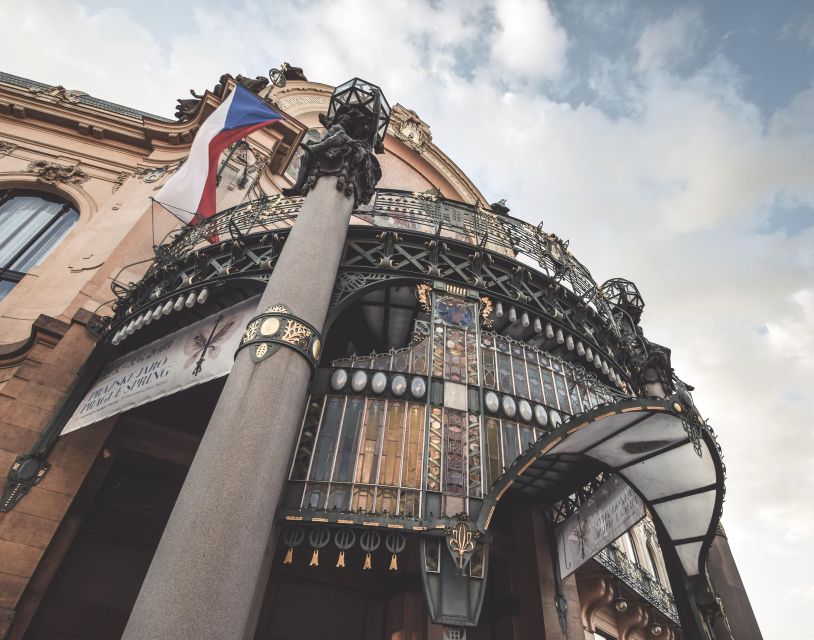
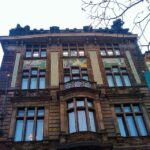
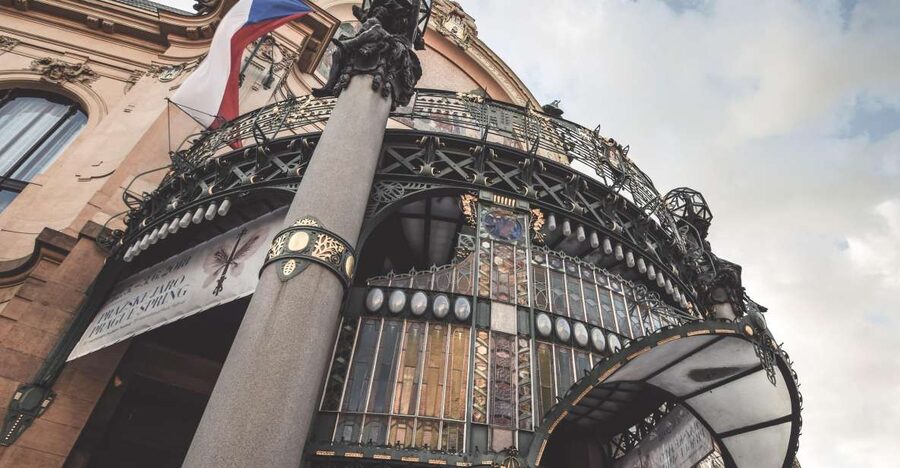
The route then reaches the Municipal House, one of those Prague structures people photograph because it’s obvious it’s important. The tour’s value is that you don’t just admire it—you connect it to why Art Nouveau felt revolutionary in its time.
This is where you’ll get a clearer sense of the style’s birth. Your guide explains how it evolved from 19th-century trends and why the movement felt like a modern break—an aesthetic built for the 20th century before the 20th century had arrived.
House of the Black Madonna: a quick stop with a bigger lens
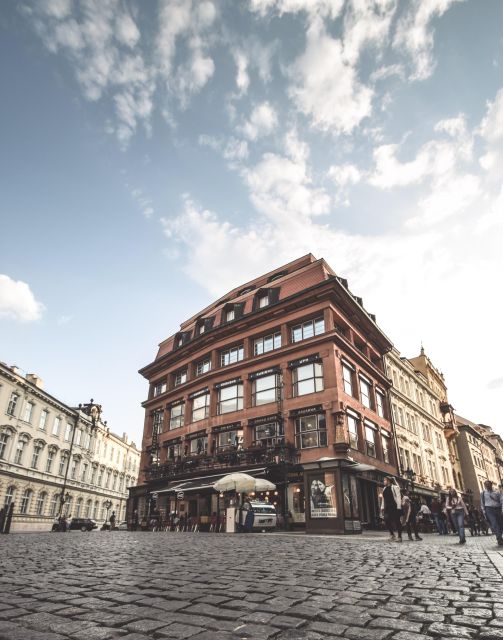
Next is the House of the Black Madonna, another stop designed for a short but focused look. Even with limited time, the guide’s interpretation helps you see the building as part of the larger cultural shift happening in Prague.
The tour frames architecture as part of daily life, not museum art. That’s why a short pause here works better than a long one. You get to keep momentum while still gaining context.
Wenceslas Square: included, but not the whole point
You’ll spend time at Wenceslas Square as part of the central-city loop. This stop can be busy, so treat it as a transit-and-context moment: the tour uses it to keep you oriented in Prague’s modern urban core before shifting toward the more adventurous Cubist section later.
If you like a plan that doesn’t ignore big landmarks but also doesn’t get trapped inside them, this approach is your kind of pacing.
Off-the-tourist-cycle architecture: when the guide changes what you notice
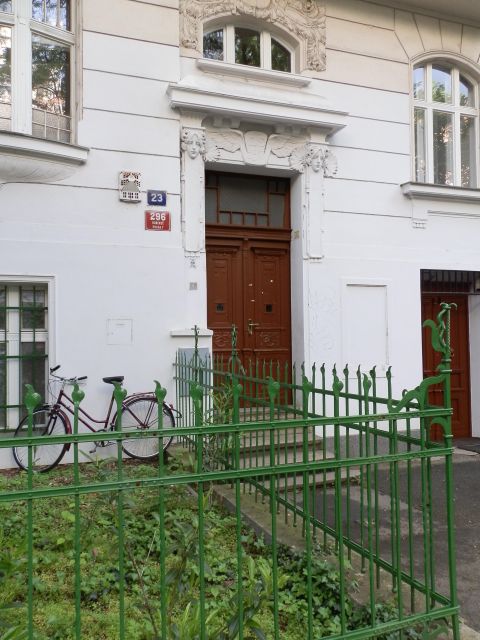
One of the most praised aspects of this tour is how guides point out locations outside the main crowd lines. Max and Eva are both described as showing more than the obvious hits. The effect is that Prague starts to feel “readable.”
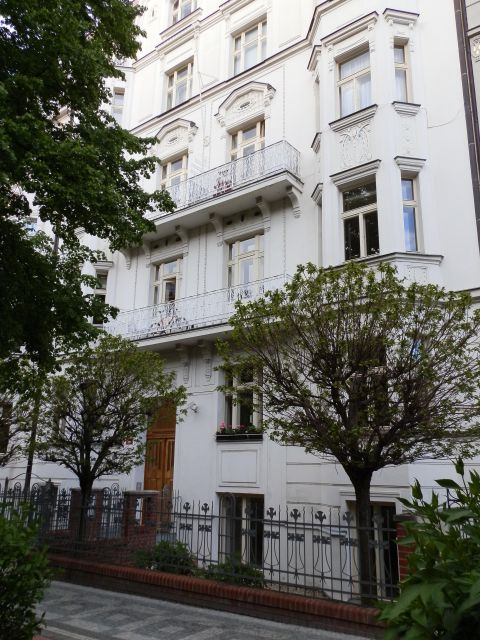
You’ll likely notice the pattern: the New Town section mixes well-known landmarks with stop-and-stare moments that train your eye. The hidden value isn’t that the places are rare for bragging rights. It’s that the guide gives you a method:
- look for stylistic choices,
- connect them to historical reasons,
- then compare across stops.
That’s why the stories land. You’re not just learning names; you’re learning relationships between ideas.
The tram shift to Vyšehrad: Cubism gets its own stage
After spending substantial time around the downtown core, the tour takes a short public transportation ride to a more remote area under the Vyšehrad fortress. This matters because Cubism in Prague isn’t evenly distributed. Some of the most daring examples are out of the standard tourist walking grid.
You’re also getting practical help here. Public transit tickets are included, and the tour uses a tram-based return option near the end. That keeps the last part from turning into a stressful scramble.
Vyšehrad Cubism circuit: Three Cubist Houses and more
This is the payoff section. Once you hit the Vyšehrad area, the architecture feels more experimental and the style contrast becomes more obvious.
Three Cubist Houses: the moment Cubism feels real
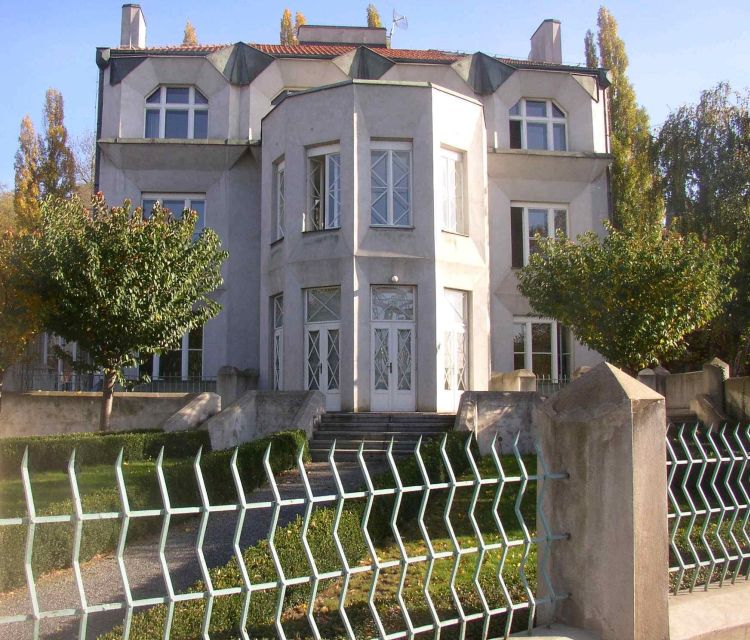
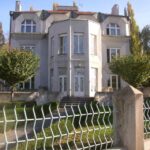
The tour calls out the Three Cubist Houses for short, focused sightseeing. The structure is simple: you arrive, you look, and then the guide ties what you see to the broader story.
Remember the narrative you were given earlier: Cubism started as a revolt against Art Nouveau. Seeing it in a tighter, more destination-like cluster makes that idea easier to understand. You’re not trying to spot Cubism somewhere random while your attention is scattered.
Kovařovicova vila: modern preservation meets historical design
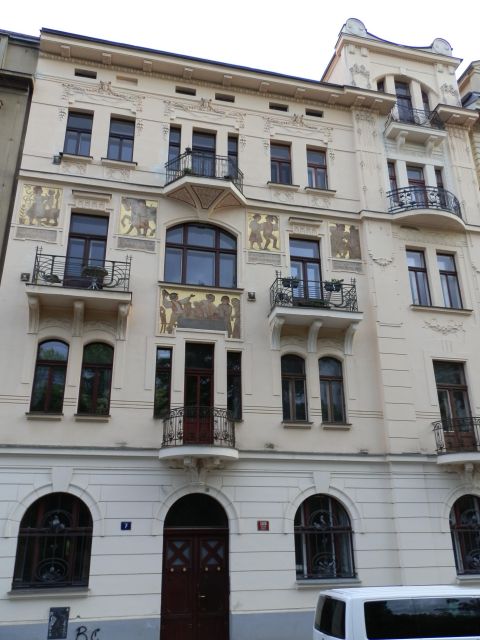
The route also includes Kovařovicova vila. The tour’s framing here is useful: it connects modern architects and later work to how Prague’s older architecture was preserved.
This matters because it changes how you interpret the city you’re standing in. You aren’t only seeing the original style period—you’re also seeing how later decisions kept those styles visible and legible.
Cubist house Vyšehrad č. p. 98: a final close look before you roll back
You finish with Cubist house Vyšehrad č. p. 98, another specific stop that keeps you in the Cubist zone long enough to feel the style as a coherent voice.
A realistic expectation: the sightseeing time at each stop is short. That’s not a problem if the guide is doing their job, which the reviews emphasize. The goal is to leave you with clear visual anchors and the historical reasoning behind them, not to turn it into a slow art history seminar.
Then you’re near a tram stop with an easy ride back to the downtown area, with the relevant tickets included.
Time on your feet: what the pacing feels like
This is a walking-and-stopping tour, not a sit-down museum visit. Even though the stops are grouped into short segments, you’ll still spend meaningful time on your feet with frequent looks at façades and details.
One person pointed out that the tour could feel long and suggested trimming the final segment. That’s a fair consideration. If you get bored with prolonged sightseeing, go into the day knowing the last Cubism cluster is the strongest visual pay-off. If you’re tired, that’s where you’ll want to spend your remaining attention.
A simple tactic: bring water (even though it’s not listed as included) and take quick moments to step off to the side when you’re given a longer explanation. It helps you keep focus for the next façade.
Guides Max and Eva: what their teaching style adds
Max and Eva are both singled out for making architecture feel understandable and fun, not intimidating. Max is described as presenting a clear, compelling account of how Art Nouveau flourished in Prague, and he’s noted for anchoring the landmarks in art and history rather than vague opinions.
Eva is praised for covering lots of ground while still keeping the architectural styles organized in your head. That’s a huge deal in a city like Prague, where it’s easy to lose the thread when you’re moving from one building to the next.
If you care about explanations that help you see, this is where you get your money’s worth.
Value check: is $84 per person a good deal?
At $84 per person for a private day tour that includes public transportation tickets and guided sightseeing through multiple areas, the value depends on how you travel.
This price starts to make sense if:
- You already know the basic Prague landmarks and want something less common.
- You enjoy learning a clear concept (Art Nouveau first, then Cubism) instead of a random list of buildings.
- You’d rather pay for direction so you notice details you’d otherwise miss.
If you’re brand-new to Prague and want only the biggest signatures in one sweep, you might find the topic niche. But if you’ve visited before or you’re spending a week and want an “extra layer” of understanding, this tour’s structure is a strong use of time.
Private format also helps. Even without group-size specifics listed, private tours usually mean fewer distractions and more room for questions, which lines up with how Max and Eva were described responding to questions.
Who should book this Prague Art Nouveau and Cubism tour
I’d put this tour on your shortlist if you:
- love architecture and want a guide to teach you what to look at,
- enjoy historical context that connects design choices to real events,
- prefer local-style routes over only postcard centers,
- are comfortable walking in short segments through the city.
It’s also a good fit for repeat Prague visits. The route includes central landmarks, then moves to a more remote Vyšehrad area so you’re not trapped in the same “top sights” loop.
It’s not a good fit for kids under 12, since the focus is architectural observation plus explanations.
Should you book it?
Yes—if you want Prague through a design lens and you’ll enjoy learning why styles changed, not just what they look like. The tour earns its cost by combining three things: a coherent story (Art Nouveau → Cubism → historical disruption), real named stops, and guides who keep the explanations clear and tied to what you’re seeing.
If you hate walking, expect to dislike it. If you want only the most famous views and nothing else, pick a different style-based tour or a more classic highlights route. But if you like the idea of understanding Prague’s modern identity by following the evolution of its buildings, this one is a strong choice.
FAQ
How long is the tour?
The tour is listed as 1 day.
Where do I meet the guide?
Meet on Prague’s Central Train Station, in the middle of Platform No. 1. The guide is carrying a red folder.
What languages are available?
The live guide offers English and German.
Is it a private tour?
Yes, it’s a private group experience.
Is public transportation included?
Yes. Tickets for public transportation are included, including tram rides as part of the route.
Is the tour wheelchair accessible?
Yes, the tour is wheelchair accessible.
What should I bring?
Wear comfortable shoes.
Is it suitable for children?
No. It’s not suitable for children under 12.
Can I get a full refund if I cancel?
Yes. There is free cancellation up to 24 hours in advance for a full refund. You can also reserve now and pay later.