REVIEW · NEW YORK CITY
New York Upper West Side Art and Architecture Tour
Book on Viator →Operated by Build Tours · Bookable on Viator
New York’s art and buildings are easier to read. This small-group Upper West Side architecture tour gives you a guided way to spot what you’re seeing, with personal headsets so you can follow the story over street noise. I especially like the focus on major design landmarks in a short time, and the fact that the tour blends famous names with city-planning context you can carry with you afterward.
One thing to consider: it’s a 2-hour walk with quick stops, so you won’t get long hangs in every building. If you want slow photo sessions or deep time inside museums, you’ll need to pair this with free time later.
In This Review
- Key highlights to look for
- Why the Upper West Side is such a good architecture lesson
- Small-group pace and headsets: the real comfort factor
- Columbus Circle start: where the story of the route begins
- Time Warner Center and the Museum of Arts and Design: culture with a business brain
- Central Park walk-by: the quick lesson that changes your view
- Lincoln Center: the arts campus you can read block by block
- Juilliard and Alice Tully Hall: where design meets education
- Hearst Tower by Norman Foster: ending with a modern icon
- What value you’re really getting for $49
- Who should book this tour (and who might skip it)
- Handy tips to get more out of your walk
- Should you book this Upper West Side art and architecture tour?
- FAQ
- How long is the New York Upper West Side Art and Architecture Tour?
- Where does the tour start and end?
- What is included in the $49 price?
- How large is the group?
- Are there admission fees for the stops?
- Which attractions are covered?
- What happens if the weather is bad or I need to cancel?
Key highlights to look for
- Small group (max 15), so questions actually land
- Headsets for every guest, helpful around Columbus Circle and Lincoln Center noise
- Iconic stops in one loop, from Columbus Circle to Hearst Tower
- Architectural context, not just dates and facts
- A guide who can adapt if your group includes design-minded people and casual walkers
Why the Upper West Side is such a good architecture lesson
The Upper West Side can feel like a set of famous backdrops when you walk it solo: park edges, theaters, towers, and the occasional campus building. What makes this tour work is that it teaches you how to “read” the city in layers—street level first, then the buildings’ massing, then how all those parts connect.
You’ll spend time in an area where art, performance, commerce, and research all sit close together. That mix is exactly why the tour is worth doing: it shows how New York doesn’t separate its ambitions. Even when you’re just standing on a sidewalk, you’re seeing the planning logic behind it.
And because it’s a guided walk with a small group, you’re not just collecting landmarks. You’re getting a framework for why each one looks the way it does—and how it fits the neighborhood around it.
You can also read our reviews of more tours and experiences in New York City.



Small-group pace and headsets: the real comfort factor
This tour runs about 2 hours, including travel time between stops. With a maximum of 15 people, the guide can keep things moving without turning it into a rush job where half the group tunes out.
The underrated win is the professional individual headsets. New York sound is loud and unpredictable—subway grates, traffic bursts, crowds near theaters. Headsets keep the guide’s explanation clear so you can actually look up and listen at the same time.
You’ll also appreciate the group mix. The tour is designed to work whether you’re a design nerd who wants details or someone who just wants to understand what’s worth noticing. In past groups, even architecture-minded visitors ended up with a lot of questions answered, while non-specialists still had plenty to enjoy.
Columbus Circle start: where the story of the route begins
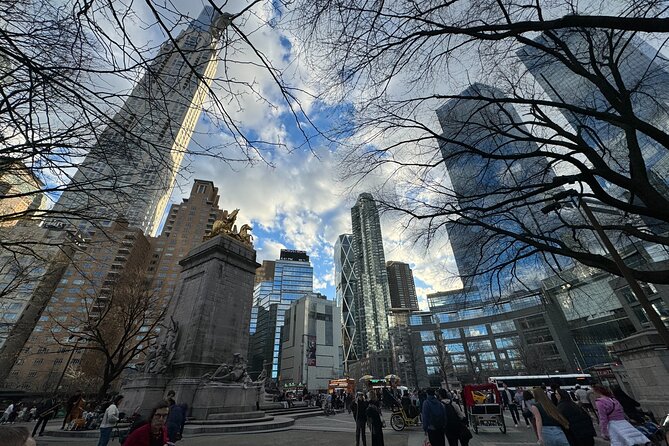
You begin at Columbus Circle, a spot that’s both a gateway and a choke point—perfect for learning how New York organizes movement. You’ll have about 15 minutes here, including the Columbus statue area and a look at the surrounding buildings.
The group takes in the Time Warner Building and the Central Park Tower area while you talk through how this part of Midtown and the park edge relate to each other. This is a smart opener because it sets the visual baseline: tall forms, major sightlines, and a public space that’s always being used.
Possible drawback: Columbus Circle is a busy visual field. Even with headsets, it can be hard to shoot great photos if crowds surge. If photography matters to you, plan for a few quick attempts rather than expecting perfect calm.
Time Warner Center and the Museum of Arts and Design: culture with a business brain
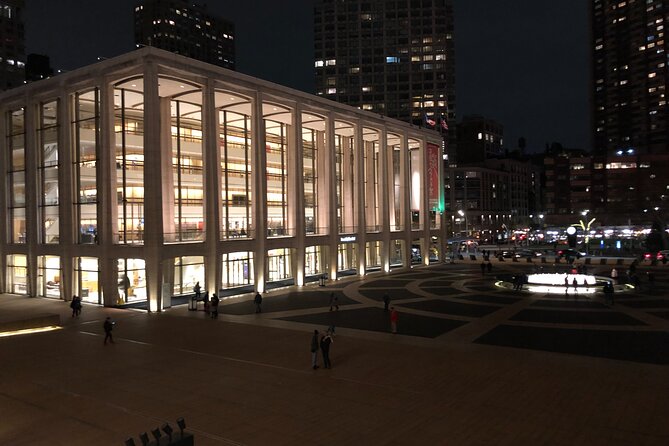
From Columbus Circle you move into the Time Warner Center zone for about 10 minutes. This is where the tour gets interesting if you like the intersection of architecture and identity. You’ll visit and discuss what you’re seeing, with the guide placing it into the larger city picture.
Next comes a stop to see and discuss the Museum of Arts and Design. It’s short, but the value is in the explanation—how this museum fits into the broader Upper West Side environment and why its presence matters in an area that also revolves around major institutions and entertainment.
Here’s what I’d watch for: a lot of architecture tours list famous buildings but don’t teach you what to notice in the facade, the entry flow, or the relationship between the building and nearby public space. This one keeps nudging your eyes toward those practical questions.
Central Park walk-by: the quick lesson that changes your view
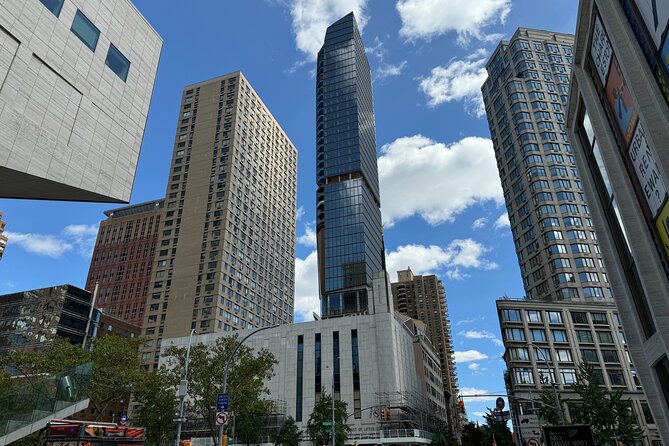
You’ll walk by Central Park for around 10 minutes and discuss it as part of the built environment, not just as scenery. This kind of stop can feel too short at first, but it helps. A park isn’t only green space in New York—it’s a planning force that affects how buildings face the city, where traffic patterns form, and how neighborhoods market themselves.
If you’re used to thinking of parks as separate from architecture, this is the moment where the tour flips that mindset. You start noticing the edge conditions: how streets meet green space, how sightlines pull you toward certain structures, and how the park becomes part of the neighborhood’s architecture.





Lincoln Center: the arts campus you can read block by block
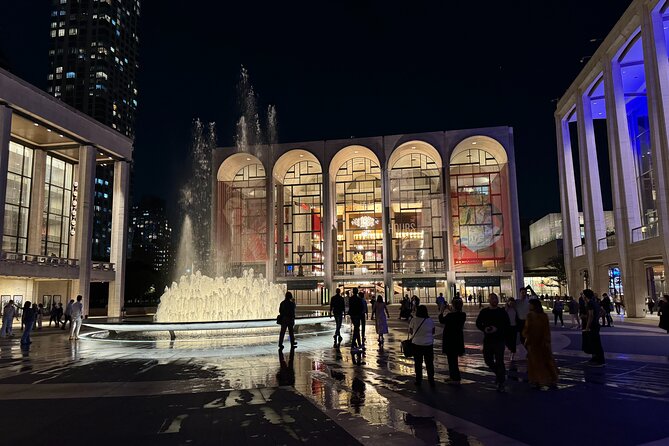
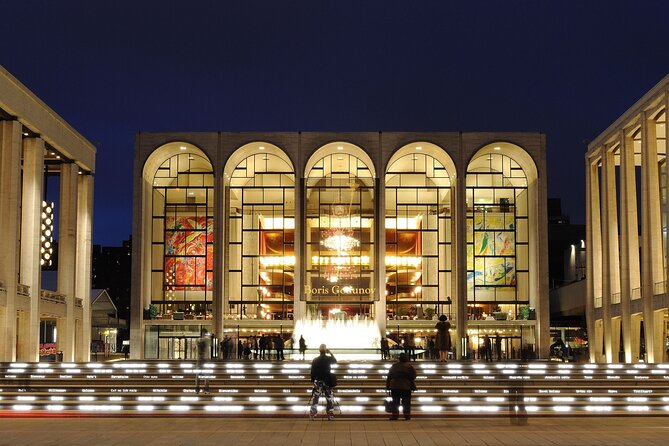
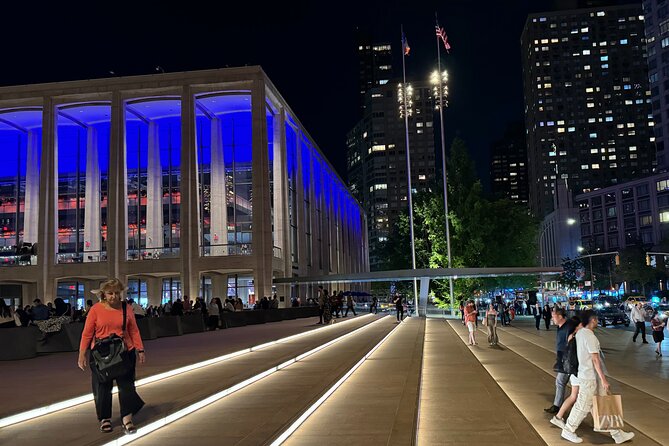
Next is Lincoln Center for the Performing Arts for about 10 minutes, followed by a run of focused visits around key venues. This is one of the biggest payoff sections because Lincoln Center is an entire complex built around performance.
You’ll move to David Geffen Hall (about 5 minutes), then to New York City Ballet (another 5 minutes), and the walk continues to the Metropolitan Opera House (about 5 minutes). After that, you’ll also visit Vivian Beaumont Theater (about 5 minutes).
Even with short times at each stop, you’re not just snapping exterior photos. The guide helps you connect the dots—how different venues reflect their purpose, how the cluster works as a system, and how the complex shapes the streets around it.
A practical note: this is where the headsets really earn their keep. Lincoln Center draws foot traffic, and street-level sound can drown out quick explanations when you’re standing too far away. With headsets, you can stay focused on the details the guide points out.
Juilliard and Alice Tully Hall: where design meets education
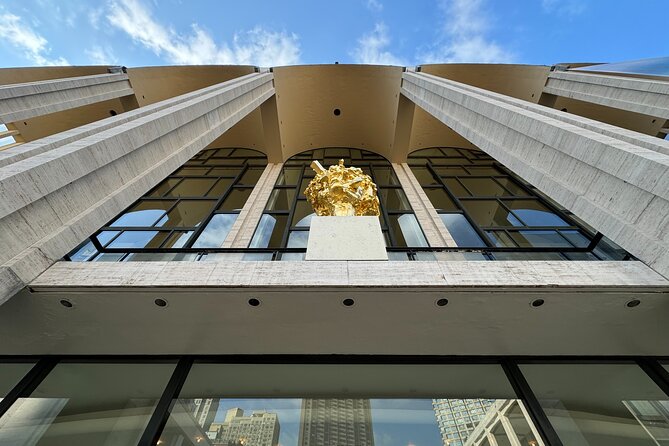
After Lincoln Center, you’ll head toward The Juilliard School, with about 15 minutes here. You’ll look at the school building by Pietro Belluschi and the later extension by Diller and Scoffidio + Renfro.
That combination is exactly the kind of architectural story you hope a tour will surface: a campus that grows in layers and shows how changing eras can coexist. Even if you don’t know the names ahead of time, the tour helps you notice differences in approach and how each phase responds to the needs of the institution.
Then you’ll stop at Alice Tully Hall for about 5 minutes. These quick stops work best if you keep your eyes open for the small cues the guide is pointing out—entrance logic, massing, and the way each building holds space for performers and audiences.
And along the way, you also pass Fordham University. It’s not the main event, but it’s a helpful reminder that the corridor isn’t only entertainment. It’s education too.
Hearst Tower by Norman Foster: ending with a modern icon
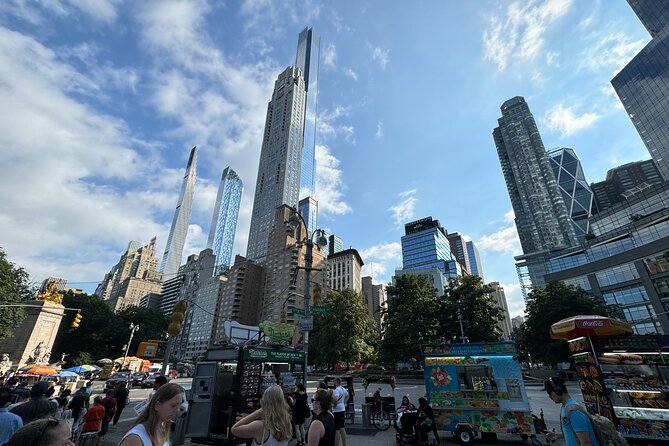
The last major stop is Hearst Tower for about 10 minutes, and you’ll hear about it as Norman Foster architecture. This closing choice is strong. You move from theaters and education spaces into a tower that reads as a modern statement, and it gives your brain a new visual anchor for the walk.
Ending around Hearst Tower also makes practical sense. The tour finishes at 300 W 57th St, close to subway and other transportation, so you’re not left planning a long walk afterward.
If you’re the type who likes to make a mental checklist of what you saw, this is a great finish: a signature modern structure, a clear authorial style, and a neighborhood that stays connected to your earlier stops.
What value you’re really getting for $49
Let’s talk money like a grown-up. $49 per person for a 2-hour guided walk doesn’t buy you entry tickets to famous interiors, at least based on what’s presented here. But it buys you something more useful: a guide who helps you translate what you see into meaning.
You get:
- Multiple major landmarks in a tight radius
- Personal headsets that make the explanation usable in real city noise
- A format built for small-group questions
- A route that ties institutions together instead of treating each stop like a separate postcard
For some travelers, that translation is the difference between walking away with photos and walking away with understanding. If you like architecture, city planning, or just want to see New York with smarter eyes, the value is strong.
Who should book this tour (and who might skip it)
This tour fits you if:
- You care about architecture, design, and how city blocks work
- You want a guided walk that’s short enough for a busy trip
- You’d rather ask questions in a small group than listen from the back of a large crowd
- You’d benefit from headsets to hear explanations clearly in street noise
You might choose differently if:
- You want lots of time inside buildings or museums
- You’re looking for a long, slow photography session
- You prefer purely outdoor sightseeing with lots of independent time
Handy tips to get more out of your walk
You’ll enjoy this most if you come with a light plan. Bring curiosity, not pressure.
- Wear comfy shoes. This is a walking tour even if each stop is brief.
- Keep your phone ready for photos, but pause it when the guide points out details.
- If you’re interested in specific themes—like facade design, how neighborhoods are stitched together, or the purpose of each venue—save your best question for a stop where you’re standing still.
And if you want the tour to feel extra interactive, don’t be shy. In groups where visitors were very design-minded, the guide handled even very specific questions, and the overall pace stayed fun for everyone.
Should you book this Upper West Side art and architecture tour?
If you’re visiting New York for the first time or you just want a smarter way to see a neighborhood, I’d book it. For $49, you get a tight, well-structured loop connecting Columbus Circle, Central Park, Lincoln Center, Juilliard, and Hearst Tower—with explanations you can actually hear thanks to the headsets.
Skip it only if you’re expecting long museum time or a super slow crawl. This is built to help you understand faster, not linger forever.
If your goal is to leave with a clear sense of how the Upper West Side works—visually and functionally—this is one of the easiest ways to do it without getting lost in the details.
FAQ
How long is the New York Upper West Side Art and Architecture Tour?
It runs for about 2 hours, including travel time between stops.
Where does the tour start and end?
The tour starts at Columbus Circle and ends at Hearst Tower (near 300 W 57th St), close to subway and other transportation.
What is included in the $49 price?
The price includes an in-person guide (English, Spanish, French, Italian), all fees and taxes, and professional individual headsets for each guest.
How large is the group?
The tour has a maximum of 15 travelers.
Are there admission fees for the stops?
The stops listed are marked as admission ticket free, so you typically won’t need paid tickets for what you’re doing on this walk.
Which attractions are covered?
You’ll see and discuss highlights including Columbus Circle, Time Warner Center, the Museum of Arts and Design, Central Park, Lincoln Center venues (including David Geffen Hall, New York City Ballet, the Metropolitan Opera House, and Vivian Beaumont Theater), Juilliard, Alice Tully Hall, Fordham University (pass by), and Hearst Tower.
What happens if the weather is bad or I need to cancel?
The experience requires good weather. If it’s canceled due to poor weather, you’ll be offered a different date or a full refund. You can cancel for a full refund up to 24 hours in advance.