REVIEW · NEW YORK CITY
3 Hour Midtown Manhattan Architectural Tour
Book on Viator →Operated by Manhattan Walking Tour · Bookable on Viator
Midtown looks different after this walk. You get a tight circuit of Fifth Avenue luxury, corporate modernism, and big-city planning in just 3 hours, with time to actually look instead of just power-walking past buildings. I love the lobby-first feel and how the guide connects each address to the money, power, and taste behind it. You’ll see Rockefeller Center up close and get context for why these landmarks look the way they do. One drawback: Manhattan noise can make the first minutes a bit hard to process, so plan to start where you can hear well.
This is built for an easy but focused morning stroll. Expect a small group (up to 8), an English-speaking guide, and a mobile ticket for a smooth start at 9:00 am near 768 5th Ave. You’ll move from The Plaza area over to Grand Central Terminal at 89 E 42nd St, with about 15 minutes per stop—enough time to learn the story without dragging on.
In This Review
- Key highlights to look for
- Price and time value for a Midtown architecture sampler
- Starting at The Plaza: where Fifth Avenue mood sets the tone
- Sherry-Netherland and St. Regis: status, borrowed references, and Fifth Avenue power shifts
- Seagram and the GE Building: corporate modernism you can read from the sidewalk
- Waldorf Astoria: luxury scale and the global stage of politics and celebrity
- Rockefeller Center: depression-era jobs, public art, and a master-planned complex
- Empire State Building: the skyline legend, and why the ticket matters
- New York Public Library (Stephen A. Schwarzman Building): architecture that holds 55 million+ reasons to care
- Chrysler Building: Art Deco as power branding in stone and steel
- Grand Central Terminal: the city’s brain for transit, planning, and design
- Pace, group size, and how to hear the guide over Midtown noise
- Who should book this Midtown architecture tour
- Should you book? My take
- FAQ
- FAQ
- How long is the 3 Hour Midtown Manhattan Architectural Tour?
- What is the price per person?
- Where does the tour start and end?
- What time does the tour start?
- Is the Empire State Building ticket included?
- What language is the tour offered in?
- How big is the group?
- Do I need a physical ticket?
- Is there free cancellation?
Key highlights to look for
- French chateau drama at The Plaza, with that film-ready opulence vibe
- Vatican Library-inspired interiors at the Sherry-Netherland
- Corporate modernism in real form at the Seagram Building
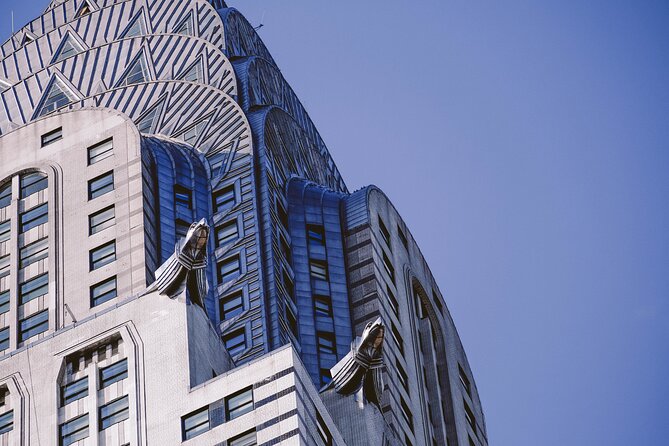
- Art Deco impact from the Chrysler Building’s crown and symbolism
- A planning-and-transport lesson at Grand Central Terminal
Price and time value for a Midtown architecture sampler
At $85 per person for about 3 hours, this tour is best viewed as a curated walking briefing on Midtown’s most influential building moments—without the extra hassle of buying a stack of individual attraction tickets. The itinerary is designed around short, efficient stops (roughly 15 minutes each), so you get a serious dose of architecture and history without spending half your day in lines.
If you’re the type who likes to understand what you’re looking at (style, purpose, and who paid for it), this format pays off. You’re not just seeing names on towers—you’re hearing what those buildings were trying to do: impress, house business, signal status, and shape how the city works.
It’s also a good value because most stops are built around free access to what you can see without separate ticketing. The one notable exception is the Empire State Building, where the tower’s ticket is not included—so you’re getting the exterior/area context as part of the tour plan rather than a paid entry add-on.
You can also read our reviews of more tours and experiences in New York City.



Starting at The Plaza: where Fifth Avenue mood sets the tone
Your morning begins at The Plaza, 768 5th Ave—an address that instantly tells you this part of Manhattan was engineered for spectacle. The Plaza’s design takes on the pomp and opulence of a French chateau. That matters because it’s not just pretty styling; it’s a statement about aspiration. Midtown’s architecture isn’t only about engineering—it’s about image.
Here’s what to watch for in your short time: look for how the building reads as formal and ceremonial, like a stage set. That feeling shows up again and again throughout this route—in hotel lobbies, in landmark public spaces, and later in the way offices signaled corporate power.
And yes, it’s also the kind of place that’s been used in countless films. Even if you don’t care about movie trivia, it helps explain why this area looks so “instantly recognizable” to people who’ve never visited.
Sherry-Netherland and St. Regis: status, borrowed references, and Fifth Avenue power shifts
Next up is the Sherry-Netherland. The standout detail here is the lobby modeled after the Vatican Library. That choice isn’t random. It borrows gravitas from one of the most symbolic repositories of learning and authority in the world, then puts it into a New York luxury-hotel setting.
You’ll likely notice how that reference shapes your expectations. It’s harder to treat the lobby as mere decoration when you know it’s designed to feel like knowledge made beautiful. It’s also a reminder that Midtown’s “modern city life” has always had a performance layer.
Then comes the St. Regis New York, tied to John Jacob Astor IV—one of the wealthiest men in America at the time. The story point that matters: this building helped mark the shift from Fifth Avenue as a strictly exclusive residential strip—often called Millionaires’ Row—into something more commercially fashionable. In other words, the address isn’t just a place to stay or shop. It’s part of the city’s economic transformation.
What to do with your 15 minutes: stand back and let the building’s purpose click. Hotels like this weren’t only built for comfort. They were built to say, silently but loudly, that wealth had a permanent home in Midtown.
Seagram and the GE Building: corporate modernism you can read from the sidewalk
After the luxury-hotel phase, the tour pivots to a different kind of ambition: the clean confidence of corporate modernism.
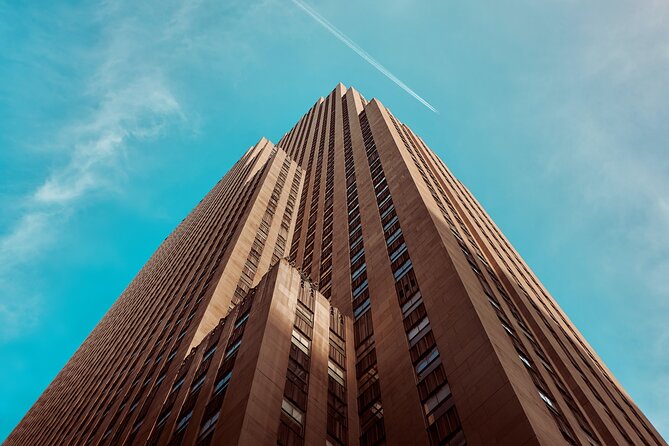
First is the Seagram Building. Its design set standards for office towers worldwide, and it’s often cited as a landmark example of corporate modernism. This is the moment when Midtown starts to look less like theatrical glamour and more like a business machine with an aesthetic.
Then you’ll pass the General Electric Building, originally the RCA Building. The tour highlights the contrast between its chrome-and-marble lobby and the radio waves crown. That specific detail is useful because it shows how design communicated function. This is architecture that wants you to feel the technology story—innovation made visible.
If you like to look for patterns, track this thread: early Midtown sells status through classic references and hotel polish. Later Midtown sells confidence through form, materials, and branding-like design elements.
Waldorf Astoria: luxury scale and the global stage of politics and celebrity
At the Waldorf Astoria, you’re stepping into a different kind of grandeur—less chateau, more international landmark. The tour notes it was designed by the luxury hotel firm behind The Sherry Netherlands, the Pierre, and the Hotel Lexington, which matters because it suggests there was a house style across multiple prestigious properties.
Even more, the Waldorf’s role in American public life is part of the architectural story. It has hosted U.S. presidents, world leaders, famous celebrities, and foreign dignitaries. That’s a key reason the building feels important even if you never go inside: it’s woven into the city’s “stage” for serious visitors.
Practical tip: when you stop here, focus less on trying to absorb every detail and more on noticing how the property’s scale changes the street-level atmosphere. Big luxury hotels don’t just sit on the avenue. They change how the block feels.





Rockefeller Center: depression-era jobs, public art, and a master-planned complex
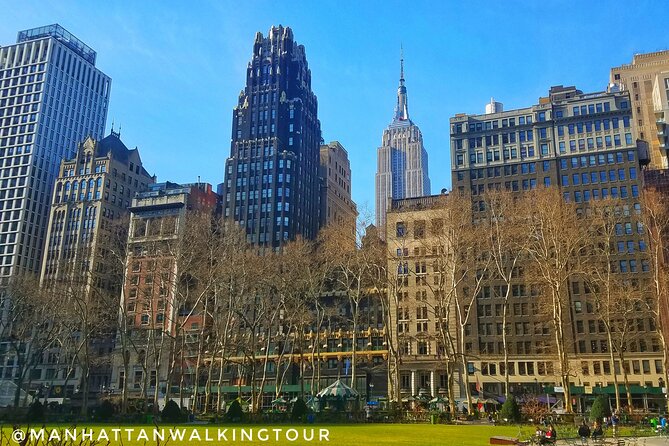
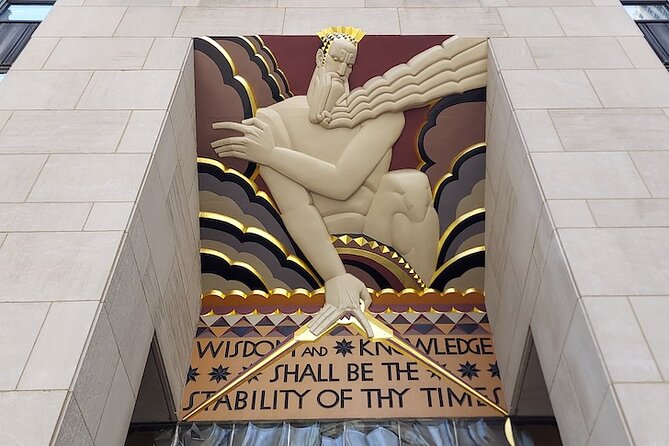
Rockefeller Center is the big set piece on this walk, and it’s more than a cluster of famous buildings. The tour frames it as a complex of 19 commercial buildings covering 22 acres, with over 100 artworks. It was also the largest and most expensive development project of its time—during the height of the Great Depression—and it provided 60,000 jobs.
That context changes how you interpret what you see. Rockefeller Center isn’t only a collection of icons. It’s a rare case where architecture, art, and economic strategy all moved together. In a city full of individual statements, this was planning at industrial scale.
When you’re standing in the area, look for the idea of “designed momentum”—the way the complex reads as one coordinated vision rather than random skyscrapers that happened to grow near each other. If you pay attention to that, the place becomes easier to understand, even if you’ve walked around it many times before.
Empire State Building: the skyline legend, and why the ticket matters
You’ll reach the Empire State Building as the tallest building in the world for 40 years, built in 410 days under budget. The tour also connects the name to Empire State, the nickname of New York.
This is one of those landmarks where the numbers are part of the experience. The speed and cost details make the building feel like a real feat of organization, not just a pretty silhouette.
One important consideration: the Empire State Building ticket is not included in the tour. So plan your expectations accordingly. You’re getting the architectural landmark context and time to view the exterior/area, not a guaranteed ascent.
If you want the observation deck experience, you’ll need to add that separately. Whether it’s worth it depends on your priorities—this tour is clearly built as an exterior-and-lobby learning walk.
New York Public Library (Stephen A. Schwarzman Building): architecture that holds 55 million+ reasons to care
Next comes the New York Public Library’s Stephen A. Schwarzman Building. This stop is a reminder that “architecture” isn’t only about towers. Libraries are civic design too.
The tour points out the library was formed by consolidating the Tilden Trust and the Astor and Lenox libraries on May 23, 1895. When it opened in 1911, it had 350,000 volumes; today it’s grown to over 55 million books and other items stacked over 7 floors.
That’s a lot of scale for a building you can appreciate in a short visit. Here’s what makes the stop valuable for your mindset: you see how architecture can be a long-term container for knowledge—built to outlast fashions and keep going long after the original opening-day excitement faded.
How to use your time well: don’t treat it like a quick “check the box” photo stop. Instead, spend a few minutes letting the building’s purpose make sense. Then you’ll start noticing how design choices align with the idea of permanence.
Chrysler Building: Art Deco as power branding in stone and steel
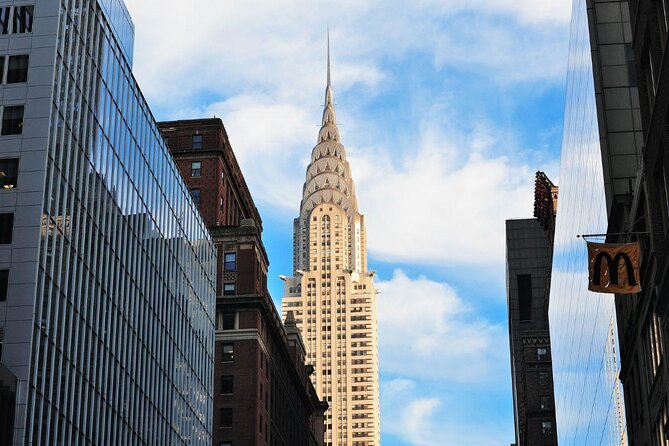
Then you’ll hit the Chrysler Building, tied to automobile titan Walter Chrysler and the strength of his corporation. The tour calls it an often-cited classic example of Art Deco.
This stop is especially good if you’re the type who likes visual clues. Art Deco isn’t shy—its style is about sharp lines, visible identity, and a sense that the building is speaking to you in the language of its era. Even if you’re not naming the stylistic features, you can feel why this structure is so frequently referenced.
The tour also gives Chrysler a punchy nickname: jhotazz in stone and steel. Whether you love that phrasing or find it goofy (fair), the intent is clear: this building is designed to project confidence and corporate muscle.
Grand Central Terminal: the city’s brain for transit, planning, and design
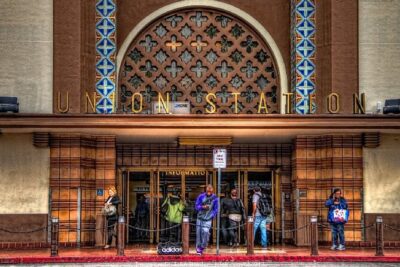
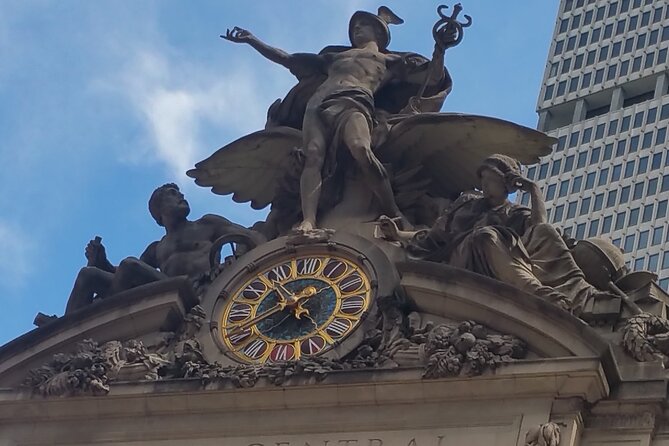
Your final stop is Grand Central Terminal, a world-famous transportation hub with 44 platforms and 67 tracks. The tour’s emphasis here is on innovation—how the terminal’s planning and engineering influenced decades of American architecture, engineering, and even culture.
This is a great ending because it reframes what you thought Midtown was. You start the tour with luxury façades. You work through modern offices and entertainment-scale complexes. Then you end at a place that runs the city day to day.
What to look for: treat Grand Central as both a transit machine and a piece of public architecture. The scale of platforms and track count tells you this isn’t just a station—it’s a system built to keep people moving.
It also makes a smart landing point for your rest of the day. Once the tour ends near Grand Central, you’re positioned right in the middle of rail and subway access.
Pace, group size, and how to hear the guide over Midtown noise
The tour lasts about 3 hours, and the stops are relatively short. That pace is ideal if you’re trying to see a lot without getting exhausted. It’s also a strong match for moderate physical fitness: you’ll be walking, but the structure prevents you from feeling stuck for long stretches.
The small group size (maximum 8) matters more than you might think. In a big group, architecture questions can get lost in the shuffle. Here, you’re more likely to get direct answers and follow-up context—useful when the guide is connecting design choices to real events, like the job impact of Rockefeller Center or the transformation of Fifth Avenue.
One practical note: Manhattan traffic noise can crowd out the first bit of info. If you can, pick a spot where you can face the guide and keep your ear on what’s being said. In reviews, a common theme is that adjusting where you stand at the start can help you absorb more.
Who should book this Midtown architecture tour
This tour is a smart fit if:
- You want Midtown’s biggest names without buying a pile of tickets
- You like history tied to buildings (not history that stays stuck in the past)
- You want a short, organized walk that ends at a major transit hub
- You enjoy a guide who can connect architecture to money, politics, and cultural moments
It may be less ideal if:
- You expect a long, sit-down museum-style experience
- You specifically want paid interior access at every stop (Empire State tickets are not included)
- You struggle with hearing instructions in city noise and don’t like adapting your position
Should you book? My take
If you’re in Midtown for a limited time, I think this is one of the best ways to get oriented fast. For $85, you’re paying for focus: a short walk, a tight route, and context that turns “famous buildings” into understandable stories.
Book it if you want to leave with a clearer sense of how Midtown changed—from Millionaires’ Row glamour to corporate modernism to civic public power at Grand Central and the library. Skip it if your dream day is only about paid entry sites or if you’d rather spend longer inside one museum than sampling many streets.
FAQ
FAQ
How long is the 3 Hour Midtown Manhattan Architectural Tour?
The tour runs for about 3 hours.
What is the price per person?
The price is $85.00 per person.
Where does the tour start and end?
It starts at The Plaza, 768 5th Ave, New York, NY 10019, and ends at Grand Central Terminal, 89 E 42nd St, New York, NY 10017.
What time does the tour start?
The listed start time is 9:00 am.
Is the Empire State Building ticket included?
No. The Empire State Building stop notes that the ticket is not included, while other stops list admission ticket free.
What language is the tour offered in?
The tour is offered in English.
How big is the group?
The maximum group size is 8 travelers.
Do I need a physical ticket?
You’ll use a mobile ticket.
Is there free cancellation?
Yes. You can cancel for a full refund up to 24 hours before the experience start time.