REVIEW · NEW YORK CITY
Custom Private New York Architecture, Art and City Tour
Book on Viator →Operated by Build Tours · Bookable on Viator
New York’s buildings tell stories if you know where to look. This custom private architecture and art walking tour, led by Dr. Ivan Shumkov, is a guided way to read the city block by block, with stops across major neighborhoods and a focus on how design shapes what you feel in public space. I especially loved the way he connects street-level details to bigger urban changes, so you understand why a place exists the way it does.
Two things I like a lot are the private format (it’s only your group) and the professional headsets, which make the explanations clear even on busy corners. One possible drawback: the experience is still a walking tour, and it’s not recommended if you have problems walking or need frequent breaks.
Starting at Washington Square Park, you get a practical launch point—easy to reach, easy to orient yourself—and then you follow the city’s architectural timeline through districts that range from historic landmarks to modern art and big-name design.
In This Review
- Key highlights before you go
- Dr. Ivan Shumkov and the feel of a truly guided NYC walk
- Price and value: $299 per person, and what’s included
- How the private, tailored format changes your day
- Starting at Washington Square Park: where the city’s edges feel close
- Financial District: Battery Park City, Wall Street, and the old-to-new skyline lesson
- East Village, Lower East Side, Bowery, and SoHo: tenements, cast iron, and modern design punch
- Chelsea, galleries, and the High Line arc: from warehouses to big-name institutions
- Midtown: Time Square lights and the skyscraper timeline
- Headsets, photos, and sketching notes: how to turn walking into learning
- Weather and timing: your best route depends on staying outside
- Who should book this NYC architecture and art tour?
- Should you book it? My honest take
- FAQ
- FAQ
- How long is the Custom Private New York Architecture, Art and City Tour?
- Where does the tour start and end?
- Is this a private tour?
- Who leads the tour?
- What languages are available?
- Does the tour include headsets?
- What areas of New York are covered?
- Are admissions included for the stops?
- Do I need to pay tips separately?
- Is the tour suitable if I have trouble walking?
- Can service animals join the tour?
Key highlights before you go
- Dr. Ivan Shumkov’s architectural lens links street details to how New York grew
- Professional individual headsets so you don’t miss key points at intersections
- Only your group participates, which usually means more questions and less rushing
- Real neighborhood contrast: old streets and churches next to contemporary museums and towers
- A flexible, tailored format where your tour can focus on the areas that matter most to you
Dr. Ivan Shumkov and the feel of a truly guided NYC walk
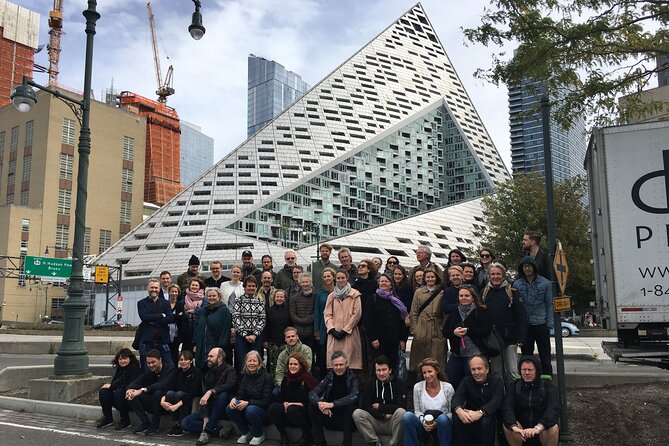
The biggest reason this tour works is the human factor: your guide, Dr. Ivan Shumkov, brings an architect’s perspective without turning the walk into a lecture you have to survive. The tone is calm and professional, and he’s the kind of guide who helps you notice things you would miss if you were just wandering.
If you care about how buildings affect daily life, you’ll like his approach. He tends to explain what you’re actually looking at—materials, form, street relationship, and the urban “why” behind it. That makes the experience more usable later, too, because you start recognizing design patterns as you move around the city on your own.
And because the guide offers multiple languages—English, Spanish, French, and Italian—you’re more likely to get an experience that feels genuinely clear, not just translated.
You can also read our reviews of more tours and experiences in New York City.



Price and value: $299 per person, and what’s included
At $299 per person, this isn’t the cheapest way to see a few neighborhoods. The value comes from what you don’t have to piece together yourself: it’s a private tour, it’s guided on foot, and it includes equipment that makes a big difference—individual headsets—so you can hear the story without standing shoulder-to-shoulder.
The tour also includes all fees and taxes, and it uses a mobile ticket. Tips are not included, so if you’re someone who tips based on service quality (most people do), plan for that.
For me, the practical question isn’t just cost. It’s whether you’ll spend your time wisely. If you want architecture and art explanations that connect directly to what you see, this price starts to make sense fast, especially compared to doing the same walking route without a guide’s framework.
How the private, tailored format changes your day
This is a private tour/activity, meaning it’s only your group. That matters more than it sounds, because you can ask real questions without feeling like you’re competing with ten other people for a few minutes of attention.
You also get flexibility in length: the tour is listed at 2 to 8 hours (approx.), which fits different travel styles. If you like a slower pace with more stops for photos, longer works better. If you’re short on time but still want strong direction, the shorter option can keep you focused.
One more plus: you can bring your camera and even sketchbooks if you feel like turning what you learn into your own visual notes. That’s not a gimmick—it’s a simple way to remember architecture beyond a few photos.
Starting at Washington Square Park: where the city’s edges feel close
Your meeting point is Washington Square Park (Washington Square, New York, NY 10012), and the activity ends back at the meeting point. That loop is handy because it keeps you anchored in a neighborhood where subway access is common and where the vibe helps you mentally switch on when you start the walk.
From here, the tour’s neighborhoods make sense as a sequence: you start in a place tied to NYU energy and campus streets, then you move through districts shaped by changing economic waves—industrial lofts to art spaces, historic finance to memorials and redevelopment, and Midtown’s newer skyscraper ambitions.
Even before the first big landmark, you’ll get oriented quickly. That’s an underrated benefit: you’re not just collecting sights; you’re building a map in your head.
Financial District: Battery Park City, Wall Street, and the old-to-new skyline lesson
The Financial District part of the tour is where New York’s contrasts show up immediately. At the southern tip of Manhattan, east and west sides of the island feel like they converge, and the skyline becomes part history lesson, part business showcase.
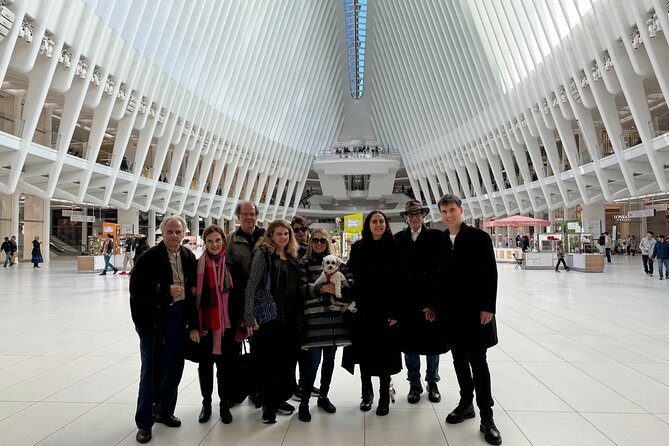
Expect to walk past and talk about key landmarks such as Battery Park City, Wall Street, Frances Tavern, and Stone Street. Then the route builds toward bigger architectural symbols like Trinity Church, the World Trade Center, and the 9/11 memorial.
What I find valuable here is how the design of public spaces affects how you process the city. Historic structures like Trinity Church carry a sense of permanence, while the World Trade Center area reflects more modern ideas about scale, planning, and renewal. The tour connects those threads so the area isn’t just a checklist of famous names.
Possible drawback: this is a high-traffic zone. If you hate crowds or need lots of personal space to hear explanations, plan for it. The headset helps a lot, but the street energy is still street energy.
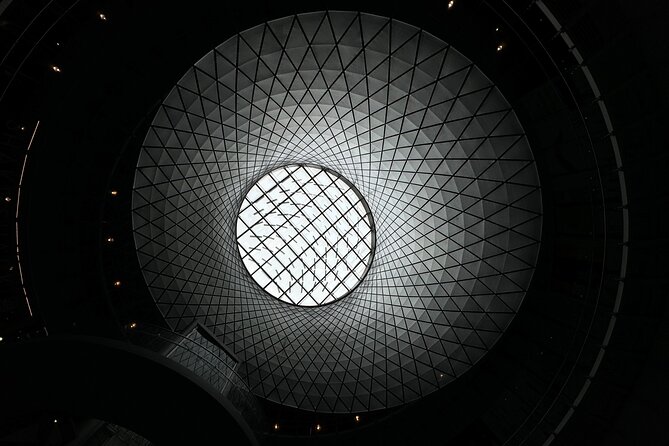
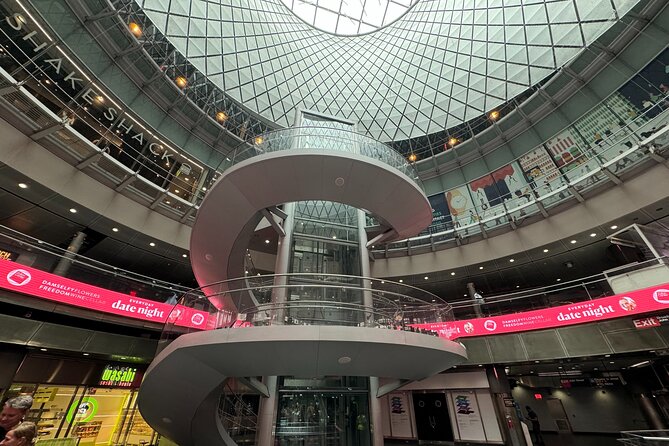
You’ll also touch the Fulton Station area and the redevelopment story along the East River waterfront, which is useful if you want New York beyond just the iconic towers.





East Village, Lower East Side, Bowery, and SoHo: tenements, cast iron, and modern design punch
The next stretch leans into neighborhood identity, especially the way different housing and industry shaped what people could do here. In this part of the city, you get architecture tied to immigrants, small businesses, and changing street economies.
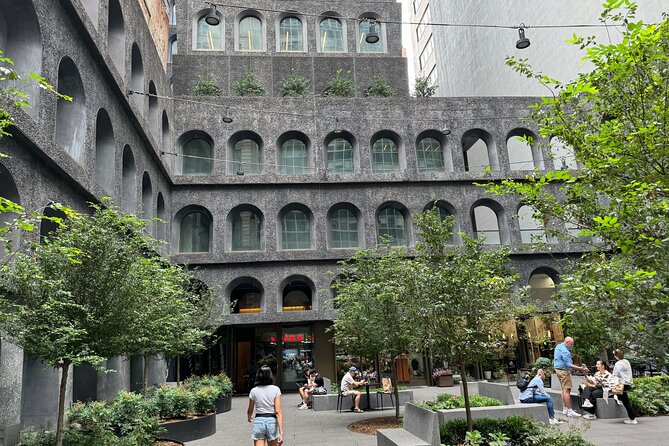
The focus includes tenement apartments associated with the Lower East Side and the industrial character of cast iron spaces linked to SoHo. Those two typologies are a great pairing for understanding how design can support density and street life, even when the city changes its tenants over time.
Then the tour brings it forward into today’s art and luxury design world with specific contemporary examples like the New Museum (SANAA), the Prada flagship boutique (Rem Koolhaas), and Copper Union (Morphosis).
This is one of the most fun sections for architecture lovers because it shows how contemporary architects borrow from older industrial ideas—while also changing materials, light, and how buildings interact with the street. It’s not just modern buildings plopped onto old streets. It’s the city negotiating what it wants now.
If you’re someone who likes to photograph facades and street rhythm, this segment will reward you. You’ll likely notice how different buildings frame storefronts, windows, and entrances in ways that directly affect walking comfort.
Chelsea, galleries, and the High Line arc: from warehouses to big-name institutions
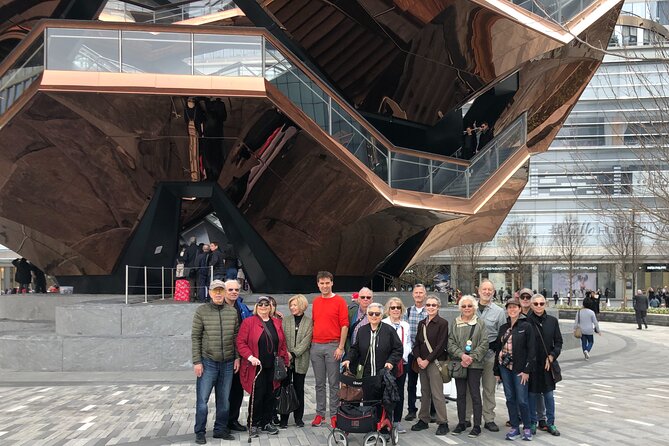
After the Lower Manhattan story, the tour moves toward the West Side and the art-heavy neighborhoods where industrial remnants became cultural magnets. Chelsea is where you see how New York repurposes space, not just builds new.
You’ll spend time around Washington Square Park and NYU buildings as part of the broader West Village/Chelsea area context, then shift into Chelsea’s industrial-to-art transformation. The tour highlights converted warehouses and factories that now hold galleries, which helps explain why these streets feel both creative and structured.
Expect mention of major landmarks and modern anchors such as the Whitney Museum, the Standard Hotel, and the High Line. Then the route connects onward to large contemporary projects and civic-scale developments, including Hudson Yards and the Javits Center.
Here’s what makes this section especially practical: it gives you a lens for understanding why Chelsea can feel like an art world even when you’re standing on a fairly normal street. The architectural choices—volume, window openings, and how the building face meets the sidewalk—support that culture.
If you’re traveling with someone who thinks architecture is boring, this is often where they start paying attention, because the buildings relate to places they already want to visit.
Midtown: Time Square lights and the skyscraper timeline
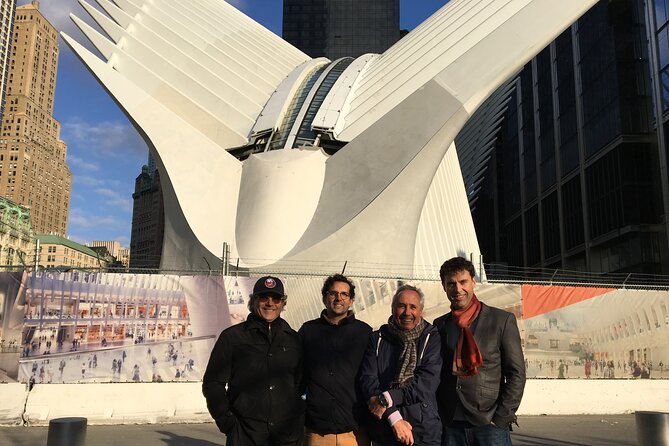
Midtown is the place where the city turns into a vertical billboard. The focus here is the evolution of Midtown Manhattan through architecture, starting with examples from the early twentieth century and moving toward the latest additions.
The tour frames Midtown around the sweep of Time Square energy and the business district’s ascendant skyscrapers. The pacing helps: you’re not just staring up at towers; you’re learning what changed over time—what Midtown prioritized as technology, business needs, and urban planning shifted.
If you want a quick way to understand why Midtown looks the way it does—why certain eras dominate certain blocks—this is a strong section. It also pairs well with an art-and-architecture trip because you start seeing how style and money become physical form in the skyline.
One note: Midtown can be loud and fast. You’ll get better value from the headset here than you might in quieter neighborhoods, since the guide’s explanations can get lost in the noise without it.
Headsets, photos, and sketching notes: how to turn walking into learning
This experience includes professional individual headsets for each guest, which is a big deal for a walking tour in New York. You don’t need to crane your neck or guess what your guide is pointing at when a crowd surges or a bus roars by.
The tour also explicitly welcomes cameras and sketchbooks. If you like to remember visually, you’ll get more out of the stops when you take a few minutes to draw or frame a photo based on what you just learned (street relationship, proportions, entry design). Even basic notes help you keep the architectural story straight later.
Practical tip: wear shoes you’re comfortable with. This is a walking experience, and the itinerary structure (with major zones like Financial District, East Village/SoHo, Chelsea, and Midtown) means you’ll be moving for hours, even if your time window is shorter.
And if you’re sensitive to walking demands, read the accessibility note carefully: the tour isn’t recommended for people who have problems walking.
Weather and timing: your best route depends on staying outside
The tour requires good weather, and if conditions are poor it will be offered on a different date or refunded. Since architecture is often best appreciated up close—facades, entries, street corners—this makes sense.
Timing also matters because the tour length ranges from 2 to 8 hours. If you’re choosing a shorter session, you may want to pick the neighborhood you care about most, since one area can take time to explain well.
Who should book this NYC architecture and art tour?
This tour is a strong fit if you want structured learning while still walking like a real New Yorker. It’s especially good for:
- Architecture and design fans who like practical explanations tied to real buildings
- Art lovers who want the design story behind museums and creative institutions
- First-time NYC visitors who want a guided framework for multiple neighborhoods
- Groups who prefer a private pace and direct Q&A with Dr. Ivan Shumkov
It’s less ideal if you struggle with long walks or need a highly accessible route, since it’s not recommended for people with walking problems.
Should you book it? My honest take
If you want NYC architecture and art explained in a way that makes you look up, slow down, and actually notice, I’d book this. The combination of a private group experience, headsets, and an architect-guided narrative across major districts is exactly the kind of structure that turns a city walk into a real memory.
I’d skip it only if your priority is purely random sight-seeing with minimal walking or you know you won’t handle the mobility demands. Otherwise, at $299 per person, the included guidance and listening setup do the heavy lifting for you.
FAQ
FAQ
How long is the Custom Private New York Architecture, Art and City Tour?
The tour runs about 2 to 8 hours depending on the option you choose.
Where does the tour start and end?
You meet at Washington Square Park (Washington Square, New York, NY 10012) and the tour ends back at the meeting point.
Is this a private tour?
Yes. It’s listed as a private tour/activity, meaning only your group participates.
Who leads the tour?
The experience is led by Dr. Ivan Shumkov.
What languages are available?
The guide is available in English, Spanish, French, and Italian.
Does the tour include headsets?
Yes. The tour includes professional individual headsets for each guest.
What areas of New York are covered?
The stops include the Financial District, the East Village / Lower East Side / Bowery / SoHo area, Chelsea, and Midtown.
Are admissions included for the stops?
The itinerary shows Admission Ticket Free for the listed stops, and the tour also includes all fees and taxes.
Do I need to pay tips separately?
Yes. Tips are not included.
Is the tour suitable if I have trouble walking?
The tour is not recommended for people who have problems walking.
Can service animals join the tour?
Yes. Service animals are allowed.