REVIEW · NEW YORK CITY
Midtown North NYC Architecture Walking Tour
Book on Viator →Operated by Build Tours · Bookable on Viator
Midtown’s skyline turns into a story. This 2-hour Midtown North walking tour is a smart way to connect iconic buildings with the ideas behind them, with a guide you can actually ask questions to. You’ll move through a tight loop of Grand Central, Park Avenue offices, and landmark art-deco and cathedral stops, finishing near Apple Fifth Avenue.
I especially like two parts of the format. The small group size (max 15) makes it easier to hear the guide and get answers, even when the city is loud. The individual headsets keep the walk comfortable and clear, so you’re not pressed into a fog of people trying to listen.
One thing to consider: the explanations can get technical, especially if you’re new to architecture terms. Also, several stops are brief by design, so you’ll see a lot, but you won’t linger long at each location.
In This Review
- Key Things That Make This Midtown North Tour Worth It
- Why This Midtown North Architecture Walk Works So Well in Two Hours
- Meet at the Harvard Club and Start Noticing Details on 44th Street
- Grand Central Terminal: Where Midtown Flexes Its First Impression
- Seagram Building: A Classic Lesson in Modern Office Presence
- JP Morgan Chase Tower: Fast Look at Newer Midtown Office Energy
- Harvard Club of New York City: Same Building, Different Role
- Chrysler Building: Art Deco Spark and a Great Photo Angle
- St. Patrick’s Cathedral: A Cathedral Pause on a Busy Avenue
- Lever House (1953): Mid-Century Modern That Feels Surprisingly Current
- MetLife Building (1962): Architects Collaborative and the Office Tower Story
- MoMA From the Outside: Art Culture Without the Ticket Trap
- Rockefeller Center: Midtown at Full Volume
- Central Park Tower (2023): The New Skyline Ending on a Big Note
- What the Best Guides Do Differently (And Why That Matters)
- Price and Value: Is $59 a Good Deal for This Two-Hour Route?
- When This Tour Might Be a Tough Fit for You
- Should You Book This Midtown North Architecture Walking Tour?
- FAQ
- How long is the Midtown North Architecture Walking Tour?
- Where does the tour start and end?
- What group size should I expect?
- What languages are supported?
- Are admissions included for the stops?
- What’s included in the ticket price?
Key Things That Make This Midtown North Tour Worth It
- Max 15 travelers keeps the pace human and questions possible.
- Headsets for everyone cut through street noise on 5th Avenue and Park Avenue.
- Free admission where listed helps you spend time inside public spaces without extra tickets.
- A guide-led route that links major styles: art deco, mid-century modern office towers, and newer skyscraper design.
- Short, efficient timing (about 5–10 minutes per stop) is great for first-timers who want orientation fast.
Why This Midtown North Architecture Walk Works So Well in Two Hours
If you want Midtown in context, this tour is built for that. You don’t just see famous facades. You learn what design choices were trying to solve, and how those choices shaped the skyline you still recognize today.
The route also fits the way most people tour New York. You get a daytime overview that hits the big names—Grand Central Terminal, Chrysler Building, St. Patrick’s Cathedral, Rockefeller Center—and then fills in the “in-between” corporate classics like Lever House and the MetLife Building. If you’re planning to explore the area on your own later, you’ll remember what you saw and why it matters.
What makes it feel different is the guide setup. You get in-person guidance in English, and you’ll hear clearly through professional individual headsets. That means you spend more time looking up, not straining your ears.
And yes, you’ll still need good legs. This is a walking tour through Midtown streets. The upside is that you cover a lot of ground without the stress of navigating a multi-stop itinerary by yourself.
You can also read our reviews of more tours and experiences in New York City.



Meet at the Harvard Club and Start Noticing Details on 44th Street
The tour starts at The Harvard Club of New York City, 35 W 44th St, and ends at Apple Fifth Avenue, 767 5th Ave. That start/end pairing matters because it keeps you walking through one continuous slice of Midtown rather than bouncing around Manhattan.
The opening location at the Harvard Club gives you a strong “Midtown North” anchor. From there, the walk naturally connects to the cluster of major landmarks along 5th Avenue and Park Avenue where you can actually compare building styles side by side.
Also, with mobile tickets and confirmation received at booking time, you’re not dealing with printouts or last-minute scavenger hunts. This matters on a first visit, when Midtown already feels like a puzzle.
Grand Central Terminal: Where Midtown Flexes Its First Impression
Your first stop is Grand Central Terminal. You get about 10 minutes there, and the tour lists admission ticket-free.
Think of Grand Central as the warm-up. It’s not just a pretty interior; it’s a civic-scale statement. In a short time, you’ll pick up the idea that some buildings weren’t designed only to function—they were designed to project confidence, order, and identity.
This stop also sets your listening mode for the rest of the tour. You’ll hear the guide point out architectural cues so you’re ready to spot patterns when you move to office towers and other landmark structures.
Seagram Building: A Classic Lesson in Modern Office Presence
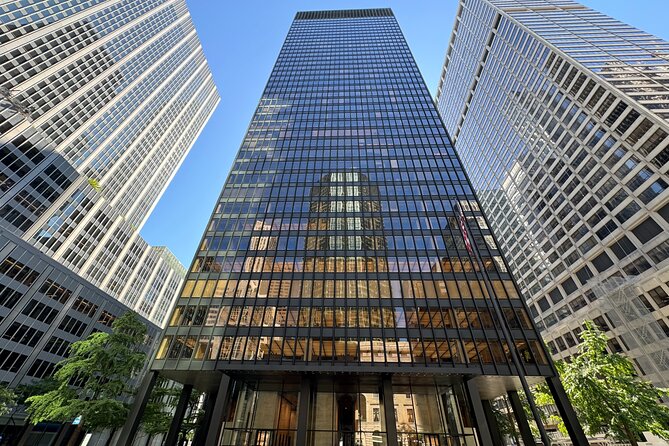
Next up is the Seagram Building with about 10 minutes. The tour is built around a visit and discussion here.
Even if you’re not a building-trivia person, this is one of the stops that helps you re-read Midtown. You start connecting what you see—shape, proportions, materials—with the “why” behind the look. The tour’s format pushes you past surface-level sightseeing.
One practical plus: this is a short stay, so you’re not stuck in a long line or trapped watching time drag. You’re there to get the context, then you move on.
JP Morgan Chase Tower: Fast Look at Newer Midtown Office Energy
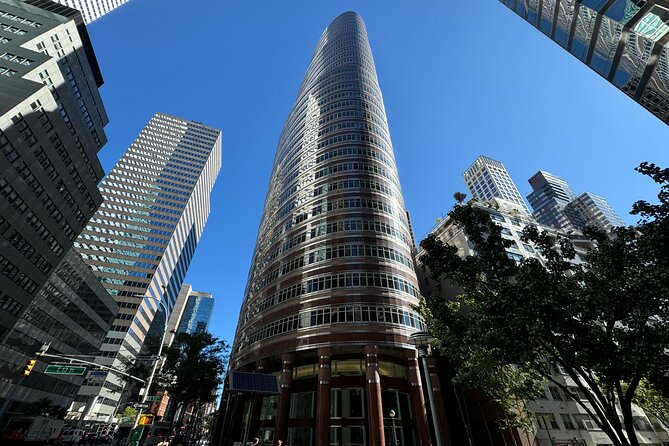
You’ll also make a stop for the new JP Morgan Chase office tower between Vanderbilt and Park Avenue. Time here is listed as about 5 minutes, and it’s marked admission ticket-free.
This is the kind of stop that works best when you travel with the right expectations. You’re not trying to memorize every detail in five minutes. You’re learning the “language” of Midtown high-rises—how they relate to the street, how they read at human scale from across an avenue, and how their presence changes the feel of the block.
If you love architecture history, this quick stop still helps you connect older icons with the newer skyline layer.






Harvard Club of New York City: Same Building, Different Role
The itinerary lists Harvard Club of New York City as a visit with about 10 minutes and admission ticket-free.
Since the tour starts at the Harvard Club address, you’ll likely spend time there early as a true starting point and/or include it as part of the route’s framing. Either way, the goal is the same: anchor Midtown North with an institution building that fits the neighborhood’s character.
It’s also a nice reminder that Midtown isn’t all glass and steel. Some of the most interesting architecture in the area comes from buildings meant for community and identity, not just commerce.
Chrysler Building: Art Deco Spark and a Great Photo Angle

You’ll then get about 5 minutes at the Chrysler Building. The stop notes seeing it by William van Alen (1930) and keeps the admission mark as ticket-free.
This is one of those Midtown icons where a little time goes a long way. You’ll likely focus on the art deco style cues the guide points out, and you’ll understand why the building still feels so readable from street level.
Practical tip: even if you’re not a professional photographer, stand where the building’s lines line up. This tour’s short timing makes it extra important to position yourself well the first time.
St. Patrick’s Cathedral: A Cathedral Pause on a Busy Avenue
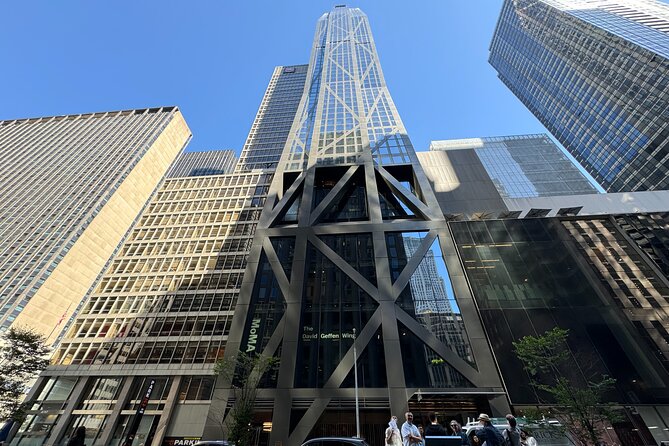
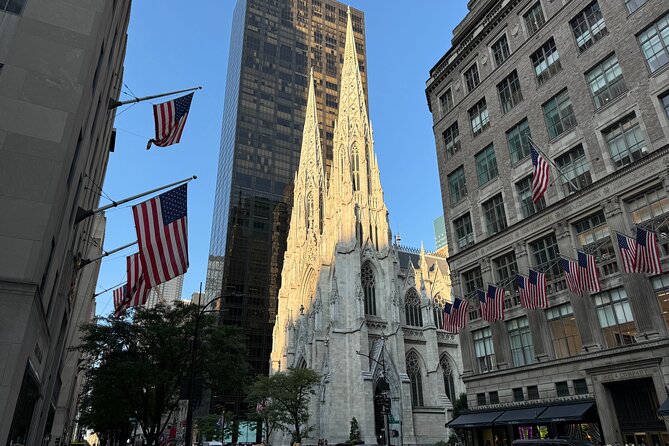
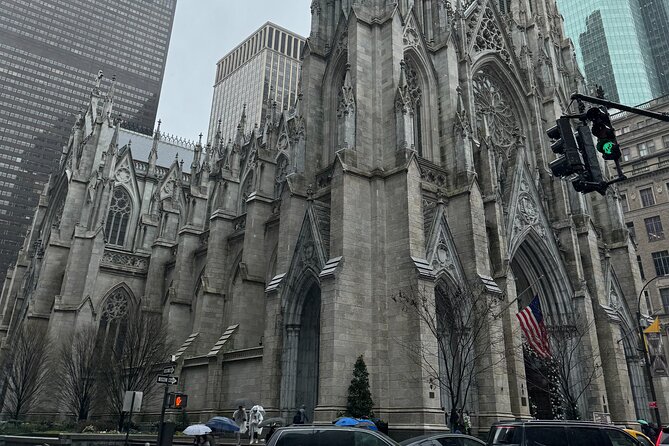
Next is St. Patrick’s Cathedral, with about 5 minutes and admission ticket-free.
This stop adds emotional contrast. The pace of Midtown high-rises can blur together fast. A cathedral break slows your eye. It also helps you see how different building purposes shape architecture—this one is about worship and gathering, not corporate branding.
If you’re building an overall understanding of Midtown North, this is a key checkpoint. It rounds out the skyline story so it’s not only office towers and landmark shells.
Lever House (1953): Mid-Century Modern That Feels Surprisingly Current
The tour moves to Lever House by SOM (1953). The listed visit time is about 5 minutes, ticket-free.
Lever House is a stop I’d point you to if you want to notice how design trends shift while the city still stays recognizably Midtown. In a short window, the guide can help you spot the style markers that make this era different from what came before.
Also, mid-century modern office architecture often reads well from the sidewalk. You don’t need special access to get something meaningful out of the visit.
MetLife Building (1962): Architects Collaborative and the Office Tower Story
You’ll also stop at the MetLife Building by Architects Collaborative (1962). Again, time is listed as about 5 minutes, ticket-free.
This is another quick hit that still pays off because it fits the tour’s core idea: skyline literacy. When you see multiple major office buildings close together—Seagram, Lever House, MetLife—you start recognizing patterns in how each building communicates through form.
Even if you don’t know the architecture language yet, the guide’s explanations are what help you connect the dots.
MoMA From the Outside: Art Culture Without the Ticket Trap
The itinerary includes The Museum of Modern Art (MoMA) for about 10 minutes, but specifically notes: see and discuss from the outside.
This matters for planning. You’re getting the museum’s place in the neighborhood without committing to an indoor visit. For many people, it’s a good trade: you keep the pacing and still get cultural context.
If your priority is the building itself and the city planning around it, this outside view can be the perfect length. If you want to enter MoMA galleries, you’ll likely need a separate stop on another day.
Rockefeller Center: Midtown at Full Volume
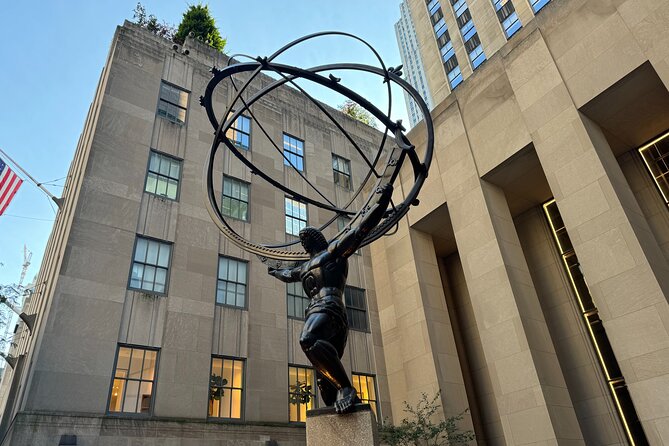
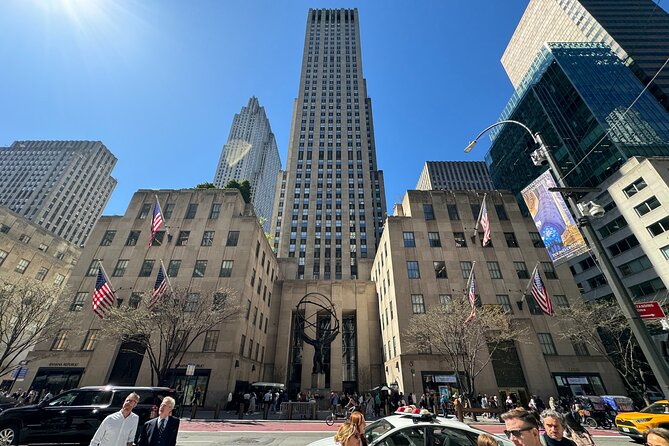
You’ll then reach Rockefeller Center with about 10 minutes.
This is where Midtown shifts from “single building appreciation” to “urban experience.” Rockefeller Center reads like a whole environment, not just a landmark. The tour approach here helps you connect design with how people move and gather in public spaces.
Because the tour keeps you moving, you’ll get a guided way of looking at the complex rather than wandering for ages and losing your focus.
Also, the route includes passing Steinway Hall and Tower by ShoP Architects (2022). That’s a nice contrast point that bridges older landmark Midtown with newer construction you might notice but not fully interpret.
Central Park Tower (2023): The New Skyline Ending on a Big Note
Finally, you’ll visit Central Park Tower by Adrian Smith + Gordon Gill Architecture (2023) for about 5 minutes, ticket-free.
This stop gives your tour a forward-looking finish. You’ve already seen older icons and mid-century office statements. Now you’re seeing how recent tower design still plays the same game—shape, presence, and relationship to the streetscape—just updated for today’s style and scale.
It’s also a good “last question” moment. If you’ve been holding questions for the guide, this is often when they feel most relevant because you’re comparing eras in your head.
What the Best Guides Do Differently (And Why That Matters)
The biggest praise in the experiences comes from the guides themselves. You might run into guides like William, described as a retired architect and current City employee, or Ivan (and in at least one case, Dr. Ivan Shumkov, described with an architecture PhD and Harvard background). Whether it’s those exact names or another guide, the pattern is consistent: you’re not only hearing facts.
You’re getting explanations you can use while walking. The guides help you read buildings like a set of choices—scale, proportion, and style. They also make it easy to ask questions mid-walk, and they’re comfortable with different comfort levels, from total beginners to people with engineering or architecture interest.
One practical perk: some of the tour is designed to feel flexible. In colder weather, for instance, guides may adjust the tour to fit your situation and pace.
Just keep one expectation in mind: the more technical parts can be a lot. If you like practical visuals over terms, tell your guide early. If you do like technical detail, you’ll be in heaven.
Price and Value: Is $59 a Good Deal for This Two-Hour Route?
At $59 per person for an approximate 2-hour walking tour, the value comes from three things you don’t always get in the same package.
First, everything is included except tips—the tour lists all fees and taxes. That removes the annoying surprise math.
Second, you get professional individual headsets, which changes the experience. You hear the guide clearly without crowding in close. That’s not just comfort; it’s how you actually get value out of a short, packed itinerary.
Third, the route is dense with major landmarks. In two hours, you cover Grand Central, Seagram, Chrysler, St. Patrick’s, Lever House, MetLife, MoMA’s exterior, Rockefeller Center, and more. For first-time Midtown visitors, that’s a high “orientation per minute” rate.
Is it expensive compared to self-guided walking? Sure. But for many travelers, the guide time and headset setup make it feel like a guided lecture with actual street-level payoff.
When This Tour Might Be a Tough Fit for You
This isn’t a slow museum visit, and that’s the point. If you want long indoor time at every stop, you’ll need to supplement with additional visits.
Also, several stops are only 5 minutes, and MoMA is outside only. You’re here to connect the bigger picture, not to camp out for deep access.
Finally, if you prefer strictly basic explanations, remember that some guide talk can lean technical. It’s still explained well, but it may not be the most relaxing for someone who wants only simple, no-terms sightseeing.
Should You Book This Midtown North Architecture Walking Tour?
I’d book it if you want Midtown North architecture in an efficient, guide-led format. You’ll get a clear route across major landmarks, plus the real advantage: you can ask questions and hear the answers through headsets instead of shouting over traffic.
If you’re a first-time New York visitor, this also helps you build a mental map quickly. You’ll finish with the ability to look at Midtown and know what style you’re seeing and what ideas shaped it.
Skip it only if your priority is long indoor time at specific attractions, or if technical detail would frustrate you. Otherwise, this tour is a strong value for $59, especially because it’s set up for a small group and designed to keep you moving with clarity.
FAQ
How long is the Midtown North Architecture Walking Tour?
It lasts about 2 hours (travel time included).
Where does the tour start and end?
The tour starts at Harvard Club of New York City, 35 W 44th St, New York, NY 10036 and ends at Apple Fifth Avenue, 767 5th Ave, New York, NY 10153.
What group size should I expect?
The tour has a maximum of 15 travelers.
What languages are supported?
The guide is listed as English, Spanish, and Italian, and the tour is offered in English.
Are admissions included for the stops?
Stops are listed with admission ticket-free in the itinerary, and MoMA is specifically from the outside.
What’s included in the ticket price?
It includes all fees and taxes, an in-person English guide (and other listed languages), and professional individual headsets for each guest. Tips are not included.