REVIEW · LUBECK
Lübeck: Private Historical and Architectural Walking Tour
Book on GetYourGuide →Operated by Travmonde OÜ · Bookable on GetYourGuide
Brick ghosts and sweet bites in Lübeck. This private 90-minute walk pairs Holsten Gate street-level storytelling with big views over medieval brick roofs, salt storehouses, and the city’s seven-spire skyline.
I also love the stop at a traditional marzipan bakery, where you taste different varieties while your guide connects the sweet to Lübeck’s identity. The only real catch: it’s a walking route on uneven ground, and it’s not suitable for people with mobility impairments or wheelchair users.
In This Review
- Key things I’d circle before you go
- Holsten Gate to Town Hall: a 90-minute route that actually makes sense
- Holsten Gate built in 1464: why you start at the city’s boundary
- The UNESCO cobbled-street walk and the “City of Seven Spires”
- Buddenbrook House and the Mann brothers in a real neighborhood
- St. Mary’s Church and the little devil outside the church wall
- Marzipan tasting at a traditional bakery: more than a sweet break
- Lübeck Town Hall: the UNESCO finish that feels like the city’s power center
- Price and value: $265 per group up to 15 for 90 minutes
- Who this Lübeck walking tour fits best
- Small practical tips for a smooth 90 minutes
- Should you book this Lübeck private historical and architectural tour?
- FAQ
- How long is the Lübeck private historical and architectural walking tour?
- Where does the tour meet?
- What sights are included on the walk?
- Is this tour private?
- What language(s) are the guides available in?
- How much does the tour cost?
- Are entry tickets included?
- What should I wear or bring?
- Is the tour suitable for wheelchair users or people with mobility impairments?
- Is there a cancellation window?
Key things I’d circle before you go
- Holsten Gate (1464) as a freedom symbol: gothic brick that still feels like a city boundary you can touch.
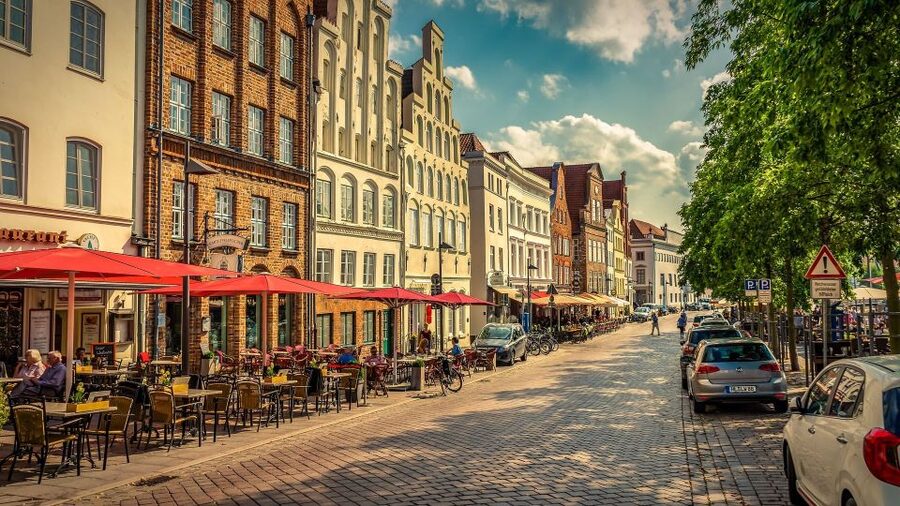
- UNESCO old-town streets and the City of Seven Spires: a skyline you’ll keep spotting again and again as you walk.
- Buddenbrook House with Thomas and Heinrich Mann: literature history mapped onto real doors and real neighborhoods.
- St. Mary’s Church and the little devil outside: an easy-to-remember story attached to a major brick-gothic landmark.
- Marzipan tasting plus background: you don’t just eat; you learn why it matters here.
- Town Hall finish at UNESCO level: a beautiful closing photo and a sense of where the city’s power sat.
Holsten Gate to Town Hall: a 90-minute route that actually makes sense
This tour is built like a guided “why this place looks this way” walk. You start right where Lübeck once used its wall line as a checkpoint, then move into the medieval core where merchants grew wealthy, churches shaped skylines, and writers put local streets into national conversation.
You’ll cover major sights at an easy pace, but it’s still a true walking experience. That matters because Lübeck’s charm is in the small-scale streets and brick details, not just a single big monument.
With a private guide and a small group size (up to 15), you can ask questions and get explanations that connect the dots fast. The payoff is that you leave with more than photos. You leave with a mental map of how Lübeck’s trading wealth, architecture, and famous names all fit together.
You can also read our reviews of more tours and experiences in Lubeck.
Holsten Gate built in 1464: why you start at the city’s boundary
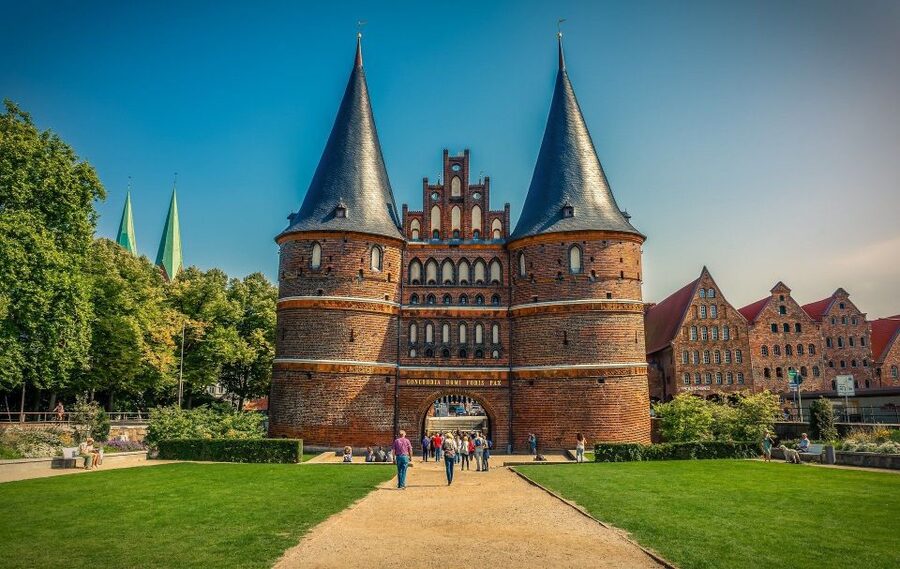
Meet your guide in front of Holsten Gate near Museum Holstentor. Even before you learn the details, the gate does its job: it frames Lübeck as a city that once had edges you could feel.
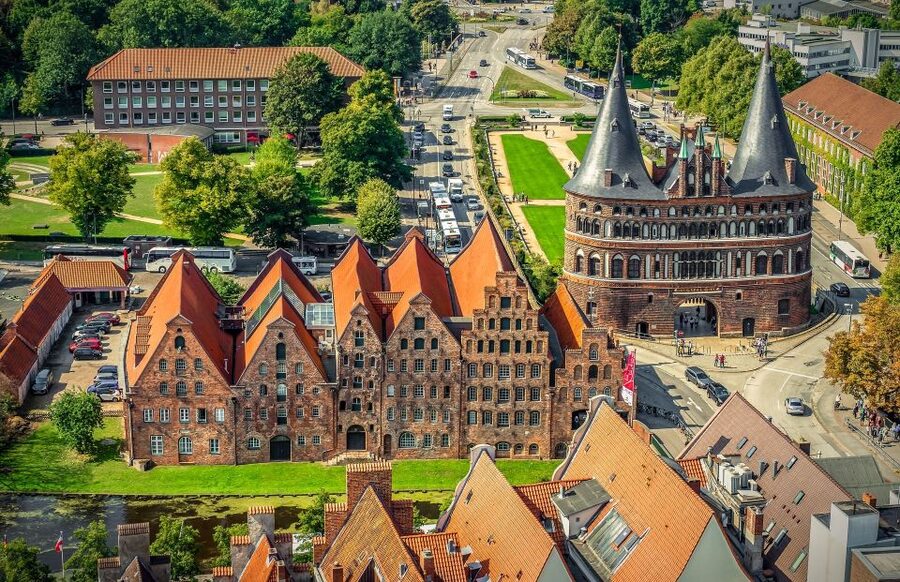
Holsten Gate is a gothic brick structure built in 1464 and described as one of the last remaining gothic relics of Lübeck’s medieval fortifications. It’s also one of two remaining city gates. That combination is the key: it’s not just pretty. It’s a surviving piece of how the city once controlled entry and symbolized identity.
As you stand there and look toward the historic skyline, your guide helps you see what you’d miss on your own. You’re not just noticing towers. You’re spotting the pattern of churches, salt storehouses, and merchant-built brick homes that reflect how the city’s wealth was stored, traded, and displayed.
The UNESCO cobbled-street walk and the “City of Seven Spires”
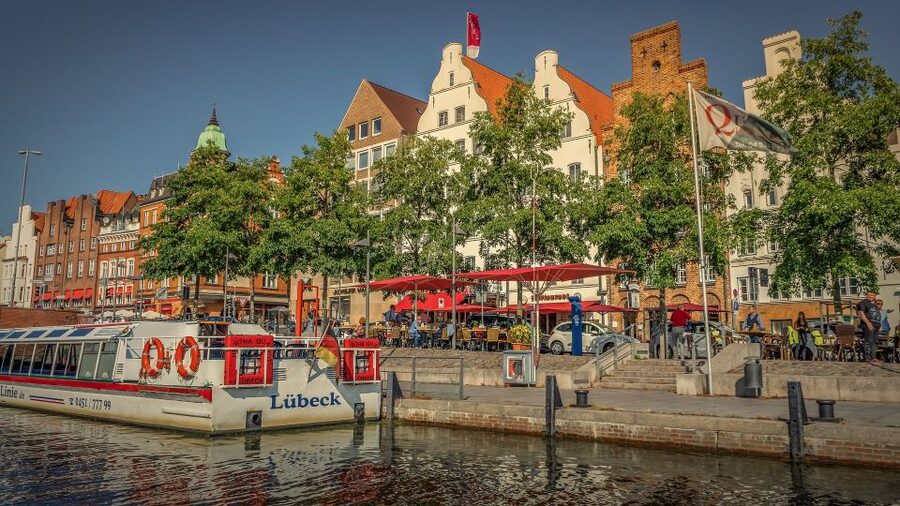
Lübeck is often called the City of Seven Spires, and on this walk you’ll feel why. The skyline isn’t random. Those church towers act like landmarks that keep guiding you through the old center.
As you move away from Holsten Gate, you’ll get panoramic views that bring the historic skyline into focus: five churches in view, plus salt storehouses and the brick homes tied to wealthy merchant families. The tour explains the economic side too, especially the impact of trading routes along the Baltic Sea. That part matters because Lübeck’s architecture isn’t only about religion and romance. It also reflects money, ships, goods, and the need to impress business rivals.
Staying in motion also helps you understand the UNESCO World Heritage Site feel. You’re walking the kind of cobbled streets where the city’s “old texture” doesn’t vanish the moment you look away. It’s the kind of place where you’ll spot brickwork patterns, rooflines, and church placements that make more sense once a guide points out how the city grew.
One practical note: this is a walking route. Wear comfortable shoes and keep your pace steady. If your legs are tired, the stories lose their punch.
Buddenbrook House and the Mann brothers in a real neighborhood
Next you head to Buddenbrook House. This is where Lübeck shifts from medieval trading city to cultural landmark in an unusually personal way.
Your guide connects the building to German writers Thomas Mann and Heinrich Mann, following their footsteps as the walk turns into literary geography. Instead of treating literature as something separate from place, you see how specific addresses and streets help writers shape what readers imagine.
Buddenbrook House works well on a guided walk because it’s easy to feel like you’re just looking at another historic façade. With the guide’s framing, the house becomes a clue about Lübeck’s social world—who had access, who benefited, and how city life shaped the written page.
If you like European architecture, you’ll enjoy the brick-and-stone atmosphere here. If you’re more into books, you’ll enjoy that the guide ties famous names to real streets, so the setting stops being generic and starts being Lübeck.
St. Mary’s Church and the little devil outside the church wall
Then you move to St. Mary’s Church, the third largest brick gothic church in Germany. That size detail helps you orient your expectations. This isn’t a small church stop for a quick photo. It’s a major brick-gothic landmark that dominates the surrounding streetscape.
Your guide shares an entertaining story about a little devil who resides outside the church. It’s exactly the kind of detail that makes historic architecture more memorable. After hearing it, you’ll probably look for that figure when you see the exterior again.
This stop also ties back to the merchant side of Lübeck. Near the church and in the surrounding Merchants’ Quarter area, your guide explains how church presence and city wealth shaped everyday life. You start to understand why the city invested in towering brick forms: they were public statements, visible from the street and from far across the skyline.
If churches feel a bit like “just churches” to you, don’t skip this. The story element is built to keep your attention on one specific exterior detail, which makes the whole stop feel smaller and more human.
Marzipan tasting at a traditional bakery: more than a sweet break
Now comes the part that many people remember for the right reasons: marzipan tasting. Your guide takes you to a traditional marzipan bakery where you can taste-test different varieties.
The best part isn’t only the sampling. The guide explains the significance of this sweet in Lübeck, linking it to local identity rather than treating it like a random souvenir. When you learn the “why” before you taste, the flavors feel like part of the same story as the brick buildings and trade routes.
You’ll probably notice how different varieties taste and how sweetness, texture, and almond intensity can vary. That makes the tasting more than a quick bite. It becomes a practical lesson in how a local product develops its own range.
This stop also gives your legs a short reset. For a 90-minute walk, that matters. It keeps the day from turning into nonstop “look, listen, walk” and helps you stay sharp for the final highlight.
Lübeck Town Hall: the UNESCO finish that feels like the city’s power center
You wrap up at Lübeck’s Town Hall, considered one of the most beautiful town halls in Germany and also a UNESCO World Heritage Site. Finishing here is smart because it shifts the story from skyline and street detail to civic identity.
Town halls are where a city performs confidence. This one earns its reputation through architecture and through what it signals about Lübeck’s governance and status. After walking past gates, churches, and merchant-influenced streets, you’re ready to connect the dots: local power shaped the city’s physical look.
It’s a great “final framing” stop. Even if you’re taking lots of photos, you’ll likely remember it as the place where the tour’s themes—trade-driven wealth, visible authority, and UNESCO-level historic value—coalesce.
If you’re planning a lunch or coffee next, this ending point is convenient because it puts you back in the heart of the action without stretching the schedule.
Price and value: $265 per group up to 15 for 90 minutes
The price is $265 per group up to 15 for a 90-minute private walking tour. That number looks high if you compare it to a public walking tour. But the value shifts fast when you think in group terms.
If you have a small group, you pay more per person. If you’re splitting cost across a full group, the per-person cost drops dramatically. Either way, you’re buying something you can’t get from a self-guided stroll: an explanation tailored to what you’re seeing right now—why Holsten Gate was built, what merchant wealth did to the city’s buildings, and how local culture like marzipan fits into the same narrative.
The other value piece is time. This is 90 minutes. You’re not spending half your day commuting between sights. You’re spending it on a connected route that keeps your attention focused.
Also, since entry tickets aren’t included, you’re mainly paying for the guided walking experience. That’s often a good deal for major historic exteriors and exterior stories where tickets don’t do much for the value.
Who this Lübeck walking tour fits best
This tour is a strong match for people who like walking cities with clear explanation. You’ll enjoy it if you care about brick Gothic architecture, you want context for Lübeck’s trading-era growth, and you like learning how local culture connects to famous names like Thomas Mann and Heinrich Mann.
It’s also a good fit for mixed-interest groups. Architecture fans get Holsten Gate, St. Mary’s, and the Town Hall. Food lovers get marzipan tasting. Literature fans get Buddenbrook House. Even if you only care about one of those themes, the rest acts like supporting proof.
What won’t work as well: anyone who needs step-free routes or wheelchair access. It’s not suitable for people with mobility impairments or wheelchair users, so plan another option if that’s relevant for you.
Small practical tips for a smooth 90 minutes
Bring comfortable shoes and comfortable clothes. Lübeck is a place where your feet do most of the work, so don’t rely on fancy footwear.
Meet in front of Holsten Gate near Museum Holstentor. Since it’s an easy-to-find starting landmark, you should be able to get oriented quickly. One useful lesson from a past booking: guides can sometimes be hard to spot at first. To avoid that awkward moment, check your guide’s details before you set off, and be ready to confirm the name of your booking.
This is a private group with live guiding in German and English. If you have a language preference, pick the option that matches, so questions don’t get stuck in translation.
Finally, plan for a steady pace. This tour packs several major stops into 90 minutes, and it works best when you’re ready to walk and listen without long breaks.
Should you book this Lübeck private historical and architectural tour?
If you want Lübeck to make sense quickly, I’d book it. The combination of Holsten Gate, St. Mary’s Church, Buddenbrook House, a marzipan tasting stop, and the Town Hall gives you the city’s architecture, economy, culture, and famous names in one tight route.
I’d especially choose it if you like guided storytelling that points out small details you’d otherwise miss—like the little devil outside St. Mary’s or the way trade routes help explain why merchant power shows up in brick buildings.
Only skip it if mobility is a concern. Otherwise, this private format is a practical way to see the highlights without turning your day into a scatter of unrelated stops.
FAQ
How long is the Lübeck private historical and architectural walking tour?
The tour lasts 90 minutes.
Where does the tour meet?
Meet in front of Holsten Gate near Museum Holstentor.
What sights are included on the walk?
You’ll pass by or visit Holsten Gate, Buddenbrook House, St. Mary’s Church, a traditional marzipan bakery, and end at Lübeck Town Hall.
Is this tour private?
Yes. It’s a private group tour.
What language(s) are the guides available in?
The live tour guide is available in German and English.
How much does the tour cost?
It costs $265 per group up to 15 people.
Are entry tickets included?
No. Entry tickets are not included.
What should I wear or bring?
Wear comfortable shoes and comfortable clothes.
Is the tour suitable for wheelchair users or people with mobility impairments?
No. It’s not suitable for wheelchair users or people with mobility impairments.
Is there a cancellation window?
Yes. You can cancel up to 24 hours in advance for a full refund.