REVIEW · BARCELONA
Barcelona: Wonders of Gaudi Bike Tour
Book on Viator →Operated by Fat Tire Tours Barcelona · Bookable on Viator
Gaudí on a bike is a great way to see Barcelona. This tour strings together famous and lesser-visited Modernista buildings with explanations that make the city click, and it ends with a skip-the-line stop at the Sagrada Familia basilica. I also love the small-group feel (max 9), which keeps the pace relaxed enough to absorb details instead of sprinting from façade to façade. One catch: most other sights are quick stops and speeches, so this is not a tour where every building comes with an extended interior visit.
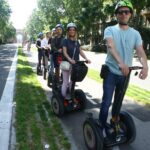
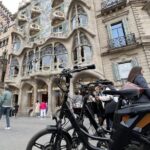
You’ll ride with a live guide through Ciutat Vella and beyond, picking up your bike near Plaça Sant Jaume and rolling along the route with helmets available (optional). The vibe is easygoing but structured: short stretches of cycling, then brief on-the-spot talks so you know what you’re looking at. It runs rain or shine, so bring clothing that can handle a surprise sea breeze.
In my favorite parts of this kind of tour, the guide connects the dots between Gaudí’s life, the neighborhood mood, and why his architecture looks the way it does. Here, that storytelling is a big deal, and the guides earn praise—Marco for making the tour fun and informative, Misha for handling preteens without rushing, and Alvaro (a Texan resident guide) for passionate, veteran-level Gaudí tours. If you want a clear route, a guide’s voice in your ear, and fewer “guess what this means” moments, this fits.
In This Review
- Key highlights to know before you ride
- Why a Gaudí bike tour feels better than a building crawl
- Getting started in Ciutat Vella: smooth logistics, real time
- The Modernista route: what you’ll see, and what to look for
- Museu d’Art Contemporani de Barcelona (Raval context)
- Palau Guell: Gaudí’s early big statement
- Casa Amatller and Casa Lleo i Morera: Mançana de la Discòrdia
- Casa Mila (La Pedrera): the one that keeps surprising you
- Hotel Casa Fuster and CaixaForum Macaya: Modernista glow with today’s use
- Casa Batllo: more discord, more storytelling
- Torre Bellesguard: a Gaudí surprise in plain sight
- Basilica de la Sagrada Familia: the moment you came for
- Castle of the Three Dragons and Parc de la Ciutadella area
- Mercat del Born: history around market life
- Arc de Triomf: a fairytale gate with a practical purpose
- Sagrada Familia skip-the-line: what it changes for you
- Pace, comfort, and the lunch reality
- Price check: is $42.69 a good value?
- Who this tour is best for
- Should you book Barcelona: Wonders of Gaudí Bike Tour?
- FAQ
- How long is the Barcelona Gaudí bike tour?
- How much does it cost?
- What’s included in the tour?
- Where does the tour start?
- Where does the tour end?
- Does the tour run rain or shine?
- What’s the maximum group size?
- FAQ
- Is lunch included?
- Do I need to pay for entry to all the buildings?
- Can I cancel for a refund?
- Is there a mobile ticket?
- Is tipping the guide required?
- Do I need to book far ahead?
- Do I have to bring my own bike or helmet?
Key highlights to know before you ride
- Skip-the-line Sagrada Familia pass so you spend less time waiting and more time looking up
- Max 9 riders for a calmer, easier pace through the city’s streets
- Modernista route planning: famous Gaudí plus key neighborhood context along the way
- Bike + helmet provided (helmet is optional, bikes are included)
- Lunch stop at a local tapas restaurant is built in, but you pay your own meal
Why a Gaudí bike tour feels better than a building crawl
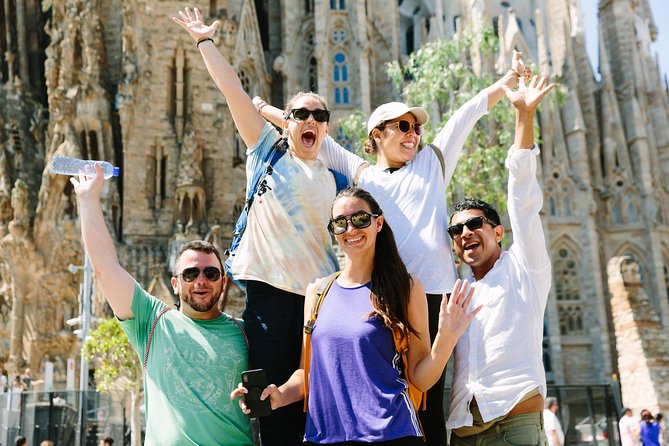
Barcelona can be intense on foot. You can walk miles and still end up with blurry memories because you only see each building for a minute or two. A bike tour solves that problem. You get movement between stops without burning your legs, and the guide controls the timing so you’re not overwhelmed.
The biggest value here is the combination of two very different kinds of attention: quick, visual “spot the details” moments along the route, then a bigger guided moment at the Sagrada Familia. That matters because Gaudí’s work is all about symbolism, shapes, and construction ideas—not just pretty façades.
Also, this tour isn’t just a greatest-hits parade. You’ll ride past and stop at buildings tied to the broader Modernista movement, like La Mançana de la Discòrdia neighbors and industrial-era influences connected to Palau Guell. That context makes the city feel less like random architecture and more like one long conversation.
You can also read our reviews of more tours and experiences in Barcelona.

Getting started in Ciutat Vella: smooth logistics, real time
Meet at Carrer de Marlet, 4 in Ciutat Vella. From there, you’ll walk briefly to the bike pickup point (Unlimited Biking, formerly Fat Tire Tours) and then you’re rolling. The tour lasts about 3 hours 45 minutes, which is a sweet spot for a first Barcelona day: enough time to cover a cluster of sights, not so long that you’re stuck out past the evening.
Helmets are provided but optional. I like that you can choose what feels comfortable. You’ll also get a mobile ticket, which is convenient if you don’t want to manage paper tickets while biking around.
One practical tip: wear shoes that grip well on city streets, and plan for the fact that you’ll be stopping and starting. This is a guided ride, not a slow sightseeing stroll, so your body feels the rhythm—even if the guide keeps it relaxed.
Group size is capped at 9 riders. That’s small enough to actually hear your guide, and it keeps questions from feeling like they’re swallowed by a crowd.
The Modernista route: what you’ll see, and what to look for
This is a Gaudí-heavy route, but it’s also a Barcelona neighborhood tour. The guide builds in talks that connect buildings to people, power, and style choices—especially the Modernista look that shaped the late 1800s and early 1900s.
Here’s how the sights work in practice, stop by stop:
Museu d’Art Contemporani de Barcelona (Raval context)
You start with a short talk near the Museu d’Art Contemporani de Barcelona. The focus is the Raval—how the area evolved, and why it matters for understanding Barcelona beyond the postcards. Even if you don’t go inside, this sets the stage. You’ll notice you’re not just chasing one architect’s signature; you’re riding through a city that changed fast.
Palau Guell: Gaudí’s early big statement
Palau Guell is Gaudí’s first major building in the city. That timing is a big clue. When you see it early in the tour, it helps you understand that Gaudí wasn’t an overnight genius—he built a foundation first, then refined his ideas over years. This is an exterior stop, but it’s the kind where you’ll likely spot structure and design choices that feel strangely bold for the period.
Drawback to note: because it’s not a long visit, you’ll want to take photos quickly and then listen. This is less about lingering and more about learning what to notice.

Casa Amatller and Casa Lleo i Morera: Mançana de la Discòrdia
Then you hit the classic Modernista neighborhood punchline: La Mançana de la Discòrdia (the Block of Discord). You’ll stop at Casa Amatller and Casa Lleo i Morera, both tied to that idea of competing, stylized façades next to each other.
This is a fun segment because the guide can explain why these buildings don’t all look “the same but prettier.” They’re different answers to the same question: how should Barcelona look as it modernized?
Casa Mila (La Pedrera): the one that keeps surprising you
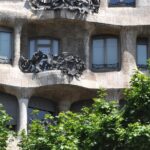
Casa Mila—La Pedrera—lands next. It’s widely known, but it still works on a guided tour because you’re not just seeing a famous building. You’re learning why it’s unusual, and how it fits UNESCO World Heritage status (declared in 1984). You’ll stop briefly, so you’ll be looking at the unusual forms and thinking about them with your guide’s explanations in your head.
Practical reality: if you’re hoping for a full interior wander, this isn’t the format. Most of your time here is short and talk-led.
Hotel Casa Fuster and CaixaForum Macaya: Modernista glow with today’s use
Hotel Casa Fuster gets a quick stop speech. Then you pass by CaixaForum Macaya for another quick talk. These interruptions are actually useful. They show how Modernista-era design can survive and adapt, not just freeze as “old stuff you look at.”
If you like architecture that’s still part of daily life, these stops help you see the buildings as more than museum props.
Casa Batllo: more discord, more storytelling
Casa Batllo is another stop where the guide ties your visit back to La Mançana de la Discòrdia. Because you’ve already seen multiple houses in the block, Batllo starts to feel like the climax. You’re more prepared to compare shapes, ornament, and the overall mood rather than treating each façade as a separate souvenir photo.
Torre Bellesguard: a Gaudí surprise in plain sight
Next up is Torre Bellesguard, which Gaudí designed and which has the feel of a modernist castle. This stop is valuable because it’s less “everyone photo here” and more “wait, that’s Gaudí?” in a good way. Again, you won’t have a long sit-down visit here, but the guide framing makes the architecture easier to read.
Basilica de la Sagrada Familia: the moment you came for
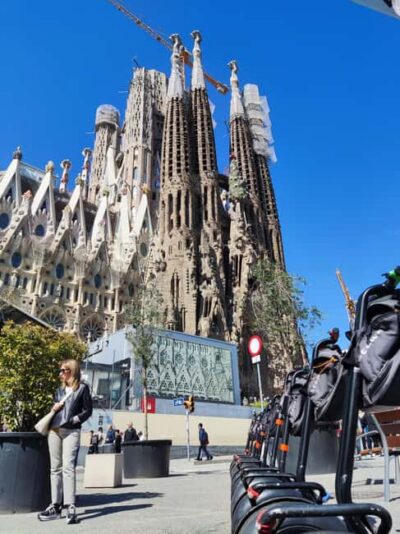
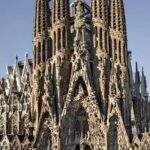
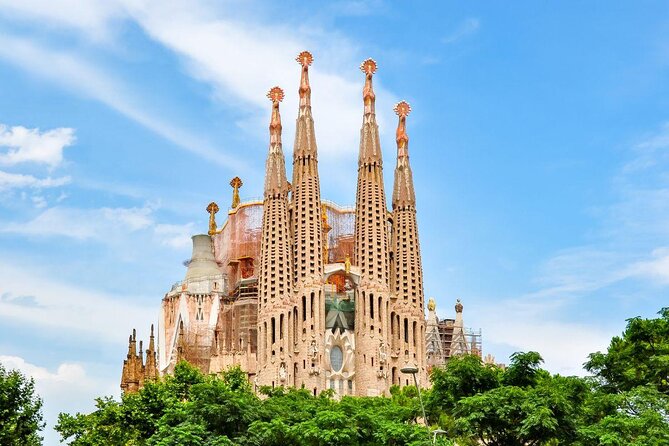
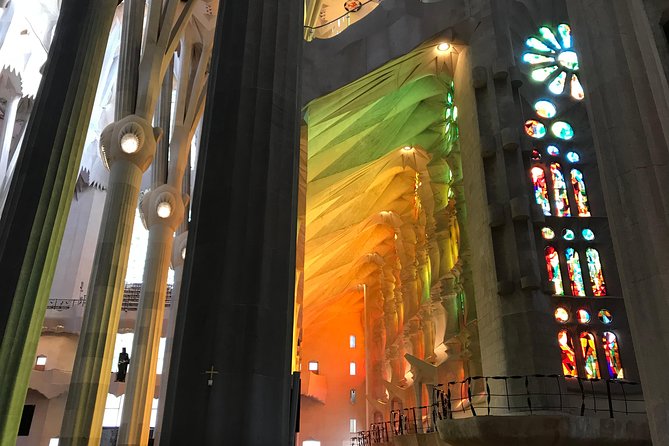
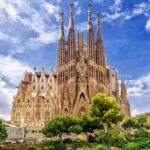
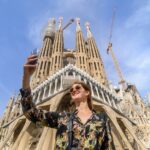
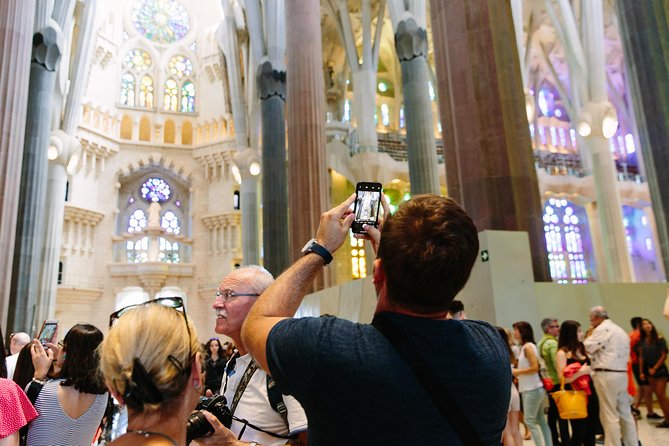
Sagrada Familia is the big finish, with a guided speech before you go in. You get skip-the-line access via your pass, which means you’re not spending your energy fighting a queue. That’s a real quality-of-life win in Barcelona.
You’ll have about 20 minutes here for the stop and the speech. That’s not an all-day deep-study visit, so keep expectations right: this is a guided “key moments” experience. Still, getting inside (with less waiting) gives you the best payoff for your time budget.
Castle of the Three Dragons and Parc de la Ciutadella area
You’ll stop at the Castle of the Three Dragons, with a guide talk connected to el Parc de la Ciutadella. This is one of those spots where the architecture looks storybook-ish, but the point of the stop is more than the cuteness. You’re learning how Barcelona planned and shaped public spaces alongside the Modernista building boom.
Mercat del Born: history around market life
Another short talk stop is Mercat del Born, with optional entry mentioned. You’ll get a sense of what the Born area represents and how it links to Barcelona’s urban evolution. Optional entry is great because you can choose based on energy and interests. If you’re spent, you can just stay focused on the ride and the guide.
Arc de Triomf: a fairytale gate with a practical purpose
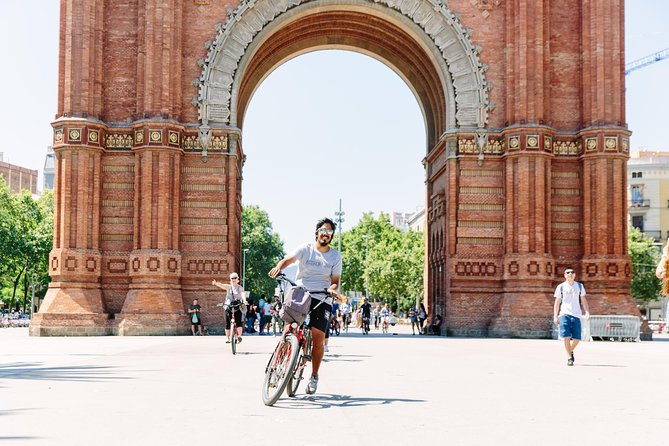
Finally, you’ll stop at Arc de Triomf. It was built as the main access gate for the 1888 Barcelona World Fair. It’s one of the easiest places to appreciate the city’s “before and after” momentum: Barcelona wasn’t just decorating buildings for art’s sake. It was hosting, building, and showing itself to the world.
You’ll also ride down Diagonal as a pass-by segment. Even as a quick transit stretch, it helps you connect neighborhoods rather than feeling like everything is locked inside one tiny zone.
Sagrada Familia skip-the-line: what it changes for you
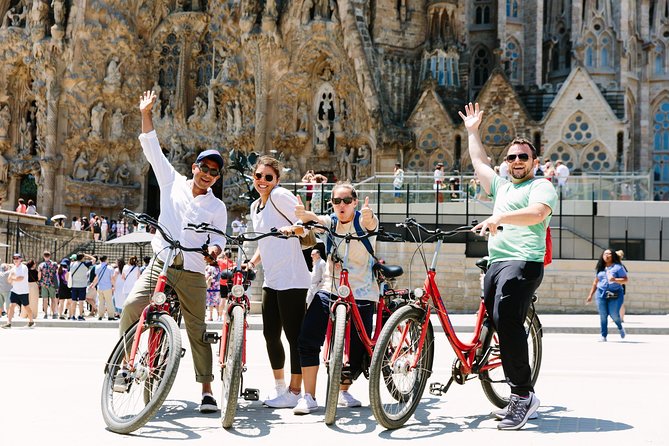
The Sagrada Familia alone can eat hours. This tour reduces that stress by giving you a pass that helps you avoid long waits. That affects the whole experience, because your mind stays in sightseeing mode instead of queue mode.
Your time inside is guided and structured. You’ll hear a talk, you’ll look around, and you’ll come out with a cleaner mental map of what you saw. In a short visit, that’s the difference between snapping photos and actually understanding what you’re looking at.
If you only have one chance to visit Sagrada Familia and you don’t want your day decided by lines, this is exactly the kind of included convenience that makes the tour feel “worth it,” not just nice.
Pace, comfort, and the lunch reality
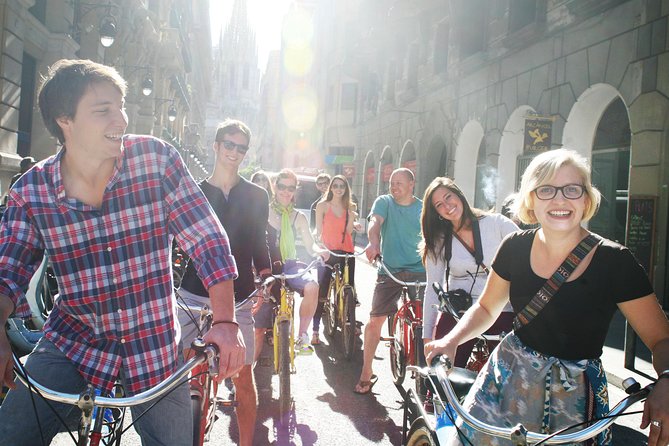
This tour runs about 3 hours 45 minutes. Think of it as a guided architecture circuit with frequent brief stops. That pace is ideal if you want to cover a lot of ground without feeling like you’re doing your own solo planning.
There’s also a lunch stop at a local tapas restaurant. Your cost for lunch isn’t included, which is normal for this type of tour. I like that setup because you can choose what fits your appetite and budget instead of being locked into a set menu you might not want.
What you should plan for:
- Bring water and plan for walking + riding rhythm
- Expect lots of short conversations at stops, not a long sit-down at each building
- Budget extra for anything you decide to enter separately (most stops are quick looks and guide speeches)
And because tours run rain or shine, pack an extra layer or a lightweight rain option. Barcelona weather can change quickly.
Price check: is $42.69 a good value?
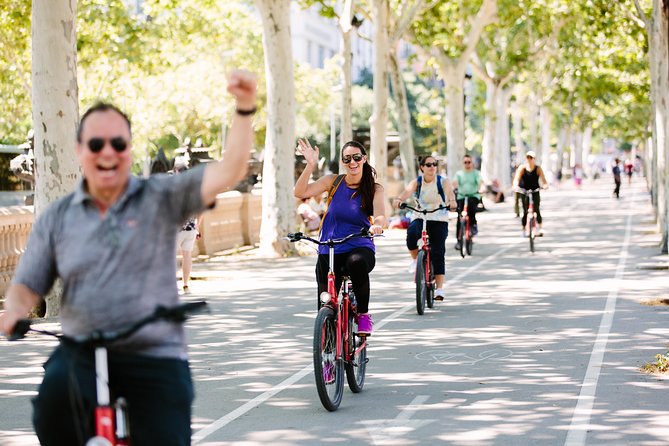
$42.69 is a reasonable price for a guided bike tour in Barcelona, and the value gets stronger when you think about what you’re really buying.
You’re paying for:
- A live guide who shapes your route and explains what you’re seeing
- Bike and optional helmet
- A Sagrada Familia pass that helps you skip long lines
- A ride that connects multiple Gaudí and Modernista stops in under four hours
Where you might spend more:
- Lunch at tapas is your cost
- Most other sights don’t list included admission, meaning you’d pay separately if you want to go in
For me, the biggest value driver is the Sagrada Familia access plus the guide’s ability to make the other stops feel meaningful. If you love architecture but hate wasting time in queues, this is the kind of deal that feels fair.
Who this tour is best for
You’ll probably love this tour if you:
- Want a first taste of Gaudí and Modernista Barcelona without planning a route
- Like guided storytelling more than reading signs
- Prefer biking to long, nonstop walking
- Want Sagrada Familia included with less waiting
You might want to skip it if you:
- Want a slower, deep interior-focused architecture day
- Dislike bike tours in city traffic
- Are hoping for long stops at each building rather than quick guided moments
Should you book Barcelona: Wonders of Gaudí Bike Tour?
Book it if you want to maximize a half-day’s worth of sightseeing with a guide, a bike, and the one big inclusion—skip-the-line entry for Sagrada Familia. The small-group size (max 9) and the mix of Gaudí-famous stops with Modernista context makes it feel like you’re understanding Barcelona, not just checking boxes.
If your dream day is long interior visits at every building, you might feel slightly shortchanged by the quick stop format. But if you want the smart, time-efficient way to see a lot of Gaudí influence in one go, this one is a strong bet.
FAQ
How long is the Barcelona Gaudí bike tour?
It runs for about 3 hours 45 minutes (approx.).
How much does it cost?
The price is $42.69 per person.
What’s included in the tour?
You get a live guide, a bike, and a helmet (provided but optional). You also receive a pass that helps with skip-the-line access to La Sagrada Familia.
Where does the tour start?
The meeting point is Carrer de Marlet, 4, Ciutat Vella, 08002 Barcelona, Spain.
Where does the tour end?
The activity ends back at the meeting point.
Does the tour run rain or shine?
Yes, it runs rain or shine.
What’s the maximum group size?
The tour has a maximum of 9 travelers.
FAQ
Is lunch included?
Lunch at a local tapas restaurant is included as a stop, but your lunch cost is not included (you pay for what you order).
Do I need to pay for entry to all the buildings?
Sagrada Familia is handled with your pass for skip-the-line access. Other stops may not include admission, so if you want to enter additional sites, you should plan on separate ticket costs.
Can I cancel for a refund?
Yes. You can cancel up to 24 hours in advance for a full refund.
Is there a mobile ticket?
Yes, it uses a mobile ticket.
Is tipping the guide required?
Guide gratuity is not included; it’s optional.
Do I need to book far ahead?
On average, it’s booked 24 days in advance, so earlier booking can help.
Do I have to bring my own bike or helmet?
No. The bike is included, and helmets are provided (optional).