REVIEW · SAN FRANCISCO
San Francisco: Downtown Architecture & Public Art Tour
Book on GetYourGuide →Operated by igniTours · Bookable on GetYourGuide
Downtown San Francisco rewards people who look up. This tour strings together architecture and public art across the Central Business District, so the city feels like an outdoor museum instead of a blur of office towers.
I especially like how the route follows the city’s growth in clear eras, from post-1906 rebuilding to today’s tech-era giants. I also like the sheer payoff of the 1% public art approach—there’s major work in places you’d normally rush through, not tucked away in a ticketed wing. One drawback to plan for: this is still a walking tour, with moderate time on your feet, so bring comfortable shoes and expect some weather-related changes.
In This Review
- Key points before you go
- San Francisco architecture, explained at street level
- Starting at 488 Market Street: your anchor point
- Financial District walking: eras of growth in 2.5 hours
- London Paris National Bank to the Pacific Telephone Building
- Sleek international glass and the turn-of-the-millennium push
- The 1% public art rule: an open-air gallery effect
- Kinetic, digital, and sculpture surprises in the streets
- Salesforce Transit Center Park: the best payoff per step
- A fountain triggered by buses: infrastructure as art
- Finishing at SFMOMA: modern art, right at the end
- Price and logistics: is $44 worth it?
- Who this tour suits best
- Should you book this downtown architecture and public art tour?
- FAQ
- How long is the tour?
- Where do I meet the guide?
- What’s included in the tour price?
- Is the tour wheelchair accessible?
- Is parking included?
- Can I cancel for a refund?
Key points before you go
- A design timeline on foot: you’ll move through changing styles and the forces behind them.
- Star-architect buildings in context: Cesar Pelli, Rem Koolhaas, and other big names make more sense when you see what replaced what.
- Public art you can actually reach: sculptures and digital works appear in streets and plazas, not just inside museums.
- Salesforce Transit Center Park: 5½ acres of rooftop greenery with views and real places to linger.
- A guide who keeps it conversational: the experience is built around questions and back-and-forth, not a one-way lecture.
- Finish at SFMOMA: you end at one of the city’s best modern-art landmarks.
San Francisco architecture, explained at street level
San Francisco’s downtown can look shiny from far away. Up close, it’s a layered record of rebuilding, business booms, and changing tastes—plus a surprising commitment to public art. That’s why a guided walk works so well here: you don’t just see buildings, you learn how they got their shapes and why those shapes matter.
The best part for me is the rhythm of the tour. You’re continuously switching from one “lens” to another—earthquake-era recovery, roaring 1920s style, mid-century office power, then the tech era that pushes glass higher than ever. It turns the Central Business District into a readable map, not a maze.
And because it’s focused on public spaces, you also get a different kind of San Francisco. You’ll spend time in outdoor zones where people read, relax, and hang out—right beside serious architecture and public art.
You can also read our reviews of more tours and experiences in San Francisco.
Starting at 488 Market Street: your anchor point
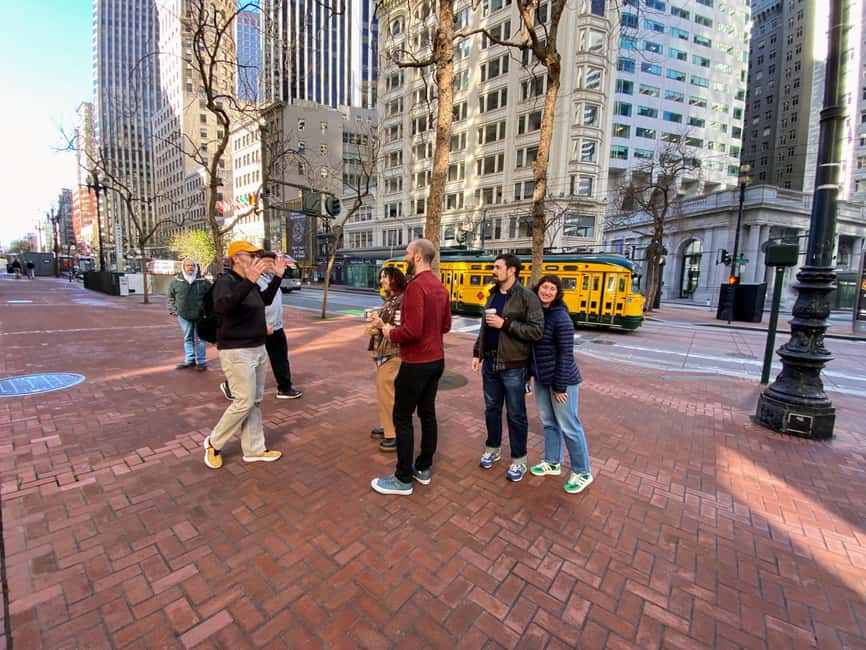
The tour begins at 488 Market Street, in front of the Mechanics Monument Plaza. This matters more than it sounds, because you start in the middle of the action and your guide can quickly set context for what you’re seeing next.
Once you’re gathered, the pace is built around walking connections—small transitions between plazas and building fronts. That’s the smart way to do downtown: you avoid the “where do I even look?” problem by having someone point out what’s worth your attention before you pass it.
If you’re hoping for great photos, arriving with enough light and taking a moment at the start helps. Market Street has plenty of visual clutter; a good first stop helps you find the thread for the rest of the walk.
Financial District walking: eras of growth in 2.5 hours
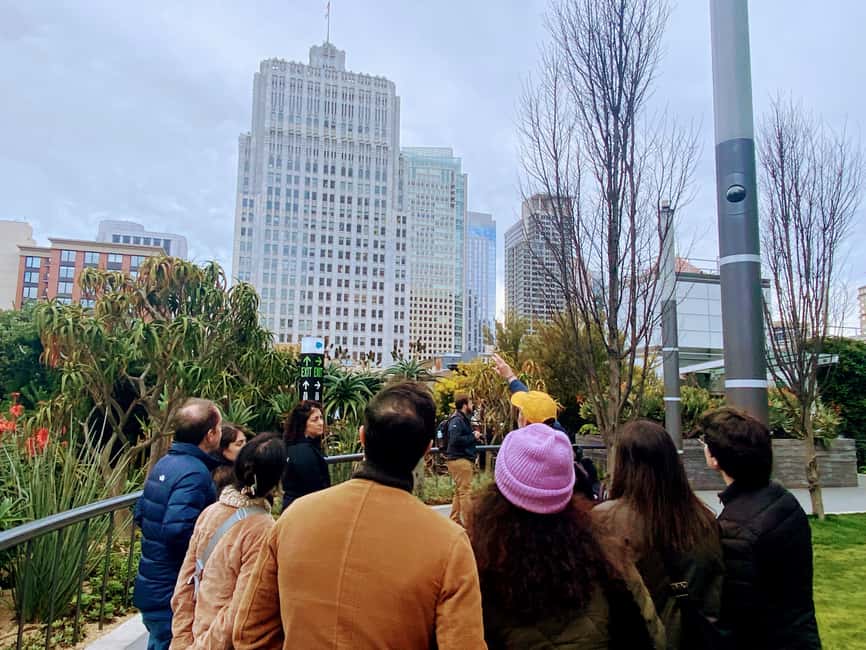
You’ll spend about 2.5 hours walking through the Financial District, which is long enough to feel like a real tour but not so long that you’re exhausted before the art part begins.
This is where the guide’s approach pays off. Instead of treating architecture like trivia, the route connects buildings to the city’s growth waves—so when you see a particular style, you also understand what was happening economically and culturally around it.
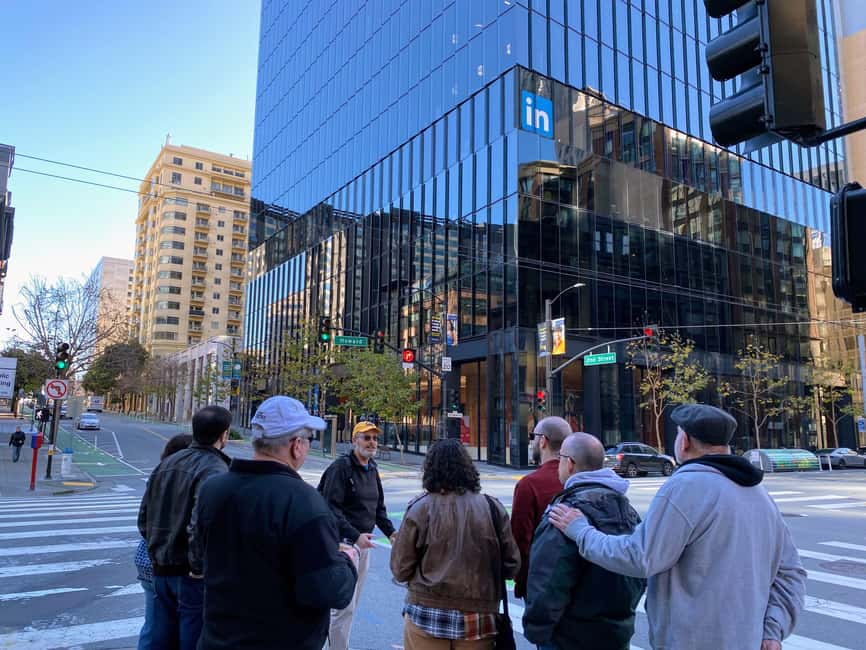
Expect stops that feel like outdoor exhibits. You’ll be looking at façades, rooftops, and plaza corners—not just standing in front of one famous monument. Downtown San Francisco is dense, and that density is exactly what makes a walking structure so useful.
London Paris National Bank to the Pacific Telephone Building
One stop you’ll likely love is the story behind the London Paris National Bank, rising from the rubble after the 1906 earthquake and fire. That kind of origin changes how you read the building: it’s not only a design object, it’s a statement about survival and rebuilding.
Then you shift into the exuberance of the early 20th-century skyline with the Pacific Telephone Building, a classic example of the art deco flair from the roaring 1920s. This is the era where downtown personalities start showing more clearly—ornament, height, and confidence.
Why this sequence works: you get contrast. Recovery-era seriousness lands harder when you later see the kind of design swagger that came with booming business. You also start noticing the details that make each period distinct.
Sleek international glass and the turn-of-the-millennium push
After you’ve seen the expressive styles, the tour moves into more sleek office forms, including mid-century International Style buildings like the Crown Zellerbach Building. This part of the walk helps you spot how design philosophies changed—clean lines, simplified surfaces, and the idea that the modern office should feel efficient and forward.
Then you’ll also see the way the CBD kept growing southward, including the JP Morgan Chase Building, tied to the turn-of-the-millennium expansion. These stops help you connect architecture to momentum. In other words, you’re not just admiring height—you’re seeing how downtown keeps reinventing its center of gravity.
If you like “why this looks like this” more than “who made it,” you’ll be in your element here. The guide’s style leans toward explanation you can actually remember, not a list of dates you’ll forget at the next corner.
The 1% public art rule: an open-air gallery effect
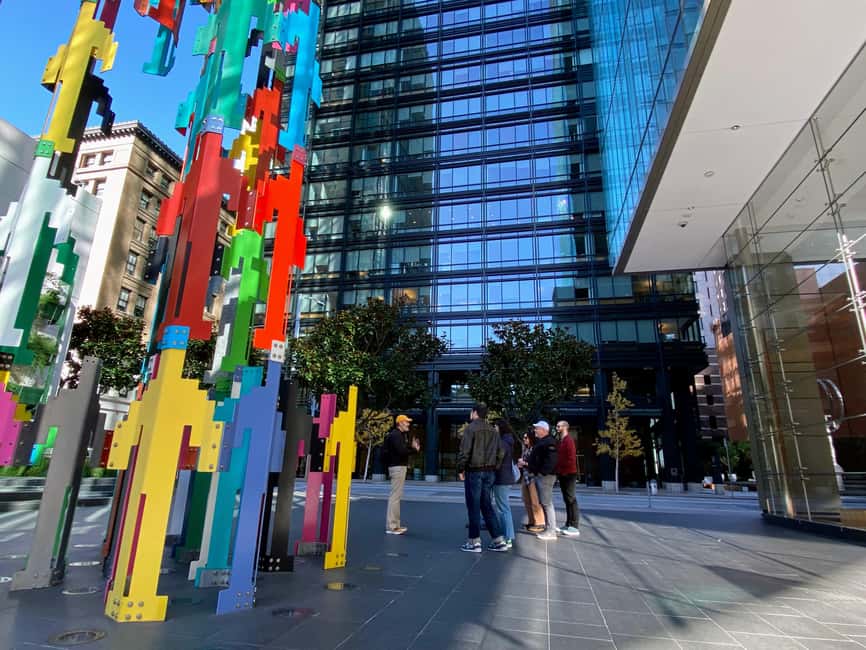
Here’s a big reason this tour feels special: downtown San Francisco has a tradition—for 40 years—where new office buildings have dedicated 1% of construction budgets to public art.
That has a real effect on what you experience as a visitor. Instead of seeing public art as an occasional sculpture in a random plaza, you get an ongoing outdoor display across the CBD. The art shows up in the places you walk every day, which means you’re constantly nudged to look closer.
It also changes how art feels in the city. A lot of downtown works don’t require you to buy a ticket or hunt for a quiet museum room. They’re there because building owners treated art as part of civic space, not decoration.
Kinetic, digital, and sculpture surprises in the streets
As the walk progresses, you’ll encounter a range of public art types—so it doesn’t feel like you’re repeating the same experience over and over.
You’re set up to see works including:
- Kinetic sculpture by George Rickey, where motion changes the way you perceive form.
- Digital art by Jenny Holzer, which brings text and light energy into public space.
- Paintings by Frank Stella, shown as part of the urban environment rather than a strict gallery setting.
- Quirky installations by Jonathan Borofsky and Ugo Rondinone, giving the streets a playful edge.
Even if you’re not an art specialist, this variety is the point. Your brain gets to switch gears: sometimes you’re reading the design of a building, sometimes you’re watching a piece move, sometimes you’re absorbing a work that feels more like it belongs in a museum than on a sidewalk.
That’s also why the tour is so well-suited for mixed groups—people who come for architecture get art education, and people who come for art still get stories about the buildings holding it.
Salesforce Transit Center Park: the best payoff per step
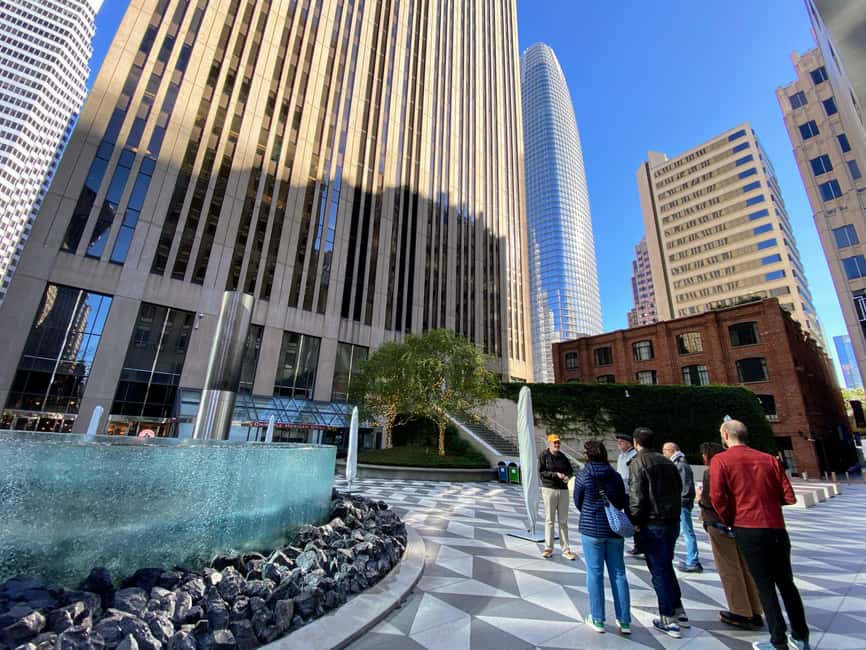
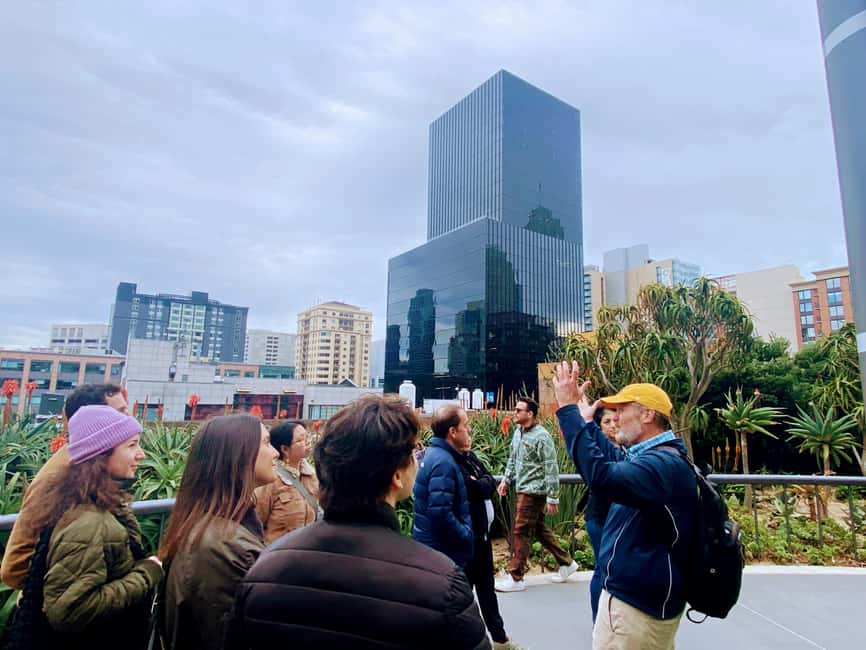
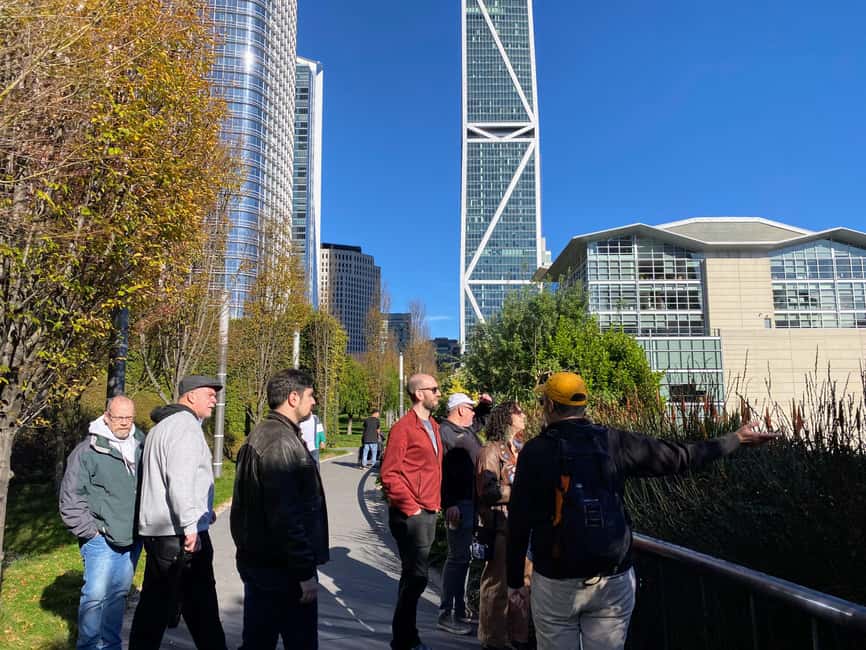
One of the most memorable parts is the Salesforce Transit Center Park, with 4½ city blocks of dedicated park space and greenery built atop an intermodal transit terminal. That’s not just a fun detail—it explains the whole concept: the city made space where it couldn’t find space.
This park stretches to 5½ acres, rising about 70 feet above street level. That elevation changes the feeling right away. You get a calmer pocket away from the street noise, plus views over the surrounding office and residential buildings.
You’ll also get the kind of specifics that make a visit more than a vague recommendation. The park includes 600 trees and 16,000 plants, organized in “zones” that recreate 13 ecosystems from around the world. Even if you don’t name every ecosystem, you’ll feel the variety in how the spaces read.
And since it’s a real public park (not just scenery), you might see activities like reading, yoga classes, movie nights, concerts, and a beer garden. In a downtown known for speed, this is where people slow down on purpose.
A fountain triggered by buses: infrastructure as art
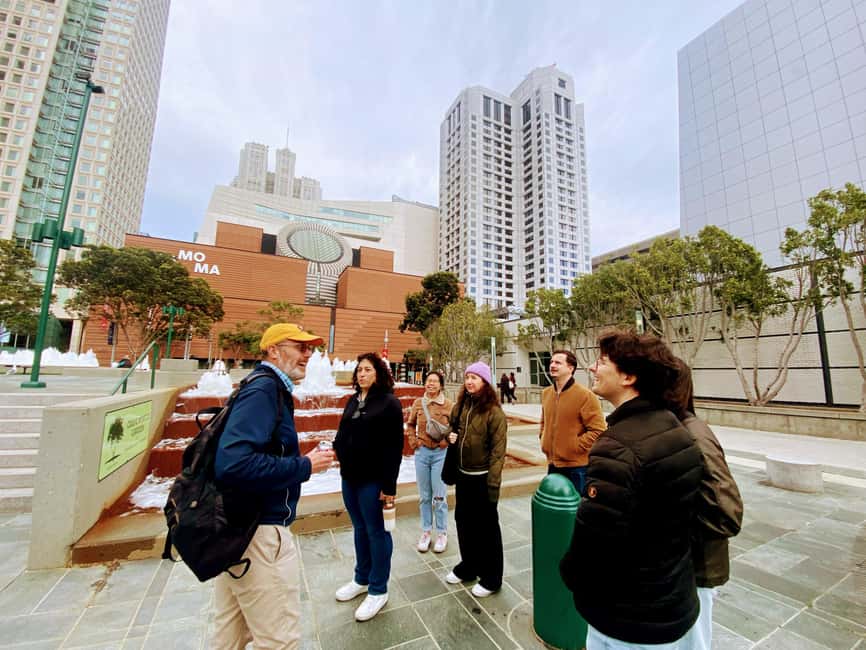
Another detail you’ll appreciate is the fountain with jets of water activated as buses traverse the transit terminal below. That’s a clever design idea: it ties the park experience to movement and function rather than pretending the terminal isn’t there.
This is exactly the kind of “design thinking” the tour highlights across the CBD. You’re not only looking at static objects. You’re seeing how architecture and public art respond to real urban systems—transit, crowds, schedules, and sound.
If you’re the type who likes to watch how things work, pause a moment when you see the setup in action. The effect is small but satisfying, like noticing a hidden mechanism inside a bigger piece.
Finishing at SFMOMA: modern art, right at the end
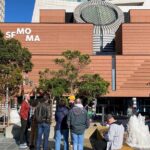
The tour ends at the San Francisco Museum of Modern Art (SFMOMA). The setting is a strong closer because the museum’s exterior has the feel of an artwork itself, so your last impression stays visual and modern even if you don’t spend hours inside.
You’ll also have time for a visit as part of the tour. That’s a smart pairing: after spending the walk learning how modern art can live in streets and plazas, you shift to a major modern-and-contemporary institution. It gives you a clean before-and-after contrast.
If you’re planning your day, it’s nice that the finish location is central and recognizable. It makes it easy to tack on dinner nearby without guessing where you’ll end up.
Price and logistics: is $44 worth it?
At $44 per person for about 3 hours (with 2.5 hours of guided walking), the value comes from what’s included: an expert English-speaking guide, a structured downtown route, and a finish at SFMOMA.
This isn’t a “stand in front of one building” tour. You’re covering multiple architectural eras and multiple public art works across the CBD, plus you get park time at Salesforce Transit Center and an art museum finish. For downtown San Francisco, that’s a lot of curated street-level context for one price.
Logistically, plan for moderate walking and dress for the weather. Downtown wind can surprise you, and you’ll want your feet ready for frequent stops and turns. If you want photos, give yourself a little buffer at the start so you’re not rushing when the really good views show up later.
Who this tour suits best
This is a strong fit if you:
- Love architecture and want stories behind the style choices, not just photos.
- Prefer outdoor art and enjoy seeing how public work functions in everyday life.
- Like a tour that stays active but not punishing—more “walk and talk” than hike.
- Want something that works for mixed interests, since public art and design history balance each other.
If your idea of a perfect tour is mostly museums and indoor galleries, you might still enjoy the SFMOMA stop, but the core of this experience is outdoors. Bring a good attitude for sidewalks, plazas, and changing city blocks.
Should you book this downtown architecture and public art tour?
Yes—book it if you want a guided way to make sense of downtown fast, with public art that you can actually see without planning a separate museum day. I’d also book it if you like asking questions, because the guide’s approach tends to feel like a conversation rather than a one-way talk.
Skip it only if you’re dealing with mobility limits that make moderate walking uncomfortable, or if you already know downtown architecture inside out and you’re chasing a very niche theme. In most cases, though, this is a smart first architecture-and-art introduction to San Francisco’s CBD.
If you can, choose a day with decent weather. The park and rooftop views matter, and clear conditions help you enjoy the skyline context the tour is built around.
FAQ
How long is the tour?
The experience runs for about 3 hours total, including a 2.5-hour walking tour of downtown San Francisco.
Where do I meet the guide?
Meet in front of the Mechanics Monument Plaza at 488 Market Street.
What’s included in the tour price?
You get a 2.5-hour guided walking tour of downtown San Francisco with an expert English-speaking guide. The tour also includes a visit at SFMOMA, and ticket-line time is skipped.
Is the tour wheelchair accessible?
Yes, the tour is wheelchair accessible.
Is parking included?
No. Parking is not included.
Can I cancel for a refund?
Yes. You can cancel up to 24 hours in advance for a full refund.