REVIEW · HAARLEM
The rise of Haarlem: Culture, History, Art and Architecture Walking Tour
Book on Viator →Operated by Haarlem Walking Tours · Bookable on Viator
Haarlem feels like a time capsule you can walk. This 2.5-hour route turns cobblestone streets into a storybook of Dutch architecture and art, from the Middle Ages through the WWII era, with details you’d miss on your own. I especially enjoyed the stop-by-stop look at a hofje complex with a secret walled garden, and the way WWII material is handled with care and specific local context.
One thing to plan around: hofje access depends on the day and time—Sundays are closed for public viewing, and the hofjes also close daily at 5pm.
This is the kind of small-group tour that works—max 6 people—so you can ask questions and get your photo tips sorted fast. I also like that the walk includes a secret viewing spot for wide Haarlem views, which makes the whole loop feel like a real payoff for your effort.
In This Review
- Key points worth saving before you go
- Where Haarlem’s story starts: the Grote Markt and Sint Bavo area
- The civic heart: Gravenzaal and town power you can read in stone
- Molen Adriaan windmill: a working symbol of Haarlem
- Teylers Museum and Haarlem’s art pulse—how the guide connects it
- The hofjes: why Haarlem’s almshouse courtyards still feel special
- Hofje timing: the one thing that can change your experience
- Walking Haarlem through the Golden Age—and then into WWII
- The “secret spot” for Haarlem views: small effort, big payoff
- Hals Museum and the Interior Question: what the tour includes (and what it doesn’t)
- Guide style and group energy: James and the “ask anything” pace
- Price and value: what $55 buys you in Haarlem
- Timing, walking comfort, and how to plan your afternoon
- Who this tour suits best
- Should you book the Haarlem Culture, History, Art and Architecture walking tour?
- FAQ
- How long is the Haarlem Culture, History, Art and Architecture Walking Tour?
- How much does the tour cost?
- How big is the group?
- Where does the tour start and where does it end?
- What ticket type do I need?
- Is the tour suitable for people with walking difficulties?
- Does the tour include hofje entry?
- What is the cancellation policy?
- Are service animals allowed?
Key points worth saving before you go
- Small group size (max 6): more back-and-forth with the guide and quicker answers to questions
- A secret viewpoint: a dedicated photo moment with Haarlem spreads in the background
- Hofjes with courtyard atmosphere: you’ll see why these almshouses mattered for everyday city life
- WWII stories with local focus: including references to Corrie Ten Boon
- Architecture and art, not just plaques: you get context for why buildings look the way they do
- About 4 km of mostly flat walking: doable for most people, but not ideal if you struggle with long walks
Where Haarlem’s story starts: the Grote Markt and Sint Bavo area
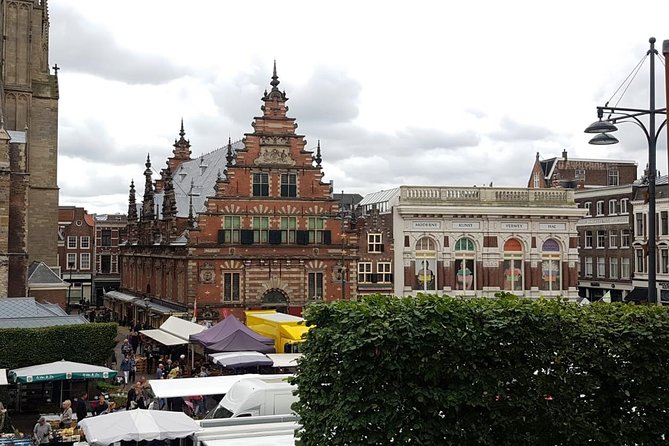
Your walk begins at the Grote Markt, Haarlem’s main square, at Grote Markt 17. This is a great start point because the square gives you instant orientation: you can feel how the city organized itself around trade, civic power, and religion—before modern life got in the way.
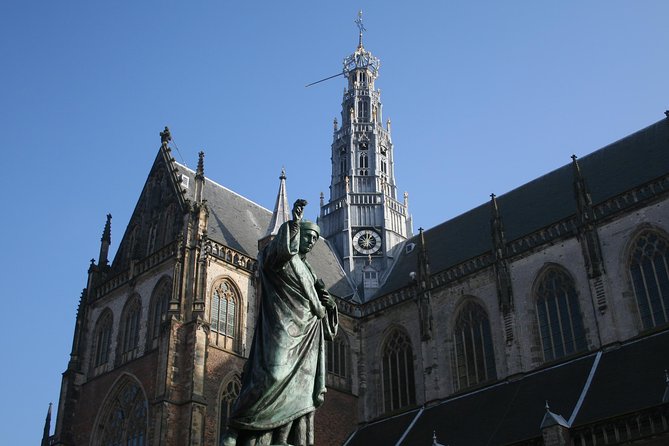
From here, the route anchors on the area around the Grote Kerk of Sint Bavo (so you’re near one of Haarlem’s signature landmarks early). The guide doesn’t treat it like a single stop for a quick photo. Instead, you get the building as a clue—how Haarlem grew, what mattered to locals, and how religious life shaped the town’s layout and prestige.
Practical tip: if you’re taking pictures, watch for the light around the square and the church-side angles. Grote Markt is also an easy spot to regroup if you’re traveling with a camera bag or you just need a breather before the next stretch.
The civic heart: Gravenzaal and town power you can read in stone
After the square, you shift from religious to civic architecture with the Town Hall Gravenzaal in your orbit. This part matters because Haarlem’s history isn’t only churches and museums. You’ll see how government buildings signaled stability and status, and how the city’s leaders used architecture to project authority.
What I like about this pacing is that it avoids the “checklist tour” vibe. You’re walking between different types of buildings, so your brain starts doing something useful: connecting why one style appears here, why another form appears there, and how the city’s priorities changed over time.
Also, since the tour runs with a certified English-speaking guide, the explanations stay clear and structured. The group stays small enough that questions don’t get swallowed by the crowd.
Molen Adriaan windmill: a working symbol of Haarlem
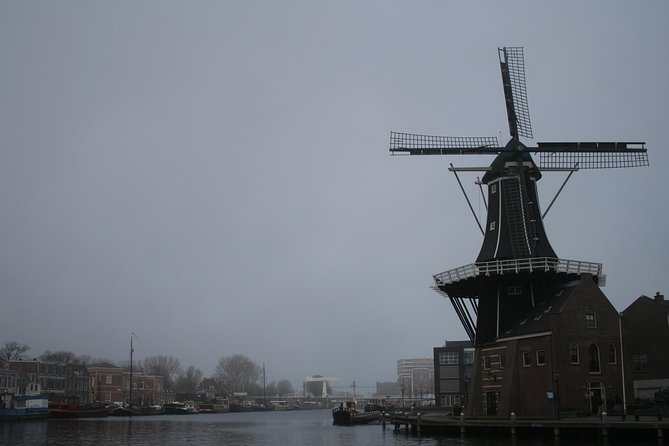
Next comes the Molen Adriaan windmill. Even if you don’t go inside on this tour, it’s an important landmark to see on foot because it’s tied to how Haarlem handled water, industry, and practical needs long before “tourist” became the default.
On a walk like this, the windmill is more than a landmark. It’s a visual reference point for the way the city worked. You’ll also get framing on how Haarlem’s built environment reflects its larger economic life as an old North Sea trading port.
Good to know: the walk is about motion and context. The tour focuses on what you can see from the street and nearby angles, so plan to add museum or cathedral interiors on your own if you want to go inside.
Teylers Museum and Haarlem’s art pulse—how the guide connects it
Haarlem’s culture isn’t only in famous masterpieces. The route also points you toward institutions like Teylers Museum, where art, science, and collections are part of the city’s identity. The guide’s job here is to help you understand what you’re looking at and why it fits into Haarlem’s broader timeline.
Even when you don’t go inside a place on the walk, you can still learn a lot—especially when the guide uses old photos or comparisons to show how street life and buildings looked in earlier eras. In fact, one of the most memorable elements is that the guide uses a tablet with visuals to support the stories. That makes the past feel less abstract and more like it’s mapped directly onto the streets you’re standing on.
The hofjes: why Haarlem’s almshouse courtyards still feel special
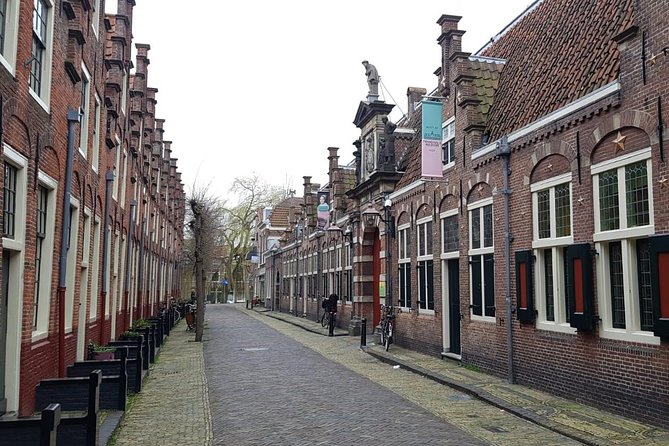
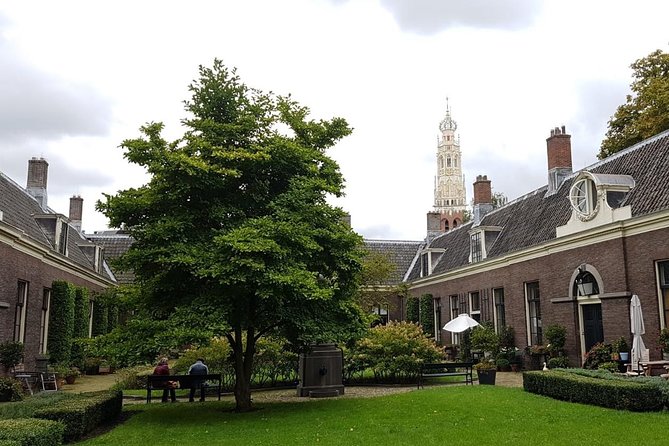
Hofjes are one of Haarlem’s most distinctive urban features: small almshouse communities built around a sense of order, privacy, and charity. This tour includes a beautiful hofje stop and, importantly, a secret walled garden component.
That garden moment is the kind of experience that makes you slow down. You go from busy-looking street edges to a calmer, more enclosed world—one that helps explain how social care worked in the city. It also gives you a different angle on architecture: not just big monuments, but the design of everyday spaces.
Hofje timing: the one thing that can change your experience
Here’s the practical catch. When you’re booking, check your exact day and start time:
- On Sundays, the hofjes are closed for public viewing.
- The hofjes close daily at 5pm.
- If you join a summer tour starting at 5pm, you won’t go inside the hofjes.
So if courtyard access matters to you, aim for a weekday (or avoid Sunday) and don’t count on late-day entry.
Walking Haarlem through the Golden Age—and then into WWII
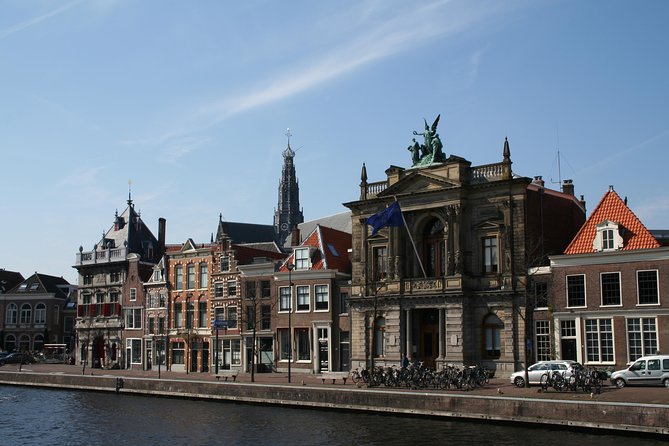
The tour’s big strength is how it moves between periods without turning it into a dry timeline. You’ll hear how Haarlem’s status shifted across major eras—especially the Middle Ages and the Dutch Golden Age—and how the city’s identity later gets shaped by WWII.
A standout part of the storytelling is the WWII Dutch Resistance material tied to Haarlem. Corrie Ten Boon comes up in the conversation, including references to her home and the kind of resistance work the area is connected to. The guide handles this with sensitivity, not shock-value energy.
This part of the tour is also why I recommend it early in your Haarlem stay. When you understand the city’s layers—trade and town power first, then art and civic identity, then WWII—you stop looking at Haarlem as a set of buildings and start seeing it as a lived-in place with memory.
The “secret spot” for Haarlem views: small effort, big payoff
Some walking tours give you a single nice view and call it a day. This one builds in a specific stop for unmatched Haarlem views. You’ll know it’s coming because the guide uses it as a reset moment—an endorphin boost mid-walk—so you can get perspective after a chunk of buildings and stories.
It’s also a good time to ask last-minute questions. With a group capped at 6, you get space to focus on your interests, whether that’s architecture details, museum context, or the WWII stories you’ve already heard.
Hals Museum and the Interior Question: what the tour includes (and what it doesn’t)
If you’re hoping to see interiors, I want to set expectations clearly. This walk is a great overview, but it does not include interior time for the cathedral or the Hals Museum. That means you’ll spend more time on street-level architecture and context rather than ticketed museum time.
That’s not a negative—if anything, it’s smart. You get a guided map of what to prioritize next, and you can choose later whether you want slower museum time on your schedule.
If you love museums, use the tour to decide what you care about most. If you’re more architecture-focused, you’ll still get plenty to chew on without needing extra admissions during the 2.5 hours.
Guide style and group energy: James and the “ask anything” pace
The biggest difference-maker is the guide. James Johnson runs the tour with a friendly, patient style and a real grasp of how Haarlem connects politics, religion, architecture, art, and cultural identity.
You’ll also notice the pace stays conversational: you can ask questions without feeling like you’re holding everyone up. On at least one tour, group size ended up even smaller than expected, turning it into a near-private experience. That’s a nice perk, and it happens often enough to be worth mentioning.
James also shares practical, real-world suggestions after the walk, like where to have a beer. He’s also the kind of guide who gives next-step ideas—for example, a tip to reserve Huis Barnaart. It’s a 19th-century canal home in Empire style, and the reservation requirement is part of the planning.
Price and value: what $55 buys you in Haarlem
At $55 for about 2 hours 30 minutes, you’re paying for three things that are hard to replicate solo:
- A structured route through major architecture and cultural nodes
- An English-speaking guide who links buildings to history (not just reading plaques)
- Small-group attention with space for questions
This is good value if you want to get your bearings fast. Haarlem is compact, but it’s not obvious at street level why one building looks the way it does or how the city’s periods connect. The guide closes that gap.
If you only want a fast photo loop with zero storytelling, then $55 might feel like more than you need. But if you like context—especially art, architecture, and WWII threads—it’s a strong deal.
Timing, walking comfort, and how to plan your afternoon
The tour covers about 4 km (around 2.5 miles). It’s described as mostly flat walking, but it does include cobblestones, so comfortable shoes matter. It’s also marked as not recommended if you have difficulty walking.
The tour uses a mobile ticket, and you’ll receive confirmation after booking. It also ends in a different location than where you start, so don’t plan your next activity as if you’ll still be right at Grote Markt. Near public transportation, it’s easier to continue exploring afterward.
Multiple tour times are available, which helps you match the walk to your day—especially important if you care about hofje courtyard access.
Who this tour suits best
This is a great match if you:
- want an architecture and art-focused orientation to Haarlem
- care about Dutch Golden Age storytelling and local civic buildings
- want WWII Resistance context tied to specific Haarlem connections
- like small-group tours where you can ask questions
It’s less ideal if:
- you need frequent breaks or can’t comfortably cover about 4 km
- hofje interiors are your main goal and you’re traveling on a Sunday or after 5pm
Should you book the Haarlem Culture, History, Art and Architecture walking tour?
Book it if you want a real Haarlem “decoder ring.” You’ll leave with a mental map, not just photos: Grote Markt, Sint Bavo area context, civic buildings like Gravenzaal, the windmill marker of practical history, and the quieter hofje courtyards. Add in WWII resistance storytelling and you get a city portrait with texture.
Don’t book it (or at least re-plan) if your schedule makes hofje access impossible—Sundays are closed for public viewing, and after 5pm the hofjes aren’t opened. And if you want guaranteed interior time at the cathedral or Hals Museum, plan to handle those separately.
FAQ
How long is the Haarlem Culture, History, Art and Architecture Walking Tour?
It lasts about 2 hours 30 minutes.
How much does the tour cost?
The price is $55.
How big is the group?
The tour has a maximum of 6 travelers.
Where does the tour start and where does it end?
The meeting point is Grote Markt 17, 2011 RG Haarlem. The tour ends in a different location than where it starts.
What ticket type do I need?
You’ll use a mobile ticket.
Is the tour suitable for people with walking difficulties?
It covers about 4 km (around 2.5 miles) and is not recommended for travelers with difficulty walking.
Does the tour include hofje entry?
Hofje viewing depends on timing. Hofjes are closed for public viewing on Sundays, and they close daily at 5pm, so summer tours starting at 5pm do not go inside.
What is the cancellation policy?
You can cancel for a full refund up to 24 hours in advance. Within 24 hours of the start time, there’s no refund.
Are service animals allowed?
Yes, service animals are allowed.