REVIEW · STUTTGART
Stuttgart city library – an architectural tour
Book on GetYourGuide →Operated by Stuttgart-Marketing GmbH · Bookable on GetYourGuide
Angles and light do the talking. In 75 minutes, you’ll read Stuttgart’s city library through light and geometric shapes, guided by Korean architect Eun Young Yi’s uncompromising clarity of form and use.
I also like that the tour treats the building like a lived space, not a museum piece: empty spaces and connecting elements matter because they shape how people move and meet. One drawback to note: if you’re hoping for very technical, deep architecture talk, the explanations may feel fairly high-level in a short time window.
In This Review
- Quick takeaways before you go
- Stuttgart’s City Library: a design icon you can’t ignore
- Finding the entrance opposite Milaneo (and starting in the right place)
- The 75-minute structure: seeing the building through light and space
- Light and geometric shapes: what you should actually watch for
- Eun Young Yi’s architectural clarity: form that has a job
- Inside the library’s “empty spaces” and connecting elements
- Guide-led experience in German: how to follow without getting lost
- Practical comfort: luggage rules and the kid limit
- Value check: is $21 worth your time?
- Who should book this architecture tour
- Should you book Stuttgart’s City Library architectural tour?
- FAQ
- Where is the meeting point for the Stuttgart city library architectural tour?
- How long is the tour?
- How much does the tour cost?
- Is food and drinks included?
- What language is the tour guide?
- Is there a live guide?
- Are oversize luggage items allowed?
- Is this tour suitable for young children?
- What is the cancellation policy?
Quick takeaways before you go
- Eun Young Yi’s design: strict geometry with a surprising sense of human scale
- Light as a feature: how brightness and shadows reveal the building’s structure
- Empty space, explained: you’ll be guided to notice the “in-between” areas
- Library as meeting place: architecture built for exchange, not just storage
- 75 minutes, focused: short enough to fit a day, long enough to see patterns
- German live guide: this is best if you’re comfortable with German or ready to follow along visually
Stuttgart’s City Library: a design icon you can’t ignore
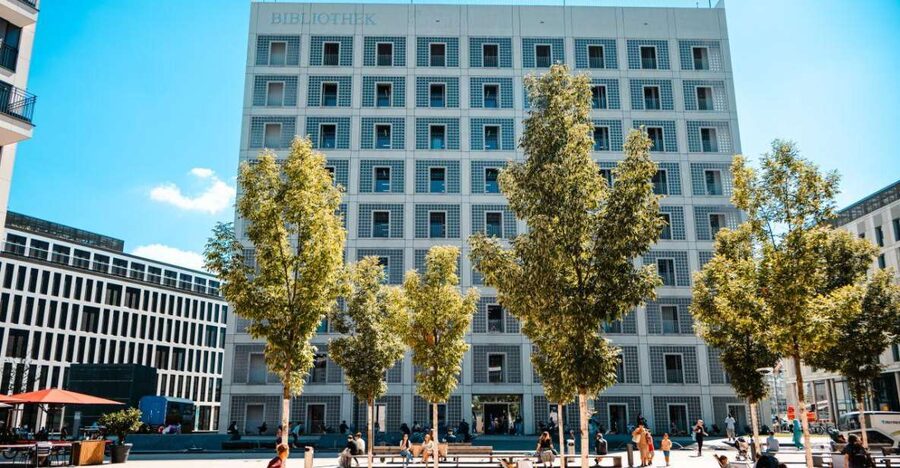
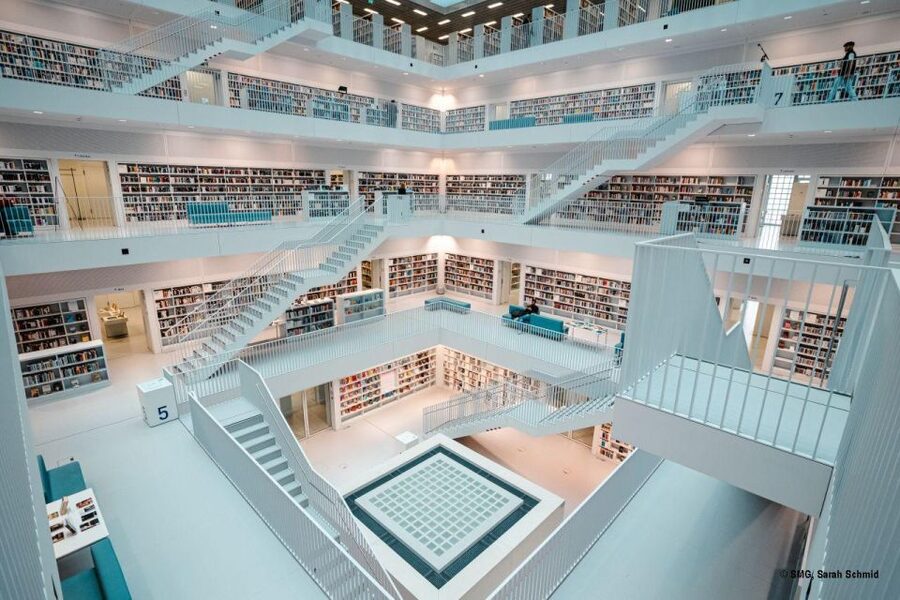
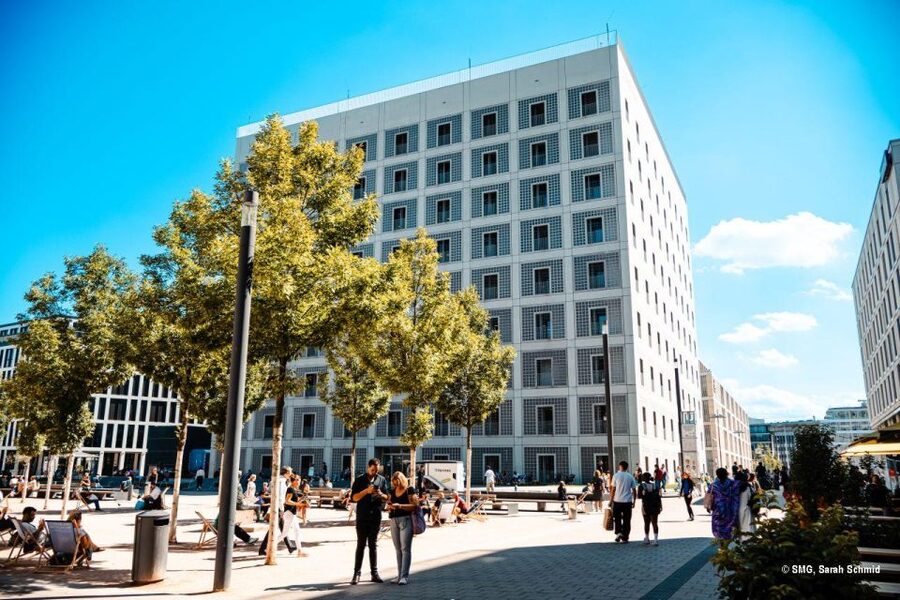
Stuttgart’s city library is one of those places where you feel architecture in your body. The big idea here is clarity: austere, geometric structure doing its job without ornamental distractions. That’s why this tour works even if you’re not an “architecture person.” You’ll still get something concrete—an understanding of how the building is organized and why it feels the way it does.
A key reason the library attracts attention from all over the world is its author, the Korean architect Eun Young Yi. The experience is built around her approach: form and function aren’t separate. You don’t just look at shapes; you see how those shapes guide movement, create pauses, and shape the library’s social energy. Since it’s a library, it’s also a place of encounter and exchange. In other words, this isn’t only about lines and angles. It’s about people using a well-designed space.
You’ll leave with a better “read” of the building—how its geometry connects to daily life. And once you learn how to look at it, you’ll probably notice similar design thinking elsewhere in Stuttgart.
Finding the entrance opposite Milaneo (and starting in the right place)
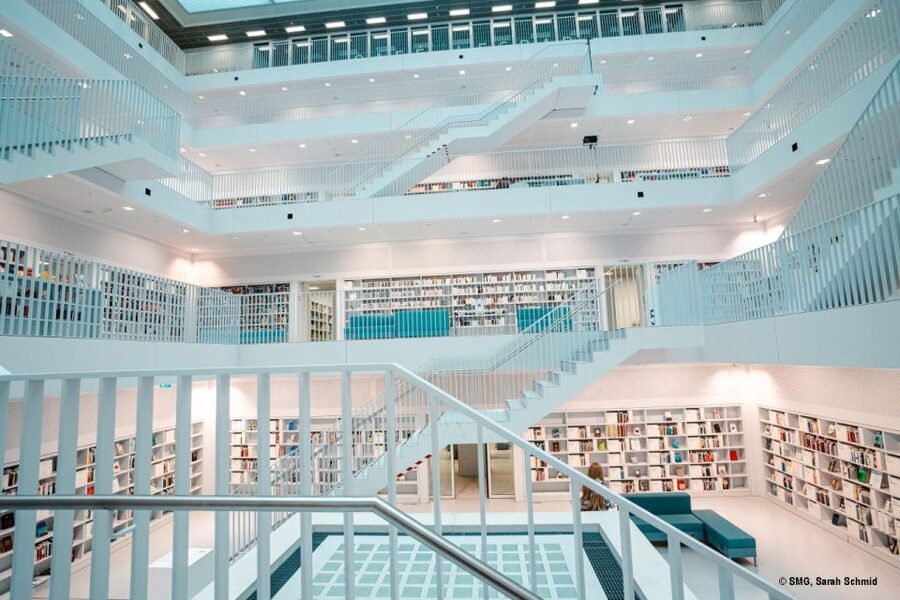
Your meeting point is simple: the entrance opposite the Milaneo shopping center. That’s helpful because it anchors you to a clear reference point in the city. When an architecture tour starts at the correct front door, you avoid that awkward early scramble of trying to figure out which side of the building the guide actually wants you to see first.
Also, pay attention to the tour’s rules of engagement. Oversize luggage isn’t allowed. So if you’re traveling with bigger bags, plan ahead so you’re not dealing with that hassle mid-tour. The tour is short at 75 minutes, so small logistics can make a big difference.
If you’re arriving from nearby sightseeing, I recommend mentally shifting gears the moment you reach the meeting spot: this is a “look closely” experience. The guide will steer your attention to specific architectural qualities, so arriving calmly helps you catch those moments instead of missing them while you’re still orienting.
The 75-minute structure: seeing the building through light and space
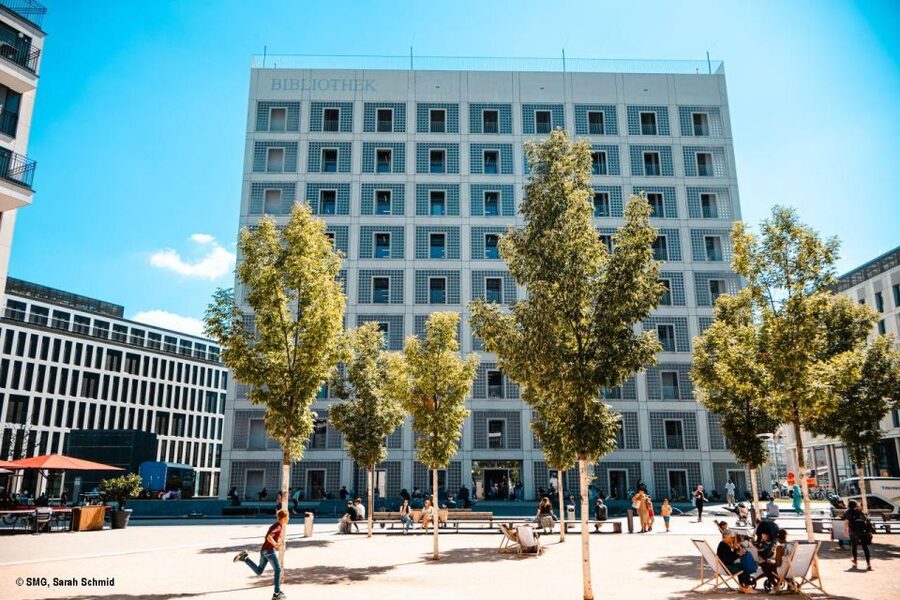
This tour is designed to be tight and purposeful. At 75 minutes, you’ll have enough time to notice patterns and connections, but you won’t get stuck in a slow, drawn-out pace.
What you can expect to focus on:
- how light interacts with the building’s geometric design
- how empty spaces function as part of the architecture (not wasted volume)
- how connecting elements link zones so the whole building feels coherent
Think of it like a guided way of training your eye. Instead of telling you a long list of facts, the tour points you toward what to look for—angles, proportions, gaps, and how circulation seems to “flow” through the structure. Since the experience is explicitly described as a study of form and function, the best moments are the ones where you can connect visual features to how the library operates.
There’s also a social element baked into the experience. You’re encouraged to come in, which matters because libraries are about people. When the tour leads you to interior space and the transitions between areas, you get a fuller sense of what makes this building work as a real public venue—not just a striking exterior.
Light and geometric shapes: what you should actually watch for
One of the strongest highlights is the interplay of light and geometric shapes. That’s not just a poetic description. It’s a practical instruction for your eyes.
Here’s how to make the most of it during the walk and any indoor moments:
- Watch the edges. When light hits sharp geometry, it makes the structure feel crisp and intentional.
- Notice what changes when you move. A shape can look different as shadows shift, and the tour is built around those changing impressions.
- Pay attention to the “in-between.” Empty spaces can read as voids, but in good architecture they act like breathing room—places that organize movement, visual focus, and even sound.
Because the library is meant for exchange, the spaces between sections are important. The tour’s attention to empty space and connecting elements gives you a way to understand the building’s logic quickly. You learn what links areas together and how space is used to create rhythm.
This is also a good tour for photographers—again, not because you’ll be chasing “views,” but because the architecture rewards careful observation. Angles, contrasts, and shadow lines are all part of the show.
Eun Young Yi’s architectural clarity: form that has a job
Eun Young Yi’s influence is the backbone of this experience. The library’s design is described as uncompromising in its clarity—meaning it doesn’t rely on decorative effects to win you over. Instead, it uses structure, geometry, and spatial organization.
That’s a big deal for how you’ll interpret the building. Many architectural sites can be impressive on first sight but feel hard to understand. This one is different because the design principles are readable. Once you start seeing how the building is composed, it’s easier to grasp why it feels orderly yet inviting.
I like that the tour connects the look of the architecture to its function. It’s not a lecture about style. It’s a practical translation of what the architecture is doing:
- guiding you through space
- framing interaction
- supporting the role of a public library as a shared civic place
If you’re the type who enjoys connecting dots—how a building’s layout affects behavior—this tour will click.
Inside the library’s “empty spaces” and connecting elements
The tour doesn’t treat the library as one solid block. It focuses on the way empty spaces and connecting elements work.
In everyday life, we often ignore those zones—hallways, gaps, transitions, and open pauses—because we’re thinking about where we need to go next. The tour asks you to slow down and treat those areas as architecture themselves. That’s one of the best skills you can pick up from a guided design experience: learning to value the space between the obvious attractions.
Why this matters:
- Empty space can change how a building feels—more calm, more open, more structured.
- Connecting elements help the whole place make sense as a system, not a set of isolated rooms.
- When you understand connections, you can navigate the library better too—mentally, even if you’re not going to use it long afterward.
If your instinct is to focus only on the most dramatic exterior angles, you might miss this layer. The tour’s emphasis on these connective parts nudges you toward a deeper way of seeing.
Guide-led experience in German: how to follow without getting lost
The tour includes a live German-speaking guide. That’s stated clearly, so plan accordingly. If your German is basic, you can still enjoy this because the architecture is visual. But the guide’s commentary is part of the value, since the whole point is interpretation of light, geometry, and function.
A small heads-up from the overall tone of feedback: some people want more architecture depth, while others find it highly informative and fun. In plain terms, the tour is designed to fit in 75 minutes, so it won’t turn into a long technical seminar. If you like deeper explanations, use the moment to ask a simple follow-up question if the guide allows it during the walk.
The upside is that a good guide can make a short tour feel complete. Even when time is limited, a skilled guide can help you build the right mental framework—what to look for, what it means, and what to notice next time you pass the building.
Practical comfort: luggage rules and the kid limit
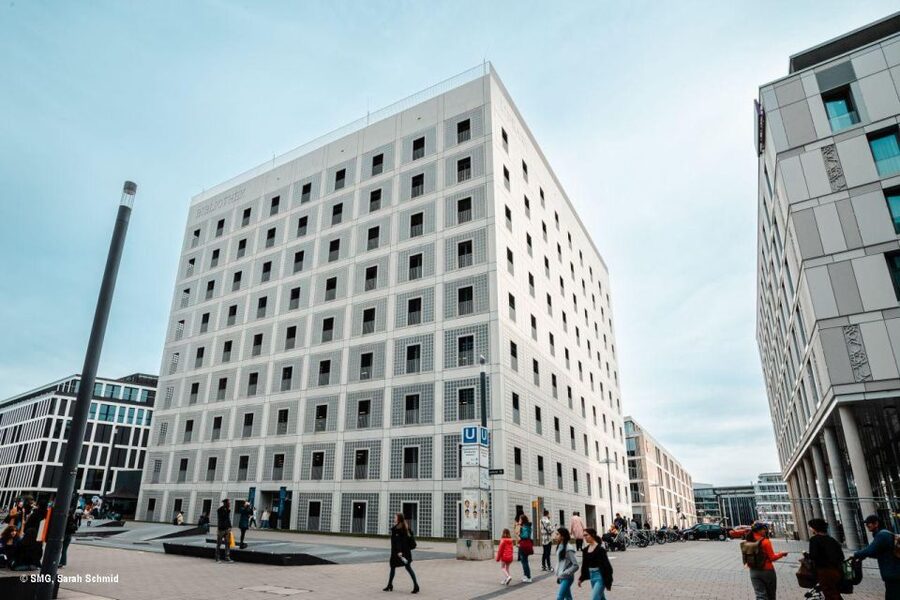
This is one of those tours where the “small rules” actually affect your day.
- Oversize luggage isn’t allowed.
- It’s not suitable for children under 2 years.
Because the tour length is 75 minutes, it’s also not built like an all-day activity. If you’re traveling with toddlers, think hard about whether 75 minutes in a guided setting fits your rhythm. For most families with older children, it may be manageable, but the official note is only for under-2.
Also, food and drinks aren’t included. So if you’re doing the tour midday or back-to-back with other plans, make sure you’ve got snacks and water arranged separately. The tour is about architecture, not breaks.
Value check: is $21 worth your time?
At $21 per person for a 75-minute live guide, the value is mostly about interpretation. You’re paying for a structured way to see the building—especially the parts you’d likely miss on your own, like how empty spaces and connecting elements shape experience.
Here’s how I see the math:
- The tour time is long enough to notice changes in light and spatial structure.
- It includes a German live guide, which means you’re getting guided meaning, not just a self-walk.
- The building itself is a major architectural highlight in Stuttgart, so you’re not spending time commuting to something obscure.
If you’re already comfortable looking at buildings and don’t need much explanation, you might get the same visual payoff by wandering on your own. But if you want help turning what you see into something you understand, this price-to-guidance ratio is reasonable.
One more factor: the tour is Stuttgart’s city library, so you can treat it as both an architecture stop and an orientation moment. Even if you don’t plan to use the library afterward, you’ll likely carry away a clearer sense of how public buildings can shape city life.
Who should book this architecture tour
This experience is a strong fit if you:
- enjoy architecture, design, and how buildings are organized
- like themes of light, geometry, and spatial planning
- want a short, focused activity that doesn’t swallow an entire afternoon
- can handle a German-speaking guide (or follow along through the visuals)
It’s also a good pick for first-time Stuttgart visitors because it targets a single, high-impact place. You’ll get concentrated value without trying to cover too much territory.
If you dislike guided tours or you hate explanation in any language, you may feel impatient during parts that are more about interpretation than scenery. And if you want very technical details, remember this is a 75-minute format, not a deep architecture course.
Should you book Stuttgart’s City Library architectural tour?
Book it if you want a practical way to see why this library is considered an architectural highlight. The focus on light and geometric shape, plus the attention to empty spaces and connections, gives you a way to look beyond the obvious. And because it’s only 75 minutes, it’s easy to slot into a day without wrecking your schedule.
Skip or reconsider if you’re specifically chasing long, highly detailed architectural lectures, or if you need lots of breaks for food and comfort—since food and drinks aren’t included and the format is short.
If you do book, come with a simple attitude: slow down your eyes. This is the type of building that rewards patience. You’ll likely leave with a new habit of noticing how space and structure guide real human movement.
FAQ
Where is the meeting point for the Stuttgart city library architectural tour?
The meeting point is the entrance opposite the Milaneo shopping center.
How long is the tour?
The tour lasts 75 minutes.
How much does the tour cost?
It costs $21 per person.
Is food and drinks included?
No, food and drinks are not included.
What language is the tour guide?
The live tour guide speaks German.
Is there a live guide?
Yes, this is a live tour with a German-speaking guide.
Are oversize luggage items allowed?
Oversize luggage is not allowed.
Is this tour suitable for young children?
It is not suitable for children under 2 years.
What is the cancellation policy?
You can cancel up to 24 hours in advance for a full refund.