REVIEW · RIGA
Riga’s Architecture: A self-guided audio tour of the city’s art nouveau history
Book on Viator →Bookable on Viator
Art Nouveau hides in plain sight in Riga. This self-guided audio walk tracks the city’s Art Nouveau boom, where there are 800-plus buildings and one of the world’s highest concentrations of the style, explained through the streets you’ll actually walk. You also get offline audio and maps through VoiceMap, so you’re not stuck hunting signal mid-stroll.
I love that the tour teaches you a practical way to identify Art Nouveau without making it a classroom. It also connects the architecture to real people, including architect Mikhail Eisenstein and the famous filmmaker his son became, Sergei Eisenstein. The result is focused story-telling that feels like “just enough” information to keep you moving.
One heads-up: you must bring your smartphone and headphones, since those aren’t included. If you’re planning to enjoy the tour while stopping for photos, plan for a little extra time to get set up and start listening.
In This Review
- Key things that make this audio tour worth your time
- Riga’s Art Nouveau density and what you’ll be hunting for
- Price and time: $5.20 with lifetime access and offline audio
- Getting started with VoiceMap on your phone
- From the Latvian National Museum of Art to Elizabetes 10b
- Alberta 2a and Alberta 4: spotting the Art Nouveau voice and Mikhail Eisenstein
- Alberta 11 and Alberta 13: the residential courtyard story
- Alberta 12 finish: where National Romanticism enters the picture
- Who this self-guided tour is for
- Should you book this Riga architecture audio tour?
- FAQ
- What is the duration of the audio tour?
- How much does it cost?
- Do I need tickets to museums or other places on the route?
- Is the tour available offline?
- What do I need to bring?
- Where does the tour start and end?
- Is it refundable if I cancel?
Key things that make this audio tour worth your time
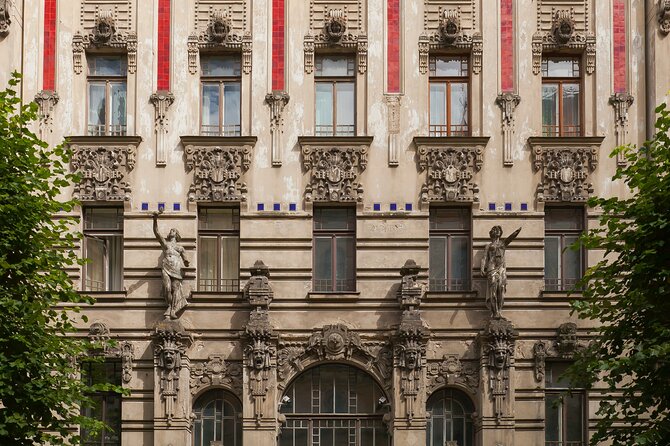
- A short, manageable 30–45 minute route through Riga’s most recognizable Art Nouveau clusters
- VoiceMap offline access to audio, maps, and geodata
- A clear method to spot Art Nouveau details right on the sidewalk
- Mikhail Eisenstein and the Sergei Eisenstein link, tying buildings to bigger cultural history
- A dedicated courtyard story from one of Riga’s standout residential buildings
- National Romanticism explained as Riga’s distinct Latvian direction within the broader Art Nouveau wave
Riga’s Art Nouveau density and what you’ll be hunting for
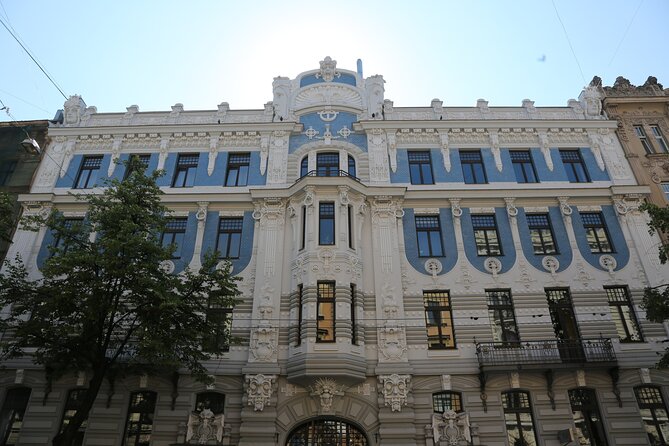
Riga’s Art Nouveau isn’t a “see one fancy building, then move on” situation. The city has over 800 Art Nouveau buildings, and it’s known for having the highest concentration of this architectural style. That matters for your experience because the walk doesn’t feel random. You’re moving through a place where the style is the default language of the streets.
This tour is built to help you see patterns instead of just collecting façades. The audio focuses on how to identify an Art Nouveau building, so you start learning what to look for before you’re overwhelmed by ornament. You’ll also hear how the architects developed a Latvian spin called National Romanticism, which helps you understand why Riga doesn’t just copy trends—it adapts them.
And because it’s self-guided, you can slow down at the buildings that catch your eye. You’re not forced to keep up with a group pace. That’s especially useful in central Riga, where you can easily decide to detour for photos or a quick coffee after you’ve already got the core story in your head.
You can also read our reviews of more tours and experiences in Riga.



Price and time: $5.20 with lifetime access and offline audio
At $5.20 per person for a 30–45 minute self-guided experience, this is low-cost sightseeing with a smart payoff. The real value is lifetime access: you’re not paying just for today’s walk. If you return to Riga later (or just want a refresher), you can replay the audio.
You also get offline access to audio, maps, and geodata via the VoiceMap app. That’s more than a convenience. It means you can walk without depending on mobile data, and you can use the map prompts as your “safety net” when streets start to look similar.
A final value point: there are no extra attraction tickets included along the route. That makes it easier to keep this as simple, fast, and budget-friendly city-walking—assuming you’re fine with learning from the exterior architecture rather than entering museums.
Getting started with VoiceMap on your phone
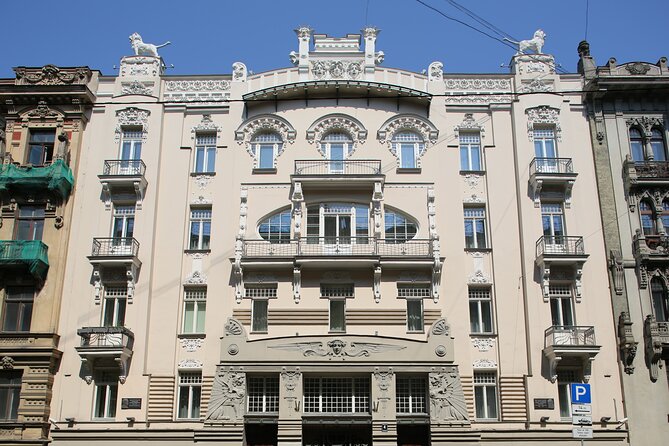
This is an English audio tour delivered through the VoiceMap app on both Android and iOS. The included materials are designed for independence: once it’s set up, you have the audio and map guidance ready even offline.
Here’s how I’d think about your prep, so it feels smooth in the moment:
- Plan to download the tour before you start walking, while you still have stable internet.
- Bring your own smartphone and headphones (required since they’re not included).
- Keep your phone charged. A mapping-heavy audio tour can still drain battery if your screen is on a lot.
The tour is also listed as near public transportation, which is helpful in Riga. If you’re building your day around other stops, you can reach this route without committing to a long transfer.
Finally, it’s described as a private activity where only your group participates. Even though it’s self-guided, that still matters if you prefer not to blend into a crowd.
From the Latvian National Museum of Art to Elizabetes 10b
Your walk begins at the Latvian National Museum of Art, at Jaņa Rozentāla laukums 1. Even if you’re not going into the museum, starting here works well because the audio can set the tone: you’re about to interpret a whole neighborhood’s design language.
This first segment is about grounding. The tour frames Art Nouveau in Riga as a major local movement, not a decorative afterthought. You’ll hear about the city’s Art Nouveau history and get introduced to key architects and themes so the buildings you see later make more sense.
Then you get a brief stop at Elizabetes 10b. This is a smart “warm-up” moment in the route. The tour uses these early pauses to teach you how to look—what separates Art Nouveau from other decorative styles. If you’ve ever walked past a beautiful building and wondered what you were actually noticing, this portion is where the audio helps you build that eye.
One benefit of the short stop format is that you don’t lose your momentum. You’re not stuck listening for 10 minutes in one spot. You get the lesson, you move on, and the next building becomes your practice example.
Alberta 2a and Alberta 4: spotting the Art Nouveau voice and Mikhail Eisenstein
After Elizabetes, the route shifts to Alberta iela with stops at Alberta 2a and Alberta 4. This section is where the tour starts feeling more “architecture fan” and less “intro lecture.”
A key thread here is Mikhail Eisenstein. The tour highlights his decorative work and also makes the cultural connection to his son, Sergei Eisenstein, who became a legendary Soviet filmmaker. That might sound like a random family fact at first, but it helps in a practical way: it puts a real human story behind the stone-and-ornament. You start to see buildings as the output of specific people and their era, not as anonymous old pretty things.
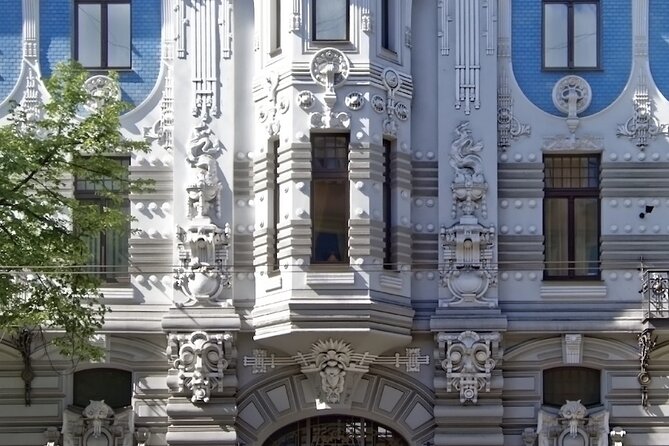
You’ll also keep applying the Art Nouveau ID skill you learned earlier. As you move block to block, you’re not just watching for decoration—you’re learning the style’s overall “system.” Think of it like learning the difference between hearing music and hearing lyrics. After a few stops, you start recognizing the musical phrase patterns.
A small consideration here: since the tour is 30–45 minutes total, you’ll want to keep your photo stops efficient. If you stop to admire every façade detail like it’s a museum exhibit, the timing can get tight. The upside is you’ll still get the story; the downside is you may feel a little rushed if you treat the route as a leisurely day-long walk.





Alberta 11 and Alberta 13: the residential courtyard story
Next up are brief stops at Alberta 11 and Alberta 13. This is where the audio expands the meaning of “Art Nouveau building” beyond the street-facing front.
One of the standout themes is the courtyard of one of Riga’s most impressive residential buildings. Courtyards can be the architectural equivalent of a hidden chapter. From the sidewalk, you might focus on façades, but the courtyard is where residential Art Nouveau can feel more intimate and human—an interior world shaped by the same design instincts.
Even though you’re walking the outside route, the audio makes sure you don’t miss what matters. It encourages you to think: who lived here, how these spaces were meant to feel, and how Art Nouveau expressed itself in daily life.
This courtyard emphasis also helps you understand why Riga earned its reputation. Art Nouveau wasn’t only for public or grand buildings. It shows up in how people lived—so the city feels designed, not accidental.
Alberta 12 finish: where National Romanticism enters the picture
Your tour ends at Alberta iela 12. The final segment connects the dots from Riga’s Art Nouveau expression to National Romanticism, described as a unique Latvian style developed by the city’s architects.
This is a good ending because it answers a bigger question: where did Riga go after Art Nouveau’s initial wave of decorative exuberance? National Romanticism, as presented here, is the local evolution—architecture that keeps the language of the era while shaping it into something distinctly Latvian.
By the time you reach the final address, you’ve already learned how to identify Art Nouveau at street level and you’ve heard story context tying architects to broader history. So this isn’t just “a final fact.” It’s the payoff: you walk out with a framework for interpreting what you just saw.
Who this self-guided tour is for
This one is ideal if you:
- Want a fast, efficient introduction to Riga’s Art Nouveau without booking a live guide
- Prefer learning at your pace, with offline audio you can replay later
- Enjoy architecture details, especially when a story connects the buildings to people (like Mikhail Eisenstein and Sergei Eisenstein)
- Have limited time but still want to understand what you’re looking at
It’s also a good choice for rainy or cool weather. You’re moving between a handful of stops, and you don’t need tickets or museum entry time to get the main value.
The main mismatch is simple: if you expect a fully guided, stop-and-explain experience with a guide in person, this won’t replace that. It’s self-guided by design.
Should you book this Riga architecture audio tour?
Yes, if you want a practical way to see why Riga is famous for Art Nouveau. For $5.20 you get lifetime access, offline audio/maps, and an English narrative that teaches you how to spot the style while explaining what shaped it locally, including National Romanticism. It’s also short enough to fit into a packed day without turning into a half-day project.
Book it if your goal is “I want my eyes to work better when I’m looking at Riga.” Download the VoiceMap app ahead of time, bring your own headphones, and treat the stops as quick lessons you can apply immediately.
Don’t book it if you’re allergic to self-guided audio on your own schedule. Otherwise, this is one of the best ways to turn a walk through central Riga into something you’ll remember and recognize next time you see Art Nouveau.
FAQ
What is the duration of the audio tour?
The tour runs about 30 to 45 minutes.
How much does it cost?
It’s priced at $5.20 per person.
Do I need tickets to museums or other places on the route?
No. Tickets or entrance fees are not included for any attractions en route.
Is the tour available offline?
Yes. The tour includes offline access to audio, maps, and geodata in the VoiceMap app.
What do I need to bring?
You’ll need your smartphone and headphones. A smartphone is not included.
Where does the tour start and end?
It starts at Latvian National Museum of Art, Jaņa Rozentāla laukums 1, and ends at Alberta iela 12.
Is it refundable if I cancel?
No. This experience is non-refundable and cannot be changed for any reason.