REVIEW · NEW YORK CITY
Financial District NYC Architecture Walking Tour
Book on Viator →Operated by Build Tours · Bookable on Viator
Two hours can feel like five eras. This small-group architecture walk connects the Financial District to Ground Zero, with crisp explanations and a pro photo you can keep. It’s the kind of tour that helps you stop guessing what you’re looking at—and start understanding why it was built.
I also like that the pace stays thoughtful: you get professional individual headsets for clear narration, and the guide builds in time for your burning questions. The one drawback to flag: it is not recommended for people who have problems walking, since it’s a walking tour with multiple stops.
In This Review
- Key things to know before you go
- Why this Financial District walk makes sense in 2 hours
- Starting at Battery Park’s Glass Carousel: the moment you get your bearings
- Trinity Church (1846): how a church became a civic anchor
- Federal Hall (1842) and the Woolworth Building (1912): where design gets dramatic
- The Federal Reserve (1924) and the World of money architecture
- One Chase Manhattan Plaza (1960): architecture with public art energy
- Fulton Center (2015): modern transit that becomes a place to look
- 8 Spruce Street’s Gehry moment: when art and addresses collide
- The National 9/11 Memorial & Museum: Ground Zero sits inside the route
- St. Nicholas Greek Orthodox Church (2020) and the newest arts venues
- Liberty Park views: the World Trade Center skyline in one walk
- Finishing inside the Oculus Path Station (2015): a transit stop that feels like sculpture
- Price and value: what $59 buys you beyond the headline
- Who this tour is best for (and who should pass)
- Quick planning tips so you don’t feel rushed
- Should you book this tour?
- FAQ
- How long is the Financial District NYC Architecture Walking Tour?
- Where does the tour start and end?
- What’s the group size?
- What’s included in the price?
- Is admission included for the stops?
- Is tips included?
- What should I expect about the weather?
Key things to know before you go
- Small group cap of 15 keeps the questions flowing and the pace human.
- Ground Zero is part of the route, so you’ll hit the National 9/11 Memorial & Museum during the walk.
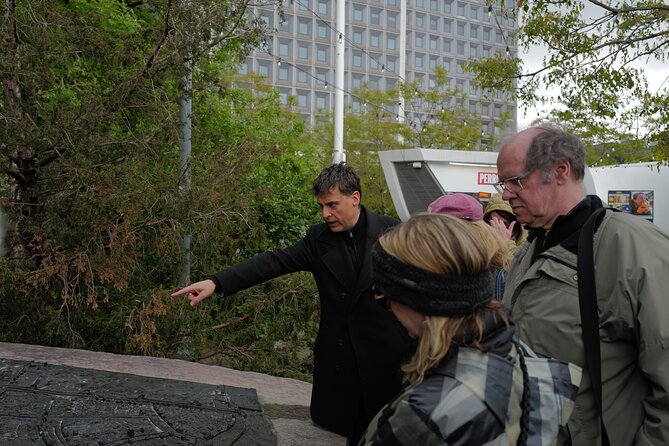
- Professional photo included, so you don’t need to hunt for a good angle and a stranger with a camera.
- Free admission at the stops shown on the route, plus all fees and taxes included.
- Headsets for everyone, so you can hear even on louder corners.
- End inside the Oculus area, which is an easy way to finish the day in the World Trade Center zone.
Why this Financial District walk makes sense in 2 hours
This is a short, focused “architecture quick hit.” You’re not going block by block with endless narration. Instead, you move from landmark to landmark with a licensed guide who ties buildings to what was happening at the time.
At $59 for about 2 hours, you’re paying for three things that are hard to replace on your own: guided context, organized timing, and the included tech (headsets). On top of that, the tour includes a professional individual photo, which turns the walk into more than just sightseeing.
One more practical benefit: because the group is capped at 15 people, it doesn’t feel like a school field trip herded along. You can actually ask questions like why these buildings look the way they do—or how the design priorities changed as the city evolved.
You can also read our reviews of more tours and experiences in New York City.



Starting at Battery Park’s Glass Carousel: the moment you get your bearings
The tour begins at the Glass Carousel at Battery Park. That’s a smart choice because Battery Park sits right at the edge of the World Trade Center area and the older civic core, so it’s an easy launch point for what you’ll see next.
You’re in good hands from the start. The tour lists Dr. Ivan Shumkov as the licensed guide meeting you at the start point. Starting here matters because the first stop sets the tone: this tour isn’t just about naming famous buildings—it’s about understanding how the skyline communicates power, faith, and finance all at once.
Also, the route starts with a free-admission stop and a short timing window. That means you spend more time seeing and less time stuck figuring out where to go next.
Trinity Church (1846): how a church became a civic anchor
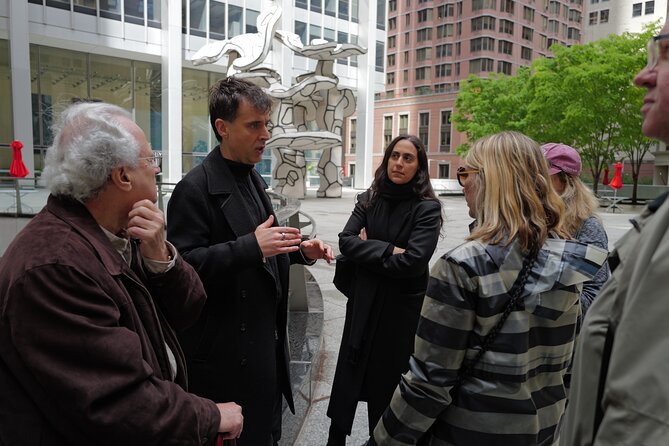
Next up is Trinity Church NYC, built in 1846. A church in the Financial District might sound like a detour, until you realize it’s a statement about the city’s early priorities. Buildings like this weren’t just worship spaces—they were community landmarks that helped define the identity of a growing Manhattan.
This stop is brief (about 5 minutes), so treat it like a photo-and-orientation moment rather than a long sit-down visit. If you’re the type who likes to read every plaque, you may find yourself wishing for more time here. But the upside is you won’t miss the later landmarks by getting stuck in the weeds early.
Federal Hall (1842) and the Woolworth Building (1912): where design gets dramatic
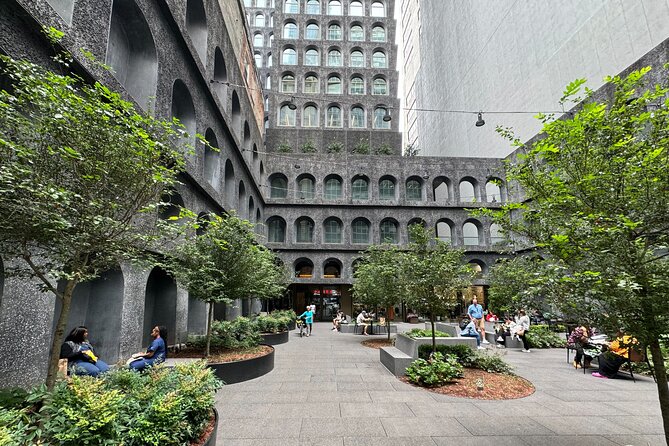
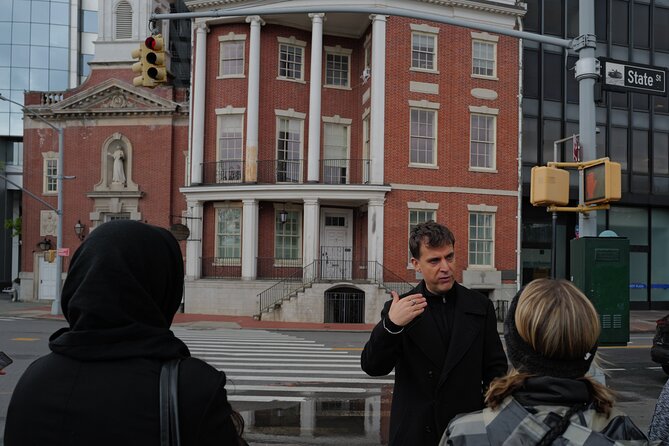
You’ll then move to Federal Hall, built in 1842. The quick hit here is about form and purpose. This isn’t just another old building to pass by; it’s tied to the founding-era identity of the area, and the guide helps you connect what you see with why it mattered.
After that, you’ll get a standout architecture moment with the Woolworth Building by Cass Gilbert from 1912. This is the kind of building that makes you stop walking for a second—not because you’re trying to be impressed, but because the details are built to be noticed from street level.
One practical thing: with a walking tour, you’ll want to keep your camera ready but not glued to it. The tour moves efficiently, so your best strategy is to shoot your angles during the short window and then listen to the guide explain what you’re seeing.
The Federal Reserve (1924) and the World of money architecture
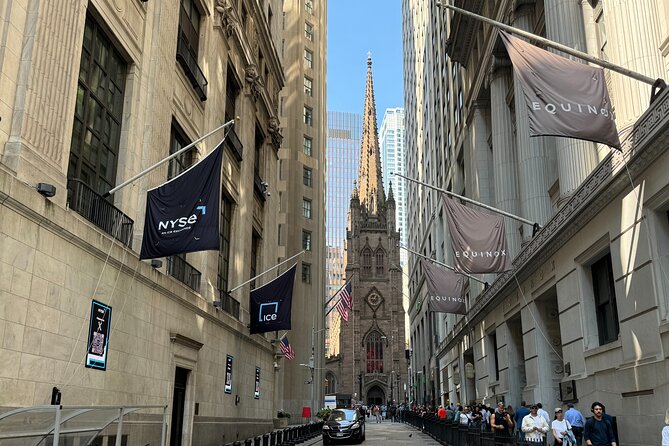
One stop on the route is the Federal Reserve building by York & Sawyer from 1924. The tour description highlights that it stores most of the gold in the world.
Whether you care about money policy or not, it’s still a fascinating architecture stop because it raises an obvious question: how do you build something that’s meant to feel secure, serious, and important? That’s where the guided layer becomes valuable. Without context, a building like this can blur into the background. With the explanation, you start looking for design choices that communicate trust and control.
Also, the route marks several stops as admission free, which keeps your time focused on the exterior views and storytelling rather than ticket lines.


One Chase Manhattan Plaza (1960): architecture with public art energy
The tour continues with One Chase Manhattan Plaza, designed by Gordon Bunshaft (SOM) from 1960. This stop is listed as about 10 minutes, giving you more breathing room than the tighter corners earlier.
Here’s what makes this part worth your attention: the tour specifically calls out the building’s public art and architecture. That combination changes how you experience the tower. Instead of viewing it as a sealed-off corporate object, you get a chance to see how modern-era design aimed to shape the public experience around it.
If you like architecture that feels like it has a mood, this is one of the better moments in the route.
Fulton Center (2015): modern transit that becomes a place to look
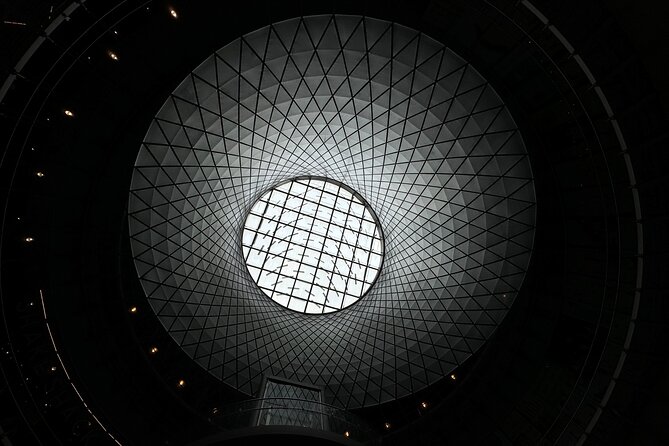
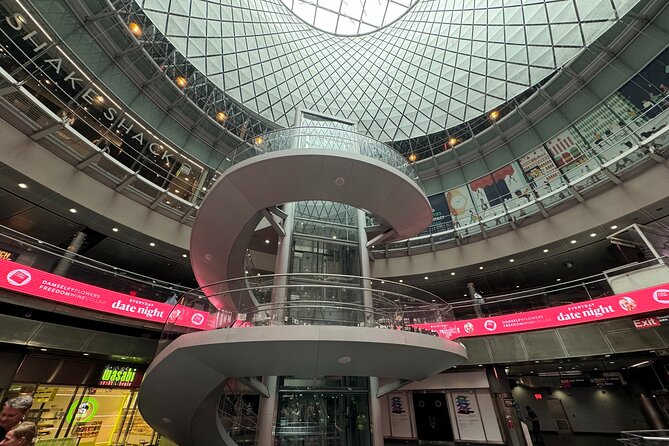
Then you’ll reach Fulton Center, designed by Grimshaw from 2015. This one is about 5 minutes on the route, which means you’ll likely get exterior perspective and quick highlights rather than an extended exploration.
But even in a few minutes, a newer transit hub can change how you see the entire neighborhood. It’s a reminder that the Financial District isn’t frozen in time. Newer design can reframe how people move through the area—literally guiding flow with form.
If you’re trying to understand the difference between older institutional buildings and newer public spaces, Fulton Center is a useful comparison point.
8 Spruce Street’s Gehry moment: when art and addresses collide
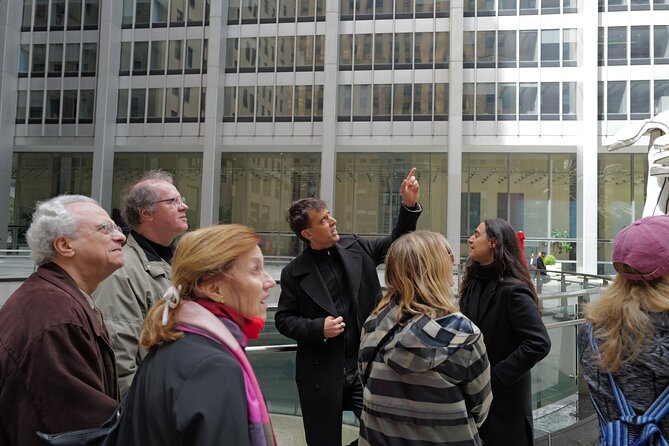
Next is New York by Frank Gehry at 8 Spruce Street from 2010. This is the kind of stop that works well in a short walking tour because it breaks the pattern. You’ve been moving through older civic and banking identities, and then—here’s a different design language.
Even if you’re not a hardcore architecture person, you can still read the energy of a Gehry-designed piece. It tends to make you look twice, and it’s a good mental reset before you enter the emotional core of the day.
And because the tour keeps momentum, you’re not left standing there wondering what you’re supposed to do. The guide gives you the “what to look for” so it doesn’t become random sightseeing.
The National 9/11 Memorial & Museum: Ground Zero sits inside the route
This is the emotional center of the tour: the National 9/11 Memorial & Museum by Snohetta, Michael Arad, and Peter Walker from 2011. It’s scheduled for about 10 minutes.
Because the tour labels this as part of Ground Zero, you should know what you’re signing up for: this isn’t just architecture viewing in a neutral way. It’s a place where you’re meant to pause, absorb, and understand the significance.
10 minutes is enough to take it in and get oriented, but it’s not a substitute for a full museum visit. If the museum is a must-do for you, think of this stop as a guided opening act. You’ll finish the walk with a clearer sense of what to focus on if you come back.
Also, the tour lists the memorial/museum stop as free admission for the experience. That helps keep your day simple and keeps the emotional piece in reach without extra added costs.
St. Nicholas Greek Orthodox Church (2020) and the newest arts venues
After Ground Zero, the route keeps moving with two modern landmarks in the religious and arts realm.
First is Saint Nicholas Greek Orthodox Church and National Shrine by Santiago Calatrava from 2020 (about 5 minutes). When you see Calatrava’s work in person, it often feels like architecture is moving even when you’re standing still. This stop helps show how the post-World Trade Center area continues to rebuild identity through design.
Then you’ll encounter The Perelman Performing Arts Center by REX from 2023. This is the newest listed cultural stop on the route. Even with limited time, it’s a useful reminder that the area isn’t only about remembrance. It’s also about life, performance, and public use.
A quick note on pacing here: because you’re stacking multiple major stops, you’ll want to focus on listening rather than trying to “master” every detail. The guide’s job is to give you the key points so you don’t leave with nothing but photos.
Liberty Park views: the World Trade Center skyline in one walk
From there, you’ll head to World Trade Center’s Liberty Park for a 10-minute look at the skyline. The tour highlights specific buildings and architects:
- WTC1 by David Childs (SOM), 2015
- WTC2, in-process
- WTC3 by Richard Rogers, 2018
- WTC4 by Fumihiko Maki, 2015
- WTC5 by Kohn Pederson Fox, in-process
- WTC7 by David Childs (SOM), 2015
This section is valuable because the names and timelines turn what can feel like a confusing cluster of towers into a story. You start seeing patterns: which firms shaped which sections, and how the rebuild unfolded over time.
One consideration: since some towers are listed as in-process, you might not see everything fully completed from your exact vantage. Still, that’s part of the point. The skyline here is a living project, not a finished postcard.
Finishing inside the Oculus Path Station (2015): a transit stop that feels like sculpture
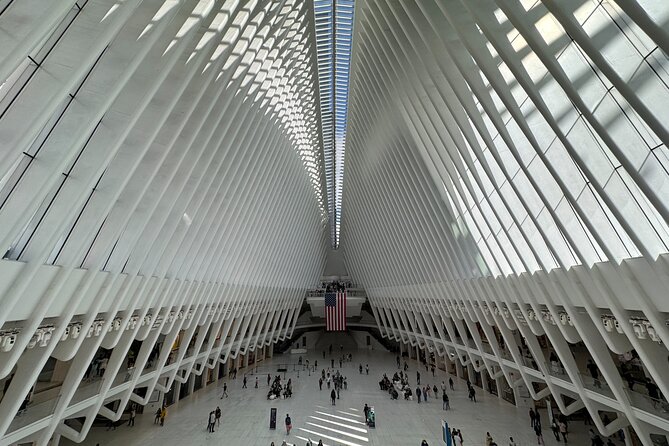
The tour ends with the Oculus Path Station by Santiago Calatrava from 2015, scheduled for about 10 minutes. Ending here is smart because the Oculus is one of the most recognizable modern structures in the area, and it’s also a functional transit space.
This finish gives you a natural “landing zone” for the rest of your day. When a tour ends right where you can move on, you don’t lose time backtracking or hunting down your next connection.
It’s also a good last architecture note: Calatrava shows up again after the earlier Calatrava church. So your brain gets a pattern to recognize—modern forms that feel more like design objects than plain infrastructure.
Price and value: what $59 buys you beyond the headline
Let’s talk money in plain terms. The tour costs $59 per person for about 2 hours. Included in the price are all fees and taxes, plus professional individual headsets. The tour also includes a professional photo taken for you, and admission tickets are listed as free at the included stops.
That combination is what makes it feel like good value. If you try to do this on your own, you’d still need to pay for either a guide (for context) or time (to figure out what you’re seeing). Here you get the guide, the tech, and the photos in one package.
Not included: tips.
One small “value” warning: because it’s short, you won’t get a slow, sit-and-read museum experience. You’re buying orientation and standout stops, not long-duration access to every detail. If you want to linger, plan to come back after the walk.
Who this tour is best for (and who should pass)
This tour fits best if you want:
- clear explanations of major architecture names and dates
- a guided route that hits both civic landmarks and the World Trade Center area
- a group experience that stays small enough for questions
It’s also a plus if you’re traveling with teens. One piece of feedback tied the tour to being interesting enough for teenagers, and that same note mentioned a guide helping with an after-tour lunch reservation. That tells me the guide approach is practical, not just lecture-mode.
Who should pass or at least consider carefully: the tour explicitly says it’s not recommended for people who have problems walking.
Quick planning tips so you don’t feel rushed
A walking architecture tour is all about readiness.
- Wear shoes you’re comfortable walking in for a couple hours. The stop windows vary, but you’re constantly moving.
- Bring a camera you can access fast. Most stops are short, so plan for a few strong shots instead of dozens.
- If you care about the memorial/museum portion, set expectations: this is 10 minutes here during the walk. For a full experience, you’ll likely want a separate visit.
- Ask questions when you’re standing in the right spot. The guide’s job is to connect what you’re seeing to why it matters.
Should you book this tour?
I’d book it if you want a tight, high-value way to understand the Financial District’s architecture while also making it to Ground Zero without turning the day into logistics chaos. The included headsets, small group size, free admission at the stops, and the professional photo make it feel like a thoughtfully put-together experience.
Skip it if you need long, slow time at one place, especially the memorial/museum. This is a route-first experience. You’ll leave with orientation and standout images, then you can choose where to spend your extra time.
FAQ
How long is the Financial District NYC Architecture Walking Tour?
It lasts about 2 hours (approx.).
Where does the tour start and end?
The tour starts at the Castle Clinton National Monument, Battery Park – Liberty Island, New York, NY 10004. It ends at the Oculus World Trade Center, 185 Greenwich St LL3110, New York, NY 10006.
What’s the group size?
The tour has a maximum of 15 travelers (people).
What’s included in the price?
All fees and taxes are included, along with professional individual headsets for each guest. The tour also includes a professional photo.
Is admission included for the stops?
Admission tickets are listed as free for the locations on the route.
Is tips included?
No. Tips are not included.
What should I expect about the weather?
This experience requires good weather. If it’s canceled due to poor weather, you’ll be offered a different date or a full refund.