REVIEW · BARCELONA
Barcelona Highlights: The Best of Gaudi On Segway
Book on GetYourGuide →Operated by Euro Segway · Bookable on GetYourGuide
Gaudí looks different when you glide. I especially loved the fast, smooth way you cover major neighborhoods, and the up-close photo angles you get on tight Gothic Quarter streets. Guides like Pablo tend to keep things clear and calm from the start, and they’ll often match the pace to you. One consideration: you do need a little balance and comfort on a moving vehicle, since the training is quick and the ride keeps a steady rhythm.
This is a private, eco-friendly Segway tour built around Barcelona’s big architectural chapters: Roman remains, Modernisme, and the unfinished drama of Sagrada Família. It’s guided in Spanish, English, French, and Russian, so you can focus on the buildings instead of language math.
In This Review
- Key highlights you’ll feel right away
- Getting Set Up on Carrer del Correu Vell (and learning the Segway fast)
- Plaça dels Traginers and the Gothic Quarter: where Gaudí’s world starts
- El Cap de Barcelona and the Columbus Monument: quick stops with big symbolism
- Port Vell and the Muralla de Mar: the city’s edge by Segway
- Estació de França and Vila Olímpica: Barcelona in motion in the 21st century
- Parc de la Ciutadella: a green pause that makes the rest easier
- Parliament of Catalonia, Neptú, and Arc de Triomf: civic pride and expo-era design
- Passeig de Gràcia and the Gaudí stop list: Casa Milà and Casa Batlló
- Sagrada Familia: seeing the unfinished towers up close
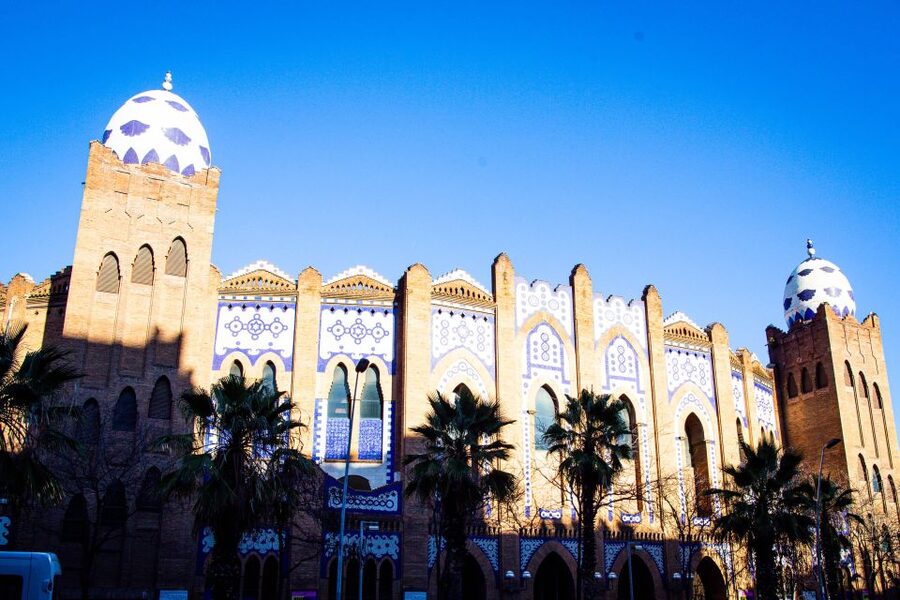
- La Monumental and the ride back: keeping the story coherent
- Price and value: what you’re paying for at $117 per person
- Who this tour suits best (and who should skip it)
- Practical tips to make your 3 hours smoother
- Should you book this Gaudí Segway tour?
- FAQ
- Where is the meeting point?
- How long is the tour?
- What does the price include?
- What languages are available for the live guide?
- Is the tour private?
- Do I need to bring ID?
- What is the cancellation policy?
- Who is the tour not suitable for?
Key highlights you’ll feel right away
- Segway lesson that actually gets you rolling before the main sights
- Gothic Quarter lanes and Roman-era walls (Barcino) for a storybook start
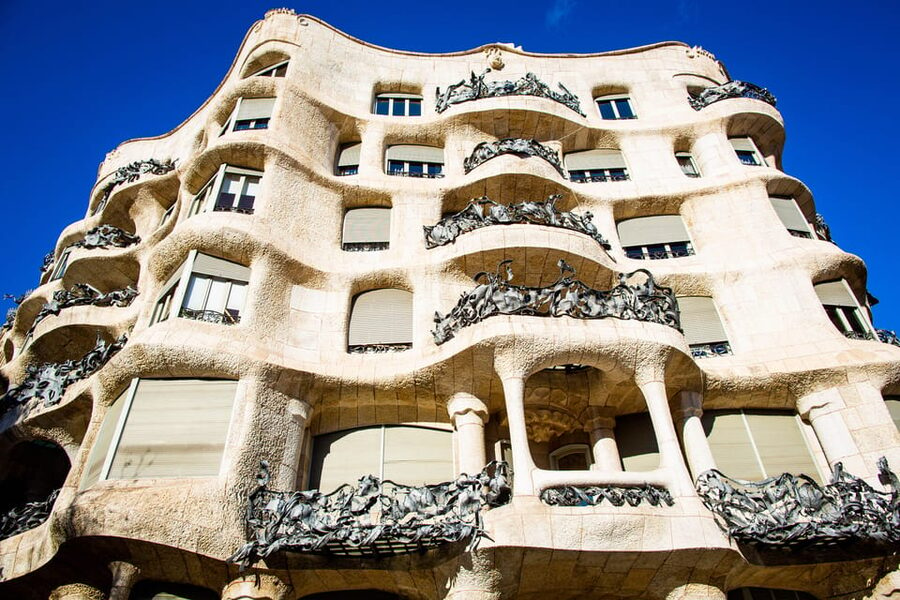
- Passeig de Gràcia Modernisme stops including Casa Milà and Casa Batlló
- Sagrada Família exterior time with explanations of what makes it unfinished
- Arc de Triomf and Parc de la Ciutadella to reset the pace with green and space
Getting Set Up on Carrer del Correu Vell (and learning the Segway fast)
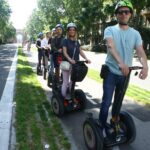
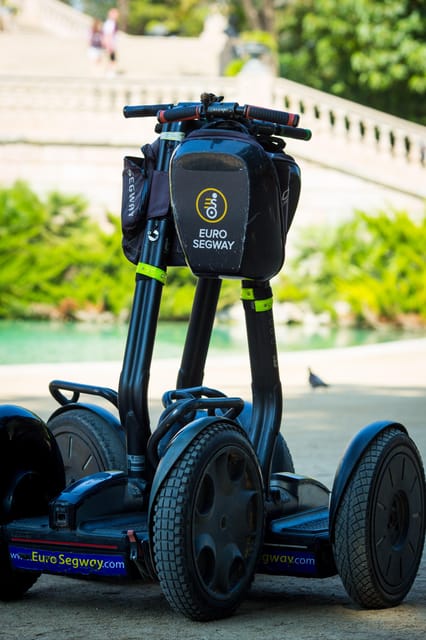
The tour meets at Carrer del Correu Vell, 6 (08002). The first stretch is practical: a 15-minute safety briefing plus a driving lesson and test drive, with helmets and raincoats included. That matters more than it sounds, because Barcelona traffic and street texture can be jumpy if you’re still wobbling.
I like that they don’t just hand you a helmet and hope for the best. You get some basic training right near the old Gothic Quarter, so you learn on streets that actually match the ride you came for. In real terms, that means you’re not discovering how the Segway behaves while already trying to line up photos of Gaudí.
Also, this is a private group, which usually makes the whole experience feel less like you’re herding people. If your comfort level is lower, you’ll get a more manageable pace than you would in a large shared tour.
You can also read our reviews of more tours and experiences in Barcelona.


Plaça dels Traginers and the Gothic Quarter: where Gaudí’s world starts
After the safety briefing, you start with photo stops and quick guided context around Plaça dels Traginers. Then you roll into the Gothic Quarter, one of those places where narrow medieval streets make every turn feel like a scene change.
Here’s what’s worth focusing on: in this area, the architecture isn’t just pretty. It’s compressed. Because you’re traveling on a Segway, you can cover more ground without getting stuck in slow, on-foot congestion. That turns the Gothic Quarter into a guided “walk-through” without the walk-through fatigue.
You’ll also hear about Barcelona’s earlier identity—when the city was known as Barcino—including the Roman wall built in the 4th century. On a bike or Segway route like this, that Roman layer doesn’t feel like an isolated museum fact. It feels embedded in the city’s physical bones.
El Cap de Barcelona and the Columbus Monument: quick stops with big symbolism
Next comes a photo stop at El Cap de Barcelona, followed by the Columbus Monument stop. These are not long-linger moments, but that’s part of the design. You get just enough time to orient yourself and understand why these landmarks show up on postcards and in conversations.
At El Cap de Barcelona, you’re basically getting a shortcut into the city’s identity—symbols, myth, and modern references, all sitting inside older streets. Then Columbus Monument gives you a more open visual—useful when you’ve just been riding in tight lanes.
The benefit of doing this by Segway is timing. You’re not spending your best energy walking from spot to spot. You’re letting the vehicle do the distance while the guide supplies the meaning.
Port Vell and the Muralla de Mar: the city’s edge by Segway
One of the smartest parts of this route is how it brings you to the water. You make stops at Port Vell and along Baluard de Migdia i Muralla de Mar.
If you’ve ever walked through these areas, you know the view is great but the pacing can be uneven. By Segway, you get the best of both worlds: the visual payoff without the stop-and-go shuffle. It also creates a natural rhythm shift. After medieval lanes, the seafront gives you breathing room.
At Muralla de Mar you’re looking at a defensive and historical layer, which contrasts nicely with what comes later in the tour: Gaudí’s curves and Modernisme’s theatrical style. The city’s layers stop feeling random.
Estació de França and Vila Olímpica: Barcelona in motion in the 21st century
Then you move into areas tied to more recent chapters of the city, with a stop at Estació de França and then Vila Olímpica.
This is where the tour’s promise about Barcelona changing in the 21st century becomes real, because you’re not only moving through “timeless” zones. You’re riding through places that show Barcelona planning, density, and modern urban life.
Practical tip: use this stretch to reset your posture. You’ve done tight turns and short climbs earlier, and now the ride shifts to wider spaces. If you’re new to Segways, this is also a good checkpoint moment—your hands, legs, and balance should feel more coordinated than at the start.



Parc de la Ciutadella: a green pause that makes the rest easier
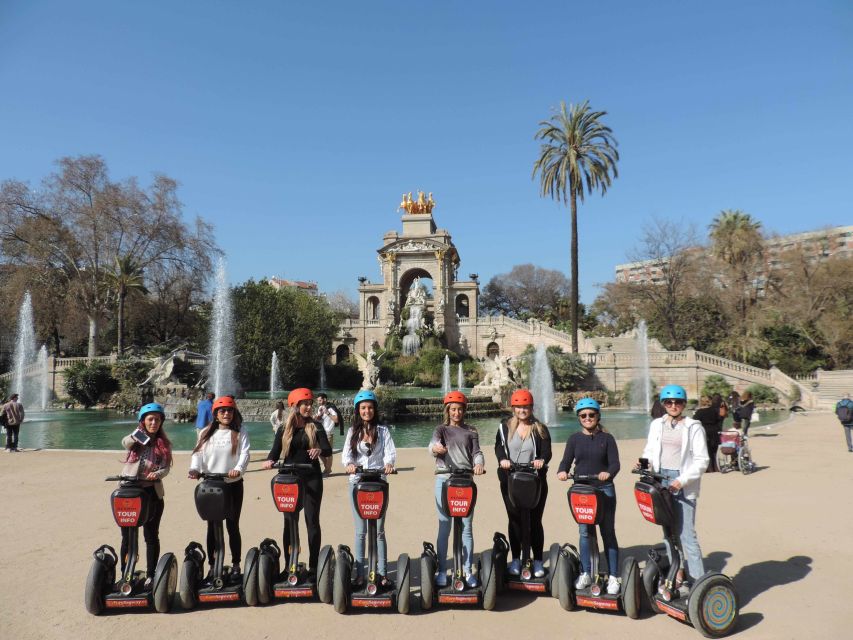
After the modern-city sections, the tour hits Parc de la Ciutadella. This is one of the stops I’d call functional, not just scenic. A green oasis breaks up architecture intensity and gives you a visual reset.
Even if you’re a photo person, take a minute to just look around. Parks like this change how you read the city. Gaudí’s ideas about form and rhythm land differently when your eyes aren’t stuck only on stone and signage.
The guided stop here is also a mental breather. After this, you head toward major civic and expositions-style landmarks.
Parliament of Catalonia, Neptú, and Arc de Triomf: civic pride and expo-era design
Next you’ll pass Parliament of Catalonia, then see Neptú, and finally stop at Arc de Triomf.
The Arc de Triomf detail you should latch onto is that it was built for the 1888 World Expo. That fact matters because it explains why the monument feels like a gateway built for coming and going—something meant for international attention, not quiet neighborhood life.
Neptú and the Parliament area sit in a different emotional register. They feel official, civic, and deliberate. Seeing them by Segway keeps the tour moving without turning this into a rushed checklist. You still get guided interpretation, but you’re not stuck fighting for a slow walking pace.
Passeig de Gràcia and the Gaudí stop list: Casa Milà and Casa Batlló
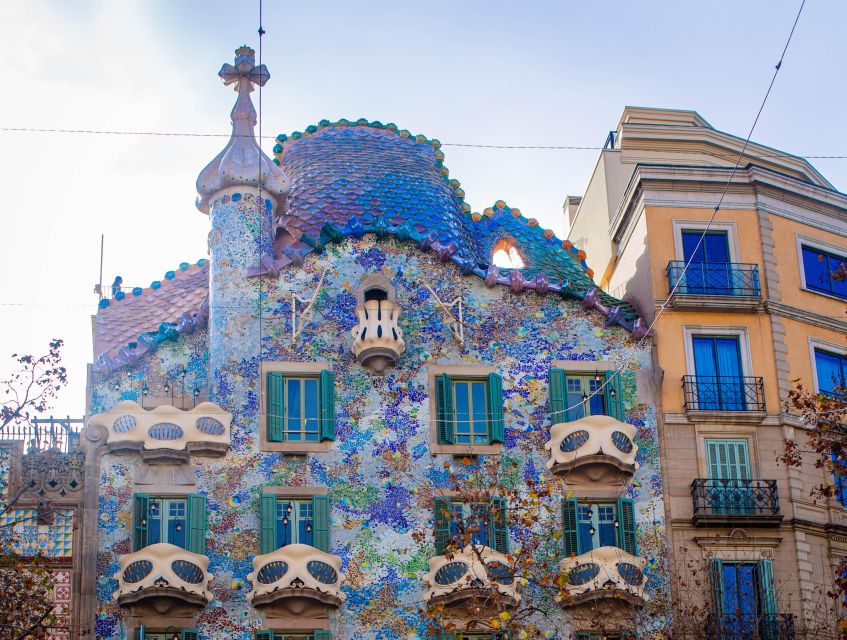
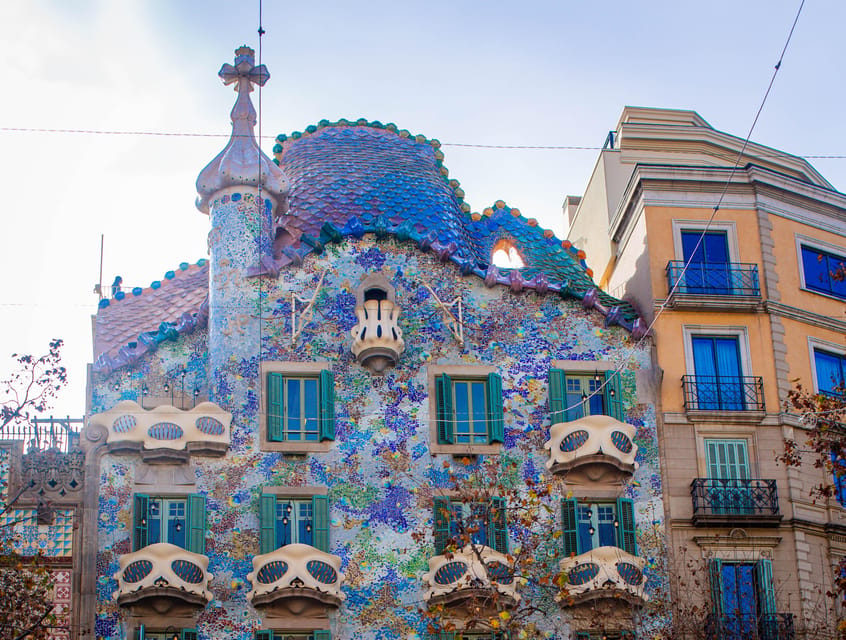
Then comes the payoff for Modernisme fans: Passeig de Gràcia. You’ll have time for a guided stop and sightseeing pass, followed by photo stops at Casa Milà and Casa Batlló.
This is the street where Barcelona’s architectural personality gets loud and specific. If you’re hoping to understand Gaudí beyond a single signature landmark, this part helps you connect dots. Casa Milà and Casa Batlló are both Gaudí, but they communicate differently. You’ll want to look at how the facades play with ornamentation, shape, and light.
Because the tour time at each stop is limited, you’ll get more value if you go in with a simple game plan:
- Pick one facade detail to focus on (curves, openings, balconies, or surface texture).
- Let the guide point out what you’d miss in a quick glance.
- Take one good wide photo first, then one close-up second.
Doing it this way helps you walk away feeling you saw something, not just took pictures.
Sagrada Familia: seeing the unfinished towers up close
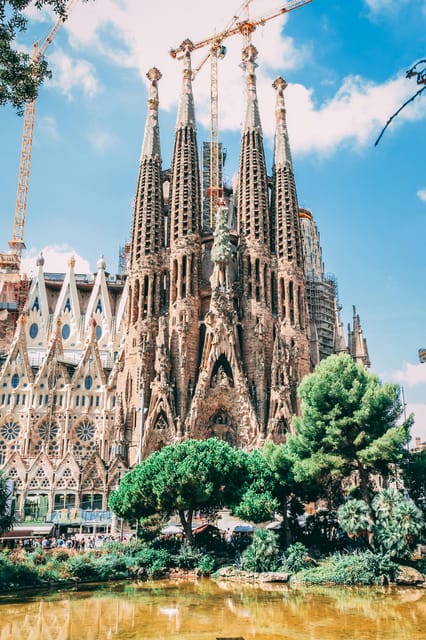
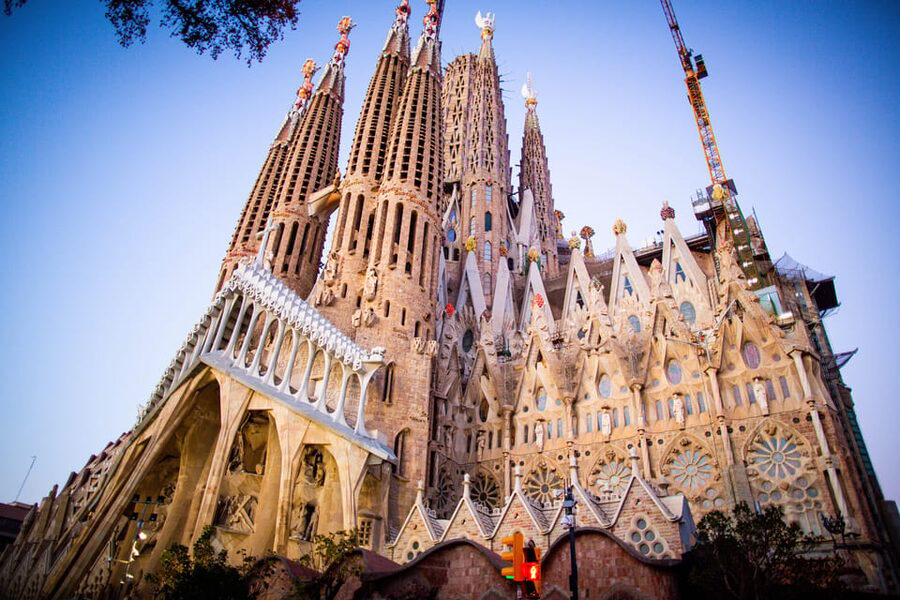
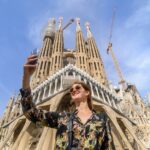
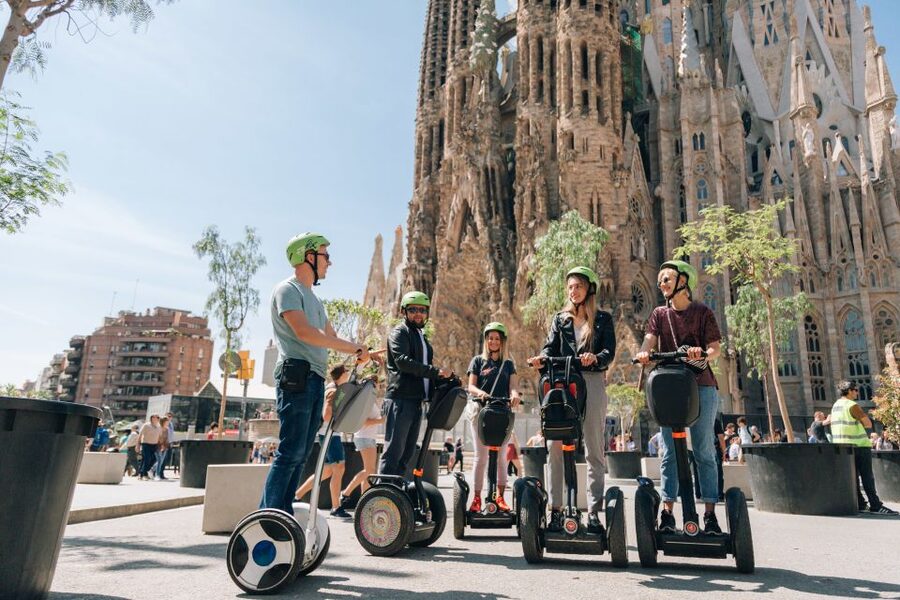
The tour’s marquee moment is Sagrada Familia. You’ll have a guided photo stop here with time to marvel at the soaring towers of Gaudí’s unfinished masterwork.
What I appreciate about this structure—rather than trying to do everything on your own—is that you’re not just staring at a famous building. You’re hearing what makes it unfinished and why that still feels central to what you’re seeing.
A Segway tour also helps with flow. You arrive at Sagrada Família with your head already trained by earlier stops: Gothic Quarter context, Roman-era layering, Modernisme street design, then the grand, evolving monument.
One more small practical point: plan for the fact that you’ll want photos, but you’ll also want a few moments to stand and look without your camera in your hand. Ten minutes goes fast when you’re juggling both.
La Monumental and the ride back: keeping the story coherent
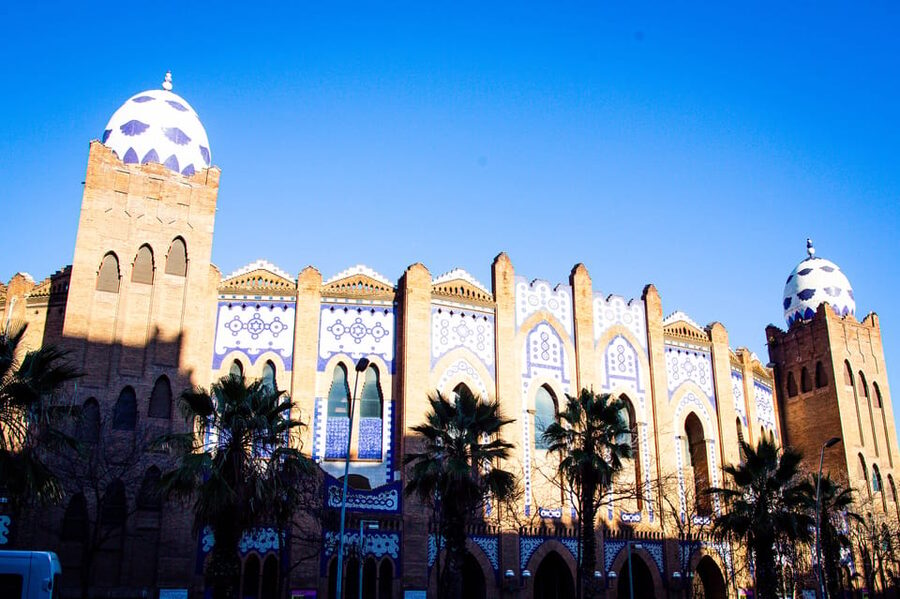
You finish with a final short stop at La Monumental, then return to Carrer del Correu Vell, 6.
I like this ending because it doesn’t drop you into a random last photo. It keeps the tour feeling like one connected arc through Barcelona’s architectural eras.
By the time you’re headed back, your legs should feel better than after a full walking day. The tradeoff is that you’re still on a vehicle, so you’ll likely want water and a little stretching once you’re done.
Price and value: what you’re paying for at $117 per person
At $117 per person for 3 hours, you’re paying for two things that are hard to fake on your own:
- a guided route that connects major architecture areas into one story
- the Segway experience with driving lesson/test drive, plus helmets and raincoats
A self-guided route could look similar on a map, but it wouldn’t give you the same built-in flow from Gothic Quarter to Modernisme to the Sagrada Família area. The Segway component is also not just a novelty; it’s what makes a route with many stops feel doable in a half-day window.
Since this is a private group, the per-person value tends to make more sense if you’re traveling as a small party and want control over pace and focus. The guide can also adjust things based on what you care about, which is exactly the kind of benefit you notice when you’re trying to fit sights into limited time.
Who this tour suits best (and who should skip it)
This tour is designed for adults, and the rules are clear.
It’s not suitable for:
- children under 16
- pregnant women
- people with heart problems
- people under 77 lbs (35 kg)
- people over 297 lbs (135 kg)
If you’re generally steady on your feet and you’re comfortable learning a new device quickly, this is a strong match. If you’re anxious about balance, you can still try—just know the training is brief and the ride keeps moving.
Language options are also a plus. You can get the tour in Spanish, English, French, or Russian, which helps if you want the guide’s architecture explanations to land clearly.
Practical tips to make your 3 hours smoother
A few things will help you enjoy the ride without distraction:
- Bring your passport or ID card, since it’s required.
- Wear clothes you can move in comfortably, even if you’re not walking much.
- Expect the route to include narrow streets early and then spacious avenues with bicycle lanes and parks later, so your posture and focus should shift with the scenery.
- If it’s rainy, thank whoever designed the raincoats. You don’t want wet gear ruining your grip or your photos.
Also, if you care about photos, don’t treat every stop as identical. Use the short stops (like the monument and smaller landmarks) for wide shots and context, and save close, detail shots for the Gaudí-focused segments.
Should you book this Gaudí Segway tour?
I’d book it if you want a single, guided way to see Barcelona’s major architectural moods without turning your day into a long walking marathon. It’s especially worth it if you care about understanding the connections—Roman layers leading into Modernisme—and you like the idea of covering more ground in less time.
I’d skip it if you don’t feel comfortable learning a Segway quickly, or if you’re in a situation where you shouldn’t ride. The experience depends on balance and attention, so don’t force it.
If you’re aiming for Gaudí highlights plus major city landmarks in a tight schedule, this is one of the easier ways to get a coherent, scenic tour loop.
FAQ
Where is the meeting point?
Meet at Carrer del Correu Vell, 6, 08002 Barcelona.
How long is the tour?
The experience lasts 3 hours.
What does the price include?
It includes a Segway driving lesson and test drive, a guide, helmets, and raincoats.
What languages are available for the live guide?
The live guide is available in Spanish, English, French, and Russian.
Is the tour private?
Yes. It’s listed as a private group.
Do I need to bring ID?
Yes. Bring your passport or ID card.
What is the cancellation policy?
You can cancel up to 24 hours in advance for a full refund.
Who is the tour not suitable for?
It’s not suitable for children under 16, pregnant women, people with heart problems, and people outside the 35 kg to 135 kg weight range.