REVIEW · LISBON
Lisbon Contemporary Architecture
Book on Viator →Operated by BLUELANE® · Bookable on Viator
One sentence can sum this tour up: architecture with real purpose. You’ll bounce between Champalimaud Foundation on the Tagus and MAAT’s futuristic, walkable museum shell, where design isn’t just for show. I love how the stop locations are spaced for good viewing—always with that river-and-city context helping you understand what you’re seeing.
I also like the human side of it. Guides like Nelson Leona can keep things friendly and adjust the tour to your interests, while staying grounded in the story behind each building. One possible drawback: MAAT’s museum ticket isn’t included, so you should plan for the add-on when you arrive.
In This Review
- Key highlights you’ll actually notice
- Where this Lisbon architecture tour fits in
- Price and what $181.39 buys you
- Charles Correa at the Tagus: Champalimaud Foundation
- Belem Cultural Center: modern form beside old Lisbon
- MAAT (Museu de Arte, Arquitetura e Tecnologia): the roof-walk museum
- Parque das Nações: modern Lisbon from above
- How the 4-hour flow works (and why it matters)
- Guide quality makes a difference here
- Who this tour suits best
- Should you book this Lisbon Contemporary Architecture tour?
- FAQ
- How long is the Lisbon Contemporary Architecture tour?
- What does the tour cost?
- Is it offered in English?
- Is this a private tour?
- Do I need a museum ticket for MAAT?
- Is the Parque das Nações cable car included?
- What time window is the activity available?
- What is the cancellation policy?
Key highlights you’ll actually notice
- Champalimaud Foundation’s Tagus-facing research building, described as architecture at the level of sculpture and therapy
- Belem Cultural Center as a modern icon with a gentle contrast against older Lisbon nearby
- MAAT’s roof-walk design, including the idea that the museum continues the Tagus promenade
- A included roundtrip cable car in Parque das Nações for a top-down look at modern Lisbon
- Private group setup with English service and a mobile ticket for easier entry
Where this Lisbon architecture tour fits in
This is a 4-hour contemporary-leaning route in Lisbon, offered in English and run as a private tour (so it’s just your group). It’s priced at $181.39 per person, and it’s typically booked about 11 days in advance—a sign this route is popular for people who want more than a generic city walk.
The big value here is how the itinerary is built around “modern Portugal in context.” You’re not only looking at buildings; you’re seeing them placed where Lisbon’s old maritime identity meets newer civic and industrial thinking. In practice, that means fewer random stops and more moments where the setting explains the design.
Price and what $181.39 buys you
At $181.39 per person for about 4 hours, you’re paying for guide time plus the structure of a tight route. A group discount can apply, but even without it, you’re buying something harder to replicate: a guided path that connects architecture, local history, and why these buildings matter.
The one financial detail you’ll want to account for is MAAT admission not included. By contrast, the Parque das Nações cable car ride is included (roundtrip). So your budget isn’t “all-inclusive,” but it’s still pretty clean: one likely add-on at MAAT, and then the cable car is covered.
Charles Correa at the Tagus: Champalimaud Foundation
Your first major stop is the Champalimaud Foundation, a striking, futuristic building sitting right on the Tagus. It’s positioned in a kind of architectural dialogue with Lisbon’s seafaring past—an area framed by older landmarks like the Tower of Bethlehem tradition on one side and the Dock of Rocks symbol of labor on the other.
What makes this stop interesting isn’t just that it looks modern. The point is the building’s mission. The Champalimaud Foundation is tied to biomedical research, and the design philosophy is described as raising architecture to sculpture, sculpture to beauty, and beauty to therapy. Even if you’re not an architecture nerd, that framing helps you read the building differently: it’s meant to feel purposeful, not cold.
Designed by Charles Correa, the building faces directly onto the river. That matters because you can’t separate form from place here. The Tagus setting turns the facade and volumes into something you can keep tracking as you move, instead of a single photo moment.
Practical tip: if you’re sensitive to wind, the riverfront can feel breezy. Wear something that handles cool air changes, and you’ll enjoy the exterior time more.
Belem Cultural Center: modern form beside old Lisbon
Next up is the Belem Cultural Center, one of modern Lisbon’s biggest icons. It’s designed by Manuel Salgado and Vittorio Gregotti and built on a special site—so the building doesn’t just sit on the waterfront; it’s working with the ground and surroundings.
The best way to understand this stop is in the contrast. The Cultural Center’s modern architecture is meant to contrast gently with iconic older Lisbon buildings. Translation: you’re seeing two eras talk to each other instead of trying to overpower each other.
What you should look for here is not only the structure itself, but how the building’s modern language lands against the older environment. That gentle contrast is exactly what makes it useful for a guided architecture route. You start noticing patterns: how new designs respect sightlines, how scale shifts, and how materials and shapes change the way the street (or waterfront) feels.
MAAT (Museu de Arte, Arquitetura e Tecnologia): the roof-walk museum
Then comes MAAT, the Museu de Arte, Arquitetura e Tecnologia. The concept is right in the name: art, architecture, and technology are treated as interconnected parts of one bigger conversation, with a space aimed at debate, discovery, and critical thinking.
MAAT’s setting is one of its biggest selling points. It’s in Belém, on the Tagus, and it’s explicitly connected to a nearby piece of industrial heritage: the Central Tejo Power Station. That connection matters for you because it anchors the museum in local industry rather than floating it in a design vacuum.
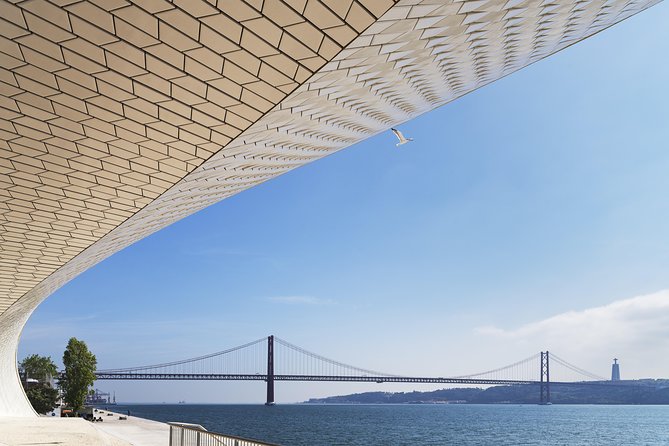
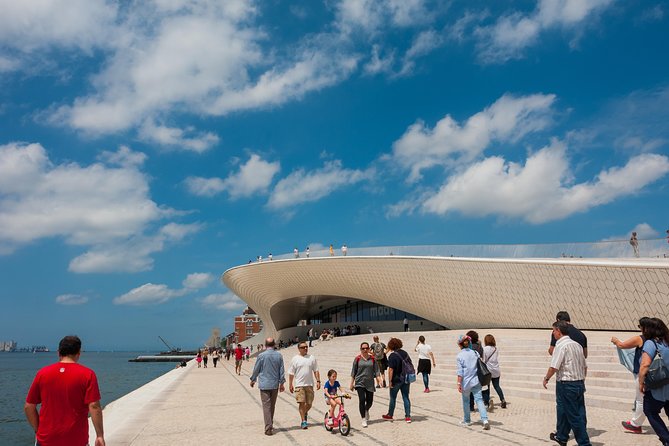
Now for the reason this stop gets recommended for architecture lovers who also like practical experiences: the building’s exterior and access are meant for movement. The arching structure is described as a continuation of the promenade, covered in 15,000 glazed tiles, and designed so visitors can walk over the roof.
One hour is scheduled here, but the museum admission is not included—so expect that to be an extra step in your planning. If you’re the type who likes to read labels and slow down, you might feel the hour compress a bit. If you prefer to focus on the architecture and take your time with the roof-walk idea, you’ll get more satisfaction.
What to do with your time: don’t treat MAAT like only another museum inside. Treat it like a designed path—look at how the arching form frames the river, then use the roof walk concept to get your bearings.
Parque das Nações: modern Lisbon from above
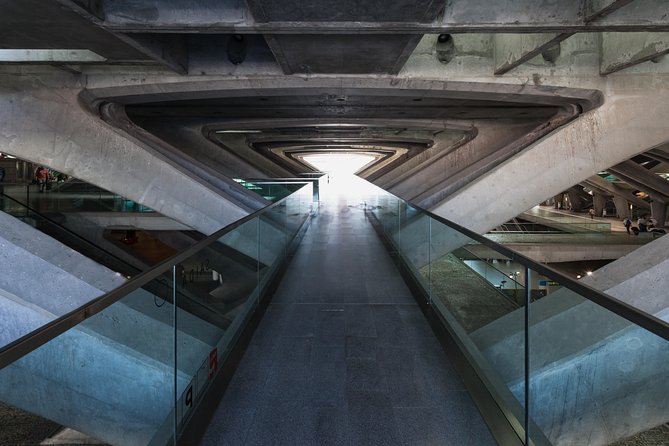
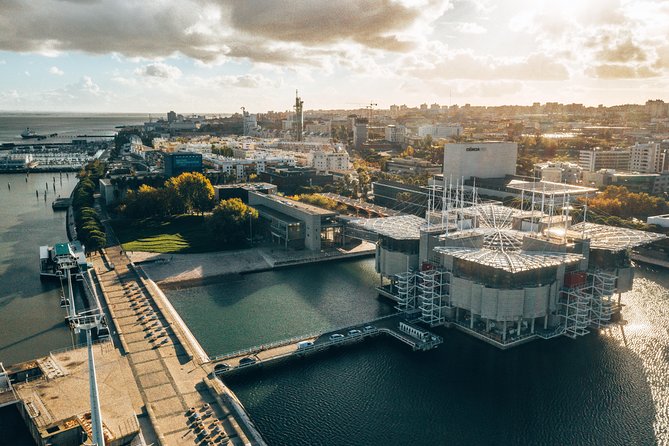
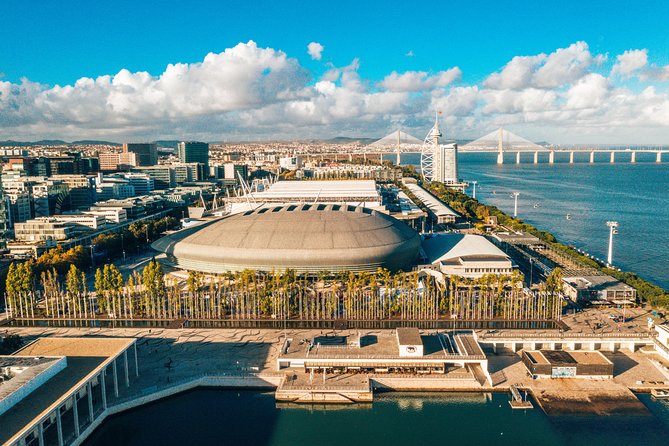
After the museum stop, the tour moves to Parque das Nações, Lisbon’s newer district known for planning that imagined a different kind of city. From the start, it was an opportunity to create a new city where architecture could take varied forms.
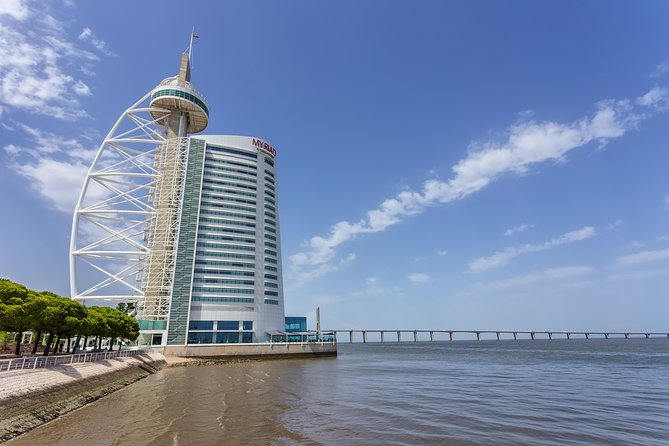
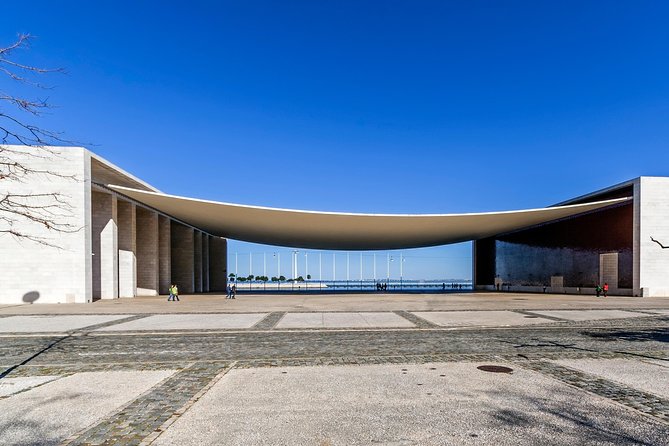
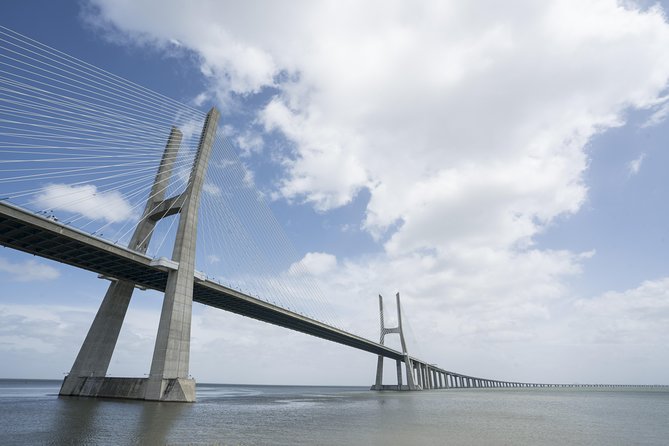
Here’s what you’ll appreciate: you’re not only hearing about individual buildings. You’re getting a sense that the area was built as a design system. The tour mentions several standout examples, including the Portuguese Pavilion, Atlantic Pavilion, Knowledge Pavilion, Vasco da Gama Tower, and Orient Station.
And yes, you get the payoff that most people want after seeing modern architecture up close: a birds-eye view. You’ll do roundtrip on the Parque das Nações cable car. The cable car ride is included, which is a nice touch because it turns the last part of the tour into a view-based finale. From above, you can connect the dots between buildings that look separate on street level.
Practical note: cable cars can mean short lines or waiting, depending on the day. With a 4-hour overall itinerary, plan to arrive ready to move quickly through each stop.
How the 4-hour flow works (and why it matters)
A route this length works when the timing is tight and the stops are close enough to reduce dead time. You’ll go from Champalimaud to Belem Cultural Center, then MAAT, and finish in Parque das Nações. That sequence makes sense because you’re moving through distinct design moods: research-future on the Tagus, modern cultural icon in Belém, museum-architecture-tech hybrid, then a modern district built for the future.
You’ll also be dealing with exterior design interpretation. That’s not a bad thing. It actually fits Lisbon. You’ll want time outside to see how sunlight changes textures—especially with MAAT’s glazed-tile facade and anything you view from the river.
The tour runs with an opening window of 7:00 AM to 8:00 PM daily, so you can pick a time slot that fits your day. If you want lighter crowds and softer light for photos, an earlier slot often helps, but you’ll have to decide based on your own pace.
Guide quality makes a difference here
One of the strongest signals from past experiences is the guide. Nelson Leona, in particular, is credited with customizing the tour to a guest’s preferences—while also being polite, personable, and fluent in English.
That matters because contemporary architecture can feel abstract if someone just points and names buildings. A good guide helps you see patterns: how the building’s purpose shapes its form, how materials communicate values, and why Lisbon places modern works where it does.
If you care about explanation—what you’re looking at and why it exists—you’ll likely get more value from this type of tour than from an unscripted self-guided walk.
Who this tour suits best
This is a great fit if:
- You’re the kind of traveler who enjoys design and intent, not only landmarks.
- You want a focused route without spending half a day hunting things down.
- You like a balance of architecture viewing and a simple ticketed “wow moment” (that cable car).
It may be less ideal if:
- You hate ticket add-ons. MAAT admission isn’t included, so you’ll pay extra if you want to go inside and fully use the museum time.
- You want a tour that heavily emphasizes historic Lisbon. This is contemporary-focused, even when it uses older Lisbon as a contrast.
Should you book this Lisbon Contemporary Architecture tour?
I’d book it if you want a guided architecture sampler that actually connects the dots between purpose, place, and form. The route hits major contemporary statements in Belém and then gives you that modern-district perspective in Parque das Nações with an included cable car. At $181.39, you’re paying for a tight plan and a competent English-speaking guide, and that’s usually what makes architecture tours worth it.
I’d pause before booking if you’re trying to keep costs ultra-low, since MAAT admission isn’t included. But if you’re willing to budget for that one part, the value feels solid—especially with the cable car included and the private-group format.
FAQ
How long is the Lisbon Contemporary Architecture tour?
It runs for about 4 hours.
What does the tour cost?
The price is $181.39 per person.
Is it offered in English?
Yes, it’s offered in English.
Is this a private tour?
Yes. Only your group participates.
Do I need a museum ticket for MAAT?
MAAT admission is not included, so you’ll likely need to purchase a ticket separately.
Is the Parque das Nações cable car included?
Yes. The cable car roundtrip is included.
What time window is the activity available?
The listed opening hours run daily from 7:00 AM to 8:00 PM.
What is the cancellation policy?
Cancellation is free up to 24 hours in advance for a full refund.
If you tell me what time of day you’re visiting Lisbon and whether MAAT inside is a must for you, I can help you decide if this schedule matches your energy level.