REVIEW · LOS ANGELES
Downtown Los Angeles History and Architecture Walking Tour
Book on Viator →Bookable on Viator
Downtown LA gets personal on foot. This small-group architecture and film history walk connects civic life, design, and movie-making into one logical route you can actually see (and ask questions about) as you go. You’ll get a fresher way to read the streets, not the usual postcard version.
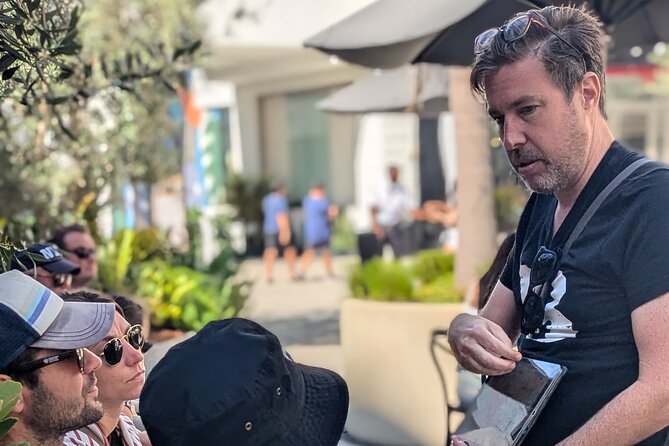
I love the thoughtful commentary that ties each building to how Los Angeles changed over time. A big strength here is the guide’s habit of making connections across food, public spaces, and Hollywood industry history, so the city starts to feel like one story instead of separate stops.
One consideration: it’s a lot of walking for 2 hours 30 minutes, and there aren’t built-in pauses. If you’re planning on lots of photos, bathroom breaks, or a slow pace, wear comfortable shoes and plan ahead.
In This Review
- Key highlights worth writing home about
- Price and walking time: what $35 buys you in DTLA
- Grand Central Market: where LA’s global mix starts
- Angels Flight and Pershing Square: tiny rides, big civic meaning
- Bunker Hill steps and the Theater District: from neighborhood climb to movie palaces
- Bradbury Building and the Continental Building: architecture that became film language
- El Dorado Lofts, The Last Bookstore, and Los Angeles Theatre: culture in three different keys
- Arcade Building, Clifton’s, and the shift to adaptive reuse
- Apple Tower Theatre: when a talkies pioneer becomes a modern flagship
- Jewelry District, Fashion District, and Eastern Columbia Lofts: design as an industry
- Hotel Per La: finishing with a financial-history glow-up
- Who this walking tour is for
- Should you book this Downtown LA walking tour?
- FAQ
- How long is the Downtown Los Angeles history and architecture walking tour?
- What is the price, and is anything included?
- What language is the tour offered in?
- What group size should I expect?
- Is the tour suitable for all fitness levels?
- What happens if the tour is canceled due to weather?
Key highlights worth writing home about
- Small group size (max 15) means you can actually ask questions and stay engaged.
- Most stops are quick and free to enter, so you spend your money on the guide, not ticket fees.
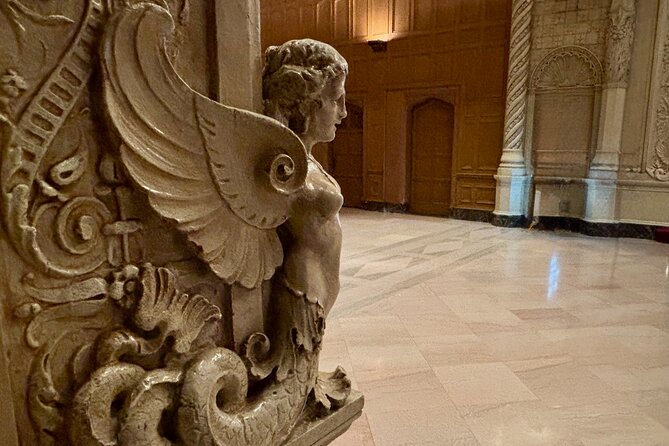
- Film history shows up in architecture, from movie palaces to iconic facades you’ll recognize on screen.
- Urban design themes come up at major civic anchors like Pershing Square.
- Adaptive reuse is everywhere, with historic theaters turned into modern spaces like an Apple flagship.
Price and walking time: what $35 buys you in DTLA
At $35 per person for about 2 hours 30 minutes, this tour is priced like a value play compared to big-bus sightseeing. You’re paying for expert interpretation, not a long list of paid attractions. That matters in Downtown LA, where a lot of the best “sights” are on the street: the way buildings line up, the shape of plazas, and the design choices that hint at economic eras.
The format also helps the value. With a maximum of 15 travelers and a local guide, it feels more like a guided walk with conversation than a scripted lecture. And the tour includes a mobile ticket, which is handy if you like light planning.
The main tradeoff is physical. The route is built for seeing a lot of ground, so you’ll want moderate fitness and good walking shoes. If you’re the type who stops every few minutes to rest, this won’t feel slow—but it will feel nonstop.
You can also read our reviews of more tours and experiences in Los Angeles.
Grand Central Market: where LA’s global mix starts
The tour kicks off at Grand Central Market, a food hall that opened in 1917. It’s a great first stop because it instantly shows what Downtown LA has always been good at: mixing people, tastes, and cultures under one roof.
What makes this start work is that the tour doesn’t treat the market as a snack break. It frames the market as a micro-version of the city, with recognizable comfort foods next to less-familiar ones. Expect a mix like Mexican tacos, Japanese ramen, Salvadoran pupusas, and Jewish pastrami—because LA’s diversity isn’t an abstract slogan here. It’s concrete, edible, and everyday.
Practical tip: even if you don’t plan to eat, arrive ready to smell and look. This stop is about orientation—helping you read the rest of DTLA through a social and cultural lens.
Angels Flight and Pershing Square: tiny rides, big civic meaning
Next comes Angels Flight, built in 1901 and known as the world’s shortest railway. It’s short in length, but not in impact. This little funicular reads like a relic that still performs a real job: connecting levels of the neighborhood and reminding you that LA used to solve problems with compact, practical systems.
The tour also uses Angels Flight to set up a theme: Los Angeles keeps re-inventing itself, but it rarely deletes its past. You’re meant to notice how the city keeps old infrastructure as emotional memory, even while the surrounding area changes.
Then you hit Pershing Square, once the heart of civic life. The tour’s angle here is urban design: how public squares evolve when cities juggle open space, private interests, and competing ideas of what a “public” place should be. If you’ve ever felt like downtown plazas are either too controlled or too neglected, this stop gives you language for why that happens.
Bunker Hill steps and the Theater District: from neighborhood climb to movie palaces
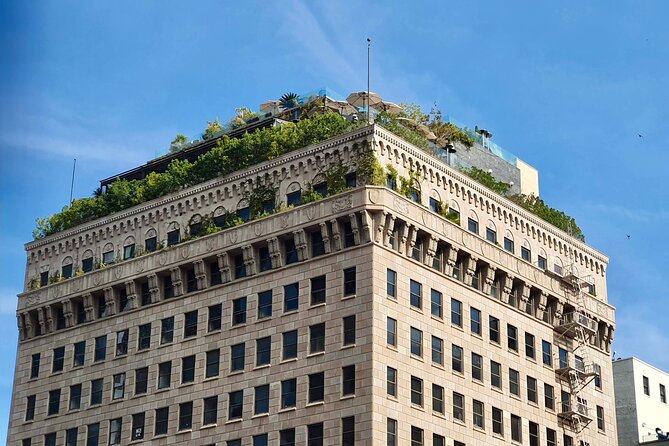
As the walk moves through the area around the iconic steps tied to Bunker Hill, you get a metaphor for LA’s climb to global attention. The steps point to a bigger story: how a wealthy residential district shifted into a cultural and financial zone. The physical elevation becomes symbolic—you’re literally walking up and down the city’s changing priorities.
Then it’s time for the Historic Theater District on Broadway. This stretch is framed as Hollywood’s early cinema chapter in brick and plaster: a time capsule with what’s often described as the world’s largest concentration of movie palaces. Here the design isn’t just decoration. It’s marketing, and it’s a statement about how seriously moviegoing was taken.
Two stops make this real. You’ll see Sid Grauman’s Million Dollar Theater, recognized as his first movie palace. The tour highlights how lavish design and the concept behind the theater influenced cinema worldwide. After that, you’re set up perfectly for one of DTLA’s most cinematic interiors: the Bradbury Building.
Bradbury Building and the Continental Building: architecture that became film language
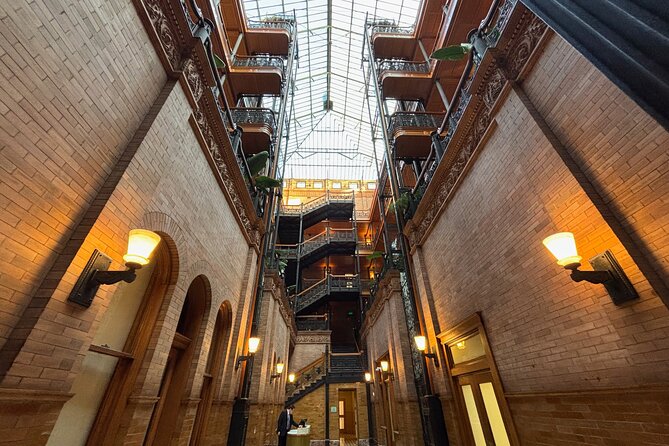
The Bradbury Building is one of those places that feels like a set even if it’s just a building. The big visual elements are the open atrium, wrought-iron staircases, and the way light moves through the space. The tour points out its film legacy, including its role in projects like Blade Runner and its broader influence on architecture elsewhere.
This stop works because it explains why certain buildings become symbols. The Bradbury Building isn’t only pretty—it’s functional beauty. The open layout makes it easy to film and easy to recognize, which is exactly why it keeps showing up.
Then you pivot to the Old Bank District on Spring Street, often called The Wall Street of the West. This is where Downtown LA’s ambition shows up in Beaux-Arts stonework and early grandeur. The tour treats these bank-era blocks as a visual timeline of power and transformation.
A key example is the Continental Building, completed in 1904—one of the city’s first high-rises. It’s the kind of structure that makes you understand how LA started thinking vertically and globally. Even a quick exterior look becomes more meaningful once you’ve been taught what to look for: symmetry, ornament, and how the building signals status.
El Dorado Lofts, The Last Bookstore, and Los Angeles Theatre: culture in three different keys
After the finance chapter, the tour swings into style and pop culture.
The El Dorado Lofts (built as a luxury hotel in 1913) get attention for their Art Deco and Nouveau mix, including the ornate terra cotta exterior with floral and geometric patterns. The tour frames this as LA plugging into a wider design movement. You’re not just seeing a building; you’re seeing how Los Angeles borrowed global trends and adapted them to its own boom years.
Then comes a complete change of mood: The Last Bookstore, opened in 2005. This stop is part shopping, part art project. You’re guided through the book world shape—especially the whimsical book tunnel and the wall-to-wall shelving. But it’s more than an Instagram setup. The tour emphasizes the shop as a haven for rare books, vinyl records, and local art, so you leave with a sense that DTLA still builds spaces for creativity that don’t require Hollywood budgets.
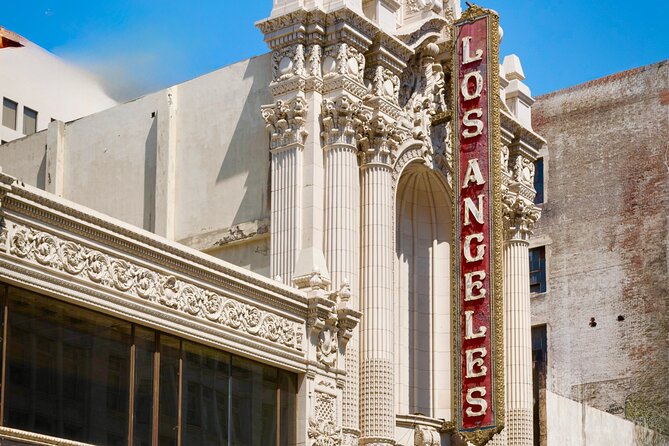
From books to cinema: the Los Angeles Theatre is a highlight for anyone who likes Golden Age movie culture. Built in 1931 for the premiere of Charlie Chaplin’s City Lights, its crystal chandeliers, gold leaf accents, and grand marble staircases are described as comparable to major European opera houses. You’ll understand why: it was designed to make film feel like an event.
Practical tip: these theater stops are especially good if you love interiors. The tour’s format is set up so you get more than a street-level glance at design details.
Arcade Building, Clifton’s, and the shift to adaptive reuse
Next is the Arcade Building, completed in 1924. The tour frames it as a snapshot of LA’s radio era, since it once housed studios and offices tied to the city’s early broadcast scene. Today, it’s an arcade-style structure with modern shops and eateries, which makes it an easy place to compare past and present at a human scale.
Then you’ll stop at Clifton’s, founded in 1931 as Clifton’s Cafeteria. This matters because the tour doesn’t treat it as kitsch. It connects the restaurant to the Great Depression, when it offered free meals to anyone in need. The modern version keeps that spirit of hospitality while adding themed design—like a towering tree, enchanted forest decor, and hidden tiki bars.
This is also where the tour earns its “perspective beyond the tourist narrative” goal. It shows you Downtown LA as an ongoing social project, not only an architectural museum.
Apple Tower Theatre: when a talkies pioneer becomes a modern flagship
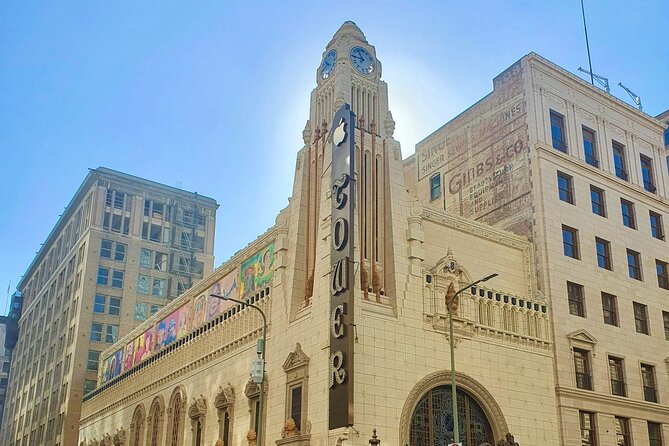
The Tower Theatre (also known as the Apple Tower Theatre) is built on 1927 history. The tour highlights its role as the first Los Angeles theater designed to screen talkies, and it points to The Jazz Singer as the debut film connected to that shift. It’s a reminder that technology changes what people expect from a venue—and the building story follows.
Architecturally, the theater is described as Spanish Renaissance Revival, with ornate detailing like carvings, stained glass, and vaulted ceilings. The tour even connects it to film culture in a specific way, linking its atmosphere to a surreal scene from David Lynch’s Mulholland Drive.
Today, Apple’s transformation is part of the walking lesson on adaptive reuse. The message is clear: historic spaces can survive by getting new functions, as long as the design is treated with respect.
If you like the idea of old Hollywood infrastructure meeting modern tech culture, this stop alone makes the time worthwhile.
Jewelry District, Fashion District, and Eastern Columbia Lofts: design as an industry
The tour moves from theaters to trade. In the Jewelry District, you’ll hear that it spans 12 blocks and is described as the largest jewelry district in the United States, with roots tracing back to the 1920s. The guide connects this to craft and entrepreneurship and ties it back to a global diamond culture reference point—Antwerp is mentioned as a diamond capital background. That international connection helps you see jewelry work as part of a worldwide supply chain, not just local retail.
Then the Fashion District comes into view. This isn’t styled as LA trying to be Paris; it’s framed as a working district where textiles, streetwear, and creativity keep moving. If you’re the kind of person who likes how cities manufacture ideas (not only display them), you’ll appreciate this section.
The tour caps the design conversation with Eastern Columbia Lofts, built in 1930. You’ll notice turquoise terracotta tiles and the famous clock tower. It’s described as Art Deco with comparisons to New York’s Chrysler Building, and the tour adds a pop-culture layer by mentioning well-known residents like Johnny Depp. That celebrity note isn’t the point by itself. It’s used to show how architecture becomes part of the city’s mythology.
Hotel Per La: finishing with a financial-history glow-up
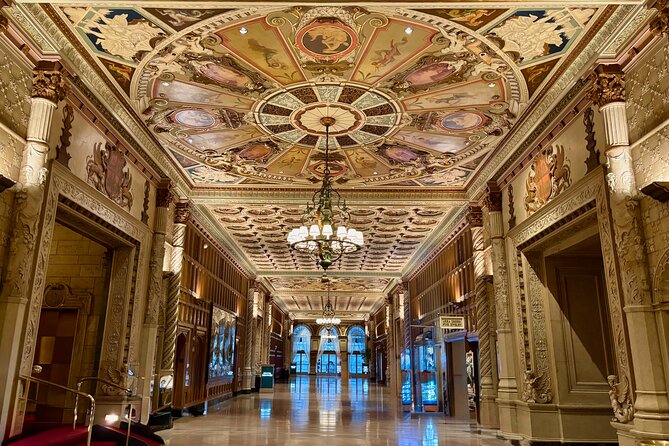
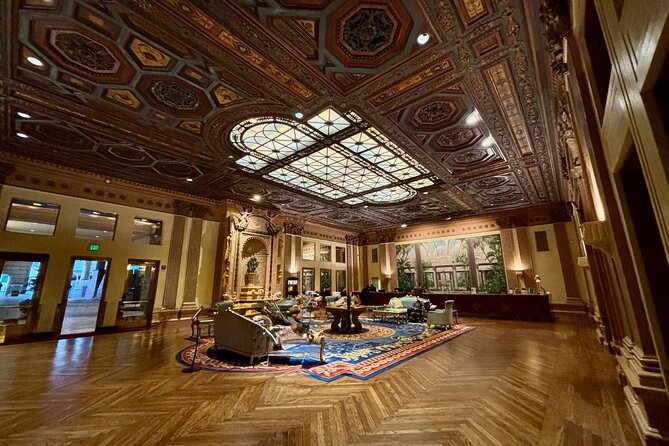
You end at Hotel Per La, Autograph Collection on 649 S Olive St. The tour frames the building as a former Bank of Italy structure from the 1920s, designed as a symbol of Italian immigrant aspirations. Over time, the tour explains, Bank of Italy evolved into what became Bank of America, and the building served as West Coast headquarters. In other words: the end stop loops you back to the financial theme, but with a happier ending.
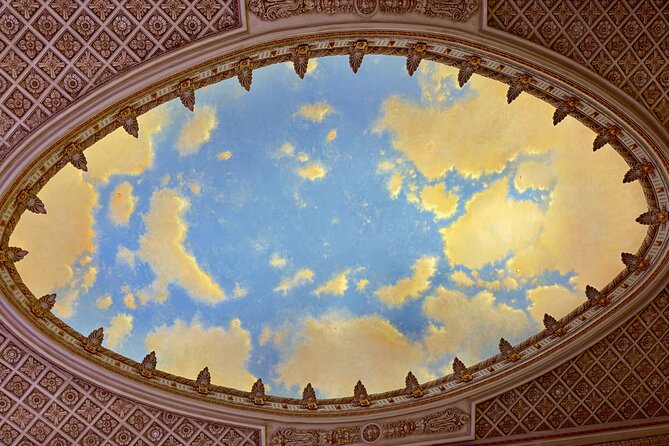
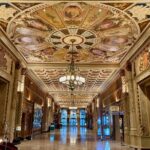
Now it’s a boutique hotel, and the interior details the tour emphasizes include a restored gold ceiling and marble columns in a lobby that reads as Roaring Twenties glamour. You also get practical payoff for the walk: the tour ends near public transportation (one block from Metro station 7th Street / Metro Center).
Who this walking tour is for
This experience fits best if you want a guided walk where architecture and film culture are treated like connected forces, not separate trivia tracks.
You’ll likely enjoy it most if:
- You like short, story-driven explanations at each stop
- You want a route that shows you Downtown LA as a city of change, not just famous facades
- You’re comfortable walking a full 2.5 hours
- You enjoy asking questions and getting thoughtful answers from a local guide
If you want a technical lecture with names, dates, and measurements, you might find this leans more toward storytelling and design interpretation than academic architecture cataloging.
Should you book this Downtown LA walking tour?
Book it if you want one easy plan to see how DTLA’s architecture, civic spaces, and movie history connect in the real city you’ll be standing in. For $35, the value is strongest when you care about context: you’ll walk away knowing why these buildings look the way they do and how LA’s identities have shifted over time.
Skip it or consider another option if:
- You hate long, continuous walking with limited built-in breaks
- You only care about architecture as a technical subject and not as a story of how LA works
FAQ
How long is the Downtown Los Angeles history and architecture walking tour?
It runs for about 2 hours 30 minutes.
What is the price, and is anything included?
The price is $35.00 per person, and it includes a local guide.
What language is the tour offered in?
The tour is offered in English.
What group size should I expect?
This experience has a maximum of 15 travelers.
Is the tour suitable for all fitness levels?
The tour asks for moderate physical fitness since it involves walking.
What happens if the tour is canceled due to weather?
If it’s canceled because of poor weather, you’ll be offered a different date or a full refund.