REVIEW · HELSINKI
Helsinki: Architectural Highlights Guided Walking Tour
Book on GetYourGuide →Operated by Helsinki Dreamdays Walking Tour · Bookable on GetYourGuide
Helsinki makes sense when you walk it. This 3-hour architectural stroll, guided by a Sociology PhD student, turns street corners into stories, with a small group (up to 6) and plenty of major-building stops you can actually see up close. You’ll cover everything from neoclassical and Gothic Revival to Art Nouveau, functionalism, modernism, and newer contemporary design, all without needing a master’s degree to enjoy it.
One catch: you’ll cover about 5–6 km of walking, rain or shine, so bring shoes that won’t complain.
In This Review
- Key highlights you’ll feel fast
- Starting at Fazer Café Kluuvikatu: your Helsinki briefing point
- Senate Square and Helsinki Cathedral: the classic anchor
- National Library of Finland, Jugend coffee, and Kappeli’s public vibe
- Esplanadi and Runeberg’s memorial: where poetry meets design
- Academic Bookstore to Rautatalo to Central Station: functionalism in motion
- Fazer Café Sanomatalo and Kansalaistori: the city’s working heart
- Oodi Central Library: the wave-shaped icon (and why it matters)
- Amos Rex and Kamppi Chapel: modern art and everyday spirituality
- Pohjola Insurance Building and the walk back: finishing on a design cue
- What you’re paying for: price, group size, and real value
- Who should book this tour, and who should skip it
- Should you book Helsinki’s architectural highlights walking tour?
- FAQ
- Where does the tour meet?
- How long is the Helsinki architectural highlights walking tour?
- How much does the tour cost per person?
- How big is the group?
- What language is the tour offered in?
- How much walking is involved?
- Does the tour run in bad weather?
- What’s included in the price?
- What’s not included?
- Can you customize the focus of the tour?
Key highlights you’ll feel fast

- A guide with a research mindset: the commentary ties buildings to how people live and think, not just dates and names.
- Small-group pace (max 6): more time to ask questions and look closely at details.
- World Design Capital + UNESCO City of Design: you get context for why Helsinki designs buildings the way it does.
- A style-focused custom option: tell the provider ahead of time which periods or aesthetics you want.
- Libraries and civic buildings matter here: you’ll see why Helsinki treats public space like a civic duty.
- Modern hits, not just old facades: Oodi and Amos Rex show how today’s Helsinki keeps changing.
Starting at Fazer Café Kluuvikatu: your Helsinki briefing point
Meet in front of Fazer Café Kluuvikatu. It’s a clear, central landmark, which matters because Helsinki is easy to get turned around in when the wind is doing its own thing. The guide starts you with a quick orientation before you launch into the city.
This first phase is more than waiting around with a coffee smell in the air. You’re setting your “city reading” mode. Helsinki is compact, so you can connect buildings to each other quickly—classical forms near modern functions, old civic symbolism beside newer design that feels more human-scale.
Bring weather-appropriate clothing. The tour runs rain or shine, and you’ll be walking long enough that temperature and wind will matter more than you expect. If you’re the type who likes to take photos, factor in that you’ll want to stop on the good angles.
You can also read our reviews of more tours and experiences in Helsinki.



Senate Square and Helsinki Cathedral: the classic anchor
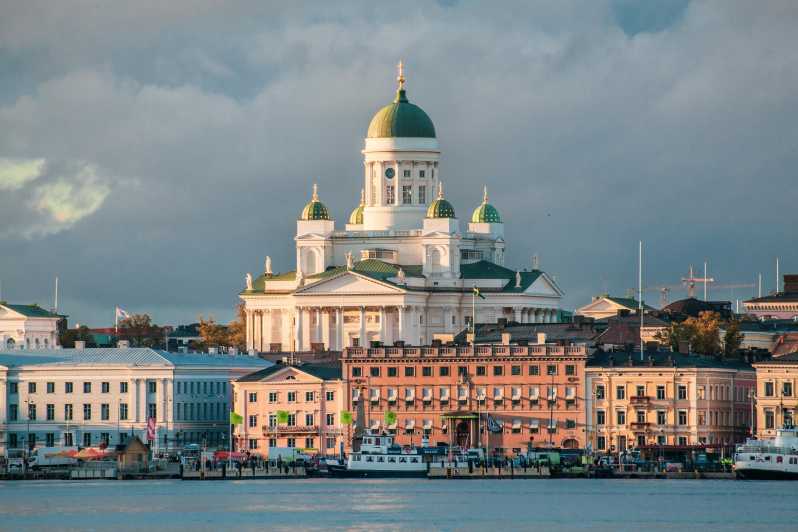
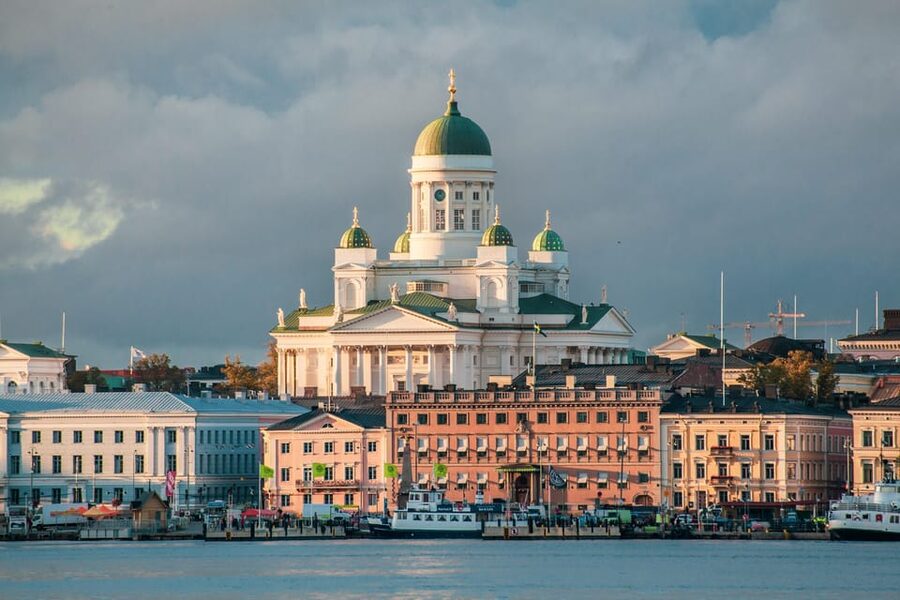
Your walk begins with Senate Square, and the guide gives you a focused primer in about 15 minutes. This is where Helsinki’s identity feels most “official.” It’s the part of town that makes first-timers go, okay, I get the basic plan.
Next up: Helsinki Cathedral. You’ll get guided context (and a quick pass) rather than a long stay. The goal is to understand why this kind of dramatic, formal architecture sits where it does, and how that style influenced what came later. In Helsinki, the past isn’t trapped behind glass. It’s still part of how people think about public space.
If you like architecture at a glance, this section works. If you prefer deep interior details, you’ll still get the big picture now, so later buildings won’t feel like random examples of styles.
National Library of Finland, Jugend coffee, and Kappeli’s public vibe
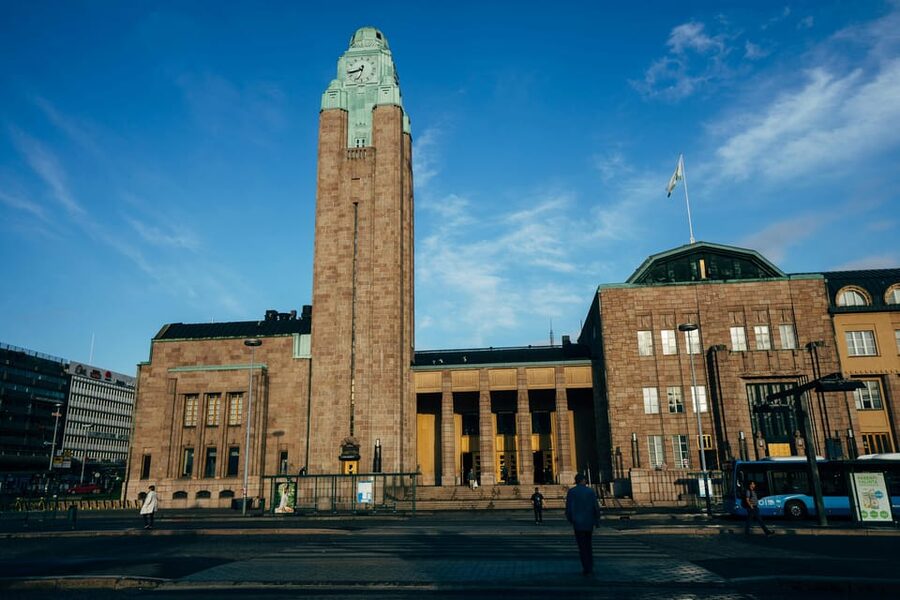
At the National Library of Finland, you’re in the “Helsinki believes in knowledge” zone. Libraries show up for a reason here: they’re not just quiet rooms, they’re civic statements. You’ll spend time there (around 15 minutes), which helps you actually notice details instead of just taking a selfie.
Then comes Robert’s Coffee Jugend—a stop built around Art Nouveau / Jugend-era charm. It’s quick (about 10 minutes), but it’s a useful contrast. You’re not only learning what the styles are called; you’re seeing how ornament and everyday life overlap.
After that: Kappeli. Think of it as a social hinge between “monumental city center” and “people actually hang out here.” It’s a short stop, but it helps you understand how Helsinki’s classic core isn’t frozen in time. It keeps functioning as a meeting point.
One practical tip: if you want the best photos, watch for angles where the facade details line up with street geometry. The guide’s comments help you spot what to photograph instead of guessing.
Esplanadi and Runeberg’s memorial: where poetry meets design

A walk through Esplanadi is a chance to notice the street as architecture. The buildings aren’t the only design objects—urban rhythm matters. You’ll have around 10 minutes here, long enough to clock the vibe and then move on with better awareness of what you’re seeing.
Next is Johan Ludvig Runeberg’s memorial, a short visit (about 5 minutes) that pays off later. Why? Because Helsinki often connects buildings to identity, and identity in Finland isn’t only about politics or wars. It’s also about literature, language, and national storylines that show up in stone and bronze.
Then you’ll get to an Academic Bookstore stop (around 10 minutes). It’s one of those places that feels small until you realize it’s part of the same civic idea: learning isn’t separate from daily life. Even if you don’t buy anything, it’s a satisfying pause from pure sightseeing.
Academic Bookstore to Rautatalo to Central Station: functionalism in motion

The route continues into Rautatalo, and you’ll also pass through Helsinki Central Station (around 10 minutes for the station). This section is where you start seeing architecture as a system, not just a style.
Rail stations and major office/civic buildings are where design has to survive reality: movement, crowds, weather, and daily routine. Helsinki tends to take “function” seriously without making it cold. The guide’s explanations help you spot that balance.
Rautatalo is short (about 5 minutes), so the payoff depends on what you enjoy. If you love ornament and symbolism, you may want extra time here. If you prefer the “how buildings work” side of architecture, this part clicks fast.
Central Station is your anchor point for orientation. Once you’ve absorbed it, the later modern stops feel less like a separate city and more like Helsinki’s continuing story.
Fazer Café Sanomatalo and Kansalaistori: the city’s working heart

After Central Station, you’ll visit Fazer Café Sanomatalo (around 15 minutes). It’s a good reset because it shifts your attention from monumental buildings to media and everyday urban life. In design terms, it also shows how corporate and cultural spaces can feel more integrated than you might expect.
Then you head to Kansalaistori (about 15 minutes). This is about public space and how people use it. Markets and squares reveal what a city values in practice: where you pause, where you meet, where you expect services, and where everyday life spills into the streets.
This isn’t a stop-longer-for-no-reason section. It helps you understand Helsinki’s design philosophy as something visible in public routines, not only in museum-quality architecture.
Oodi Central Library: the wave-shaped icon (and why it matters)
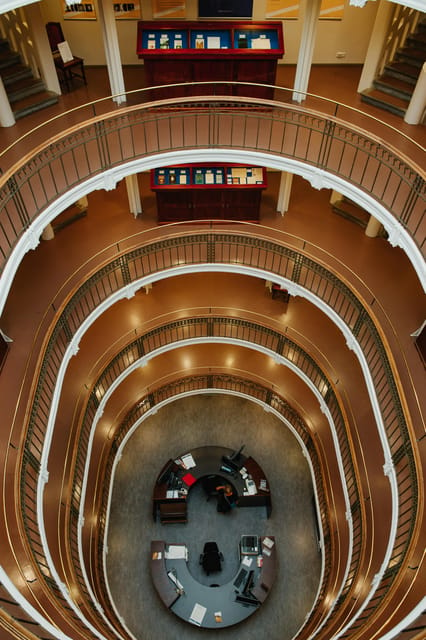
No Helsinki architecture walk feels complete without Oodi Central Library. You’ll spend about 20 minutes there, and it’s the kind of stop that gives you a reason to remember the tour afterward.
Oodi is often described as having a wave-like form, and that shape isn’t just visual. It signals softness in a civic building—welcoming zones, gathering spaces, and a layout that encourages people to use the library as a community place, not just a quiet room.
This stop is also where the guide’s style context shines. The explanation connects how earlier architectural choices set up the expectation that public buildings should serve people, not only represent power. If you’re into design that feels practical and humane, you’ll probably enjoy Oodi the most.
If you prefer museums and heritage interiors, this is your best match in the “modern Helsinki” category. If you dislike crowds, just plan to keep your patience in the busy areas inside.
Amos Rex and Kamppi Chapel: modern art and everyday spirituality
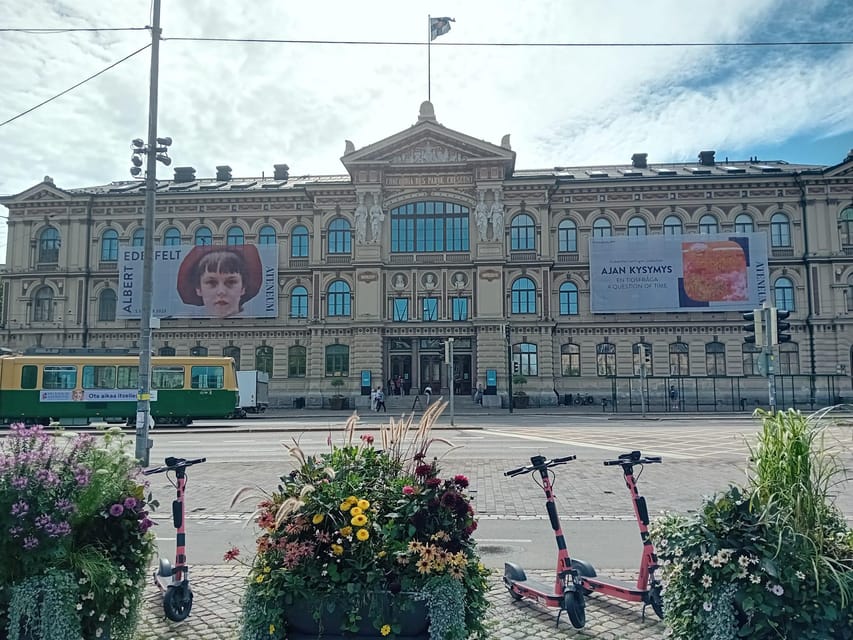
Next is Amos Rex, with a guided moment of about 5 minutes. It’s brief, but it’s enough to point you toward what makes the building interesting and how it fits the broader Helsinki design story. Even in a short stop, you can get a useful framework for looking at contemporary architecture without treating it like a puzzle you must solve alone.
Then you pass by Kamppi Chapel with a guided look and a quick pass (about 5 minutes). This is one of those places where architecture feels like mood. The guide’s comments help you notice how the building creates a space for quiet even in a city center.
This section works especially well if you want the tour to cover today’s Helsinki, not just the “pretty old stuff.” You’ll leave with a better sense of how the city makes space for art, reflection, and public life in the same walking route.
Pohjola Insurance Building and the walk back: finishing on a design cue
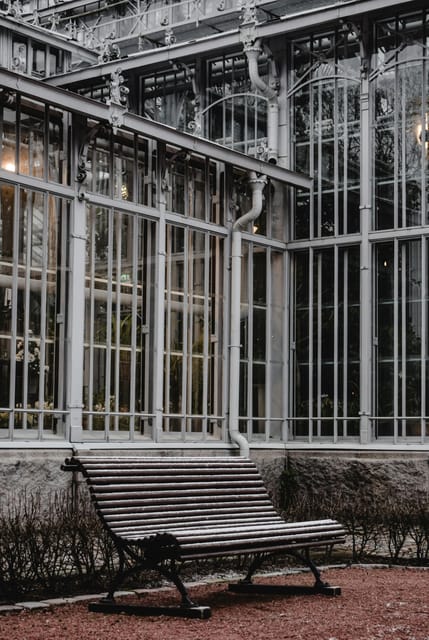
The final stretch includes Pohjola Insurance Building, a short visit (about 5 minutes). Think of it as a last design lesson. By now, you’ve seen enough styles that even a quick exterior stop helps you connect architectural choices to their era and purpose.
Then you arrive back at Fazer Café Kluuvikatu. The return loop is useful because it lets the story land. Instead of remembering only the biggest names, you remember the pattern: Helsinki’s architecture is a conversation between eras, and public space is a major character in that story.
If the weather stayed messy, you’ll be grateful for the simplicity of the ending point. It’s easy to regroup and plan your next stop without guessing where you are.
What you’re paying for: price, group size, and real value
At $56 per person for 3 hours, the biggest value isn’t only the list of buildings. It’s the way the guide helps you connect them—history, culture, and even politics come into the explanations alongside architecture.
The small group (up to 6 participants) matters. You’ll usually move at a pace that works for looking carefully, and you’re not stuck listening to someone else’s questions for an hour. It’s also one reason the tour can feel packed without feeling rushed.
Also, you’re not just viewing from the sidewalk. Several stops are structured as visits (including places like the National Library, Oodi, and others), so the tour doesn’t rely entirely on exterior sightseeing. And if you like architecture specifics, you can tailor the focus by letting the provider know what periods or styles you want to emphasize.
Who should book this tour, and who should skip it
This is a smart pick if you’re:
- visiting Helsinki for the first time and want a tight, walkable orientation
- the type who likes architecture but also wants cultural context
- interested in Helsinki design thinking, including the emphasis on public institutions like libraries
It may be less ideal if:
- you don’t handle steady walking well, because you’ll cover 5–6 km
- you need wheelchair access, since it’s not suitable for wheelchair users
For art and design lovers, this tour has a sweet spot. It’s not a lecture on theory, and it’s not just a photo walk. You get enough structure to understand what you’re seeing, and enough flexibility to keep the experience personal.
Should you book Helsinki’s architectural highlights walking tour?
If you want Helsinki’s architecture explained in a way that feels grounded—style names plus what they mean for people—this is an easy yes. The high rating (4.9 with 80 reviews) lines up with what matters most on a walking tour: good pacing, strong guide energy, and meaningful stops.
I’d especially recommend booking if you’re excited about libraries and civic buildings or you want modern design explained without intimidation. If you’re coming with limited time, the route gives you a lot of city identity in a manageable afternoon.
Just plan for weather, pack warm, and wear shoes you trust. Helsinki will do the rest—on foot.
FAQ
Where does the tour meet?
Meet in front of Fazer Café Kluuvikatu. The guide will wait for you there.
How long is the Helsinki architectural highlights walking tour?
The tour lasts 3 hours.
How much does the tour cost per person?
The price is $56 per person.
How big is the group?
It’s a small group limited to 6 participants.
What language is the tour offered in?
The tour guide speaks English.
How much walking is involved?
Expect 5 to 6 kilometers of walking.
Does the tour run in bad weather?
Yes. The tour takes place rain or shine.
What’s included in the price?
Included are the walking tour and a local guide.
What’s not included?
Food and drinks, plus transportation, are not included.
Can you customize the focus of the tour?
Yes. You can customize the tour in advance by telling the provider which architectural periods or styles you want to see.