REVIEW · TOKYO
Small-Group Architecture Tour in Ginza, Tokyo
Book on Viator →Operated by Showcase Tokyo Architecture Tour · Bookable on Viator
Tokyo’s buildings have stories if you slow down.
This small-group architecture tour is a great way to see Ginza without the usual fast walk-by. I love the format: regular photo stops on foot and time to go inside several standout spots, not just stare from the sidewalk. One thing to consider: it’s still a walking tour, with moderate fitness needed and about 40 minutes of walking total spread across a 3.5-hour loop.
You’ll also get context that’s hard to pick up on your own—how Shogun-era priorities and natural disasters influenced the architectural thinking behind what you see. Add in a licensed guide with real technical depth (I’ve heard this tour led by Hal and Taka, including one guide who’s a former urban planner and architect), and the details start clicking. If you’re looking for a car-and-cooler kind of tour, this one is more street-level and hands-on.
In This Review
- Key highlights you’ll actually notice
- Why Ginza’s architecture works best when you walk it
- Tsukiji to Ginza: the route, the pace, and why it matters
- Tsukiji Hongwanji Temple and Toyoiwa Inari Shrine: spiritual design cues in the city
- Kabukiza Theater and the Nicolas G. Hayek Center: performance meets modern landmark design
- Hermes, Mikimoto, UNIQLO, Wako, and the brands in between: architecture as a language
- Price and value: what $84.70 buys in a 3.5-hour Ginza walk
- Who should book this Ginza architecture tour (and who might skip it)
- Should you book?
- FAQ
- FAQ
- How long is the Ginza small-group architecture tour?
- What’s the group size for this tour?
- Where does the tour start and where does it end?
- What time does the tour begin?
- Is the tour mostly walking, or do you ride in a vehicle?
- Do you go inside the buildings or only view them outside?
- Is it weather-dependent and is cancellation refundable?
Key highlights you’ll actually notice
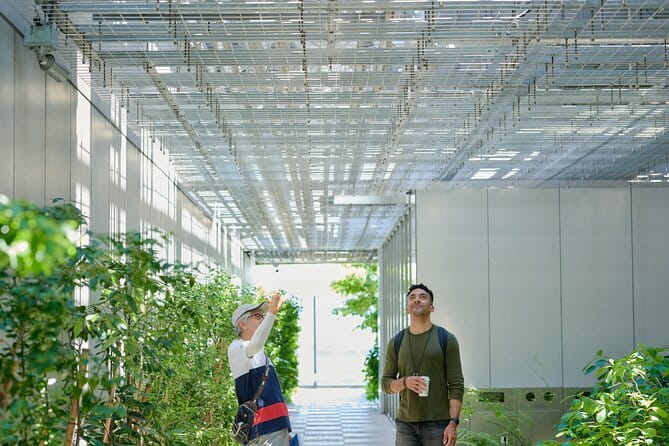
- Small group size (max 6) keeps questions practical, not performative
- Photo-stop pacing means you’ll frame buildings instead of rushing past them
- Inside visits at multiple locations, including Kabukiza Theater and Nicolas G. Hayek Center
- A mix of eras and functions, from temples and shrines to theaters and brand flagship buildings
- A built-in drink pause along the way to reset before the next cluster of sights
Why Ginza’s architecture works best when you walk it
Ginza can feel like one long shopping block if you don’t have a lens. This tour gives you that lens. Instead of speed-reading the district from a vehicle, you move at a human pace and stop often enough to notice how buildings meet the street—corners, entrances, columns, window rhythm, and the way signage and lighting shape the architecture.
What I like is that you don’t just get a list of famous names. You’ll learn how older forces shaped design thinking—especially the way Shogun-era influences and the memory of disasters affected architectural choices. That might sound abstract, but it becomes useful when you start asking better questions, like: Why does a building feel formal here? Why does a structure emphasize certain materials or spacing? On this kind of tour, your guide helps connect those dots while you’re still standing in the right spot.
You’ll also feel the contrast baked into Ginza. You’re not only looking at luxury facades. You’re bouncing between religious spaces, a historic-feeling performance venue, and modern landmark interiors. That mix is the whole point: architecture in Tokyo isn’t separated by theme. It’s layered in real streets, next to real daily life.
You can also read our reviews of more tours and experiences in Tokyo.

Tsukiji to Ginza: the route, the pace, and why it matters
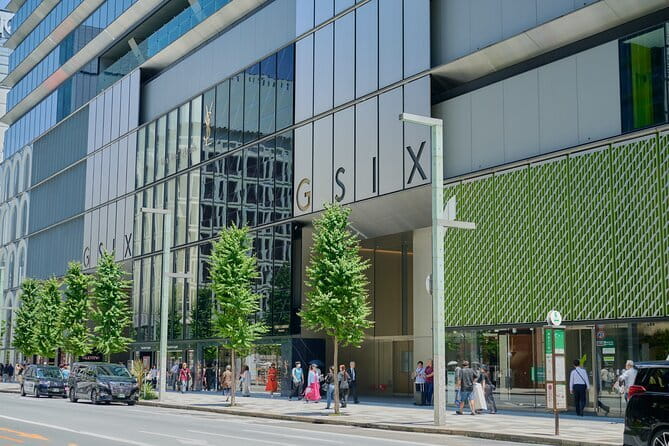
The tour starts at Tsukiji Station (Exit 1), near Tsukiji 3-chome (around 15-1 Tsukiji). The start time is 10:00 am. You’ll finish at Ginza 4-chome intersection, in front of Mitsukoshi department store. No hotel pickup or drop-off here, so plan to arrive via public transit and give yourself a few minutes to find the exact meeting spot.
The day runs for about 3 hours 30 minutes. The schedule includes short, focused stops; the total walking time is listed as 40 minutes between sites. That balance is great if you want variety without turning your day into a marathon. You’ll still want comfortable shoes, but the pacing is built for sightseeing—not suffering.
Also, this is capped at up to 6 travelers. In a district as dense as Ginza, small groups make a real difference. You can actually slow down at the building you care about, and your guide can respond to questions on the spot. It’s the difference between hearing an explanation and using it immediately to look harder.
One more practical note: you’ll have a mobile ticket, and this tour runs with a weather requirement. If it’s canceled due to poor weather, you’ll be offered a different date or a refund. Plan your day knowing you might need a backup option.
Tsukiji Hongwanji Temple and Toyoiwa Inari Shrine: spiritual design cues in the city
The first proper stop is Tsukiji Hongwanji Temple. You’ll spend about 10 minutes here, and you actually go inside. Even in a shopping district, you can feel the shift when you step into a temple space—light changes, sound changes, and the architectural details start reading differently. Look for how the interior frames the space, how the threshold transitions from the street, and how the building creates a calmer rhythm even when you’re surrounded by urban intensity.
After that, later on the route, you’ll also visit Toyoiwa Inari Shrine. This one is shorter—about 5 minutes—but it’s still an inside stop, so you get a quick taste of shrine design and the way Inari spaces relate to nearby streets. Small windows, materials, and the placement of key elements can tell you a lot about intent, even when you don’t have time to read everything like a textbook.
Here’s how I’d use these stops while you’re there. Don’t just admire the “pretty” parts. Notice the logic of the space:
- How the entrance shapes your first glance
- How the site guides movement (even if it’s only a few steps)
- How sacred spaces keep focus in a neighborhood that usually doesn’t slow down
This is where the tour’s wider theme starts to make sense. When the guide talks about how different historical pressures affected architectural thinking, you can test that idea against what you’re seeing in real space—especially in religious buildings where function and tradition are tightly linked.
Kabukiza Theater and the Nicolas G. Hayek Center: performance meets modern landmark design
Two stops anchor the tour in a way that helps you understand Ginza as more than shopping.
First up is Kabukiza Theater. You’ll spend about 20 minutes, and you go inside to enjoy its features. Kabuki theater is a perfect architecture study because it’s both a cultural machine and a designed environment. Even without going deep on plot or performance, you can pay attention to how the building supports a specific kind of audience experience—circulation, sightlines, and the feel of the interior atmosphere.
Then you’ll move to the Nicolas G. Hayek Center, with about 15 minutes on the schedule. You’ll go inside here too. This stop is often a favorite moment because it shows how modern design can feel precise, almost engineered—like a building that understands branding, materials, and public presence as one system. If you’ve ever looked at watches and thought, okay, so what else is this level of detail good for, this is the architecture version of that question.
You also include Okuno Building later on, with about 10 minutes, and you go inside. That matters because it keeps the tour from becoming only “iconic exterior” sightseeing. When you see interiors on this route, you learn how architects shape comfort and flow, not just how they design facades.
The best part is that the tour keeps linking eras and styles through your guide’s explanations. Even when the stops are very different—temple, theater, design center—you start to see recurring themes: how buildings create identity, how they handle movement, and how they manage the relationship between street energy and interior calm.
Hermes, Mikimoto, UNIQLO, Wako, and the brands in between: architecture as a language
Ginza is famous for its glitz, and the tour doesn’t pretend that isn’t true. But it helps you read the glitz as design.
You’ll stop at Ginza Maison Hermes Le Forum for about 15 minutes, and you’ll go inside. This is a good chance to study how luxury buildings use spatial drama—light, entry sequences, and display layouts that turn architecture into a stage.
Then there’s Mikimoto at two points on the route:
- Mikimoto Boutique Ginza 2-chome: about 5 minutes, and you’ll go inside if you have time
- Mikimoto Ginza 4-chome Honten: about 5 minutes, viewed from outside
That mix is useful. Interiors teach you how a brand curates space. Outside views teach you how the building communicates identity at street level. If you’re the type who likes to compare, this tour gives you built-in side-by-side contrasts.
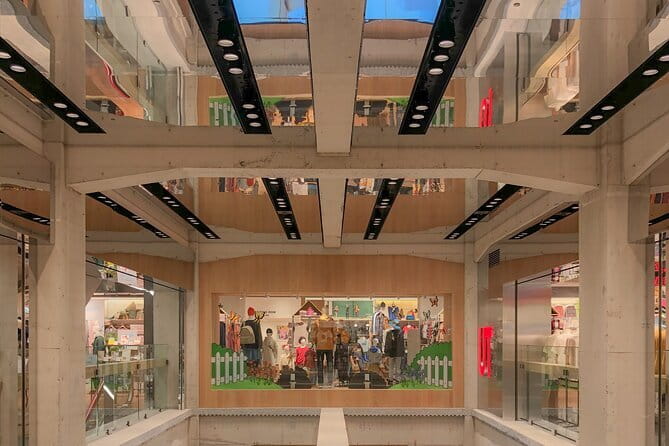
Next comes UNIQLO Tokyo. You’ll view it from outside for about 10 minutes. This stop is quietly smart because it reminds you that not every architectural lesson needs an ornate exterior. Big retail architecture affects crowds, sightlines, and pedestrian flow. You can treat it like a case study in how modern commercial design handles density without losing legibility.
You’ll also see Wako Ginza from outside for about 10 minutes. And with Wako, you can pay attention to how historic-feeling brand presence still works in a district that changes fast. The architecture keeps a recognizable voice, even as the area around it stays in motion.
If you want one practical tip, it’s this: when you’re viewing these brand buildings, don’t just hunt for the prettiest facade. Look at the edges—corners, entrances, and how the building meets the sidewalk. Those details are where architecture becomes usable, and you’ll feel the difference instantly while walking.




Price and value: what $84.70 buys in a 3.5-hour Ginza walk
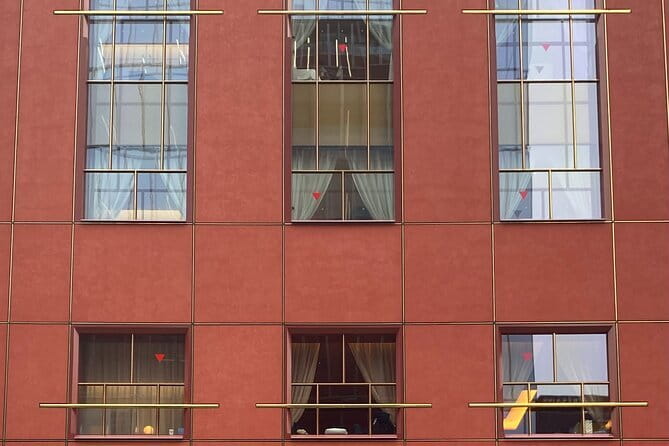
At $84.70 per person for about 3 hours 30 minutes, this tour’s value depends on what you want from a guide. If you’re hoping for a lecture-only experience, you might not get enough of that. If you want real-world design interpretation while you’re looking at buildings, the price starts to make sense.
Here’s why: the tour pairs a licensed local guide with multiple stops that include inside access at several locations, plus a drinks break. The schedule also lists admissions as free at each stop, so you’re not stacking ticket costs on top of the guide fee. What you’re paying for is the time and skill—someone to help you understand why the architecture looks the way it does, then keep you moving on foot so you see the streetscape too.
The small-group limit (max 6) is also part of the value equation. In Ginza, the best questions come from noticing something specific in the moment. A larger group tends to rush through and protect the schedule. A small group makes it easier to linger when a building actually catches your eye.
Finally, the guides on this route have a reputation for strong technical insight. I’ve heard from people who joined led by Hal and Taka, including mention of Taka’s background as a former urban planner and architect. That kind of expertise changes the tone of the tour. You’re not just getting facts—you’re learning the architecture language that helps you keep noticing after the tour ends.
Who should book this Ginza architecture tour (and who might skip it)
This tour fits best if you:
- Like architecture but don’t want to get stuck doing homework first
- Enjoy photo stops and want your eyes trained by a guide
- Want a mix of cultural sites and modern design landmarks in one walk
- Prefer a small-group experience where you can ask questions
You might skip it if you:
- Want a car tour with zero walking
- Only care about one single style (like strictly traditional temples, or strictly modern skyscrapers)
- Are expecting a long museum-style interior time at every stop (the format is efficient)
The sweet spot is balanced curiosity. You’ll move through Ginza with enough structure to avoid getting lost in the noise, but enough freedom to make the buildings your focus.
Should you book?
Yes, if your ideal Tokyo day includes street-level details, interiors, and a guide who connects what you see to how cities and disasters shape design choices over time. The small-group size, the frequent stops for photos, and the mix of Kabukiza Theater, Nicolas G. Hayek Center, and brand architecture make this a smart “high concentration” experience for Ginza.
Book it especially if you’re the type who looks at buildings and wonders how they work—at the entrance, the materials, the flow, and the way the street interacts with the structure.
FAQ
FAQ
How long is the Ginza small-group architecture tour?
It’s about 3 hours 30 minutes.
What’s the group size for this tour?
The tour has a maximum of 6 travelers.
Where does the tour start and where does it end?
It starts near Tsukiji Station Exit 1 (Tsukiji, Chuo City) and ends at Ginza 4-chome intersection, in front of Mitsukoshi department store.
What time does the tour begin?
The start time is 10:00 am.
Is the tour mostly walking, or do you ride in a vehicle?
It’s a walking tour. Total walking time between sites is listed as 40 minutes, though the full experience lasts about 3.5 hours.
Do you go inside the buildings or only view them outside?
Some stops include inside visits—such as Tsukiji Hongwanji Temple, Kabukiza Theater, Nicolas G. Hayek Center, Toyoiwa Inari Shrine, Ginza Maison Hermes Le Forum, and Okuno Building. Other spots are listed as outside views, such as UNIQLO Tokyo, Mikimoto Ginza 4-chome Honten, and Wako Ginza.
Is it weather-dependent and is cancellation refundable?
Yes. It’s marked as requiring good weather. If it’s canceled due to poor weather, you’ll be offered a different date or a full refund. You can also cancel for a full refund if you do so at least 24 hours before the experience starts.