REVIEW · TOKYO
Private Harajuku Omotesando Architecture Walking Tour
Book on Viator →Operated by Showcase Tokyo Architecture Tour · Bookable on Viator
Architecture fans, this walk starts in a shrine. In about 3.5 hours, you trace modern Tokyo from Meiji Jingu to design landmarks along Omotesando’s high-end stretch, with the 1964 Olympic connection built into the story. I like the way the route balances big-name works (hello, Kenzo Tange) with smaller storefront-style architecture you’d normally speed past.
One standout for me is the guide materials and pacing. Guides like Yoshi and Yoko are described as bringing photo libraries and clear explanations, sometimes with floor-plan style details and tips on where to stand for the best views. The one thing to consider is that a couple of past groups noted understanding could be harder if the guide’s English pace didn’t click with you, so it helps to share your interests early.
If you want a fashion-and-architecture overlap that feels personal (not like a bus tour), this is a strong fit. Just note it’s still a walking tour with a moderate fitness requirement, and you’ll spend a good chunk of time on sidewalks and crossings.
In This Review
- Key highlights you’ll actually feel
- Why Harajuku and Omotesando Work So Well for Architecture
- Start at Meiji Jingu, Then Snap to Yoyogi Gymnasium
- Omotesando Boutique Stops: When Storefronts Become Architecture
- Prada’s Convex/Concave Glass Lessons (Jacques Herzog and Pierre de Meuron)
- The Tokyo Plaza Harakado Rooftop Garden Contrast
- Collezione and the Tadao Ando Underground Idea
- A Built-In Olympics Thread You’ll Actually Remember
- How Customization Changes What You See (and How Long You Stay Inside)
- What the Walking Feels Like and What to Wear
- Price and Value: Is $132.14 a Fair Deal?
- Who This Tour Is Best For
- Should You Book This Harajuku–Omotesando Architecture Walking Tour?
- FAQ
- How long is the Private Harajuku Omotesando Architecture Walking Tour?
- What’s included in the tour price?
- Where does the tour start and end?
- Is this a private tour or a shared group tour?
- What fitness level do I need?
- Is free cancellation available?
Key highlights you’ll actually feel
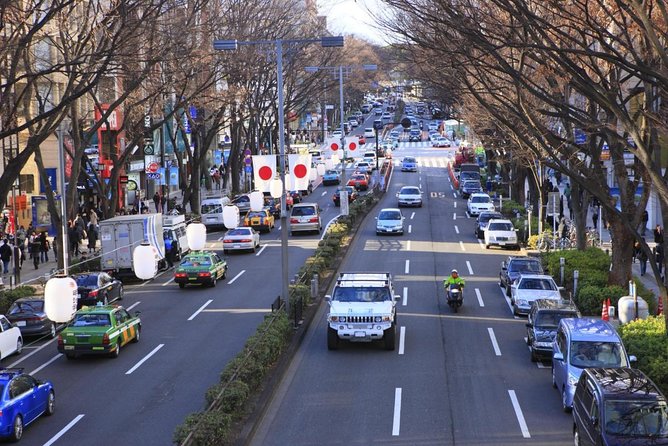
- A customizable private route through Harajuku and Omotesando, mixing icons with lesser-seen buildings
- Olympic-era design context, especially around Yoyogi Gymnasium
- Photo-backed architectural storytelling from guides like Yoshi, Yoko, and Taka
- Boutique architecture stops along the Omotesando fashion run, including Prada and major luxury storefronts
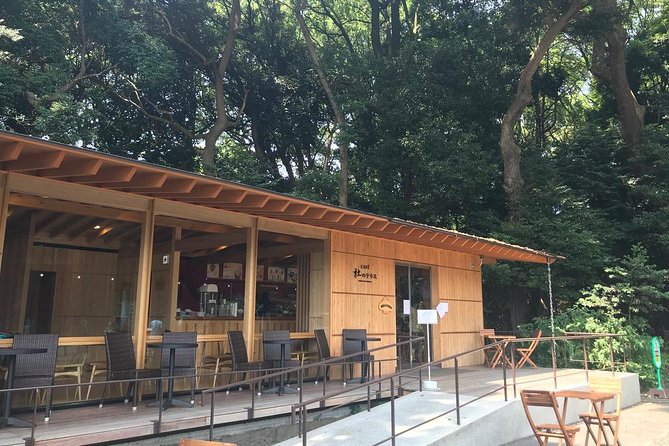
- A drinks pause at a quieter backstreet café moment instead of rushing end-to-end
- Plenty of walking, adjustable for heat, with some guides adding indoor time when it’s hot
Why Harajuku and Omotesando Work So Well for Architecture
Harajuku and Omotesando aren’t just places to shop. They’re a long, walkable lesson in how Tokyo can go from sacred space to sleek commercial design without pausing for your comfort.
This tour is built for people who want to connect the dots: you’ll see landmark architecture, then you’ll get a guide’s explanation of what you’re looking at—materials, shapes, and the thinking behind famous architects and designers. I like that it doesn’t treat buildings as museum objects. It treats them as part of everyday life, which is exactly how Tokyo reads best.
And because it’s private and customizable, you can steer the emphasis. If you care more about modern design technique than fashion, you can likely bias the route that way. If you’re there for Harajuku’s visual culture, you’ll still get serious architecture context.
You can also read our reviews of more tours and experiences in Tokyo.
Start at Meiji Jingu, Then Snap to Yoyogi Gymnasium
The tour begins at Meiji Jingu (Harajuku Eki) area, right in the gravity of a major Shinto shrine. That opening matters. The calm, the trees, and the scale help you reset your eye before the city turns back on to steel, glass, and engineered form.
From there, the walk frames one of the most important modern Tokyo anchors: Kenzo Tange’s Yoyogi Gymnasium. You’ll catch it from a distance first, which is a smart way to start. You get the big silhouette before you start negotiating details up close.
This is also where the walking tour starts doing what it promises: blending architecture talk with real-world neighborhood cues. After the shrine moment, you transition into the high-end commercial corridor—an easy mental shift from spiritual scale to human scale design.
Omotesando Boutique Stops: When Storefronts Become Architecture
A lot of architecture tours only point at iconic facades. This one also pays attention to the in-between stuff—especially the storefront design culture that lives along Omotesando.
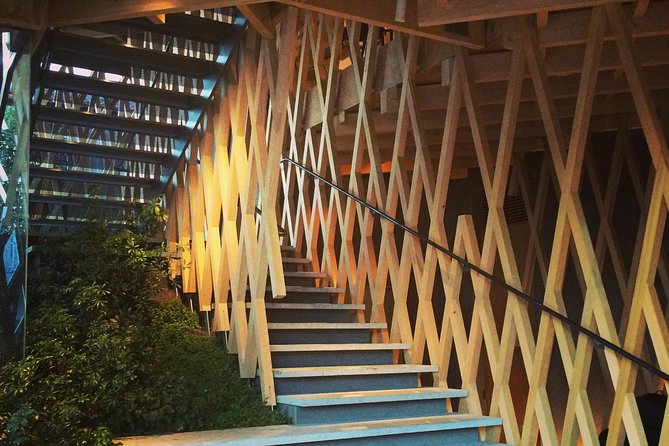
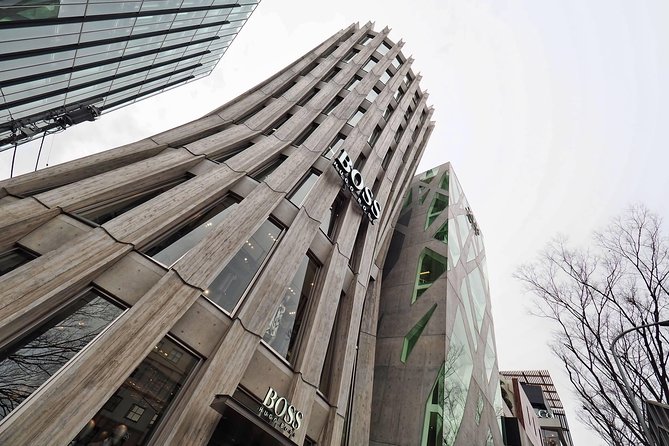
In the early stretch, you’ll pass notable buildings and shop fronts tied to major fashion and luxury brands such as The Iceberg, Dior, Louis Vuitton, Tod’s, Sunny hills, and Prada. Even if you don’t plan to buy anything, this part is useful. The design of entrances, the way buildings sit on the street, and how light hits surfaces can teach you more than a single postcard view.
And you’ll do more than look. The tour’s concept includes pausing to talk and catch your breath. There’s also a cozy break with drinks along the way, which is a practical win on a 3.5-hour walk in Tokyo’s weather swings.
Prada’s Convex/Concave Glass Lessons (Jacques Herzog and Pierre de Meuron)
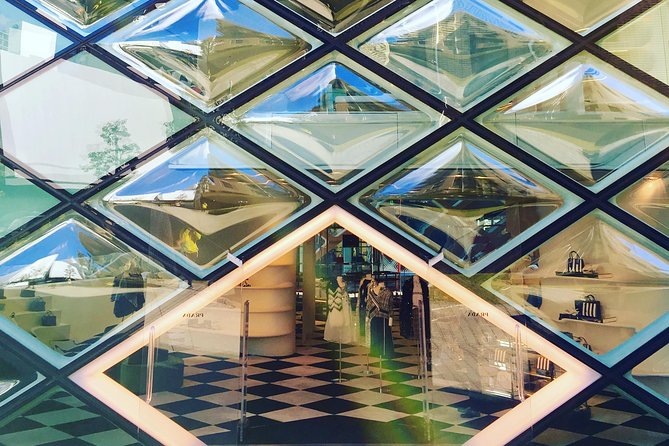
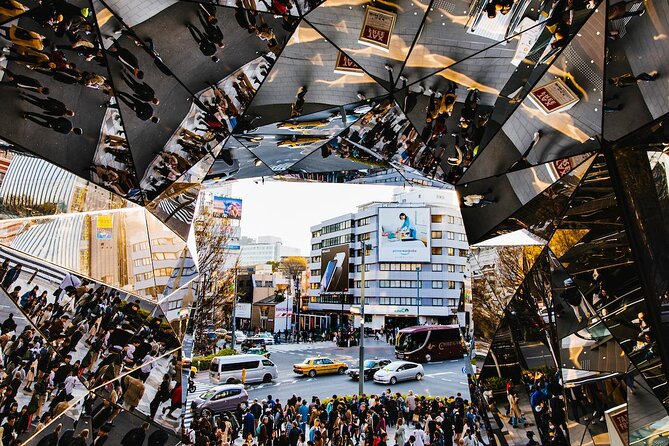
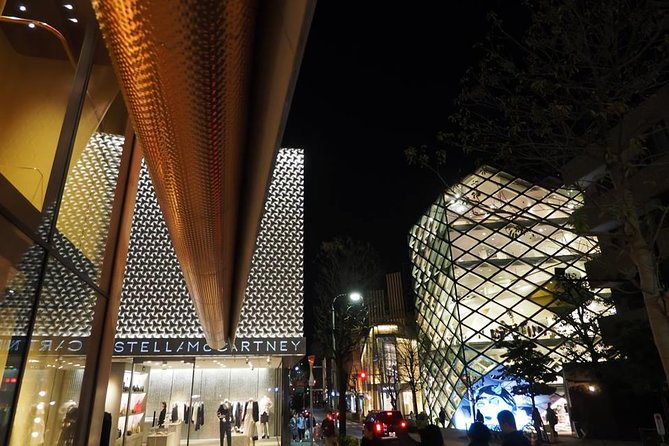
At some point on this route, you’ll likely discuss one of the most striking design ideas in the area: the Prada store with convex and concave glass by Jacques Herzog and Pierre de Meuron.
If you’ve ever walked past complex glass without understanding what makes it special, this is where the tour helps. Guides can explain how geometry and reflection change the feel of a space depending on your angle. You’re not just seeing a shopping building. You’re learning how architects use curves to control perception.
One detail that makes these stops more valuable is how guides help you position yourself. Some guides have been described with tablet photo libraries and tips on where to stand for the best view angles. That turns a complicated facade into something you can actually read, not just photograph.
The Tokyo Plaza Harakado Rooftop Garden Contrast
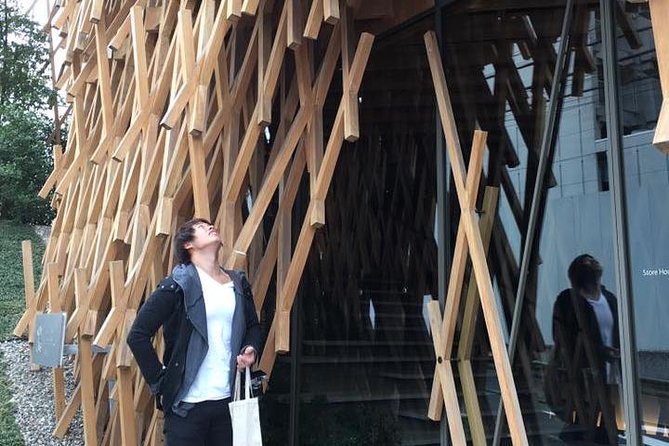
Another highlight you may encounter on the walk is Tokyo Plaza Harakado by Akinisa Hirata, including its planted rooftop vertical garden.
This is a good reminder that modern Tokyo architecture isn’t only about shape and glass. It’s also about climate strategy and experience: adding greenery, managing sightlines, and creating a layered relationship between street-level life and the built envelope above.
If you like your architecture with context—how it affects the way you walk and look—this stop plays nicely. It interrupts the luxury-shopping rhythm with something calmer and more functional to notice.




Collezione and the Tadao Ando Underground Idea
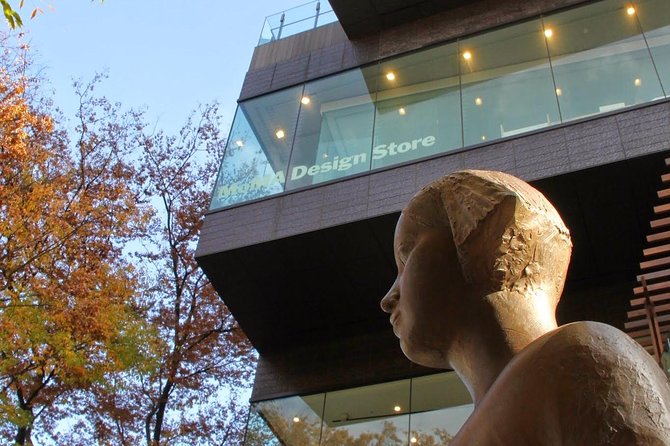
You may also work toward a design that flips expectations: Tadao Ando’s Collezione, described as featuring a building concept where part of the structure is underground.
That’s exactly the kind of architecture lesson that makes a guided walk worth paying for. Instead of just admiring a facade, you get the idea that the ground itself can be designed. The tour setting helps you understand why an underground portion changes light, movement, and how the building feels from the street.
This is also the kind of stop where a good guide can tailor the story to your interests. If you care about design technique, you can focus on form. If you care about the vibe, you can focus on how the space behaves.
A Built-In Olympics Thread You’ll Actually Remember
The tour explicitly ties into Olympics history, and the most visible entry point is Yoyogi Gymnasium, originally tied to Tokyo’s 1964 Olympic era.
What I like about this is how the Olympics element doesn’t take over the walk. It’s used like a lens. You learn why these structures exist and what kind of ambition drove their design—then you move on to the next streetscape where that ambition echoes in later modern development.
So you finish with more than a list of names. You finish with a sense of timeline: how Tokyo’s modern architecture arrived, evolved, and spread into commercial districts like Omotesando.
How Customization Changes What You See (and How Long You Stay Inside)
One of the strongest reasons to pick this type of architecture walking tour is the customization. The tour is described as fully customizable, letting you mix major landmarks with under-the-radar buildings and a coffee-and-conversation pause.
In practice, it means you’re less likely to get trapped in a fixed checklist. If you want extra time at glass-and-steel spaces, you can ask for it. If you’re more interested in neighborhood texture and street-level architecture, the guide can steer the pacing.
You’ll also appreciate flexibility if weather is rough. One group experience noted the guide adjusted by increasing indoor time when conditions were hot. That kind of adaptation matters on a 3.5-hour schedule.
What the Walking Feels Like and What to Wear
This is not a sit-and-watch tour. It’s a walking route through Harajuku and Omotesando with repeated street crossings and time outdoors.
The good news: you get a drinks pause, and the route includes opportunities to slow down while the guide explains what you’re seeing. The drawback: if you’re sensitive to long pavement time, plan for comfortable shoes and a water plan. Even with drinks included, you’ll want to manage your own hydration.
Moderate physical fitness is recommended. That usually means you don’t need to be an athlete, but you should be ready for sustained walking over the half-day window.
Price and Value: Is $132.14 a Fair Deal?
At $132.14 per person for about 3 hours 30 minutes, this sits in the “pay for the guide, not the subway” category. You’re not paying for a vehicle. You’re paying for design interpretation, route tailoring, and access to the kind of architectural context that’s hard to assemble on your own while you’re busy noticing shop windows.
Two value signals stand out from the details you do get:
- It’s private, meaning you’re not sharing listening time with a crowd.
- The guide brings structured visual support—some guides are described with photo notebooks, iPads, and floor-plan style material tied to the architects you’re seeing.
There’s also mention of group discounts. If you’re traveling with friends or family who also care about design, pooling your group size can improve the value-per-person.
One practical note: it’s an experience that’s often booked around 53 days in advance. If you’re traveling during a busy season, don’t treat it like a last-minute add-on.
Who This Tour Is Best For
This tour is a great match if you love modern design and want Tokyo architecture explained in plain language, not just name-dropping.
You’ll likely enjoy it if:
- you’re a first-timer who wants a fast orientation to Harajuku and Omotesando beyond shopping
- you care about specific architects and the “why” behind shapes and materials
- you like routes that mix big icons with street-level design details
- you want a guide who can slow down for questions and adjust to your interests
It may feel less perfect if you expect a mostly historical, museum-style tour. This walk is about modern architecture and how it’s woven into everyday streets.
Should You Book This Harajuku–Omotesando Architecture Walking Tour?
Yes, if you want Tokyo architecture that feels personal and readable. The best reason to book is the combination of private tailoring plus real design storytelling—especially around modern works like Kenzo Tange’s Yoyogi Gymnasium, Prada’s complex glass presence, and the way guides use visuals to help you see what matters.
I’d hesitate only if you’re not up for walking for a few hours or you need a very specific English delivery style. If that’s you, send a quick message or set expectations early so the guide can match your comfort level.
If your ideal Tokyo day includes storefront architecture, Olympics-era context, and a break in a quieter backstreet café, this tour is the kind of plan that turns a trendy district into something you’ll remember for the design ideas, not just the photos.
FAQ
How long is the Private Harajuku Omotesando Architecture Walking Tour?
It runs for about 3 hours 30 minutes.
What’s included in the tour price?
You get a local licensed tour guide plus a cozy pause with drinks along the way.
Where does the tour start and end?
The tour starts at Meiji Jingu (Harajuku Eki) in Shibuya. It concludes at the Omotesando and Aoyama-dori intersection, in front of Mizuho bank, near Minamiaoyama.
Is this a private tour or a shared group tour?
This is a private tour/activity, so only your group participates.
What fitness level do I need?
A moderate physical fitness level is recommended.
Is free cancellation available?
Yes. You can cancel up to 24 hours in advance for a full refund, and cut-off times are based on local time.