REVIEW · TOKYO
Private Ginza Architecture Walking Tour
Book on Viator →Operated by Showcase Tokyo Architecture Tour · Bookable on Viator
Ginza can feel like a showroom. This tour turns it into a readable map of architecture and culture.
I especially like the private format with a guide who adjusts to your interests, and I like that you walk at your pace instead of being herded on a timer. You’ll also get an English explanation that connects modern design to what came before.
One possible drawback: Ginza is a mix of eras, and if you want only the newest skyline scenes, you’ll need to say that early. The route includes shrines, a temple, and interiors like the kabuki theater, so the balance may not match your ideal if you are chasing just glass-and-steel.
In This Review
- A quick take on what makes it work
- Key points before you go
- Why Ginza Architecture Works Best on Foot
- How a Private Guide Lets You Control the Emphasis
- The 3.5-Hour Route: What Each Stop Adds
- Stop 1: Ginza walk (about 40 minutes)
- Stop 2: Tsukiji Hongwanji Temple (about 10 minutes, inside)
- Stop 3: Kabukiza Theater (about 20 minutes, inside)
- Stop 4: Nicolas G. Hayek Center (about 15 minutes, inside)
- Stop 5: Toyoiwa Inari Shrine (about 5 minutes, short stop)
- Stop 6: Ginza Maison Hermes Le Forum (about 15 minutes, inside)
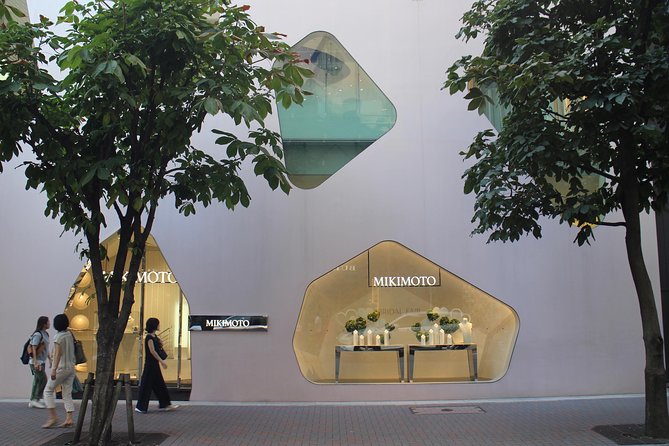
- Stop 7: Mikimoto Boutique Ginza 2-chome (about 5 minutes, inside if time)
- Stop 8: UNIQLO Tokyo (about 10 minutes, view from outside)
- Stop 9: Mikimoto Ginza 4-chome Honten (about 5 minutes, view from outside)
- Stop 10: Wako Ginza (about 10 minutes, view from outside)
- Stop 11: Okuno Building (about 10 minutes, inside)
- The Drinks Pause: Small Comfort, Big Impact
- Price and Value: When Private Actually Makes Sense
- Best Fit: Who This Tour Helps Most
- How the Two Departure Times Can Help Your Day
- Who Runs the Show and Why It Matters
- Should You Book This Ginza Architecture Walking Tour?
- FAQ
- How long is the Ginza Architecture Walking Tour?
- Is this tour private or shared?
- What’s the maximum group size?
- What language is the tour in?
- Where do we meet and where does the tour end?
- Are there two departure times?
- Is anything included with the tour?
- Can I get a full refund if I cancel?
A quick take on what makes it work
This is built for people who like seeing Tokyo by looking up, down, and sideways. You’ll cover major stops in about 3 hours 30 minutes, with a drinks pause included so your legs and your brain can keep up.
Key points before you go
- Private and small (max 5): easier questions, slower pace when you want photos.
- Tailored to your interests: you can steer toward modern buildings or traditional corners.
- English-led with context: you’re not just reading labels; you’re learning why things look the way they do.
- A balanced route: Ginza commercial icons plus Tsukiji temple and kabuki theater.
- Free listed entries: the tour notes admission tickets as free for the stops that enter.
You can also read our reviews of more tours and experiences in Tokyo.

Why Ginza Architecture Works Best on Foot
Ginza is one of those Tokyo districts where the sidewalks are basically a stage. Today’s storefronts sit next to older landmarks, and the streets create a constant “look up” habit. The fun part is that architecture here isn’t only about fancy buildings—it’s also about how people move, how light hits façades, and how an old cultural site survives in a luxury shopping grid.
On this walking tour, the route is designed so you don’t spend all your time staring at luxury branding. You’ll get the bigger picture: how buildings in Ginza reflect shifting tastes, how they frame the street, and how public culture (like a theater and a temple) fits right into a commercial hub.
You’ll also feel why a guide matters. From the street, many buildings look impressive but hard to “read.” With the tour’s English explanations, you start noticing patterns—materials, proportions, and design choices you would normally miss while rushing to the next store.
How a Private Guide Lets You Control the Emphasis
The most valuable part of a private architecture walk is simple: you can ask. This one is explicitly customizable to your interests and your knowledge level, and the guide works at your pace. That sounds like marketing, but it matters in practice.
If you’re an architecture fan, you can focus questions on façade details and how modern structures sit in a historic-feeling street grid. If you’re more about culture than technical design, you can lean into the places that carry tradition—temples, shrine spaces, and the kabuki theater. Either way, the tour is set up so you can spend more time where your curiosity actually lives.
You may encounter guides such as Yoko, Yoshi, Yuki, Taka Yamamura-San, Eriko, Haruka, Makoto, or Mari—people with a reputation for clear explanations and making buildings feel less mysterious. And when English is strong, it changes the whole experience. You’re not pausing your day to translate what you already can’t explain.
The 3.5-Hour Route: What Each Stop Adds
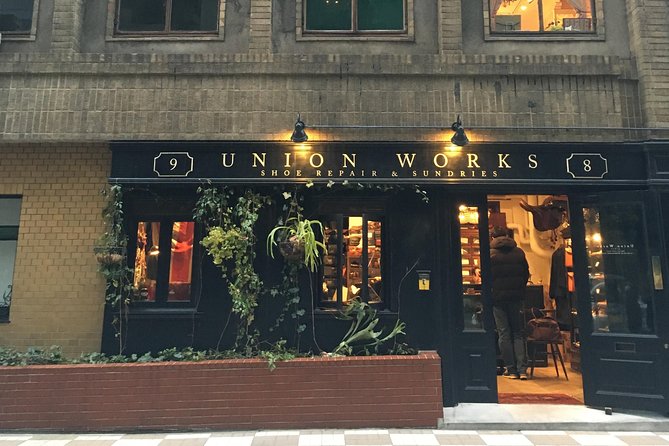
The walking tour runs about 3 hours 30 minutes, and you’ll move from site to site with short, intentional time blocks. Some stops are more “inside and look around,” while others are structured as exterior viewing points so you can still keep momentum.
A big plus: many entries are listed as admission ticket free, and the tour includes a cozy pause with drinks along the way. That drink break isn’t just comfort—it’s when you can reset, ask questions, and decide what you want to extend on.
Here’s how the stops shape the story of Ginza:
Stop 1: Ginza walk (about 40 minutes)
This is your warm-up. You get the street-level rhythm first, then you transition into specific landmarks. It’s a good way to learn how Ginza “reads” as a design district—angles, signage, storefront heights, and the way pedestrians funnel toward major intersections.
Because it’s a walking segment, you can also set the tone with your guide. If you say you want more modern architecture, this is where you can ask for extra attention on the latest buildings once you’re oriented.




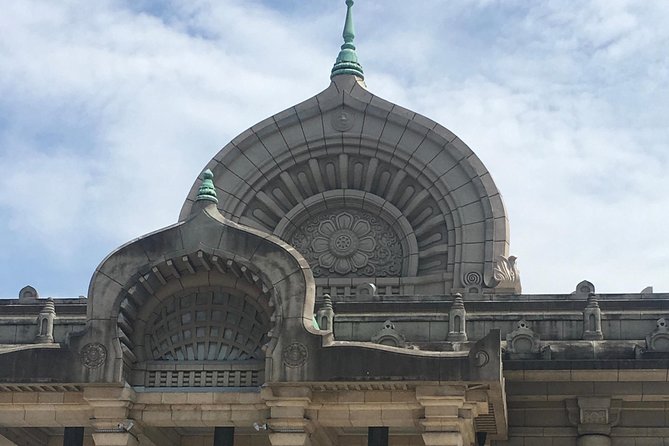
Stop 2: Tsukiji Hongwanji Temple (about 10 minutes, inside)
This is the cultural counterweight that keeps Ginza from feeling like all shopping all the time. Going inside helps you see how a religious site is more than a quick photo stop; it’s a quiet architectural moment in the middle of a busy district.
Even with limited time, you’ll get context about what you’re seeing, and that context helps you look at the rest of the route differently. A temple teaches you to notice structure and space, not just style.
Stop 3: Kabukiza Theater (about 20 minutes, inside)
Kabukiza isn’t only a name—it’s a key piece of public culture in Tokyo. Going inside means you can take in the design choices that support performance spaces and visitor flow.
This stop is also a reminder that architecture is for people, not just for aesthetics. Even if you don’t know much about kabuki, the building itself gives you cues about audience experience and how the theater “holds” an event.
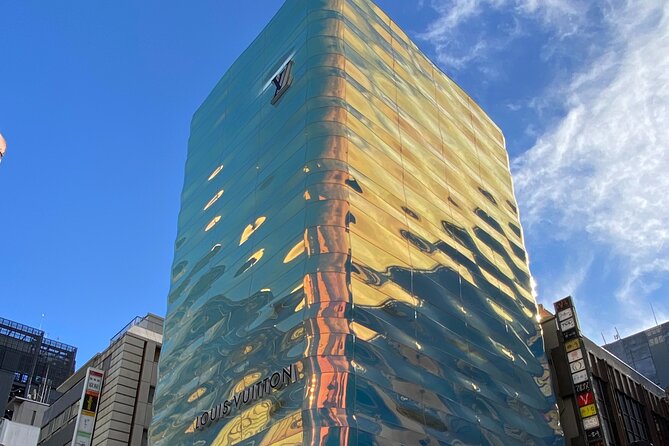
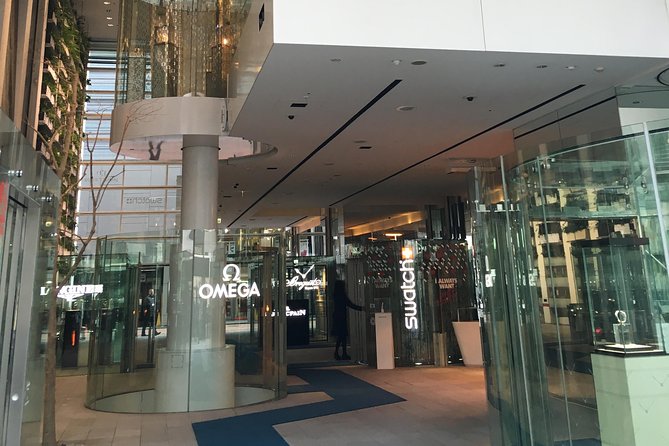
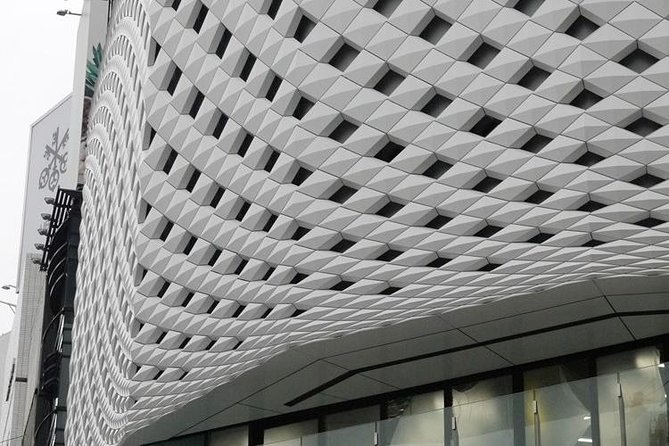
Stop 4: Nicolas G. Hayek Center (about 15 minutes, inside)
This is one of those “design people pay attention” stops. The Nicolas G. Hayek Center brings a modern, brand-and-architecture feel into the tour. You’re given time to look around inside, which is often where modern design makes more sense than the exterior view.
Use this stop to ask how the building’s design supports movement and how it influences the street mood outside.
Stop 5: Toyoiwa Inari Shrine (about 5 minutes, short stop)
A quick shrine stop works best when you treat it as a pause, not a quest. You’ll get a taste of the space and the meaning behind Inari shrine traditions, even if you don’t linger long.
This tiny block is smart. It keeps the route varied and prevents the whole walk from turning into a long commercial sprint.
Stop 6: Ginza Maison Hermes Le Forum (about 15 minutes, inside)
Luxury architecture in Ginza can look “obviously expensive,” but that’s not the point. The point is how the building’s design language connects to the street and how interior spaces communicate brand identity without feeling like they’re only about selling.
Since you go inside, you can see how the experience changes when you’re inside the architecture rather than viewing from the curb.
Stop 7: Mikimoto Boutique Ginza 2-chome (about 5 minutes, inside if time)
This is a flexible stop. The tour notes that you’ll go inside if you have time, which means it can function as a short “extra” rather than a fixed must-see.
If pearls and brand storytelling aren’t your thing, you can still use the time to notice signage, materials, and how the space draws you toward display. If they are your thing, great—this is where you’ll probably slow down for photos.
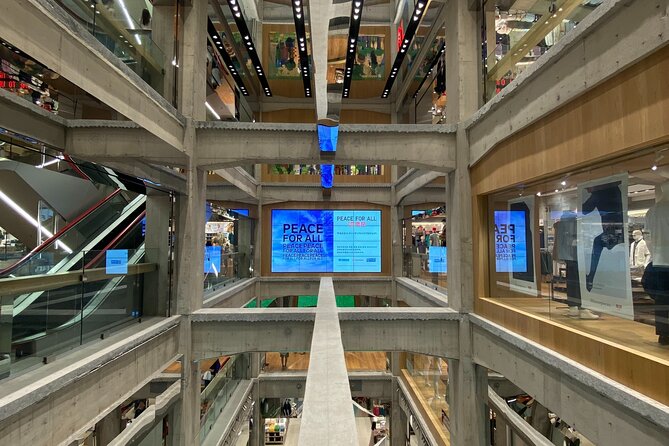
Stop 8: UNIQLO Tokyo (about 10 minutes, view from outside)
Not every stop is about entering. Some places are best enjoyed from outside because the design relationship with the street is the point.
This is also where you get a contrast: a global retail brand next to more formal cultural architecture. It helps you understand that Ginza isn’t only luxury glass boxes—it’s a working district of different design philosophies.
Stop 9: Mikimoto Ginza 4-chome Honten (about 5 minutes, view from outside)
A brief exterior viewing stop can still be meaningful if you’re looking for details. With a guide, you’re more likely to notice how the building façade frames the sidewalk and how it signals identity from a distance.
It’s short by design, so you can keep your energy for the next interior look.
Stop 10: Wako Ginza (about 10 minutes, view from outside)
Wako is a classic Ginza anchor. Even when you’re only viewing from outside, you can treat this as a street-scene checkpoint: what does the façade tell you, and how does the building relate to the nearby flow of pedestrians?
This stop is useful if you like learning how iconic places become meeting points and visual landmarks.
Stop 11: Okuno Building (about 10 minutes, inside)
This is another inside-the-structure moment. Interior time is valuable because it gives you different angles on materials and spatial planning.
If you’ve spent earlier stops focusing on famous brand buildings, this is a good place to switch back into architecture reading mode: proportions, stair or corridor feel, and how the architecture guides the visitor.
The Drinks Pause: Small Comfort, Big Impact
Included in the tour is a cozy pause with drinks. That matters more than you might think, especially in Tokyo’s busy districts. A short break helps you avoid the common walking-tour problem: you can’t ask good questions when you’re focused on pacing yourself.
Use the pause to check in with your guide. Ask what building is next and what you should notice. Or ask for one photo angle to try. This is also a good moment to switch your focus—if you’ve been chasing modern design, you can steer toward what to look for in the remaining cultural stops.
Price and Value: When Private Actually Makes Sense
At $132.10 per person for a roughly 3.5-hour private walk (max 5 people), the price is reasonable if you want more than a basic overview. This isn’t a long bus tour where you barely move your feet. You’re paying for a licensed local guide, English interpretation, customization, and that included drink break.
Here’s how I think about value with a tour like this:
- You’ll get a route that mixes major Ginza icons with culture stops, which means fewer “I wish we’d also seen…” regrets.
- Private pacing helps your brain stay engaged instead of switching to autopilot.
- Many listed entries are noted as free, so your day isn’t constantly interrupted by ticket logistics.
If you’re traveling solo, it can still be worth it when architecture is a priority. If you’re a couple or a small group, private format often feels like the smartest way to avoid “hurry up” energy.
Best Fit: Who This Tour Helps Most
This tour is ideal if you:
- like architecture explanations tied to what you can actually see on the street,
- want a balanced route that includes both modern commercial design and cultural landmarks,
- enjoy asking questions and taking photos without feeling rushed.
It also suits first-time Ginza visitors who want a structured introduction. The district is easy to wander in, but harder to interpret. This walk gives you an interpretive framework so the area feels less like random shopping blocks.
If you only care about modern skyscrapers and nothing else, you might want to communicate that right away. The route includes a temple, a shrine, and kabuki theater, and those stops shift the emphasis.
How the Two Departure Times Can Help Your Day
The tour offers two departure times to fit your schedule, which is handy in Tokyo. With just 3.5 hours on foot, timing affects comfort and photo results—morning light can make façades feel sharper, and later starts can keep you away from the hottest parts of the day.
Pick the departure that matches your energy level. If you’re doing other plans afterward, choose the time that keeps this walk from turning into a sprint.
Who Runs the Show and Why It Matters
This is led by a local licensed tour guide, and the experience depends heavily on how well the guide connects design features to everyday meaning. In the guides associated with this tour, you’ll often see names like Yoko, Yoshi, Eriko, Haruka, Makoto, and Mari, with praise that commonly points to clear explanations, flexibility, and friendly pacing.
Even if your personal interests are very specific, the tour is set up for adjustment. That’s why it’s private: you don’t have to accept a fixed script.
Should You Book This Ginza Architecture Walking Tour?
Book it if you want Ginza to feel like a place with stories—not just storefronts. The private guide format, English narration, and mix of modern icons with real cultural stops make it a strong use of a half-day. Add the included drink break and the small-group limit, and it becomes a comfortable way to learn while you walk.
Skip or reconsider if you’re chasing only one kind of architecture, like ultra-modern exterior skylines. Tell your guide your preference early, but the route is clearly designed to balance eras, including shrines and theater. If that balance sounds like your kind of Tokyo, you’ll probably have a great time.
FAQ
How long is the Ginza Architecture Walking Tour?
It lasts about 3 hours 30 minutes.
Is this tour private or shared?
It’s private, meaning only your group participates.
What’s the maximum group size?
The tour allows a maximum of 5 people per booking.
What language is the tour in?
The tour is in English.
Where do we meet and where does the tour end?
You start at Tsukiji meeting place, 3-chōme 15-1 Tsukiji, Chuo City, and you finish at the Ginza 4-chome intersection in front of Mitsukoshi department store.
Are there two departure times?
Yes, there are two departure times to choose from.
Is anything included with the tour?
Included are a local licensed tour guide and a cozy pause with drinks along the way.
Can I get a full refund if I cancel?
Yes. There is free cancellation, and you can cancel up to 24 hours in advance for a full refund. If you cancel less than 24 hours before the start time, the amount paid will not be refunded.