REVIEW · TOKYO
Private Ginza Architecture Tour
Book on GetYourGuide →Operated by Showcase Tokyo Architecture Tours · Bookable on GetYourGuide
A temple with church-like vibes. That’s the kind of contrast this private Ginza architecture tour leans into—big names, modern work, and the ideas behind the Metabolism movement. You start at Tsukiji Hongwan-ji, then work your way through major Ginza landmarks, including the Kabuki Theatre and the Wako/Seiko area, with a live English guide keeping the story clear and practical.
I love the way the tour mixes eras: you’ll see traditional-to-modern balance in the same walk, instead of one style lesson. I also like the focus on design thinking—especially the Metabolism movement thread, which ties 1960s–70s urban ideas to what you can actually see on Ginza streets. One possible drawback: it’s a walking tour that lasts 210 minutes, and meals aren’t included, so plan for comfort and a timing gap.
In This Review
- Key points at a glance
- Ginza architecture, seen at human pace
- Finding the tour start at Tsukiji Hongwan-ji (and why it’s the perfect opening)
- Tsukiji to Kabuki Theatre: how tradition survives in new construction
- The Metabolism movement theme: spotting 1960s–70s urban ideas in Ginza
- Nicolas G. Hayek Center, Maison Hermes, Tokyu Plaza Ginza: big names, big design lessons
- Mikimoto Ginza 2 and the Okuno Building: shifting scale and design intent
- Ending at Ginza 4-chome: Wako (SEIKO watch) and street-level drama
- The secret backstreet side trip: Ginza beyond the main stage
- What 210 minutes feels like in real life (and how to prepare)
- Price and value: is $129 per person worth it?
- Who this private Ginza architecture tour suits best
- Should you book it?
- FAQ
- FAQ
- Where does the tour start?
- Where is the meeting point exactly?
- How long is the tour?
- Is this a private tour?
- Is there a live guide and what language is it in?
- What’s included in the price?
- What isn’t included?
- What are the main places you’ll see?
- Do you take a side trip off the main route?
- What’s the cancellation policy?
- Do I need to pay immediately?
Key points at a glance
- Tsukiji Hongwan-ji starts the tour with an Indian-style exterior and a European church-like interior feel
- Kabuki Theatre (2013) follows with traditional design influence carried into a newer building
- A Metabolism movement lens (1960s–70s New Urbanism proposals) helps you see Ginza buildings differently
- Stops include major Ginza anchor sites like Nicolas G. Hayek Center, Maison Hermes, Tokyu Plaza Ginza, Mikimoto Ginza 2, and the Okuno Building
- You also get a secret side trip into backstreet lanes for a less polished, more lived-in view
- Includes a break with drinks, which matters on a 3.5-hour foot tour
Ginza architecture, seen at human pace
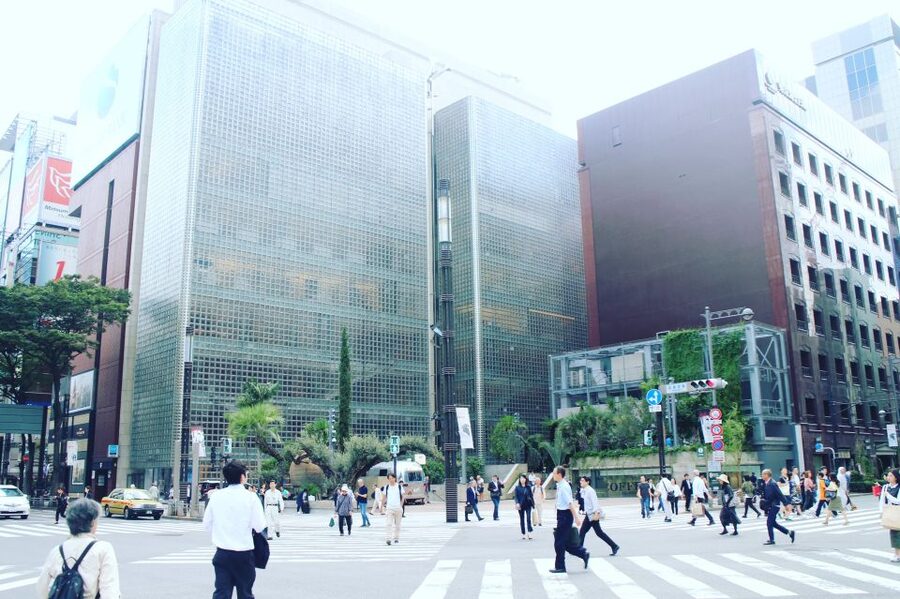
Ginza can feel like a showroom—clean lines, famous storefronts, and streets that seem engineered for walking. This tour makes that everyday setting more interesting by treating architecture like a conversation you can follow step by step.
You’re not just looking at facades. You’re also learning how different eras tried to solve the same problem: how people move through a city, what buildings communicate, and how design ideas become street-level reality. At 210 minutes, the pace is long enough to form connections between stops, but still short enough that you’re not stuck sightseeing for a whole day.
Because it’s a private group with an English-speaking live guide, you’ll get explanations tuned to what you’re noticing. That’s a big deal for architecture tours, where the biggest difference between a good and a great one is how well the guide helps you translate shapes and details into meaning.
You can also read our reviews of more tours and experiences in Tokyo.
Finding the tour start at Tsukiji Hongwan-ji (and why it’s the perfect opening)
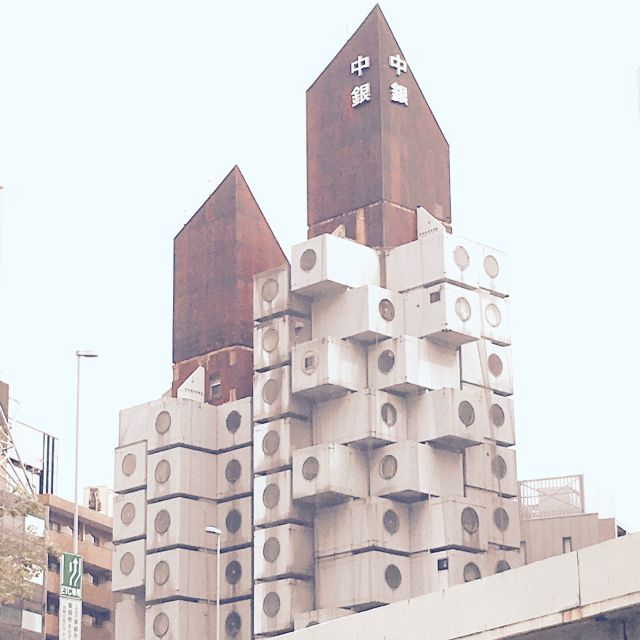
The meeting point is easy and specific: stand in front of the main gate of Tsukiji Hongwan-ji temple. If you’re coming from Tsukiji station on the Tokyo Metro Hibiya line, take Exit 1, turn left, and walk straight for less than a minute.
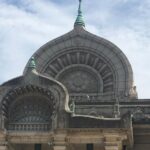
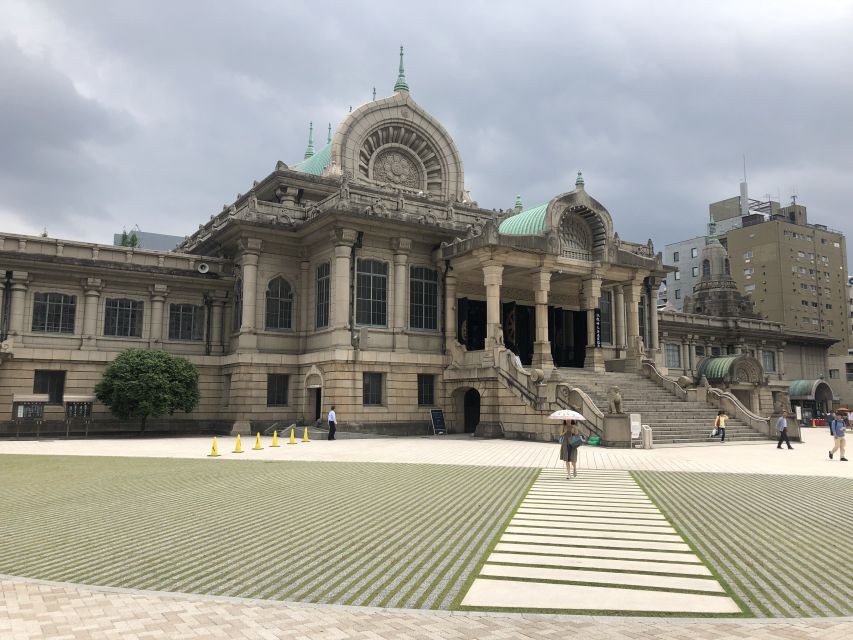
This start matters because Tsukiji Hongwan-ji is the kind of building that resets your expectations fast. You’ll hear the contrast described as an Indian style exterior paired with a European church-like interior. That combination is exactly what makes an architecture walk interesting: you arrive in a part of Tokyo you might associate with one thing, then the architecture tells a different story.
Practical tip: before you begin moving, take a minute to look back at how the temple setting frames the first impression of the area. Even if you’re not an architecture buff, this is where your brain starts paying attention.
Tsukiji to Kabuki Theatre: how tradition survives in new construction
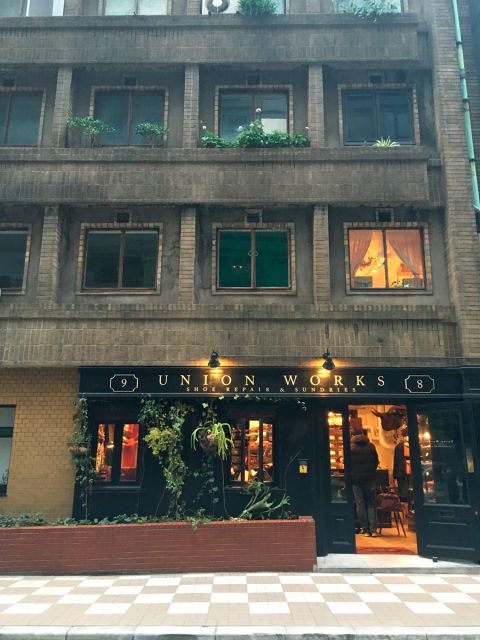
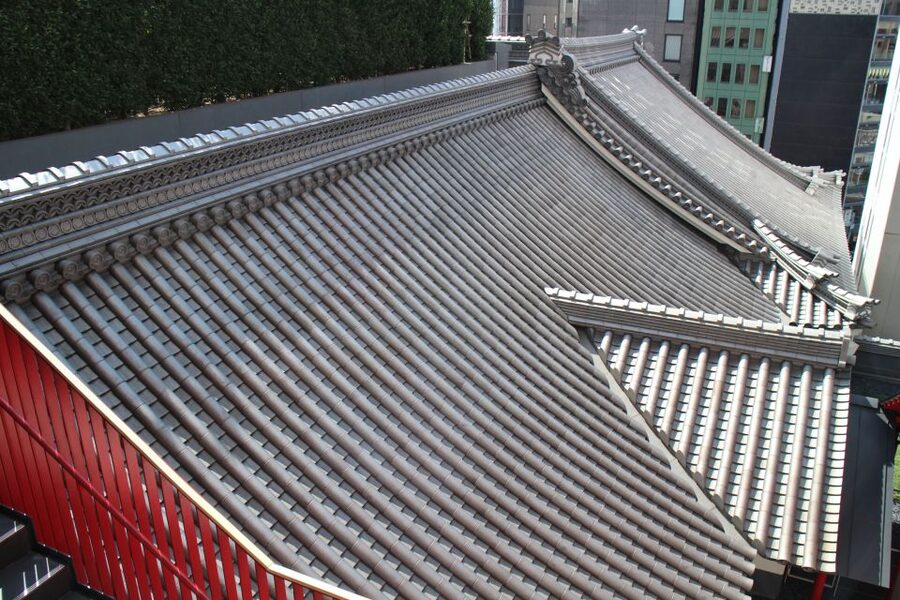
After the temple, the tour moves to the newly built Kabuki theatre (2013). The key point isn’t just that it’s modern. It’s that it inherited the traditional style from past generations.
That’s the kind of detail that helps you understand why Ginza isn’t just shiny and new. A building can be updated or rebuilt and still keep cultural cues—layout logic, visual rhythm, and the way a structure presents itself to the street. On this stop, you’ll be able to compare the temple’s cross-cultural exterior/interior contrast with a theatre design that aims for continuity.
If you like “design logic,” this is a strong moment for questions. Watch for how the building’s presence communicates its purpose—audience experience and performance spaces have different design demands than offices or retail. That’s the real value of this stop: it puts architecture into context.
The Metabolism movement theme: spotting 1960s–70s urban ideas in Ginza
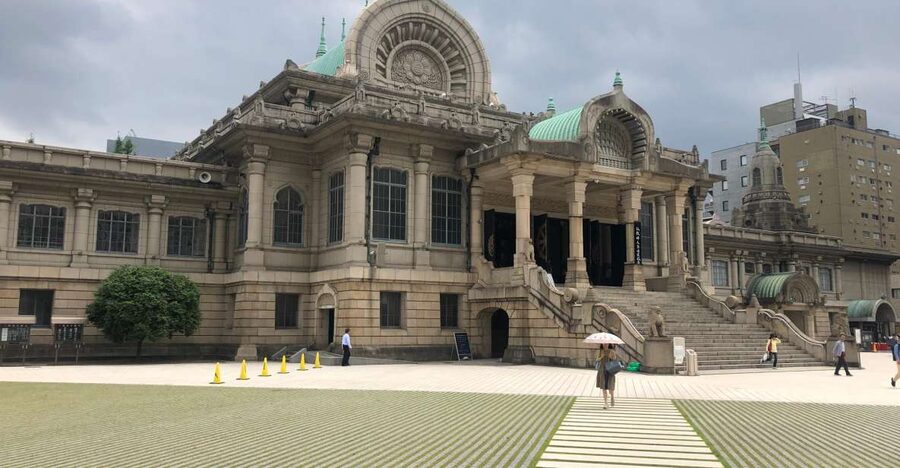
One of the tour highlights is the chance to admire a masterpiece from the Japanese Metabolism movement—linked to proposals for a new urbanism in the 1960s to 70s. You’re not asked to memorize theory. Instead, the tour uses that concept as a lens as you move through the Ginza area.
Here’s what the Metabolism lens helps you do: it encourages you to look for architecture that treats the city as something flexible and changeable. Think in terms of systems, growth, and how parts of a built environment can evolve. Even when you’re standing on a modern street, that mindset changes what you notice—structures feel less like fixed objects and more like answers to future needs.
On this walk, the Metabolism moment comes alongside stops like the Okuno Building, plus other major Ginza landmarks. The practical takeaway for you: don’t just look for “old vs new.” Look for the design mindset behind each building form.
Nicolas G. Hayek Center, Maison Hermes, Tokyu Plaza Ginza: big names, big design lessons
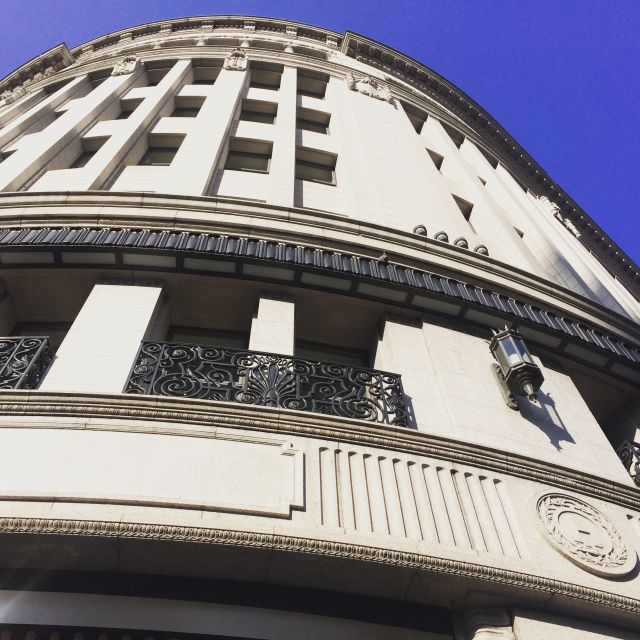
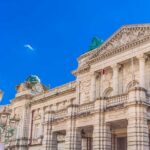
Next you’ll pass through a sequence of famous Ginza stops, including the Nicolas G. Hayek Center, Maison Hermes, and Tokyu Plaza Ginza. These places are easy to recognize, but the tour approach is what makes them worthwhile.
Retail and brand-centered architecture has a job most people forget: it has to create identity fast. Buildings in this zone don’t just shelter activity—they market an image and guide movement. When you walk these stops with an architecture-focused guide, you start noticing practical design choices like how entrances pull you in, how facades manage visibility at street level, and how building mass relates to the sidewalk experience.
You’ll also see a “balanced from traditional to modern” theme in action. The idea isn’t that every building is historical or every building is futuristic. It’s that Ginza keeps mixing references and styles in the same area—so your brain can compare how each era wanted the city to feel.
One consideration: if you’re hoping for deep interior access at every stop, this kind of street-focused tour may not give you that. Based on what’s described, you’re walking and observing as you go. That’s still the right format for this kind of “see the whole picture” architecture lesson.
Mikimoto Ginza 2 and the Okuno Building: shifting scale and design intent
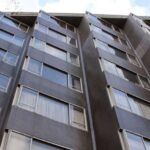
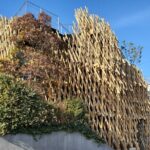
Two more major stops are Mikimoto Ginza 2 and the Okuno Building. Even without going into technical details, these stops give you a useful contrast: Ginza isn’t one mood. It’s a stack of different ambitions, from polished luxury spaces to design tied to urban-thinking ideas.
This is also where you’ll likely appreciate the tour’s pacing. A 3.5-hour walk isn’t enough time to study every building like a museum. But it’s enough time to notice patterns: when the architecture tries to look timeless, when it leans modern, and when it carries a specific urban concept—like the Metabolism movement—through its form.
If you care about architecture theory but still want a real-world payoff, this section of the route is one of the best chances to connect abstract ideas to visible design choices.
Ending at Ginza 4-chome: Wako (SEIKO watch) and street-level drama
The tour finishes at the intersection of Ginza 4-chome, where the Wako (SEIKO watch) building stands. Ending at a high-recognition landmark is smart for two reasons.
First, it gives you a clear mental “bookmark.” After hours of moving between buildings, you want one strong reference point to anchor the experience. Second, street intersections are where architecture becomes urban experience, not just object on a map. Corners change how you perceive scale, edges, and proportion—especially in a district like Ginza.
When you reach the finish, you’ll have spent enough time with the architecture lens that this last stop won’t feel like just a photo spot. It becomes the final piece in a design story you can actually follow.
The secret backstreet side trip: Ginza beyond the main stage
You’ll also take a secret side trip into a backstreet neighborhood to appreciate different aspects of the area. This is often where tours like this deliver the most value, because the “main drag” can blur your sense of what a city really feels like.
Backstreets reduce the noise from big signage and brand-dominant storefronts. Even if the streets are still in the same neighborhood, they can feel different in light, scale, and building rhythm. That’s what helps you calibrate your architecture reading: you stop judging only by the famous facades and start paying attention to how architecture behaves when it’s not performing for tourists.
If you enjoy walking and want your city photos to feel more grounded, this side trip is a great feature—not an add-on.
What 210 minutes feels like in real life (and how to prepare)
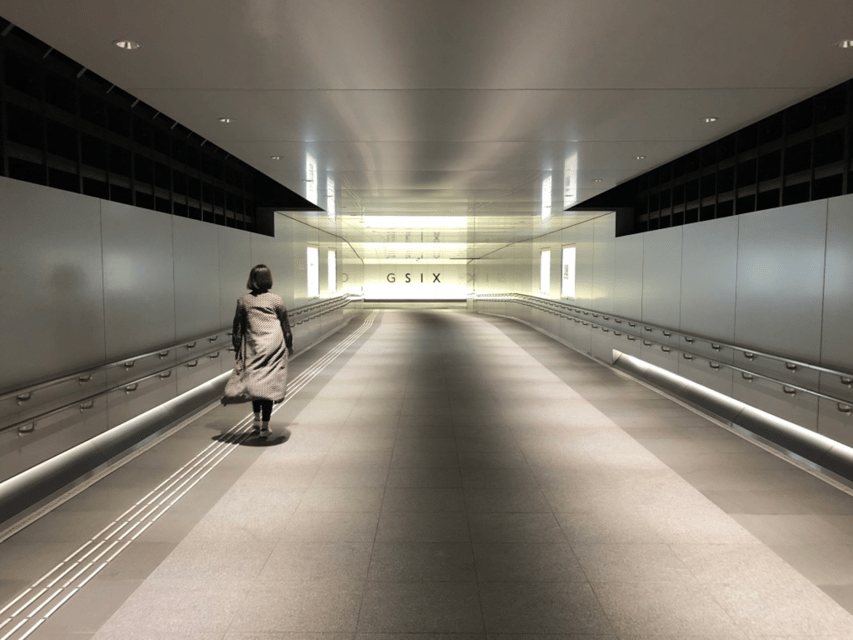
A 210-minute private walking tour is long enough that comfort matters. The good news is that the tour includes a break time with drinks, so you’re not stuck walking straight through.
Still, here’s how I’d plan it:
- Wear comfortable shoes you can walk in for hours
- Bring a small layer in case the weather shifts
- Since meals aren’t included, treat this as an early afternoon or late morning plan and eat before or after
Also note the tour’s structure: it’s focused on Ginza landmarks and architectural observation, not on rides between areas. You’ll likely spend most of your time on foot from the start point near Tsukiji to the Ginza 4-chome finish.
Price and value: is $129 per person worth it?
At $129 per person for a private 210-minute architecture walk, you’re paying for three main things: a live English guide, a route built around specific design stops, and the time to connect those stops into a story.
Here’s how to judge value for yourself:
- If you want architecture explained in context (like the Metabolism movement thread) instead of just being pointed at buildings, the guide component is the value driver.
- If you prefer small group attention (instead of a large crowd), the private group format is part of what you’re buying.
- The included drinks break is a small thing, but it supports the long walking time.
What’s not included is also part of the math. Transportation fee to/from the Ginza area and meals are on your side, so factor that into the full budget. But the core tour itself is straightforward: guide, walking tour, and drinks during the break.
If your priority is architecture learning with a manageable walking commitment, this price can feel fair. If your priority is heavy museum-style interiors and long sitting visits, you may need to pair this with other stops in Tokyo.
Who this private Ginza architecture tour suits best
This works best if you like:
- Seeing famous buildings, but with interpretation that makes them more meaningful
- A clear conceptual thread (like Metabolism) rather than random photo stops
- Walking at a steady pace with a live English guide
- Contrast: traditional meets modern within the same neighborhood
It might be less ideal if you hate walking in cities for long stretches, or if you’re looking for a tour that includes lunch and lots of scheduled time inside buildings.
Because it’s private, it’s also a smart pick for couples or small groups who want to control the pace—within the tour’s structure—rather than being rushed by larger crowds.
Should you book it?
Yes—if you want Ginza architecture with a point of view. The combination of Tsukiji Hongwan-ji’s unusual temple design, the Kabuki Theatre’s 2013 “new build, traditional influence” approach, and the Metabolism movement lens gives you a tour that’s more than sightseeing.
Book it especially if you like learning how ideas become buildings, and if you value a route that includes both landmark architecture and a backstreet look at the neighborhood’s texture.
Only skip it if you’re expecting lots of interior access at every stop or if your schedule can’t handle a 210-minute walking format without meals planned around it.
FAQ
FAQ
Where does the tour start?
It starts in front of the main gate of Tsukiji Hongwan-ji temple. From Tsukiji Station (Tokyo Metro Hibiya line) Exit 1, turn left and walk straight for less than a minute.
Where is the meeting point exactly?
The meeting point is the main gate area of Tsukiji Hongwan-ji temple in the Tsukiji area.
How long is the tour?
The tour duration is 210 minutes.
Is this a private tour?
Yes, it’s a private group tour.
Is there a live guide and what language is it in?
Yes, there is a live tour guide, and the tour is in English.
What’s included in the price?
Included items are the guide, the walking tour, and a break time with drinks.
What isn’t included?
Meals are not included, and the transportation fee to/from the Ginza area is not included.
What are the main places you’ll see?
You’ll pass landmarks including Tsukiji Hongwan-ji temple, the Kabuki theatre (2013), Nicolas G. Hayek Center, Maison Hermes, Tokyu Plaza Ginza, Mikimoto Ginza 2, the Okuno Building, and you finish at Ginza 4-chome near the Wako (SEIKO watch) building.
Do you take a side trip off the main route?
Yes. The tour includes a secret side trip to a backstreet neighborhood to appreciate different aspects of the area.
What’s the cancellation policy?
You can cancel up to 24 hours in advance for a full refund.
Do I need to pay immediately?
No. The option is reserve now & pay later, so you can book without paying today.