REVIEW · CHICAGO
Chicago Lake and River Architecture Tour
Book on Viator →Operated by Wendella Tours & Cruises · Bookable on Viator
Chicago’s skyline looks even better when you understand what you’re seeing. I love the live narration that points out specific buildings, and I like that you get both river architecture history and Lake Michigan wide-open views in about 1.5 hours. The one drawback to plan for: it’s first-come seating, and some outdoor chairs can feel a bit uncomfortable when the lake wind kicks up.
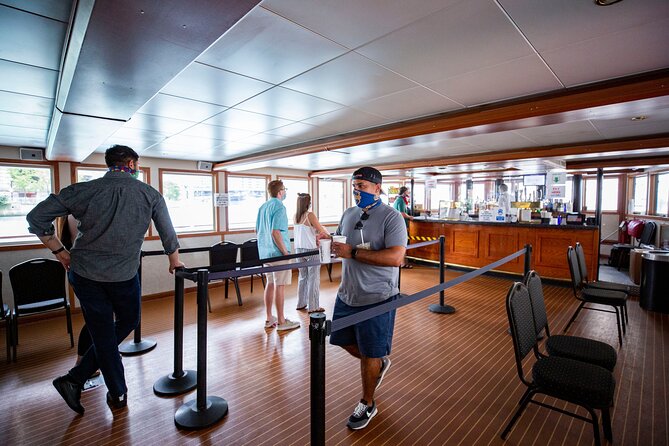
You’ll board at Wendella’s Michigan Avenue Dock, right on the edge of the Magnificent Mile action. The lower deck gives you climate-controlled comfort, restrooms, and a full-service bar, so you’re not stuck freezing if weather turns. If you’re picking based on vibe, this cruise can feel funny and energetic—names like John, Kenny, Lucas, and Dave show up often in guide praise.
Go early and dress for wind. The best photos and the best views often depend on where you stand once you’re underway, and the boat can get crowded.
In This Review
- Key highlights you’ll feel fast
- Chicago architecture makes more sense from the water
- Boarding at 400 N Michigan Ave: how to score the best spot
- Chicago River leg: where the stories started
- From the locks to Lake Michigan: the scenery shift you’ll feel
- Lake Michigan leg: skyline photos, wind management, and where to stand
- The landmarks you’ll learn to spot (without a map)
- How the 90 minutes feels for families and first-timers
- Cost and value: why $45 works for what you get
- Should you book the Chicago Lake and River Architecture Tour?
- FAQ
- Where do I meet for the tour?
- How long is the Chicago Lake and River Architecture Tour?
- Is the tour ticket mobile?
- Is there indoor seating on the boat?
- Are there restrooms onboard?
- Is food or drink included?
- Is outside alcohol allowed?
- Is the cruise wheelchair accessible?
- Is there storage for luggage?
- What if the cruise is canceled due to weather?
Key highlights you’ll feel fast
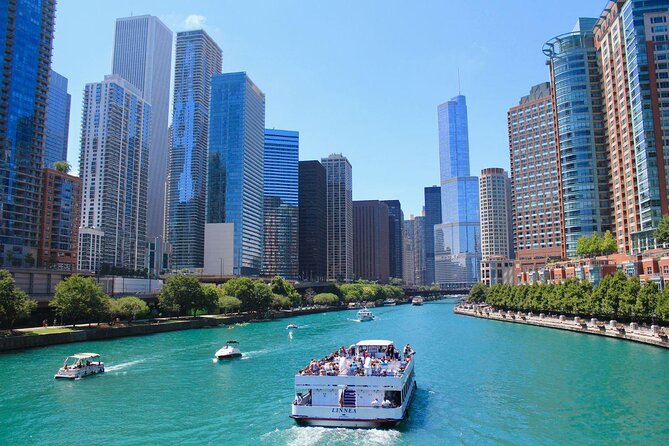
- Live, building-by-building commentary that helps you recognize landmarks instead of just seeing them
- River-to-lake route for both historic Chicago River moments and big skyline shots on Lake Michigan
- Climate-controlled lower deck plus outdoor viewing, with restrooms onboard
- Iconic facades in view: Wrigley Building, Merchandise Mart, Marina City, and the Water Tower area
- Wind-ready experience: pack layers, and expect chilly breezes once you’re out on the lake
Chicago architecture makes more sense from the water
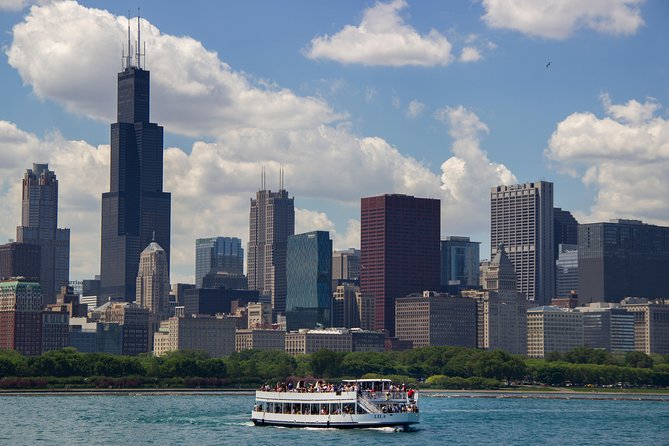
A walking tour tells you what’s on the street. A lake-and-river cruise helps you understand how Chicago chose to build up, build out, and manage space. You see skyscrapers grouped like neighborhoods, and you start connecting why certain buildings belong together on a skyline—rather than treating them as random tall blocks.
This tour is built around that idea. You’ll listen to a guide who focuses on real architecture details and the stories behind them, while you glide past the river and then out toward Lake Michigan. It’s the kind of outing that makes your first day in Chicago feel smarter without requiring a full day of planning.
And because you’re moving, the skyline changes every few minutes. That’s what makes this more fun than looking at photos online: you get angles you can’t easily recreate from the sidewalk.
You can also read our reviews of more tours and experiences in Chicago.
Boarding at 400 N Michigan Ave: how to score the best spot
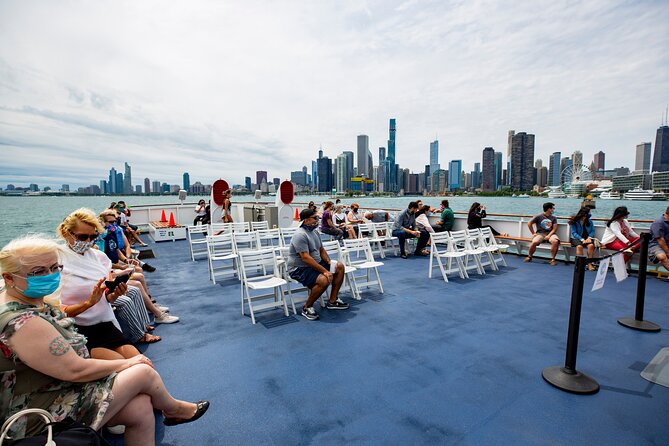
The meeting point is Wendella’s dock at 400 N Michigan Ave, by the historic Wrigley Building. It’s super convenient if you’re already staying near the Magnificent Mile, and it’s close to public transportation. You’ll also want to know this boat uses first-come, first-served seating, with indoor and outdoor options.
If you care about views, arrive early—about 30 minutes before departure is the sweet spot. One review noted people can block views, which is exactly what happens when crowds funnel into the same line-of-sight. Getting there early helps you choose where you stand or sit before the boat fills in.
Inside, the lower deck is climate-controlled and has speakers so you can hear the narration. That’s a big deal in Chicago weather, where one hour can swing from comfortable to windy-cold. If you’re bringing a small blanket or something to cushion your seat, you’ll be happier on the outdoor portions. Several people called out how chilly and how uncomfortable the chairs can be on windy lake stretches.
Chicago River leg: where the stories started
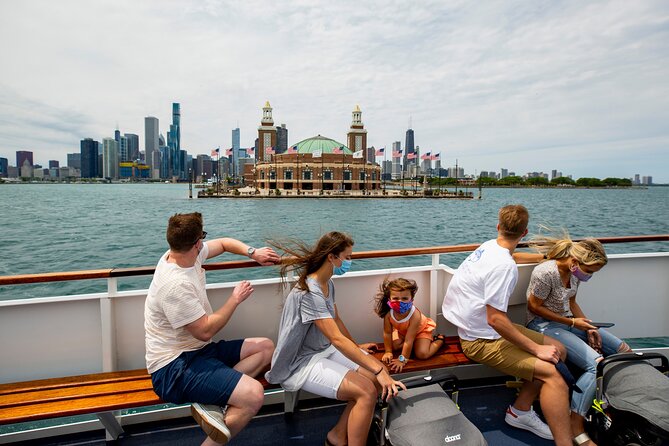
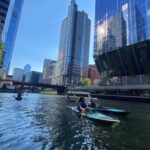
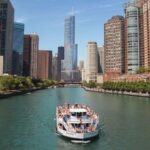
The cruise begins with the Chicago River, and this is where the guide’s job really matters. From the river, you can see the density of downtown development and how the waterfront lines the buildings up into a readable pattern.
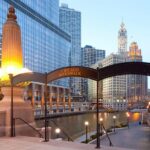
One highlight is the stretch tied to the city’s river reversal. You’ll pass a dedicated fountain area linked to the Metropolitan Water Reclamation District milestone, celebrating the reversal of the Chicago River’s flow in 1900. A fun detail: for the first five minutes of every hour, the fountain shoots a water arc across the river from a tiered waterfall. If you’re near a railing around the top of the hour, it’s a great moment for photos and a quick break from the skyline gaze.
You’ll also glide past some of Chicago’s most recognizable commercial and residential forms. The cruise routes you by the Merchandise Mart, often described as the largest commercial building in the world. Even if you’ve never heard the name before, seeing it from the river gives you a sense of scale you can’t estimate from ground level.
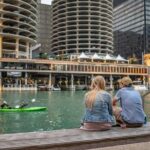
Then there’s Marina City—the pair of mixed-use apartment towers often nicknamed for their corn-cob shape. These buildings don’t just look distinctive; they explain how Chicago went vertical while still packing in a full “micro-city” feel. On the river leg, the guide’s framing helps you notice the difference between a tower that’s mainly office space versus one that’s designed to be a complete living environment.
From the locks to Lake Michigan: the scenery shift you’ll feel
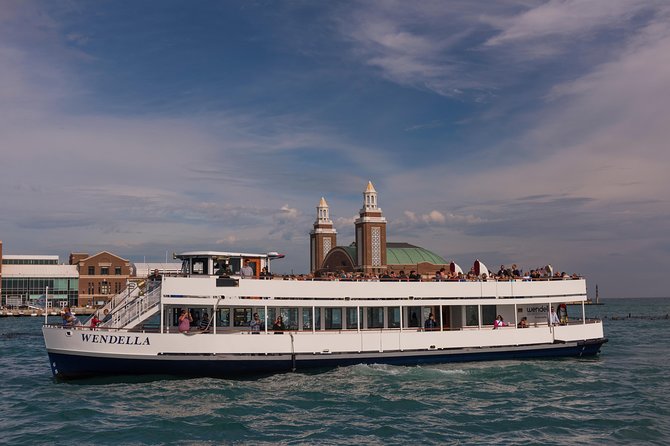
After the river portion, you head toward Lake Michigan. One of the most memorable transitions on this route is the part where the boat goes through the locks. It changes the mood fast: the city tightens behind you and the water opens up in front of you.
This is also the moment where weather can make or break your comfort. On the lake, wind is real. Even in good fall weather, it can feel sharp once you’re out where water has no nearby walls to block it. If you get even slightly chilly, don’t fight it—use the indoor lounge when you need it, then step back out for photos when the deck clears.
If you’re aiming for the best skyline pictures, the lake portion is where you’ll get that long, wide-angle view of the city stretching along the shoreline. Chicago’s coastline is often described as 26 miles (with some references giving 42 miles depending on how it’s measured), and from the water you understand why people talk about Chicago and the lake in the same breath.
Lake Michigan leg: skyline photos, wind management, and where to stand
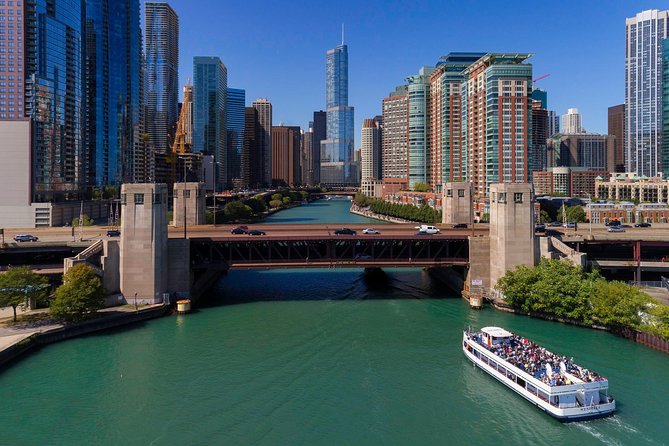
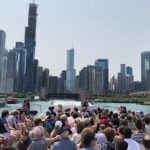
The Lake Michigan portion is your “big picture” segment. You’ll see the skyline more spread out, and you’ll get longer sightlines that make architecture easier to pick out by shape rather than only by height.
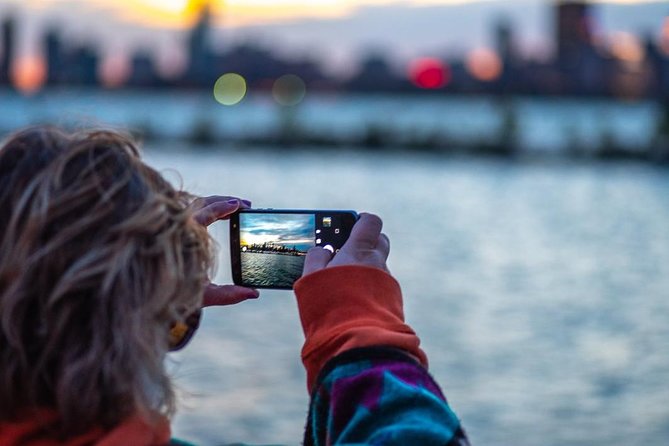
This is also where you should think about your camera habits. If you’re taking lots of photos, you’ll want a stance where you can steady yourself and avoid constant blocking. Because seating is first-come and crowding can happen, it pays to arrive early and move strategically instead of trying to change your position after everyone’s settled.
For comfort, layer up. Several people mentioned bringing sunglasses or a hat when it’s sunny, and many warned it can feel chilly even when the city feels mild. A small blanket can help if you end up on outdoor seating that feels a bit stiff.
The good news: the boat setup is built for this exact situation. The lower deck gives you a warm option, and since the narration runs through speakers, you don’t lose the story just because you’re inside. You can bounce between indoor warmth and outdoor views without the trip feeling like a compromise.

The landmarks you’ll learn to spot (without a map)
One reason this cruise is worth the money is that the guide doesn’t just say pretty words about buildings. You’ll get a running tour that helps you identify structures as you pass them.
Here are the big ones you’ll likely recognize as the skyline slides by:
- Chicago Water Tower and the Michigan Avenue zone, including nearby cultural stops like the Art Institute area and the general stretch around Millennium Park
- The Chicago River-adjacent skyline blocks, where older downtown forms sit right alongside newer development
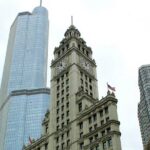
- Wrigley Building (white, terra-cotta landmark), built as headquarters for the Wrigley chewing gum company in 1922
- Second Lakefront, a pedestrian waterfront concept often described as the city’s second lakefront space
- Lyric Opera House, known as the second-largest opera auditorium in North America with an Art Deco interior
- Second Lakefront + cultural skyline moments, which make Michigan Avenue feel like more than just shopping
The most useful part is how all these landmarks connect into a single story. Michigan Avenue isn’t just a street of iconic buildings—it becomes a shoreline spine where different eras of Chicago architecture show up in the same view.
And if you want a more entertaining experience, try to catch the guide with the best crowd chemistry for you. Several reviews called out guides like John, Kenny, Lucas, Tess, Justin, Kay, Dave, and Jack as standouts for humor and delivery. You can’t choose in advance for every sailing, but you can at least go in knowing the narration style can make this feel like a fun city class rather than a stiff lecture.
How the 90 minutes feels for families and first-timers
This is a short tour for Chicago standards: about 1 hour 30 minutes. That length is a feature. You get two major water environments—river and lake—without turning the day into a half-trip marathon.
That said, not every kid or teen loves sitting on a boat watching skylines. One family noted it might be a little long for children around ages 9 and 11, even though the adults thought the time was perfect. If you’re traveling with younger kids, I’d plan for breaks: use the indoor deck when needed, and bring something small to keep hands busy (a snack you’re allowed to bring, or a game that doesn’t require outlets).
For first-timers, this is a strong starting point. It gives you bearings fast: where downtown sits, why the river matters, and why the lake views are the best “Chicago in one glance” shots. For locals, it can be fun because guides often bring out details you forget you’re seeing every day from the street.
Cost and value: why $45 works for what you get
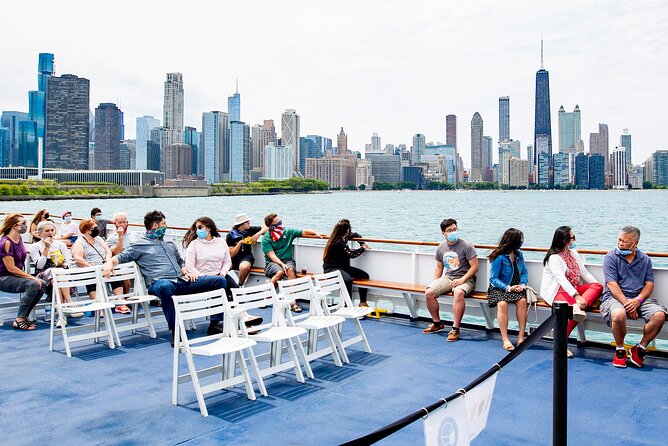
At $45 per person, this tour sits in the value zone for a city activity that includes both guided interpretation and boat time. The price isn’t just paying for movement across water. You’re paying for a live guide, structured narration, and a format that lets you see multiple architecture zones in a short window.
What makes the value feel real:
- Taxes and fees are included (so you’re not surprised at checkout)
- You get restrooms onboard, which matters more on a boat than you might expect
- The boat has indoor and outdoor climate-controlled seating, so your comfort level doesn’t hinge entirely on weather luck
- The tour is limited to a maximum group size of 300 travelers, which helps the experience stay manageable compared with mega-crowd attractions
What you should plan around:
- Drinks and snacks are available for purchase, but alcohol and snacks are not included
- There’s no storage, and bags can be subject to search, so travel light with a daypack
If you’re trying to decide between this and another architecture option, I’d think about your goal. If you want the skyline photo moment plus an architecture lesson in one go, this hits that sweet spot. If you want deep historical detail that keeps layering for hours, you may want a longer walking or museum-style option. But for a first Chicago day, $45 is a fair price for the blend.
Should you book the Chicago Lake and River Architecture Tour?
I’d book it if you’re in Chicago for a short visit and you want the fastest path to understanding why this city looks the way it does. The combo of live narration, river reversal context, and wide Lake Michigan views makes it a smart “first architecture day” activity.
Skip it or adjust expectations if you know you’ll struggle with boat wind or you hate tight lines and first-come seating. If you do go, solve those issues with simple choices: arrive early, dress in layers, and use the indoor deck when the lake gets chilly.
If you’re the type who likes to learn while having fun, this cruise delivers exactly that—architecture you can recognize, skyline you can photograph, and a guide style that can turn a 90-minute ride into a highlight of your trip.
FAQ
Where do I meet for the tour?
You meet at 400 N Michigan Ave, Chicago, IL 60611, at the historic Wrigley Building (Wendella’s Michigan Avenue Dock).
How long is the Chicago Lake and River Architecture Tour?
It runs about 1 hour 30 minutes.
Is the tour ticket mobile?
Yes, the tour offers a mobile ticket.
Is there indoor seating on the boat?
Yes. You’ll have access to indoor and outdoor seating, with a climate-controlled lounge available.
Are there restrooms onboard?
Yes. Restrooms are located on the lower deck of the vessel.
Is food or drink included?
No. You can buy snacks and drinks onboard, including a full-service bar.
Is outside alcohol allowed?
No. Outside alcohol is prohibited.
Is the cruise wheelchair accessible?
Yes. Wendella operates boats with wheelchair lifts between decks, and the boats can accommodate wheelchairs with ADA-compliant toilets.
Is there storage for luggage?
No. There is no storage area on the dock, and any bags you bring must be kept with you and are subject to inspection.
What if the cruise is canceled due to weather?
The cruise requires good weather, and if it’s canceled due to poor weather, you’ll be offered a different date or a full refund.