REVIEW · BARCELONA
Sant Pau Art Nouveau Site Skip The Line | Sant Pau Hospital
Book on Viator →Operated by THINGS TO DO IN FZCO · Bookable on Viator
A hospital campus that feels like art. Sant Pau is one of Barcelona’s most striking Art Nouveau complexes, and this skip-the-line ticket lets you get inside fast so you can focus on the architecture and atmosphere.
I love the pavilion-and-garden design—it feels calm on purpose, not just pretty. And I also love that this site is photograph-friendly, with big visual hits like domes, stained glass, and colorful details that make every turn feel different.
One drawback to plan for: this ticket includes admission only, not a guided tour, so the story behind what you’re seeing may depend on signage and your own curiosity.
In This Review
- Key things to know before you go
- Why Sant Pau Hospital feels like a whole world, not a quick stop
- Skip-the-line and price: is $26.41 good value?
- Entering the grounds: where your best photos and first impressions happen
- The pavilion-and-garden plan: architecture built for calm
- The story behind the complex: from 1401 origins to UNESCO status
- Pavilions, stained glass, and the “look closer” details
- Underground tunnels: the fun surprise layer
- Timing your visit: how to get the most from 1 to 2 hours
- What you miss without a guided tour
- Getting there and getting around once you arrive
- A quick note on re-entry and using your time wisely
- Should you book this skip-the-line Sant Pau entry?
- FAQ
- How long should I plan for Sant Pau?
- Is skip-the-line entry included?
- What’s included in the price?
- Is a guided tour included?
- Who designed Sant Pau Hospital?
- Is Sant Pau a UNESCO World Heritage Site?
- Is this experience refundable if I cancel?
Key things to know before you go
- Skip-the-line admission so you spend less time waiting and more time walking
- Designed for healing with a layout meant to support patients in the early 1900s
- 16 pavilions inside a huge property, with gardens built for quiet
- Art Nouveau details like stained glass and ornate rooflines
- Underground tunnels that add an interesting, slightly spooky layer
- Easy to fit into a 1 to 2 hour visit, especially if you like architecture
Why Sant Pau Hospital feels like a whole world, not a quick stop
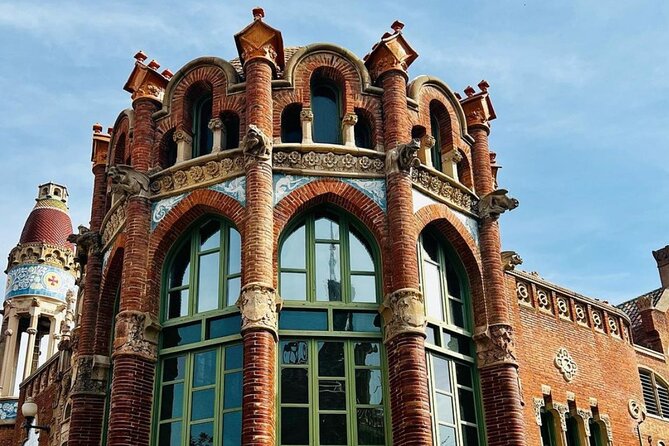
Sant Pau doesn’t feel like one building. It feels like a small city devoted to health care. That’s the big reason it’s so memorable: you’re not just looking at facades, you’re moving through a plan.
The complex is tied to a medical site that goes back to 1401, but the visitor experience mostly comes from the grand Art Nouveau hospital era. This is where Lluís Domènech i Montaner’s ideas show up in real space: light, air, orientation, and calm surroundings all play a role in how the campus works.
Barcelona has plenty of famous landmarks, but Sant Pau has a different vibe. Even when it’s open to visitors, it still feels like a place built for slowing down and noticing.
You can also read our reviews of more tours and experiences in Barcelona.


Skip-the-line and price: is $26.41 good value?
For $26.41 per person, you’re buying one clear benefit: admission with skip-the-line entry. At this price point, that matters because it saves time at a popular UNESCO site, and time is what makes your visit enjoyable instead of rushed.
This ticket is also a smart match if you want flexibility. A 1 to 2 hour window is enough to see the highlights at your own pace—pavilions, gardens, key interiors, and photos—without being locked into a strict group schedule.
The tradeoff is that the ticket does not include a guided tour. If you’re the type who wants the full “here’s why each detail matters” explanation, you might feel like you’re missing some context unless you’re comfortable reading what’s on site or using your own background research.
Entering the grounds: where your best photos and first impressions happen
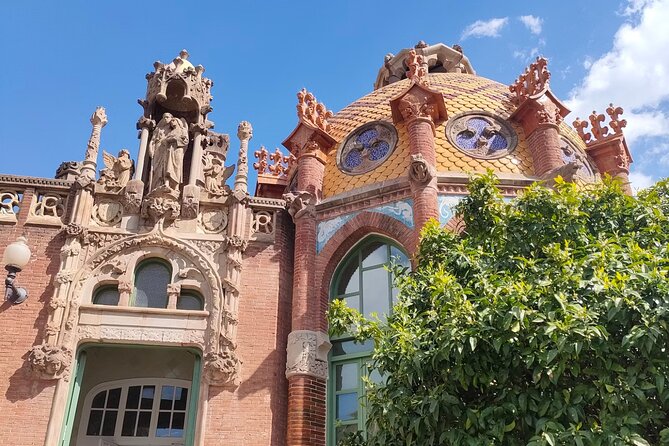
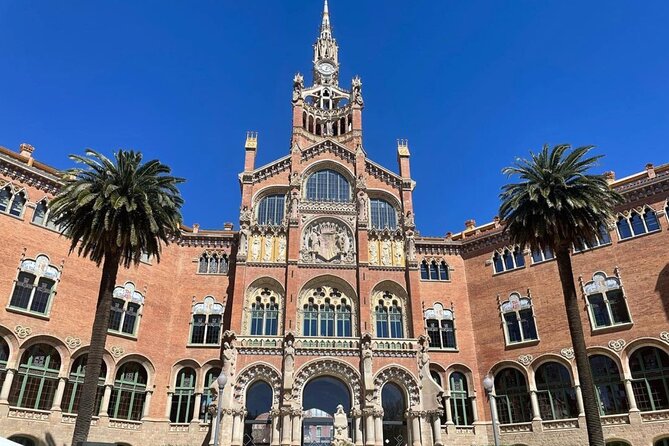
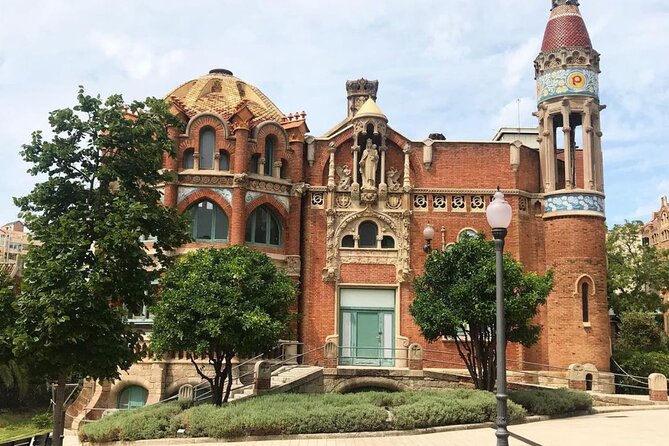
The first impression is the point. Sant Pau’s exterior architecture hits fast with domes and decorative rooflines that look almost too playful for a hospital. You’ll notice the design language that people associate with Catalan Art Nouveau—ornament that feels joyful, not fussy.
Once you’re inside the grounds, your walking route matters. The property is big, and the best strategy is to start with the views that catch your eye—rooflines, stained glass, and colorful exterior details—then come back through the quieter garden areas.
If your camera comes out quickly at Sagrada Família and you love architectural details, this is the kind of place where you’ll keep finding new angles without feeling like you’re repeating yourself. And yes, the campus layout makes it easier to move around without getting stuck in a single bottleneck.
The pavilion-and-garden plan: architecture built for calm
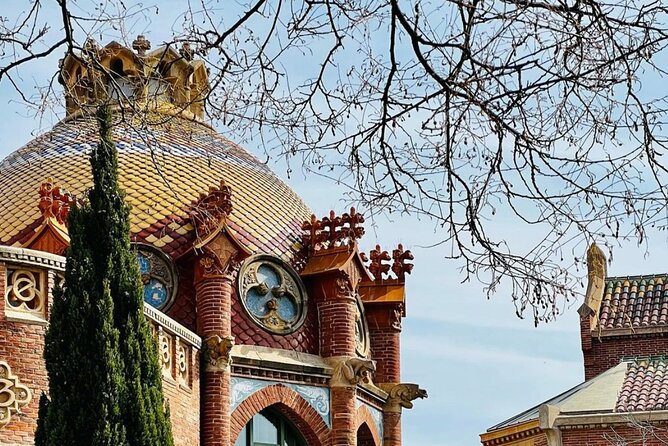
Sant Pau is often described as an Art Nouveau masterpiece, but what makes it work isn’t only style. It’s the way the site supports people over time.
The hospital was meant to aid patients’ healing, and the design choices show up in the campus rhythm: open spaces, gardens meant for relaxation, and a layout that encourages you to move between pavilions rather than stay trapped in one room. In the early 20th century, that kind of setting was a serious idea, not a decorative afterthought.
In practical terms for you: the gardens give you a break from walking, and they’re also great for settling your eyes after intense architectural details. It’s the part of the visit where the site feels most intentional—quiet, open, and restful.
The story behind the complex: from 1401 origins to UNESCO status
The medical site begins as far back as 1401, but the Art Nouveau transformation is what draws you in. Sant Pau became a major municipal hospital from 1912 and operated for many decades, with the campus serving patients through the early 2000s.
Architecturally, the big creative period is tied to construction from 1901 to 1930, when the modernist vision came to life across multiple pavilions. That long building timeline helps explain why the complex feels both unified and varied: it’s one concept, executed across different buildings and moments.
This site has also been recognized internationally for decades. Sant Pau has been a UNESCO World Heritage Site since 1997, which is your hint that the visitor route is not random. The campus is preserved and presented because it’s culturally significant, not only pretty.





Pavilions, stained glass, and the “look closer” details
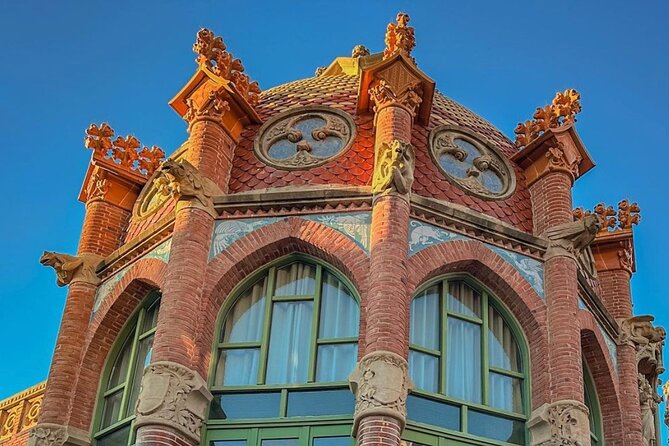
Art Nouveau at Sant Pau isn’t just about big shapes. The details are part of the reason people rave about it.
You can expect visual highlights such as:
- Stained glass that adds color and glow to the experience
- Ornate exterior domes and roofline features
- Decorative tiling, mosaics, and decorative architectural elements around the campus
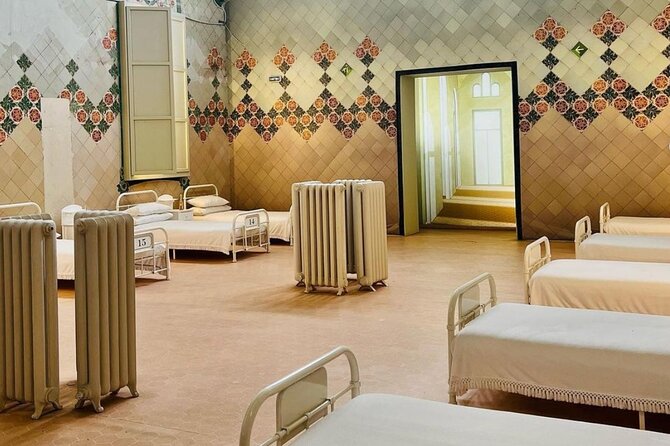
- Spaces that recreate older hospital settings, including an old ward-style presentation (you may see a recreated ward experience and a solarium visiting room concept)
Here’s the practical advice: don’t just walk fast between photo spots. Take a few slow minutes at each pavilion cluster. The design is meant to reward attention, and if you’re rushing, you’ll miss the specific details that make Sant Pau feel different from other modernist sights.
Underground tunnels: the fun surprise layer
One of Sant Pau’s most interesting features is the presence of underground tunnels. They add a different “side” of the complex, turning the hospital campus from purely scenic into slightly mysterious and functional.
Visiting the tunnels is worth it because it changes how you understand the whole place. Instead of thinking only about visible architecture, you start to see how the pavilions connect in a practical way—movement and logistics were part of the healing concept too.
If you like quirky photo opportunities, the tunnels also give you more dramatic contrasts than open gardens and sunlit facades. Just keep an eye on where foot traffic is guiding you, so you don’t get turned around in the more maze-like areas.
Timing your visit: how to get the most from 1 to 2 hours
A 1 to 2 hour visit is a good target for most people. The campus is big enough that you’ll want a plan, but not so big that you must spend half a day to feel satisfied.
A simple pacing approach:
- Spend your first 25 to 35 minutes chasing the most photogenic exteriors (domes, stained glass, rooftop details).
- Then move into a slower loop through pavilion interiors and the gardens.
- Save underground tunnel areas for when you’re ready for a change of pace.
If you’re a serious photographer, you might stretch toward the 2-hour mark. If you’re more of a “see it, enjoy it, then move on” person, 60 to 90 minutes can feel complete—especially since the skip-the-line entry helps you avoid losing momentum.
What you miss without a guided tour
This experience includes admission, but it does not include a guided tour. That means you’ll learn primarily through what’s available on site.
For some visitors, that’s totally fine. If you enjoy reading plaques at your own speed and connecting the dots yourself, you’ll still come away impressed by the Art Nouveau architecture and the logic of the healing campus layout.
But if you want the richer, guided-level explanations—why specific design choices were made, how the hospital operated, and what to look for in each pavilion—you may wish you had a guide. There’s a strong argument for adding a tour elsewhere or choosing a different format if history storytelling is your thing.
Getting there and getting around once you arrive
You’ll be happy to know Sant Pau is near public transportation. That makes it easy to pair with other modernist stops without a lot of detouring.
Once you’re on the grounds, wear comfortable shoes. The experience is built around walking between pavilions and through garden areas. If you plan to photograph a lot, also keep in mind that moving slowly for shots naturally adds time.
A quick note on re-entry and using your time wisely
One practical consideration: if you plan to leave the grounds and come back later the same day, double-check how entry works at the ticketing point. There are reports of visitors being charged again after returning, so it’s safer to treat your visit as a single continuous loop unless the rules clearly say otherwise.
Should you book this skip-the-line Sant Pau entry?
I’d book it if:
- You want skip-the-line admission at a major UNESCO site
- You love Art Nouveau architecture, especially stained glass, domes, and decorative exterior details
- You’re happy doing it self-guided and letting the campus design tell the story through your own observations
- You can do a focused visit of 1 to 2 hours
I might look for a guided option instead if:
- You want someone to explain the hospital design choices and historical context in depth
- You’re the type who doesn’t enjoy reading signage and needs a human narrator to connect it all
If you’re building a Barcelona itinerary around landmark architecture, Sant Pau is a strong pick. It’s calmer, more walkable, and visually rewarding in a way that feels different from the city’s biggest crowds.
FAQ
How long should I plan for Sant Pau?
Plan on about 1 to 2 hours.
Is skip-the-line entry included?
Yes. The experience includes a skip-the-line ticket for admission.
What’s included in the price?
Admission to the venue is included.
Is a guided tour included?
No. A guided tour is not included with this ticket.
Who designed Sant Pau Hospital?
The hospital complex is associated with architect Lluís Domènech i Montaner.
Is Sant Pau a UNESCO World Heritage Site?
Yes. It has been a UNESCO World Heritage Site since 1997.
Is this experience refundable if I cancel?
No. The experience is non-refundable and cannot be changed for any reason.