REVIEW · LOS ANGELES
The History and Architecture of Downtown Los Angeles
Book on GetYourGuide →Operated by See LA in a Day L.L.C. · Bookable on GetYourGuide
Hollywood history starts in Downtown Los Angeles. This 3-hour walking tour ties DTLA architecture to movies, true crime, and real civic power, beginning with a ride on Angels Flight. I especially love the pairing of bold, modern design at Walt Disney Concert Hall with the cinematic time-warp of the Bradbury Building.
I also like how Chris, a long-time guide who has led tours for KTLA, Spectrum News1, and NHK Japan, keeps the stories moving from Bosch-style details to where famous defendants faced court. The one drawback is simple: it is a longer walk with a couple of slight slopes, so you’ll want comfortable shoes and good stamina.
In This Review
- Key things to know before you go
- Downtown LA works best on foot, with stories attached
- Angels Flight Railway and Bunker Hill: the ride that keeps showing up on screen
- Museum, art, and design stops: MOCA, The Broad, Disney Concert Hall, and the Music Center
- Civic Center and City Hall: where movie magic meets real court cases
- Little Tokyo mochi at Fugetsu-Do: a sweet reset that actually fits the story
- Historic Core showstoppers: Vibiana, the Bradbury Building, Biddy Mason, and The Last Bookstore
- Grand Central Market: how to turn a 3-hour tour into a full day
- Price, pacing, and what makes the $39 value feel real
- Should you book this Downtown LA architecture tour?
- FAQ
- How long is the tour?
- Where do I meet the guide?
- What is included in the price?
- Is food or drinks included?
- What should I bring?
- Is parking available?
- Can I bring alcohol?
- Is the tour suitable for mobility impairments?
- What language is the tour in?
Key things to know before you go
- Angels Flight ride (1901 funicular): you start with a photo stop and a cable-car-style climb that shows up in TV and film
- Architecture by big-name designers: routes include buildings associated with Frank Gehry and Arata Isozaki
- Film locations with context: you connect what you’ve seen (Batman, La La Land, Blade Runner, and more) to the real streets
- Little Tokyo mochi stop: Fugetsu-Do, opened in 1903, makes a perfect sweet break
- Civic Center court-history stories: the tour links City Hall and the courts to major criminal cases
- A practical finish at Grand Central Market: you get meal ideas before you scatter for dinner
Downtown LA works best on foot, with stories attached
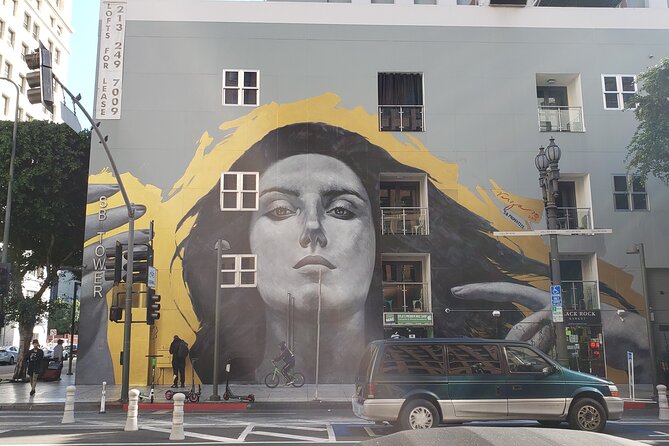
Downtown Los Angeles can feel like a lot at once. Skyscrapers, museums, theaters, and older brick streets all compete for your attention. This is why this style of tour makes sense: it moves you block by block, and it gives you a reason to look up and a reason to care.
For me, the smartest part is the way the tour connects architecture to the human stuff that made it matter. You’ll hear how places grew with the city, and you’ll also get the behind-the-scenes angle: where scenes were filmed, and where real life played out in court.
You’ll walk a few miles across mostly downtown flat areas with some gentle slopes. If your plan includes heavy museum hopping later, build in time afterward, because this tour is paced like an experience, not a checklist.
You can also read our reviews of more tours and experiences in Los Angeles.
Angels Flight Railway and Bunker Hill: the ride that keeps showing up on screen
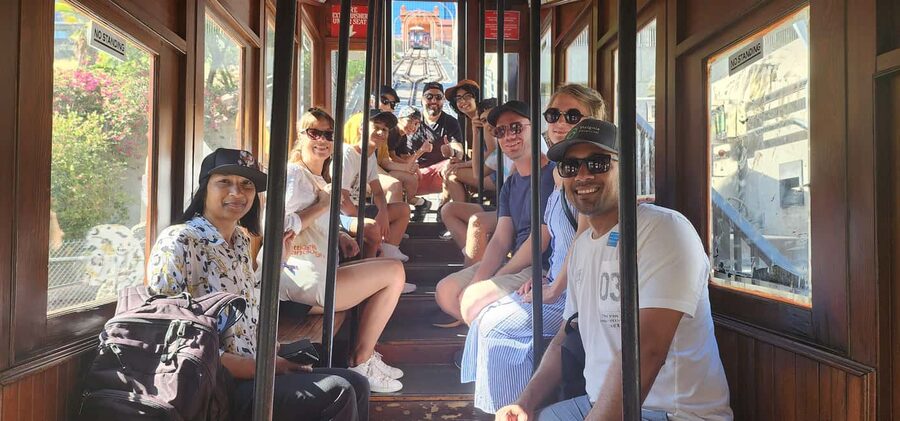
You meet near the lower end of Angels Flight, at the stair area to the left of the funicular’s base. From there, you take the short ride uphill and get a built-in photo moment. This matters because Angels Flight is one of those rare LA landmarks that feels both old and instantly recognizable.
Angels Flight dates to 1901, and it has popped up in a lot of productions. The tour uses that fact to do something better than name-dropping. You’ll get the setting for why the spot works cinematically, and you’ll also talk through the story of the Bunker Hill community that once depended on this kind of transportation.
The “mystery” angle is more than dramatic flair. It helps you notice how this neighborhood changed over time, and how infrastructure can reshape daily life fast. If you love crime shows or detective stories, this is a strong opener because it gets you thinking like a viewer and like a historian at the same time.
Practical tip: start hydrating early. Even on a mild day, downtown sun can turn the first hour into a sweat session.
Museum, art, and design stops: MOCA, The Broad, Disney Concert Hall, and the Music Center
The next stretch is built for architecture lovers and art-curious travelers alike. You’ll pass by major cultural stops and get short guided moments that help you understand what you’re looking at rather than just snapping a picture.
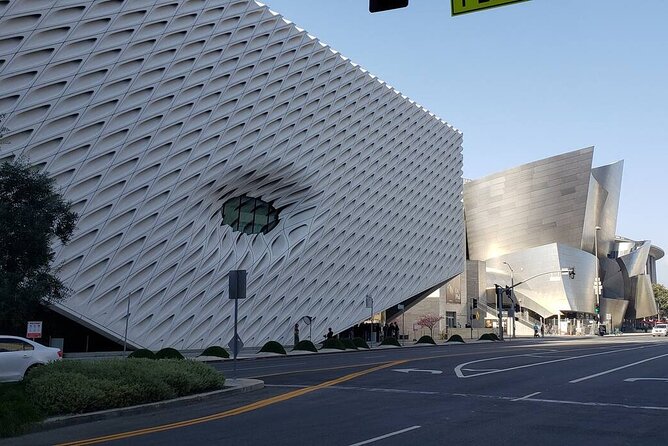
You’ll first get a quick moment at the Museum of Contemporary Art (MOCA). The stop is brief, but the guide’s framing helps you see MOCA not as a standalone museum, but as part of downtown’s bigger shift toward cultural institutions.
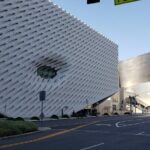
Then comes The Broad. Even if you are not going for specific galleries, it helps to have the design and context in your head before you head inside later (or decide you don’t need to). The tour keeps these moments tight, so you stay moving without feeling rushed.
Walt Disney Concert Hall is the star stop in this section. Here, the guide connects the building’s modern form to why it is so often used as a landmark backdrop. You’ll also hear how it came together over time, including the development that made the hall such a signature piece of LA design.
After that, you’ll see the Music Center area. This is the part of downtown where theaters and performance venues sit close enough that you can feel the rhythm of the city’s arts scene. The tour doesn’t try to turn it into a long lecture. Instead, you get enough context that the buildings stop feeling random.
Possible downside: this is not a deep, hour-long museum day. It’s designed for smart orientation. If you want to spend a whole afternoon inside museums, plan that for later.
Civic Center and City Hall: where movie magic meets real court cases
City Hall has one of those “if you know, you know” reputations in Hollywood. The tour uses that fact to teach you something practical: the same buildings that dominate film backgrounds also function as real government spaces.
As you move through the Civic Center, you’ll focus on why City Hall is such an LA icon. The guide connects it to shows and movies like Batman, Superman, War of the Worlds, Lincoln Lawyer, The Rookie, Dragnet, and more. The point is not just recognition. It’s learning how filmmakers use scale, symmetry, and civic grandeur to sell authority on screen.
Then the tour turns from screen to reality. You’ll learn where notable cases were heard, including high-profile defendants and names tied to major criminal history: OJ, The Nightstalker, Bugsy Siegel, and Charles Manson. That change in tone matters. It reminds you that these are not just sets. They’re places where decisions were made.
If you like true crime, you’ll probably feel that the tour gives you a clearer mental map of downtown’s role in the city’s public life. And if you’re more into architecture, you’ll appreciate that civic buildings were designed to communicate permanence.
Tip for photo lovers: look for angles where the buildings show depth, not just height. Downtown often rewards a step to the side.
Little Tokyo mochi at Fugetsu-Do: a sweet reset that actually fits the story
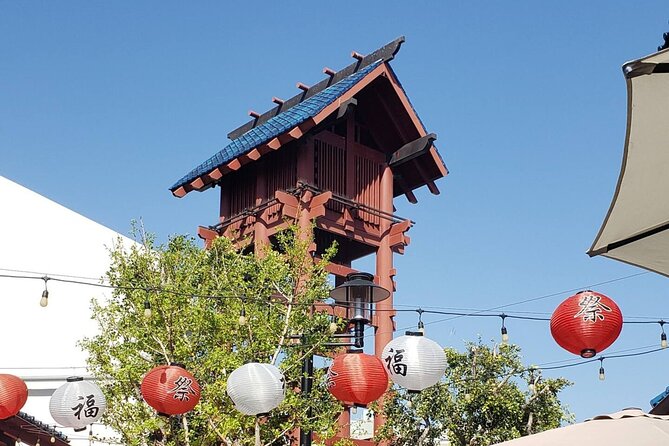
After the big civic-and-arts energy, the tour heads into Little Tokyo, and that shift is not random. It gives you a break from the hard lines of government architecture and introduces a neighborhood that has lived through ups and downs.
The highlight here is the stop at Fugetsu-Do Bakery Shop. You’ll sample mochi from a confectionery that opened in 1903, and the tour frames it as a local tradition, not just dessert time. The tasting works as a reset button: you cool down, refuel, and then rejoin the walk with better focus.
The tour also moves through Japanese Village Plaza with guided context. Even if you’ve walked through Little Tokyo before, a guided route helps you notice the layers: the way community identity shows up in streets, signage, and everyday businesses.
You’ll also pass by or visit Astronaut Ellison S Onizuka Street. It’s a quick stop, but it’s one of those downtown details that helps you see LA as a city of neighborhoods with stories tied to broader history, not just to highways and skyscrapers.
Practical note: this is where I’d take advantage of shade and slow down for a second. Your next stretch includes the Historic Core, and you’ll want your energy.
Historic Core showstoppers: Vibiana, the Bradbury Building, Biddy Mason, and The Last Bookstore
The tour’s final stretch leans heavily into “LA in a single block.” You’ll see a mix of older buildings, cinematic vibes, and downtown culture that doesn’t feel like it’s trying too hard.
You’ll get a quick sightseeing moment at Vibiana. The time is short, so think of it as a visual checkpoint. Use it to notice the building’s presence in the street rhythm, then keep walking.
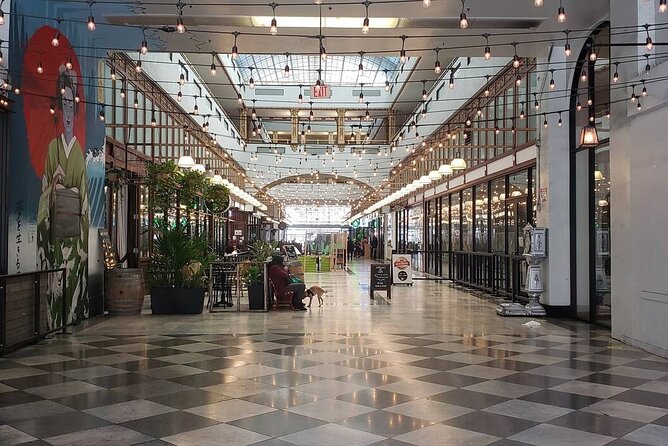
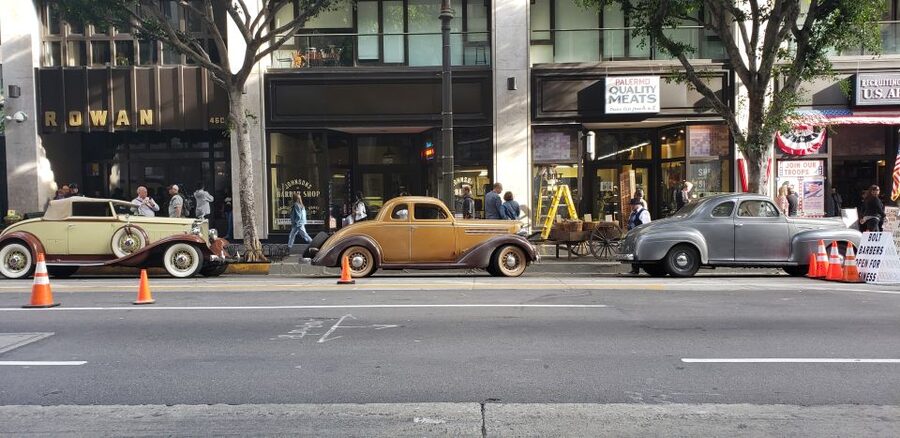
Next is the big one: the Bradbury Building. The tour makes it clear why this building is so famous—its interior has the sci-fi feel that helped shape the look and mood associated with Blade Runner. Even without any special effects, the space reads like a future set. That’s what makes it such a standout: it feels cinematic in real life.
After Bradbury, you’ll stop at Biddy Mason Memorial Park. The tour includes a guided walk-and-learn moment here, which adds human context to a part of downtown that can otherwise feel purely architectural and film-related. You come away with a stronger sense that the city’s story is more than just famous buildings.
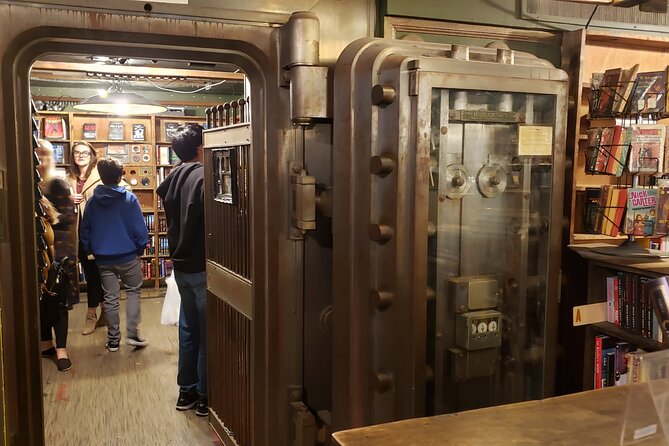
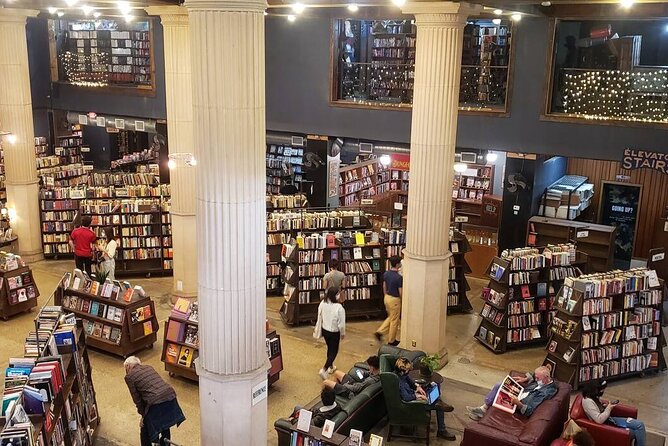
Then comes The Last Bookstore. This is one of those stops that changes the tour tone from architecture geek mode to happy wandering. You’ll see it as a place with its own personality, and you’ll learn it is set inside a 1915 bank. That detail helps you understand why it feels like a mash-up of history and offbeat creativity.
One heads-up: The Last Bookstore can be tempting. If you are the type to browse for 30 minutes, set expectations for what you can do within the tour’s time window.
Grand Central Market: how to turn a 3-hour tour into a full day
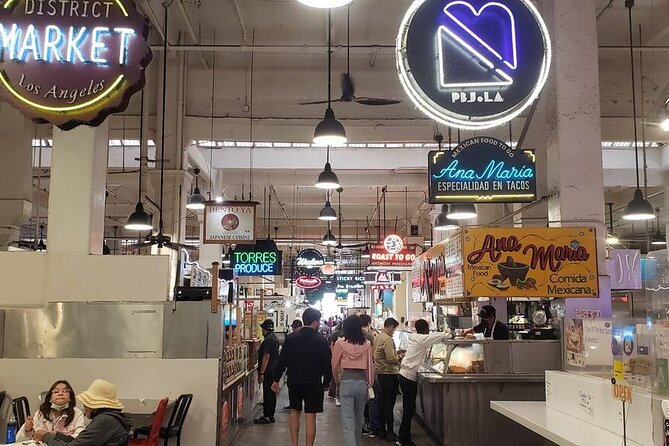
The tour wraps in the area of Grand Central Market, and that’s a smart finish. After three hours of walking, your biggest problem usually isn’t where to go—it’s where to eat without losing another hour.
You’ll get guided time in the market and some meal recommendations. This is where you can pivot based on your energy level. If you feel like a sit-down break, pick a place with quick service. If you want to keep the exploring going, you can grab something portable and head out.
Grand Central Market is also a good place to regroup because it’s a dense food hub. You don’t need a long plan. You just need a snack strategy: eat something first, then decide whether you want a full meal.
If you’re planning the rest of your day, I’d think about it like this: use the tour to learn downtown’s layout and the meaning behind the landmarks, then let the market help you choose the next steps based on what you’re craving.
Tip: you’ll be happier if you’ve already thought about whether you want something sweet, something savory, or something that won’t upset your feet.
Price, pacing, and what makes the $39 value feel real
At $39 per person for a 3-hour experience, this tour is positioned in the sweet spot between “too short to matter” and “too long to be exhausting.” You get a chain of major downtown stops, plus a guided connective thread that helps each location land.
The value isn’t only the attractions list. It’s the way the guide’s storytelling turns separate points of interest into a coherent route. That’s the difference between seeing downtown and understanding it.
Two inclusions make a real impact on value. You get a mochi sample in Little Tokyo, and the guide covers the Angels Flight ticket as part of the experience. Those are the kinds of small-but-meaningful costs that add up when you try to self-plan.
Pacing-wise, this is a walking tour built around sight windows. Some stops are photo and brief guided moments; others are longer, like the Bradbury Building and City Hall area. That helps you avoid the trap of spending your day stuck at one location.
The tour is also designed with comfort in mind. Based on guide behavior in real conditions, the group pace includes breaks and hydration reminders, which matters because downtown heat can be brutal. Chris is also described as funny, patient, and adaptable if your group is small.
Who is this for?
- If you love architecture and you want a guided frame fast, this works
- If you care about film locations and want the real-world geography, this works
- If you like true crime, the civic-court angle adds an extra hook
- If you hate walking or have mobility limits, skip it. The tour is not suitable for people with mobility impairments.
Should you book this Downtown LA architecture tour?
Book it if you want downtown to make sense quickly. You’ll come away with a mental map you can reuse—where key sites sit, how they connect to film, and how civic spaces tie into real history.
Skip it if your idea of a great LA day is mostly resting, or if you want long museum time. This is a walking route with guided context, not a slow sit-down tour.
If you do book, do two things and you’ll get more out of it:
1) Wear shoes you trust on uneven pavement.
2) Bring water and plan for sun, especially earlier in the day.
FAQ
How long is the tour?
It runs about 3 hours.
Where do I meet the guide?
You meet at 341 S Hill St, at the lower part of Angels Flight. There’s a stair area to the left of the train where your guide should be.
What is included in the price?
The tour includes the live guide and a mochi sample in Little Tokyo.
Is food or drinks included?
Only the mochi sample is included. Drinks are not included.
What should I bring?
Bring comfortable shoes, a camera, and water.
Is parking available?
Yes. There is parking at Grand Central Market and in nearby lots, usually around $10–$20 per day.
Can I bring alcohol?
No. Alcohol and drugs are not allowed.
Is the tour suitable for mobility impairments?
No. It is not suitable for people with mobility impairments, since it is a longer walking route with some slight slopes.
What language is the tour in?
The tour is in English.