REVIEW · BARCELONA
Gaudi’s Crypt in Colonia Güell with Audioguide
Book on GetYourGuide →Operated by CRIPTA GAUDÍ DE LA COLÒNIA GÜELL · Bookable on GetYourGuide
Twisted columns are the main event here. I love how Gaudí’s Crypt feels like a hands-on lesson in design: a UNESCO World Heritage site often called the Sagrada Familia lab, where he tested solutions later used at his grand Barcelona project. I also like the add-on value of the Interpretation Center, with audiovisual exhibits and models showing how the church might have looked if construction had finished. The only real consideration is that parts of Colònia Güell can be affected by ongoing work, so don’t assume every building or area will be open at the level of access you might expect.
Plan for a focused visit plus a slow walk. You’ll start at the Visitors’ Center in Colònia Güell, see the crypt, then head into the Interpretation Center in the former workers’ cooperative building. After that, you can wander the colony streets to spot modernist architecture beyond the church. It’s one of those trips where you get a lot of meaning from a small footprint—if you take your time with the details.
In This Review
- Key points to know before you go
- Getting to Colònia Güell: the 20-minute Barcelona connection
- Gaudí’s Crypt: why people call it the church of twisted columns
- Interpretation Center: the former workers’ cooperative that explains everything
- Audioguide strategy: get more meaning from every stop
- Walking Colònia Güell: modernist architecture beyond the crypt
- Price and value: is $11 really enough?
- Timing and pacing: making it work as a 1-day visit
- Who this is for (and who might prefer something else)
- Should you book Gaudí’s Crypt in Colònia Güell with an audioguide?
- FAQ
- How far is Colònia Güell from Barcelona?
- What is Gaudí’s Crypt in Colònia Güell called?
- Is Gaudí’s Crypt a UNESCO World Heritage Site?
- What’s included in the ticket price?
- Where is the Interpretation Center?
- How long is the activity valid?
- What languages are available on the audioguide?
- Where do you meet and where does the tour end?
- How do I get to Colònia Güell by train from Barcelona?
- Is transportation included with the Hola Barcelona card?
Key points to know before you go
- UNESCO World Heritage crypt in Colònia Güell, about 20 minutes from Barcelona
- Audioguide in 10 languages to help you read Gaudí’s geometry at your pace
- Interpretation Center in the former workers’ cooperative, with audiovisual exhibits
- Models of what the church could have become if it had been completed
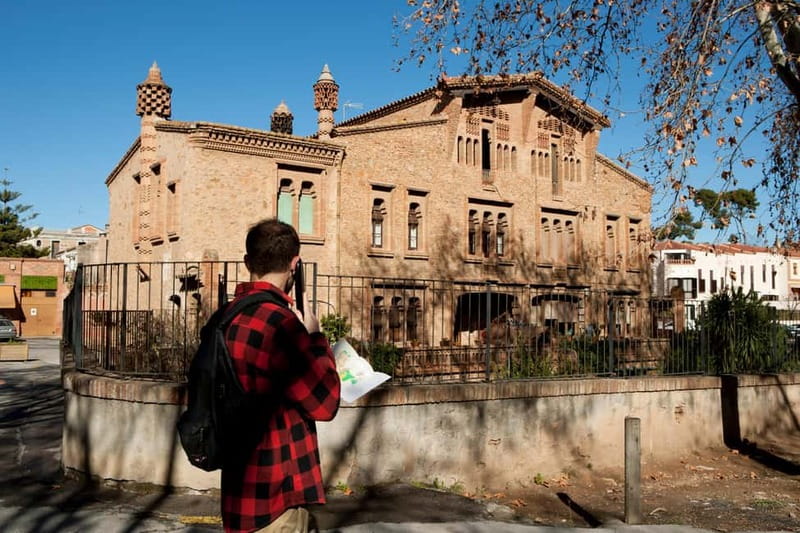
- Colònia Güell walking time: modernist buildings and textile-village context
- Potential access limits if construction is underway in parts of the area
Getting to Colònia Güell: the 20-minute Barcelona connection
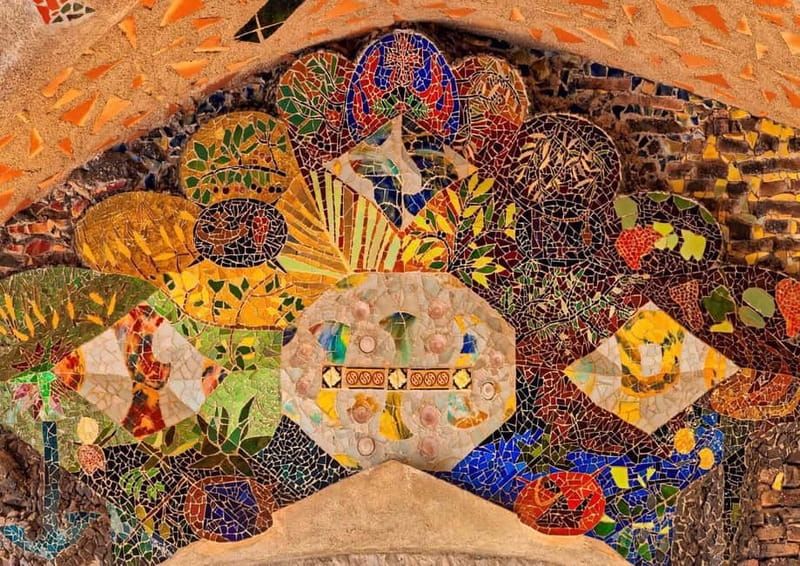
Colònia Güell is close enough to feel like a quick escape, not a full-day ordeal. The base idea is simple: you’re in Catalonia, and you’re visiting a world-famous Gaudí site that happens to sit in a former textile village.
If you’re coming from Barcelona, take the Ferrocarriles de la Generalitat de Catalunya (FGC) from Pl. Espanya station to Colònia Güell Station. The lines listed for this route are S33, S8, and S4. This matters because it keeps your day trip feeling smooth: fewer transfers, less guesswork, and you arrive ready to walk.
If you have a Hola Barcelona card, transportation to Colònia Güell is included. That can turn this from a nice visit into a very efficient one, especially if you’re already using your card for other day-to-day transit.
I’d also plan for a “local pace.” Even if you’re eager to see the crypt, Colònia Güell rewards you for slowing down. The village streets and modernist details are part of why this isn’t just a ticket to one building.
You can also read our reviews of more tours and experiences in Barcelona.


Gaudí’s Crypt: why people call it the church of twisted columns
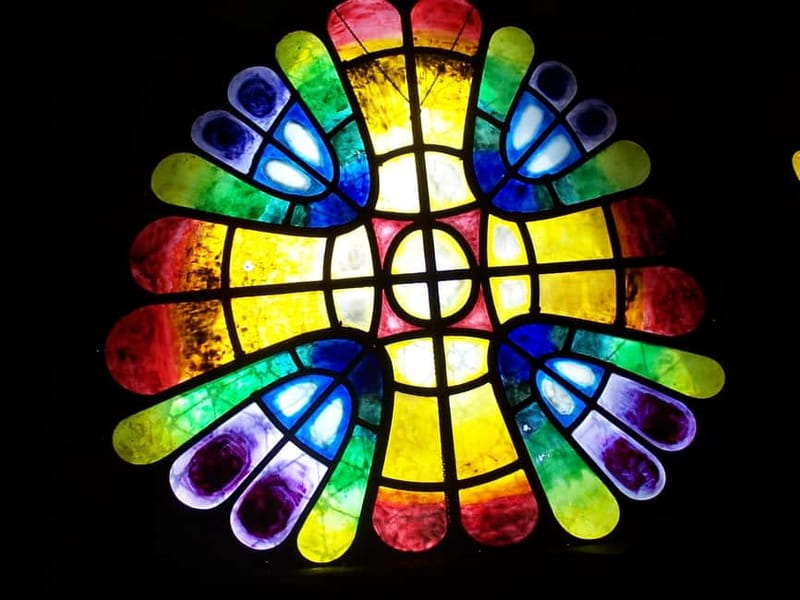
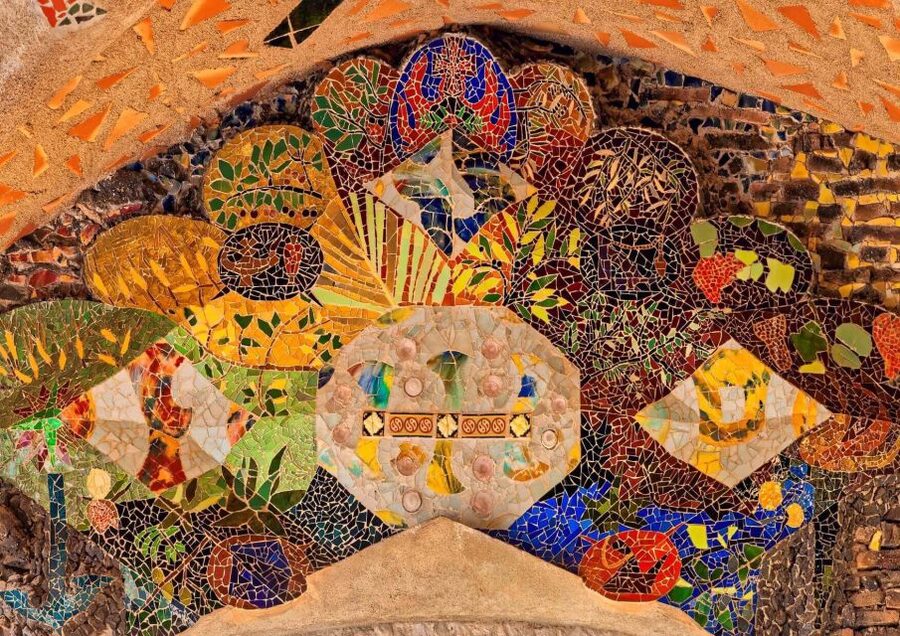
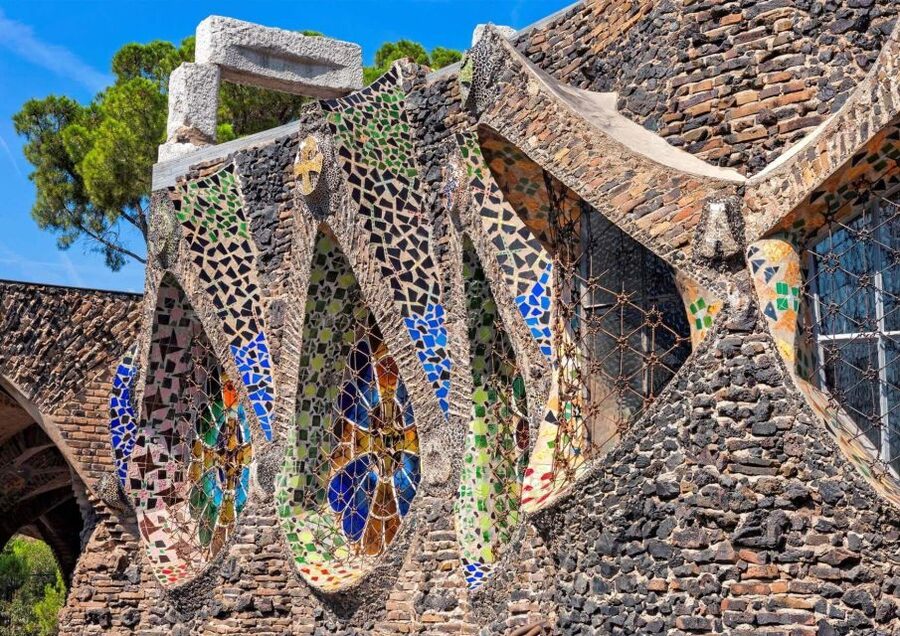
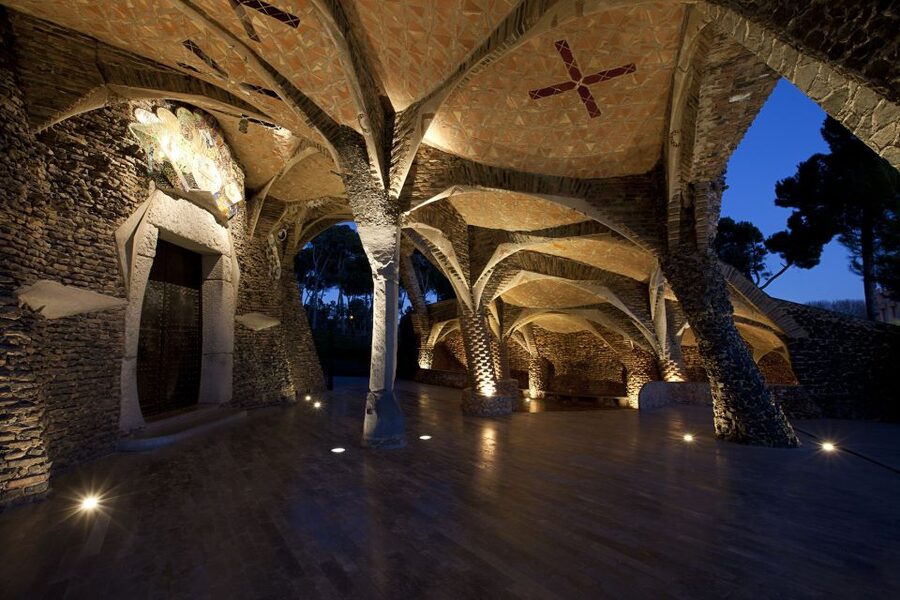
Gaudí’s Crypt in Colònia Güell is often described as the church of twisted columns, and that nickname isn’t just marketing. The design logic is the point. You’re not looking at a finished, traditional church facade; you’re looking at an evolving architectural idea—columns that tell you Gaudí was experimenting, testing forces, and shaping form through structure.
The bigger context you’ll feel as you walk is that this site is regarded as a kind of Sagrada Familia lab. In other words, it’s a place where you can connect dots between Gaudí’s later, more famous work and the earlier experiments that shaped his style.
That connection is why the crypt is so satisfying even if you’ve already seen other Gaudí sights. Here, the focus is on structure and experimentation, not just grand spectacle. And because it’s a UNESCO World Heritage Site (declared in July 2005), you know you’re stepping into something officially protected for its creative and cultural value.
One practical note: the crypt and the interpretation elements are the core. If you notice construction affects nearby buildings, don’t let that throw off the day. Treat the crypt as the anchor, then enjoy the village streets around it when access allows.
Interpretation Center: the former workers’ cooperative that explains everything
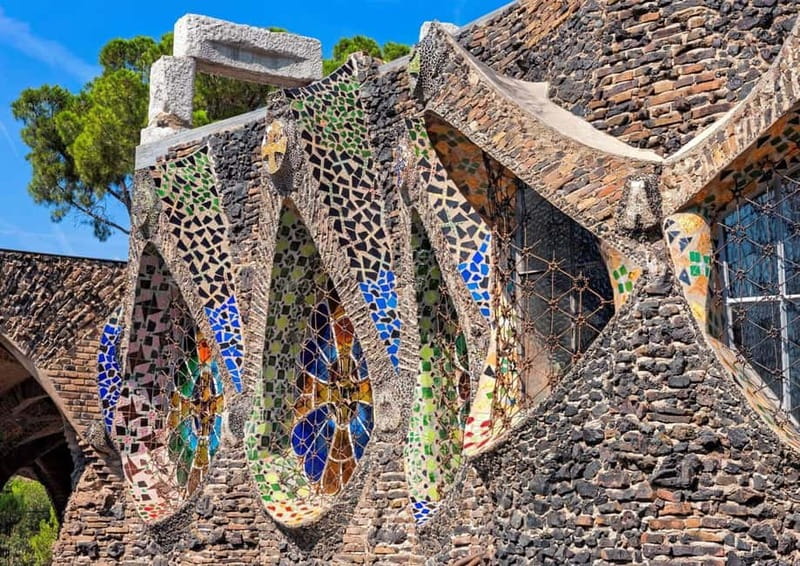
The Interpretation Center is located in a former workers’ cooperative building, and that detail quietly improves the whole experience. You’re not only learning about Gaudí’s architecture—you’re also getting the human context of why this colony existed in the first place.
What you’ll find inside is a permanent historical exhibition built to give context for Colònia Güell. Then there’s a modern, practical layer: the center has added different models explaining how the church would have been if the construction had been completed.
That matters because it changes how you look at the crypt. Instead of thinking, this looks unfinished, you start thinking, this is what was planned and how the design might have evolved. Even if you don’t know architecture terms, the models help you translate the visual language.
Also, if you’re the kind of person who likes to connect architecture to place, this is where it clicks. Gaudí’s work doesn’t float in space here; it’s tied to the social world of a textile village, with workers and systems shaping daily life.
If you only have energy for one indoor stop, make it the crypt. If you have time for two, the Interpretation Center is the best “why” layer you can add.
Audioguide strategy: get more meaning from every stop
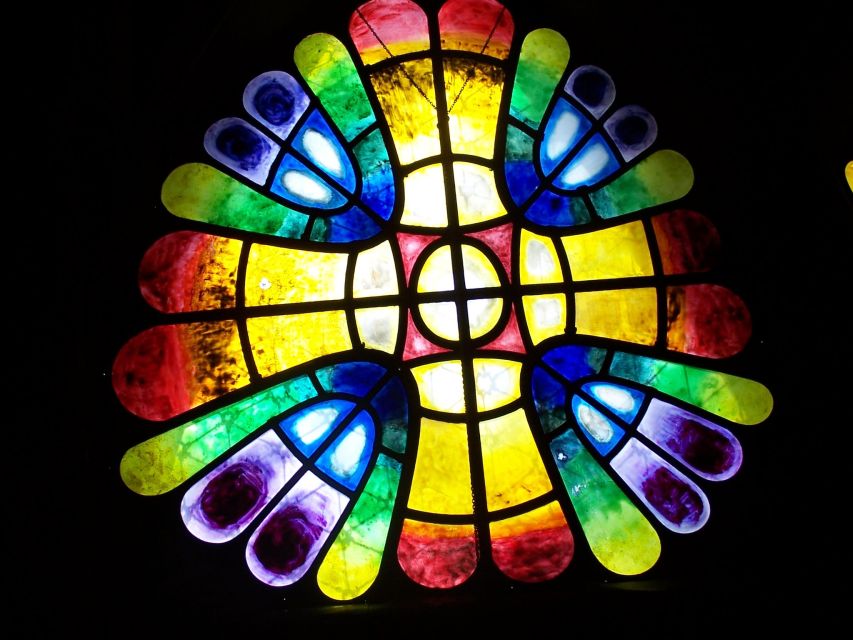
This ticket includes an audioguide in 10 languages: Spanish, English, French, German, Italian, Japanese, Russian, Catalan, Chinese, and Korean. That’s a lot of coverage, and it’s useful because Gaudí’s design details can be subtle without guidance.
Here’s how to use it in a way that actually helps:
- Start with the big picture segments first, so you understand what you’re seeing before you focus on details.
- When you hear explanations about how elements relate to the larger project, pause your walking a bit. These spots reward stillness.
- Save the parts you like most for a second pass on your own time—meaning you re-check an area while the guide is still in your head.
The guided pacing is also a good match for Colònia Güell. You’ll be moving between spaces, then stepping into the center, then walking the village. Audio keeps the whole loop coherent instead of feeling like separate stops that you assemble later in your memory.
Tip for value: the audioguide included here is part of what makes the visit feel worth it, especially at a budget price (more on that next).
Walking Colònia Güell: modernist architecture beyond the crypt
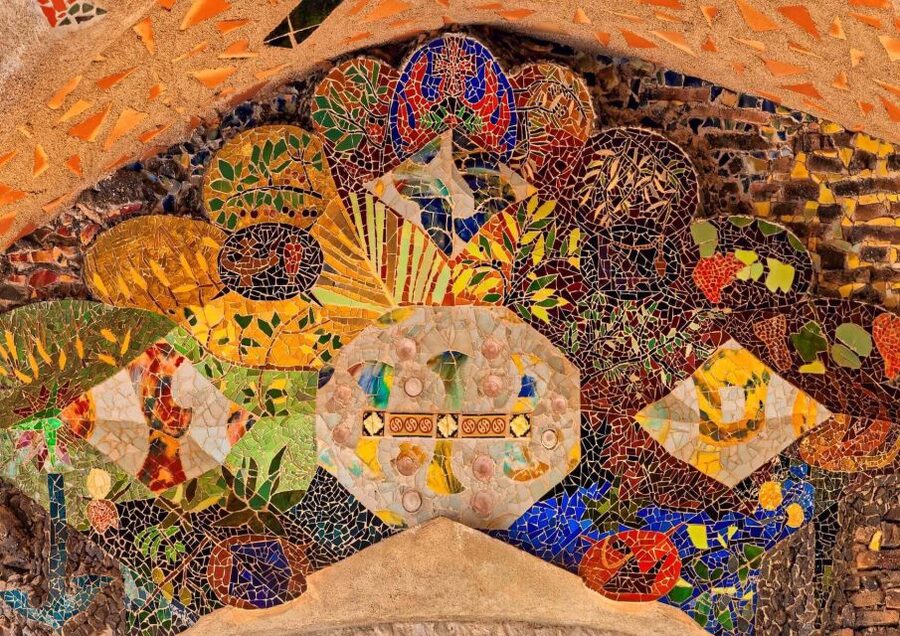
After you’ve seen Gaudí’s Crypt and the Interpretation Center, you’ll have the best “bonus” experience by simply walking the colony streets.
Colònia Güell is known as a textile village, and that origin helps explain why the architecture is so specific. This isn’t a random museum district. It’s a lived-in environment built around an industry and the community that grew around it.
While you stroll, keep an eye out for modernist buildings. Even when you’re not stopping at every doorstep, the street-level view gives you a sense of how the colony was planned and how architectural styles shaped everyday space.
One caution: access can be uneven. If there’s ongoing work, some buildings or sections may be harder to enter. I’d plan your mindset accordingly: you’re there to appreciate the visual and contextual experience, not to expect every interior door to be open.
In practice, the village walk helps you connect the crypt to its surroundings. You start seeing the crypt not as an isolated masterpiece, but as part of a broader design world that Gaudí’s ideas belonged to.


Price and value: is $11 really enough?
At $11 per person, this can be an unusually good deal—especially because your ticket includes several items that usually cost extra at other attractions.
What you get:
- Admission to Gaudí’s Crypt
- Admission to the Interpretation Center
- A map
- An audioguide in 10 languages
That combination matters. You’re not just paying to look at stone. You’re paying for interpretation—context about the colony and models about how the church might have been completed. The map helps you move through the area with less confusion, which is a small cost that saves time.
Also, this is a UNESCO site, and you’re doing it on a day trip scale from Barcelona. If your time is limited and you want a high-impact architectural visit without going full-day to multiple museums, this price-to-experience ratio is strong.
The only reason value might feel lower is if you rush. This visit works best at a walking pace, with time for the audio and the interpretation exhibits.
Timing and pacing: making it work as a 1-day visit
Your ticket is marked as valid 1 day, with starting times depending on availability. That means you should pick a time that matches your day: arrive when you can take your time, not when you’re racing between trains and meals.
Because you’re starting and ending back at the same place—at the Visitors’ Center in Colònia Güell—plan for a loop. In a realistic, comfortable pace, you’re looking at:
- Crypt first (your “main attraction”)
- Interpretation Center (your “meaning” layer)
- Village walk (your “place” layer)
If construction is affecting nearby areas, that loop still holds up. The crypt and interpretation components are where the structure of the experience lives.
Who this is for (and who might prefer something else)
This trip is a great fit if you love:
- Architecture with experiments and real structural ideas
- Gaudí beyond postcards, especially the connection to the Sagrada Familia
- UNESCO stops that feel more thoughtful than purely scenic
- Day trips where you mix a landmark with a real neighborhood walk
You might consider something else if:
- You expect a fully finished, monument-like site experience throughout every area
- You’re only interested in one tiny stop and hate moving between indoor and outdoor spaces
For most people, though, the blend of crypt + interpretation + colony streets hits the sweet spot: one strong focal site plus enough surrounding context to make the visit feel “complete.”
Should you book Gaudí’s Crypt in Colònia Güell with an audioguide?
Yes—if you want a compact, meaningful Gaudí experience near Barcelona, this is a solid booking.
Book it when you care about why Gaudí designed the way he did. The crypt’s twisted-column identity plus the Interpretation Center’s models and audiovisual context make this more than a quick photo stop. And with $11 giving you admission to both key spaces and a multi-language audioguide, it’s easy to justify as a value-driven day plan.
I’d only hesitate if you have very tight timing and hate audio-guided visits, or if you know you’ll be frustrated by the reality that some areas can be affected by ongoing work. Otherwise, this is one of those trips where the ticket price doesn’t feel like the end of the story—the context inside is what makes it click.
FAQ
How far is Colònia Güell from Barcelona?
Colònia Güell is about 20 minutes from Barcelona.
What is Gaudí’s Crypt in Colònia Güell called?
It’s known as the church of the twisted columns.
Is Gaudí’s Crypt a UNESCO World Heritage Site?
Yes. It was declared a UNESCO World Heritage Site in July 2005.
What’s included in the ticket price?
Admission to Gaudí’s Crypt, an audioguide in 10 languages, admission to the Interpretation Center, and a map.
Where is the Interpretation Center?
It’s located in the former workers’ cooperative building in Colònia Güell.
How long is the activity valid?
The activity is valid 1 day. Starting times depend on availability.
What languages are available on the audioguide?
Spanish, English, French, German, Italian, Japanese, Russian, Catalan, Chinese, and Korean.
Where do you meet and where does the tour end?
You start at the Visitors’ Center in Colònia Güell, and the activity ends back at the meeting point.
How do I get to Colònia Güell by train from Barcelona?
Take the FGC from Pl. Espanya station to Colònia Güell Station, using lines S33, S8, and S4.
Is transportation included with the Hola Barcelona card?
Yes. Transportation to Colònia Güell is included with the Hola Barcelona card.