REVIEW · RIGA
Riga’s Old Center and Art Nouveau Tour
Book on GetYourGuide →Operated by Discover Latvia Tours · Bookable on GetYourGuide
Riga’s Art Nouveau is hiding in plain sight. This 3-hour guided walk strings together Riga Old Town’s medieval Hanseatic lanes and the best stops for Alberta Street architecture, all with a live English guide and a finish in central sights you’ll want to explore later. You’ll also get the big picture on how Riga’s style developed, not just a list of facades.
My other favorite part is the way the tour connects places you can actually see—Town Hall Square, Dome Cathedral, the Old Guild House, and Riga Castle—so the Art Nouveau doesn’t feel like a separate planet. One consideration: it’s a walking tour through old streets, so you’ll want comfortable shoes for cobblestones and uneven surfaces.
In This Review
- Key Highlights You’ll Feel Immediately
- Old Riga Meets Art Nouveau: Why This 3-Hour Walk Works
- Town Hall Square and the House of the Blackheads
- Medieval Streets, Dome Cathedral, and Riga Castle
- St. Peter’s Church, Swedish Gates, and the Powder Tower
- Art Nouveau in Riga: Why Alberta Street Matters So Much
- How Much Architecture Detail Should You Expect?
- Price and Value: Is $94 Worth It?
- Private Group and Pickup in Riga Old Town: Practical Tips That Help
- Who Should Book This Art Nouveau and Old Town Tour?
- Should You Book This Tour?
- FAQ
- How long is the Riga Old Center and Art Nouveau tour?
- Where does the walking tour start?
- What kind of tour is it?
- Which language is the guide using?
- What’s included in the price?
- Is the group private?
- What sights will we see during the tour?
- What should I bring?
- Is there free cancellation?
Key Highlights You’ll Feel Immediately
- Town Hall Square as the anchor for medieval Riga and the House of the Blackheads
- 30% Art Nouveau density in the center, with architecture you can spot block by block
- Alberta Street and nearby embassy district for some of the most lavish facades
- UNESCO Old Riga focus on preserving both wooden buildings and Art Nouveau
- Photo-friendly stops like Swedish Gates and the Powder Tower on your way to the center
Old Riga Meets Art Nouveau: Why This 3-Hour Walk Works
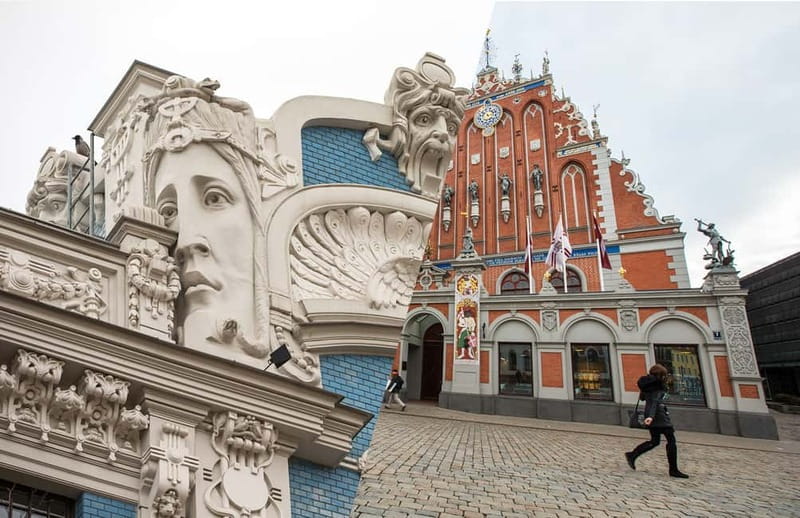
Riga can feel like two cities at once: the medieval bones underneath, and then the early-20th-century art style that turns everyday buildings into something dramatic. What makes this tour smart is the timing. Three hours is long enough to learn what to look for, but short enough that you don’t get tired staring at details before they start to make sense.
You start in the heart of the old city—Town Hall Square—and then your guide links the dots between historic power and design. That matters, because Art Nouveau in Riga isn’t just pretty decoration. It’s part of how Riga projected confidence and prosperity during the period when the style was taking off across Europe. If you’re the type who likes figuring out why a place looks the way it does, this is a good match.
The group is private, so the pace stays human. And because it’s a live guide tour, you can ask questions when something catches your eye, instead of trying to decode everything from a phone screen later.
You can also read our reviews of more tours and experiences in Riga.

Town Hall Square and the House of the Blackheads
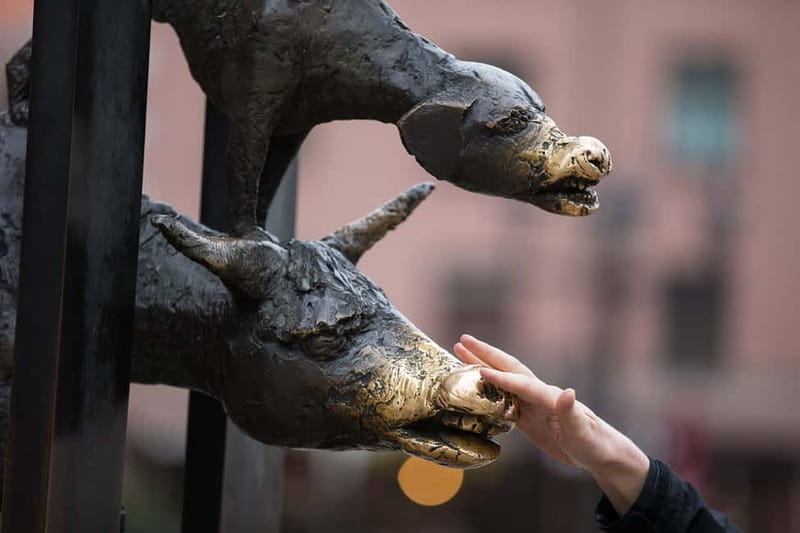
Your walk starts at Town Hall Square, which served as the city’s central square from the 13th century up to the 19th century. That’s an important context-setting move. You’re not just starting somewhere convenient—you’re starting where Riga’s public life gathered for centuries.
The headline building here is the gothic House of the Blackheads. It’s the kind of landmark that immediately signals Riga wasn’t waiting around for someone else’s cultural trends. The guide’s job is to help you read it: not just the style, but what the structure represents in the city’s story. Even if you’ve seen gothic architecture elsewhere, the way it sits inside Riga’s older street network makes it feel personal and local.
After you leave the square, you’ll notice something: Riga’s medieval Old Town is built for wandering. Narrow streets mean you see fronts up close, not from a distant viewpoint. That’s great for architecture lovers, and it also helps you catch small changes in design that you’d otherwise miss.
Practical note: because you’re walking from a historic square and down old streets, expect uneven ground. Going slowly at first pays off—you’ll enjoy it more and your feet will thank you.
Medieval Streets, Dome Cathedral, and Riga Castle
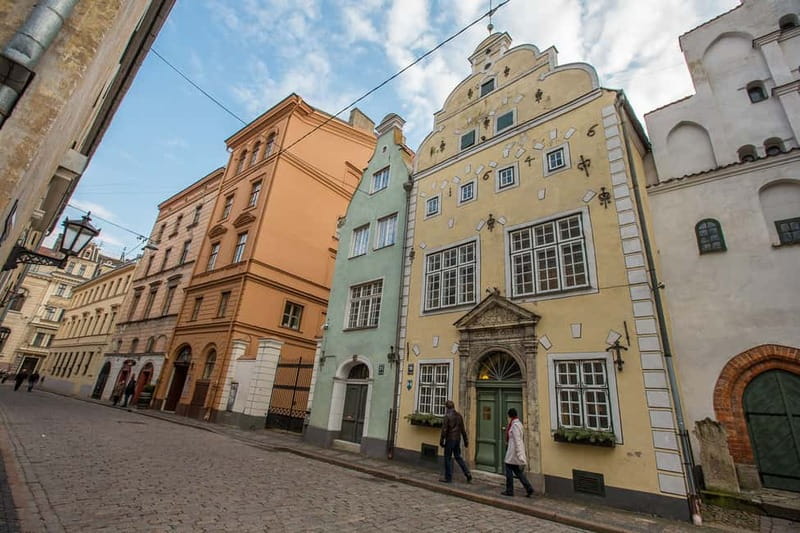
This tour doesn’t treat Old Riga as a backdrop. It moves you through key religious and civic sites that explain who held influence and how the city organized itself.
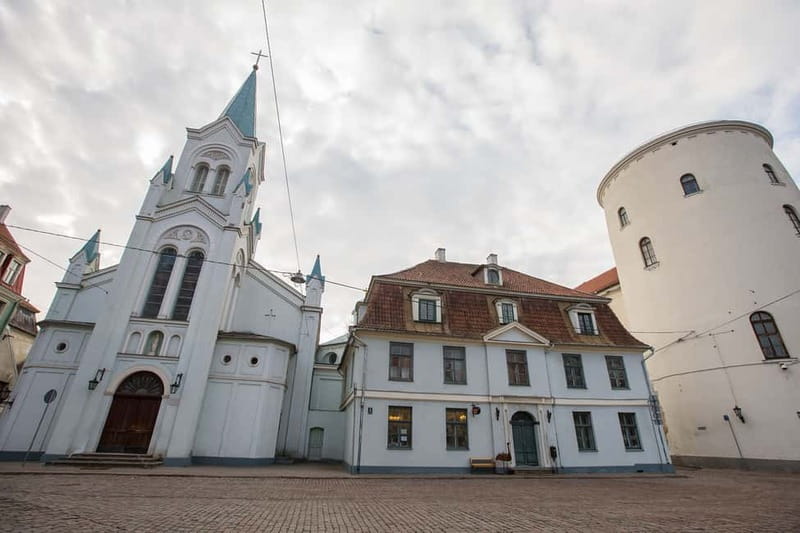
One of the main stops is Dome Cathedral, a centerpiece you’ll see while moving through the older parts of the city. Cathedral exteriors can blur together on trips like this, but the payoff is in how the guide frames it—what makes it important in Riga’s story, and how it sits inside the city’s layout.
Next you’ll visit the area tied to the Old Guild House and you’ll also get time around Riga Castle. These stops help you understand the city as a working organism: trade, governance, and community institutions, all wrapped in architecture you can still walk past today.
What I like about this segment is that it gives your brain a scaffold. Once you learn the basic rhythm—square, institutions, church, castle—you start noticing architecture patterns more easily later, especially when Art Nouveau appears along the central streets. You stop thinking, That’s a pretty building, and start thinking, Ah, this is part of the same city evolving over time.
St. Peter’s Church, Swedish Gates, and the Powder Tower
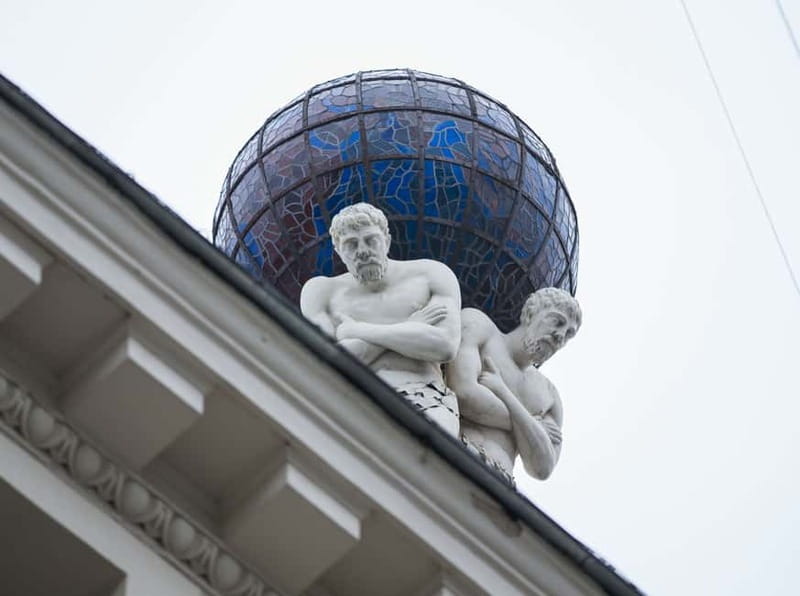
The middle portion of the walk gives you a nice balance of religious, defensive, and ceremonial architecture.
You’ll see St. Peters Church, which adds another layer to the Old Town experience. It’s not only about the building’s look; it’s about how religious landmarks shaped how people navigated the city. When you can connect a church to nearby streets and gates, the city starts to feel mapped in your head.
Then come the defensive structures: the Swedish Gates and the Powder Tower. These are the kinds of places that give you a reality check. Medieval cities had to protect themselves, and Riga’s fortification-era architecture tells that story in a direct way. If you like architecture that has a job—protection, control, movement—these stops land well.
Also, these sights are useful for pacing. After cathedral and civic buildings, a gate and a tower feel different in shape and silhouette. That variation keeps the walk from turning into one long scroll of stone details.
If you’re deciding whether you’ll enjoy this, here’s the test: do you like seeing how a city used to defend itself while still learning what it eventually became? If yes, you’ll get a lot out of this portion.
Art Nouveau in Riga: Why Alberta Street Matters So Much
Now for the reason many people book this tour: Art Nouveau, concentrated in the city center.
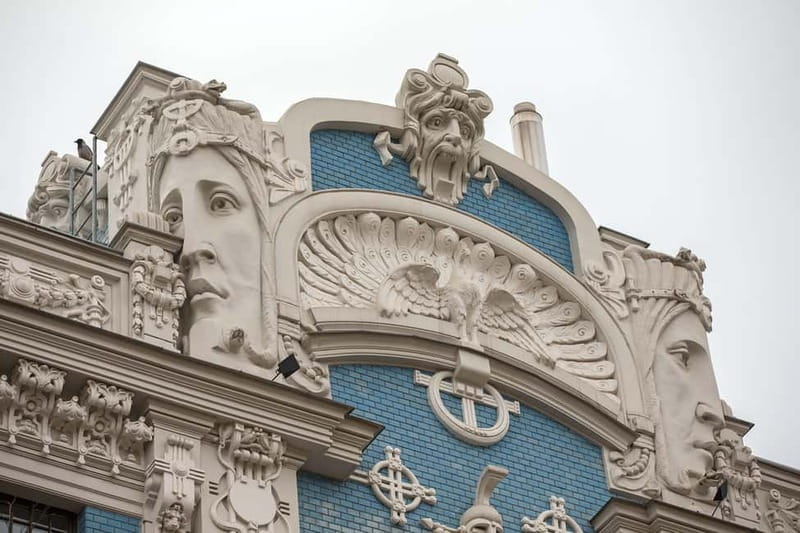
Riga has an unusually high share of Art Nouveau buildings in its central area—about 30% according to the tour’s framing—and that’s one of the big reasons architecture lovers talk about Riga so seriously. The style here is described as especially powerful and sweeping, not just decorative flourishes.
The best stretch for that is Alberta Street. This is where the facades shift from “nice” to “wait, look at that.” You’ll see Art Nouveau objects and learn what to notice: how design elements repeat, how balconies and windows get treated like part of one overall composition, and how the buildings manage to feel both elegant and grounded in the street.
The tour also includes the nearby embassy district, which helps you avoid a common mistake: thinking Art Nouveau is only one street. Getting a second area nearby gives you a stronger sense of how the city developed that style in clusters.
And don’t ignore the UNESCO angle. The historical center is recognized as a UNESCO World Heritage Site, with a focus on preserving both older wooden buildings and the Art Nouveau architecture. That means the tour isn’t just pointing at pretty structures; it’s treating Riga’s built environment as something worth protecting.





How Much Architecture Detail Should You Expect?
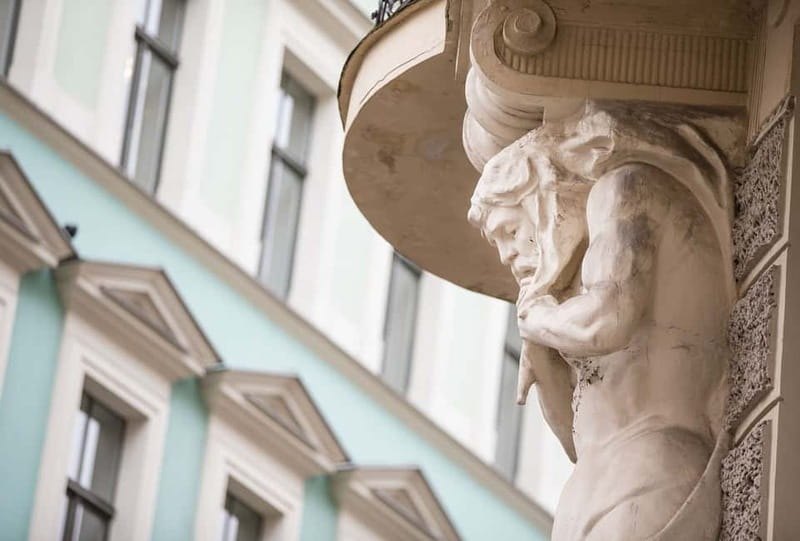
If you want a tour that’s all skyline photos and minimal talking, this might not be your vibe. This is design-focused, so you’ll spend real time looking at buildings and learning what you’re seeing. That’s the point.
The guide is the difference-maker. One standout from past participants is the kind of enthusiasm and pride you can run into with local guides—people have specifically highlighted guides such as Eva for being exceptionally knowledgeable and friendly, and for bringing a strong sense of native Latvia into the explanations. You don’t need to be an architecture specialist to enjoy it, but you do need a little willingness to slow down and look.
Here’s how to get the most out of it:
- Keep your phone camera ready, but don’t start filming every 10 seconds. Look first.
- Notice the street rhythm—Art Nouveau is easier to read when you see a whole block, not one isolated window.
- Ask questions when something feels confusing. That’s what you’re paying for.
This tour is also nicely timed at three hours. If you tried to do all of this on your own in one afternoon, you’d likely spend time guessing where to go next. With a guide, the mental load drops.
Price and Value: Is $94 Worth It?
At $94 per person for a 3-hour guided walking tour, the value comes from how much you cover in a short time and how targeted the experience is. You’re paying for an English-speaking live guide, a structured route, and a focus on two big themes—Old Town history and Art Nouveau architecture—without spending hours figuring it out yourself.
A few value boosters:
- Private group means you’re not stuck with a crowd that moves at a different pace.
- Hotel pickup is included, but only if you stay in Riga Old Town. That can save time and reduce hassle at the start.
- The tour gives you multiple major stops, not just one or two photo points.
Where the price can feel less “worth it” is if you’re a casual visitor who mainly wants quick views and doesn’t care about details like guild buildings, gates, and architecture styles. For you, a self-guided stroll might feel more efficient. But if you enjoy learning what you’re looking at, this price is pretty reasonable.
Private Group and Pickup in Riga Old Town: Practical Tips That Help
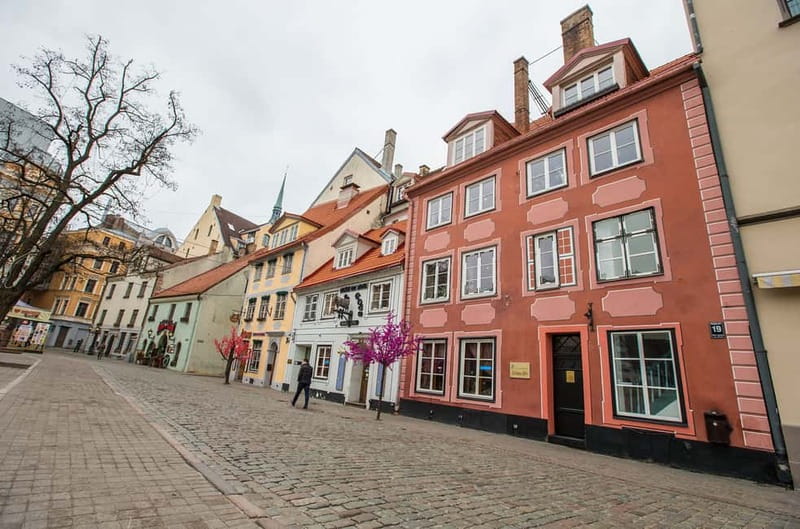
This is designed for visitors who base themselves inside the Old Town. Pickup is available from hotels in Riga Old Town only, so if you’re staying just outside the center, you’ll want to plan how you’ll reach the starting point.
The tour starts at Town Hall Square, which is useful because it’s central and easy to orient around. If you arrive early, you can take a quick lap and get your bearings before the guide calls everyone together.
Bring comfortable shoes. That’s the one prep item clearly stated, and it’s honestly the most important. Old Riga’s streets are not engineered for flip-flops and speed-walking. Take your time. You’ll see more, and you won’t feel rushed.
The guide language is English, and the tour is a live experience. That combination matters on architecture-focused tours. You want clear explanations when the design cues start blending together.
Who Should Book This Art Nouveau and Old Town Tour?
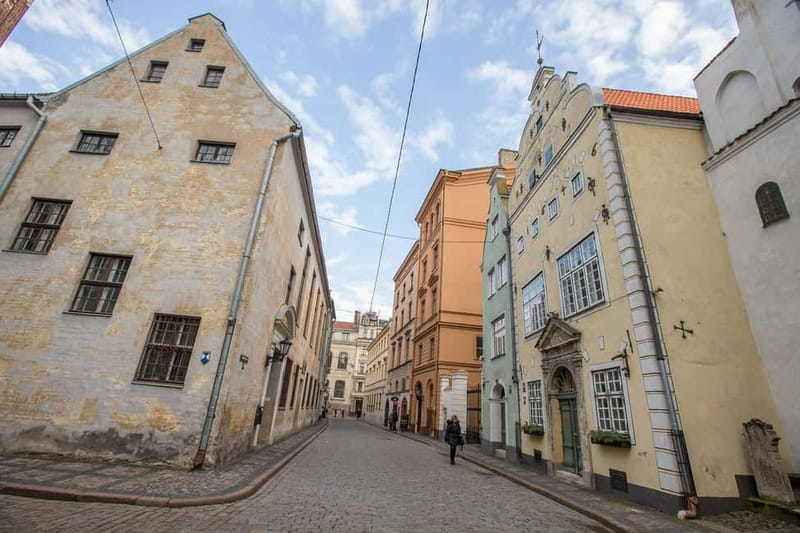
This tour fits best if you:
- Like walking and want a structured route through Old Riga instead of guessing
- Care about architecture details, especially Art Nouveau
- Want to connect Riga’s medieval civic and religious landmarks with the later style boom
- Prefer a small, private-group experience
It also works well as a first or second day in Riga. If it’s early in your trip, you’ll leave with a better map of what’s where and what style you’re looking at. If it’s later, you’ll appreciate what you notice on your own afterward.
If you’re traveling with limited time—half a day—this route is a strong use of it. You get multiple key sights and one of the highest-density Art Nouveau areas in the city.
Should You Book This Tour?
Yes, if your idea of a great Riga day includes historic streets and architecture that rewards close looking. The tour’s biggest strength is the way it pairs Old Town landmarks with Art Nouveau focus—so the story clicks instead of feeling like two disconnected stops.
Book it if you want guidance for reading Riga’s buildings, especially along Alberta Street and nearby areas. And if you’re picky about pacing, the private group setup helps you move at a comfortable speed.
Skip it if you want a mostly casual walk with minimal explanations, or if you know you hate walking through older cobbled streets. In that case, you may prefer a shorter, self-guided route.
FAQ
How long is the Riga Old Center and Art Nouveau tour?
It lasts 3 hours.
Where does the walking tour start?
The tour starts at Town Hall Square.
What kind of tour is it?
It’s a guided walking tour through Riga Old Town and central Riga.
Which language is the guide using?
The tour is offered with a live guide in English.
What’s included in the price?
The guide is included, and hotel pickup is included from hotels located in Riga Old Town only.
Is the group private?
Yes, it’s a private group.
What sights will we see during the tour?
You’ll see the Dome cathedral, Old Guild House, Riga castle, and also stops such as St. Peters Church, Swedish Gates, Powder Tower, and Alberta Street. The House of the Blackheads is also part of the Town Hall Square area.
What should I bring?
Wear comfortable shoes.
Is there free cancellation?
Yes. You can cancel up to 24 hours in advance for a full refund.