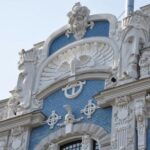
Art Nouveau in Riga turns corners into stories. This private, English-language walking tour focuses on architecture you can actually see—explained clearly, stop by stop, with time for you to steer the route toward what you care about most.
I especially like the flexibility: your guide can adjust the itinerary to your group’s interests, instead of marching you through a rigid script. And I really like the wider city feel—the route goes beyond the usual old-town bubble and gives you a practical sense of how Riga’s style evolved across neighborhoods.
One thing to consider: the tour starts at the Latvian National Opera and finishes in the Art Nouveau district (Alberta iela), so you’ll want to plan your day with that in mind, especially if you’re trying to keep everything close to one hotel area. Also, the tour is listed for moderate physical fitness.
In This Review
- Key Highlights Worth Planning For
- Why This Riga Art Nouveau Tour Feels More Personal
- Price and What You Get for Your Group of Up to 15
- Timing, Meeting Point, and How the Walk Works
- Stop 1: Latvian National Opera and the Art Nouveau Backstory
- Stop 2: Tērbatas iela and the Style Evolution You Can See
- Stop 3: Riga Secondary School No. 40 and National Romanticism
- Stop 4: Jewish Museum / Museum Jews in Latvia and the Crossroads of Styles
- Stop 5: Ministry of Economics and Eclectic Decorative Design
- Stop 6: Alberta iela and Ending at the Riga Art Nouveau Center
- What to Look For During the Tour (So You Don’t Miss the Point)
- Who This Riga Tour Suits Best
- Should You Book This Private Riga Art Nouveau Tour?
Key Highlights Worth Planning For
- Tailor-made pacing for your group: you’re not stuck with a one-size-fits-all group route
- Art Nouveau plus National Romanticism, step-by-step: the evolution of style is part of the story
- Free admission at each scheduled stop: the itinerary is designed so you can focus on the buildings, not tickets
- Strong guide energy: guides like Emils and Eduards bring real enthusiasm and art history training
- Ends at the UNESCO Alberta Street area: easy to continue your architectural sightseeing
Why This Riga Art Nouveau Tour Feels More Personal
This tour works because it’s built around the idea that you learn by looking slowly. Instead of a rushed checklist of famous facades, you get commentary that connects what you’re seeing to when and why it appeared.
The private setup matters. With up to 15 people, you can still move as a small group while your guide explains at the right speed—especially if someone in your group wants more detail on ornamentation, or if you’d rather spend time spotting patterns and symbols on building fronts.
Two guides show up in the experience in a meaningful way. Emils is described as having studied art history and doing the work out of genuine passion. Eduards is also praised for enthusiasm and deep understanding. Even if you’re not a self-declared architecture person, that kind of energy helps you see the building as more than decoration.
You can also read our reviews of more tours and experiences in Riga.

Price and What You Get for Your Group of Up to 15
The price is $178.71 per group (up to 15), for an approx. 2-hour experience. That pricing model is where the value lives.
If you’re traveling with friends or family, you can treat this like a shared investment: the more people in your group, the lower the cost per person. For example, if you did reach the full 15-person group size, it would come out to roughly $12 per person. Smaller groups generally pay more per person, but you still get the core perks: a professional guide, a private format, and a structured route with free-admission stops.
Local taxes are included, and you’ll get a mobile ticket. That combination is handy on a trip where you’d rather not waste time on paperwork.
Timing, Meeting Point, and How the Walk Works
Plan on meeting at the Latvian National Opera at Aspazijas bulvāris 3 (Centra rajons). That start point is smart: it puts you right into the city’s early 20th-century expansion story before you start hunting details.
The itinerary moves in a gentle sequence, with short visits (often 10–20 minutes) and one longer final stretch. The overall walk is paced for people with moderate physical fitness. If you’re someone who tires quickly on uneven sidewalks or needs frequent breaks, tell your guide at the start so they can pace the stops accordingly.
One practical note: hotel or port pickup/drop-off isn’t listed as included. The highlights mention pickup options, but the tour itself specifies a clear meeting point. So if you’re counting on pickup, it’s worth confirming directly before you book, then build your plan around the Opera meeting location.
Stop 1: Latvian National Opera and the Art Nouveau Backstory
You kick off at the Latvian National Opera, and the goal here isn’t just to admire a landmark—it’s to set the historical stage for what follows.
This first stop covers how Riga developed in the late 19th and early 20th centuries and why Art Nouveau became such a big deal in the city. You’ll also get a brief history of Art Nouveau and why Riga, in particular, embraced the movement with so much energy.
Why this matters: when you understand the timing, the ornament starts making sense. Otherwise, Art Nouveau can feel like a bunch of pretty swirls. With context, you start noticing themes—how design expresses identity, modernity, and national style.
Good to know: admission for this stop is listed as free, and the visit is about 15 minutes, so you’re not committing to a long indoor experience before you start seeing street-level buildings.
Stop 2: Tērbatas iela and the Style Evolution You Can See
Next comes Tērbatas iela, one of the city streets where you can learn by comparing facades. This stop focuses on vertical Art Nouveau details and the related thread of national romanticism.
Here’s the helpful part: you don’t just see one “snapshot” of Art Nouveau. You get the progression across time. Art Nouveau isn’t one fixed look—it shifts as years pass, and Riga’s version connects to wider cultural currents.
What I’d watch for on your own:
- Vertical lines that pull your eye up
- Decorative elements that feel symbolic, not just decorative
- How ornament changes from one building to the next nearby
This stop is about 20 minutes, and the admission is listed as free. It’s the kind of stop that makes you realize your photos will be better if you slow down and frame details, not just the whole building.





Stop 3: Riga Secondary School No. 40 and National Romanticism
The tour then moves to Riga Secondary School No. 40, described as an excellent example of National Romanticism.
This part of the experience focuses on how National Romanticism worked as a tool for national identity, especially in the lead-up to independence. That’s a big idea, but it stays practical because you’re grounding it in architecture you can see.
Why this stop is worth your time: school buildings often fly under the radar. But the design choices can reveal what a society wanted to teach and project—values, identity, and confidence in a national future.
The visit is short—about 10 minutes—so think of it as a focused “look and interpret” stop rather than a long sit-down explanation.
Stop 4: Jewish Museum / Museum Jews in Latvia and the Crossroads of Styles
Then you’ll reach the Jewish Museum / Museum Jews in Latvia, which brings the tour into a deeper cultural intersection.
This stop discusses the link between Art Nouveau and neo-classicism, and it also covers influence from the German community on Riga’s development over the decades. In other words, you’re not just learning architecture. You’re learning how different communities and tastes shaped what the city built.
A practical way to approach this stop: don’t try to absorb everything at once. Ask your guide what features in front of you signal those influences—then you’ll have concrete things to remember later when you compare buildings in the Alberta Street district.
This stop is listed at 15 minutes and free admission, which is a nice bonus in a tour that’s already heavy on street-level detail.
Stop 5: Ministry of Economics and Eclectic Decorative Design
The Ministry of Economics of the Republic of Latvia stop is where the tour leans into eclectic decorative design.
You’ll also hear about building practices and the interior layout of Art Nouveau apartments—plus modern conservation efforts. That conservation angle is important. Riga’s Art Nouveau heritage only stays visible if it’s protected and maintained, and you’ll get some insight into what that means in the real world.
What to look for here:
- Decorative patterns that feel mixed across styles
- Signs of craftsmanship (the kind you can’t fully appreciate from a distance)
- Any discussion of how apartments were arranged inside, since Art Nouveau wasn’t only about facades
The visit is about 15 minutes, and again the itinerary lists free admission. That keeps the flow moving and keeps you from feeling locked into ticketed spaces.
Stop 6: Alberta iela and Ending at the Riga Art Nouveau Center
The final stop is the big one: Alberta iela, Riga’s most famous Art Nouveau district. You’ll get about 40 minutes here, with the tour ending at the Riga Art Nouveau Center (corner of Alberta iela and Strelnieku iela).
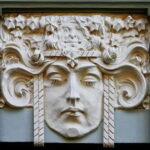
This is where the tour earns its title. Alberta Street is tied to a UNESCO World Heritage site and is known for a “peak” style feel: flowing curves, floral motifs, and symbolic embellishments on ornate facades.
Why this ending works: earlier stops help you understand the ingredients. Alberta iela lets you see what happens when those ideas concentrate into one place.
If you want to get the most out of the time here, don’t rush toward the biggest building. Slow down and compare:
- Facade ornament density (where decoration becomes more than background)
- The style of linework and floral forms
- How symbolic details are distributed across windows and entrances
When the tour ends, you’re already dropped in the right area to keep exploring without needing to backtrack.
What to Look For During the Tour (So You Don’t Miss the Point)
Even if you love architecture, it’s easy to get photo-happy and forget to observe. Here’s how I’d tune your attention for this specific tour.
Start with one question: how does this building “speak”? Art Nouveau in Riga often uses lines and motifs to suggest motion and identity. National Romanticism uses design language to support culture and independence. Eclecticism shows up when styles blend.
Then look for three categories:
- Vertical drama: elements that pull the eye upward
- Motifs with meaning: floral forms, symbols, and decorative themes
- Craft signals: patterns that look hand-finished rather than generic
Also, take advantage of the private guide factor. If your group is into something specific—doorways, window shapes, sculptural elements, or apartment design—say so early. Your guide can tailor the emphasis during the walk.
Who This Riga Tour Suits Best
This is a strong choice if you want:
- A private walk with a guide who can adjust to your interests
- Clear focus on Riga’s Art Nouveau beyond the most obvious areas
- A stop-by-stop route that teaches you the “how styles developed,” not just what to photograph
It’s especially good for groups who want a shared activity without feeling trapped. The size cap of up to 15 can work well for families and friend groups who travel together.
If you hate walking or need long breaks, the “moderate physical fitness” note is worth respecting. You might still enjoy it, but you’ll want to pace yourself and plan for short rests.
If you only care about one or two buildings, you might feel the tour is too broad. But if you want the feeling of a city where style evolved over time—and you enjoy comparing details—this is the right match.
Should You Book This Private Riga Art Nouveau Tour?
Book it if you want a guided, architecture-focused introduction that doesn’t stop at the postcard version of Riga. The route connects Art Nouveau to National Romanticism, style crossovers, and conservation—then gives you the main payoff on Alberta iela with a relaxed final finish.
Skip it only if you already know exactly what you want to see and you’re on a tight schedule that doesn’t allow for a structured, two-hour walking sequence. Also, factor in that pickup isn’t clearly included, so you’ll likely start at the Opera.
For the best outcome, I’d recommend you show up with comfortable shoes, a phone for the mobile ticket, and one or two things you want to focus on (facades, ornament, or the story behind how Riga’s design identity formed). With a guide like Emils or Eduards, that kind of approach turns the tour into something you’ll actually remember.