REVIEW · RIGA
Riga: 2-Hour History of Art Nouveau Walking Tour
Book on GetYourGuide →Operated by Guide agency Smile Line · Bookable on GetYourGuide
Riga’s facades tell stories you can read. This 2-hour Art Nouveau walk turns a simple stroll into a guided lesson on style, symbolism, and why the buildings were meant to be both beautiful and practical. You’ll start at the Smile Line office in the House of the Black Heads and move from Old Town streets into Riga’s famous Art Nouveau district.
I especially like how the guide frames Art Nouveau as more than decoration. You’ll compare different interpretations, from highly ornate facades to designs that feel more thoughtful and “intellectual.” The route also shines a spotlight on Mikhail Eisenstein, a talented architect with a controversial edge, plus the designers who left their marks on the city through details on the homes.
One thing to consider: it’s a walking tour. If you’re traveling with very young kids or you prefer lots of sitting breaks, you might find the pace a bit full by the end of two hours.
In This Review
- Key reasons this Art Nouveau walk is worth your time
- Start at Townhall Square: the House of Black Heads makes a perfect opening scene
- From Old Town to Art Nouveau: how the walk turns buildings into clues
- Eisenstein’s Riga: the controversial architect you’ll understand more by walking
- Alberta Street details: how Riga’s mixed architect roots show up on balconies
- National romanticism vs. decorative showpieces: two ways Art Nouveau speaks
- What you’ll actually see on this 2-hour loop (and why the timing works)
- Guides, pace, and group size: why the human part matters
- Price and value: $39 for a guided style lesson, not building entry fees
- Practical tips so you get the most from the walk
- Should you book this Riga Art Nouveau walking tour?
- FAQ
- How long is the Riga Art Nouveau walking tour?
- Where do I meet the guide?
- What languages are the guided tours offered in?
- Is the tour wheelchair accessible?
- Are entry tickets included?
- Is there a cancellation option if my plans change?
Key reasons this Art Nouveau walk is worth your time
- Meet at the House of the Black Heads (Townhall Square, 7), a central landmark that makes the tour easy to find
- Mikhail Eisenstein in focus, including what he built in Riga’s major port-era context
- Alberta Street stroll, with stories tied to the city’s mix of Latvian, German, Russian, and Jewish architects
- Ornament vs. “useful beauty”: you’ll learn what Art Nouveau was trying to achieve, not just what it looks like
- Small group feel is common, with past groups often staying under 10 people
- German or English guide plus clear guiding support (some groups use an audio system so you don’t miss the narration)
Start at Townhall Square: the House of Black Heads makes a perfect opening scene
You’ll meet in Townhall Square at the Smile Line office inside the House of the Black Heads, address Townhall Square 7. This is one of those Riga anchor points that helps you get your bearings fast. Before you even step into the Art Nouveau area, you’ll be standing in a part of town that signals you’re in a city with taste—and a willingness to show it.
I like that the tour begins in a place that’s both historic and central. That matters because you’re more likely to arrive relaxed, not stressed. And since you’re doing a walking loop from there toward the Art Nouveau district, starting here keeps the route intuitive.
You can also read our reviews of more tours and experiences in Riga.

From Old Town to Art Nouveau: how the walk turns buildings into clues
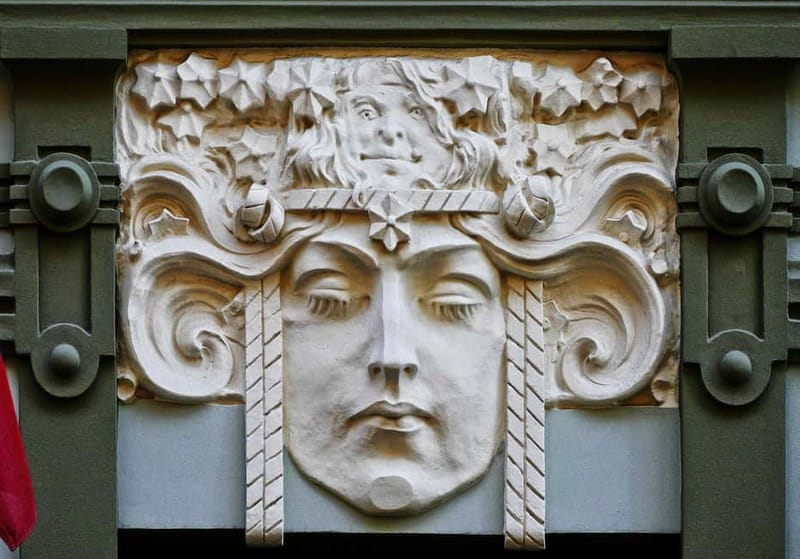
Once you’re moving, the tour does what the best architecture walks do: it changes how you look. Instead of letting you skim facades, the guide gives you a framework—Art Nouveau as a set of values translated into street-level design choices.
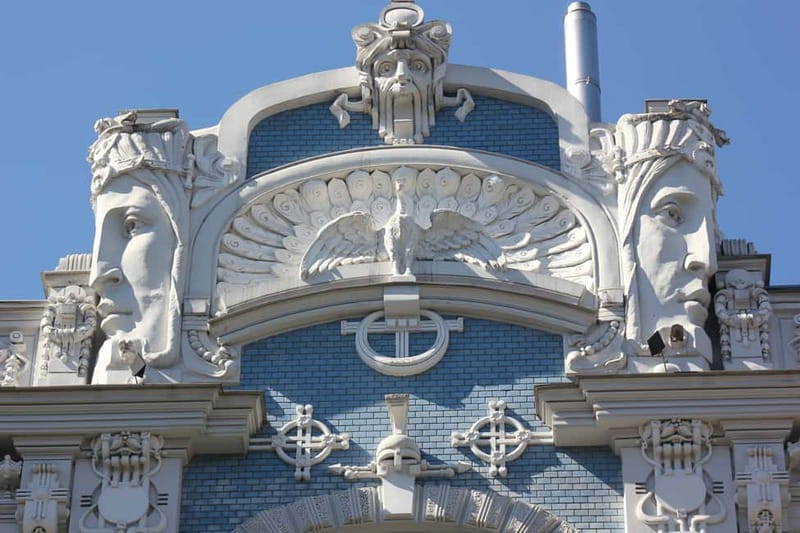
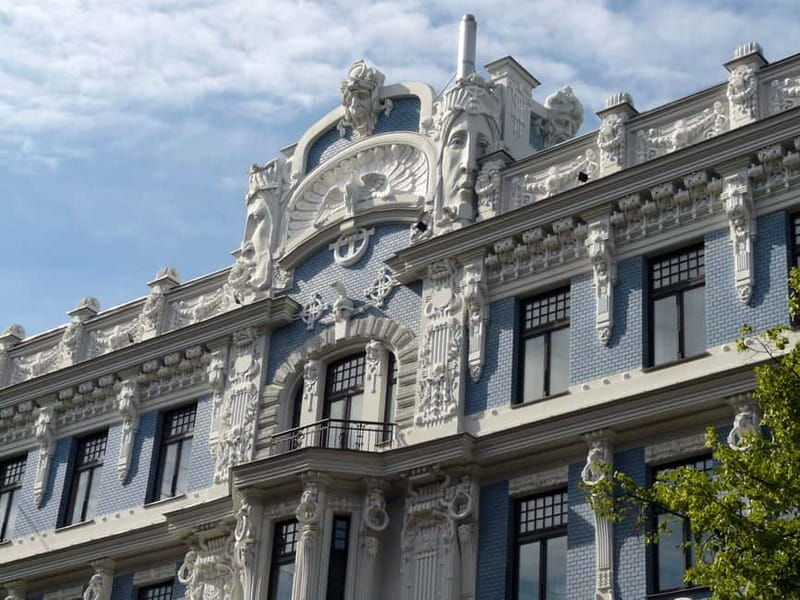
Expect a shift as you head from the Old Town toward the Art Nouveau zone. Riga’s Art Nouveau isn’t one uniform look. You’ll see the spectrum: from buildings that go all-in on decorative richness to facades that feel more structured and idea-driven. The guide keeps asking a quiet question while you walk: is this style only about beauty, or does it also solve real needs for real buildings?
That’s where the tour feels practical. Art Nouveau values are described as both aesthetic and functional, and you’re encouraged to judge how well the buildings live up to that promise. Even if you’re not an architecture nerd, you’ll leave with a sharper eye for why certain choices show up—motifs, curves, symmetry tricks, and the way design is used to frame the street.
Eisenstein’s Riga: the controversial architect you’ll understand more by walking
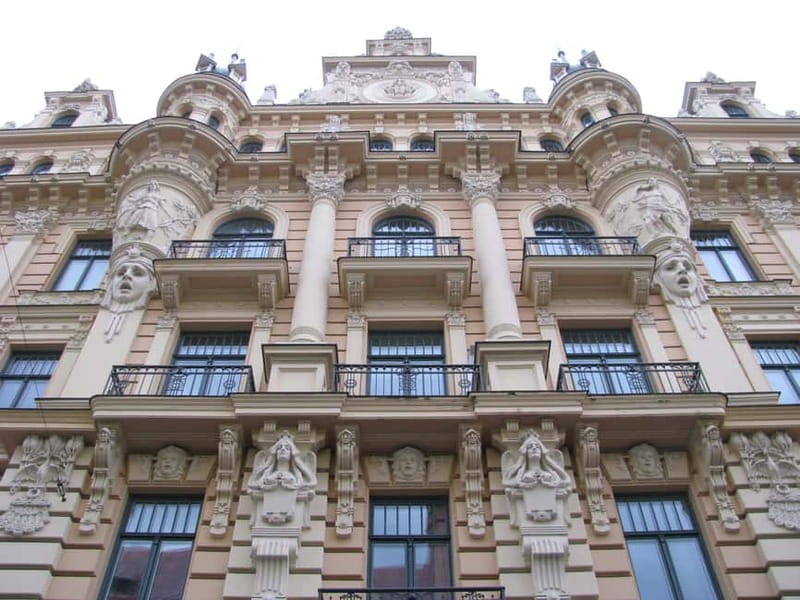
The big “character” of this tour is Mikhail Eisenstein. You’ll hear about him while you’re in the district where his creations shaped what people think of as Riga’s Art Nouveau identity.
What makes this part compelling is the context: Eisenstein lived and worked in what was, at the time, the most important port city in the Russian Empire. That kind of setting changes everything. A port city is where money, merchants, ideas, and outside influences meet. So you’re not just learning about one person. You’re also learning why the city’s architectural style could become so ambitious.
There’s also the “controversial” aspect. The tour doesn’t treat Eisenstein like a museum label. It frames him as a talented architect whose story has edges, which helps you see Riga’s buildings as products of people with opinions—not just pretty shapes. For me, that makes the facades feel more honest. You can stand in front of a decorative wall and still feel the human decision behind it.
Alberta Street details: how Riga’s mixed architect roots show up on balconies
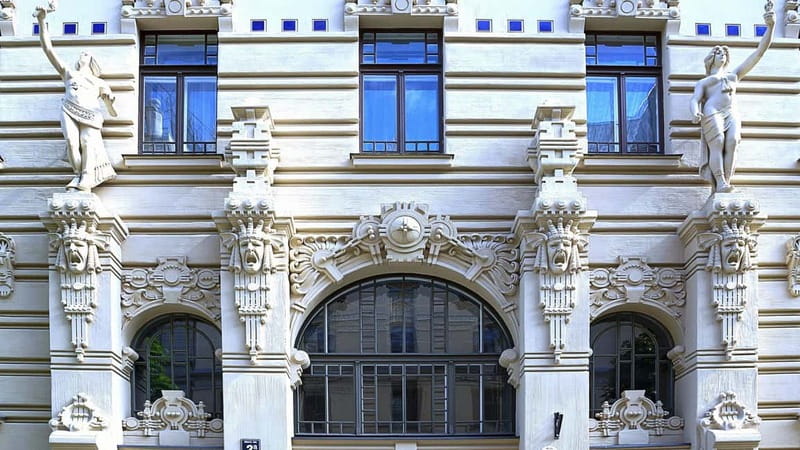
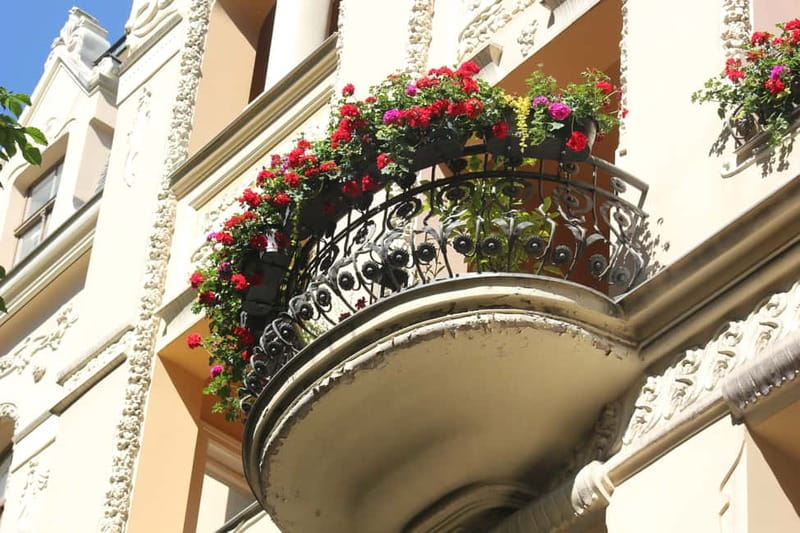
As you walk along Alberta Street, the narration connects design elements to the city’s broader architectural community. You’ll hear stories tied to notable Latvian, German, Russian, and Jewish architects who left distinctive features on Riga’s Art Nouveau houses.
This is the moment where the tour rewards slower looking. Alberta Street becomes a kind of open-air classroom. The guide helps you notice decorative patterns on facades, but also the logic behind them—how ornament can communicate identity, status, or regional pride.
You’ll also get a sense of Riga’s layered character. Art Nouveau in one city can feel like it came from one brain. In Riga, it feels like it grew from a whole neighborhood of influences. That’s a huge part of why Riga is often called an Art Nouveau capital.
National romanticism vs. decorative showpieces: two ways Art Nouveau speaks
One of the most useful things this tour teaches is that Art Nouveau wasn’t one single recipe. You’ll see designs that lean heavily into decorative richness, then you’ll encounter buildings where national romanticism gets built into the styling.
In practical terms, national romanticism adds meaning through design choices. Instead of focusing only on curving flowers or ornamental flourishes, it uses style to reflect identity—local themes expressed through architecture.
That contrast is more than trivia. It changes what you photograph. On one building, you might focus on surface details and lush ornamentation. On another, you might start looking for symbolism—how forms are used to “say something” about place.
And because the guide keeps reminding you that Art Nouveau should be both beautiful and functional, you’re also encouraged to check how the design supports the building’s real life. You start thinking about what you’re seeing: entrances, windows, layouts hinted by the facade, and the way the structure carries its decorative language.




What you’ll actually see on this 2-hour loop (and why the timing works)
This is a two-hour walking tour, so it’s not trying to cover everything in Riga. Instead, it concentrates on the Art Nouveau district and the key landmarks that help you understand the style quickly.
That timing is a strength. In a short period, you get the story arc: start in central Old Town, move to Art Nouveau streets, focus on Eisenstein, then connect the dots about the broader architect mix and the style’s different interpretations. At the same pace, you’re also less likely to get “facade fatigue,” that moment when every building starts blending together.
From past group experiences, the small-group vibe can make a difference. Many groups have been under 10 people, which means you’re more likely to hear the guide clearly, ask questions, and stay engaged without feeling rushed.
Guides, pace, and group size: why the human part matters
Art Nouveau is best with context. A good guide doesn’t just point. They connect. On this tour, the guidance is in German or English, so you can pick the language you’re most comfortable with and follow the story closely.
I’ve also found that the best walking tours handle pace like a skill. One reason people rate this highly is the easygoing rhythm—enough time to look closely at details without stopping so often that you lose momentum. There are also hints that some groups use an audio system, which helps you keep up while you’re admiring facades and not constantly craning your neck toward the guide.
Who is this best for? People who like to learn while walking—couples, solo travelers who want a safe structure, and architecture fans who don’t want to spend days building an itinerary. If you’re a first-time Riga visitor, this is a smart way to get oriented fast.
Price and value: $39 for a guided style lesson, not building entry fees
At $39 per person for a 2-hour guided walk, the value comes from what you gain that you can’t easily get on your own. You’re paying for:
- a guided route through the Art Nouveau district,
- explanations of the design ideas behind what you see,
- and a focus on major names like Mikhail Eisenstein plus Riga’s broader architect mix.
Entry tickets aren’t included, which actually fits the format. This is a street-and-facade experience. You’re not forced to plan around opening hours or spend extra time waiting for entrances. Instead, your time goes into observation and interpretation—exactly what walking tours like this are good at.
Is it pricey? It’s not bargain-bin either. But for a focused, guided architecture lesson in the heart of Old Town, it’s a reasonable match for the time you’re getting.
Practical tips so you get the most from the walk
- Wear comfortable shoes. Two hours on Riga sidewalks adds up, especially if you’re looking up a lot.
- Bring your curiosity. The tour is about reading buildings, not just snapping photos.
- If route changes happen, don’t panic. The main idea stays the same: you’ll still cover the Art Nouveau focus area and key landmarks.
- If you’re traveling with kids: children under 6 can join for free, but older kids may find two hours of architectural discussion a bit long. Plan on breaking attention now and then.
Should you book this Riga Art Nouveau walking tour?
I’d book it if you want a fast, guided way to understand why Riga is considered a major Art Nouveau destination. The combination of a central start point, a clear 2-hour structure, and an Eisenstein-focused story gives you more than “pretty building spotting.”
Skip it only if you strongly dislike walking or you’re chasing ticketed attractions. This tour shines in the open air, on the sidewalk, where the details matter and the guide helps you see what most people miss.
If your travel plan is short—and you still want the architectural heart of Riga—this is the kind of smart, efficient “one tour” choice that pays off for years after you leave.
FAQ
How long is the Riga Art Nouveau walking tour?
It lasts 2 hours.
Where do I meet the guide?
Meet the guide at the Smile Line office in the House of the Black Heads, Townhall Square, 7.
What languages are the guided tours offered in?
The live tour guide is available in German and English.
Is the tour wheelchair accessible?
Yes, wheelchair accessibility is listed.
Are entry tickets included?
No. Entry tickets are not included.
Is there a cancellation option if my plans change?
Yes. You can cancel up to 24 hours in advance for a full refund.