REVIEW · RIGA
Riga Art Nouveau walking tour
Book on Viator →Operated by RigaTrips · Bookable on Viator
Riga’s Art Nouveau turns a city walk into a story. I love how this tour reads the buildings for you—especially the symbols on façades and balconies—so you’re not just looking at pretty stone. I also like that it pushes you beyond the Old Town into Centra rajons, where the style feels lived-in. The one catch: it’s fast-moving, so if you want long, slow photo breaks, you’ll need extra time before or after.
Guides can make or break this kind of tour. On this one, I saw that happen with guides like Diana, who handled a sudden downpour by adjusting the talk and waiting out the rain under a portico. You may also meet enthusiastic guides such as Gunta (sometimes spelled Guta), who connect the architecture to wider Riga life and even offered follow-up ideas like heading toward the Central Market when plans shifted for them.
Logistics are pretty straightforward: it starts at the Laima Clock on Aspazijas bulvāris 20 at 12:30 pm, ends near Kalpaka bulvāris 12A, and keeps groups to a maximum of 30. You’ll use a mobile ticket, and the meeting point is near public transportation, which helps if your first Riga day is already a bit chaotic.
In This Review
- Key things to know before you go
- Why Riga’s Art Nouveau hits differently on this walk
- Meeting at Laima Clock: how the tour sets the rhythm
- Stop 1: Latvia’s Freedom symbol and the story behind it
- Opera House time: spotting elements instead of just taking pictures
- Alberta Iela: where the Art Nouveau story really shows up
- Time management: making 1h45 feel like more
- Price and value: what $36.09 buys you in the real world
- Who this tour is perfect for (and who might prefer something else)
- Practical tips to make the walk easier
- The one thing to watch: last-minute changes and meeting spot confusion
- Should you book the RigaTrips Art Nouveau walking tour?
- FAQ
- How much does the Riga Art Nouveau walking tour cost?
- How long is the tour?
- Where does the tour start?
- Where does the tour end?
- What time does the tour start?
- Is the tour offered in English?
- What’s included in the price?
- Are there admission tickets required?
- How large is the group?
- Can I get a full refund if I cancel?
Key things to know before you go
- Freedom symbolism first: you’ll hear a short story tied to a Latvia freedom symbol early on.
- Opera House details: you’ll focus on the building’s elements, not just the location.
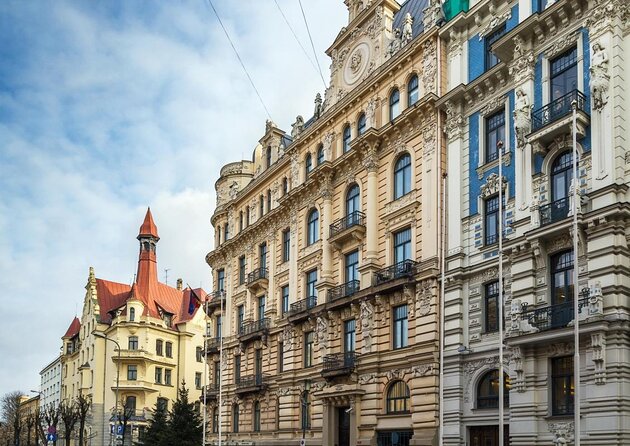
- Alberta Iela gets the time: about 30 minutes on the street where Art Nouveau really shows off.
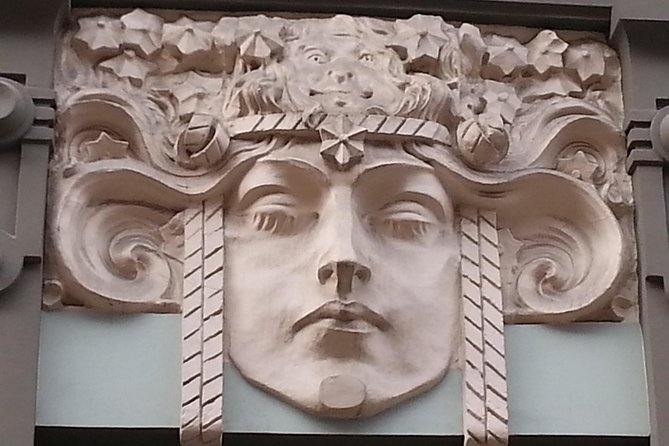
- Symbols on buildings: expect explanations of what’s carved or placed on houses and why it matters.
- Small-group feel: up to 30 people, which usually means you can ask questions.
- Weather-ready guiding: a guide can adapt mid-walk if the sky changes.
Why Riga’s Art Nouveau hits differently on this walk
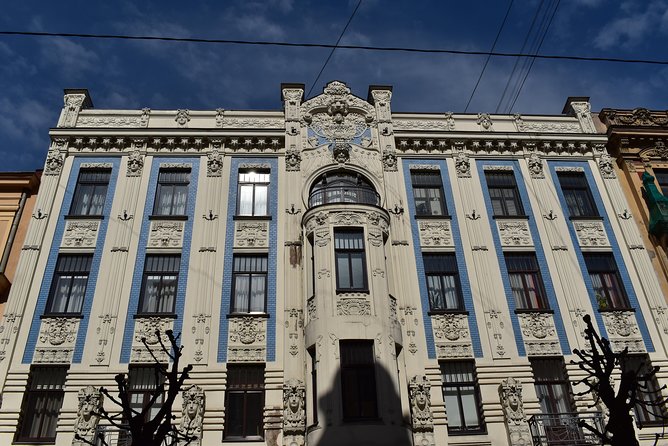
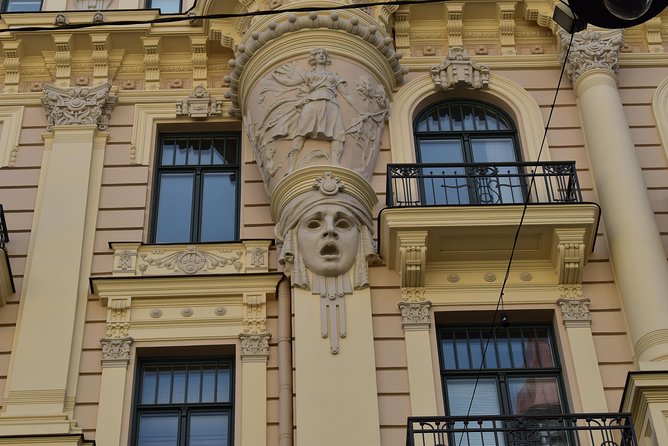
Art Nouveau in Riga isn’t just decoration—it’s a language. On this tour, you’ll learn to see patterns and meaning: repeating motifs, stylized figures, and symbolic elements that show up on building façades across the neighborhood.
What I like most is that you’re not stuck guessing. The guide points out details and then explains what they represent, so you end up with a mental map you can keep using after the walk ends. You also get a smarter use of time: in about 1 hour 45 minutes, you cover multiple highlights without trying to do it all alone while your feet are already plotting a route to your hotel.
One more practical plus: the route takes you through Riga’s wider Central area, not only the classic Old Town crowd-traffic. That matters because Art Nouveau often looks best when you’re walking in the same streets where people live, work, and pass by these buildings every day.
You can also read our reviews of more tours and experiences in Riga.


Meeting at Laima Clock: how the tour sets the rhythm
The tour begins at Laima Clock (Aspazijas bulvāris 20). It’s an easy landmark to find, and the start time is 12:30 pm. That midday timing can work well if you’re using your morning for museums and paperwork and want a human-scale walk for your early afternoon.
You’ll end at Kalpaka bulvāris 12A, which is handy because it gives you a natural “finish point” for later wandering. In practical terms, you won’t feel like you’re trapped in a one-direction route back to where you started.
Because the group is limited to 30 travelers, it tends to stay conversational. You’re not in a giant herd, and that’s important when the guide is asking you to look at small details on balconies, doors, and façades.
Stop 1: Latvia’s Freedom symbol and the story behind it
You kick off with a Freedom symbol in Latvia and a short story about it. This is a smart choice for the first segment because it anchors you emotionally before you go full architecture-spotter mode.
I find it helps to know what you’re looking for, even if you think you’re only there for buildings. When a guide frames a symbol and then ties it to the city’s identity, the art stops feeling random. You start noticing how Riga’s public spaces and buildings communicate ideas—politics, pride, memory—through design choices.
If you like tours where you understand the “why” as much as the “what,” this opening works well. If you’re mainly chasing photos, it still sets you up: it trains your eyes to expect meaning.
Opera House time: spotting elements instead of just taking pictures
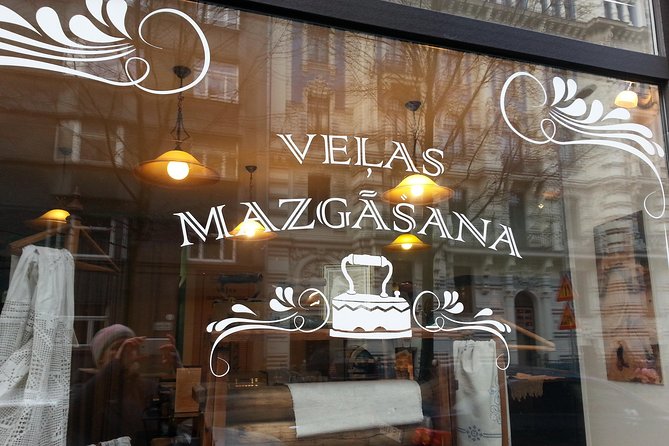
Next up is the Opera House, and the tour focuses on its elements. Instead of only saying where to look, the guide points out parts and explains what you’re seeing.
For architecture walks, this is the difference between a passive stroll and a useful one. You can stand in front of a landmark like the Opera House and still walk away learning almost nothing. Here, you’re guided to look at specific features, which makes the building feel more legible.
Practical note: Opera House areas can be busy. Keep an eye on where your guide wants you to stand, because the best view of certain details depends on angle. If you want the cleanest photos, you’ll likely need to shift your position when the guide points things out.
Alberta Iela: where the Art Nouveau story really shows up
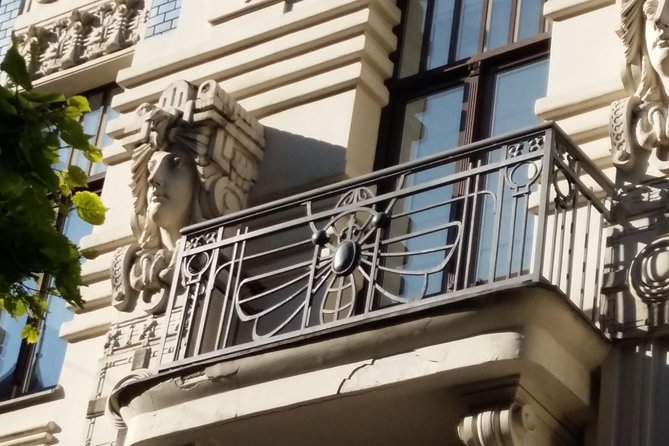
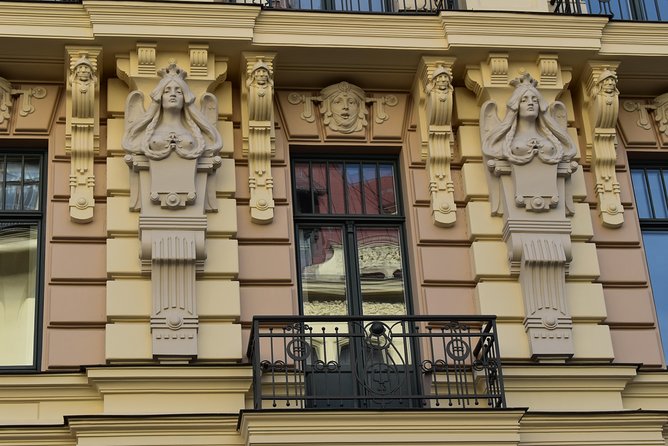
The tour’s “main street moment” is Alberta Iela. This is described as the one street that really flourishes in Art Nouveau architecture, and you get about 30 minutes here. That time matters: with Art Nouveau, the details are the point, and 30 minutes is enough to slow down without feeling stuck.
This stop is also where you learn about the symbols on houses and the history tied to the buildings. In plain terms, you’re learning how to read façade design like a decoder ring:
- what recurring shapes might signal,
- how ornament can reflect identity or era,
- and how the design language shows up house to house.
You’ll walk past façades that look different at a glance but share the same design philosophy. Once you’ve heard the guide explain the logic behind the symbolism, you’ll start noticing those connections on your own—whether you’re still on Alberta Iela or you wander later nearby.
One more thing: the stop being admission ticket free is a nice value factor. You’re paying for interpretation and guiding, not fees to enter another site.





Time management: making 1h45 feel like more
An approximate 1 hour 45 minutes can sound short, but it works if the guide has a clear flow. Here, the pacing is built around multiple “anchor” moments:
- Freedom symbol (story + meaning)
- Opera House (elements to spot)
- Alberta Iela (time for buildings + symbols)
The biggest risk with any architecture walk is rushing past details. The upside of this schedule is that at least one stop (Alberta Iela) gets enough time to actually absorb ornament and symbolism.
Also, this is a midday start. That can be a double-edged sword depending on the weather. If the sun is strong, you’ll get sharper façade contrast for photos. If it rains, you may get a slower moment—one guide (Diana) handled a sudden downpour by adjusting and waiting under a portico until it passed.
Price and value: what $36.09 buys you in the real world
At $36.09 per person, you’re not paying for entrance tickets to museums. You’re paying for a professional guide and their ability to make Art Nouveau understandable quickly.
Here’s how I see the value:
- You save time. Riga Art Nouveau can be all over the place, and a self-guided walk may leave you with lots of photos and few answers.
- You get interpretation. The tour is built around symbols on houses and elements on major buildings, which is exactly the kind of learning that’s hard to DIY unless you already know what to look for.
- You get a focused area change. The tour also aims to show you another part of Riga beyond the Old Town, which helps you cover more ground efficiently.
If you’re the type who enjoys learning while walking—especially if you like symbolism, design, and local context—this price is easier to justify. If you only want broad sightseeing with no explanation, you might feel the cost more than you’d like.
Who this tour is perfect for (and who might prefer something else)
This Riga Art Nouveau walking tour is a strong fit if you:
- like architecture tours that explain meaning, not just names,
- want to see more than just the Old Town,
- and enjoy walking with a guide who can keep energy up.
It’s also great for first-time Riga visitors who need a fast way to understand what people mean when they talk about Art Nouveau here. You’ll leave with a clearer sense of the neighborhood’s identity and the design language behind it.
You might consider skipping (or pairing with a longer independent walk) if you:
- hate being outside for nearly two hours,
- need long pauses for shopping, sitting, or deep museum-style reading,
- or plan to use the afternoon to maximize rest.
Practical tips to make the walk easier
A few small choices can make this tour smoother.
Wear comfortable shoes. Art Nouveau districts can be full of short turns, and you’ll be stopping to look up close at façades.
Bring layers. Even in fair weather, Riga can shift quickly. If the sky dumps rain, don’t assume the tour will vanish—one guide adjusted on the fly during a downpour and used shelter while waiting for it to stop.
Use your mobile ticket. Since you’ll have a mobile ticket, keep your phone charged and accessible. That also helps if you need to show confirmation quickly.
Stay flexible with questions. Because the group cap is 30, you may be able to ask follow-ups about symbols or the buildings you’re seeing. If you’ve got a favorite style detail, ask early so you can look for it during later stops.
The one thing to watch: last-minute changes and meeting spot confusion
Most tours like this run smoothly, but there is a real-world risk with any experience that requires a minimum number of travelers. If the minimum isn’t met, the tour can be canceled, with an alternative date offered or a full refund.
So do yourself a favor:
- Check the app message and any email you get related to the booking.
- Don’t assume a confirmation shown earlier will still be valid if the operator cancels close to departure.
If you’re using the afternoon for other plans, I’d avoid scheduling something critical to start at the exact tour end time. Build a small buffer. It’s the simplest way to protect a vacation afternoon.
Should you book the RigaTrips Art Nouveau walking tour?
Yes, if you want Art Nouveau Riga explained in a way that you can carry with you after the walk. This is especially worth it if you like symbolism, enjoy architecture details, and want a route that reaches beyond the Old Town.
Book it with extra confidence if:
- you prefer guided interpretation over solo guesswork,
- you want to spend about 30 minutes on Alberta Iela instead of sprinting through it,
- and you’re okay walking for about 1h45 in the city.
Skip or compare alternatives if:
- you need a fully seated or low-walk experience,
- you’re very weather-sensitive,
- or you dislike the idea of group travel even with a cap of 30.
If you do go, you’ll come away knowing what to look for next time you spot a Riga balcony, doorway, or carved figure. And that turns a nice photo stop into a real learning moment.
FAQ
How much does the Riga Art Nouveau walking tour cost?
It costs $36.09 per person.
How long is the tour?
The duration is about 1 hour 45 minutes.
Where does the tour start?
The tour starts at Laima Clock, Aspazijas bulvāris 20, Centra rajons, Rīga, LV-1050, Latvia.
Where does the tour end?
The tour ends at Kalpaka bulvāris 12A, Centra rajons, Rīga, LV-1010, Latvia.
What time does the tour start?
The start time listed is 12:30 pm.
Is the tour offered in English?
Yes, it’s offered in English.
What’s included in the price?
A professional guide with knowledge on Art Nouveau architecture in Riga is included.
Are there admission tickets required?
No admission ticket is required at least for the Alberta Iela stop, which is listed as Admission Ticket Free.
How large is the group?
The tour has a maximum of 30 travelers.
Can I get a full refund if I cancel?
Yes. You can cancel for free up to 24 hours in advance for a full refund. If you cancel less than 24 hours before the start time, the amount paid isn’t refunded.