REVIEW · RIGA
Old Town And Art Nouveau Walking Tour Of Riga
Book on Viator →Operated by EASY TRAVEL · Bookable on Viator
Riga’s Art Nouveau tells a story in brick. This tour strings together Old Town landmarks and the city’s Art Nouveau district into one easy 3-hour walk, with a guide who helps you see details you’d normally miss.
I especially love how quickly the stops build context: you get a feel for Riga’s shift from medieval streets into the early 1900s architecture style, without getting stuck in museum lines all day. Another big win for me is the guide time—this isn’t just a route, it’s explanation on the move, and the group gets the chance to ask questions.
One thing to plan for: the Art Nouveau Museum ticket isn’t included, so you’ll likely pay extra if you want to go inside. Also, most sights are brief photo-and-history stops, so it’s ideal for getting your bearings, not for slow lingering at every building.
In This Review
- Key highlights you’ll feel on this Riga walk
- Riga’s Old Town meets Art Nouveau: what this 3-hour route really gives you
- Meeting at 11:00 with hotel pickup: the easy start
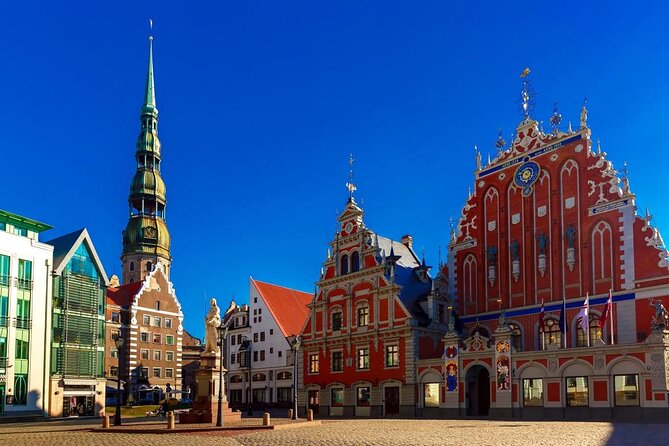
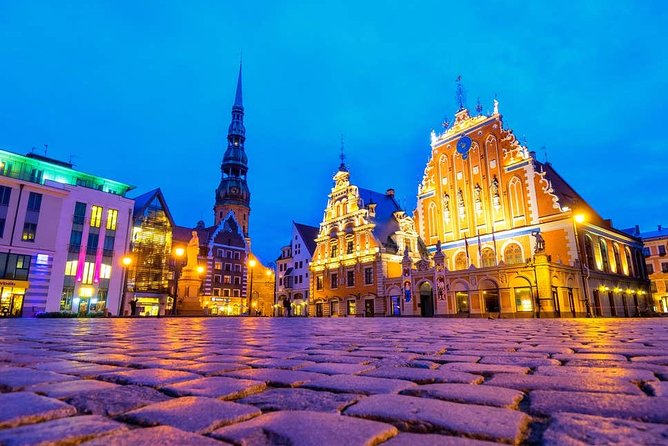
- House of the Blackheads: Riga’s power, in one stop
- Town Hall Square and Riga Cathedral: medieval anchors that frame everything else
- Jauniela lanes: where the Old Town colors start to make sense
- Latvian National Opera and Alberta Iela: the Art Nouveau signature streets
- Art Nouveau Museum: the one extra ticket that’s worth budgeting
- How the guide changes your view: Andra, Inga, and Maria’s styles
- Pace, group format, and real walking comfort
- Price and value for $168.58: what you’re paying for
- Who should book this Riga Old Town and Art Nouveau tour
- My take: should you book it?
- FAQ
- How long is the Old Town and Art Nouveau walking tour of Riga?
- What time does the tour start?
- Is pickup included?
- Is the Art Nouveau Museum ticket included?
- Is the tour offered in English?
- Is this a private tour?
Key highlights you’ll feel on this Riga walk
- Old Town classics up front like the House of the Blackheads and Town Hall Square, set in tight walking distance
- Art Nouveau street-reading on Alberta Iela, where façade details have meanings you can actually spot
- A guide who answers in plain language (names that come up include Andra, Inga, and Maria)
- A museum stop that adds the why behind Riga’s early 20th-century architectural style
- Pickup from centrally located hotels so you spend less time figuring out meeting points
- A pace that works for families and all ages, with children staying with adults
Riga’s Old Town meets Art Nouveau: what this 3-hour route really gives you
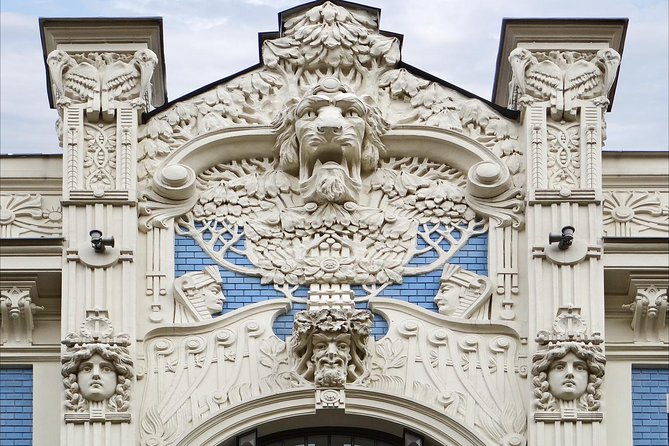
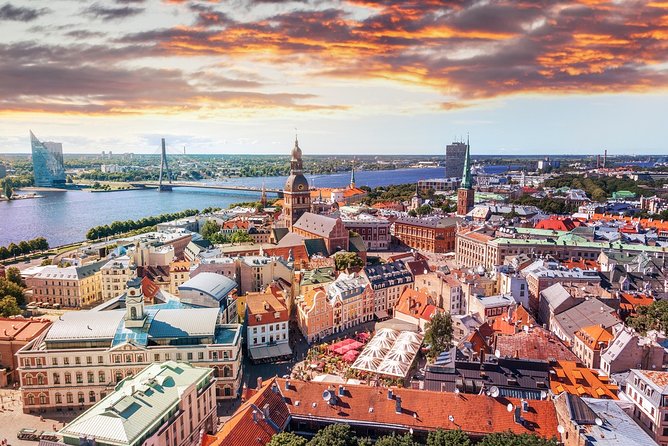
This is the kind of tour I like for first visits. In about 3 hours, you cover two Riga “moods”: the cobbled, postcard-perfect Old Town and the more patterned, theatrical look of Art Nouveau in the surrounding streets. The result is a route that makes the city feel coherent instead of like a scattered list of sights.
The best part is the sequencing. You don’t start with architecture details right away—you begin with well-known Old Town anchors, then the guide connects the dots to why Riga later embraced Art Nouveau. That context matters, because these buildings aren’t just decoration. They reflect a period of ambition and identity, and the guide helps you notice how that shows up in stonework, curves, and symbols.
If you’re the type who likes to photograph façades, you’ll get plenty of chances. If you’re more “show me the highlights and tell me what they mean,” you’ll be just as happy.
You can also read our reviews of more tours and experiences in Riga.


Meeting at 11:00 with hotel pickup: the easy start
The tour starts at 11:00 am, and pickup is offered from your hotel in centrally located areas. That’s a small detail, but it changes the whole experience: you arrive on time without doing a pre-walk logistics puzzle.
You’ll also have a mobile ticket, and the tour is run in English. It’s set up as a private tour/activity, meaning only your group participates. That tends to make questions easier, and it helps keep the pace comfortable for mixed ages.
One more practical note: service animals are allowed, and the tour is described as suitable for most travelers. It also runs near public transportation, which is handy if you’re not doing hotel pickup.
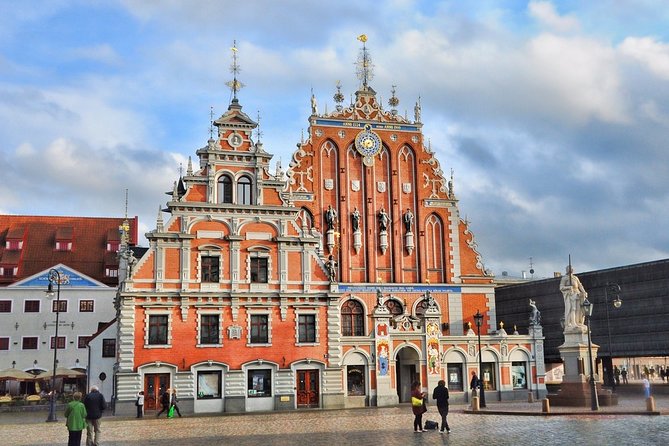
House of the Blackheads: Riga’s power, in one stop
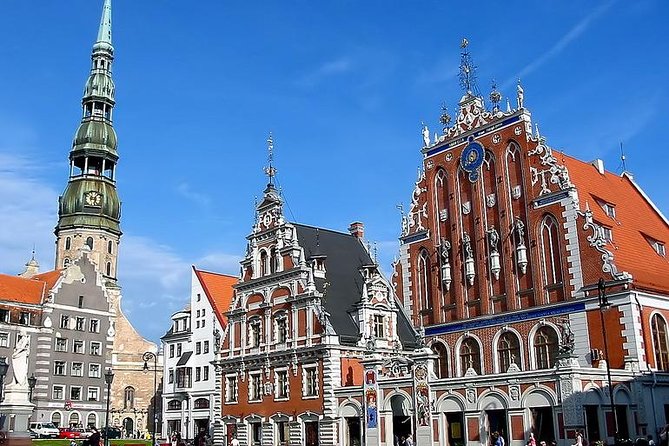
The walk begins at the House of the Blackheads. You’ll spend about five minutes there, and the admission ticket is listed as free.
Even in a short visit, this stop is useful because it acts like a historical “signpost.” The House of the Blackheads is one of those names you hear early when people talk about Riga, but without context it can feel like trivia. With a guide, it becomes a clue about who held influence in the city and how that influence shaped the streets you’re walking on.
If you’re walking with kids, this is a good early moment because it’s visual. Façades and nearby details are easy to point at, and the guide can switch between history and practical observation without losing the group.
Town Hall Square and Riga Cathedral: medieval anchors that frame everything else

Next up is Riga Town Hall Square. You’ll spend about five minutes there, and it’s listed as admission not included.
From a touring perspective, Town Hall Square is a hinge point. It’s open, it’s central, and it helps you understand how Old Town life was organized—who gathered, where power sat, and why certain buildings became focal points. Even if you don’t go inside anything here, a quick guided orientation at the square can make the rest of the walk feel less random.
Then you move to Riga Cathedral, another short five-minute stop with admission not included. The cathedral stop works best as a “you’re here for the setting” moment. The building isn’t just impressive; it’s part of the story about Riga’s long timeline, which your guide ties back to how the city later adopted Art Nouveau.
A small consideration: because these stops are short, it’s not the tour for you if you’re hoping for deep time inside every major attraction. It’s better suited to building context fast.
Jauniela lanes: where the Old Town colors start to make sense
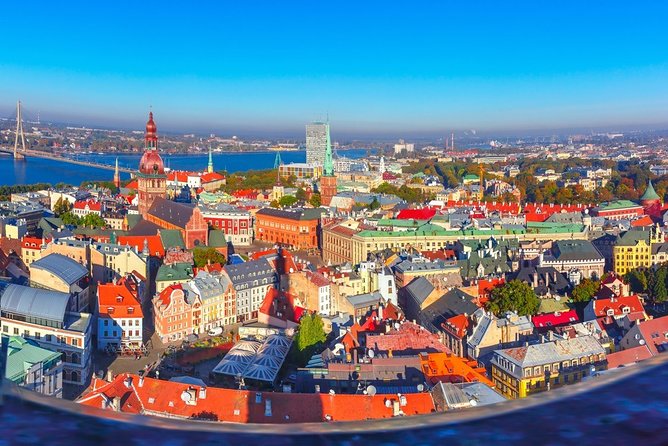
Your next stop is Jauniela, again about five minutes, with admission listed as free.
Jauniela is where the Old Town stops feeling like “big sights” and starts feeling like real streets. This is the moment I’d use to slow down a bit, look up, and compare what you see here with what you’ll see later on Alberta Iela. You can usually tell when a city is transitioning into a new style just by the way window shapes, ornament, and façade rhythm change block to block.
The guide’s job here is key: instead of just pointing at pretty buildings, you’ll learn what features were important and why Riga leaned into a new aesthetic later. That makes the walk feel like a timeline you can see.
If you want photos, bring your stamina for short bursts. You’ll be on cobbles, and you’ll likely be stopping for angles, not just strolling straight through.





Latvian National Opera and Alberta Iela: the Art Nouveau signature streets
You’ll then head to Latvian National Opera, with about five minutes and free admission listed for the stop.
From the street, the opera-area view is one of the quickest ways to grasp Art Nouveau’s personality: it’s theatrical without being cartoonish. The shapes feel purposeful, and the details tend to reward looking from multiple angles.
Then comes Alberta Iela (often spelled Alberta Iela in tour materials). This is another five-minute stop with free admission listed.
Here’s why I like this pairing. Opera-adjacent architecture gives you a sense of the city’s public ambition, while Alberta Iela is where you can focus on the façade “language” of Art Nouveau. In the feedback I’ve absorbed about the guide style, a common theme is that guides help you read architectural codes on the buildings—things like recurring motifs, how ornament is arranged, and what the façade rhythm is trying to do.
If you’re the type who can’t unsee patterns once you know what to look for, this segment is for you.
Art Nouveau Museum: the one extra ticket that’s worth budgeting
The highlights mention a visit to the Art Nouveau Museum to learn about Riga’s early 20th-century architectural school. The important detail is that tickets to the Art Nouveau museum are not included.
So plan for a small additional cost. I’d treat that ticket as part of your “value check,” because the outdoor architecture stops give you the visual cues, and the museum helps you understand the context behind the style. If you skip the museum entry, the tour still works as an architecture walk—but you’ll have less of the why.
Also, because the walking portion is only around three hours, the museum stop is likely timed for efficiency. Don’t expect hours of free-choice wandering. Go with a mindset of targeted learning: look for what connects Riga’s medieval past to this later architectural identity.
How the guide changes your view: Andra, Inga, and Maria’s styles
The guide is the difference-maker on this kind of tour. Across the guide names that show up most often—Andra, Inga, and Maria—the pattern is consistent: they explain what you’re looking at in a way that turns ornament into meaning.
I like guides who stay warm and interactive, because Art Nouveau details can overwhelm you if you just get a lecture. The best approach, and the one that shows up in the way these guides are described, is explanation that stays tied to the buildings right in front of you.
Maria, in particular, is described as taking people down streets and corners that other walks often skip. That’s a real value-add for me: you get the sense of Riga as a place, not just a checklist of famous façades.
Inga is noted for deeper insight into Riga’s history and architecture, plus answers to questions about daily life and where the country is heading. That’s useful because you leave with more than photos—you leave with a sense of modern context layered onto old buildings.
Even if you don’t care about every historical detail, you’ll still benefit from learning how to spot Art Nouveau features quickly. After a good guide, you start noticing these shapes and motifs on your own while you walk afterward.
Pace, group format, and real walking comfort
This is a walking tour, about 3 hours total. Most stops are short, and you’ll be moving between locations in central areas. That setup usually works well for first-timers, but it also means you should wear shoes you trust on cobblestones.
The tour is described as popular with families and all ages, and children must be accompanied by an adult. If you’re traveling with kids, this kind of short-stop structure can actually help; it keeps the walk from turning into a long, repetitive slog.
Because it’s private and only your group participates, you can typically expect more attention to your pace than you’d get on a large group tour. It’s not marketed as an all-day endurance event, so if your feet are your limiting factor, it’s still a reasonable length.
Price and value for $168.58: what you’re paying for
At $168.58 per person for a 3-hour, English-language tour, the price makes sense if you treat it as guided orientation plus architecture tutoring, not just transportation between stops.
Here’s the value math I’d use:
- You get hotel pickup from centrally located areas, which saves time and energy.
- You get a professional local guide, and on this route the guide’s ability to interpret façade details is the main “product.”
- You cover both Old Town icons and Art Nouveau streets in one go, so you don’t have to self-plan a route that zigzags across districts.
The one subtraction is clear: the Art Nouveau Museum ticket is not included. That’s not a deal-breaker, but it changes what your total spending will look like.
If you’re the kind of traveler who enjoys reading buildings with a bit of coaching, the cost feels fair. If you prefer to wander solo with a map and photos, you might find you only use part of what the guide provides.
Who should book this Riga Old Town and Art Nouveau tour
This tour is a strong fit if:
- You want a first-visit route that helps you understand Riga quickly
- You like architecture and want help noticing patterns
- You’re traveling with family and want a format that doesn’t drag
- You value a guide who explains in plain language and answers questions
You might want to look elsewhere if:
- You want long, unhurried time inside multiple major sites (this is built around short stops)
- You don’t plan to go into the Art Nouveau Museum and want only outdoor viewing
My take: should you book it?
Yes, I’d book it if you’re aiming to understand Riga fast and see the Art Nouveau district with context. The mix of Old Town anchors plus Alberta Iela and Opera-area architecture, paired with a guide who can explain façade details, is exactly the kind of “learning while walking” experience that makes a city click.
Just remember to budget for the Art Nouveau Museum ticket, since it isn’t included. If that extra cost fits your plan, you’ll get a lot out of the route—and you’ll likely leave with a better eye for the city’s design.
FAQ
How long is the Old Town and Art Nouveau walking tour of Riga?
It lasts about 3 hours.
What time does the tour start?
The start time is 11:00 am.
Is pickup included?
Yes. The guide will pick you up from your centrally located Riga hotel.
Is the Art Nouveau Museum ticket included?
No. Tickets to the Art Nouveau museum are not included.
Is the tour offered in English?
Yes, it is offered in English.
Is this a private tour?
Yes. It’s listed as private, meaning only your group will participate.