REVIEW · BERLIN
Private walking Tour: Berlin Architecture Tour
Book on Viator →Operated by Insider Tour Berlin · Bookable on Viator
Berlin’s buildings tell a political story. This private Berlin architecture tour turns that story into a walk you can actually follow, with stops built around WWII aftermath, Cold War division, and what reconstruction changed in real neighborhoods. I especially like the clear East-versus-West contrast you’re meant to notice, and the way the route keeps landing on big photo moments without feeling like a checklist.
You’ll get a guide who can tailor the pacing and focus, which matters in Berlin where one street can mean ten different eras. One potential drawback: this is a compact 4-hour plan, so if you want long museum time or lots of interior exploring, you’ll need to set that expectation with your guide early.
Finally, plan your day around the fact that food and drinks aren’t included. Bring a bottle of water and be ready for a moving day through central Berlin, with hotel pickup and drop-off doing most of the heavy lifting.
In This Review
- Key highlights that make this tour worth your time
- Why Berlin architecture needs context, not just photos
- Hotel pickup, private pace, and the walking-or-bike choice
- Museum Island: Altes Museum to Neues Museum without the museum-time trap
- Friedrichstrasse’s renewal story: Golden Twenties nostalgia meets New Berlin
- Gendarmenmarkt and the cultural trio: Deutscher Dom, Französischer Dom, Schinkel’s Konzerthaus
- Kulturforum and the Berliner Philharmonie: modernist boldness with real acoustic pride
- Reichstag: the old facade, the new glass dome, and the democracy symbolism
- Potsdamer Platz: urban reinvention in steel, glass, and planned space
- Berliner Dom: Baroque-Renaissance revival drama in stone and dome
- Kreuzberg and Friedrichshain: Altbau apartments, the Oberbaum Bridge, and East Side Gallery murals
- Pariser Platz and Hackescher Höfe: Brandenburg Gate formality to Art Nouveau courtyards
- Price and value: when $191.87 makes sense
- Who should book this tour (and who should skip it)
- Should you book this Berlin Architecture Tour?
- FAQ
- How long is the Private walking Tour: Berlin Architecture Tour?
- What is the price per person?
- Is the tour private?
- Does the tour include hotel pickup and drop-off?
- Is the tour only walking?
- Is food included?
- What language is the tour offered in?
- What are the ticket details like?
Key highlights that make this tour worth your time
Private guide who can tailor the route so you can steer toward what you care about most.
Museum Island to Gendarmenmarkt to the Reichstag for classic Berlin landmarks plus modern contrasts.
Friedrichstrasse urban renewal context tied to the city’s changing role after the war.
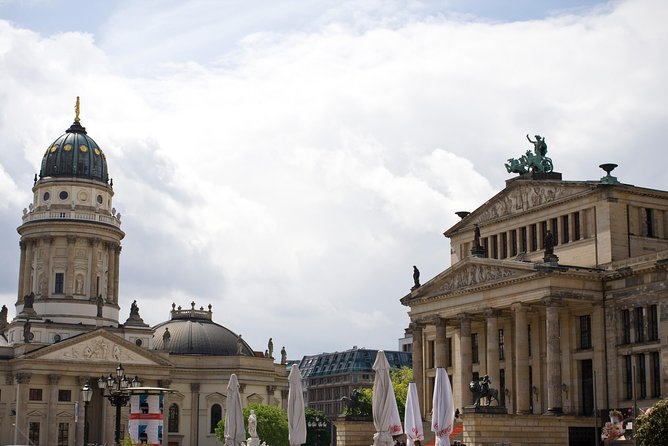
Architectural trio at Gendarmenmarkt: Deutscher Dom, Französischer Dom, and Schinkel’s Konzerthaus, plus Schiller nearby.
Expressionist-and-modern cultural belt around the Kulturforum and the Berliner Philharmonie.
Neighborhood architecture lessons in Kreuzberg and Friedrichshain, including Altbau streets and the East Side Gallery.
Why Berlin architecture needs context, not just photos
Berlin architecture can feel like a collage. That’s the point, but it can also confuse you if you’re just taking pictures and moving on. This tour is designed to connect the dots: what happened after World War II, how division shaped construction, and why reunification pulled the city in new architectural directions.
You’ll also get a way to read details fast. For example, when you see older facades in neighborhoods like Kreuzberg and Friedrichshain, you’re not just looking at pretty buildings. You’re looking at housing patterns, restoration choices, and how everyday life survived alongside big political changes. That’s why a guide helps: the buildings make more sense when someone points out what to notice.
You can also read our reviews of more tours and experiences in Berlin.


Hotel pickup, private pace, and the walking-or-bike choice
This is a private experience for your group only, with hotel pickup and drop-off. That alone makes the tour easier on your schedule. You’re not hunting meeting points, and you’re less likely to burn your time figuring out transit between key architecture areas.
You can also choose to do the tour on foot or by bike. If you’re someone who likes to cover ground and see more corners, the bike option can be a big win. If you prefer a slower pace with more stops for photos and discussion, walking fits better.
Also, it’s offered in English, and you’ll receive a mobile ticket. If you want specific additions or swaps, you’re expected to speak with the guide about your requests since the experience is customized.
Museum Island: Altes Museum to Neues Museum without the museum-time trap
Museum Island is one of Berlin’s most rewarding places to start because the architecture reads like a timeline. Even if you don’t spend all day in museums, you’ll get the shapes, styles, and design choices that make the skyline feel intentional.
At the Altes Museum, you’re looking at neoclassicism with grand columns and a dramatic portico. It’s the kind of architecture that wants you to stand still and look up. The Pergamon Museum brings a different energy: monumental classic facades and the scale that makes a building feel like a destination, not just a container for objects.
The Bode Museum adds a softer, more baroque-feeling skyline element with an elegant dome and curved forms. Then the Neues Museum brings a modern twist to the island’s story, since it was restored after wartime damage. That restoration angle matters here. It’s not only about what the buildings look like; it’s about what Berlin decided to repair, how it repaired it, and what that says about cultural priorities.
Practical tip: this area is photo-friendly from many angles. If your guide offers quick repositioning spots, take them. Museum Island rewards small moves.
Friedrichstrasse’s renewal story: Golden Twenties nostalgia meets New Berlin
One of the smarter parts of the tour concept is adding an urban renewal stop at Friedrichstrasse. This street is a shortcut to understanding Berlin’s identity after major disruption. You’ll see the pull between the “Golden Twenties” vibe and the architecture of a more modern Berlin.
Expect a mix of decorated buildings, offices, and coffee shops, plus major retail anchors like Galeries Lafayette. It’s a place where you can sense how Berlin markets itself, redevelops its center, and still keeps traces of earlier eras in the streetscape.
Why this stop works: it’s not just about landmark buildings. Friedrichstrasse shows how architecture supports daily movement—shopping, commuting, and public life—after political upheaval.
Gendarmenmarkt and the cultural trio: Deutscher Dom, Französischer Dom, Schinkel’s Konzerthaus
If you like architectural ensembles, Gendarmenmarkt is your payoff. This square is often described as Berlin’s most beautiful for a reason: it feels composed, symmetrical, and theatrical in a controlled way.
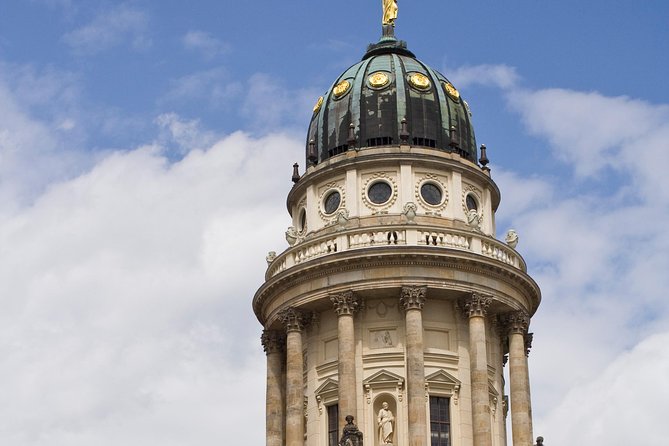
The star players are the French Cathedral (Französischer Dom) and the German Cathedral (Deutscher Dom), framing the square with their domes and elegant facades. Then Schinkel’s Konzerthaus completes the architectural trio with a classical concert-hall presence that ties the whole picture together. In the middle, you’ll also spot Friedrich Schiller’s statue, which adds a cultural “center of gravity” beyond the buildings.
This is also a great sunset-style photo area. You’ll see how light changes the stone and the domes, and you’ll get a feel for why Berlin keeps returning to this square as a symbol of refined urban design.
Practical tip: stand back for a full-square shot first, then move in for details. The ensemble is the story.

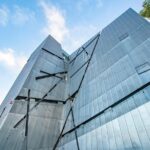
Kulturforum and the Berliner Philharmonie: modernist boldness with real acoustic pride
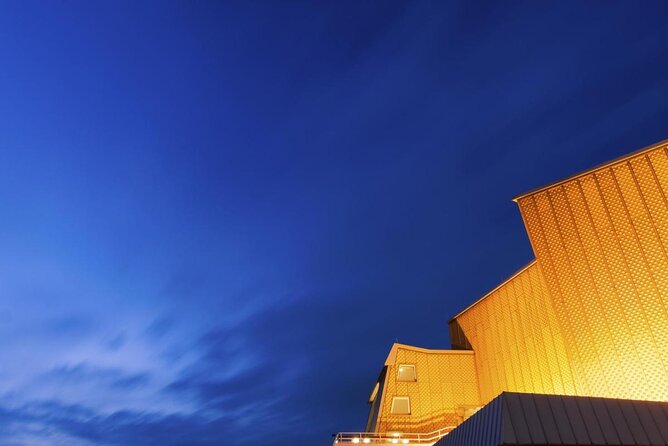
From Gendarmenmarkt, the tour pushes you toward Berlin’s cultural district around the Kulturforum, where the Berliner Philharmonie sits like a piece of modern sculpture. The building is famous for its tent-like, asymmetrical exterior and its bold modernist design language.
What makes it more than a facade is the interior design concept: a circular interior plan that’s tied to acoustics. Even if you’re not sitting in a concert, you can understand the building’s intention by how it’s shaped and how it controls space.
This stop is ideal if you’re trying to understand Berlin’s willingness to build modern forms in prominent locations. It’s also a strong photo stop because the exterior lines make you look at the building from different angles, not just straight-on.
Reichstag: the old facade, the new glass dome, and the democracy symbolism
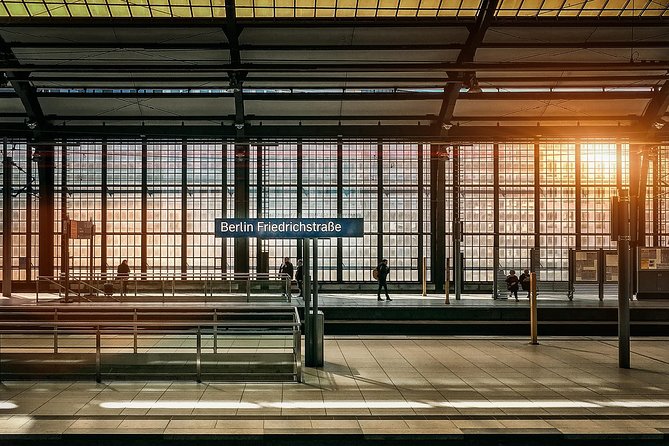
The Reichstag is where history meets design politics. You’ll see the original classical grandeur—built in the late 19th century—with a portico and intricate facade details that project power and permanence.
Then comes the key modern contrast: the glass dome designed by Norman Foster, added after renovation following reunification. That dome isn’t only about views. It symbolizes transparency in the way the building literally reframes the idea of public access to government.
From up top (if you choose to go), the viewpoints let you see Berlin’s geometry in one sweep. But even if you’re just standing at street level, the visual contrast is the point: neoclassical mass on one side, glass-and-light modern intervention on the other.
Potsdamer Platz: urban reinvention in steel, glass, and planned space
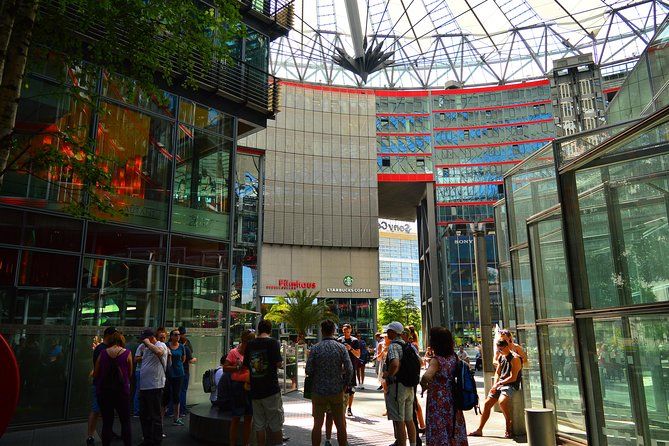
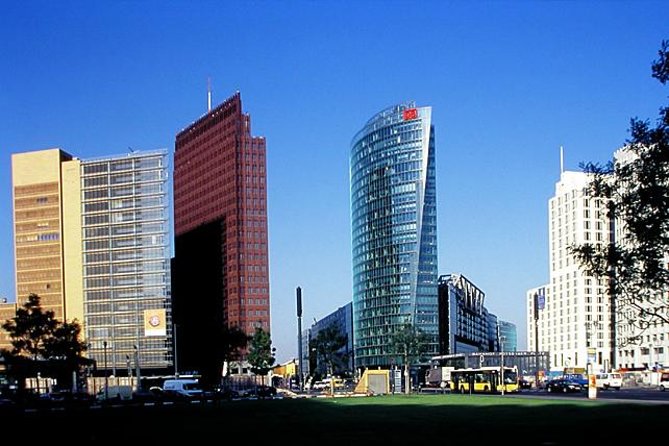
Potsdamer Platz is Berlin’s “we rebuilt it on purpose” district. It used to be a busy center before WWII. Then division and Cold War realities left it in ruins. Today, it’s a contemporary hub that mixes futuristic office towers with big public spaces.
You’ll likely notice the Sony Center first, with its iconic glass roof that feels both sleek and structural. The DB Tower is another skyline anchor—glass-clad and cleanly modern. If your guide points it out, the Panoramapunkt is a way to connect architecture to city scale, giving you a top-down sense of how Berlin reorganized itself.
Why this matters for your architecture brain: Potsdamer Platz shows architecture as a planning tool. It’s not only about aesthetic style; it’s about how Berlin decided to reorganize movement, business, and public life after major disruption.
Berliner Dom: Baroque-Renaissance revival drama in stone and dome
The Berliner Dom is one of the city’s most iconic churches, completed in 1905, and it brings a strong statement of form. The central dome is enormous and dominates the skyline, while the symmetrical facade includes detailed stonework, majestic columns, and sculptural elements.
Inside, the tone shifts toward ornament and grandeur, with soaring arches, richly decorated surfaces, and opulent marble columns. If you’re watching for how architecture communicates status and ceremony, this one does it loudly—in the best way.
Practical note: if the area is busy when you arrive, let your guide manage the pace. This stop is usually more about absorbing the exterior first and then checking key interior sightlines if timing allows.
Kreuzberg and Friedrichshain: Altbau apartments, the Oberbaum Bridge, and East Side Gallery murals
The tour doesn’t stop at the famous architecture icons. It moves into neighborhoods where you can see how older housing stock and cultural identity survived and changed.
In Kreuzberg, you’ll get a street-level feel for alternative culture roots and a mix of eras. You’ll see 19th-century Altbau apartment buildings with ornate facades and that distinct “older Berlin living” look, side by side with more industrial-style conversions and newer infill.
The Oberbaum Bridge is a standout here. Those red-brick towers and Gothic-inspired arches make it one of the most photogenic ways to understand the Spree crossing between districts. It’s a classic Berlin moment: structure, color, and city texture.
Then the route continues into Friedrichshain, which sits in the former East Berlin. This area is a blend of pre-war Altbau buildings—often lovingly restored—and socialist-era structures that add weight to the streetscape story. You’ll also connect the architecture to art through the East Side Gallery, an open-air mural stretch along a surviving segment of the Berlin Wall.
Why these neighborhood stops are worth it: they show architecture as lived experience. The buildings aren’t props; they’re home to changing communities, changes in taste, and visible repair choices.
Pariser Platz and Hackescher Höfe: Brandenburg Gate formality to Art Nouveau courtyards
Pariser Platz gives you a perfect contrast to the neighborhood stops. This square is anchored by the Brandenburg Gate, a neoclassical triumphal arch associated with unity and peace. The surrounding buildings add variety without losing that formal, civic feel.
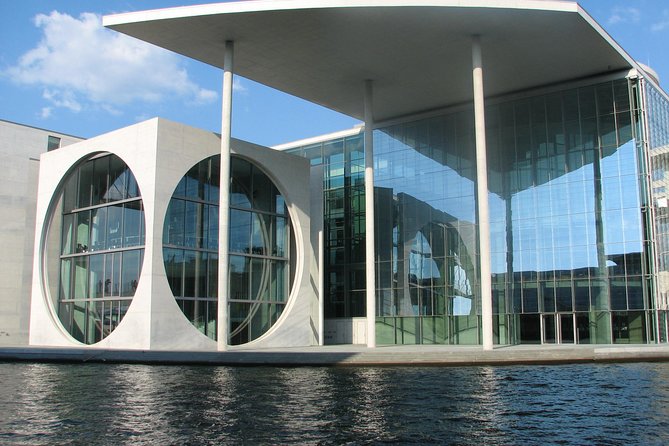
You may also spot major landmarks like Hotel Adlon and embassies nearby, including the French Embassy. The American Embassy is part of the picture too. Then comes a modern jolt: the DZ Bank building by Frank Gehry, finished in 1999, with a fluid glass-and-steel facade that looks sculptural rather than rectangular. The Academy of Arts also contributes to the mix, reinforcing why this square works as an architectural sampler.
Next comes Hackescher Höfe, famous for its early 20th-century Art Nouveau design. It’s built around eight interconnected courtyards, designed in 1906 by August Endell. Here, the details are the point: ceramic tiles, ironwork, and facades that look decorative but are tightly tied to how the complex functions.
Practical tip: take a minute to walk through multiple courtyards. Each one has its own vibe, and the architecture changes as you move.
Price and value: when $191.87 makes sense
At $191.87 per person for about four hours, this is not a budget walking tour. So you should ask what you’re buying.
You’re paying for a private guide, plus hotel pickup and drop-off. You’re also getting architecture coverage that spans landmark civic buildings, cultural institutions, and actual residential districts. That mix is harder to assemble on your own without either missing context or spending extra time getting from place to place.
Where it really gets value is in customization. Guides here can adjust around your interests, and several guides have been noted for strong communication and topic focus. Names that show up in past experiences include Ariel, Sara (described as an architect), Thomas, Daniel, Heiko, and Tarek Ibrahim. If you like the idea of having someone steer the discussion toward what you find meaningful—design details, political context, or both—that’s where the price starts to feel fair.
Who should book this tour (and who should skip it)
This tour is a great match if you want an organized architecture overview that still feels human. It’s also ideal if you like learning in motion, not sitting in a classroom. Families and groups can work well here because it’s flexible, and it mixes major landmarks with neighborhood texture.
You might not love it as much if you’re expecting a slow, museum-heavy day. The plan is built around exterior viewing, quick stops, and guided interpretation across several zones. It’s more “architecture orientation with context” than “every building inside.”
Should you book this Berlin Architecture Tour?
Book it if you’re in Berlin for a short time and you want your first architecture day to make sense fast. The route balances big symbols like the Reichstag and Brandenburg Gate with smaller but meaningful lessons in neighborhoods like Kreuzberg and Friedrichshain.
Skip or adjust it if you know you need long interior stays, since the tour is designed for a moving, 4-hour window. If you do book, send your guide your must-see list before you meet, especially if you care about Friedrichstrasse, the Kulturforum area, or the neighborhood stops. That simple message helps the whole experience fit your interests.
FAQ
How long is the Private walking Tour: Berlin Architecture Tour?
The tour lasts about 4 hours.
What is the price per person?
The price is listed as $191.87 per person.
Is the tour private?
Yes. It’s a private tour/activity, and only your group participates.
Does the tour include hotel pickup and drop-off?
Yes. Hotel pickup and drop-off are included.
Is the tour only walking?
No. You can choose to do the tour on foot or by bike.
Is food included?
No. Food and drinks are not included.
What language is the tour offered in?
The tour is offered in English.
What are the ticket details like?
A mobile ticket is featured, and confirmations are typically received at booking time unless booked within 3 days of travel.