REVIEW · CHICAGO
Marvels & Feats: An Engineer’s Tour of Chicago Architecture
Book on Viator →Operated by Inside Chicago Walking Tours · Bookable on Viator
Skyscraper facts click fast with an engineer on your side.
This is an architecture tour built around how buildings stand up and why Chicago’s designs feel different from anywhere else. You’ll cover more than 150 years of engineering ideas while seeing key structures in the Loop, plus a finish along the Chicago River for big photo angles.
Two things I really like: the explanations stay clear without getting dumbed down, and you get interior access for a few stops, which changes how you understand the structures. One thing to consider: it’s still a walking tour with a moderate fitness level, so wear good shoes and expect some city walking between stops.
In This Review
- Key Highlights You’ll Notice
- Why Chicago’s Architecture Feels Like Engineering, Not Just Aesthetic
- Price and What $35 Buys You in Real Value
- Getting There and Ending with a View: Loop to Riverpoint Park
- The Guide’s Engineering Lens: How Explanations Stay Clear
- Stop 1: Downtown / The Loop and the Power of Seeing Structure Up Close
- Interiors Matter More Than You Think
- Chicago Riverwalk Engineering: Newer Feats with Better Views
- The “Haunted” Building Story and Why Foundations Get Blamed
- Learning to See Gravity and Wind in the Real World
- Who This Tour Fits Best (and Who Might Prefer Something Else)
- Practical Tips So Your 2 Hours Feel Easy
- Should You Book This Engineering-Focused Architecture Tour?
- FAQ
- How long is the tour?
- What is the price per person?
- Where do I meet the guide and where does the tour end?
- What time does the tour start?
- Do I need admission tickets for the stops?
- Is this tour offered in bad weather?
- Is there a hotel pickup or drop-off?
- What is the cancellation policy?
Key Highlights You’ll Notice
- Engineering-first storytelling that connects design choices to real forces like gravity and wind
- A real engineer guide who makes big concepts graspable and not textbook-heavy
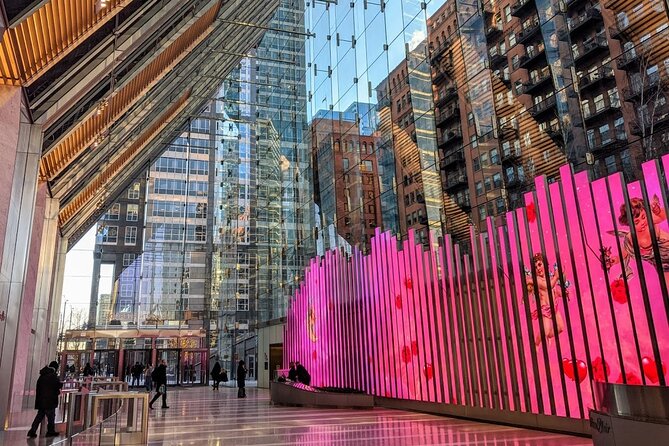
- Building interior moments that turn exterior facts into something you can actually picture
- The Loop + Riverwalk pairing for both structural history and modern skyline views
- Small group size (max 20) for better pacing and Q&A
- All-weather operation, so plan to dress for Chicago, not for comfort
Why Chicago’s Architecture Feels Like Engineering, Not Just Aesthetic
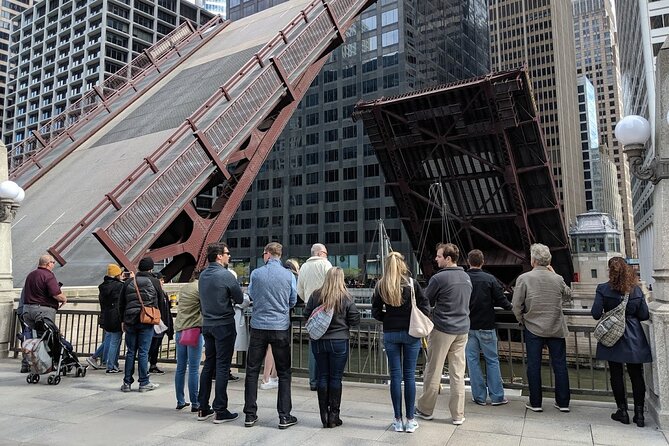
Chicago is where the skyscraper really took off, and this tour treats that like an engineering story, not an art lecture. You’ll hear how breakthroughs in structure and materials let tall buildings work in a place known for wind and unpredictable stresses. It’s the kind of framing that helps you look at a facade and start asking, what’s holding it up, and how does it behave over time?
I also like that the tour covers a long timeline. You’re not just chasing one famous building. You’re watching engineering evolve over decades, so the city starts to feel like a living lab rather than a museum. And because the guide is an engineer, the tone stays grounded in practical cause-and-effect.
You can also read our reviews of more tours and experiences in Chicago.



Price and What $35 Buys You in Real Value
At $35 per person for about 2 hours, this isn’t just a casual walk. You’re paying for an engineering-themed route, led by a local guide, with multiple architectural stops where you can actually step inside a few buildings. That matters because interiors often show structure cues you’d never catch from the street.
It also helps that admissions for the two main stops are listed as free in the tour flow. So you’re not budgeting extra ticket fees on top of the base price. For a focused topic tour with small group limits and interior time, this feels like solid value.
One more value point: it’s marketed as Chicago’s engineering-focused option. If you’re the type who wants to know how things work, you’ll probably feel like you’re spending money on a specific lens, not just paying for someone to point things out.
Getting There and Ending with a View: Loop to Riverpoint Park
This tour starts at 430 S Michigan Ave and finishes at Riverpoint Park with a sweeping view of the Chicago River. It’s an easy route to connect to other plans afterward, especially if you’re already exploring the Downtown / The Loop area.
The start time is 2:30 pm, and the whole experience runs about 2 hours. You’ll be walking through the city center, so plan to move at city pace. It’s also near public transportation, which keeps it flexible if you don’t want to deal with parking.
A small but important practical note: you’ll use a mobile ticket, so have your phone charged enough for the day. If your battery is usually shaky, bring a small portable charger. City photos and maps eat power.
The Guide’s Engineering Lens: How Explanations Stay Clear
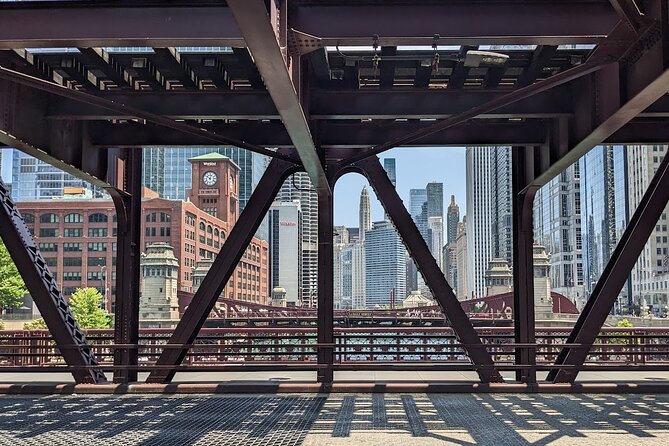
The standout in the feedback is the guide’s ability to make early architecture understandable. In one review, Hillary is singled out for helping people see Chicago’s early architecture in a new way and pointing out hidden spots along the route. That’s exactly what you want from an engineering tour: not just facts, but clarity.
The tour’s pitch is that an engineer can teach concepts in an accessible way without watering them down. In practice, that usually means fewer vague “it’s impressive” statements and more: here’s what force is happening, here’s how the building dealt with it, and here’s what to look for as you move.
And since the group is capped at 20, questions tend to land well. You’re not shouting across a crowd just to ask what a term means. The pace is built for learning while walking.
Stop 1: Downtown / The Loop and the Power of Seeing Structure Up Close
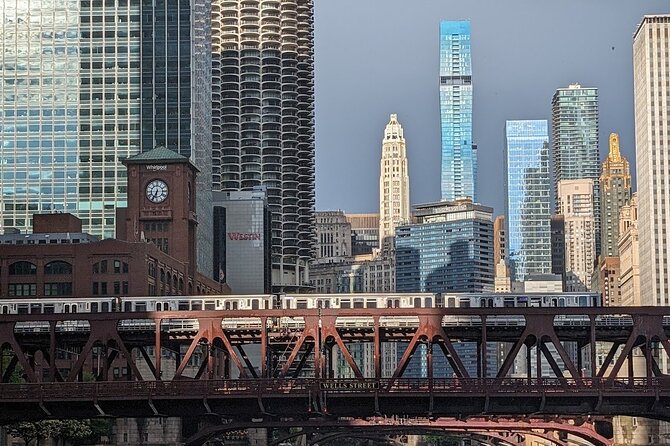
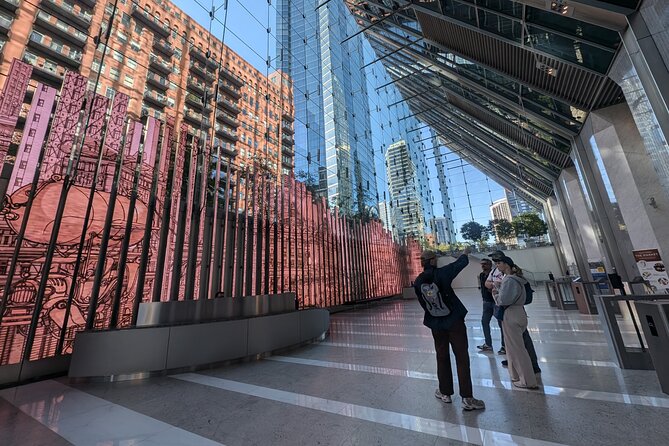
Most of the tour happens in The Loop, Chicago’s downtown district. This is where you’ll spend the majority of your time, starting with an architectural walkthrough that includes popping inside a couple buildings for structural design lessons.
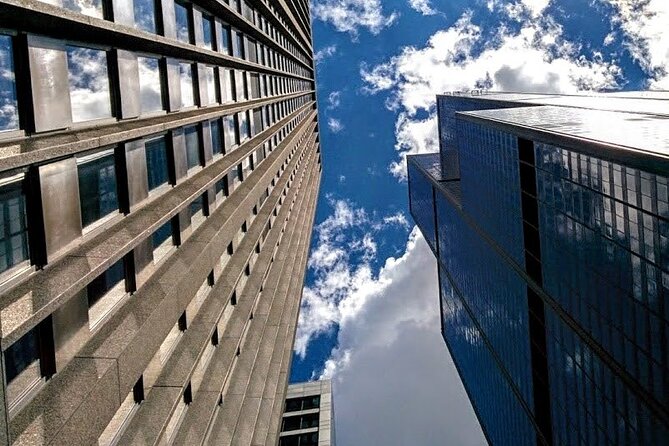
Why The Loop works so well for an engineering theme: the city’s most concentrated architectural history is here. Tall buildings, different eras of construction, and lots of public-facing design cues all sit in a compact area. That means you can compare “what changed” without spending an hour commuting between eras.
What I’d watch for: any moment the guide points out structural choices you can read visually, like how shapes relate to stability or how the building’s parts connect. Even if you’re not an engineer, you’ll start noticing patterns. And because you get interior time, you can connect the street view to what’s happening inside.
Possible drawback for Stop 1: it’s the busiest, most central part of downtown. If you’re sensitive to crowds or want long quiet pauses, you’ll still get stops to look, but you’ll be doing it in a dense area.





Interiors Matter More Than You Think
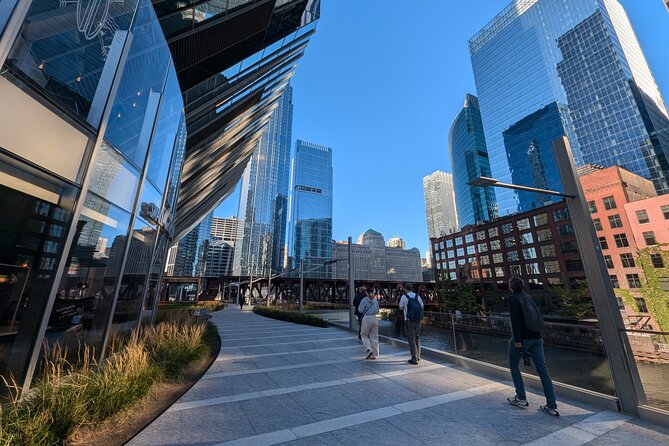
This tour includes interior visits to a few buildings, not just exterior viewing. That’s a big deal if you’re trying to understand engineering. From the sidewalk, you can see what a building looks like. Indoors, you often get clues about how it’s organized, how forces translate into real spaces, and why certain shapes and details exist.
You’ll also feel the difference in scale. Tall buildings don’t just loom outside. Inside, you get a better sense of proportions and how the building’s logic influences everything from circulation to structural spacing. Even when the facts are complex, the interior context makes them feel physical, not abstract.
If you’ve ever toured a building and felt like you learned only surface-level “what,” interior access is the fix. It turns your attention from decoration to engineering intent.
Chicago Riverwalk Engineering: Newer Feats with Better Views
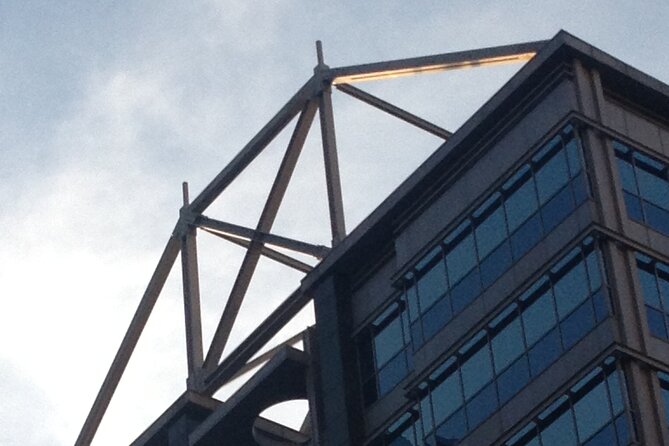
After the Loop, you shift to the Chicago Riverwalk for more recent engineering feats and a change of scenery. This portion is shorter, about 45 minutes, but the payoff is strong because you’re paired with views while learning.
The Riverwalk is useful for an engineering tour in a practical way. Water and open sightlines make wind behavior feel more real. You can look at the skyline and think about how tall structures respond to gusts and airflow. Then you get to carry that new way of looking into the next buildings you see in Chicago on your own.
This stop also gives you an emotional break. Instead of only tight streets and dense facades, you get something more spacious. You’ll end with a broad view near the finish point, which is a nice wrap for a tour focused on how buildings behave.
The “Haunted” Building Story and Why Foundations Get Blamed
One of the tour’s most memorable hooks is the story about a building that’s known as haunted. The explanation isn’t supernatural. The guide frames the reputation around settling unevenly on a floating foundation.
That kind of storytelling works because it teaches you how structural behavior can create human-scale effects. When a building settles unevenly, it can lead to distortions people notice. Those distortions can become the source of rumors. It’s a reminder that engineering isn’t just about paperwork and steel. It shows up in how spaces feel and how people interpret irregularities.
Even better, this theme gives you a mental checklist for future Chicago visits. You’ll likely start thinking: if you see unusual movement or odd alignment, what’s the likely cause? And what does the building’s foundation design imply?
Learning to See Gravity and Wind in the Real World
The tour promises you’ll learn how Chicago buildings handle gravity and wind. That’s the kind of basic physics framing that makes architecture feel more logical. Instead of a building being a static object, you start imagining forces moving through it: loads downward, and lateral forces pushing and pulling as wind changes.
You don’t need to memorize equations. You need a picture in your head of how a tall structure stays stable. A good engineering guide gives you that picture with examples you can recognize in Chicago’s skyline.
This is also where the “over 150 years of engineering evolution” claim becomes practical. Early breakthroughs make sense when you connect them to problems that designers needed to solve. As techniques improved, what you see in later buildings becomes less about luck and more about refined decisions.
Who This Tour Fits Best (and Who Might Prefer Something Else)
This works best if you like structured explanations and want to understand the why behind the buildings. If you’re the type who reads building plaques and gets curious about what makes tall structures possible, you’ll probably feel at home.
It’s also a good choice if you want a tour that’s not only about famous names. The route is designed around engineering themes and specific building stories, which can feel more satisfying than a general overview.
You might be less thrilled if you want a purely artistic, photo-focused stroll with minimal talking. This isn’t that kind of tour. You’re there to learn how the city’s engineering shaped what you see, including some physics and mechanics talk.
And one more fit question: how do you do with walking? The tour calls for moderate physical fitness. With only about 2 hours and a small group size, it’s manageable, but it’s still a walking route.
Practical Tips So Your 2 Hours Feel Easy
Plan for walking in downtown Chicago, and assume you’ll be outside more than you’d like if weather turns. The tour runs in all weather conditions, so dress for wind and changing temps. Even in pleasant months, Chicago can surprise you.
Bring:
- Comfortable shoes with grip
- A layer you can adjust quickly
- Your phone for the mobile ticket
- A small water bottle if you’re easily thirsty
Since the tour is capped at 20 travelers, it usually keeps moving without endless crowd delays. Still, if you prefer a slow pace, start with that mindset. A guided engineering tour moves to a learning rhythm, not a sightseeing rhythm.
Also note that there’s no hotel pickup or drop-off. You’ll want to handle your own arrival at 430 S Michigan Ave and then end at Riverpoint Park.
Should You Book This Engineering-Focused Architecture Tour?
I’d book it if you want Chicago architecture with a clear brain behind it. The strongest reasons are the teaching style and the way the guide helps you see early architecture and structural stories in a more meaningful way. The fact that a guide like Hillary has impressed people with the early-architecture perspective and hidden stops is a good sign you won’t get a bland, generic route.
I’d also book it if you like value built into the schedule: a small group, about 2 hours, multiple building stops with interior time, and a low friction start at a central address. For $35, it’s not a budget tour, but it’s not priced like a premium museum day either. It’s priced like a focused guided experience.
The only reason to skip is if you’d rather spend your time on a softer, more scenic architecture walk. This route is about engineering concepts you can understand, including foundation settling stories and how buildings handle gravity and wind.
If you’re curious about how the city works, not just how it looks, this is a smart, satisfying way to spend a Chicago afternoon.
FAQ
How long is the tour?
It runs for approximately 2 hours.
What is the price per person?
The price is $35.00 per person.
Where do I meet the guide and where does the tour end?
You start at 430 S Michigan Ave, Chicago, IL 60605. You end at Riverpoint Park, 150 N Riverside Plaza, Chicago, IL 60606.
What time does the tour start?
The tour starts at 2:30 pm.
Do I need admission tickets for the stops?
Admission tickets are listed as free for both stops in the tour flow.
Is this tour offered in bad weather?
Yes, it operates in all weather conditions, so dress appropriately.
Is there a hotel pickup or drop-off?
No, hotel pickup and drop-off are not included.
What is the cancellation policy?
Free cancellation is available. You can cancel up to 24 hours in advance for a full refund. If you cancel less than 24 hours before the experience’s start time, you won’t be refunded.