REVIEW · BERLIN
Private Taxi Tour City East & West History and Architecture 3-4h
Book on Viator →Operated by Gunter Bauer GAT-Productions · Bookable on Viator
Berlin changes fast in a taxi. In just 3–4 hours, you’ll ride a guided loop through East–West history and architecture, from the Kaiser Wilhelm Memorial Church to government landmarks near the Reichstag, with short stops timed for real sightseeing instead of hours of transit. I especially like the private, door-to-door comfort (air-conditioned when needed, heated in cooler months) and the way the guide weaves local stories into what you’re seeing, led by Gunter Bauer (GAT-Productions). One possible drawback: the route is packed, so some stops are quick look-and-photos rather than slow, in-depth museum time.
You also get pickup included within the S-Bahn ring, plus parking fees and both the taxi ride and city tour VAT baked into the price, so you’re not doing math while you’re trying to enjoy Berlin. It’s a great format when weather is messy, when your time is tight, or when you want a smarter first pass at the city before you build your own plan.
In This Review
- Key Reasons This Taxi Tour Works So Well
- Private Berlin Taxi: The Fast Way to See East and West in 3–4 Hours
- Price and Value: What You’re Paying For (Beyond the Ride)
- Meet Gunter Bauer: The Driver-Guide Who Turns Sights into Stories
- West Berlin Sequence: Kaiser Wilhelm, the Zoo, and Why Ku’damm Feels Like a Theme Park
- One trade-off on the West side
- KaDeWe and the Shopping Mile: Luxury, Gourmets, and the Reality Check
- Government Berlin: Memorial Church, European Center, Parliament Core, and the Spree Mood
- A nice bonus: “parking-lot Berlin” turns into canal-orientation thinking
- East-City Essentials: Unter den Linden, Museums, Humboldt Forum, and the Gendarmenmarkt Glow
- Reichstag Area and Monument Stops: Schloss Bellevue, Victory Column, and the “Pregnant Oyster”
- One consideration in this zone
- Topography of Terror and Checkpoint Charlie: Two Ways Berlin Forces You to Remember
- Why this matters for your travel day
- East Side Beyond the Classics: Hackesche Höfe, Nikolaiviertel, and the City’s Rebuilt Face
- A Quick Hits Portion You’ll Appreciate More Than You Think
- Logistics That Matter: Pickup Zone, Timing, and Comfort Tactics
- Should You Book This Private City East & West History Tour?
- FAQ
- How long is the Private Taxi Tour City East & West History and Architecture?
- What does the tour cost?
- Is pickup included?
- What language is the tour offered in?
- Is this a private tour?
- What’s included in the price?
- Are any meals included?
- Is there WiFi in the taxi?
- Do you offer child seats or booster seats?
- What’s the cancellation policy for a full refund?
Key Reasons This Taxi Tour Works So Well
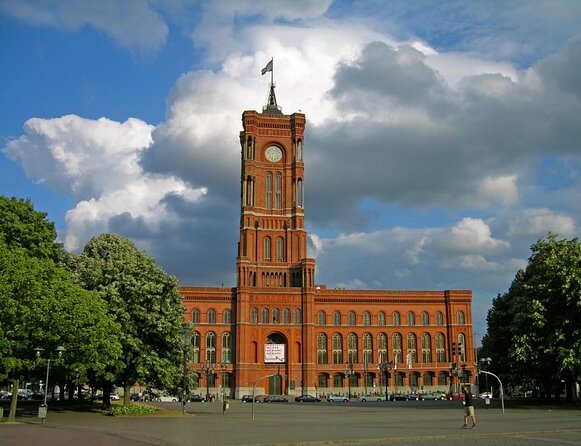
- Private car pace: You control the rhythm with frequent photo pauses, not long public-transport hops.
- East and West in one sweep: You connect landmarks that normally get separated on typical city itineraries.
- English throughout: Your guide keeps the story clear, street-level, and easy to follow.
- Guide who looks after details: Gunter is known for being responsive and even helping with extra practical stuff when schedules change.
- Stops are designed for variety: Churches, shopping boulevards, war-era sites, palaces, and major squares all get their moment.
- Comfort plus access: WiFi on board and pickup make it smoother than “walk, wait, repeat.”
Private Berlin Taxi: The Fast Way to See East and West in 3–4 Hours
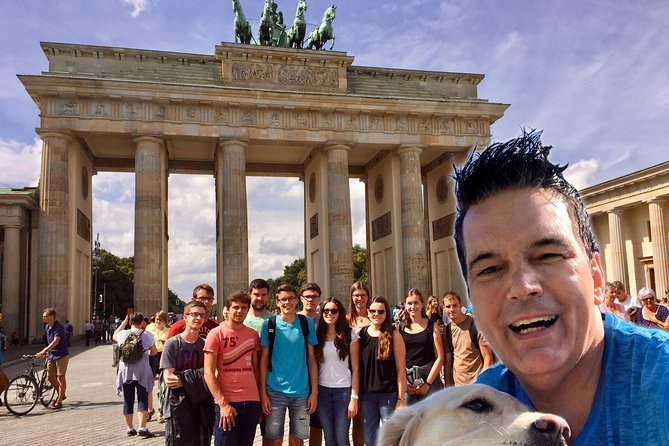
This is the “smart first day” style of sightseeing. Instead of bouncing across Berlin on trains and buses, you’re in a taxi with a guide who uses the ride itself as part of the storytelling. The result is that you get a sense of how Berlin’s neighborhoods stitch together, from West-era boulevards and grand theaters to the post-war government core on the Spree.
The key idea is pacing. In a 3–4 hour window, you’re not meant to become a museum expert. You’re meant to get your bearings fast, see the big visual anchors up close, and understand what makes each place politically and architecturally important. If you’re traveling with kids, older relatives, or anyone who hates standing around in lines, this format usually feels kinder than a stop-by-stop walking tour.
You can also read our reviews of more tours and experiences in Berlin.


Price and Value: What You’re Paying For (Beyond the Ride)
At $150.18 per person for 3–4 hours, this isn’t a budget deal in the usual sense. But it does include a lot of what normally adds up in Berlin:
- Private transportation with an air-conditioned vehicle
- Pick-up from your desired location within the S-Bahn ring
- Parking fees
- WiFi on board
- Guide time in English
- Taxi tariff ride time and the city tour time (both include VAT)
So you’re paying for time, access, and reduced hassle. Berlin can be efficient, but it can also punish you for poor routing. A private taxi loop helps you avoid that. And if you’re a couple, small family, or small group, the “per person” value tends to improve because you’re splitting the car cost.
Meet Gunter Bauer: The Driver-Guide Who Turns Sights into Stories

The biggest consistency in the experience is the human side. Gunter Bauer (GAT-Productions) is the name you’ll feel behind the wheel. He’s described as friendly and sociable, and the role matters: Berlin landmarks are easy to photograph, but harder to interpret. Gunter’s job is to translate architecture and streets into real meaning.
You’ll also find practical care built into how the day runs. People note things like rescheduling when plans shift, taking photos during stops and sharing them afterward, and adjusting the pace to keep everyone comfortable. If you’re older travelers or you’re traveling as a mixed-age group, that kind of flexibility can be the difference between “we saw things” and “we actually enjoyed it.”
West Berlin Sequence: Kaiser Wilhelm, the Zoo, and Why Ku’damm Feels Like a Theme Park
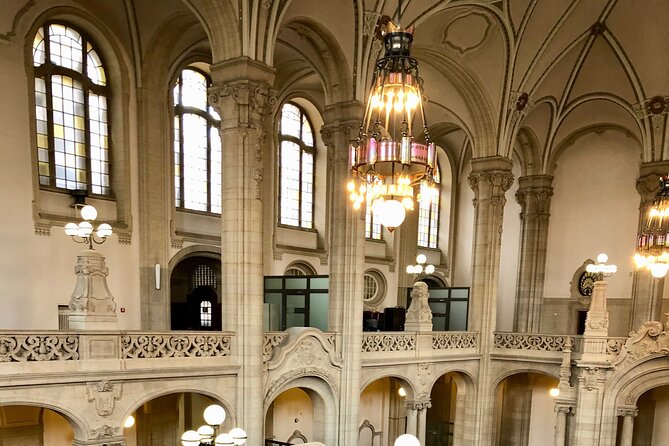
The West side starts with the Kaiser Wilhelm Memorial Church area. The first thing you notice isn’t a museum label—it’s a whole architectural argument. The church you see relates to Kaiser Wilhelm I and the Hohenzollern family, and part of the area was intentionally preserved rather than fully erased after the damage of war. Later reconstruction took on a modern exterior style based on designs by Egon Eiermann, which locals reportedly nicknamed in a way that captures both affection and a bit of snark. The effect is memorable: you see how Berlin carries the past without pretending it never broke.
Then comes the Berlin Zoo, not just as a classic attraction but as a living timeline. It dates back to King Friedrich Wilhelm IV, and the guide-style story is useful here: the zoo grew out of moving animals from earlier royal holdings, then building enclosures in styles connected to where the animals come from. That’s why parts of the complex still feel like little “country rooms,” even with the scars of war. From the outside, the elephant gate and the lion gate near the Zoo station are strong visual anchors.
Next, you’ll pass the Theater des Westens, built in the “new west” mindset of the early 1900s. It’s a reminder that West Berlin’s growth wasn’t just rebuilding after war—it was also about prestige, leisure, and pushing people and culture outward from a crowded center.
Finally, you hit the Ku’damm corridor. The tour uses the street names like landmarks in their own right: Kantstraße’s connection to a Chinese quarter vibe, then the famous Ku’damm (short for Kurfürstendamm). This is a boulevard built on spectacle. In the past it had villas and entertainment; today it’s shopping and flagship retail. It can feel quieter at night, which tells you something about how Berlin changed economically and socially over time.
One trade-off on the West side
West Berlin highlights can be very visually loud. If you want heavy, slow contemplation, plan your own return visits later. In the taxi, you’ll see a lot of exteriors and quick perspectives, not hours inside.

KaDeWe and the Shopping Mile: Luxury, Gourmets, and the Reality Check
A standout stop is Kaufhaus des Westens, KaDeWe. This is one of those places you don’t have to love shopping to appreciate. Even in a brief 15-minute window, the scale is part of the point—KaDeWe is famous for its massive size on continental Europe’s shopping map, and the “gourmet floor” is described as a playground for food lovers: champagne, oysters, and a dizzying selection of chocolates, breads, and cheeses.
What I like about including KaDeWe here is that it gives you a social snapshot. This isn’t only about luxury goods. It’s a sign of West Berlin’s consumer culture and the city’s ability to rebuild a modern lifestyle around grand buildings.
If your group prefers culture over consumerism, you can treat KaDeWe as a short architecture and people-watching stop rather than a buying spree. The ticket mention in the tour format is essentially a low-stress “go in, look around, come out” window.
Government Berlin: Memorial Church, European Center, Parliament Core, and the Spree Mood
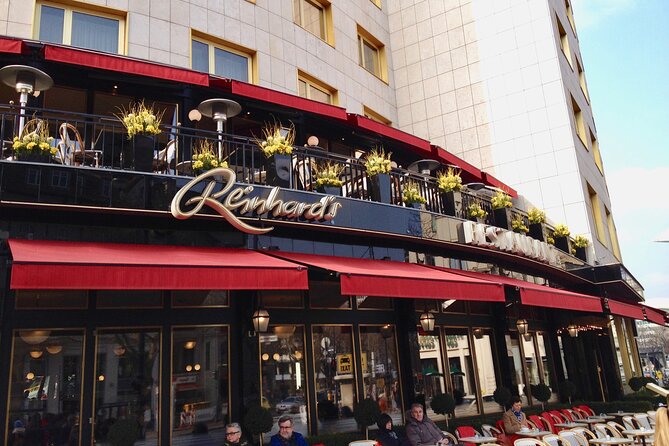
Later you’ll loop back around the Memorial Church area from another side, where the new church building shifts the mood. A big visual feature here is the interior lighting effect created by thousands of glass stones made in France. Even though the street noise is intense outside, the structure’s double wall design with an air gap reduces sound inside. That detail matters because it shows how design can shape what your brain experiences: calm inside, chaos out.
Right behind that area, you’ll reach the European Center shopping complex, a much older shopping center for Berlin (50 years old). The included backstory about an ice rink in the middle that got sacrificed for space optimization adds a very Berlin flavor: even leisure has to make room for commerce.
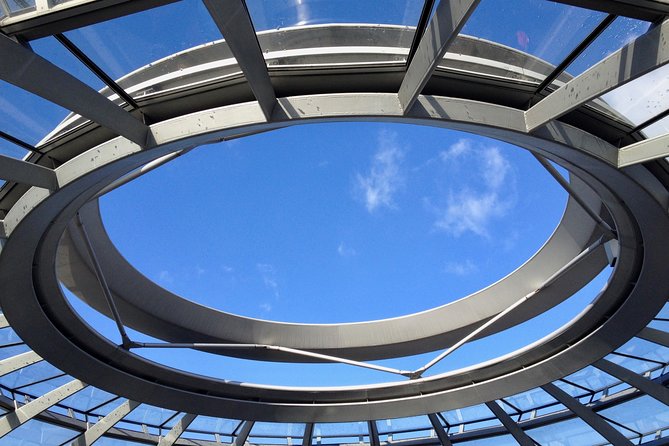
Then the tour turns into serious Berlin. You move through the government zone and see how architecture signals power and function. The Bundestag area and the Reichstag dome show you both symbolism and practical workflow. You’ll get the idea that much of the real “work” happens in committee spaces, while the public-facing speeches happen elsewhere. It’s a useful correction if you’re expecting one grand debate chamber as the whole story.
You’ll also pass the large government office building on the scale of a small city. The tour’s focus here is the physical presence: height, floors, and hundreds of rooms. It’s not designed to charm you. It’s built to operate.
A nice bonus: “parking-lot Berlin” turns into canal-orientation thinking
As you travel, the guide ties Berlin’s layout to water. Berlin sits low, with groundwater close to the surface, and over centuries the city has been shaped by drainage, dams, and canals. The Landwehr Canal becomes a logical orientation tool. If you’re the type who likes understanding the city’s engineering backbone, you’ll appreciate how the guide frames Berlin as a water-built metropolis.
East-City Essentials: Unter den Linden, Museums, Humboldt Forum, and the Gendarmenmarkt Glow
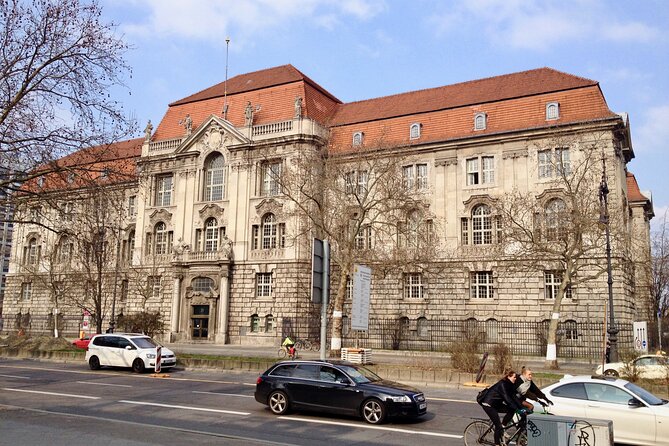
This is where the tour’s “architecture and ideology” story clicks.
You’ll pass Unter den Linden, once designed as a tranquil bridle path linking the Berlin Palace area toward the hunting grounds (which eventually became the zoo). Today it’s a grand axis with important state institutions and a few surviving café cues. The linden trees and the straightness of the street make it easy to feel why rulers cared about views and procession lines.
Then you land at the Gendarmenmarkt—often described as Berlin’s most beautiful square for good reason. The two “cathedrals” you see aren’t bishop seats. They’re meetinghouses with cathedral-like towers, embellished under Frederick II’s direction. The tour also highlights that one side is tied to French Reformed worship with a small Huguenot museum behind it—refugees shaping the city with just enough legal permission and lots of determination.
Next is the Humboldt Forum. This stop is about what got erased and what got rebuilt. You’ll hear how the palace stood for centuries, how war damage left it burned out but standing, and how political decisions later shaped what happened to it. The modern concrete exterior houses reconstructed elements like the Schlüter inner courtyard, plus collections connected to non-European art and Humboldt University. Even if you disagree with the reconstruction, you can’t miss the point: Berlin used to be a place that argued loudly about icons, and it still does.
If you want a museum later, this stop helps you choose where to go first. You’ll have enough context to decide whether you want the art side, the civic side, or the both-in-one-day route.
Reichstag Area and Monument Stops: Schloss Bellevue, Victory Column, and the “Pregnant Oyster”
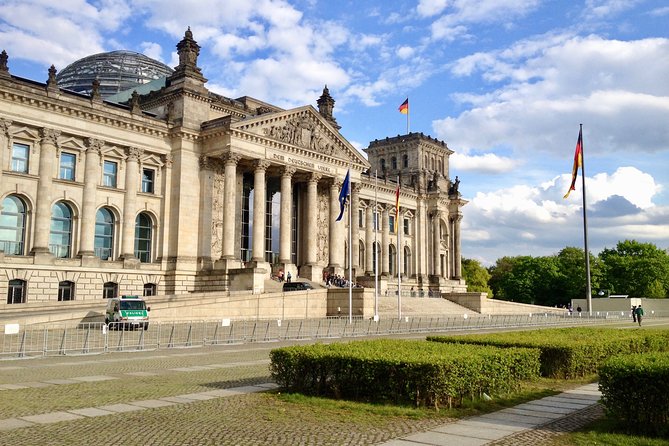
A key section of the experience covers the “monument spine” around the Spree.
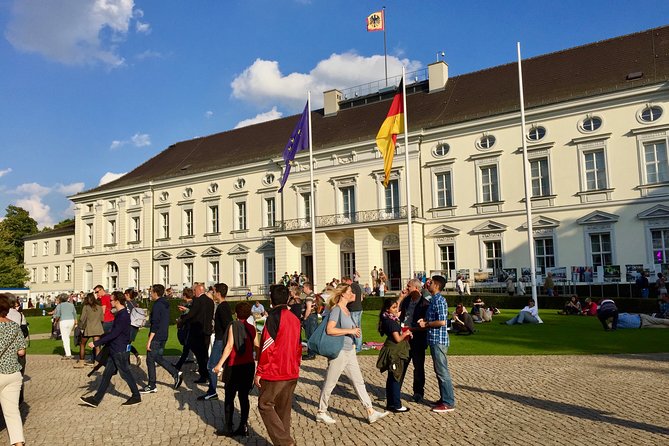
You may see Schloss Bellevue, the seat of the Federal President, built initially for August Ferdinand, Friedrich II’s youngest brother. The story here isn’t just about the building; it’s about what happened to authority after division. The view that once mattered politically and visually was damaged by war, and the role of the castle shifted in a way that sparked protests from East Berlin about neutrality and Western alignment.
You’ll also see the Victory Column. The guide’s explanation is useful: it originally had three drums with captured cannons from the Danish, Austrian, and French wars tied to German unification. Even after wars changed Europe, the column’s meaning kept being argued over—by the French especially—then later became part of Nazi-era plans and disruptions.
Finally, there’s the “pregnant oyster,” Berlin’s nickname for the former congress hall, known as the House of World Cultures today. It’s an architectural flex with an unusual story: the curved roof led to a nickname, then structural collapse in 1980, then rebuilding to the original concept. In the present day, you connect it to non-European artists, concerts on the roof terrace in summer, and high-profile cultural events.
One consideration in this zone
This is not the area to rush if you’re the kind of person who wants to sit and think. In a taxi format you’ll typically take in exteriors and viewpoints. If you want long interior time, plan a separate return day.
Topography of Terror and Checkpoint Charlie: Two Ways Berlin Forces You to Remember
This part of the tour gives you a pair of “dark history” experiences in different formats.
Topography of Terror focuses on layers: Imperial/Prussian-era remnants, a big Nazi-era building context, later excavations that uncovered old torture cells and an open-air exhibition, and the post-reunification documentation center. It’s a short tour inside a larger site, but the framing is what matters—multiple eras in one place, and the continuity of how buildings get repurposed by power.
Then comes Checkpoint Charlie. Here’s the honest twist: the photo stop itself is a replica of an older checkpoint layout. That doesn’t make it useless. It shows how Berlin’s global visibility often centers on iconic images, and the guide also points you to what the real story is about. You’ll hear about the October 1961 tank confrontation, highlighted as one of the hottest Cold War moments linked to this location.
Why this matters for your travel day
If you’ve only seen Berlin as a list of monuments, this section reconnects the pieces. It helps you understand that the Wall and Cold War weren’t just political backdrops. They shaped daily fear, movement, and the geography of life.
East Side Beyond the Classics: Hackesche Höfe, Nikolaiviertel, and the City’s Rebuilt Face
Not all “East Berlin” sightseeing here is about division-era tragedy. You also get places that show how Berlin rebuilt with style, even when the reconstruction was debated.
Hackesche Höfe is a courtyard ensemble with Art Nouveau charm that was damaged and partly used as warehouse space during the GDR years. After the Wall fell, it was restored and became an atmospheric hub. The tour framing explains the original concept: not just pretty courtyards, but a mix of workshops, printing houses, and work-life living spaces. Today those workshops are replaced by shops, but the overall feeling remains. It’s a good place to stop and smell the city, even if you only have 10 minutes.
Nikolaiviertel follows a different path: a reconstructed “old Berlin” look created in the 1980s during the GDR period. It’s designed like a staged zoom into older baroque-era vibes, even though the original structures were limited. In a short stop you can still see the Nikolaikirche area, the museum concept around it, and near-by older homes like Knoblauchhaus in Biedermeier style (and the tour notes these are free to enter).
The combination works because it shows two truths at once: Berlin used to be authentic in places that survived, and Berlin rebuilt authenticity where it wanted the city to look a certain way.
A Quick Hits Portion You’ll Appreciate More Than You Think
Along the ride, the tour also threads through practical orientation points that help you understand Berlin as a system:
- Bahnhof Zoo and the scale of rail movement, with the idea that Berlin’s transit story is partly about what got downgraded or redirected after new central routing priorities changed.
- The embassy belt logic and the way embassies cluster near key transport corridors.
- The Landwehr Canal view logic for orientation by water.
- A photo-minded stop at Urania, with its connection to public science and a French-influenced arch element.
- Time-flexible quick looks that let you trade between “I want to see it up close” and “I just want the story.”
If you’re the type who likes understanding how Berlin functions, these connective details are the payoff.
Logistics That Matter: Pickup Zone, Timing, and Comfort Tactics
Here’s how to make the day smoother.
- Pickup is included within the S-Bahn ring. If you’re outside it or coming from the airport area, it can cost extra in a different taxi tariff setup.
- It’s private, so only your group is in the vehicle.
- You’ll have WiFi on board, plus an air-conditioned vehicle (so it’s comfortable in warm weather too).
- It’s offered in English, which matters because Berlin history often gets dense fast.
Practical tip: bring water. A taxi tour is still time on the move, and Berlin walking happens even during short exits.
Also, for the best experience, think about what you want most: churches and architecture, government and monuments, or Cold War and darker sites. The route covers all of it, but your preference helps the guide choose where to linger within the time.
Should You Book This Private City East & West History Tour?
Book it if you want a high-impact first Berlin day that mixes architecture, power, and history without forcing you to sprint across the city. The private taxi format makes the biggest difference: you get a guided explanation, comfort, pickup, and multiple landmark zones within a realistic 3–4 hours.
Skip it (or plan a different approach) if your dream day is slow museum time or deep interior tours. This experience is built for seeing and understanding lots of exterior anchors and key landmarks quickly, not for spending half a day inside one building.
FAQ
How long is the Private Taxi Tour City East & West History and Architecture?
It runs about 3 to 4 hours.
What does the tour cost?
The price is $150.18 per person.
Is pickup included?
Yes, pickup within the S-Bahn ring is included.
What language is the tour offered in?
It’s offered in English.
Is this a private tour?
Yes. It’s private, and only your group participates.
What’s included in the price?
Private transportation, WiFi on board, an air-conditioned vehicle, parking fees, pickup within the city (within the S-Bahn ring), and both the taxi ride tariff and the city tour VAT are included.
Are any meals included?
Lunch is not included.
Is there WiFi in the taxi?
Yes, WiFi on board is included.
Do you offer child seats or booster seats?
A child seat for toddlers from six months to three years is available, and a booster seat for older children is also available. A baby seat can be brought on request.
What’s the cancellation policy for a full refund?
You can cancel up to 24 hours in advance for a full refund.