REVIEW · CHICAGO
Private Chicago Architecture Walking Tour
Book on Viator →Operated by ForeverVacation · Bookable on Viator
Chicago teaches architecture fast.
This private walking tour strings together some of the Loop’s best-known buildings, with architecture-focused storytelling that makes the skyline feel readable instead of random. You get a guide who keeps the pace tight and the details clear, plus a schedule that moves you efficiently from one architectural moment to the next.
What I like most is the mix of building types: 19th-century office towers, early “skyscraper age” design, and landmark public spaces. You’ll also get a practical built-in break with lunch, bottled water, and admission tickets for multiple indoor stops.
One thing to keep in mind: the tour doesn’t promise you’ll enter every building. If a stop has limited access (or it’s a weekend with tighter rules), your indoor time can be shorter than you’d expect.
In This Review
- Key highlights to know before you go
- Why this Chicago Loop route makes sense
- Private tour feel: your guide, your pace, your questions
- Entering the Marquette Building: speculative offices and profit dreams
- The Rookery Building: LaSalle Street’s elegant office landmark
- Palmer House Hilton lobby: hotel tech milestones in 10 minutes
- Sullivan Center (Carson Pirie Scott): Chicago School meets retail grit
- Chicago Athletic Association: ornate club building, modern hotel energy
- Chicago Cultural Center: a full city block for art and access
- Tribune Tower: Gothic drama in a surprisingly approachable stop
- Wrigley Building clock tower finish: the skyline’s punctuation mark
- Price and value: what $211 buys you in real terms
- What you should bring (and wear) for a great walking day
- Who this tour fits best
- Should you book this private Chicago architecture walking tour?
- FAQ
- How long is the Private Chicago Architecture Walking Tour?
- What does the tour cost?
- Is the tour private or shared?
- What language is the guide?
- Is lunch included?
- Are admission tickets included for the stops?
- Where does the tour start and end?
- Are bottled water and fees included?
- Do I need to tip the guide?
Key highlights to know before you go
- Private group tour means only your party on the walk, so it feels personal and paced to your questions.
- Admissions are included for several stops, so you’re not paying separately for key interior moments.
- Lunch and bottled water are included, which helps when you’re walking the full Loop route.
- English-speaking guide keeps the explanations easy to follow for most visitors.
- Clear endpoint at the Wrigley Building gives you a satisfying final photo spot near Michigan Avenue.
Why this Chicago Loop route makes sense
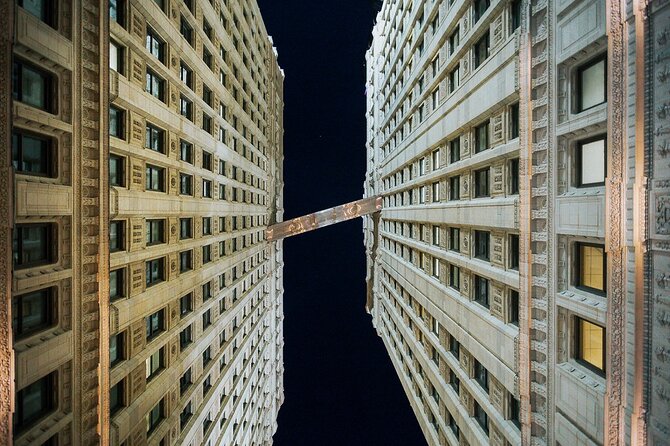
Chicago’s architecture can feel like a blur if you just roam on your own. This route is designed to connect ideas across time: speculative office buildings, then the big “Chicago School” look, then high-style civic landmarks, and finally the grand commercial icons of the early 20th century.
You start near Michigan Avenue and work your way through the densest architecture zone. The ending at the Wrigley Building is smart—by then you’ve seen enough to understand why that clock tower became the city’s shorthand for skyline drama.
For a walking tour, the timing is also realistic. Most stops are around 15–30 minutes, so you get enough time to look closely without turning it into a long slog.
You can also read our reviews of more tours and experiences in Chicago.
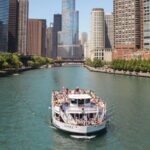
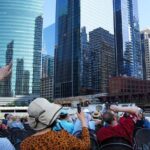
Private tour feel: your guide, your pace, your questions
This is a private tour, meaning only your group participates. That matters more than people think, because it changes how the guide can respond when you’re curious—about materials, the design style, or why certain buildings were built the way they were.
The tour runs in English with an English-speaking guide. Since the city’s architectural terms can get technical fast, having clear explanations in plain language helps you keep up without needing a history degree.
Also, you get a mobile ticket, which is convenient in a city where plans can change with weather, crowds, and opening hours.
Entering the Marquette Building: speculative offices and profit dreams
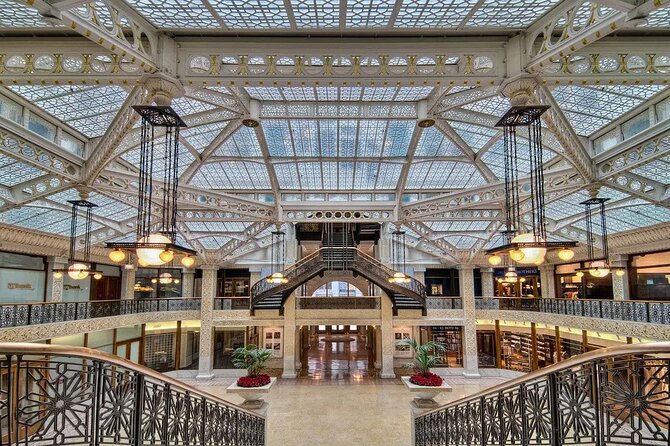
Stop 1 is the Marquette Building, a landmark from the 19th-century building boom. What makes it a great first stop is the story behind its existence: it was designed as a collection of first-class office spaces, built to earn big money for real estate investors who bet early on Chicago’s growth.
You get about 20 minutes here, including an admission ticket. That indoor time is valuable because it’s where you can connect the outside “tower” idea to what these buildings promised people inside—prestige, modern office life, and serious rent potential.
If you like your architecture with a side of economics, this one hits. It shows how Chicago’s skyscraper era wasn’t only about engineering. It was also about investors selling an idea of the city’s future.
The Rookery Building: LaSalle Street’s elegant office landmark
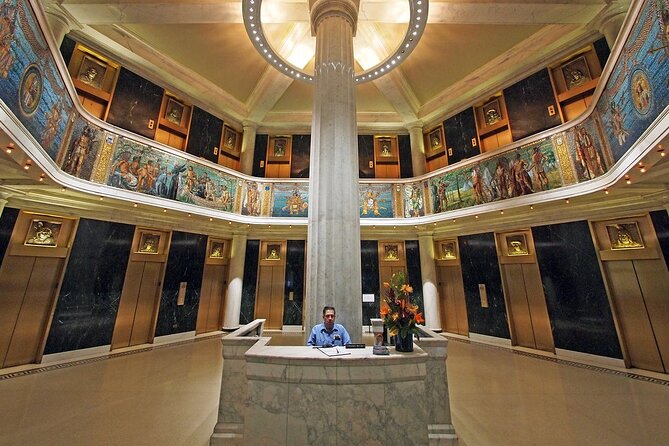
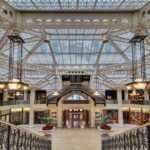
Next is the Rookery Building at the corner of LaSalle and Adams. It was once seen as one of the biggest and finest office buildings in the United States, which sets expectations for the kind of ambition Chicago was exporting to the rest of the country.
You get another 20 minutes with an admission ticket included. This is also an ideal stop to compare philosophies: the Rookery sits right in the heart of the LaSalle Street financial corridor, so it gives you a sense of how architecture and business power reinforced each other.
Look closely at how the building’s design language signals sophistication. Even if you’re not a design expert, you’ll feel the difference between “big” and “refined”—and why Chicago put so much effort into office buildings.
Palmer House Hilton lobby: hotel tech milestones in 10 minutes
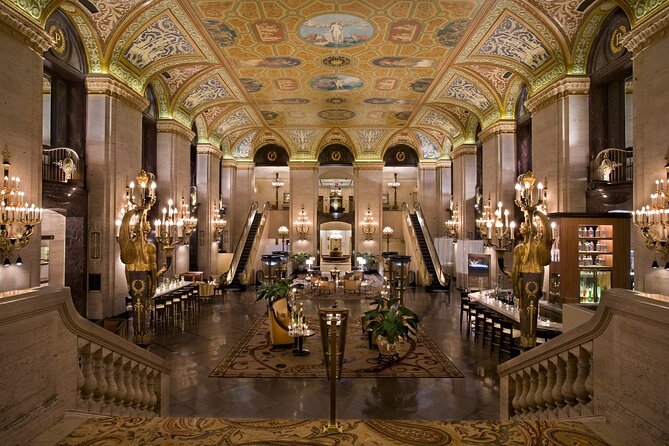
Stop 3 is the Palmer House Hilton Historic Lobby. This is a rare case where you get a major “city firsts” story without it turning into a museum-style lecture.
The Palmer House is noted as the longest continuously operating hotel in North America. It also claims a few standouts from early hotel innovation: elevators first, electric light bulbs first, and telephones in guest rooms first.
You’ll spend about 10 minutes here, and entry is free. Since the time is shorter, go in with a plan: focus on what feels most “early modern” versus what feels purely decorative. It’s a quick but memorable way to understand how technology moved into everyday city life.

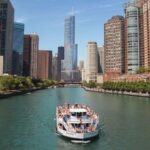

Sullivan Center (Carson Pirie Scott): Chicago School meets retail grit
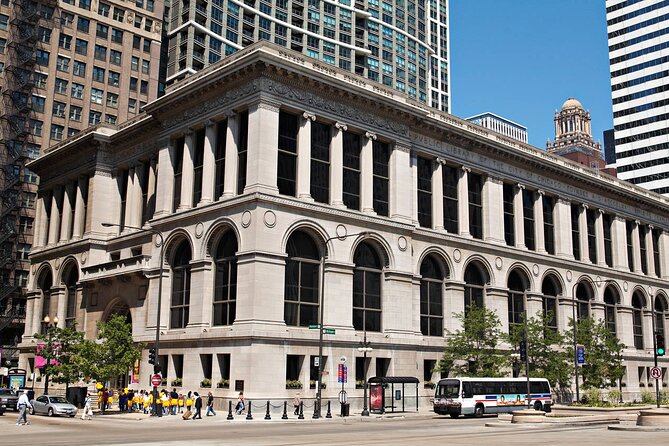
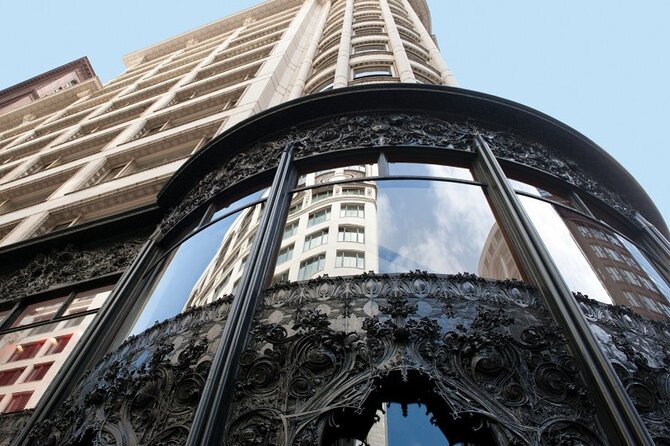
Stop 4 is the Sullivan Center, better known historically as the former Carson Pirie Scott store. This is one of those buildings that helps you understand Chicago’s “tall buildings + style” era as more than just skyscraper height.
Built between 1899 and 1903, it’s cited as a representative work of the Chicago School and an important moment in tall building history. It also stayed a retail space for most of its life, which matters—architecture that supports real customers tends to carry design choices differently than office-only towers. In 1975, it was declared a milestone of Chicago.
You’ll have about 20 minutes with an admission ticket included. If you want a stop that feels less like a corporate monument and more like a place people actually shopped, this is your moment.
Chicago Athletic Association: ornate club building, modern hotel energy
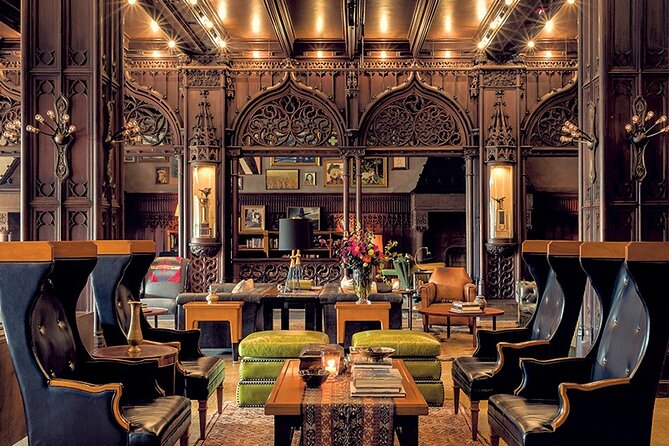
Stop 5 is the Chicago Athletic Association (The Unbound Collection by Hyatt), an 11-story Venetian Gothic building designed by Henry Ives Cobb and completed in 1893.
Here’s the fun part for architecture lovers: for a long stretch, this building functioned as a private club for wealthy Chicagoans—from its construction until 2007. When it was refurbished, the interior’s ornate details were largely preserved, so you still see paneling, molding, and trims that reflect the original “old Chicago” club vibe.
You also get about 30 minutes at this stop, and admission is free. The location helps too: it’s directly across the street from Millennium Park. That means you’re not just staring at the building—you’re positioned near one of Chicago’s biggest outdoor cultural anchors, so your photos and next steps feel easy.
Chicago Cultural Center: a full city block for art and access
Stop 6 is the Chicago Cultural Center, which takes up an entire city block in the Loop. This is one of the easiest places in downtown to understand why Chicago cares about public-facing culture.
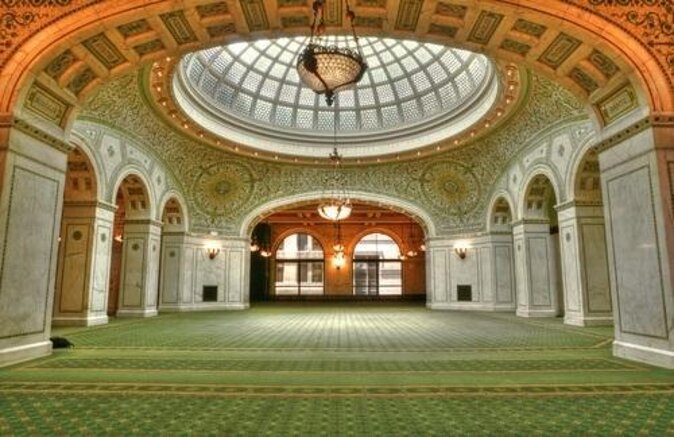
The highlight is the world’s largest Tiffany stained glass dome. The building also runs more than 700 humanities programs per year, and many are free and open to the public.
Your time here is 30 minutes, with an admission ticket included. That’s long enough to enjoy the dome and the main interior spaces, but not so long that you’ll get stuck if you’re eager to keep moving. If you’re the type who likes “look up, slow down, take it in,” this stop will reward you.
Practical tip: bring a phone camera that actually captures stained glass colors well. This is one of those places where the light changes as you move.
Tribune Tower: Gothic drama in a surprisingly approachable stop
Stop 7 brings you to the Tribune Tower, one of Chicago’s iconic buildings. Even though it’s 36 stories tall, it has a bigger-than-you’d-expect visual impact thanks to Gothic spires and a lobby that’s described as shrine-like and quote-filled.
You’ll have about 15 minutes here, with an admission ticket included. This is a good stop for a quick “wow” moment with context: the height sets expectations, but it’s the style and interior feel that make it memorable.
If you want architecture that feels theatrical (without being hard to understand), this is the kind of stop that stays with you.
Wrigley Building clock tower finish: the skyline’s punctuation mark
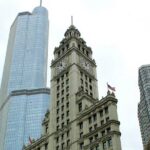
Final stop is the Wrigley Building at the end of the tour. It dates to the 1920s and is one of downtown Chicago’s instantly recognizable icons.
Even though the building includes French Renaissance elements, the most prominent feature is the clock tower, reaching about 130 meters (425 feet). It’s the kind of design detail that makes the building feel like a landmark even from far away.
You’ll have about 15 minutes with an admission ticket included. This is a strong finish because by now you’ve learned how to “read” Chicago buildings—style choices, time period clues, and the city’s recurring theme of height plus character.
Also, ending here on Michigan Avenue is convenient for continuing your day, whether you’re heading to Millennium Park area or planning a meal nearby.
Price and value: what $211 buys you in real terms
The price is $211 per person for an approximately 3-hour private tour. That’s not cheap, so you should look at what you’re getting, not just the number.
Here’s the value math in plain terms:
- You’re paying for a private guide who explains what you’re seeing as you walk.
- Admissions and fees are included for multiple stops.
- Lunch and bottled water are included.
- You get a route that hits many major names in one compact walk.
Where you should be careful: the tour description lists lunch as included, but there’s at least one caution that lunch inclusion can be unclear. Since the details can vary by departure, I’d confirm what lunch is on your exact booking before you arrive hungry.
Also, access can be limited. The tour doesn’t guarantee you’ll go inside every building. If you’re the kind of traveler who wants maximum “walk in and look around,” set expectations for shorter indoor time at some stops depending on what’s open.
What you should bring (and wear) for a great walking day
A tour like this works best when your body is comfortable. Chicago weather can swing, and you’re walking a significant stretch through the Loop.
Wear shoes you trust. Bring a light layer you can adjust. And keep an eye on the weather, because even short showers can turn sidewalks slippery.
If you care about photos, plan to look both ways: these buildings reward not only front-on views, but also corner angles and street-level details.
Who this tour fits best
This is a strong pick if you:
- Want a Chicago architecture overview that connects buildings across eras.
- Prefer a guide explaining details in real time instead of reading guidebooks solo.
- Like a structured walk with admissions built in, so your time doesn’t vanish into ticket lines.
It may be less ideal if you:
- Want maximum indoor access at every stop no matter what.
- Are sensitive to schedule changes tied to building hours.
Should you book this private Chicago architecture walking tour?
Yes—if you want a focused, high-value Loop architecture walk with admissions, lunch, and a guide who keeps the story clear. The stop lineup is excellent for building recognition: Marquette, Rookery, Palmer House, Sullivan, Chicago Athletic Association, Cultural Center, Tribune Tower, and the Wrigley Building.
Book it with one caveat: confirm lunch inclusion for your departure and expect that not every stop may have full interior access. If those points don’t bother you, this tour is a very efficient way to understand Chicago’s skyline style without feeling lost.
FAQ
How long is the Private Chicago Architecture Walking Tour?
It runs for approximately 3 hours.
What does the tour cost?
The price is $211.00 per person.
Is the tour private or shared?
It’s a private tour/activity, so only your group will participate.
What language is the guide?
The tour is offered in English.
Is lunch included?
Lunch is listed as included, but you should confirm what lunch means for your specific departure before you go.
Are admission tickets included for the stops?
Admission tickets are included for multiple stops on the route.
Where does the tour start and end?
It starts at the Fine Arts Building, 410 S Michigan Ave, Chicago, IL 60605, and ends at the Wrigley Building, 400-410 Michigan Ave, Chicago, IL 60611.
Are bottled water and fees included?
Bottled water is included, and all fees and taxes are included.
Do I need to tip the guide?
Tips for guides are not included.