REVIEW · BOLOGNA
Best of Bologna in one day : Food, architecture, art and history
Book on Viator →Operated by Riccardo Bacchi · Bookable on Viator
Bologna in a single day can fly. What makes this one work is the mix: architecture, art, history, and food all tied together as you move from Piazza Maggiore into university buildings, churches, and the medieval market lanes.
I especially like how the tour includes interior moments, not just street views. You get into places where you can look closely at frescoes, staircases, and terracotta art, the kind of detail you’d miss on a self-guided walk with a busy schedule.
One catch: the pace is fast and the information comes at you in layers. If you want lots of slow wandering or long museum time, this route may feel like it’s moving ahead of your comfort zone.
In This Review
- Key highlights worth planning for
- Piazza Maggiore and Palazzo Comunale: Art in Stone, Terracotta, and Staircases
- Piazza Santo Stefano: Medieval Courtyards, Romanesque Interiors, and Tower Views
- Santa Maria della Vita: A Baroque Church That Houses Renaissance Terracotta
- Archiginnasio and Pinacoteca Nazionale: University Walls and Major Paintings
- Quadrilatero and Bruno e Franco: Market Streets and Tastings That Feel Designed
- San Giacomo Maggiore, Canale delle Moline: Smaller Stops With Big Atmosphere
- San Domenico and Santo Stefano’s Model of Jerusalem: Bologna’s Art + Spiritual Architecture
- Pasta alla Bolognese Mini-Class: The Hands-On Finale
- Price and Tickets: Is $174.69 Per Person Good Value?
- Who This Tour Fits Best (and Who Might Want a Slower Day)
- Should You Book This One-Day Best of Bologna Tour?
- FAQ
- How long is the tour?
- Where does the tour start and end?
- Is the tour in English?
- Is this a group tour or private?
- What food is included?
- Are admission tickets included?
- Does the tour include museum and church visits?
- Are there any practical booking details like a mobile ticket?
- What is the cancellation policy?
Key highlights worth planning for
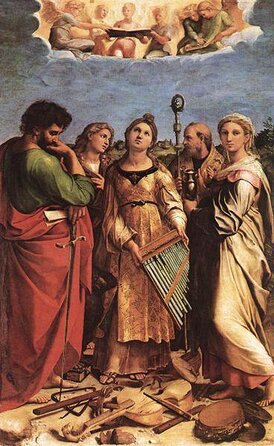
- A single-day route with major Bologna anchors like Piazza Maggiore, Archiginnasio, and Pinacoteca Nazionale
- Ticketed access built in for several stops, so you’re not constantly queuing or budgeting entry fees
- Nicolò dell’Arca terracotta focus showing up in multiple churches
- Food that’s structured, not random, including tastings at Bruno e Franco and a short pasta class
- University of Bologna atmosphere paired with Bologna’s visual art, from fresco walls to painting collections
- Multiple “Bologna above street level” moments, including a terrace view near the Santo Stefano complex
Piazza Maggiore and Palazzo Comunale: Art in Stone, Terracotta, and Staircases
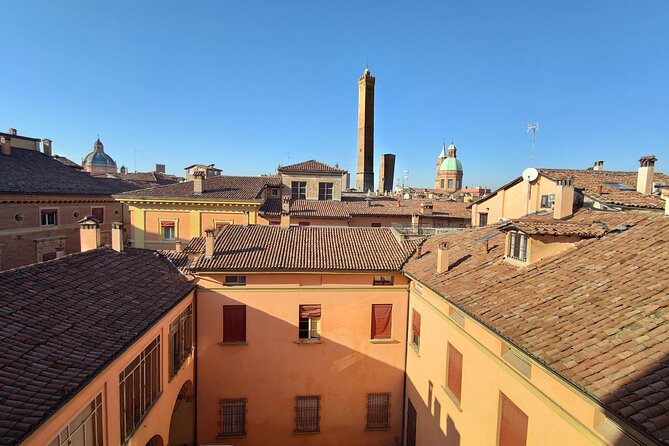
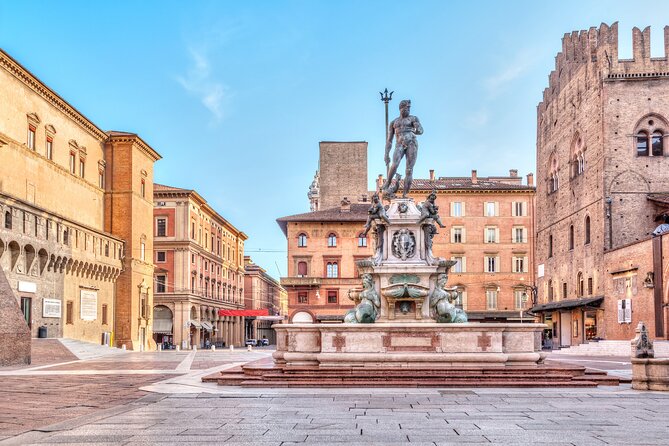
Piazza Maggiore is the obvious starting point, but the value here is what you learn while you’re standing inside it. You’ll spend time with the square’s core masterpieces, including Nicolo’ dell’Arca’s terracotta works, the Fountain of Neptune, Palazzo Comunale, and the church of San Petronio.
Then you step into Palazzo Comunale, where the whole mood changes from public square to power center. The tour focuses on frescoed rooms and a dramatic feature: the grand staircase of Bramane’s horses. It’s the kind of architectural flourish that instantly explains why Bologna gained a reputation for craftsmanship and authority, even beyond its borders.
If you only had time to look at statues and facades, you’d miss the point. This stop is built to teach you how the city used art and design to shape identity. It’s also one of the best moments to reset your bearings, because everything else feels easier once Piazza Maggiore is mapped in your head.
Piazza Santo Stefano: Medieval Courtyards, Romanesque Interiors, and Tower Views
From Piazza Maggiore you move into the area around Piazza Santo Stefano, and the change is immediate. This complex brings early medieval buildings together with Romanesque and Gothic interiors, plus frescoes and porticoes that feel older than your phone photos.
What I like about this stop is that it’s not one single church moment. It’s a whole cluster: specialized art museum pieces, medieval interiors, spiral staircases, and even a terrace where you can see Bologna’s towers from higher up.
The drawback is timing. With only about 20 minutes here, you’ll want to keep your eyes up and your questions ready. If you’re the type who enjoys slow, room-by-room looking, you can still enjoy it, but you’ll need to skim with purpose and trust the guide to point out what matters.
Santa Maria della Vita: A Baroque Church That Houses Renaissance Terracotta
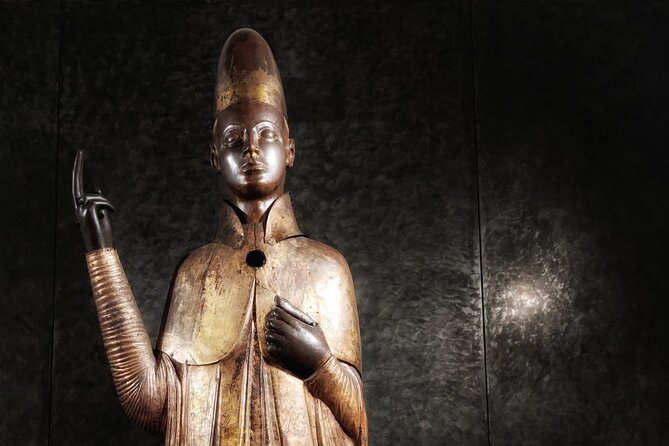
Santa Maria della Vita is a quick stop with a big punch. You’re going into a Baroque church, but the emotional highlight is the Lamentation of Nicolò dell’Arca, a Renaissance terracotta masterpiece.
This is exactly the kind of art Bologna does well: figures that feel alive, materials that should not look this expressive, and a setting that makes the work feel even more intense. The guide’s focus keeps the terracotta from becoming just another name in a list.
If you love sculpture or anything that feels theatrical and human, this stop will likely be a standout. It’s also short enough that you’re not trapped in a long visit after already walking a lot that day.
Archiginnasio and Pinacoteca Nazionale: University Walls and Major Paintings
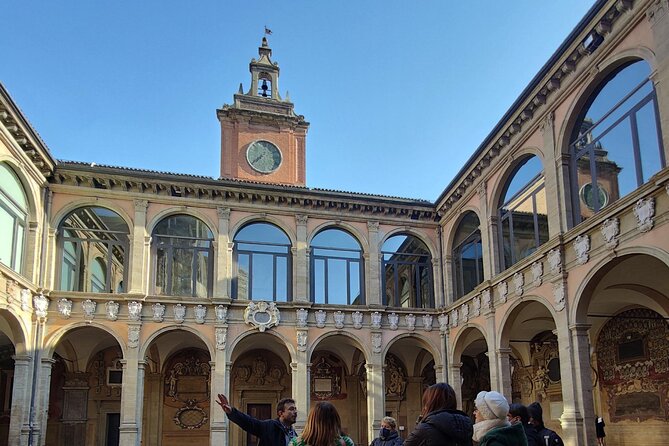
The Archiginnasio di Bologna stop connects you to the city’s brain. It’s an ancient Renaissance and Baroque palace linked to the University of Bologna, and it’s packed with visual evidence of how education looked before modern classrooms.
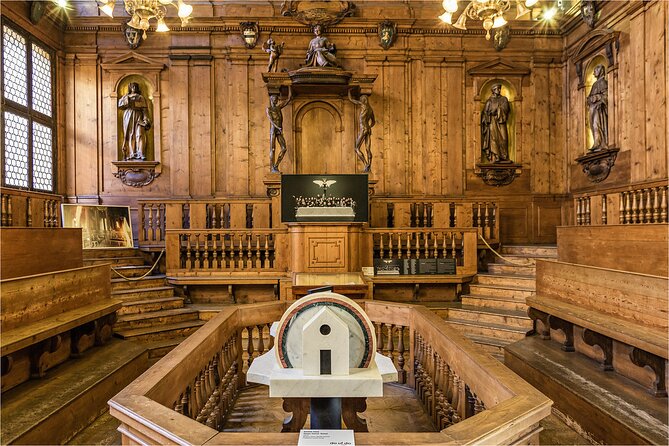
You’ll see frescoes and books, plus a historical library and something that’s easy to remember once you’ve seen it: a wooden anatomical theatre. It’s a fascinating contrast to everything else on the route because it turns learning into a physical space.
Then the day shifts into fine art at the Pinacoteca Nazionale di Bologna. This museum visit gives you a concentrated look at painting and ancient art, with names spanning Giotto to Raphael, Titian to Guido Reni, and more (Ercole de Roberti, Carracci, Guercino, and artists associated with Bologna like Vitasle da Bologna and Parmigianino).
This museum time is about focus, not sheer volume. Roughly 40 minutes means you’ll skim highlights, but you’ll do it with guidance so the collection doesn’t blur into “a lot of paintings.”
My practical tip: keep one or two “focus themes” in mind before you enter, like religious art, portraiture, or the evolution of style. The guide’s connections between works will make more sense if you’re listening for patterns, not just facts.
Quadrilatero and Bruno e Franco: Market Streets and Tastings That Feel Designed
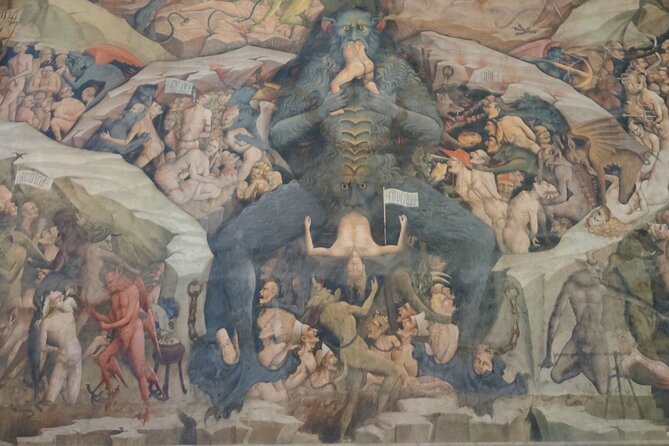
Quadrilatero is where Bologna stops acting like a museum and starts acting like itself. You’ll walk through the ancient market of Mezzo di Bologna with historic stalls, taverns, and traditional shops. It’s a medieval layout built for food and conversation, not quick sightseeing.
Then you get to the structured part: tastings at Bruno e Franco – La Salumeria. This is one hour, and it’s not a token bite. You’ll taste a spread that’s distinctly Bologna and Emilia Romagna, including figs and Parma ham, culatello, salami, mortadella, and items that feel like they belong on a table in real time.
The menu also leans hard into the region’s comfort-food identity: pasta like tagliatelle with ragout, traditional green lasagne bolognesi, meatballs and peas (Bologna style), and aged Parmigiano Reggiano. There’s also Traditionalò Modena balsamic vinegar, described here as aged up to 24 years.
The smartest part is how it ties back to the route you’ve walked. Bologna’s food culture makes more sense when you’ve already spent hours learning how the city valued craft, ritual, and fine materials. This tasting turns that idea into something you can taste.
One more note: wear shoes you trust. Even with tastings arranged during the day, you’re still spending a lot of time on your feet.
San Giacomo Maggiore, Canale delle Moline: Smaller Stops With Big Atmosphere
After the big hitters, you get two stops that help the day feel human again.
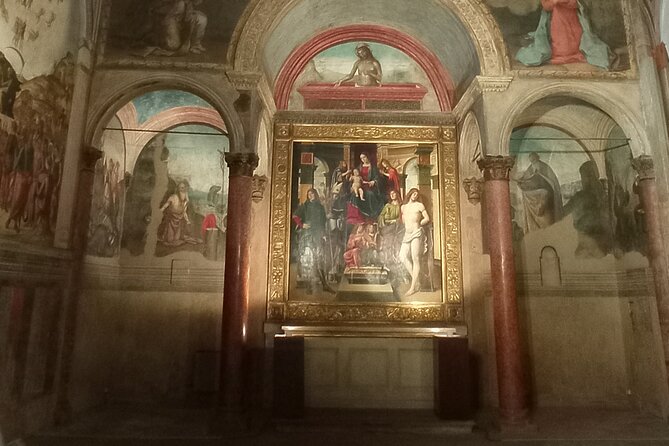
At Chiesa di San Giacomo Maggiore, the tour spotlights the Bentivoglio Chapel, a major work of the Emilian Renaissance. You’ll also spend time at the Oratory of Santa Cecilia, with frescoes and musical connections. This isn’t the kind of church that feels like a quick photo and gone. The stop is shaped like a mini art gallery within a worship space.
Then comes Canale delle Moline, and it’s brief but satisfying. You’ll see towers and arcades, medieval houses and palaces, and those “how did I not know this existed” corners—hidden canal areas, noble staircases, frescoed halls, and oratories. The tour also ties this location back to the oldest university atmosphere in Europe, so it’s not just scenic.
This is a good segment for people who like texture. You’re not only chasing grand monuments; you’re learning how the city’s academic identity lives in everyday architecture.
San Domenico and Santo Stefano’s Model of Jerusalem: Bologna’s Art + Spiritual Architecture
Two larger church-and-complex moments close out the day, and they show different sides of Bologna’s art world.
Basilica di San Domenico is described here as an art and architecture treasure trove. You’ll hear about the Ark of Nicola Pisano, pieces connected to Nicolò and Michelangelo, and you’ll look at the alchemical wooden choir. There’s also the mention of a famous organ associated with Mozart, plus the Renaissance cloister.
The reason this stop matters is variety. You’re not stuck in one style. You’re moving across centuries of artistic expression, tied together by one place. It also helps you see Bologna as a city where major figures and big ideas intersect with local craft.
After that, Basilica – Santuario di Santo Stefano shifts into a medieval complex built in the image and likeness of the Holy Sepulcher of Jerusalem. You’ll explore a medieval and early medieval structure complex, again with the focus on how Bologna translated spiritual models into local architecture.
If you’ve ever wondered why the city feels so layered, these stops are your answer in stone and space.
Pasta alla Bolognese Mini-Class: The Hands-On Finale
The end of the day doesn’t just send you to dinner. It gives you a short cooking class focused on pasta alla bolognese.
The format is brief but practical, with pasta ideas that connect to what you tasted earlier: pasta with egg for tagliatelle, tortellini, lasagna, balanzoni, tortelloni, and passatelli. You’ll also connect the “why” behind Bologna-style comfort—how local technique and ingredients become repeatable tradition.
This is where the value really shows. You’re leaving with a sensory memory plus an actionable understanding of the dish style. Even if you don’t cook much at home, you’ll know what makes it “Bologna style” when you see it on a menu later.
Price and Tickets: Is $174.69 Per Person Good Value?
At $174.69 per person for about 7 hours, this tour looks pricey only if you compare it to a casual walking tour. But this day is built around admissions and food.
Several stops include admission tickets: Piazza Maggiore, Piazza Santo Stefano, Santa Maria della Vita, Archiginnasio di Bologna, and Pinacoteca Nazionale di Bologna. Other major sights in the route are listed without admission tickets, and you also get time for the Quadrilatero food market and church visits.
On top of that, the day includes tastings at Bruno e Franco – La Salumeria and an included pasta cooking class. That matters because food alone in Bologna can add up quickly if you’re trying to sample “a bit of everything” on your own schedule.
So the value equation looks like this: you pay for a planned route, guided interpretation, multiple entry tickets, and structured tastings. If you’re short on time or you want a guided focus that turns the city into a story, it’s a fair deal.
If you’re the type who prefers self-guided museum wandering and you’d rather eat without a set tasting sequence, you might feel the structure more than the freedom.
Who This Tour Fits Best (and Who Might Want a Slower Day)
This tour fits best if you like art and architecture but also want Bologna’s food culture to be part of the same conversation. It’s also a good match if you enjoy clear explanations that connect big names like Nicolo’ dell’Arca and the broader University of Bologna influence to what you’re seeing in front of you.
It’s also a solid choice when you only have a short window in the city. The itinerary is designed so you don’t spend your day deciding where to go next.
That said, don’t underestimate the pace. The route is fast, and the guide’s commentary can be information-heavy. If you prefer quiet sightseeing with long pauses, plan to use the walk time to listen, and don’t expect to read every label and absorb every ceiling fresco at a leisurely speed.
Should You Book This One-Day Best of Bologna Tour?
I’d book it if your priority is maximizing what you understand in one day. The route connects major squares, terracotta art, the University’s world, top painting highlights, and a structured Bologna food experience that’s more than just “snack stops.”
I’d skip it if you want a relaxed day with minimal walking and lots of free time to wander. The day is built to cover many layers, so it rewards active participation and quick attention more than drifting.
If you do book, I strongly recommend comfortable walking shoes. Also go in with one or two things you’re curious about, like terracotta sculpture, Renaissance art, or Bologna’s food identity. With that mindset, the day will feel tighter and more satisfying.
FAQ
How long is the tour?
It’s listed as approximately 7 hours.
Where does the tour start and end?
It starts at Bar Vittorio Emanuele in Piazza Maggiore 1, Bologna, and ends back at the same meeting point.
Is the tour in English?
Yes, it’s offered in English.
Is this a group tour or private?
It’s private, meaning only your group participates.
What food is included?
The tour includes tastings at Bruno e Franco – La Salumeria, plus a pasta alla bolognese cooking class.
Are admission tickets included?
Admission tickets are included for several stops: Piazza Maggiore, Piazza Santo Stefano, Chiesa di Santa Maria della Vita, Archiginnasio di Bologna, and Pinacoteca Nazionale di Bologna. Other stops on the route are listed as free.
Does the tour include museum and church visits?
Yes. You’ll visit a university palace (Archiginnasio), a national painting museum (Pinacoteca Nazionale), and multiple churches and basilicas.
Are there any practical booking details like a mobile ticket?
Yes, the tour includes a mobile ticket.
What is the cancellation policy?
Free cancellation is available up to 24 hours in advance for a full refund.