REVIEW · PRAGUE
Prague Art Nouveau and Cubism Walking Tour
Book on GetYourGuide →Operated by insightcities.com · Bookable on GetYourGuide
Prague’s Art Nouveau reads like a story. This 3-hour walking tour helps you spot the Art Nouveau details that give Prague its slightly theatrical, pre-war café-and-hotel vibe, then ties them to nearby Cubist architecture so the styles make sense together. Expect an expert-led route that mixes street clues with interior looks at places many people walk past without ever noticing.
I especially like two things. First, you learn how to recognize motifs fast, from botanical touches like ginkgo biloba leaves to the more surprising influences in the design language, including hints of the orient in the ornament. Second, the tour includes two big, elegant stops—Lucerna bar and the Grand Hotel Europa—so you’re not stuck only outside staring at façades.
One possible drawback: the pacing is meant to keep you moving and seeing lots of details in 3 hours. If you want long photo sessions at every stop, you may need to ask for extra time, because the flow is built for learning and momentum.
In This Review
- Key moments you’ll remember
- Prague Art Nouveau and Cubism: how this city taught itself to look modern
- The 3-hour pacing: smart stops, minimal standing, better learning
- Where you start at Ovocný 19 and why the first minutes matter
- Recognizing Art Nouveau fast: ginkgo leaves, ornament, and light fixtures
- Lucerna bar: Art Nouveau as atmosphere, not just architecture
- Grand Hotel Europa: where style met the city’s social elite
- The Cubist and Rondo-Cubist comparisons: House of the Black Madonna and Bank of the Legions
- Who should book this tour—and who should consider a different pace
- Price and value: is $123 worth 3 hours?
- Should you book Prague Art Nouveau and Cubism?
- FAQ
- How long is the Prague Art Nouveau and Cubism walking tour?
- Where is the meeting point?
- Is the tour guide available in English?
- Can I pay later?
- Is free cancellation available?
- Is this tour only for large groups?
Key moments you’ll remember
- Ginkgo biloba on façades as a quick, hands-on way to identify Art Nouveau
- Oriental-influenced ornament explained in plain terms, not museum-speak
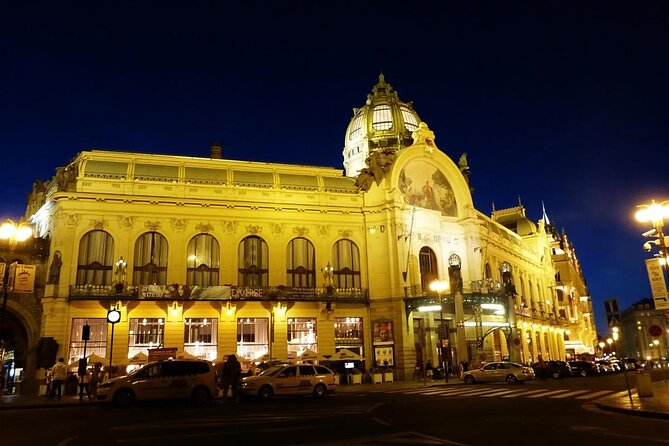
- Lucerna bar interior time tied directly to Art Nouveau design cues
- Grand Hotel Europa stop to connect architecture with the social world of cafés and hotels
- Cubism links on the route using Rondo-Cubist and Cubist examples like the House of the Black Madonna and the Bank of the Legions
- Expert guides with credentials like historians, doctoral students, journalists, and art critics (you might even meet guides such as Robert, Vadim, or Bonita)
Prague Art Nouveau and Cubism: how this city taught itself to look modern
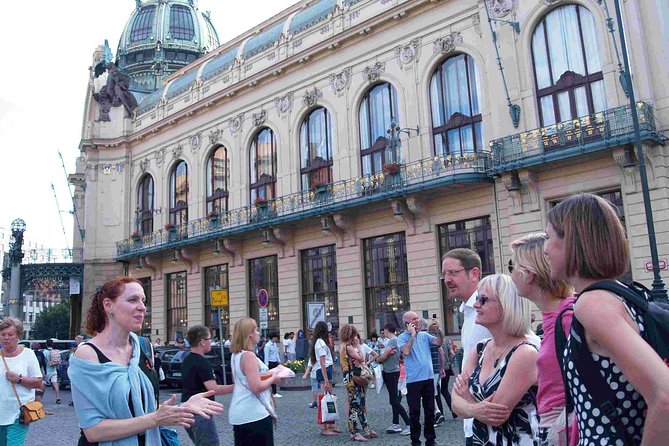
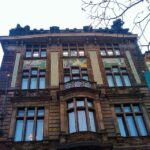
Art Nouveau hit Europe near the end of the 1800s, and Prague was quick to make it its own. On this walk, you’ll learn that the style wasn’t just decoration. In Prague, it became a visual language for comfort, modernity, and social status—especially around places like hotels, cafés, restaurants, and stations.
That context matters because it changes how you read the buildings. Instead of asking only What does it look like?, you’ll start asking Why did they build it like this? You’ll also connect the dots between pre-war elegance and the early 20th-century feeling that industrial-era progress was finally paying off in daily life.
And then the tour pivots you toward Cubism. That shift can feel like a jump—until you’re taught how both styles act as statements. Art Nouveau leans into nature-inspired curves, glow, and atmosphere. Cubism, by contrast, brings sharper structure and a more deliberately modern, almost argumentative way of seeing.
You can also read our reviews of more tours and experiences in Prague.

The 3-hour pacing: smart stops, minimal standing, better learning
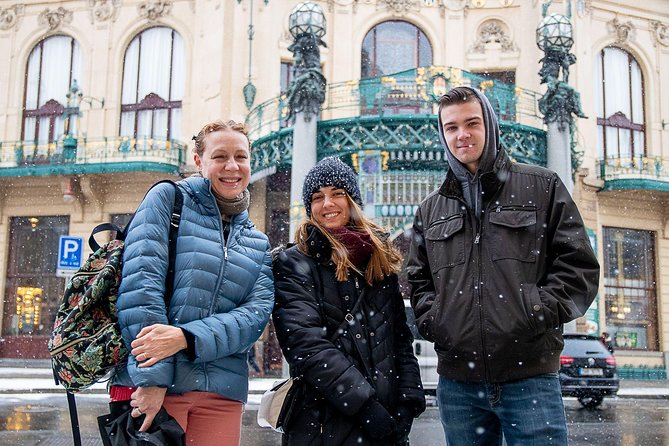
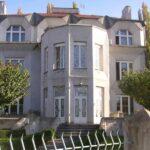
This is a 3-hour walk with a live English guide, built for attention. You’re not wandering randomly, and you’re not stuck standing around waiting for other people to catch up. The route is designed so you see enough variety that the architectural “grammar” clicks.
You’ll also get chances to go inside some buildings. That’s a practical win in colder months, when looking at details through chilly air can get less fun fast. More importantly, interiors help you understand what you’re actually seeing on the outside—Art Nouveau often signals itself through lighting, fixtures, and the way spaces feel.
If you’re the kind of person who likes to linger, take longer photo breaks, or sketch on the spot, build that habit into your expectations. The tour keeps moving. You can still take good photos quickly, but this isn’t the kind of tour where you’ll automatically get long pauses at every photo spot.
Where you start at Ovocný 19 and why the first minutes matter
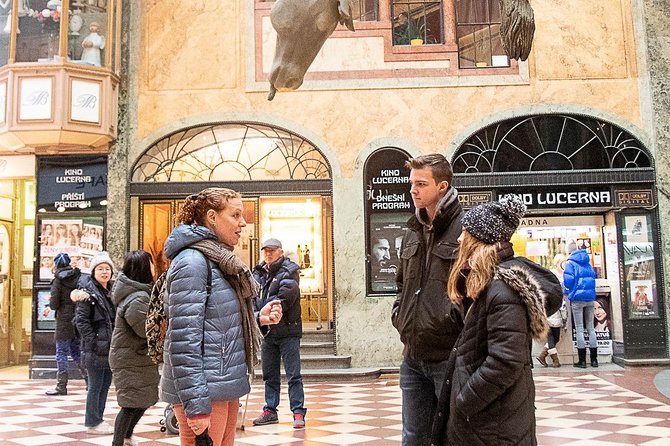
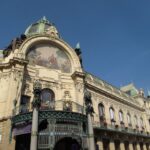
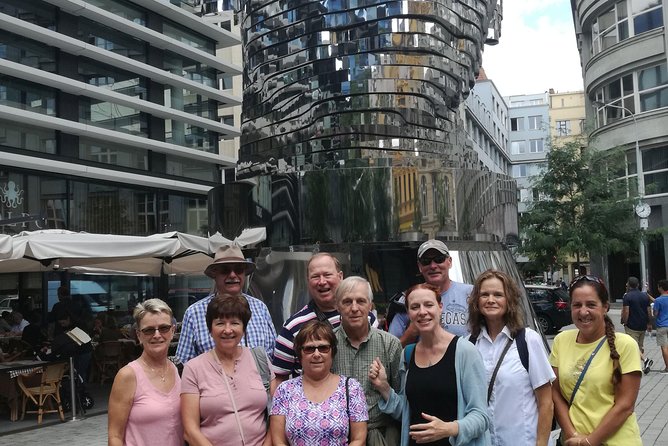
The meeting point is the House of the Black Madonna / Grand Café Orient, downstairs at the front doors on the square: Ovocný 19, Prague 1. The practical benefit of this starting location is that you begin in the middle of the city’s layers, not at the edge of your “classic Prague” postcard zone.
That helps because your guide can set up two things right away. One is what to look for as you walk—motifs, materials, and the details that repeat. The other is how to compare styles without getting lost. By the time you’re standing in front of an Art Nouveau façade, you’ll already know what evidence you should hunt for.
It’s also a good mental trick: you’re starting near a place that connects to both architecture and city life. In Prague, the “style” isn’t separate from the social world. It shows up in bars, cafés, and hotels for a reason.
Recognizing Art Nouveau fast: ginkgo leaves, ornament, and light fixtures
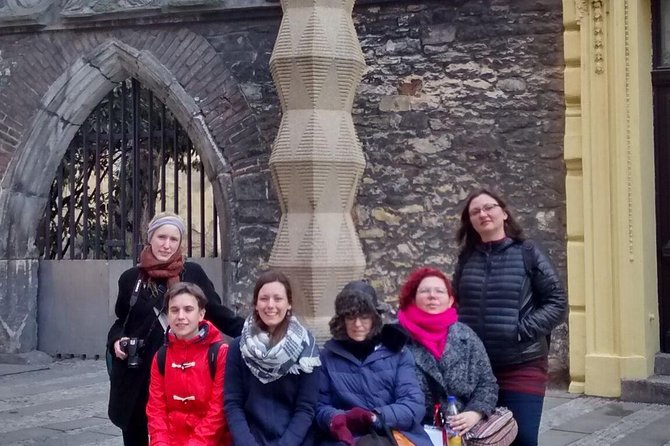
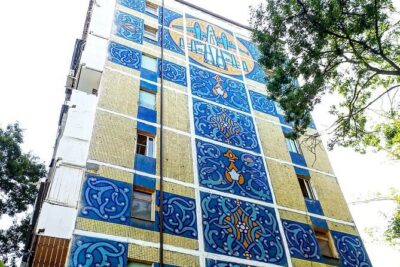
This tour teaches you how to recognize Art Nouveau without needing an art degree. One standout clue is ginkgo biloba leaves on façades. Once you learn to spot that botanical language, you start noticing it everywhere—like your brain flips into pattern-detection mode.
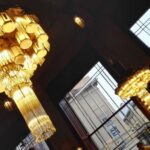
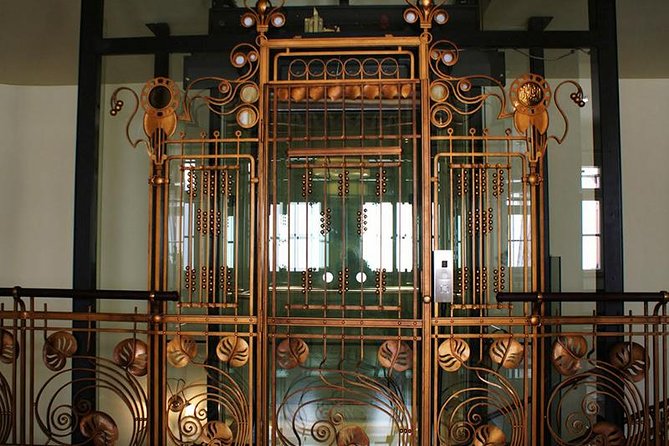
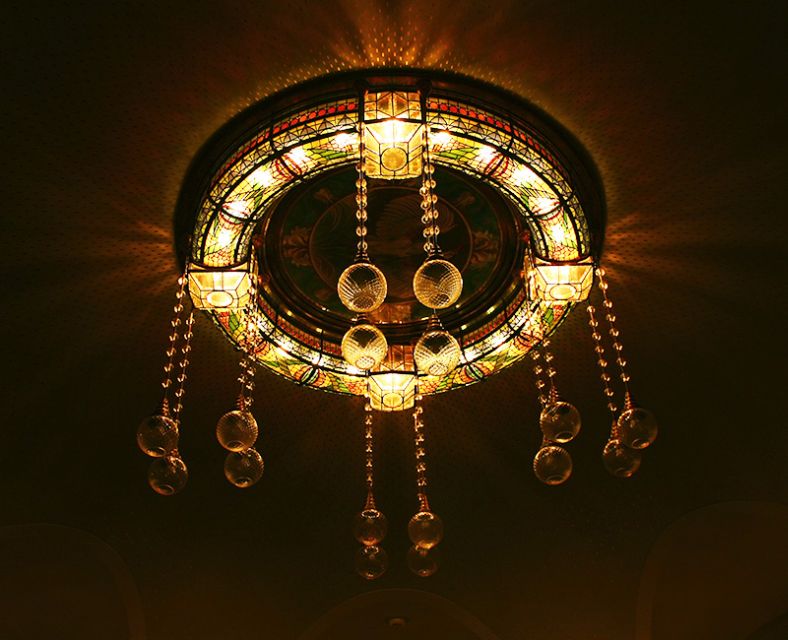
You’ll also learn about other features that tell you you’re looking at Art Nouveau rather than some other decorative style. The tour highlights elaborate lighting fixtures and interior hallmarks, which is key because Art Nouveau often looks best when you can see how the space is lit and how the decorations relate to everyday movement through a room.
There’s also a theme of cross-cultural influence. The tour points out that some ornament choices reflect oriental influences, and that helps you understand why the style can feel both local and oddly worldly at the same time. This isn’t about one country copying another. It’s about designers during a connected era borrowing ideas, remixing them, and turning them into something Prague-specific.
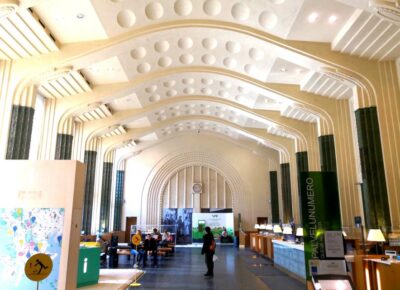
Finally, you’ll link all of this to where Art Nouveau most often shows up in the city. Hotels, bars, restaurants, and train stations were the places that welcomed visitors and the first globetrotters who were arriving in Prague in the early years of the 1900s.
Lucerna bar: Art Nouveau as atmosphere, not just architecture
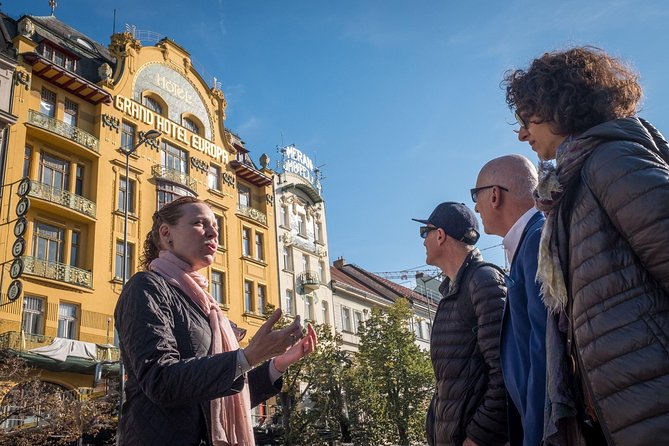
The tour includes a visit to Lucerna bar, and that stop is where the “reading skills” you build outside start to feel real. Bars and hotels are where Art Nouveau often turns into mood: the way light hits surfaces, the way decorative elements guide your eye, and the way the space feels designed rather than accidental.
Even if you’re not a design nerd, you’ll leave with a clearer sense of what Art Nouveau was selling. It wasn’t only beauty. It was a promise of comfort, sophistication, and a little bit of theatrical modern life.
And because you’re learning during the visit, you’re less likely to treat it like a quick photo stop. You’ll have a checklist in your head—botanical motifs, the decorative “logic,” and the interior cues that match what you saw on the street.

Grand Hotel Europa: where style met the city’s social elite
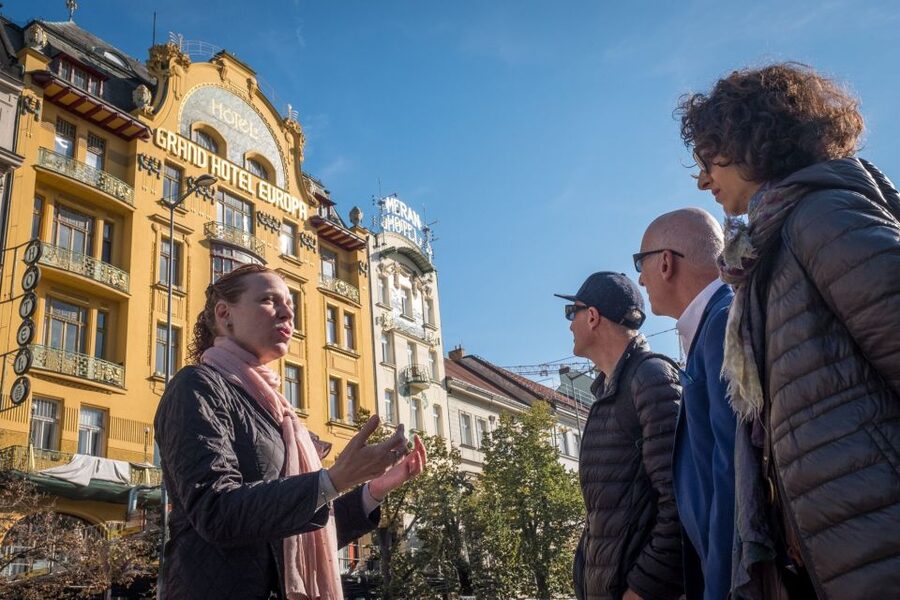
Next up is Grand Hotel Europa, another anchor point for understanding why Art Nouveau belongs to Prague’s pre-war social elite. This is where the “architecture as social proof” idea clicks.
Hotels weren’t just lodging. They were display cases for a city’s modern self-image. That’s why Art Nouveau often appears in places frequented by well-off locals and visitors who wanted a taste of elegance.
On this tour, you’ll also make a wider connection: industrialization was changing the rhythm of life, and the early 20th century carried a sense of possibility. The buildings reflect that energy. They show a city investing in spaces meant for meeting, eating, and showing up in style.
If you like architecture but also enjoy people-watching vibes, this stop should land well. It’s not sterile or academic. It’s tied to the everyday rituals that made Prague feel cosmopolitan long before social media.
The Cubist and Rondo-Cubist comparisons: House of the Black Madonna and Bank of the Legions
A smart part of the tour is that it doesn’t treat Art Nouveau and Cubism like two separate chapters. It connects them through comparisons as you move along.
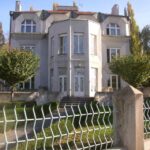
You’ll draw parallels that include examples such as the House of the Black Madonna and the Bank of the Legions. The tour also points to Rondo-Cubist architecture, which helps you see Cubism in Prague isn’t always just flat, angular geometry—it can be playful and formal at the same time.
This comparison matters because Cubism in Prague is often tied to a modern identity. The tour frames both Art Nouveau and Cubist architecture as statements of Prague’s sophistication and as part of a renewed sense of Czech identity. In practice, that means you’ll interpret buildings less as style for style’s sake and more as choices made in a changing society.
So when you’re standing in front of Cubist forms, you’ll have better language for what you’re seeing. Instead of only describing shapes, you’ll know what questions to ask: What mood is this trying to create? What does it signal about progress, confidence, or cultural pride?
Who should book this tour—and who should consider a different pace
This works best if you enjoy architecture but want help seeing it clearly. You don’t need to be an expert. The guide is trained to explain details in a way that keeps you oriented, and the background of the guides—professors, doctoral students, historians, journalists, art critics, and published authors—signals that you’ll get both accuracy and interpretation.
It’s also a good match if you like coffee-and-culture breaks without losing time. The tour is structured so you’re not constantly walking in silence or missing the practical side of sightseeing.
Consider a different tour if your main goal is slow, wandering wandering and lots of free time between major stops. This one is designed for concentrated learning in a tight window. You’ll still get beauty and plenty of visual payoff, but the schedule is the point.
Price and value: is $123 worth 3 hours?
At $123 per person for a 3-hour guided walking tour, you’re paying for three things at once: expert narration, a focused route, and built-in interior moments at Lucerna bar and Grand Hotel Europa. That combination is where the value comes from.
A tour that only points out exterior façades can be hit-or-miss because you’re doing most of the interpretation yourself. Here, you’re guided through how to recognize features like Art Nouveau motifs and lighting hallmarks, plus you get comparisons to Cubist examples like the Bank of the Legions. That’s the difference between seeing buildings and understanding them.
Also, the guide team isn’t casual. The provider organizes guides with serious academic and professional backgrounds, and the experience leans on explanation—not just “look at this cool building” vibes.
If you’re visiting Prague only once and want to use your time well, this price can make sense. If you already have a deep interest in architecture and you plan to spend hours on your own, you might prefer a self-guided plan. But for most people, paying for a guide is the fastest route to real recognition.
Should you book Prague Art Nouveau and Cubism?
I’d book it if you want Prague to feel like more than a pretty city. This tour helps you read the architecture like a language, connects Art Nouveau to the social world of cafés and hotels, and then makes Cubism feel like a logical next step rather than a random stylistic detour.
I’d pass or swap if you’re aiming for a relaxed, unstructured day with long breaks. The format is efficient. It’s not slow travel.
If you can do one architecture-focused experience in Prague, this is a strong choice. You’ll come away with practical visual skills—especially ginkgo leaf spotting and knowing what to look for in Art Nouveau interiors—and you’ll understand why Cubism showed up where it did.
FAQ
How long is the Prague Art Nouveau and Cubism walking tour?
The tour lasts 3 hours.
Where is the meeting point?
Meet at the House of the Black Madonna / Grand Café Orient, downstairs at the front doors on the square, Ovocný 19, Prague 1.
Is the tour guide available in English?
Yes. The tour is led by a live English-speaking guide.
Can I pay later?
Yes. You can reserve your spot and pay nothing today.
Is free cancellation available?
Yes. You can cancel up to 24 hours in advance for a full refund.
Is this tour only for large groups?
No. Private or small groups are available, depending on what you book.