REVIEW · PRAGUE
Prague Art Nouveau and Cubism Walking Tour
Book on Viator →Operated by Insight Cities · Bookable on Viator
Prague buildings can be read like a comic book. This 3-hour walk links Art Nouveau flourishes to Cubism ideas, with a historian guide calling out what to see and why it mattered. I really liked how the tour makes style feel practical, not academic, and how guides like Vadim and Matous keep the pace friendly for questions. One thing to note: it’s a walking route with lots of close-up looking, so if you need long sit-down breaks, plan for a lighter day afterward.
You’ll start near Ovocný trh and end around Café Louvre, hitting iconic façades and some less obvious interiors tied to Czech cultural shifts. Expect architecture + history woven together, including turn-of-the-century building tech and the political swings that changed Prague. If rain hits, it’s still doable, as long as you stay flexible and let the guide steer you toward the best vantage points.
In This Review
- Key highlights worth booking for
- Why this Art Nouveau and Cubism walk works in Prague
- Meeting at Ovocný trh and getting your bearings fast
- House of the Black Madonna: Cubism starts with attitude
- Obecní Dum: Prague Art Nouveau at its most iconic
- K+K Hotel Central: an Art Nouveau starter for first-timers
- Café Imperial interior: the glamour side of Czech optimism
- Czechoslovak Legion Bank: Cubism with a purpose
- Prague hlavni nadrazi: Art Nouveau inside the main station
- Wenceslas Square: where Art Nouveau meets Art Deco
- Lucerna Music Bar: the best kind of time travel
- Upside-down statue on the route: history in one object
- The technology stories you’ll remember on your next Prague walk
- How to spot Art Nouveau vs Cubism after the tour
- Price and value: $126.71 for a focused architecture story
- What the route feels like in real life (pace, timing, and options)
- Who should book this Prague architecture walk
- Should you book this Art Nouveau and Cubism walking tour?
- FAQ
- How long is the Prague Art Nouveau and Cubism walking tour?
- What is the group size limit?
- Where does the tour start and end?
- Are there different departure times?
- What language is the tour offered in?
- What is included in the price?
- What is not included?
- Do the stops require paid admission?
- Is free cancellation available?
- What should I expect in terms of participation?
Key highlights worth booking for
- Small group (max 8) so you actually get answers while you’re staring at buildings
- Two design movements in one route: Art Nouveau details, then Cubist geometry
- Historian guide who connects design to Czech society and big events
- You’ll see Prague’s big public icons plus interiors in the city center
- Free-entry stops listed throughout so you’re not stuck budgeting ticket time
Why this Art Nouveau and Cubism walk works in Prague
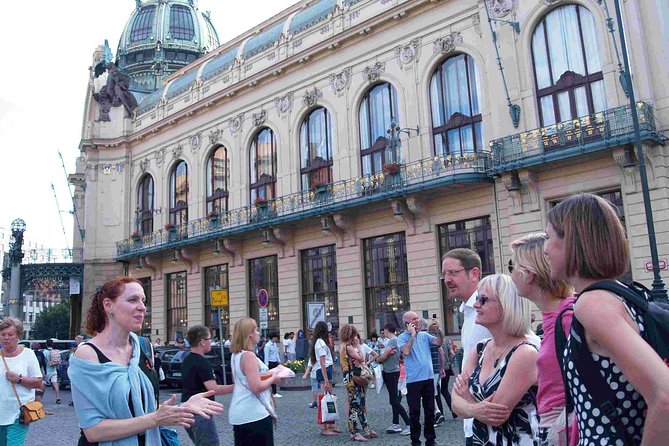
Prague is one of Europe’s best cities for architecture that tells a story without needing a museum ticket. This tour does that job by pairing two styles that look totally different but grew out of the same era’s thinking. You’ll walk from Art Nouveau ornament and curving type into Cubist structure and angular drama, and the guide explains the bridge between them.
The best part for me is that the tour doesn’t treat buildings like pretty postcards. You get reasons: what artists wanted to change, what people were proud of, and what wars and politics did to the city. And because the group stays small, you can ask practical questions like what to focus on when you’re standing on a busy street.
You can also read our reviews of more tours and experiences in Prague.

Meeting at Ovocný trh and getting your bearings fast
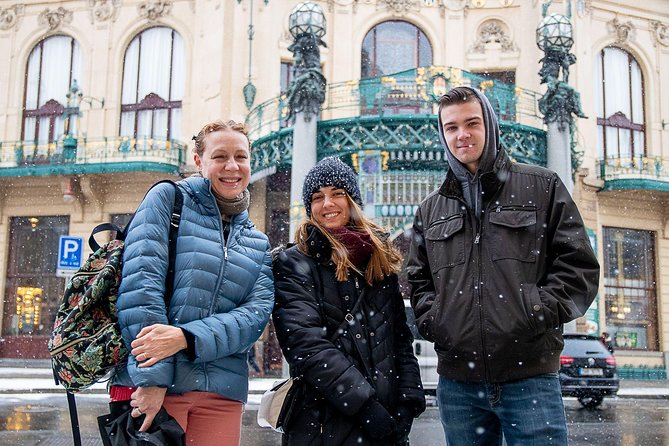
You meet at Ovocný trh 19 in Staré Město (Old Town). The meeting point is central, and the tour is designed to be easy to reach via public transit. You’ll get a historian guide and a mobile ticket, which helps you avoid the usual last-minute ticket scramble.
Starting near Old Town also means you can connect this walk to the rest of your day. The tour ends around Café Louvre on Národní 22, an area that’s perfect for grabbing food, browsing shops, or continuing on foot to nearby sights.
Timing is flexible in the sense that you can choose morning or afternoon, and the listed start time is 10:00 am. Also, the tour runs about 3 hours, which is long enough to feel like a real route but short enough that you’re not trapped for half your day.
House of the Black Madonna: Cubism starts with attitude
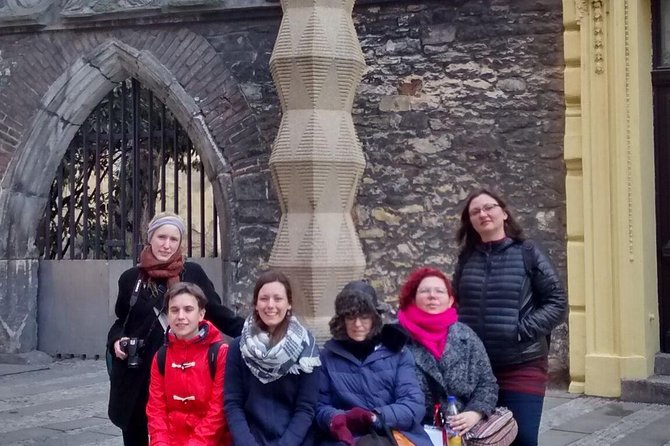
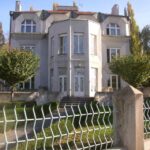
The tour begins at the House of the Black Madonna. This stop is quick, but it matters because it sets up the Cubist lens: instead of chasing decorative curves, you start noticing angular confidence, bold forms, and the sense that the building is built like a composed object.
What to look for here is shape and structure rather than ornament. The guide frames Cubism in a way that helps you understand why Prague became such a center for this style. Even in the early minutes, you’ll be trained to spot what makes Cubist buildings feel crystalline—like the city is made of faceted ideas.
Good to know: you only get about 10 minutes, so use the time like a preview. If you want to study every corner, come back later on your own after the guide teaches your eye.
Obecní Dum: Prague Art Nouveau at its most iconic
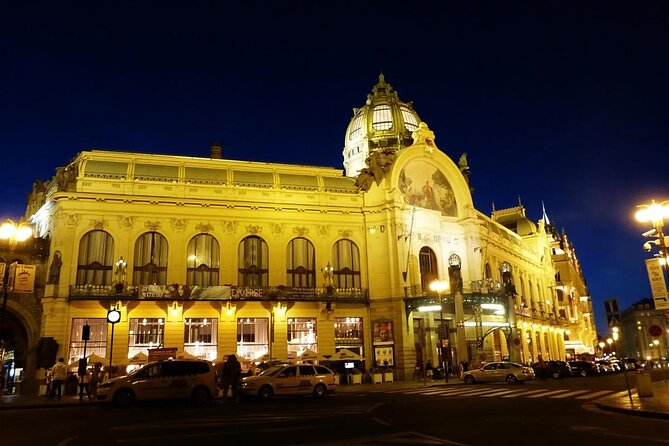
Next up is the Obecní Dum (Municipal House), a flagship Art Nouveau landmark. This is one of those buildings where your brain instantly says, Yes, I get it, and then your guide makes you understand what you’re actually seeing.
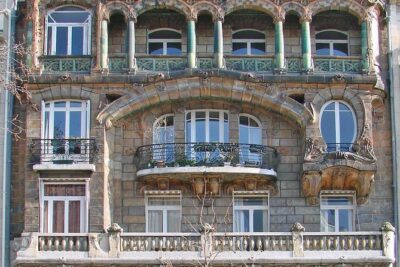
Here you’re likely to hear details tied to the movement’s love of nature-inspired motifs. One of the tour’s concrete clues is the gingko leaf look that shows up on Art Nouveau façades. The guide also connects the style to broader influences—especially how Eastern art and aesthetics helped shape what designers considered beautiful.
Expect to absorb the rhythm: ornamenting without turning chaotic, and using materials and pattern like they’re part of the building’s “voice.”
K+K Hotel Central: an Art Nouveau starter for first-timers
The tour then stops at the K+K Hotel Central Prague, noted as the first Art Nouveau building in Prague. That fact alone makes this a meaningful checkpoint, but the bigger value is how the guide uses it to show early adoption: how quickly Prague embraced a new design language and pushed it into everyday civic life.
Spend your short time here noticing how the Art Nouveau approach turns “ordinary” elements—like windows, entrances, and interior transitions—into something theatrical. This is also a good stop if you’re not an architecture person yet, because the design feels readable even without training.
For the medieval bookend to all this optimism, climb something older afterwards: pragueexplorer.com reviews the Old Town Hall tower entry, the best cheap viewpoint over the roofscape you have been reading facade by facade, and UNESCO’s listing for Prague’s historic centre explains why the whole skyline still hangs together.

Café Imperial interior: the glamour side of Czech optimism
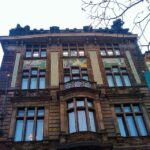
You’ll stop at Café Imperial, focusing on its Art Nouveau interior. This is where the tour shifts from façades to atmosphere. Instead of guessing what’s inside, you get the guidance to notice how the space feels designed—like every line and detail is working for a mood.
This stop is also a nice breather in the route. Even if it’s only about five minutes, the value is that it shows Art Nouveau wasn’t only for grand outside statements. It belonged to social spaces and daily rituals too.
If you like places where history still affects the vibe, this is a strong stop.
Czechoslovak Legion Bank: Cubism with a purpose
At the Czechoslovak Legion Bank, you’re back on Cubist turf, but with an extra layer: the interior and architecture are dedicated to the Czechoslovak Legion and the First World War.
This matters because it’s not Cubism as fashion. It’s Cubism used as a language for remembrance and national identity. You’ll get help connecting design choices to the political climate of the time, not just to aesthetics.
The practical benefit for you is that your eye stops treating Cubist buildings as random angular art. You start reading them like messages.
Prague hlavni nadrazi: Art Nouveau inside the main station
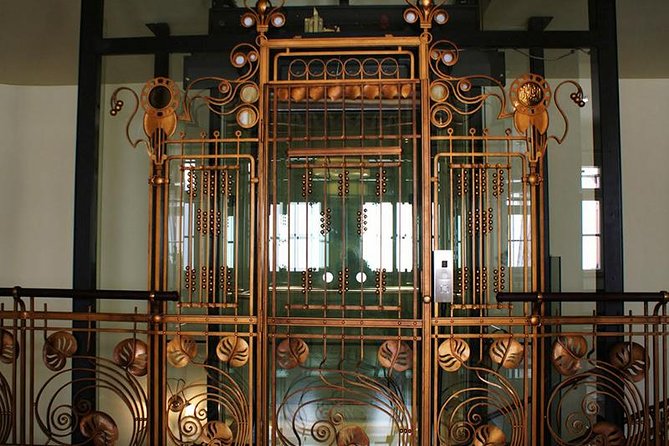
Next is Praha hlavni nadrazi (Prague Main Train Station). This is a major “wow” stop, especially because the building includes a magnificent Art Nouveau dome in the interior space.
Stations can be overwhelming—people rush, signs blur, and you just want to find your platform. The guide can help you navigate smarter, so you’re not left wandering for 20 minutes trying to figure out where everything is.
Use this stop to connect the tour themes with daily life. This dome isn’t built for tourists looking for photos. It’s built for people moving through a modern city.
Wenceslas Square: where Art Nouveau meets Art Deco
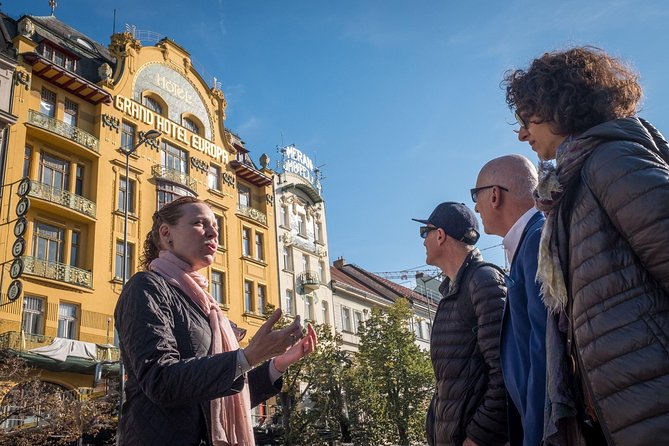
Then the walk reaches Wenceslas Square, and the guide focuses on the square’s Art Nouveau and Art Deco architecture. This part is useful because it teaches you that Prague’s streets don’t sit still in one style. You’re seeing design evolve across time, often within the same big urban space.
Your job here is to start spotting the differences in ornament density, geometric feel, and overall vibe. The guide’s explanations make it easier to read the square even if you’re passing through it later on your own.
The stop lasts about 15 minutes, so don’t try to memorize everything. Instead, grab a sense of how to recognize styles at a glance.
Lucerna Music Bar: the best kind of time travel
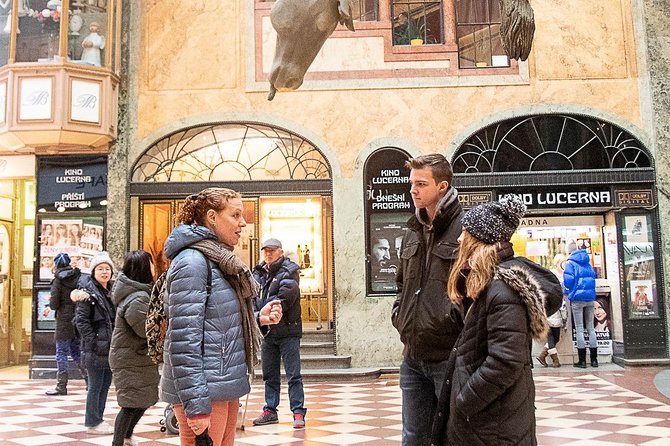
The tour then goes to Lucerna Music Bar, known for its Art Nouveau interior and the arcades that help make the area feel special. This is one of the stops that gives you turn-of-the-century energy without needing to be in a fancy museum.
Look for how the building channels optimism and modernity—ideas that were happening in Prague around the same time as the avant-garde movements the guide discusses. It’s a good contrast point right before the last stop, where the tour turns from architecture to symbolism and national identity.
Upside-down statue on the route: history in one object
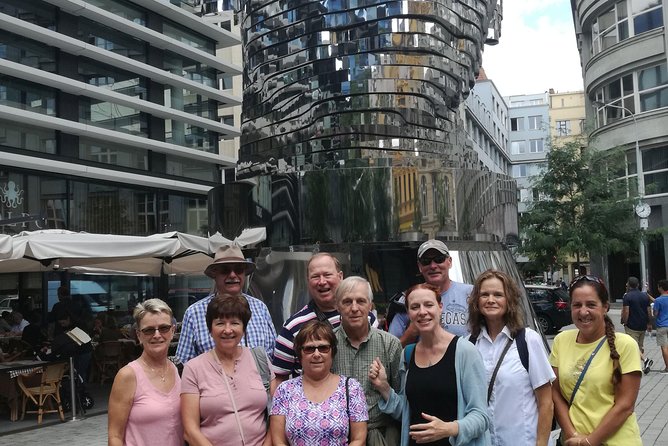
At the Upside-Down Statue of King Wenceslas riding a Dead Horse, you’ll discuss symbolism in the context of Czech history and the Czech National Revival. This is a clever way to close the architecture loop: style isn’t separate from politics and identity.
Even though it’s a contemporary sculpture, the guide frames it against the earlier struggles Czech culture went through—so you can see why a public artwork can feel like a headline about national memory.
This stop is about 10 minutes, and it works best if you let the guide explain the “why.” The piece becomes easier to understand once you know what it’s reacting to.
The technology stories you’ll remember on your next Prague walk
One of the tour’s strengths is how it connects architectural style to engineering reality. The guide points out groundbreaking construction and building systems from the era—things like central heating and ventilation, drinking water, hydraulic elevators, steam-powered laundry, and even an intercom system.
That list might sound like a trivia contest, but it changes how you look at the buildings. When you know the era had to solve serious comfort and infrastructure challenges, decoration feels less random and more intentional. Designers were selling a future, and the city was literally upgraded with new systems.
If you want Prague to feel real (not just postcard-pretty), this is one of the most valuable parts.
How to spot Art Nouveau vs Cubism after the tour
By the end, you should be able to tell the difference without relying on signage. Here’s the practical shortcut the guide helps you build:
- Art Nouveau tends to love nature motifs, curving lines, and decorative rhythm. Watch for plant-like forms such as the gingko leaf vibe and for design elements that look “grown.”
- Cubism makes you focus on geometry, facets, and structured angles—crystal-like forms and pyramid-like composition show up in ways that feel engineered.
- In Prague, these styles also get interpreted through Eastern influences and through Czech cultural pride, so the same city can show multiple “solutions” to modern life.
After this, when you wander on your own, you’ll spend less time guessing and more time noticing.
Price and value: $126.71 for a focused architecture story
At $126.71 per person, this isn’t the cheapest way to see Prague. But for a three-hour walk with a historian guide, it’s priced like a specialty experience.
A few value anchors make the cost easier to justify:
- You get a small group with room to ask questions while standing in front of details.
- The route includes major sights and also helps you access interior-feeling context where noted, not just exterior gawking.
- Many stops on the route are listed as free entry, so you aren’t paying extra to keep moving.
One more practical signal: it’s on average booked 69 days in advance. If you’re traveling in peak season or you want a specific morning vs afternoon departure, book early so you don’t end up settling for whatever’s left.
What the route feels like in real life (pace, timing, and options)
The tour is built around short “look and learn” blocks—around 5 to 15 minutes at each location. That structure keeps it energetic, but it also means you can’t expect to linger endlessly. If you’re the type who wants 30 minutes per façade, plan a second pass later.
The pace also depends on weather. Reviews note that even in rain you still get plenty of examples of Art Nouveau and Cubist architecture, and guides adjust the route to what interests you. That’s one reason the small group matters: it makes tailoring possible.
Also keep an eye on comfort. You’re walking multiple city-center segments, and the whole point is being close enough to see details.
Who should book this Prague architecture walk
This works best if you fit at least one of these:
- You want a strong first overview of Prague through its design history.
- You like architecture but want it explained in human terms, not just art terms.
- You’re interested in the way politics and wars shifted the course of Prague history and culture.
- You enjoy asking questions mid-route. Reviews mention guides tailoring to what people want, including specific interests like cubism and art deco.
It also suits a wide age range in practice, because the route is structured and guided. If your group includes teens and grandparents, this kind of tour can actually hold everyone’s attention—architecture gives you a common language.
Should you book this Art Nouveau and Cubism walking tour?
If you want to see Prague and understand what you’re looking at, I’d book it. The biggest wins are the small-group feel, the way the guide connects styles to Czech history, and the mix of iconic stops with the kind of focused architecture moments that make you notice details later.
The only reason to hesitate is if you hate walking or need long breaks. The stops are short by design, so it’s less about lingering and more about learning your eye.
If that sounds like your travel style, reserve a spot and bring a curious mindset. Prague’s buildings will start talking back.
FAQ
How long is the Prague Art Nouveau and Cubism walking tour?
It lasts about 3 hours.
What is the group size limit?
The tour has a maximum of 8 travelers.
Where does the tour start and end?
It starts at Ovocný trh 19, Staré Město, and ends near Café Louvre at Národní 22.
Are there different departure times?
Yes, you can choose a morning or afternoon departure. The start time listed here includes 10:00 am.
What language is the tour offered in?
It is offered in English.
What is included in the price?
A historian guide is included.
What is not included?
Food and drinks are not included unless specified, and there is no hotel pickup or drop-off.
Do the stops require paid admission?
The stops listed in the route are marked as admission ticket free.
Is free cancellation available?
Yes. You can cancel up to 24 hours in advance for a full refund.
What should I expect in terms of participation?
Most travelers can participate, and it’s a walking tour around central Prague.