REVIEW · PRAGUE
Private Prague Art Nouveau and Cubism Walking Tour
Book on Viator →Operated by Prague Articulate · Bookable on Viator
Prague’s buildings start speaking. This private, English-language walking tour is a smart way to learn Art Nouveau and Cubist style at street level, with a guide who connects design details to the people and ideas behind them. I especially love how the route trains your eye to recognize style cues on the fly, and how it includes standout Prague-specific sights like the House of the Black Madonna and Emil Kralicek’s cubist lamppost. One thing to plan for: not every stop includes admission, and the walking and transit gaps can make the experience feel longer than the stated 2.5 hours.
This is priced per group (up to 15), so it can be good value if you’re coming with a couple friends or a small family. You also get a mobile ticket, and you’ll be close to public transportation throughout the day’s movement—handy in a city where distances add up fast. Your guide is Max Hutar from Prague Articulate, and the vibe is engaging, story-driven, and very focused on architecture you can actually see.
Because some segments are short walks and some are done using public transportation, the listed stop times don’t add up perfectly to the full duration (about 2 hours 30 minutes). Expect a steady pace with frequent look-ups and quick discussion at each exterior.
In This Review
- Key highlights worth building your day around
- Price and group value for a 2.5-hour architecture hit
- Meeting at Prague Main Station: why this start matters
- From a Moorish-style synagogue to Art Nouveau hints
- Senovážné náměstí: spotting Art Nouveau apartment drama
- Hotel Central Palace on Hybernská: early Art Nouveau in plain sight
- Obecní dům (Municipal House): Prague modern culture in stone
- House of the Black Madonna: Prague Cubism at full volume
- Na Příkopě and Václavské náměstí: Art Nouveau on Prague’s main artery
- Vodičkova and the cubist street clues
- Three Cubist Houses and Villa Kovarovic: moving toward Prague’s experiments
- Ending on Neklanova: a cubist apartment finish line
- Who this tour fits best (and who might want a different plan)
- What makes the guide matter: Max Hutar’s story-and-detail approach
- Should you book this Prague Art Nouveau and Cubism tour?
- FAQ
- How long is the Private Prague Art Nouveau and Cubism Walking Tour?
- Is this a private tour or a shared group?
- What’s the maximum group size, and is the price per group or per person?
- What language is the tour offered in?
- Are admission tickets included for all stops?
- Where does the tour start and where does it end?
- Do I need to plan for walking and transport between stops?
- Is it suitable for most travelers, and are service animals allowed?
- Will you need another tram ticket at the end?
- Cancellation rules
Key highlights worth building your day around
- Start with Prague’s Central Station (opened 1909), an Art Nouveau showpiece with recently reconstructed interiors worth the time.
- Learn Cubism through Prague furniture and facades, including Emil Kralicek’s cubist lamppost and three famous cubist houses near Vyšehrad.
- You get both style education and practical orientation, so Prague’s “modern” early-1900s side becomes easier to spot later on your own.
- Multiple city-square and street moments, from Senovážné náměstí to Václavské náměstí and Vodičkova.
- Some key stops are outside-only (admission not included), so you’ll see plenty even if you skip interiors.
Price and group value for a 2.5-hour architecture hit
At $94.93 per group (up to 15 people), this tour is priced for groups that want a guided route without the per-person hit. If you’re traveling solo or as a couple, it may feel like a premium compared with standard group tours—but the private format is what you’re paying for: you can set the pace, ask questions, and focus on what interests you most (architecture details, timelines, or how styles spread through the city).
Duration is about 2 hours 30 minutes, and the route is built with short pauses plus short transfers. That matters because you’ll actually see more “style territory” than you would by trying to self-tour everything at random. If you’re the kind of person who likes learning patterns—how to spot Art Nouveau curves or Cubist angular fractures—this is a time-efficient way to get there.
One fair caution: the actual experience can run longer because there’s walking between stops, and the transit timing isn’t just “down time.” Bring comfortable shoes and give yourself a little buffer in your schedule.
You can also read our reviews of more tours and experiences in Prague.

Meeting at Prague Main Station: why this start matters
The tour begins at Prague Main Station, also known as Praha hlavní nádraží, at Wilsonova 300/8 (Vinohrady). Starting here is a smart move because it sets the visual baseline fast: this building opened in 1909 and is a prime example of Prague’s Art Nouveau style. Since it was recently reconstructed, you’ll see a clean, cared-for version of the station’s architectural mood right away.
In practical terms, this start also reduces friction. You’re meeting in a major hub, so it’s easy to arrive by tram, metro, or on foot if you’re already exploring nearby. Then you immediately move from a single big landmark into smaller architectural “clues” around the city.
If you’re short on time in Prague, this is one reason the tour can be worth booking early in your trip: once you’ve seen the station’s scale and decorative approach, later facades and shopfronts make more sense.
From a Moorish-style synagogue to Art Nouveau hints
Next comes the Jerusalem Synagogue, from 1906. Synagogues in that era often used stylistic traditions associated with Moorish design, and this one includes art Nouveau elements that were fashionable at the time. The key detail here is contrast: you’re not only seeing one style, you’re seeing how Prague absorbed influences and mixed them into something distinctly local.
Admission is not included here, so you’ll likely experience the site from outside or at least without relying on the tour to cover entry. That’s not automatically a downside. It still teaches you a useful lesson: style boundaries in Prague can be fuzzy, and buildings often borrow, remix, and adapt.
If interiors matter to you, you’ll want to check on your own whether you plan to add time for entry—because the tour itself doesn’t promise included admission at this stop.
Senovážné náměstí: spotting Art Nouveau apartment drama
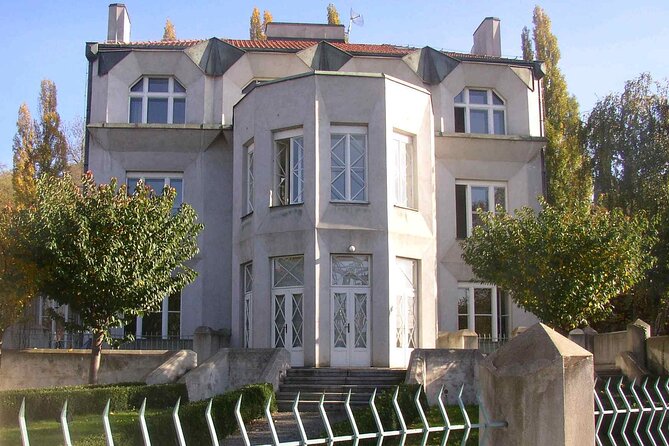
At Senovážné náměstí, you get a quick hit of Art Nouveau apartment architecture. The stop is short, but the payoff is clear: this is where you start noticing the “everyday grandness” of Prague—how residential buildings carried serious design ambition in the early 1900s.
This square also helps you connect dots across neighborhoods. The tour doesn’t keep you in one bubble of tourist icons. Instead, you’re training your eye to see how style shows up in apartments, hotels, and commercial streets too.
Admission is free at this stop, so there’s little friction. Use the short time to look at repeating patterns: window shapes, surface ornament, and how the building’s lines curve or break depending on the era.
Hotel Central Palace on Hybernská: early Art Nouveau in plain sight
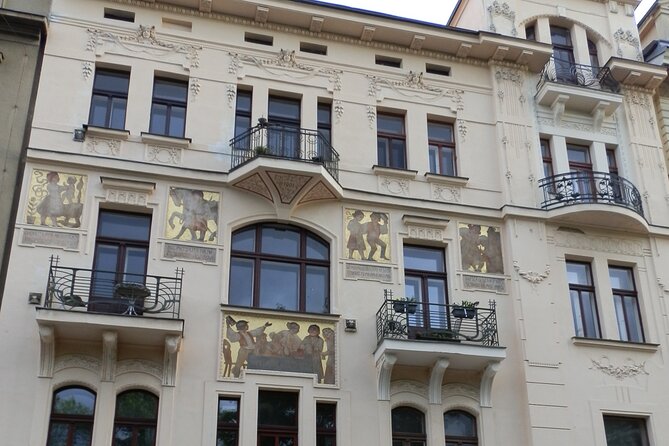
Hybernská 10 brings you to the Hotel Central Palace, dating to 1899. It’s described as one of Prague’s earliest Art Nouveau buildings, and that’s exactly why it’s a good stop on this route. Early examples can feel both familiar and experimental: you see the style trying on ideas before it fully settles into the most recognizable look.
Admission is not included here, so your visit is mainly about exterior observation and quick guidance. This is where a good architecture guide earns their paycheck. You don’t need an indoor ticket to learn what to look for—you need someone to point out which details matter.
If you only have time for a few “Art Nouveau” stops on your trip, this is one of the better uses of a short window because it’s early enough to show you how the style formed.

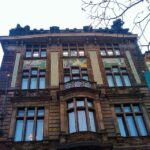
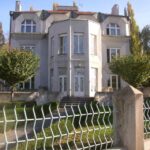
Obecní dům (Municipal House): Prague modern culture in stone
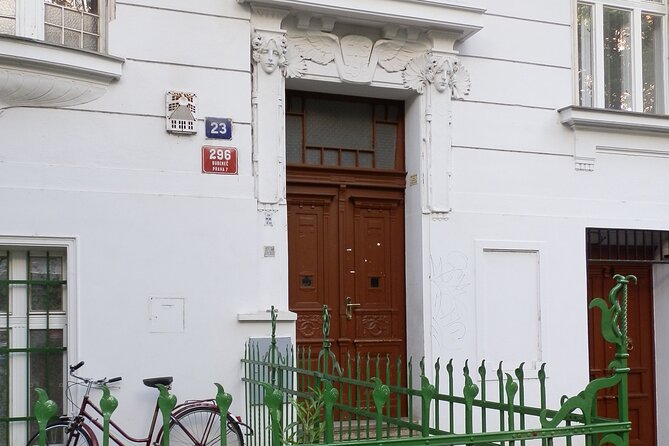
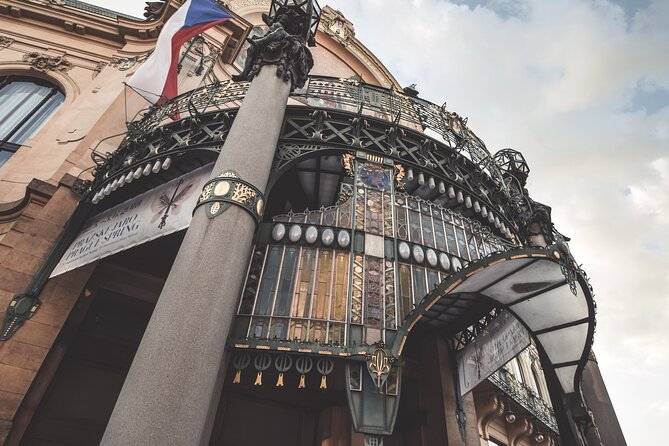
Next is Obecní dům, the Municipal House of Prague, projected in 1905. It still functions as a house of culture and representation, which means it’s not just a pretty facade—it’s an active civic building. The tour frames it as one of Prague’s biggest and most important Art Nouveau works.
Admission is not included here, so again you’re focused on seeing the structure and details without relying on entry. Even from outside, you can get a lot out of this stop because you’ll learn to read scale. Big civic architecture tells you how boldly Prague embraced modern design.
Use this moment to compare what you saw at Central Station. Even when two buildings are both Art Nouveau, the approach can feel different—more monumental here, more station-like spectacle there.
House of the Black Madonna: Prague Cubism at full volume
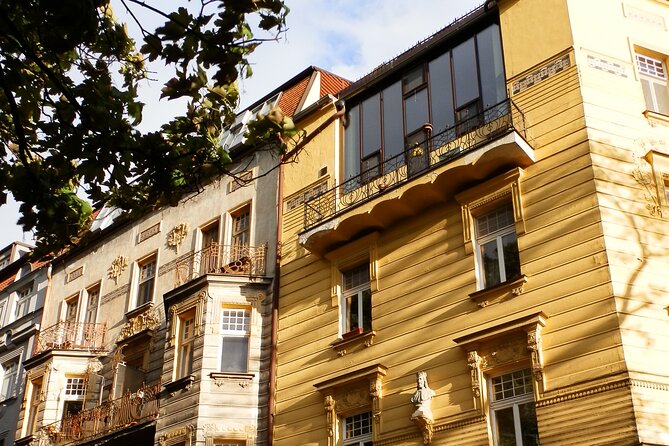
Then the route makes its most dramatic stylistic pivot with the House of the Black Madonna (House at the Black Madonna), from 1912. Cubism in Prague has a reputation for being energetic and slightly confrontational in how it fractures surfaces, and this building is presented as the flagship of that cubist approach.
Admission is not included, so you’ll be outside. But if your goal is to understand style, that works. Cubist architecture is about form, angles, and composition—things you see instantly even when you’re standing on the street.
This is also a key stop for building your confidence. By the end of the tour, you should be able to glance at a facade and say, roughly, whether it’s leaning Art Nouveau or Cubist—without waiting for a plaque to explain it.
Na Příkopě and Václavské náměstí: Art Nouveau on Prague’s main artery
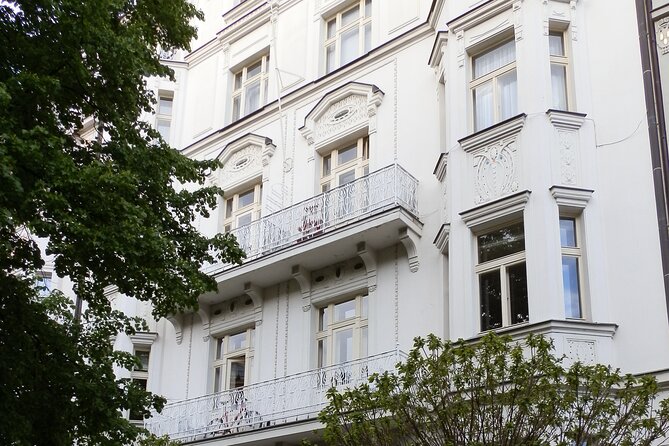
At Na Příkopě, the tour moves along a boulevard described as the borderline between Old Town and New Town. This is a classic Prague walking lesson: you don’t just view buildings; you learn what streets are for. Banks and other buildings line the route, and many wear Art Nouveau styling.
Then you reach Václavské náměstí, where the tour spends about 20 minutes. This central square has beautiful Art Nouveau hotels and department stores, which makes it a useful contrast to the more residential feel earlier in the walk. It’s a place where you’ll start noticing how commercial Prague wanted to look modern—sometimes in a more flamboyant way than quieter districts.
Most of these stops don’t require tickets, which is a real advantage when you’re balancing the tour with other plans. You get instruction without being trapped behind ticket lines.
Vodičkova and the cubist street clues
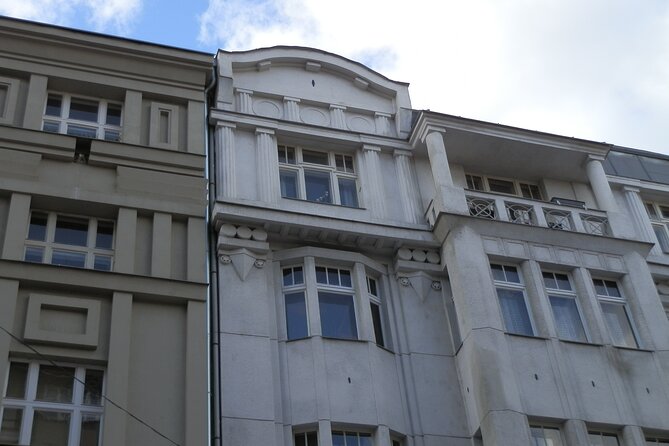
Vodičkova adds another street-layer lesson, with multiple Art Nouveau and Cubist buildings packed into an area that rewards slow looking. The tour gives you about 10 minutes here, which may sound short—but the point is to sharpen your attention quickly.
When I’m judging a style-focused tour, I look for whether it changes how I see the city afterward. A street stop like Vodičkova can do that because it forces comparison within a small footprint. You stop hunting for one “perfect” landmark and start seeing how styles can overlap within a neighborhood.
Again, admission isn’t included at this stop, so the value is in the guide’s pointers and your own eyes.
Three Cubist Houses and Villa Kovarovic: moving toward Prague’s experiments
Near Vyšehrad fortress, you’ll see the three Cubist Houses under the rock. This triplet is presented as one of the most famous constructions of the Cubist style. The stop is short, but it’s influential: triplet buildings make it easier to understand Cubism as a system, not just one-off decoration.
After that, the tour moves to Villa Kovarovic, built in 1912 on the Vltava river banks. It’s described as cubist while also inspired by Gothic and baroque elements. That mix is the point. Prague Cubism isn’t only about sharp geometry. It can carry older design languages too, like a city that refuses to choose only one tradition.
Admission isn’t included at these stops, so you’ll be absorbing the shapes from outside. If you love architecture that looks like it’s mid-thought—like someone cut a plan into angles and then rebuilt the entire idea—you’ll probably find this segment energizing.
Ending on Neklanova: a cubist apartment finish line
The tour concludes on Neklanova, with an amazing cubist apartment building from 1913. This final street stop works well because it brings Cubism back to everyday life. You’re not only seeing civic or monumental architecture—you’re seeing how design ideas could shape housing too.
The stated end location is Na Slupi 2102/2b (Nové Město), and the tour concludes at the Albertov tram stop so you can get back to the center quickly. The tour also mentions that the same ticket used for public transportation to the last leg should remain valid long enough for your return.
Practically, it means you don’t end stranded. You finish near transit and can connect onward without turning your day into a maze.
Who this tour fits best (and who might want a different plan)
This is a great match if you like architecture, design, and the challenge of learning a visual “language.” The tour format is especially good for people who want to start spotting differences in Prague’s early 1900s buildings—fast.
It’s also a good option if you want orientation without doing a generic highlights walk. The route is built around style change points, so your brain stays engaged.
On the other hand, if you only care about interiors and want long museum-style access, you may feel slightly constrained, since multiple stops do not include admission. And if walking is hard for you, note that the experience includes walking between stops and some transit gaps, so you’ll want to pace yourself and wear comfortable shoes.
What makes the guide matter: Max Hutar’s story-and-detail approach
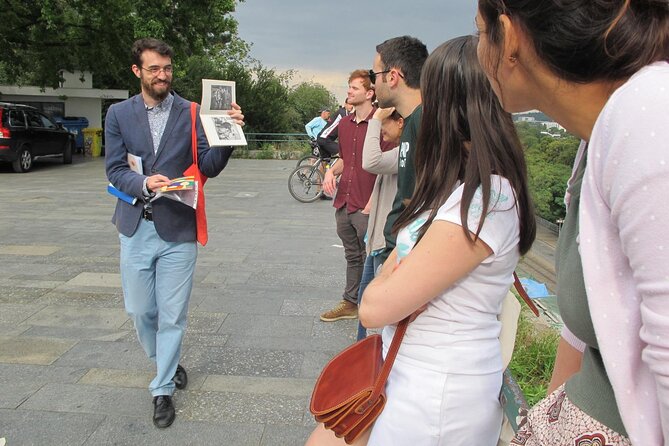
This is led by Max Hutar of Prague Articulate, and the best part of his guiding style is how he links architectural details to the bigger picture without drowning you in jargon. The tour has a strong teaching rhythm: look closely, understand the design idea, then look again with better eyes.
You’ll likely appreciate that the guide doesn’t treat buildings like static objects. Instead, you’ll hear them explained in a way that feels human—why people built this way, what the era was trying to do, and how the city’s identity shows up in stone and windows.
Also, the tour is described as accommodating to needs, so if you move slowly or want extra time at a facade, this private setup makes it easier to work with your pace.
Should you book this Prague Art Nouveau and Cubism tour?
I’d book it if you want an architecture-focused Prague experience that teaches you how to recognize styles without needing an architecture degree. It’s private, English-language, and structured around major visual “stations” of Art Nouveau and Cubism, from Prague’s Central Station to the cubist finale on Neklanova.
I’d skip or consider a different option if your priorities are mostly indoor sites with included tickets. Several stops here are listed as not including admission, so you’ll be relying on outdoor viewing and the guide’s explanations rather than guaranteed entry to every highlight.
If your schedule allows, this tour also works well early in your trip. It helps you see Prague’s modern side again later, even when you’re just wandering.
FAQ
How long is the Private Prague Art Nouveau and Cubism Walking Tour?
The tour lasts about 2 hours 30 minutes.
Is this a private tour or a shared group?
It’s private. Only your group participates.
What’s the maximum group size, and is the price per group or per person?
The price is $94.93 per group, with up to 15 people per group.
What language is the tour offered in?
The tour is offered in English.
Are admission tickets included for all stops?
No. Some stops are free to visit, while others are listed as admission not included (for example, the Jerusalem Synagogue and several other major buildings).
Where does the tour start and where does it end?
It starts at Prague Main Station (Wilsonova 300/8, Vinohrady). It concludes at the Albertov tram stop, with the experience end listed at Na Slupi 2102/2b.
Do I need to plan for walking and transport between stops?
Yes. There is walking involved, and some of the moving time uses public transportation, so the time at specific stops won’t add up exactly to the full tour duration.
Is it suitable for most travelers, and are service animals allowed?
Most travelers can participate, and service animals are allowed.
Will you need another tram ticket at the end?
The tour notes that the same public transportation ticket used for the last leg remains valid long enough to get you back toward the city center.
Cancellation rules
Free cancellation is available up to 24 hours before the experience starts for a full refund.