
REVIEW · WASHINGTON DC
DC: Historic Georgetown History & Architecture 2 Hour Tour
Book on GetYourGuide →Operated by Visit DC Tours · Bookable on GetYourGuide
Georgetown’s cobblestones have secrets, and this tour tells them. I love how you start at C&O Canal Lock 3 and quickly move into the Old Stone House area. The guide weaves presidents, immigrants, and Kennedy-era lore into the streets in a way that sticks. One possible drawback: if you want architecture-only, you may feel the story style leans a touch toward gossip.
The tour is led by professional, licensed local experts, and some named guides who’ve handled this walk include Catherine, Georgia, Becca, and Ingeborg. In practice, that shows up as smooth storytelling and quick pivots that keep a small group engaged, including a run where the group size was just 8.
At $49 for about 2 hours, it’s a strong value if you want a guided shortcut through Georgetown’s key sights without piecing together bus routes or multiple tickets. Do wear shoes for cobblestones and uneven sidewalks, because that part is real, not marketing.
In This Review
- Key Highlights You’ll Actually Feel While Walking
- Why Historic Georgetown Feels Like a Time Machine
- Start Smart at C&O Canal Historic Park (Lock 3)
- Old Stone House: More Than a Pretty Stop
- M Street Northwest and the Neighborhood Texture
- Newton D. Baker House: Details at Human Scale
- Georgetown’s Key Story Stops: From Martin’s Tavern to the Wave Wall
- Kennedys, Taylor Swift, and the People Who Shaped This Place
- Georgetown University: Use Your 10 Minutes On Purpose
- Price, Timing, and Group Size: Is $49 a Good Deal?
- Who This Tour Is Best For (and Who Might Want Something Else)
- Should You Book DC Historic Georgetown History & Architecture?
- FAQ
- Where does the tour start?
- How long is the tour?
- How much does it cost?
- Do I need to buy tickets in advance?
- Is the tour in English?
- What are the main stops?
- Where do I meet if I’m using taxi or rideshare?
- Where does the tour end?
- What’s included in the price?
- What should I do about gratuity?
Key Highlights You’ll Actually Feel While Walking
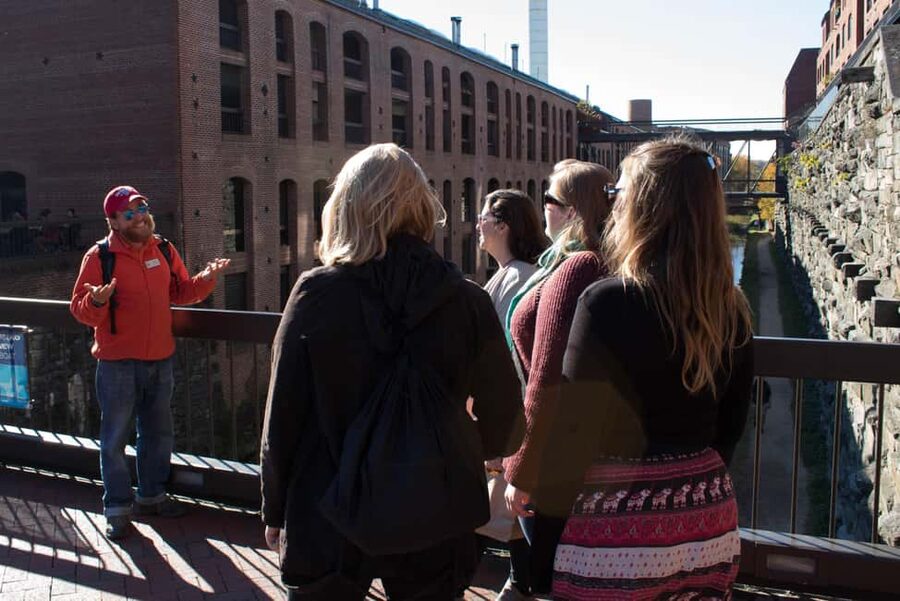
- Lock 3 to Georgetown in one easy flow, connecting the canal world to the neighborhood above it
- Old Stone House details you can spot, including historic design cues and the significance of the National Park site
- Architecture clues beyond postcard views, like firemarks, coal chutes, ironworks, and gas lanterns
- Stories with human focus, including Black Georgetown, immigrants, and women who challenged social norms
- Kennedys and even Taylor Swift references, used as doorways to understand the place
- A guided Georgetown University stop, plus a short window to look around on your own
Why Historic Georgetown Feels Like a Time Machine
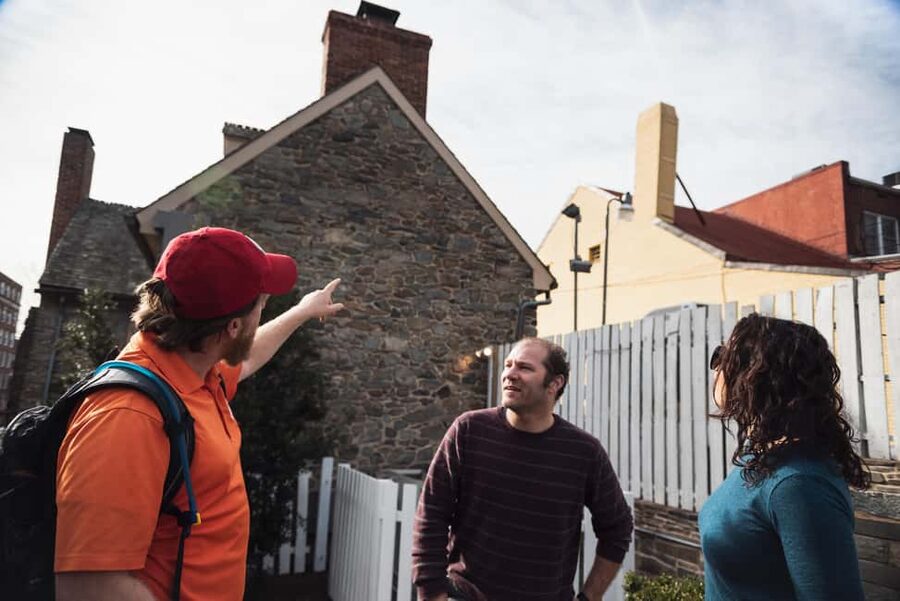
Georgetown can look like a neat, polished corner of Washington. This tour nudges you past that surface and into the older, weirder, more complicated layers. You’re in a neighborhood older than the capital itself, and that age shows in the way the streets curve and the buildings sit like they’ve been here for centuries.
I like that the stories don’t treat history like a museum label. You hear how Presidents lived here when they were still Congressmen, and how the Founding Fathers shaped the city using plans made in everyday places, not just grand ceremonies. That human scale makes the neighborhood easier to understand.
You also get a clear sense that Georgetown wasn’t one single “type” of place. The C&O Canal runs through the industrial side of the area, while the residential and institutional parts sit close by. The walk keeps switching gears, which is exactly what makes it interesting.
You can also read our reviews of more tours and experiences in Washington Dc.



Start Smart at C&O Canal Historic Park (Lock 3)

You meet at the Chesapeake and Ohio Canal Historic Park by Lock 3, located between Thomas Jefferson and 30th St NW. There’s a park on the north side of the canal, which gives you a good open space to regroup before you head into the streets.
If you’re arriving by taxi or rideshare, the simplest move is to use Baked & Wired at 1052 Thomas Jefferson St NW as your drop-off point. The tour provider notes it’s a short 2-minute walk from there, and you can see the tour start from the bridge in front of the bakery. I like this because you can grab a pastry first, get your bearings fast, and avoid hunting for the group.
The tour’s first stretch includes a photo stop plus a guided look at Lock 3. What you should watch for: how the canal function connects to the life of the neighborhood. Even if you only remember one thing, remember this—waterways shaped industry, and industry shaped where people lived and worked.
Old Stone House: More Than a Pretty Stop
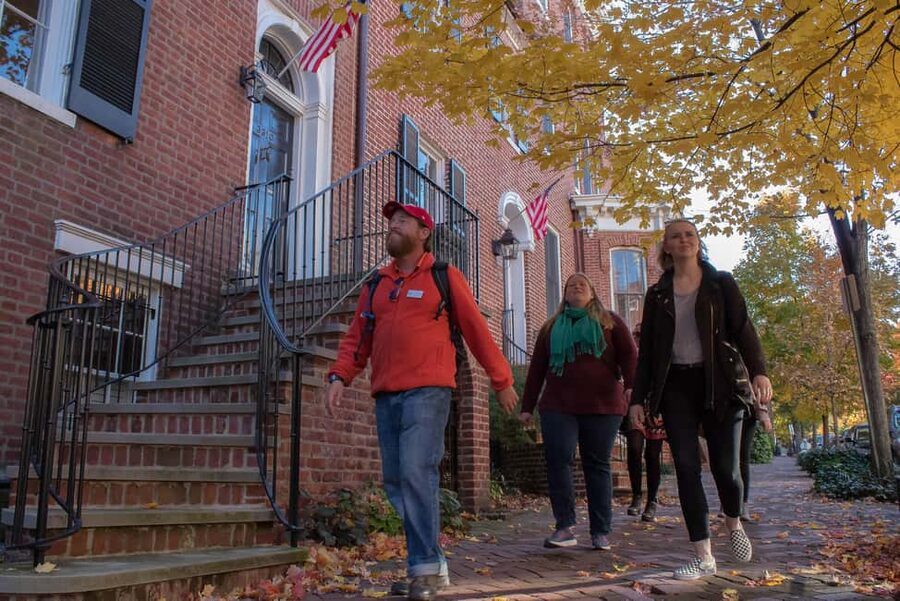
The Old Stone House stop is short, but it’s one of the places where the tour earns its time. You’ll get a photo stop and a visit, and you’ll hear that it’s the oldest residential building in the district and now part of a National Park site.
This is where the tour’s architecture angle becomes practical. Instead of telling you it’s old, the guide points you toward what to look for in the built environment—details that many people walk right past. If you’re a visual learner, this is a good moment to slow down, stand still, and let the guide connect the building’s age to the stories you’ll hear later.
If you’re already a Washington building buff, you might still enjoy the context. It ties the stone house to the broader Georgetown pattern: longtime structures, changing residents, and the way the neighborhood kept reinventing itself without fully resetting.
M Street Northwest and the Neighborhood Texture

Next comes M Street Northwest, with another photo stop plus guided walking time. This segment matters because it shows you how Georgetown’s main streets transition into those quieter lanes and older building lines.
You’ll also have a chance to clock the neighborhood’s “everyday historic” look: Victorian-era homes, older churches, and the vibe of a place that still feels like a community rather than a theme park. That’s not just aesthetics. It’s why the tour feels different from a typical monument circuit.
At this point, the guide’s storytelling style is doing real work. The walk is built to keep shifting between architecture, specific places, and personal narratives—wild women, innovative immigrants, and the founding-era people who affected the city’s layout. If you enjoy history as a string of people and decisions, you’ll likely stay locked in here.
Newton D. Baker House: Details at Human Scale
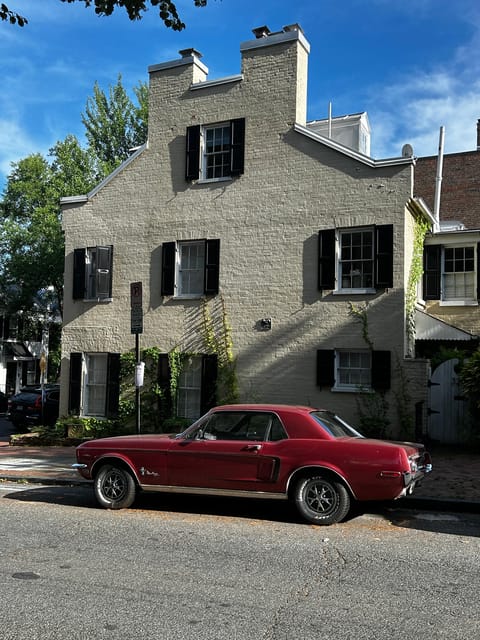
You’ll pass the Newton D. Baker House with a quicker photo stop plus a short guided visit. This is one of those “blink and you miss it” moments, which is exactly why having a local expert matters.
Even when time is tight, the guide uses these stops to teach you how to read the street. You might notice the kind of tells that historians love: evidence of old work patterns, older exterior features, and building elements that suggest what residents needed at the time.
If you’re the type who likes a tour to point out specific features, keep an eye out for the tour’s recurring architectural cues. The tour encourages you to look for original firemarks, coal chutes, ironworks, and gas lanterns as you go. Those details turn Georgetown from pretty to meaningful.





Georgetown’s Key Story Stops: From Martin’s Tavern to the Wave Wall

After the earlier architecture moments, the tour hits a longer stretch in Georgetown proper—about 45 minutes, with guided storytelling and photo time. This part is where the tour’s identity shows most clearly: the neighborhood as a stage for real-life change.
You’ll also make brief stops at two memorable anchors: Martin’s Tavern and the Wave Wall. Martin’s Tavern is handled as a photo stop with a short visit, and the Wave Wall gets similar treatment. The point of both isn’t just the photo—it’s the way the guide connects them back to the surrounding streets and the people who moved through them.
One reason these shorter stops work: Georgetown is compact. In a short time, you can see how the area’s landmarks sit alongside the residential texture. The guide uses that closeness to help you picture how daily life operated here.
Kennedys, Taylor Swift, and the People Who Shaped This Place
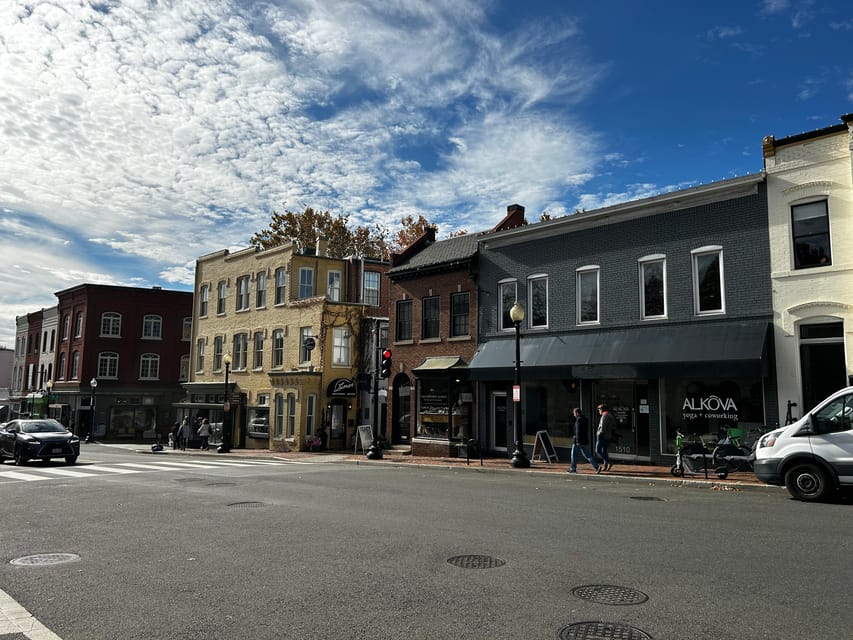
A big promise of this tour is that you’ll learn what the Kennedys have to do with Georgetown—and yes, there’s also a connection to Taylor Swift. The value here is less about pop culture trivia and more about using modern reference points to make the place easier to remember.
The tour includes stories connected to Jackie and John F. Kennedy, including their time in Georgetown before and after his assassination. That kind of framing turns a neighborhood stroll into a memory map: you’re not only seeing buildings, you’re hearing how events and residents shaped what the area meant.
You’ll also hear about Black Georgetown and about immigrants who helped shape the neighborhood. You’ll hear about women who bucked social norms, the kind of characters who don’t always make it into the most polished versions of national history. If you like your Washington stories grounded in real people rather than only famous men, this is one of the strongest parts of the walk.
Georgetown University: Use Your 10 Minutes On Purpose
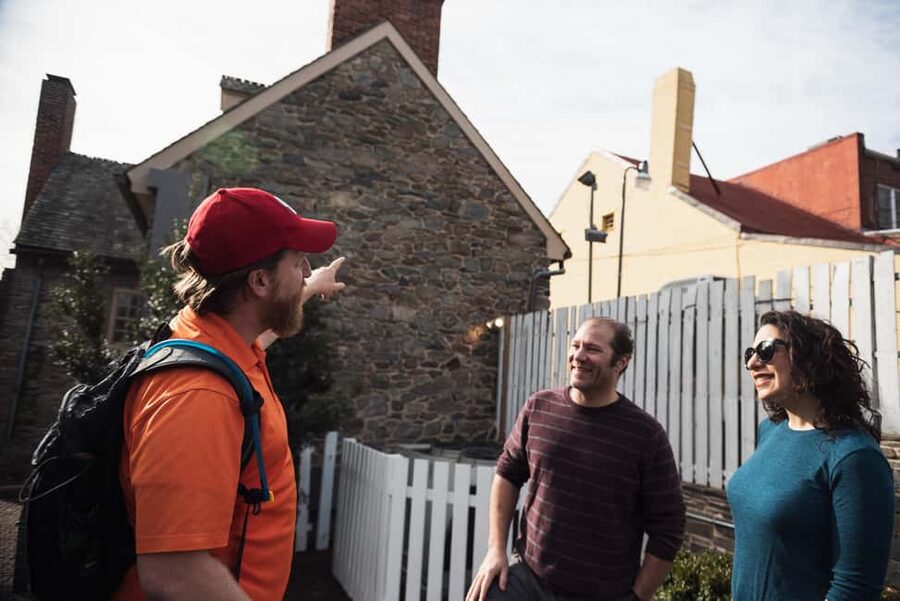
The final major stop is Georgetown University. You get a photo stop and a visit, followed by free time for about 10 minutes.
That free time is your chance to do one small thing that makes the whole tour feel personal. Take a few photos, look around, and decide what you’d want if you came back for a longer visit. Because you’re short on time, I suggest you pick one direction to explore rather than trying to cover everything.
The tour also frames Georgetown University as part of the neighborhood story. The guide explains how the surrounding area influenced the university’s development, which helps you understand why the campus feels woven into the neighborhood instead of pasted on top of it.
Price, Timing, and Group Size: Is $49 a Good Deal?

For $49 per person, you’re paying for a guided 2-hour walking route that covers canal history, standout buildings like the Old Stone House, street architecture, and major anchors like Martin’s Tavern and Georgetown University. You also get recommendations on lunch after the tour.
That price starts to feel like value when you consider what would be hard on your own: you’d likely spend time figuring out where to start (Lock 3), then how to connect the scattered sights into one smooth walk, then how to interpret the buildings without a local guide.
Group size seems to stay small. One tour experience described a group of 8, which is a sweet spot for questions and interaction. If your group ends up even smaller, you may get extra attention, and at least one run became private due to the party size.
The main trade-off comes down to fit. One participant rating it 4/5 said they wanted the balance to lean more toward history and less toward gossip. If you’re strictly architecture-focused, you might want to treat the storytelling as the main engine and the buildings as the stage props.
Who This Tour Is Best For (and Who Might Want Something Else)
This tour is ideal if you want Georgetown in one guided sweep. It works especially well for first-timers who want to understand the neighborhood’s identity beyond the obvious photos.
It’s also a good match if you enjoy narrative history. The guide style emphasizes stories—founding-era influences, immigrants, Black Georgetown, and women who didn’t fit polite rules. You’ll likely enjoy the energy if you like history that feels like characters and choices rather than dates.
If you only care about architectural vocabulary—styles, material changes, and strict building analysis—this may feel too story-heavy for your taste. The architecture is real and the stops are specific, but the tour’s storytelling approach is part of the product.
Should You Book DC Historic Georgetown History & Architecture?
Book it if you want a guided, time-efficient way to see Georgetown’s best-known landmarks and understand why they matter. I’d especially recommend it if you’re interested in how different sides of Georgetown connect—the canal’s industrial energy and the residential elegance—and you want a guide to point out the clues in the streets.
Skip it or consider a different style tour if you’re architecture-only minded and prefer minimal personal anecdotes. Also, if you’re sensitive to uneven pavement, plan for cobblestones and wear comfortable shoes.
If you do book, a smart move is to arrive hungry and ready to walk. Use the Baked & Wired drop-off and grab a pastry, then let the guide lead the timing. You’ll finish with a better sense of Georgetown as a living neighborhood, not just a photographed district.
FAQ
Where does the tour start?
The tour starts at the Chesapeake and Ohio Canal Historic Park by Lock 3, between Thomas Jefferson and 30th St NW, on the north side of the canal.
How long is the tour?
The tour is 2 hours.
How much does it cost?
It costs $49 per person.
Do I need to buy tickets in advance?
You can reserve now and pay later, based on availability.
Is the tour in English?
Yes, the live tour guide speaks English.
What are the main stops?
Key stops include C&O Canal Lock 3, Old Stone House, Martin’s Tavern, the Wave Wall, and Georgetown University, with additional walking and photo stops along the way.
Where do I meet if I’m using taxi or rideshare?
You can give the driver Baked & Wired, 1052 Thomas Jefferson St NW, Washington, DC 20007. The tour start is a short walk from there, and you can see it from the bridge in front of the bakery.
Where does the tour end?
The tour finishes at Georgetown University. The activity details also note it ends back at the meeting point.
What’s included in the price?
A professional, licensed tour guide, a 2-hour guided walking tour, and lunch recommendations after the tour.
What should I do about gratuity?
Gratuity is not included.