REVIEW · SARASOTA
Sarasota Architecture Tour
Book on Viator →Operated by Discover Sarasota Tours · Bookable on Viator
Sarasota’s style jumps across decades. In about 90 minutes, you’ll move from Art Deco landmarks to Mid-Century Modern icons, with stops like the Sarasota Municipal Auditorium, the Chidsey Library, the Blue Pagoda, and the Center for Architecture in Sarasota. I love how the tour treats buildings like stories, not just photos. I also like the way the route spotlights Sarasota’s own design movements, from the 1920s to the late 1950s. One thing to consider: the pacing is designed for breadth, so you’ll come away with strong overviews rather than long, slow looks at any single site.
You meet at Discover Sarasota Tours on 4th St (10:30 am), and the group keeps things friendly with a maximum of 30 people. If you want to understand why Sarasota’s architecture looks the way it does—through design origins, local influences, and a few specific architects—you’re in the right place.
In This Review
- Key Highlights You’ll Actually Feel During the Tour
- Why This Sarasota Architecture Tour Works So Well
- Price and What You Get for the $80.12
- The 10:30 Meeting at 1826 4th St and How the Tour Runs
- Stop by Stop: What You’ll See and Why Each One Matters
- Sarasota Municipal Auditorium: Art Deco Details from 1938
- Chidsey Library: May 1941 and Sarasota’s First Public Library Building
- Burns Court Historic District: Mediterranean Revival in the Mid-1920s
- Sarasota Art Center and the Sarasota School of Architecture
- The Blue Pagoda (1956): A Japanese Garden-Inspired MidMod Masterpiece
- Center for Architecture in Sarasota: Mid-Century Modern from 1959
- The Guide Factor: How Ed Makes Sarasota’s Styles Click
- Who Should Book This (and Who Might Skip It)
- Should You Book This Sarasota Architecture Tour?
- FAQ
- How much does the Sarasota Architecture Tour cost?
- How long is the tour?
- What time does the tour start?
- Where is the meeting point?
- Do I get a mobile ticket?
- What language is the tour offered in, and how big is the group?
- Are service animals allowed?
- Are there any age requirements?
- Is free cancellation available?
Key Highlights You’ll Actually Feel During the Tour
- A tight timeline in 90 minutes: Art Deco roots in the 1910s, then jumps to 1920s–30s revival styles, and lands in the Mid-Century Modern era.
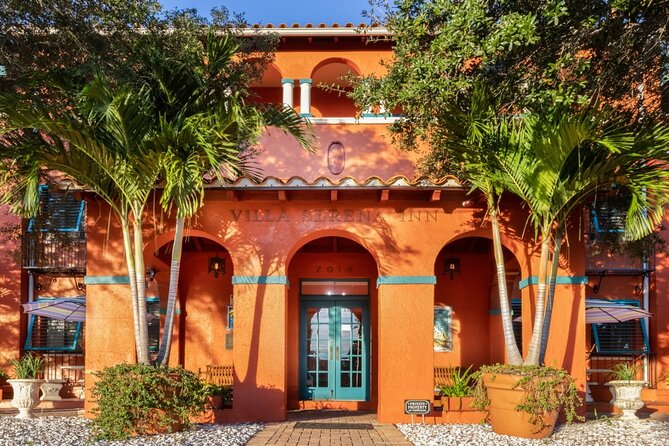
- Real Sarasota landmarks, not generic photo stops: Sarasota Municipal Auditorium, Chidsey Library, Burns Court Historic District, Sarasota Art Center, and more.
- Blue Pagoda with a strong design reason: Japanese garden-inspired shape and blue glazed tiles intended to echo Sarasota Bay.
- Architectural context made clear: You’ll hear how Sarasota became a hotbed for MidMod ideas, including discussion of Paul Rudolph and the Ringlings.
- Small-group feel: A maximum of 30 travelers keeps it easier to follow and ask questions.
- Accessible for many visitors: English tour, mobile ticket, service animals allowed, and near public transportation.
Why This Sarasota Architecture Tour Works So Well
Sarasota can feel like a vacation postcard on the surface. But the built environment is where the city gets interesting fast. This tour is built around that idea: instead of treating architecture like trivia, it connects style changes to time, place, and local ambition.
What makes it especially satisfying is the mix of eras. You start with Art Deco—a look that first appeared in France in the 1910s and then spread and evolved through the 1930s. Then the route turns toward Mediterranean Revival, which fits the Florida mood of the 1920s and 1930s. After that, you move into Mid-Century Modern, including Sarasota School of Architecture thinking, which is where the city really stakes its claim in the design world.
You also get something practical: a guide who explains what you’re seeing while you’re seeing it. That matters because architecture is easy to overlook when you’re rushing for beach time. Here, you slow down just enough to notice patterns—materials, shapes, and details that tell you which decade you’re standing in.
Price and What You Get for the $80.12

At $80.12 per person, this isn’t a throwaway add-on. But it’s also not the kind of pricing that assumes you’ll sit in a museum all day. You’re paying for a guided route that compresses multiple major stops into about 1 hour 30 minutes, plus the interpretation that helps those stops click.
A big value point is focus. You’re not trying to hit “everything Sarasota” across multiple tours. This one is built around architectural styles and specific buildings tied to those styles. That means the time isn’t wasted on random detours, and you leave with a clearer mental map of how Sarasota design evolved.
Another value signal: it sells out weekly, and it’s commonly booked about 38 days in advance. That usually means two things—good demand and steady operating quality. If you’re the kind of traveler who prefers planning ahead (and I do), booking early is the smart move here.
The 10:30 Meeting at 1826 4th St and How the Tour Runs
You start at Discover Sarasota Tours, 1826 4th St, Sarasota, FL 34236. The start time is 10:30 am, and the tour ends back at the meeting point.
A couple details help you set expectations:
- Maximum group size is 30. That keeps it from feeling like a herd.
- It’s offered in English.
- You’ll get a mobile ticket, and confirmation comes at booking time.
- Service animals are welcome.
- Guests must be 10+; children under 10 aren’t allowed.
One small practical consideration: since it’s designed around multiple stops and styles in a short window, you’ll want to be mentally ready for a quick pace. Think “architectural highlights tour,” not “slow architecture seminar.”
Stop by Stop: What You’ll See and Why Each One Matters
Sarasota Municipal Auditorium: Art Deco Details from 1938
The tour kicks off with Art Deco education, grounded in a real Sarasota anchor: the Sarasota Municipal Auditorium. Built in 1938, it’s your main reference point for what Art Deco looks like when it lands in Florida.
You start by learning the broader origin story: Art Deco first appeared in France during the 1910s, then grew and flourished through the 1930s—not only in buildings, but in architecture and fashion. That context matters because it keeps you from thinking Art Deco is just “pretty old styling.” You’ll learn how the look became a broader cultural language.
When you’re standing near the Auditorium, you’ll have a framework for what to notice: the geometric feel, the sense of vertical emphasis, and the overall sleekness that makes Art Deco feel confident. The guide’s narrative also connects the building to the era that produced it. That helps the stop become more than a waypoint.
Chidsey Library: May 1941 and Sarasota’s First Public Library Building
Next up is the Art Deco Chidsey Library. This one opened in May 1941 and is noted as the City of Sarasota’s first public library building.
Why this stop hits: libraries are a different kind of architecture than theaters and auditoriums. They’re public, functional, and meant to serve everyday life. When you apply Art Deco design to that mission, you get a sense of civic pride—style isn’t just for luxury; it’s for public services too.
You’ll also appreciate the timeline effect. The tour doesn’t treat buildings as isolated monuments. It helps you feel the transition from the 1930s Art Deco wave into early-1940s Sarasota civic design. If you like architecture that has a job to do, this library stop is a satisfying reminder that design choices shape how communities use spaces.
Burns Court Historic District: Mediterranean Revival in the Mid-1920s
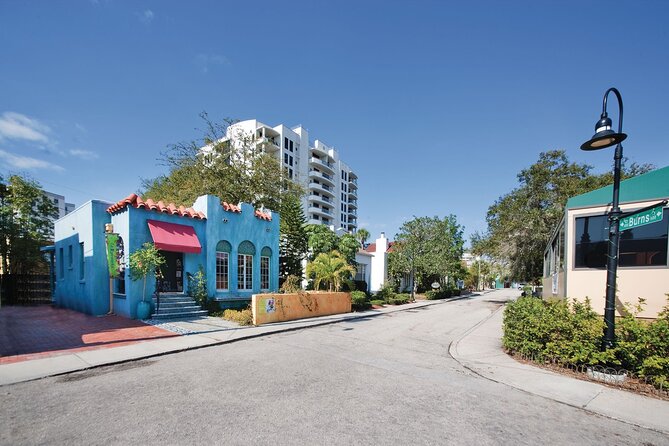
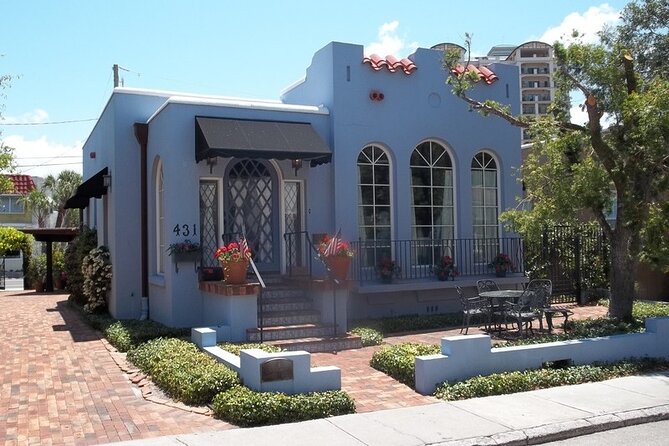
Then you shift into the Burns Court Historic District, where you’ll focus on Mediterranean Revival architecture. This part of the tour includes houses, and some commercial buildings, built as part of a development that took shape in the mid-1920s.
This stop is where the tour’s “Sarasota identity” side starts to feel real. Mediterranean Revival is strongly associated with sunbelt aspirations: warm-weather living, stucco textures, and an atmosphere that reads as relaxed but intentional. The guide helps you understand why this style made sense here and how it was part of a bigger cultural pull during the 1920s and 1930s.
In the tour’s broader storytelling, the Ringlings come up as an influence. You’ll get context on how their presence and reach helped shape the city’s taste and development patterns. Even if you already know the Ringlings name, the tour helps connect that name to architecture instead of leaving it as a vague “yes, famous local people.”
Sarasota Art Center and the Sarasota School of Architecture
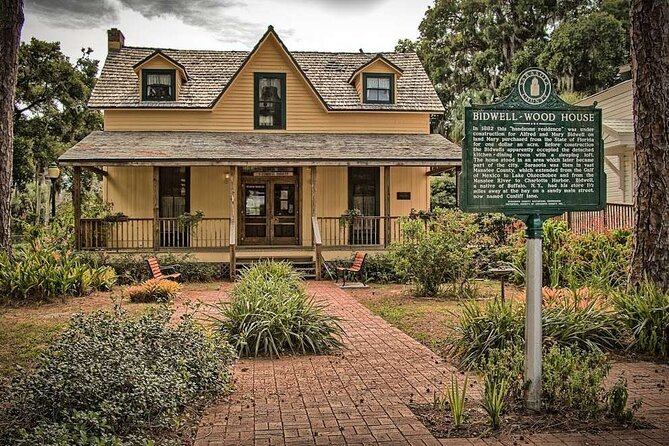
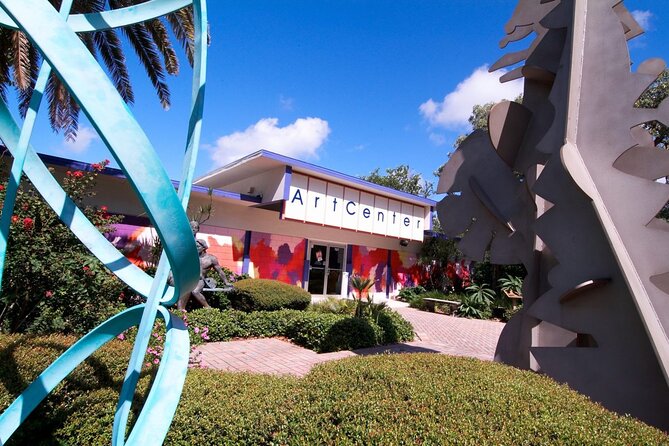
The tour moves on to the Sarasota Art Center, and this is one of the most important transitions on the whole route. Here, the emphasis turns to the Sarasota School of Architecture and Mid-Century Modern thinking.
If you’ve ever seen a MidMod building and thought it looked like it belonged in a movie, this is the stop where you learn how the movement got its identity. The guide explains how Sarasota became a hotbed for MidMod design, and you’ll hear about key figures tied to the Sarasota School of Architecture. Paul Rudolph is specifically mentioned as a topic where many people start with partial knowledge—and then leave with a clearer picture.
The Art Center stop also helps you read MidMod architecture with less mystery. You start seeing it as a set of design goals: clean lines, strong structure, and a relationship to climate and light. You’re not just admiring form; you’re understanding why those choices got made.
The Blue Pagoda (1956): A Japanese Garden-Inspired MidMod Masterpiece
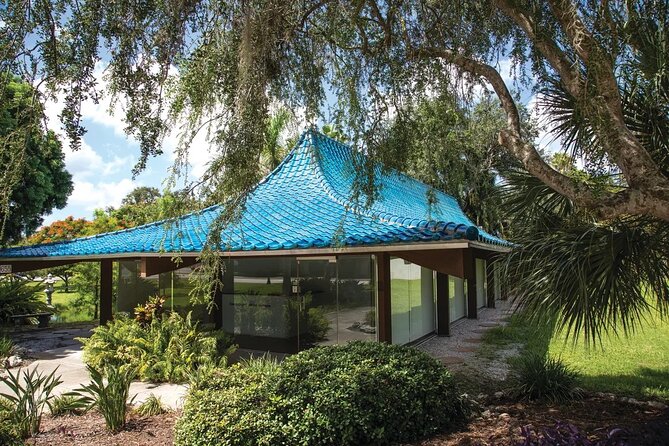
From the Art Center, the tour points you toward the Blue Pagoda, another Mid-Century modern building and one of the most visually memorable moments on the route. It’s described as a Japanese garden-inspired structure designed by Victor Lundy, a founding member of the Sarasota School of Architecture.
Key details you’ll learn here:
- The Blue Pagoda was designed in 1956.
- It was built near the bayfront for the Greater Sarasota Chamber of Commerce.
- It features a Japanese blue glazed tile roof.
- Victor Lundy specifically wanted those blue tiles to reflect the blue waters of Sarasota Bay.
That “why” is what makes the stop great. A lot of architecture tours show you shapes. This one gives you intention. The roof isn’t just decorative; it’s a color choice tied to place. Standing there with the Bay in mind (even from a distance), the building’s visual language starts to make sense.
This is also where you’ll likely pause mentally and realize that MidMod in Sarasota isn’t just about minimalism. It’s about adapting ideas, mixing influences, and making the design feel rooted in its surroundings.
Center for Architecture in Sarasota: Mid-Century Modern from 1959
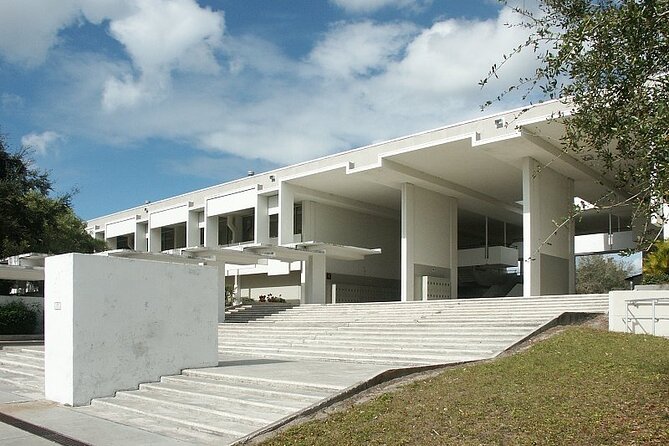
The final architectural-style anchor on the route is the Center for Architecture in Sarasota, commissioned in 1959.
Here, you’ll connect the dots about how Mid-Century Modern architecture was built and designed in that era. The guide focuses on construction and design basics—enough to help you understand what you’re seeing without needing an architecture degree.
This stop works well as a “closing frame.” After Art Deco, Mediterranean Revival, and Sarasota School highlights, the 1959 building lands like proof of continuity: the city kept pushing forward, and design wasn’t a one-decade trend. You end with the feeling that Sarasota was actively shaping its own future, not just copying styles from elsewhere.
The Guide Factor: How Ed Makes Sarasota’s Styles Click
One of the strongest points in the experience is the guide. The name Ed comes up in the reviews, and it’s consistent with the tone you’ll experience: detailed explanations, confident narrative delivery, and clear translation of architectural jargon into something you can actually see on the street.
Ed’s style seems built for real-life visitors. He doesn’t just list facts. He explains how Sarasota became a design hotspot for MidMod, including discussion that goes beyond the usual quick mentions. For example, even if you only know Paul Rudolph in name, the tour’s narrative helps fill in the gaps. The Ringlings influence also gets pulled into the architectural story so it feels like more than background trivia.
If you’re the type who likes to learn while moving, this is a big reason the tour earns such strong ratings. And if you’re the type who usually skips guided tours, the guided interpretation here is the difference between walking past buildings and understanding why they’re worth slowing down for.
Who Should Book This (and Who Might Skip It)
This tour is a great fit if:
- you like architecture and want an organized introduction to major Sarasota styles
- you want a short morning plan that doesn’t rely on museum time
- you enjoy hearing how local influences connect to what you see outside
It might be less ideal if:
- you need lots of free time at each stop for lingering and photos without guidance
- you’re expecting a very long, in-depth building-by-building study (this is a tight 90-minute overview)
Also note the age rule: it’s for guests 10 and up, with no children under 10 allowed. If you’re traveling with older kids who enjoy learning, it’s a smart family activity. If you have younger kids, you’ll need an alternative plan.
Should You Book This Sarasota Architecture Tour?
Yes—if you want a fast, story-driven way to understand why Sarasota looks the way it does. The value is in the combination: multiple major architectural styles, specific buildings tied to those styles, and an expert guide who makes the details understandable. The fact that it sells out weekly tells you the format works for people who care about design.
Book early, especially if your trip dates are fixed. And go in with one mindset: you’re not just sightseeing; you’re training your eyes. Once that clicks, Sarasota’s architecture starts talking back.
FAQ
How much does the Sarasota Architecture Tour cost?
It costs $80.12 per person.
How long is the tour?
The tour lasts about 1 hour 30 minutes.
What time does the tour start?
The start time is 10:30 am.
Where is the meeting point?
You meet at Discover Sarasota Tours, 1826 4th St, Sarasota, FL 34236.
Do I get a mobile ticket?
Yes. The tour includes a mobile ticket.
What language is the tour offered in, and how big is the group?
The tour is offered in English, and it has a maximum of 30 travelers.
Are service animals allowed?
Yes, service animals are allowed.
Are there any age requirements?
Guests must be 10+; children under 10 aren’t allowed.
Is free cancellation available?
Yes. You can cancel for a full refund up to 24 hours in advance of the experience start time.