REVIEW · MADRID
Madrid Historic with an architect : Arabs, Austrias and Bourbons
Book on Viator →Operated by architoursmad · Bookable on Viator
Madrid’s streets read like an architecture textbook. I love that this tour is guided by an architect—Emilio—who connects each building to the political and cultural shifts that shaped the city, and I love how the pace lets you keep looking closely instead of just snapping photos. You’ll walk from Teatro Real toward Plaza Mayor, moving across centuries of design language without needing museum stamina.
One thing to consider: it’s a walking-and-looking route with short stops (often 5–10 minutes), and the Royal Palace interior is not included, so if you want long indoor time, this isn’t that kind of tour.
In This Review
- Key points worth knowing before you go
- Why an architect guide changes everything in Madrid
- Teatro Real: where Madrid learned to stage its big stories
- Plaza de Oriente and the Royal Palace facades: power’s visual language
- Plaza de Ramales: Velázquez’s trail through quiet ruins
- Church-hopping with a point: Santiago y San Juan Bautista
- San Nicolás de las Servitas: Mudéjar tower details you’ll remember
- La Almudena’s cathedral museum area: how to read the skyline
- The Arab Wall remains: the 9th century in front of you
- Plaza de la Villa: old city government in an enclosed storybook square
- Mercado de San Miguel: use the steel structure and eat something
- Plaza Mayor and Puerta del Sol: Castilla’s square loop to Kilometer 0
- Is the $65.89 price good value?
- Pace and what to expect on the walk
- Who this tour is best for
- Should you book this Madrid Arabs–Austrians–Bourbons architecture walk?
Key points worth knowing before you go
- Architect-led explanations with plans and historical photos make the “who built what” story click fast.
- A street-level timeline from 9th-century Arab walls to later royal power runs through the whole route.
- San Nicolás de las Servitas is a standout stop for Mudéjar tower details, including horseshoe-arch forms.
- La Almudena area views help you understand how the cathedral fits into the skyline and city plan.
- Mercado de San Miguel gives you a practical tapas break in a market with a distinctive steel structure.
- Most stops are exterior and quick, so come ready to walk and keep your eyes up.
Why an architect guide changes everything in Madrid
If you’ve ever stood in front of a beautiful building and thought, I like it, but what am I actually looking at, this is the fix. An architect guide doesn’t just name styles. You learn how walls, openings, street alignments, and power symbols changed over time—and why that matters on the ground, not just on a plaque.
What I like most is that the guide brings tools: plans and historical photos. That’s important because Madrid’s center can feel layered and confusing. With those references, the city stops being a random set of landmarks and starts reading like a timeline you can walk through.
Also, this is a private tour, so you’re not competing with a crowd for the best sightlines. It’s designed for your group, not for mass throughput.
You can also read our reviews of more tours and experiences in Madrid.


Teatro Real: where Madrid learned to stage its big stories
You start near Plaza de Isabel II and head to Teatro Real, Madrid’s famous opera house. Even if you’re not an opera person, the building is a perfect “opening chapter.” It signals how the city organized culture and prestige—because theaters are never just entertainment. They’re civic branding in stone and steel.
The tour briefly reviews the opera theater’s history, with enough context to understand why this site belongs early in the route. It also helps you calibrate your eye for the rest of the day: look for transitions between older urban layers and later, more formal architecture that expresses authority.
Practical note: the stop is short, but you’ll get a guided “what to notice” moment before you move on.
Plaza de Oriente and the Royal Palace facades: power’s visual language
Next comes Plaza de Oriente, a square with deep roots in the city’s evolving layout. You’ll hear how its urban development connects back through different eras, starting with the early Arab influence and rolling forward to later periods. Squares like this are where rulers and cities talk to each other—through axis lines, monumental frontages, and controlled views.
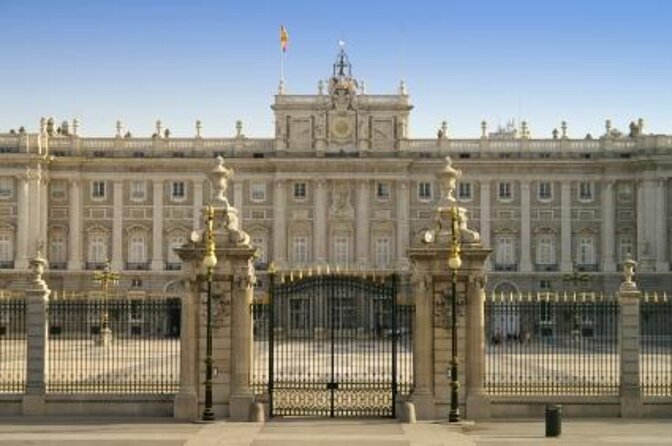
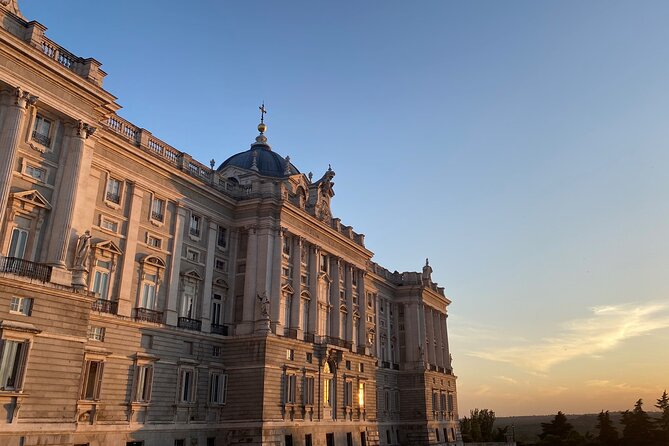
Then you shift to the Royal Palace area. This is where you get what I’d call the “facade lesson”: how different kings and architects shaped the look of the palace project over time. You’ll admire the exterior elements and learn how architectural decisions map to political priorities.
Important drawback: the tour does not include the palace interior. That means you should treat this stop as architecture-by-looking, not architecture-by-gallery. If you want interior rooms and guided museum-style storytelling, you’ll need another experience for that.
Plaza de Ramales: Velázquez’s trail through quiet ruins
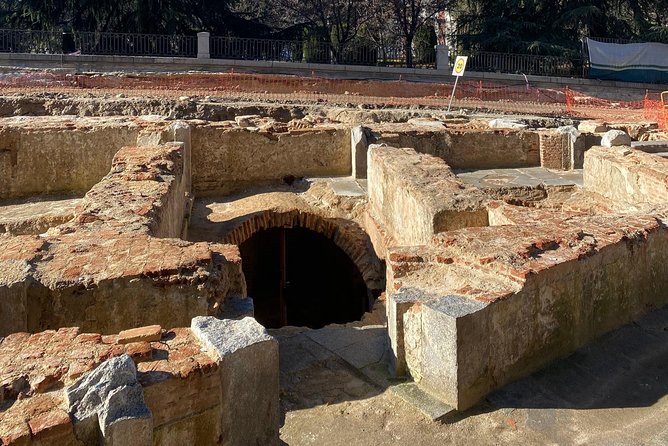
Plaza de Ramales is a calmer breather, and that’s good because you’re about to mix major sites with smaller religious spaces. You’ll see the ruins of the Church of San Juan, where painter Velázquez was buried. Even knowing that name makes the stone feel less like background and more like a specific chapter in Madrid’s cultural life.
From there, you also see the Church of Santiago. Together, these stops highlight a pattern you’ll keep noticing across the day: Madrid’s religious architecture isn’t just spiritual—it’s a record of who built, who renovated, and what survived.
The stop length is brief, so be ready to focus. This is a “notice the location and the context” stop more than a “linger for details” stop.
Church-hopping with a point: Santiago y San Juan Bautista
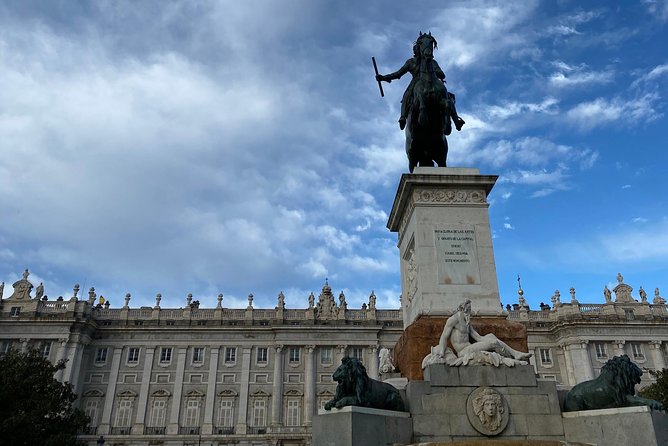
The route includes the Real Iglesia Parroquial de Santiago y San Juan Bautista, a church dedicated to the apostle Santiago. This kind of stop works well on this tour because it helps you track how sacred architecture expresses changing styles while staying anchored in religious function.
Even when time is tight, a good guide can point out the small signals of style and period—things you’d miss if you only looked for what’s impressive at first glance.
San Nicolás de las Servitas: Mudéjar tower details you’ll remember
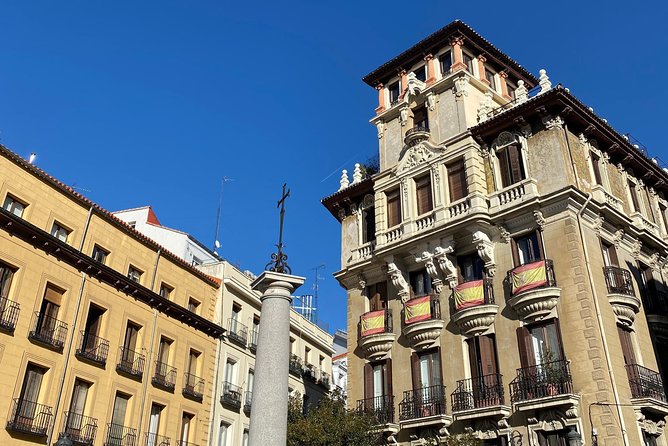
If you’re the type who likes architecture that rewards close looking, this is a highlight. You visit the Church of St. Nicholas of the Servitas (San Nicolás de las Servitas), often cited as the oldest church in Madrid with a Mudéjar tower.
The tower details matter: it’s described as a Mudéjar tower full of horseshoe-arch elements. That’s not a random decorative feature. Horseshoe arches connect you to an earlier architectural vocabulary that survived and evolved in the city rather than being wiped out.
This stop is short, but it’s designed around that “aha” moment: you’ll leave noticing arch shapes and thinking about cultural contact, not just aesthetics.
La Almudena’s cathedral museum area: how to read the skyline
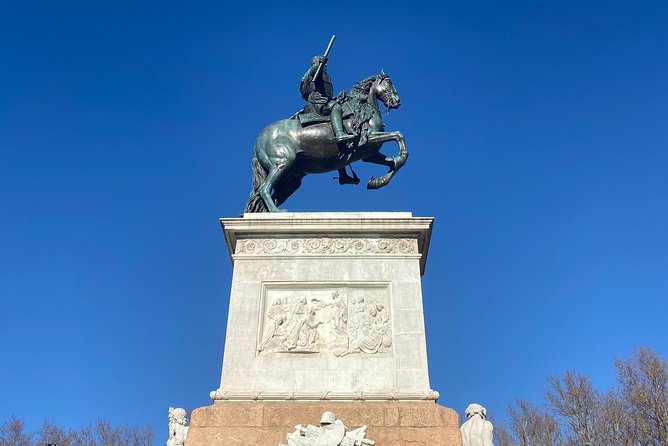
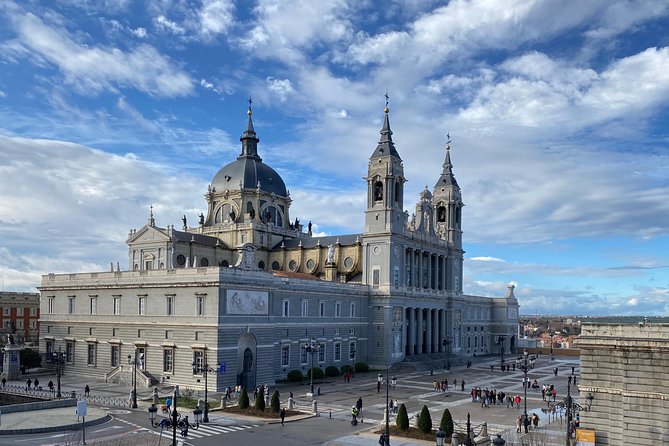
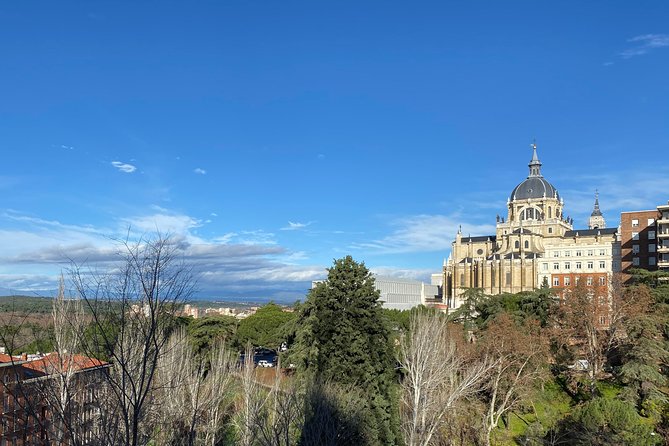
After the churches, you move to the Museo de la Catedral de la Almudena area. The tour frames it as a seaview-style perspective—meaning you’ll get a sense of how the cathedral reads from outside and how it fits into Madrid’s broader visual structure.
You’ll hear the cathedral’s history and why it matters in the city’s timeline. For me, the value here is learning to connect a landmark to its surrounding urban “frame.” A cathedral isn’t only about the building; it’s about how the city arranges visibility and meaning around it.
This is also one of the quieter stops, which helps you absorb what you’ve already learned rather than rushing into the next one.
The Arab Wall remains: the 9th century in front of you
Then comes the Arab Wall, described as the only remnants of the old Arab walls from the 9th century. Seeing remains like this in a living modern city is powerful, because you get proof of how deep the roots go.
The tour encourages you to enjoy what’s left, rather than treating it like a minor detour. Walls are boring until you understand what they did: they shaped where people could move, where the city could grow, and how defense and daily life were organized.
If you like architecture that’s less about grand facades and more about survival through time, this stop will stick with you.
Plaza de la Villa: old city government in an enclosed storybook square
Plaza de la Villa is where the walk shifts toward civil life. You’ll visit the old City Hall and the surrounding buildings, including Casa de Cisneros and Casa de los Lujanes.
This is one of those moments where architecture becomes a social map. City administration buildings, noble homes, and formal façades cluster together for a reason: power likes proximity, and squares are how that closeness becomes visible.
What I like here is the guide’s ability to keep everything connected. Instead of treating each stop as a separate attraction, you get a sense of how Madrid arranged authority, commerce, and civic identity in shared spaces.
Mercado de San Miguel: use the steel structure and eat something
Next you pause at Mercado San Miguel, the well-known market with a steel structure—one of the standout design features in Madrid’s market world. You can stop for a drink and tapas, which makes this not just educational but also genuinely useful on a walking tour.
This stop works for almost everyone because it’s flexible. Even if you’re not sure what you want, you can browse and pick something practical without losing the group.
A small tip from how this tour is paced: since the rest of the walk keeps moving, make your food decision quickly here. Think snack-size tapas you can eat without slowing your pace.
Plaza Mayor and Puerta del Sol: Castilla’s square loop to Kilometer 0
The tour ends in Plaza Mayor, described as the city’s social and commercial center for about the last 400 years, and an example of the square type associated with Castilla. This is where you get the big, satisfying payoff after smaller architectural stops.
Plaza Mayor gives you space to zoom out. You’ll finish the story by looking at how a square can define life patterns—markets, public events, and daily movement—while also reflecting changing architectural influences.
Then you finish at Puerta del Sol at Kilometer 0. That’s a fun, literal marker: you end where Madrid likes to measure itself. Even if you’re familiar with the landmark, it feels different after spending hours seeing how the city’s layout and buildings grew.
Is the $65.89 price good value?
For a 3-hour to 3.5-hour private architect-guided walk, $65.89 per person is strong value—especially because many stops have free admission listed for the experience’s components. You also get extra teaching support: plans and historical photos, plus a local architect leading the way in English.
The only notable cost consideration is the Royal Palace side of things. The tour doesn’t include the interior, and any palace ticket is not included. So if you plan to add palace interior tickets later, factor that into your overall budget.
If you’re the type who learns fast from context—why a style exists, who funded it, how the city changed—this pricing makes sense. If you prefer long museum time or full interior tours, you may feel like the value is weighted toward street-level learning instead of attractions you can spend an hour inside.
Pace and what to expect on the walk
Expect a steady cadence. Several stops are around 5–10 minutes, which means the guide must keep things focused. That’s not bad. It’s how the route works: you’re moving through a chain of eras, not spending an entire afternoon at one site.
Bring sensible walking shoes. Madrid’s center can have uneven pavement, and you’ll be looking up more than you might expect. If you’re carrying a camera, plan for quick, safe stops rather than long tripod moments.
If you’re traveling in cooler or rainy weather, keep your flexibility. The experience requires good weather, and if it can’t run due to poor conditions, you’ll be offered a different date or a full refund.
Who this tour is best for
This fits you if you:
- Love architecture and want names plus meaning, not just style labels
- Enjoy walking and spotting details you can’t find on a quick bus stop
- Want a private, small-group feel with an architect guide (Emilio is the standout name)
It may not fit you as well if you:
- Want lots of indoor time or museum-style pacing
- Get frustrated by short stops and quick transitions
- Mainly want “postcard views” and less interpretation
Should you book this Madrid Arabs–Austrians–Bourbons architecture walk?
I think you should book it if your goal is to understand Madrid’s center as a living timeline. The biggest reason: the architect-led approach makes the city’s layers feel coherent, and you’ll come away seeing shapes and materials with a new level of meaning.
Skip it only if you want long interior visits or a slower, sit-down-heavy tour. Otherwise, this is a smart way to get context fast—walking from opera-house culture to royal power, from Mudéjar arches to surviving 9th-century wall remains, then ending at Plaza Mayor and Puerta del Sol with your bearings firmly in place.