Buda Castle Hill has stories in every stone. I really liked how the tour connects big landmarks to the smaller, human-scale streets beneath them, so the Royal Palace feels less like a picture and more like a place that changed over centuries. The English guide, Máté, explains what you’re actually looking at, and his pace keeps you moving without feeling rushed.
What I liked most is the way architecture becomes the timeline. Gothic, Baroque, Neoclassical, and even modern reconstructions all show up on the same hill, and you learn how power, religion, and war left physical marks you can still see today. I also liked the small group size (up to 12), which makes it easier to ask questions and get answers that stay tied to what’s in front of you.
One possible drawback: it’s a long, mainly walking-focused tour (about 3 hours 30 minutes) on uneven ground, and it’s not suitable for limited mobility. If you hate hills, cobblestones, and cold wind at Castle Hill, plan extra time to warm up and take breaks.
In This Review
- Key highlights you’ll care about
- Royal Palace Hill: more than a postcard stop
- Stop 1: Royal Palace exterior and the real meaning of rebuilds
- Sigismund Church remains: the quiet breadcrumb in the palace complex
- Medieval commerce on Tárnok Street: where trade shaped architecture
- Úri Street and medieval gateways: noble life, thicker walls
- Church of Saint Mary Magdalene: surviving memory after demolition
- Országház Street and the Italian Street story
- Early-1900s Neo-Gothic, WWII damage, and reconstructed faces
- Matthias Church: the famous name mix-up and what you learn anyway
- Fortuna Street: from first printing in Hungary to today’s wine glasses
- Becsi Kapu Square: marketplace and multicultural edges
- National Archives of Hungary: a Neo-Romanesque modern echo
- Siege of Buda 1686: where the walls were first breached
- The Medieval Jewish Chapel and prayer house: the included interior you won’t skip
- Táncsics Mihály Street: walls reused instead of erased
- Dominikánus Udvar and the Hilton-era controversy
- Fisherman’s Bastion from the main level: King Saint Stephen’s symbol
- Should you book the Buda Castle history and architecture tour?
- FAQ
- How long is the tour?
- How much does it cost?
- What language is the tour offered in?
- Do I need to buy separate tickets during the tour?
- Is the Jewish Praying House included every day?
- Where does the tour start and end?
- Is there a mobile ticket?
- What kind of walking fitness level do I need?
- How big is the group?
Key highlights you’ll care about
- Royal Palace exterior layers you can read like a historical timeline, from medieval origins to later styles
- Medieval streets with real building survivors at Tárnok Street and Úri Street, not just sweeping views
- Jewish Quarter stop with an included interior at the excavated medieval Jewish prayer house (closed Sat and Mon)
- Siege of Buda context at key outer-wall points where the 1686 fighting is marked in the landscape
- Reused medieval structures on Táncsics Mihály Street and the controversial mix at Dominikánus Udvar
- Fisherman’s Bastion monument focus from street level, with the upper terrace left for self-paid tickets
Royal Palace Hill: more than a postcard stop
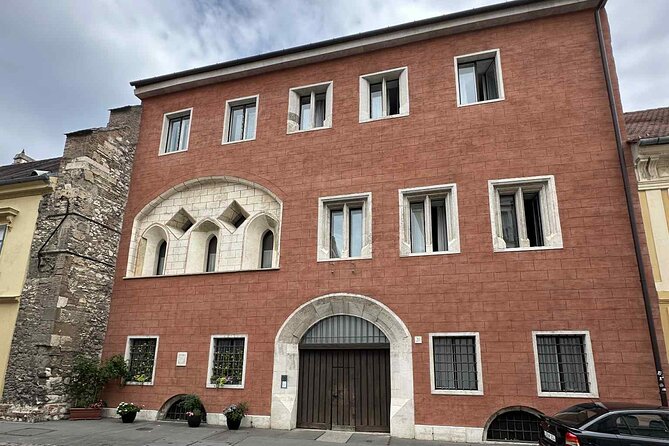
Start at the Statue of Prince Eugene of Savoy in Budapest. From there, you work your way through Castle District streets that feel layered, even before you learn why. The whole experience is about seeing history as a built environment: walls, courtyards, street layouts, and the way people rebuilt after losing everything.
A big value of this tour is that it doesn’t center only on interiors. You do get an included entrance later (the medieval Jewish prayer house), but much of the payoff is in what you can observe from outside: how styles change, how buildings get repurposed, and how the hill’s layout shaped daily life.
And yes, you’ll walk. The itinerary is structured around short stops that build toward a larger picture. With a 3-hour-plus time block and a max group size of 12, it’s a smart way to cover ground without feeling like you’re sprinting from one landmark to another.
You can also read our reviews of more tours and experiences in Budapest.


Stop 1: Royal Palace exterior and the real meaning of rebuilds
The first major attraction is Buda Castle—the Royal Palace area you’ll recognize instantly in photos. The point here isn’t just the scale. It’s the fact that the palace was built, destroyed, and rebuilt multiple times over centuries, which is a fancy way of saying: the building you see now is the result of many different eras arguing through architecture.
You’ll learn how medieval fortification life evolved into royal residence power. Expect the tour to connect those shifts to visible style changes—Gothic to Baroque to Neoclassical elements—so you’re not just memorizing facts. You’re learning to spot the timeline in the stones.
Practical note: the interior of the Royal Palace isn’t included in the tour price. That’s fine because your guide’s exterior tour sets you up to enjoy an optional self-visit later, if you want to go inside on your own schedule.
Sigismund Church remains: the quiet breadcrumb in the palace complex
Next comes the remains of the medieval Sigismund Church—foundations that can still be seen in the courtyards below. This stop is short, but it’s one of those details that makes the tour feel serious.
In practical terms, you get a sense of how early palace expansion created sacred spaces as part of the power show. The Gothic-style royal chapel linked to King Sigismund’s early 15th-century transformation, and the surviving foundations are an early clue to what the palace complex tried to become.
This is also a good example of the tour’s style: you’re not only chasing the famous monuments. You’re learning to notice the less obvious places where important construction phases began.
Medieval commerce on Tárnok Street: where trade shaped architecture
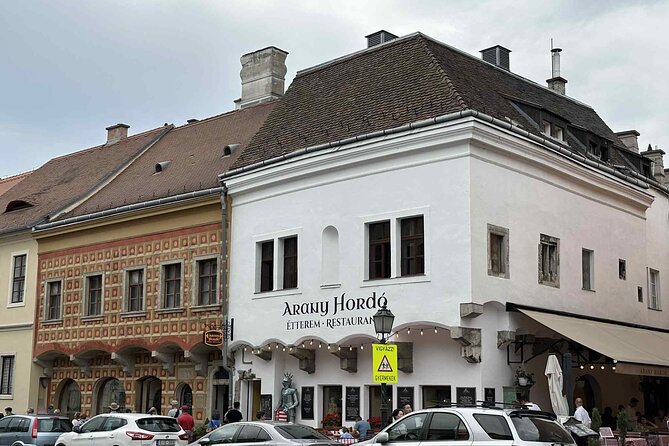
Then you shift from royal power to everyday life at Tárnok Street, the medieval commercial street in the burgher town beneath the court.
This part matters because it gives you context. The Royal Palace may have been about kings and empires, but the city needed merchants, storage, displays, and constant movement of goods. You’ll walk a cobbled lane where preserved medieval merchant houses sit behind Gothic façades, so the street looks charming—but you’re taught to see how it worked.
A key detail: the tour visits three authentic buildings there that withstood fire, siege, and centuries of urban change. That means you’re looking at survival, not reconstruction fantasy.
If you want the city to feel real, this is one of the stops that does it. It’s also a great place to slow down and look at the façades closely, because the street rewards careful attention.
Úri Street and medieval gateways: noble life, thicker walls
From Tárnok Street you continue to Úri Street, once home to Buda’s noble residential quarter. Here the tone changes. You’re still in medieval structures, but the focus is status—residential houses and aristocratic palaces built on 14th–15th century foundations.
One highlight is the collection of medieval gateways. As you pass under their arches, you’re meant to connect architecture to who got access and who didn’t. In other words: who entered, how they entered, and what that meant for daily life behind thick stone walls.
This is another stop where the guide’s explanations matter. If you’re walking without a frame, these gateways can look like decoration. With the tour, they become practical clues to how the noble class managed travel and commerce around their homes.
Church of Saint Mary Magdalene: surviving memory after demolition
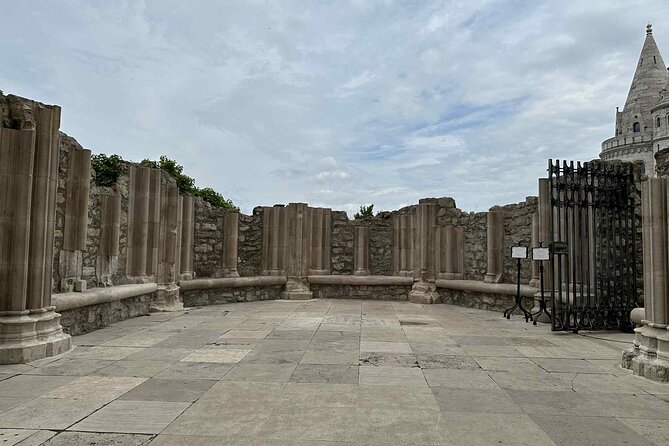
Next is the Church of Saint Mary Magdalene (built on the site of the earliest church on Castle Hill). Even though you don’t get to tour inside as part of this stop, it’s emotionally powerful because it shows how history can be erased twice—first by conflict, later by policy.
You’ll learn that the foundations date back to the 13th century and that it was partially destroyed during the siege of Buda in 1686. Then comes the 1950s twist: Hungary’s communist regime ordered demolition of the ruined structure, and only the medieval tower survived due to archaeologists and preservationists who fought to save it.
The tour makes this more than a sad story. It becomes a lesson in resilience—how one surviving tower can carry memory when the rest is gone. Admission to the church isn’t included in the tour price here, so you’ll focus on the exterior and the meaning.
Országház Street and the Italian Street story
On Országház Street—once known as the Italian Street—you’ll see how Buda wasn’t just Hungarian. It was shaped by outside merchants and cultural exchange.
This is where you get a look at the 14th–15th century prosperity of the area, with grand medieval houses and noble residences lining an elegant lane. The tour points out a detail you can easily miss on your own: the only surviving 16th-century sgraffito decoration in the entire Castle District.
That tiny fact is a big one because it shows Renaissance-style art leaving traces even in places dominated by Gothic walls. It’s the kind of detail that turns walking into discovery.
Early-1900s Neo-Gothic, WWII damage, and reconstructed faces
One of the more surprising stops is Volt Magyar Királyi Pénzügyminisztérium, a Neo-Gothic building that now houses Hungary’s Ministry of Finance. This is not a medieval stop. It’s a stop about how later generations tried to keep Castle Hill looking medieval-ish.
You’ll hear how it was constructed in the early 20th century after some medieval structures were demolished to make room. During World War II, the façade was damaged, then stripped and simplified afterward. In the last five years, the original façade was reconstructed, restoring much of its former grandeur.
Here’s the tour’s helpful honesty: the reconstruction project also sparked debate, including the fact that one of the original wings was demolished during the restoration process.
This stop is worth your attention if you care about authenticity debates. It gives you a framework to think about conservation choices rather than treating all restoration as automatically good.
Matthias Church: the famous name mix-up and what you learn anyway
Next is the Church of the Assumption of the Buda Castle, commonly—and incorrectly—called Matthias Church. That correction matters more than it sounds. The tour explains that the church’s history reflects centuries of religious and cultural change on Castle Hill, including its roots serving Buda’s German-speaking community.
Matthias Church interior access isn’t included in the tour price. So you’re mostly here for the landmark experience and the context, then you can decide after the tour if you want to go inside on your own.
Fortuna Street: from first printing in Hungary to today’s wine glasses
Then comes Fortuna Street, which feels modern now with restaurants nearby. But in medieval times it was about aristocratic palaces and townhouses. The tour brings you back to a specific moment: in the 1470s, Andreas Hess, a German-born printer, produced Hungary’s first printed book here, the Chronica Hungarorum.
It’s a strong example of how the Castle District is not only about religion and royalty. It’s also about ideas, literacy, and the spread of information.
You’ll also hear about the Red Hedgehog Inn (Vörös Sün), a legendary meeting point for travelers, merchants, and intellectuals for centuries—then you’ll walk in the present-day version of that street vibe, where you can hear the clink of drinks from nearby spots.
Becsi Kapu Square: marketplace and multicultural edges
At Becsi Kapu Square, you get a sense of how a medieval entry and market space worked. The tour frames it as an intersection of everyday life—trading, talking, and worshiping—where Hungarian townsfolk and the local Jewish community mixed within the Castle walls.
Today it’s still charming and historic-looking, but the value is what the guide teaches you to imagine: crowds, carts, and conversations that made the city function.
National Archives of Hungary: a Neo-Romanesque modern echo
The National Archives of Hungary is an early-20th-century building designed in a Neo-Romanesque style to blend with the Buda Castle District’s medieval character.
What I liked here is the practical lesson behind the look. The stonework and arched windows give it that “older than it is” feeling, but the tour makes the point that this building is about national memory. You’re essentially standing in a structure built to protect documents spanning the full scope of Hungary’s written past.
It’s a reminder that heritage isn’t only old ruins. It’s also the institutions that keep history stored and accessible.
Siege of Buda 1686: where the walls were first breached
As you walk along the outer castle walls, you reach a memorial site tied to the Siege of Buda in 1686. You’ll see where the walls were first breached by Christian allied forces, and not far from there, where the Ottoman Pasha of Buda fell in battle.
The tour highlights the presence of multinational Christian soldiers and the memorial’s purpose: honoring the fighters who died in the liberation of the city.
If you like military history, this stop adds weight to the scenery. If you don’t, it still works because the guide connects how conflict physically changed what stood and what replaced it.
The Medieval Jewish Chapel and prayer house: the included interior you won’t skip
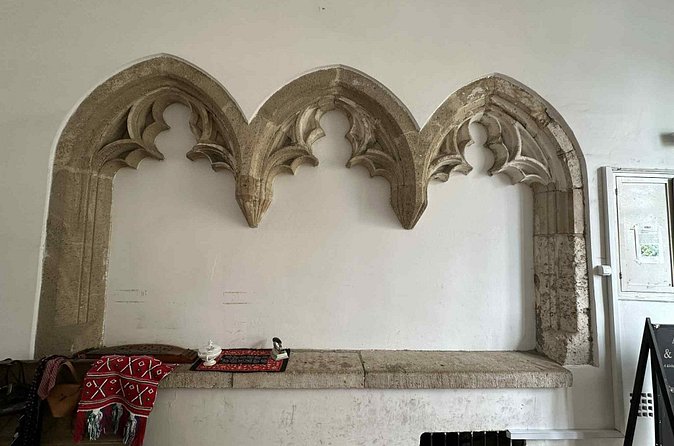
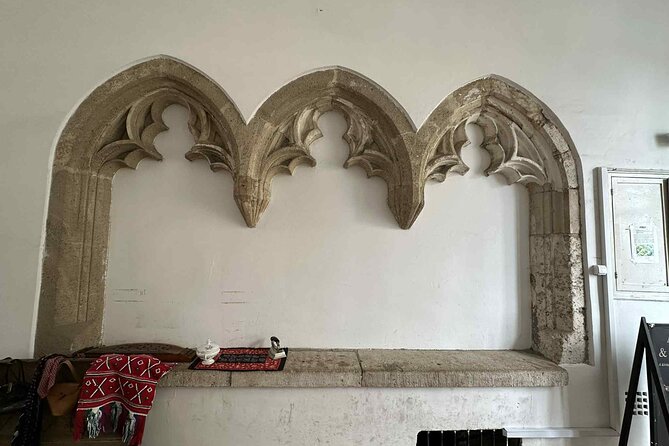
One of the most meaningful parts of the tour is the medieval Jewish quarter, where you pause at the site of a former Gothic synagogue and then step into the excavated medieval Jewish prayer house.
This is where the tour gives you something special: a smaller interior space, tied to one of the rare surviving examples of Jewish religious architecture from the Middle Ages in Hungary. Even with limited size, the meaning comes through—the tour frames it as a quiet look at everyday life, resilience, and faith in a community that was later silenced.
Important practical detail: the entrance is included, but the prayer house is closed on Saturday and Monday. If your visit includes those days, the tour schedule may still run, but you should expect the included interior to be unavailable.
Táncsics Mihály Street: walls reused instead of erased
Then you walk along Táncsics Mihály Street, where medieval ruins were reused and transformed during the 17th and 18th centuries.
This is one of those “look for the seams” stops. Old Gothic walls and cellars weren’t demolished; they were incorporated into Baroque and later residential buildings. So you’re seeing a city that rebuilt by layering, not by wiping clean.
The effect is subtle but real. The tour helps you read it as both a literal rebuilding on medieval foundations and a symbolic rise after Ottoman rule.
Dominikánus Udvar and the Hilton-era controversy
Next is Dominikánus Udvar, where the remains of the Dominican monastery of Saint Nicholas can still be seen. The guide connects the order to Friar Julianus’s legendary 13th-century journey, which gives the ruins a wider historical footprint.
Then the tour makes the story complicated in a good way: centuries of fire, siege, and neglect eventually led to a dramatic reinterpretation during the construction of the Hilton Hotel in the 20th century. The result is a striking blend of medieval stonework with modern architecture—and it’s described as controversial.
This stop is a reminder that heritage protection is not always neat. You get to think about what you gain (visibility and preservation of some elements) and what you lose (comfort with modern intrusion). That tension is part of Castle Hill’s modern story, not just its medieval past.
Fisherman’s Bastion from the main level: King Saint Stephen’s symbol
Finally, you reach Fisherman’s Bastion. At the center is the equestrian statue of King Saint Stephen, Hungary’s first Christian king, presented as a symbol of the birth of the Hungarian state.
You’ll admire the monument and the structure from the main level. The upper panoramic lookout terrace is not included in the tour price, and the tour notes you need a separate ticket if you want to go up there.
Even staying at the main level, the location works well as a finale because it gives you sweeping views and a clear symbolic conclusion. After the tour ends at Szentháromság Square by Matthias Church, you can keep walking or choose to go inside the church independently.
Should you book the Buda Castle history and architecture tour?
Book it if you want a guided walk where architecture is the lesson and you’d rather understand how Buda grew than just take photos. It’s also a strong choice for first-timers because it balances the famous sights (Royal Palace area, Matthias Church exterior, Fisherman’s Bastion) with the quieter streets (Tárnok, Úri, Országház) that give you the real sense of medieval city life.
Skip it or plan carefully if:
- you need step-free routes or you have limited mobility (it’s not suitable),
- you’re traveling with kids under 10 (they’re not permitted),
- you dislike long walking tours (about 3h30), especially if the weather is windy or cold.
If you’re flexible and like learning from what you can see, this tour is excellent value for your time. For $43.25, you’re paying for hours of guided interpretation plus the included entrance to the medieval Jewish prayer house (when open). That mix is what makes the whole hill feel like one connected story.
FAQ
How long is the tour?
It’s about 3 hours 30 minutes.
How much does it cost?
The price is $43.25 per person.
What language is the tour offered in?
The tour is offered in English.
Do I need to buy separate tickets during the tour?
Some stops include admission and some don’t. The tour price includes the entrance fee to the Jewish Praying House, but it does not include the interior of Matthias Church, the upper terrace at Fisherman’s Bastion, or the interior of the Royal Palace.
Is the Jewish Praying House included every day?
No. The Jewish Praying House is closed on Saturday and Monday.
Where does the tour start and end?
It starts at the Statue of Prince Eugene of Savoy (Budapest, 1013) and ends at Matthias Church near Szentháromság Square (Szentháromság tér 2, 1014).
Is there a mobile ticket?
Yes, the tour uses a mobile ticket.
What kind of walking fitness level do I need?
A moderate physical fitness level is recommended. It’s not suitable for guests with limited mobility.
How big is the group?
The tour has a maximum of 12 travelers.