REVIEW · WASHINGTON DC
Dupont Circle and Embassy Row Architectural Walking Tour
Book on Viator →Operated by DC Design Tours · Bookable on Viator
Why do DC mansions feel like passport stamps? This Dupont Circle to Embassy Row walking tour strings together former private homes now serving as clubs, embassies, and power centers. You get a fully narrated route that explains who lived there, why the buildings look the way they do, and how American life mixed with international diplomacy.
I love the way the guide ties architecture styles to the people and ambition behind them, from Alice Roosevelt Longworth to Evalyn Walsh McLean and the Hope Diamond storyline. I also like the small-group vibe, where the pacing stays relaxed and the talking points actually help you spot details you’d miss on your own.
The one catch: it’s mainly a look-from-the-sidewalk tour. If you’re hoping to wander inside embassies or homes, you may find it less satisfying than a full-access museum visit.
In This Review
- Key things to notice before you go
- Dupont Circle: where the tour starts and why it matters
- Embassy Row: you’re walking through DC’s style book
- The Indonesia Embassy and the Hope Diamond link
- Cosmos Club, the Society of Cincinnati, and the power behind the walls
- Anderson House: patriotic roots in a grand setting
- Sheridan Circle and the Turkish Ambassador area
- Kalorama: a quieter pocket off the main embassy corridor
- Woodrow Wilson House: what you see, and what you don’t
- Spanish Steps, Mitchell Park, and the Hobbit House story
- The Phillips Collection ending: art starts to breathe through the brick
- Price and walking time: what $48 gets you in DC
- Guide style: why the narration is the real attraction
- Who should book this Embassy Row walk—and who might not
- Should you book this Dupont Circle and Embassy Row tour?
- FAQ
- How long is the Dupont Circle and Embassy Row Architectural Walking Tour?
- How much does the tour cost?
- Where do we meet and where does the tour end?
- Is the tour guided, and what language is it in?
- What’s the group size limit?
- Are tickets or admissions included for stops?
- Are service animals allowed?
- Is public transportation nearby?
Key things to notice before you go
- Small group (max 20): easier questions, closer attention, and less “lost in the crowd.”
- Real embassy culture, not just landmarks: you’ll connect today’s diplomacy to yesterday’s private wealth.
- Architecture as a language: Neo-classical, Beaux-Arts, Queen Anne, and more show up across the route.
- Quirky DC details: Spanish Steps, Mitchell Park, and the Hobbit House story are part of the fun.
- A modern-art landing: The Phillips Collection ends the walk near the first modern art museum in the US.
- A heads-up on access: one notable stop (the Woodrow Wilson House) isn’t included, so plan to view from outside.
Dupont Circle: where the tour starts and why it matters
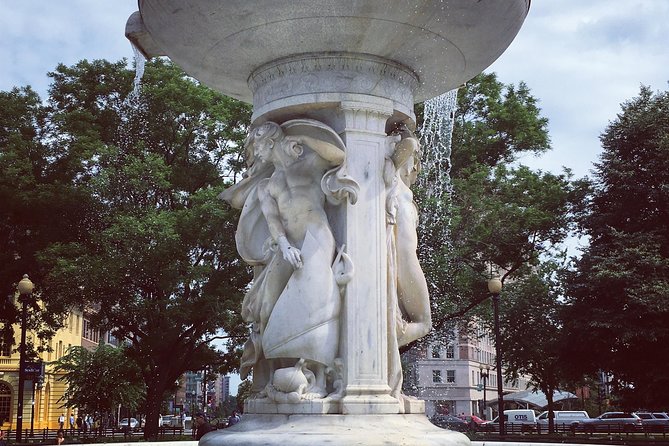
Dupont Circle isn’t just a pretty meeting point. It’s the heart of a historic neighborhood, and that centered fountain is a built-in landmark—photogenic, walkable, and easy to orient around.
Your guide typically uses this starting moment to set the bigger picture: why this area became a magnet for Washington’s money and influence. That context pays off later, because you start seeing each building as a clue, not just a façade.
If you’re arriving early, this is a good spot to grab a coffee, check the weather, and get ready for a steady two hours on your feet. The tour is designed to feel doable for most people, but you’ll still want comfortable shoes.
You can also read our reviews of more tours and experiences in Washington DC.



Embassy Row: you’re walking through DC’s style book
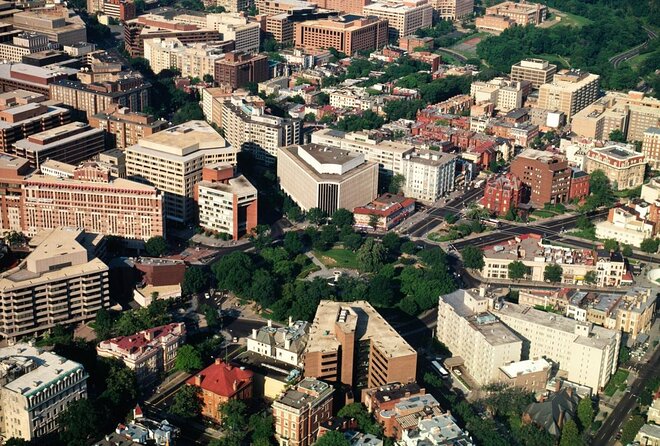
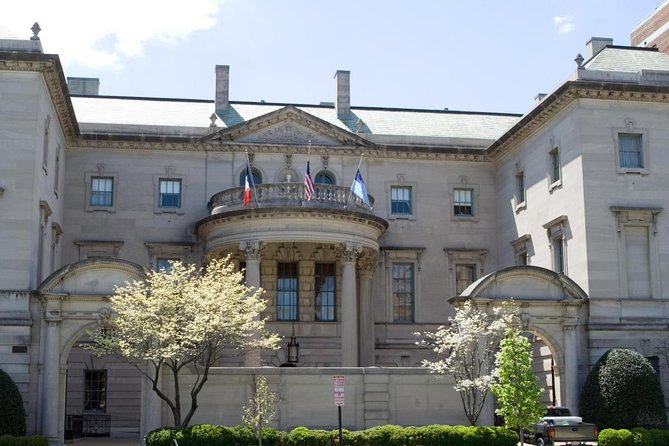
This is the main attraction, and it’s more interesting than it sounds at first. Embassy Row is an actual living corridor of international relations, but the buildings you see are rooted in American ambition—mansion after mansion created for private life, then repurposed as embassies and institutions.
Expect a mix of styles: Neo-classical calm, Beaux-Arts drama, Queen Anne character, and more. A strong guide helps you read the clues—rooflines, columns, materials, and the way each home broadcasts status without ever saying a word.
And the stories make those details stick. You’ll hear about the people who turned these blocks into their social playground, including big-name DC figures tied to the area’s wealth and reputation. One review highlighted how the tour made the history feel practical, not academic—like a story you can follow while your eyes do the rest.
The Indonesia Embassy and the Hope Diamond link
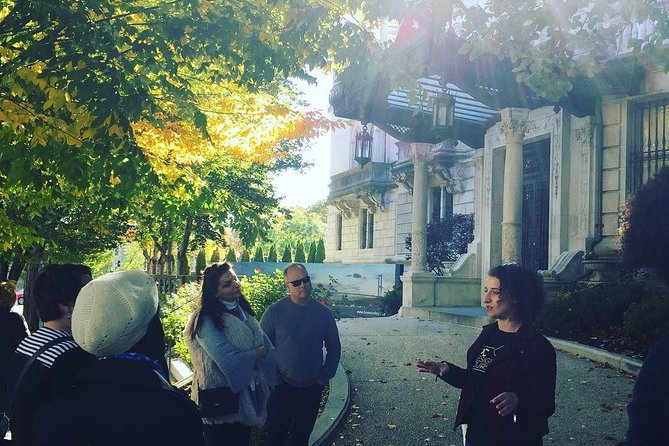
One of the most memorable stops is the Embassy of Indonesia, where you’ll hear a surprising backstory. The connection to the Hope Diamond turns an embassy exterior into something much more than a government building.
This is the kind of stop that changes how you look at Washington. The city’s diplomatic buildings are often housed in structures shaped by old fortunes—so the international layer sits on top of a distinctly American one.
It’s a short pause, but the narration is the point. If you like quick, high-impact facts—good dates, good names, good cause-and-effect—this is one of your best moments on the route.
Cosmos Club, the Society of Cincinnati, and the power behind the walls

Along the way, you pass institutions like the Cosmos Club and the Society of Cincinnati. Even if you don’t go inside, you get a sense of what they were built to do: reinforce community among influential people and keep networks tight.
In a city full of monuments, these organizations show a different kind of influence—quiet, social, and repeatable. You’ll understand why certain groups gained prestige and how their settings supported that status.
What I like here is the balance. The tour doesn’t make everything sound like a history lecture. It keeps pointing you back to what you can see right now—shape, scale, and placement—then layers in the human story.
Anderson House: patriotic roots in a grand setting
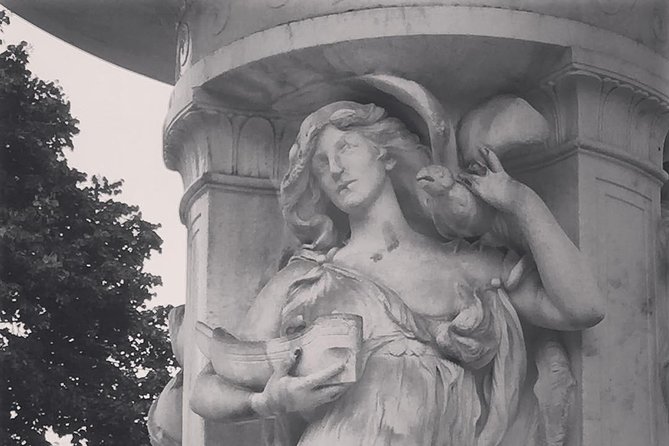
Another key stop is the Anderson House, described as the former home of a very powerful DC couple. Today, it serves as headquarters for the nation’s oldest patriotic organization, which adds a new layer to the architecture you’re seeing.
This stop helps you notice a pattern across the route. Many buildings on Embassy Row began as statements of wealth and taste. Then, over time, they became useful for public-facing missions—heritage groups, diplomatic work, and other civic roles.
It’s also a reminder that Washington influence didn’t only come from politics. It came from social standing, philanthropy, and organizations that shaped national conversations.




Sheridan Circle and the Turkish Ambassador area
Sheridan Circle is one of those Washington spots that feels like it should have a straightforward story. It doesn’t. You’ll get the monument backstory—described as bizarre—and you’ll hear that it was designed by the same sculptor credited with Mount Rushmore.
This is where the tour gets extra fun if you enjoy trivia with real context. The guide connects art, memory, and public symbolism, so the monument stops being random and starts reading like a design decision.
Off this area, you’ll also see the residence of the Turkish Ambassador. The narration includes a music-world detail: Ahmet Ertegun got his start here. That small human thread—how culture can rise out of an address—adds personality to an otherwise official stretch.
Kalorama: a quieter pocket off the main embassy corridor
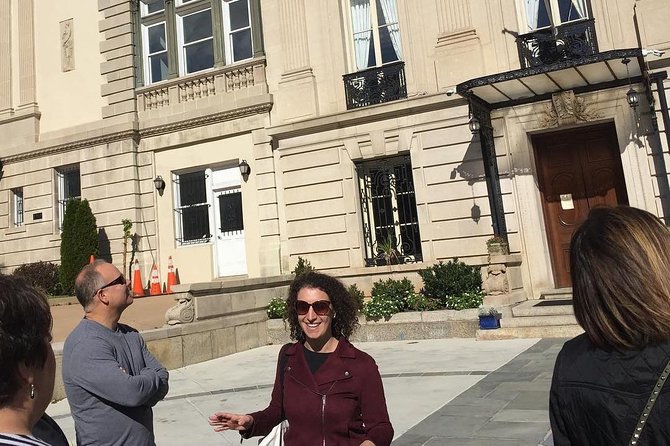
After the embassy density, you move into Kalorama, a residential neighborhood off Embassy Row. You’ll hear the name has a Greek meaning tied to beautiful views, and the feel shifts from public-facing grandeur to more private, leafy energy.
This part of the tour matters because it prevents your brain from getting stuck on one idea. Yes, the block-by-block wealth is impressive. But you’re also seeing how the city’s elite lived day to day, not just how they hosted receptions and built reputations.
If you like contrast, this is a good reset. The narration keeps the thread of influence going, but the setting turns calmer.
Woodrow Wilson House: what you see, and what you don’t
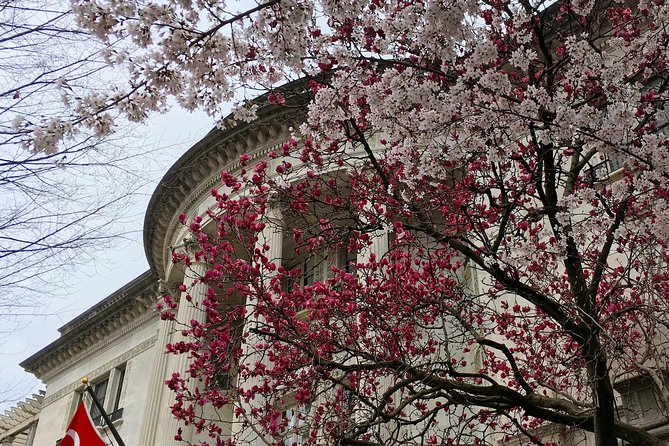
You’ll pass the former post-presidency home of President Woodrow Wilson. The tour notes this stop as a ticket not included, so treat it as a viewing opportunity rather than an inside visit.
That’s also an important planning point for your expectations. This tour is built around outdoor architecture and story delivery, not on-ticket museum access. If you want to enter specific historic properties, you’ll likely pair this walk with another stop elsewhere that offers paid entry.
If you’re flexible and enjoy seeing what a building communicates from the street, this still works well. The Wilson connection adds weight to an already impressive string of residences.
Spanish Steps, Mitchell Park, and the Hobbit House story
Washington loves to borrow ideas and remix them. The Spanish Steps are DC’s modest version of a famous European landmark, and you’ll get a look at this little pause in the city—almost like a quiet pocket you wouldn’t notice unless someone pointed you toward it.
Then you’re guided toward Mitchell Park and the “Hobbit House” location. Here, the narration includes a quirky creator detail: Edward Lind Morse painted his famous inventor father there. It’s the kind of specific story that turns a location stop into a real “oh wow” moment.
These are short segments, but they add variety. After the grandeur of mansions and embassies, this is where you feel the city’s playful side.
The Phillips Collection ending: art starts to breathe through the brick
The tour finishes near The Phillips Collection, taking in the red brick exterior of this modern art museum. It’s noted as the first modern art museum in the US, which gives the ending a nice historical click: you’re leaving a diplomatic-and-mansion world and stepping into an art one.
Because the stop is brief and framed as a look-around moment, it’s a great way to end the walk without dragging you into a long museum session right away. If you want to keep going, the museum location gives you an easy next step.
Price and walking time: what $48 gets you in DC
At $48 per person for about two hours, this tour sits in the midrange for DC guiding. What makes it feel like value is the delivery: fully narrated, local guide, and a small-group format capped at 20.
It also helps that the itinerary is built from free-to-view exterior stops. Most stops list no admission needed, so you’re paying for the interpretation—not for a parade of entry fees.
You might want to book ahead. This experience is commonly reserved about 22 days in advance, which usually means popular timing slots get pulled first. If you’re traveling in a busy season or have a narrow window, earlier planning is smart.
Guide style: why the narration is the real attraction
The buildings are gorgeous, sure. But the tour lives or dies on how the guide tells the story. The reviews for this experience repeatedly praise guides who keep the walk moving while delivering clear architecture cues and human details.
Names that come up often include Sam, Mark, Ellory, Christine, Natalie, and Carolyn. Across those different voices, the common theme is storytelling that stays connected to what you’re seeing. One review even mentions supplemental photos that help you visualize how people lived—exactly the kind of tool that turns background details into something your brain can hold onto.
One more practical point: guides here tend to invite engagement, and when you ask a question, they don’t treat it like an interruption. That makes the experience feel more like an informed conversation than a rigid lecture.
Who should book this Embassy Row walk—and who might not
This tour is a great match if you want to:
- see Dupont Circle and Embassy Row in a structured way without getting lost
- learn how architecture styles connect to power, wealth, and diplomacy
- enjoy stories that blend DC elite culture with international themes
- get a short, well-paced leg-stretcher that ends near something cultural
You might hesitate if you:
- only care about interior access and paid entry spots
- hate walking in heat or cold (the tour is outdoors most of the time)
- want a deep museum visit instead of a guided street-level interpretation
Should you book this Dupont Circle and Embassy Row tour?
If you’re doing DC with limited time and you want a high-return use of a couple hours, I’d book it. It turns one of Washington’s most photogenic areas into a story you can actually follow, with architecture lessons that feel practical, not forced.
If you already know DC’s big monuments and want something more human and sideways—less marble, more mansions, embassies, and quirks—this hits that sweet spot. Just go in expecting a smart exterior walk, then use the ending at The Phillips Collection if you want to extend your afternoon.
FAQ
How long is the Dupont Circle and Embassy Row Architectural Walking Tour?
It’s about 2 hours.
How much does the tour cost?
The price is $48.00 per person.
Where do we meet and where does the tour end?
You start at Dupont Circle, Washington, DC 20036 and end at The Phillips Collection, 1600 21st St NW, Washington, DC 20009.
Is the tour guided, and what language is it in?
Yes, it includes a local guide and is offered in English.
What’s the group size limit?
The tour has a maximum of 20 travelers.
Are tickets or admissions included for stops?
Most stops are listed as admission free, but the President Woodrow Wilson House stop notes admission as not included.
Are service animals allowed?
Yes, service animals are allowed.
Is public transportation nearby?
Yes, the tour is near public transportation.