REVIEW · WASHINGTON DC
Castle to Capitol: Museums of the National Mall Architecture Tour
Book on Viator →Operated by DC Design Tours · Bookable on Viator
Washington’s National Mall is built like a storybook.
This tour is the fast way to read it: you walk the east side between the US Capitol and the Washington Monument with a historian guide, focusing on the architecture and design choices behind the museums. I especially liked how the small group (up to 20) keeps the pace conversational, and how the guide’s explanations make famous buildings feel newly understandable, not just photographed.
One thing to keep in mind: it’s a walking tour that’s packed with stops, so if you prefer long museum time inside exhibits, you may want to pair this with separate ticketed museum visits afterward.
In This Review
- Key highlights at a glance
- National Mall museums, explained through design
- Price and timing: what $48 buys you (and what it doesn’t)
- Route overview: a tight east-side sweep to the Capitol
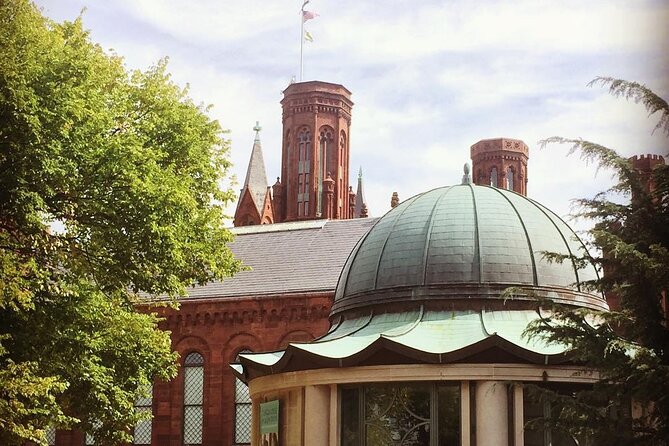
- Stop 1: Smithsonian Castle and Garden as your starting key
- Stop 2: Smithsonian Arts + Industries Building and the design conversation
- Hirshhorn Museum and Sculpture Garden: the Mall’s sci-fi moment
- National Gallery of Art from a distance: neoclassical vs modern lesson
- National Museum of the American Indian: sculpted-by-nature architecture story
- United States Botanic Garden: a breather between museums
- Bartholdi Park: the small detour with a surprising fountain
- Capitol Hill finish: views from the west lawn
- Guides make a difference: Carolyn, Sam, and Cathryn-style tours
- Who this tour is best for (and who should skip it)
- Should you book Castle to Capitol?
- FAQ
- How long is the Castle to Capitol tour?
- Where does the tour start?
- Where does the tour end?
- What’s included in the ticket price?
- Is there a mobile ticket?
- How many people are in the group?
- Which stops will I see during the walk?
- Is the National Gallery of Art included inside?
- Are service animals allowed?
- What if the minimum number of travelers isn’t met?
- Can I cancel for a full refund?
Key highlights at a glance
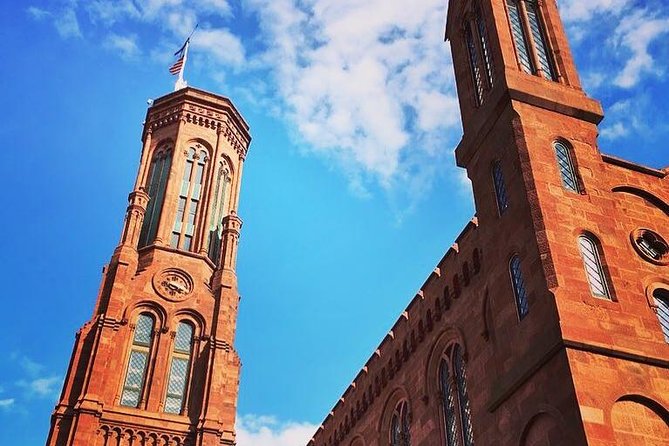
- Architecture-first route across the museum spine of the National Mall
- Included Smithsonian Castle admission to kick things off at the headquarters building
- Expert historian guidance that ties design details to real stories
- Small group size (max 20) for questions and back-and-forth
- Smart mix of big-name museums and quiet stops like the Botanic Garden and Bartholdi Park
- End at Capitol Hill for payoff views over the Mall
National Mall museums, explained through design
If you’ve ever walked the National Mall and felt like you were just collecting photos, this tour changes the game. You don’t spend most of the time in galleries. You spend it noticing why each building looks the way it does—materials, shapes, setbacks, and how each museum “speaks” to its neighbors.
That architectural focus is the main value here. It turns the Mall into a readable sequence. Instead of treating each museum like a separate stop, you start seeing patterns: how the Smithsonian helped shape the area, how different styles sit side by side, and how later institutions made their own visual arguments with what came before.
I also like that the vibe is educational but not stiff. In past tours with guides such as Carolyn, Sam, and Cathryn, the guiding style has been described as info-heavy and funny, with lots of real-world explanation rather than memorized facts.
You can also read our reviews of more tours and experiences in Washington DC.



Price and timing: what $48 buys you (and what it doesn’t)

At $48 per person for about 2 hours, this is priced like a guided sightseeing experience with a specific “angle.” The biggest practical reason it feels like good value: you get local guidance plus admission to the Smithsonian Castle as part of the tour.
What it doesn’t try to do is replace a full-day museum plan. You’ll see buildings from close range and learn the design story behind them, but you’re not buying deep entry time into every museum. If your goal is mostly to “check boxes,” this tour helps you do it faster and more intelligently. If your goal is hours inside exhibits, treat it as your orientation and story-builder.
You’ll also want to plan around the reality of booking. The tour is commonly booked about 8 days in advance, so for peak days you may want to lock in earlier rather than waiting.
Route overview: a tight east-side sweep to the Capitol
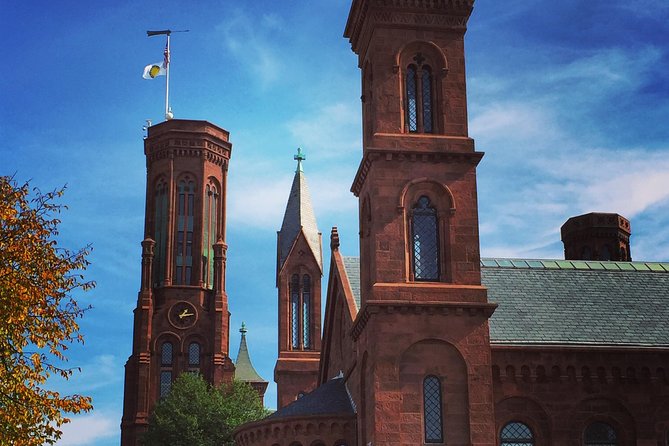
This is an east-side National Mall walk, between the US Capitol and the Washington Monument. The tour begins at the Smithsonian Castle and Garden area at 1000 Jefferson Dr SW. It finishes on the west lawn of the US Capitol, with wrap-up views from the foot of Capitol Hill.
The tour also runs with a maximum of 20 travelers, which matters more than people think. On the National Mall, you can lose a tour quickly if it feels crowded or rushed. Here, the smaller group size makes it easier to hear the guide and ask quick questions without feeling like you’re interrupting a cattle line.
And yes, this is a walking tour. The timing is short at about 2 hours, so you’ll want comfortable shoes and an open attitude toward lots of “look at this, now notice that” moments.
Stop 1: Smithsonian Castle and Garden as your starting key
You start outside the Smithsonian Castle, the Smithsonian’s headquarters and the big symbolic “beginning” for the Mall’s museum system. The tour includes admission to the Smithsonian Castle, so you’re not only looking at the building from the outside—you get inside to see how this place functions as a hub.
What I like about starting here: the Smithsonian Castle isn’t just another pretty structure. It helps you understand why the Mall looks the way it does today. The guide’s job is to connect design choices to the Smithsonian’s long role in shaping the National Mall, from the Smithsonian’s early years in the mid-1800s through today.
If you’re the type who usually skips museum headquarters buildings, this is where you’ll probably change your mind. The Castle gives you context before you move outward to the museums.
Stop 2: Smithsonian Arts + Industries Building and the design conversation
Next up is the Smithsonian Arts + Industries Building, described on the tour as a second home for the Smithsonian. Even with a brief stop, this is where the tour’s architecture mindset kicks hard: you start noticing how different institutions represent themselves through design, not just collection content.
The value here isn’t that you memorize architectural terms. It’s that you learn how to see the choices—what feels formal, what feels functional, how a building claims space. The guide also keeps time tight (this stop is short), so don’t worry about trying to “finish reading” the building. You’ll get the gist and move on.




Hirshhorn Museum and Sculpture Garden: the Mall’s sci-fi moment
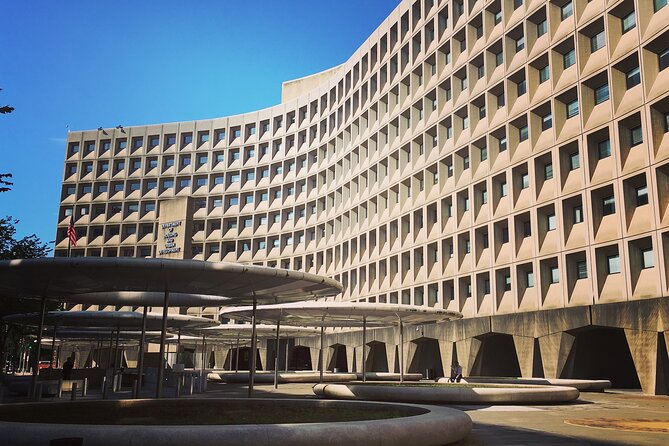
Then you hit the Hirshhorn Museum and Sculpture Garden, often described as a kind of spaceship on the National Mall. If you usually think of the Mall as mostly traditional stone-and-columns, the Hirshhorn helps you understand how modern museum architecture has staked its own claim right in the middle of the classic layout.
I like this moment because it breaks the rhythm. After Castle and the Smithsonian-adjacent buildings, the Hirshhorn’s visual attitude makes you pay attention. It’s a reminder that architecture isn’t only about “looks old” versus “looks new.” It’s also about museum mission—how a space signals what kind of art experience you’ll have.
National Gallery of Art from a distance: neoclassical vs modern lesson

As the route goes on, you’ll get a view of the National Gallery of Art from the outside. The key idea the guide points out is the contrast between the Neoclassical West building and the Modern East building.
This is a smart stop for anyone who tends to blend styles together when sightseeing. Even if you only glance quickly, the guide’s framing helps you separate the visual languages. You stop thinking, I saw two buildings, and start thinking, I’m seeing design debate in real space.
Since the tour looks at it from the Mall-side, you won’t be doing a full interior museum visit here. That’s fine. The point is the architectural takeaway, and you’ll carry that awareness to the next stop.
National Museum of the American Indian: sculpted-by-nature architecture story
Next is the National Museum of the American Indian. The tour’s description leans into how the building’s look feels shaped by wind and water, and how its past has been complicated.
This stop matters because the building’s form isn’t just decorative. It’s tied to cultural symbolism and the realities of bringing a major museum project to life. You’ll likely find yourself looking at the surfaces and overall massing differently once the guide explains what the design is trying to communicate.
If you care about architecture as storytelling, this is one of the more emotionally resonant stops on the walk. Even without extended time inside, you’ll leave with a clearer sense of why the museum’s appearance carries meaning beyond aesthetics.
United States Botanic Garden: a breather between museums
One of my favorite parts of any museum-heavy route is a pause that feels different. The tour includes the United States Botanic Garden as a stop of about 10 minutes.
The practical upside: it breaks the pattern of museum facades and lets your eyes rest. The educational upside: the Garden sits inside the National Mall ecosystem, so it makes the Mall feel less like a museum corridor and more like a designed public space with its own purpose.
If you’re traveling with kids, this is also the kind of stop that can keep attention without needing everyone to sit and listen for long.
Bartholdi Park: the small detour with a surprising fountain
Then comes Bartholdi Park, a smaller, tucked-away stop off the National Mall. The tour highlights a historic fountain there and notes that the sculptor story is the kind of detail people often don’t expect.
This is exactly the type of moment that makes walking tours worth it. A big part of DC sightseeing is big buildings. Bartholdi Park gives you contrast—scale, quietness, and a reminder that history shows up in small places too.
Think of it as a reset before the final payoff: your eyes adjust, your legs catch up, and you’re ready for the open views at the end.
Capitol Hill finish: views from the west lawn
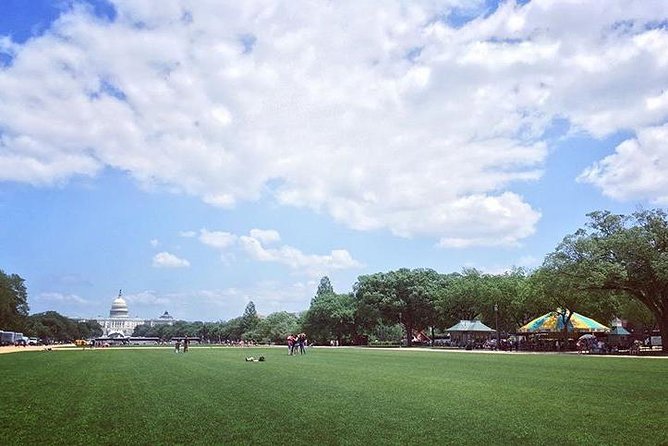
The tour wraps up at the west lawn of the US Capitol, with the guide pointing you toward breathtaking views over the National Mall and the Capitol itself.
This final section is more than a photo moment. It’s where architecture lessons land. From this perspective, you can connect the dots between the Smithsonian-centered start and the broader national civic setting. Even if you’re not taking every historical detail in, you’ll feel the spatial logic: the Mall is an intentional corridor, and these museums are part of that national stage.
Guides make a difference: Carolyn, Sam, and Cathryn-style tours
In the guide lineup you might see names like Carolyn, Sam, and Cathryn. Across these tours, the consistent theme is a guide who’s prepared, friendly, and ready to answer questions—especially if your curiosity runs toward design.
One review-style detail that matters: guides have been praised for being humor-forward while still staying accurate and packed with information. That mix is important on a tight 2-hour walk. You don’t want a lecture voice. You want a conversation that helps you see.
Who this tour is best for (and who should skip it)
You’ll probably love this tour if:
- You’re interested in architecture and want a guided way to see design choices.
- You want a fast orientation to the east side National Mall without committing to a full museum day.
- You like small-group touring and asking questions when something clicks.
You might want to skip or supplement it if:
- You prefer mostly interior museum time and long-stay exhibits.
- You’re visiting with very young kids who need more frequent breaks than a tight walking schedule allows.
- You’re coming only for one museum and don’t care about how the buildings connect.
Should you book Castle to Capitol?
If your trip includes at least a few National Mall museums, I think this is an easy “yes” for most people. $48 isn’t cheap, but with Smithsonian Castle admission included, a historian guide, and a route built around how the Mall’s architecture works as a system, it’s a strong use of two hours.
Book it when:
- You want context early in your DC days.
- You want to see more than facades, even if you don’t plan to go deep into every museum right away.
- You like tours where the guide helps you notice details you’d normally miss.
FAQ
FAQ
How long is the Castle to Capitol tour?
It lasts about 2 hours (approx.).
Where does the tour start?
The meeting point is at Smithsonian Castle, 1000 Jefferson Dr SW, Washington, DC 20560.
Where does the tour end?
The tour finishes on the west lawn of the US Capitol, at Capitol Hill, Washington, DC 20004.
What’s included in the ticket price?
The tour includes local guide service and admission to the Smithsonian Castle.
Is there a mobile ticket?
Yes, the tour uses a mobile ticket.
How many people are in the group?
The experience has a maximum of 20 travelers.
Which stops will I see during the walk?
You’ll see the Smithsonian Castle, the Smithsonian Arts + Industries Building, the Hirshhorn Museum and Sculpture Garden, the National Museum of the American Indian, the United States Botanic Garden, Bartholdi Park, and you’ll end at Capitol Hill. You’ll also view the National Gallery of Art from a distance.
Is the National Gallery of Art included inside?
The tour includes seeing the National Gallery of Art from a distance, not an interior visit.
Are service animals allowed?
Yes, service animals are allowed.
What if the minimum number of travelers isn’t met?
If the minimum isn’t met, the tour may be canceled after confirmation, and you’ll be offered an alternative date/experience or a full refund.
Can I cancel for a full refund?
Yes. You can cancel up to 24 hours before the experience starts for a full refund.