
REVIEW · WASHINGTON DC
Historic Georgetown: History, Gossip, & Architecture Walking Tour
Book on Viator →Operated by DC by Foot · Bookable on Viator
Georgetown has secrets, and this walk shares them. You get a guided, small-group route that turns the neighborhood into a story you can picture, not a list you’ll forget. I love how the guide keeps moving with clear commentary, plus the kind of names-and-motives details that make the streets feel personal.
I also love the architecture-and-identity mix. You’ll see early structures like the Old Stone House, plus Georgetown’s campus landmarks, and you’ll connect them to who lived and studied here over time.
The only drawback is the walking surface. Expect hills, brick sidewalks, and cobblestones, so bring shoes you trust.
In This Review
- Key things you’ll notice right away
- A 2-hour Georgetown walk that feels personal, not rushed
- Starting at C&O Canal Lock 3: where the route begins
- Georgetown cobblestones: the neighborhood you’ll want to slow down for
- The C&O Canal lock stop: how boats actually moved
- Old Stone House (1766): the stop for a breather and a time jump
- Hedin House Apartments: where Kennedy connections feel grounded
- Georgetown University: spires, the statue of John Carroll, and campus energy
- Martin’s Tavern and the nearby Exorcist Steps finish: DC flavor and pop culture
- What the guides add: stories, humor, and real answers
- Price and value: is $49 worth a two-hour walk?
- Walkability and comfort: hills, bricks, and cobblestones
- Who this tour is best for
- Should you book Historic Georgetown: History, Gossip, & Architecture?
- FAQ
- How long is the walking tour?
- Where does the tour start?
- Where does the tour end?
- How big is the group?
- What’s included in the price?
- Is the tour offered in English?
- Do I need a paper ticket?
- Is the tour suitable for most people?
- What happens if the weather is poor?
- Are service animals allowed?
Key things you’ll notice right away
- A max of 15 people keeps the pace friendly and the Q&A real
- C&O Canal Lock 3 gives you a hands-on sense of how boats moved through Georgetown
- Old Stone House (1766) includes a calm garden stop, run by the National Parks Service
- Kennedy-era references pop up in Hedin House Apartments along the way
- Georgetown University landmarks include the Patrick Healy building spires and John Carroll’s statue
- A Georgetown institution stop at Martin’s Tavern rounds out the experience with classic DC flavor
A 2-hour Georgetown walk that feels personal, not rushed
Georgetown can look pretty effortless from afar. Up close, it’s all angles, brick, and old-world planning. This tour takes that physical detail and pairs it with human stories, so you understand why certain streets and buildings matter.
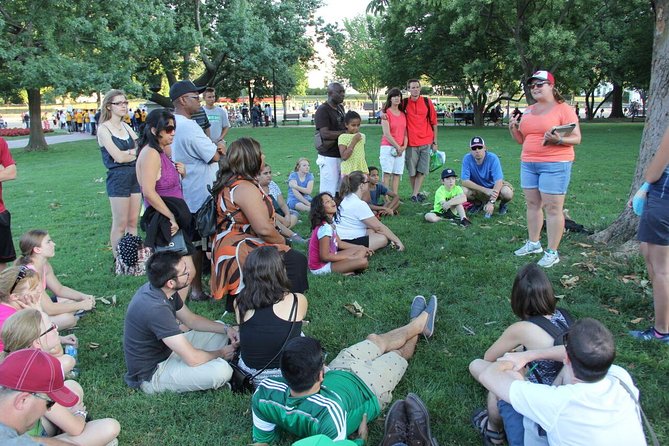
The format helps. With a cap of 15 travelers, you’re not shouting over a big crowd, and the guide can actually answer questions as you go. That matters in a place like Georgetown, where a lot of the interest is in the small stuff: gates, facades, and the subtle shifts in neighborhood design.
You’ll also get a clean arc. The walk starts at the C&O Canal area and finishes near Georgetown University, so it’s easy to keep exploring on your own afterward.
You can also read our reviews of more tours and experiences in Washington DC.



Starting at C&O Canal Lock 3: where the route begins
Your meeting point is at C&O Canal Lock 3 in Washington, DC. Starting here is smart because it roots the tour in Georgetown’s work life, not just its later reputation as a charming shopping and dining area.
From the jump, you’re set up to notice how the neighborhood was shaped by transport and industry. The canal is a big reason Georgetown grew the way it did, and this first segment gives you that context before you move into the quieter streets.
Georgetown cobblestones: the neighborhood you’ll want to slow down for
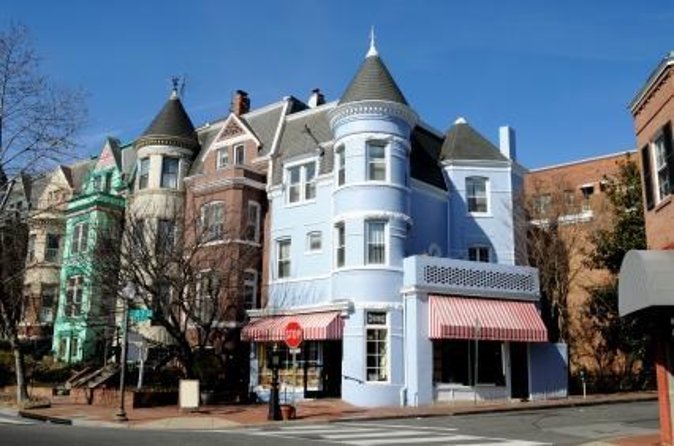
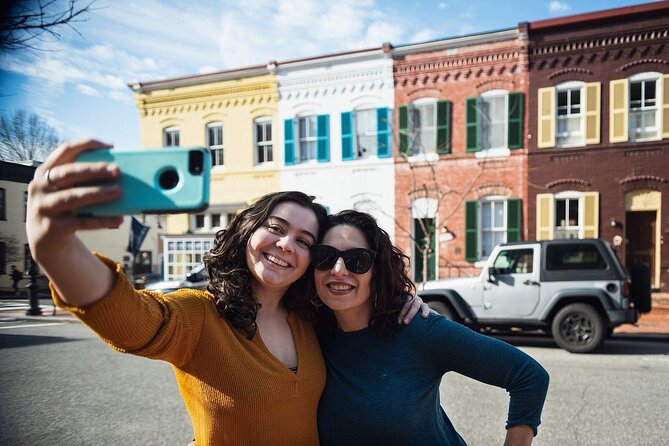
The Georgetown portion focuses on the classic walkable core: cobblestone streets, historic homes, and gardens. This is the part where you’ll see why the area has stayed popular with artists, shoppers, and history lovers.
What makes this stop work is the way the guide connects street-level observations to bigger stories. You’re not just admiring old buildings. You’re learning who these places were associated with and what life might have looked like here, street by street.
One practical tip: take a moment to look for architectural cues as you walk. Door shapes, window proportions, and the layout of small garden spaces all signal different eras and priorities. The tour gives you the prompting so you don’t have to guess.
The C&O Canal lock stop: how boats actually moved
You’ll also spend time at the canal itself, including a working lock gate. Seeing how a lock helps boats travel along the waterway turns the canal from a background feature into something you can visualize.
This is especially useful if you’re the type who likes real mechanics behind the romance. The lock is basically Georgetown’s water-based engineering story, and it makes the later neighborhood development feel less random.
If you’re doing other DC sights that lean heavily political, this stop offers a refreshing change. It’s tangible. It’s physical. It helps you understand trade and movement, not just dates.
Old Stone House (1766): the stop for a breather and a time jump
One of the most satisfying pauses on the walk is the Old Stone House, built in 1766. It’s run by the National Parks Service, and it comes with a garden space where you can sit, reset, and take in the scale of how long this place has been here.
This stop also gives you a clean timeline. The Old Stone House later served as a car dealership by the early 1950s, and then it shifted into historic preservation. That evolution is fascinating because it shows how a building can keep serving a community while still changing with the times.
There’s also a sense of everyday history. The nearby port trade and the talk that went with it were the kind of setting where tobacco and tall tales would have felt normal. It’s the kind of detail that makes you picture the people, not just the structure.




Hedin House Apartments: where Kennedy connections feel grounded
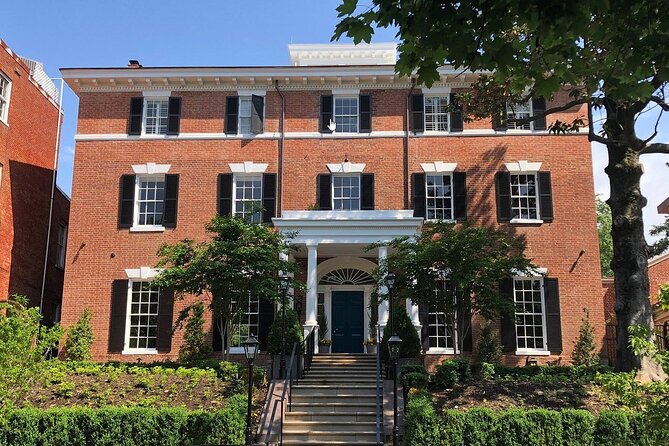
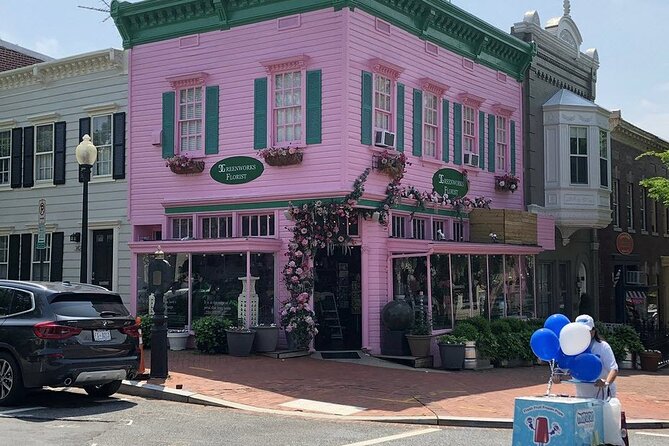
Next up is Hedin House Apartments, tied to homes associated with the Kennedy family. This isn’t a museum stop. It’s more of a pattern-recognition moment: the guide helps you see how Georgetown could function as a home base for prominent families.
The most useful part here is the way the tour explains why you might find multiple connections in the same neighborhood. You’re not chasing one famous address. You’re learning how the neighborhood fit into wider life for decades.
If you like architecture plus biography, this is one of the best stretches of the walk. You’ll look at the building with a different lens after the guide puts the Kennedy-era context in place.
Georgetown University: spires, the statue of John Carroll, and campus energy
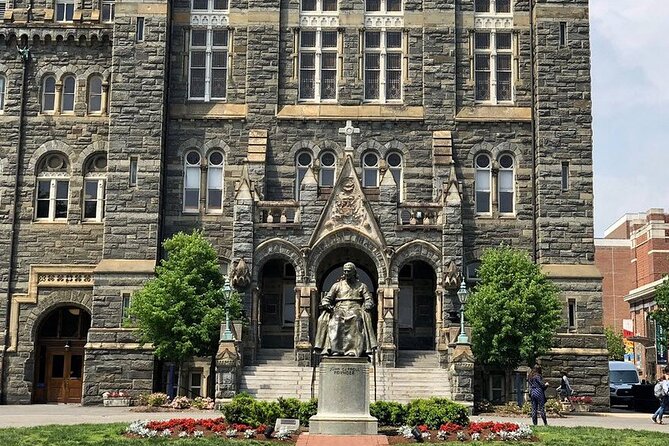
The tour includes a quick stop at Georgetown University, founded in 1789. The school is a major reason visitors linger in this area, but this tour keeps it from feeling like a sightseeing detour by focusing on recognizable landmarks.
You’ll see the Patrick Healy building spires and the statue of founder John Carroll. On a warm day, you might also catch students relaxing outside—reading, socializing, and generally using the campus grounds like real people do, not just like a postcard background.
This is also a good stop if you want a sense of how old institutional power looks in the real world. Georgetown University’s influence shows in the architecture and the street flow, even when you’re not inside a building.
Martin’s Tavern and the nearby Exorcist Steps finish: DC flavor and pop culture
As you near the end of the walk, you’ll hit Martin’s Tavern, a Georgetown institution locally owned since 1933. The vibe is classic: dark wood panels, black-and-white photos, and the kind of regulars-and-stools atmosphere that makes you want to sit for just one more minute.
The guide’s commentary helps you understand why a place like this endures. It’s not only about food. It’s about continuity—how a community keeps reusing the same corner for decades.
The tour ends near Georgetown University at the intersection of 37th and O St NW, with a mention of the Exorcist Steps along the way. Even if you’re not a movie person, the steps have become part of local identity because they’re so visually specific and easy to recognize once you’re close.
What the guides add: stories, humor, and real answers
This is where the tour earns its near-perfect rating. Across guides, the pattern is consistent: engaging narration, specific architectural details, and a strong ability to answer questions without turning the walk into a lecture.
I’m especially fond of the way Vicky and Becca are described for combining history with a lively pace and staying responsive. If you want more than facts—if you want a feeling for what people were like—this tour hits that note.
Other guides bring their own style. Eli is credited with humor and a good mix of historical and fun trivia. Ingeborg is noted for being extremely informative with a good dollop of gossip. Wayne and Georgia are praised for stories and anecdotes that make the significance of sites click fast.
One smart bonus you might catch in how the guide works: some guides provide helpful recommendations after the tour, including places to eat or drink. That’s practical when you still need a morning coffee or a dinner plan later.
Price and value: is $49 worth a two-hour walk?
At $49 per person for about 2 hours, the value comes down to one thing: how much you care about context. If you only want a quick photo walk, this price might feel steep. If you like understanding what you’re looking at, it’s a solid deal.
Here’s why. The tour bundles a licensed, professional guide with a tight route through multiple Georgetown anchors: canal, Old Stone House, Kennedy-era connections, Georgetown University, and Martin’s Tavern. You’re also paying for the guide’s ability to connect those stops, so you don’t just see buildings—you learn why they matter.
Also, there’s small-group sizing (up to 15 people). In DC, that size difference is the whole game for a walking tour. It keeps the pace human and the listening comfortable, which is hard to get on bargain tours.
Finally, the stops listed show free admission for the featured sites during the tour, so you’re not stacking ticket costs on top of the price.
Walkability and comfort: hills, bricks, and cobblestones
Comfort is your main planning issue. You’ll walk on hills, brick sidewalks, and cobblestones, which can slow you down if you’re not used to it.
What to do:
- Wear grippy shoes you’ve already broken in.
- Bring a layer for sudden temperature shifts, especially since the tour depends on decent weather.
- If you’re sensitive to uneven ground, consider taking your time during the cobblestone sections.
Most people can participate, but this is not a flat, stroller-friendly stroll. Plan for a bit of uphill effort and uneven footing.
Who this tour is best for
This tour is ideal if you want:
- Architecture plus personality, not just one famous building
- A guided route through Georgetown that explains connections
- A short trip that leaves you free to continue on your own near Georgetown University
It’s also a great fit if you’re staying downtown and want a manageable morning or afternoon plan. The ending point makes it easy to stitch this walk into a bigger day of DC sightseeing.
If you hate walking, or if cobblestones make you uncomfortable, you may want to look for a shorter or less hilly option. Otherwise, it’s one of the better ways to get Georgetown context without spending all day in lines.
Should you book Historic Georgetown: History, Gossip, & Architecture?
Yes, if you want Georgetown to make sense fast. Booking makes extra sense when you’re short on time and want a guided mix of canal history, early buildings like the Old Stone House, and major campus landmarks at Georgetown University.
Skip it only if you strongly dislike uneven pavement or want a pure self-guided experience. Otherwise, the price, the small group size, and the way guides weave in stories and humor make it a smart use of a couple hours in DC.
FAQ
How long is the walking tour?
The tour runs about 2 hours.
Where does the tour start?
It starts at C&O Canal Lock 3 in Washington, DC.
Where does the tour end?
It ends near Georgetown University at the intersection of 37th and O St NW.
How big is the group?
The tour is capped at a maximum of 15 travelers.
What’s included in the price?
You get a professional, licensed guide. The featured stops listed show free admission for those stops.
Is the tour offered in English?
Yes, it’s offered in English.
Do I need a paper ticket?
You’ll use a mobile ticket.
Is the tour suitable for most people?
The tour indicates that most travelers can participate, but it’s still a walking route with hills, brick sidewalks, and cobblestones.
What happens if the weather is poor?
The experience requires good weather. If it’s canceled due to poor weather, you’ll be offered a different date or a full refund.
Are service animals allowed?
Yes, service animals are allowed.