REVIEW · LOS ANGELES
Downtown LA: History and Architecture Guided Walking Tour
Book on GetYourGuide →Operated by See LA in a Day L.L.C. · Bookable on GetYourGuide
Downtown LA teaches fast if you have the right guide. I love how this tour uses Downtown architecture as a time machine, with stops like the Bradbury Building and a story-rich walk through the historic core. Then it shifts gears into Little Tokyo for shopping breaks and a Fugetsu-Do mochi sample, with guide Chris weaving in how the city grew from a small start into what you see today.
The main thing to think about is walking time. It’s a 3-hour trek over a few miles with some gentle slopes, and it’s not suitable for people with mobility impairments, so bring your best walking shoes and plan for a steady pace.
In This Review
- Key Things I’d Actually Tell a Friend
- Downtown LA’s Architecture Is the Story
- Where the Tour Starts (And How to Find Your Guide)
- Stop 1: The Last Bookstore for LA-Style Counterculture Energy
- Stop 2: The Bradbury Building, Where Architecture Feels Like Theater
- Pershing Square and the Historic Core: Small Stops, Big Connections
- Little Tokyo: Shopping, Boba Breaks, and Mochi That Has a Name
- Civic Center, Grand Park, and the Music Center: Where LA’s Power Shows Up
- Angels Flight Funicular Ride: The 120+ Year Old LA Shortcut
- Price and Value: Is $49 Worth It?
- What to Bring (And What to Skip)
- Who This Tour Suits Best
- Practical Tips for a Smooth 3 Hours
- Should You Book This Downtown LA Architecture and History Walking Tour?
- FAQ
- Where do I meet the guide?
- How long is the tour?
- What’s included in the price?
- Is parking available nearby?
- Are there places to use the restroom before the tour starts?
- What should I bring?
- Is the tour suitable for people with mobility impairments?
- What items are not allowed during the tour?
Key Things I’d Actually Tell a Friend
- Bradbury Building guided tour: you’ll look at details most people rush past.
- Little Tokyo break with mochi: a real snack moment, not just a photo stop.
- Civic Center + Grand Park + Music Center: Los Angeles’ power blocks meet big-screen fame.
- Film-location spotting: Batman, La La Land, Blade Runner, and more get tied to real places.
- Angels Flight funicular ride: a classic 120+ year old LA shortcut back down.
Downtown LA’s Architecture Is the Story
Downtown Los Angeles is where the city’s identity took shape, and this tour treats it like a living textbook. You start with the idea that LA’s history and downtown are inseparable—so instead of just naming buildings, you learn what they were built for, who they served, and how they helped the city become itself.
I like the way the tour connects architecture to everyday life. The historic core isn’t presented as stuck-in-time scenery; it’s shown as the engine behind Los Angeles’ growth. That makes even quick stops feel purposeful, because you know what you’re looking at and why it matters.
And then it gets fun. The walk includes famous film locations tied to the places you’re standing in, so the skyline and streets start working like a “now you see it” pop quiz.
You can also read our reviews of more tours and experiences in Los Angeles.
Where the Tour Starts (And How to Find Your Guide)
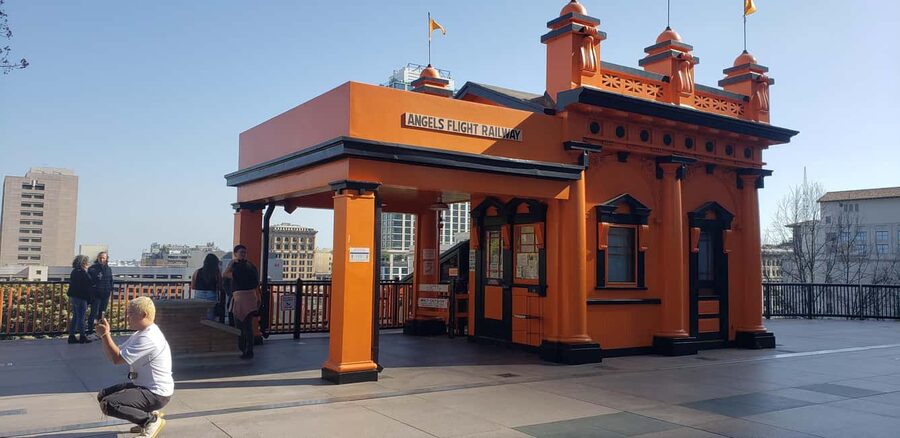
You’ll meet at 341 S Hill St, at the lower part of Angels Flight. The meeting note is specific for a reason: there’s an area with stairs to the left of the train, and your guide should be there.
This matters because Downtown can feel like a maze, and Angels Flight is the kind of landmark that draws attention from every direction. Once you spot the guide’s group, the pace is friendly but steady—this is not one of those tours that wanders for an hour just because it can.
Practical tip: use the restroom before you start. There aren’t many opportunities once you’re moving through the early blocks, and you’ll have restrooms available across from the meeting area at Grand Central Market.
Stop 1: The Last Bookstore for LA-Style Counterculture Energy
The tour includes a stop at The Last Bookstore in Los Angeles for about 10 minutes. This isn’t just “buy a souvenir book and go.” It’s a quick, focused glance at a place that feels very LA: creative, a little odd, and shaped by people who refuse to keep things normal.
Why this stop works in a walking tour is timing. It’s early enough to break the ice and reset your attention before you get serious with architecture. And it also sets up a key theme you’ll hear throughout the walk: Downtown LA has always been a mix of commerce, culture, and reinvention.
Drawback to note: because the stop is short, you shouldn’t plan on deep browsing. If you love book stores, treat this as an introduction and plan to return on your own later if you want more time.
Stop 2: The Bradbury Building, Where Architecture Feels Like Theater
The Bradbury Building stop is one of the tour’s biggest draws, and you’ll get a guided visit (also around 10 minutes). This is the kind of building that looks impressive from the street, but becomes even better once your guide points out the elements you might otherwise miss.
What I like about this part is the framing. Instead of making it only about the building’s appearance, you also get context—how its design reflects the city’s ambitions, and why it remains a go-to location in pop culture. The tour also sets you up to understand why Downtown keeps getting reused in film and photography.
One practical consideration: because the stop is short, pay attention when your guide is explaining features. If you drift off to take endless photos, you’ll miss the best “aha” moments.
Pershing Square and the Historic Core: Small Stops, Big Connections
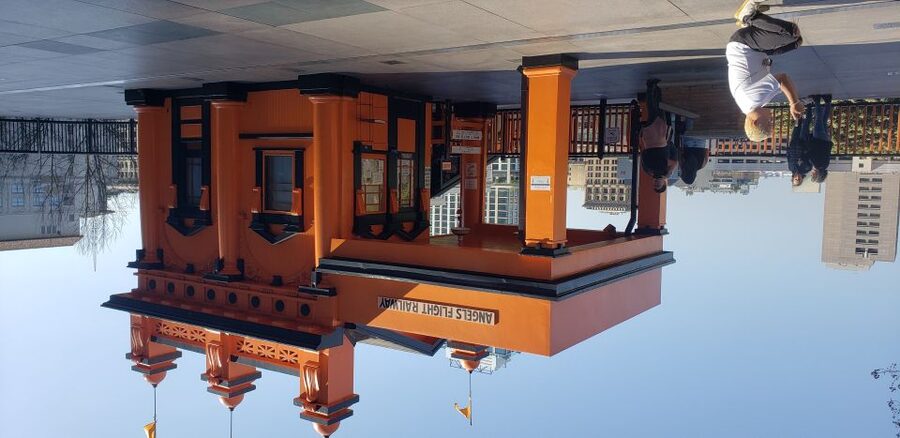
Between major highlights, you’ll pass through the historic core and you’ll hear about buildings and streets that helped define Downtown LA. One of the named stops in this architectural deep cut is Pershing Square, plus the tour includes other sights in the same general pocket.
This is where architecture-guided tours can either feel like trivia or feel like a story. The best version—this one—ties each place to what changed over time: street life, business growth, civic development, and the way Los Angeles kept reinventing its center.
You also get the benefit of not having to read everything from a phone screen. You can simply walk, look, and listen. When your guide explains what a building was designed to do, your eyes catch on faster.

Little Tokyo: Shopping, Boba Breaks, and Mochi That Has a Name
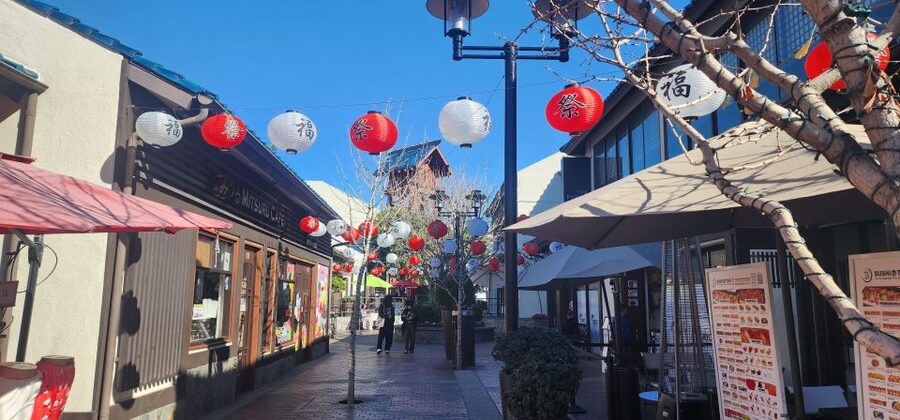
After the architecture-heavy early stretch, you head to Little Tokyo, one of the most enjoyable breaks in the whole tour. The area is full of shops and restaurants, and the tour is built to give you time to actually use that space—shopping, grabbing a drink, or just wandering.
Here’s what makes it feel real: the guided stop includes a mochi sample in Little Tokyo. The tour specifically calls out Mochi lovers and points you toward Fugetsu-Do, described as the oldest confectionery in Los Angeles. So you’re not just eating something sweet—you’re tasting a piece of local continuity.
And yes, you can use the time to grab something else too. Drinks aren’t included, but a boba tea is easy to find nearby if you want a break.
Possible drawback: if you expect a long, sit-down meal, this isn’t that. The Little Tokyo moment is a stop that supports the walking tour’s flow—enough time to enjoy the neighborhood, not enough time to treat it like an all-day food crawl.
Civic Center, Grand Park, and the Music Center: Where LA’s Power Shows Up
The final third of the walk moves into the civic zone—Civic Center, Grand Park, and the Music Center—often described as the political engine that keeps Los Angeles running. This is where you’ll see how government, culture, and public space shape the city’s identity.
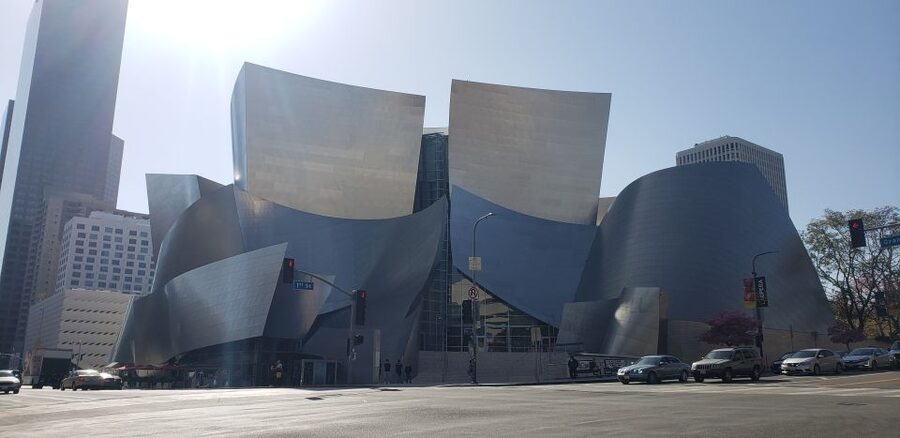
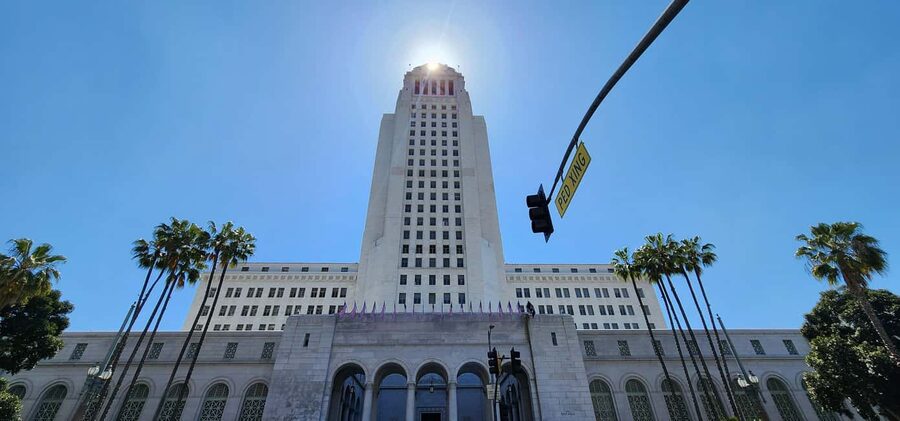
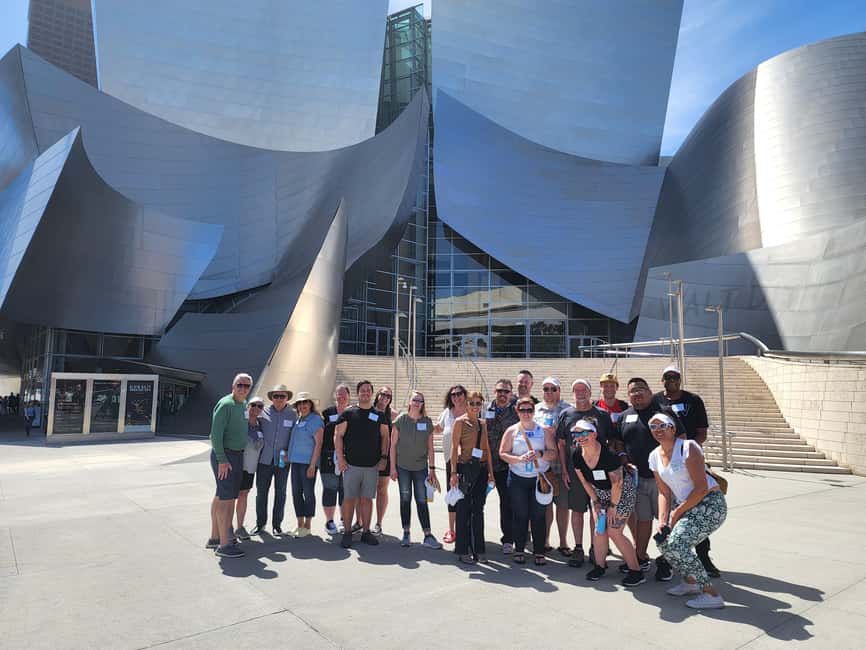
Two buildings that get called out clearly are City Hall and The Walt Disney Concert Hall. These aren’t just landmark photos—they’re also tied to major film references. The tour notes appearances in Batman and Iron Man, and that helps you connect the architecture to the way movies sell mood and scale.
Why this section is valuable: if you’ve only ever seen Downtown LA from postcards or from the car, civic spaces can look like empty plazas. With a guide, you start to see how they were designed to function—how they pull foot traffic, how they frame views, and how they create the stage for public life.
Also, Grand Park is one of those places where being on foot changes everything. You notice the sightlines and the way buildings meet open space. Even if you aren’t a city-planning nerd, you’ll feel the logic once you’re there and listening.
Angels Flight Funicular Ride: The 120+ Year Old LA Shortcut
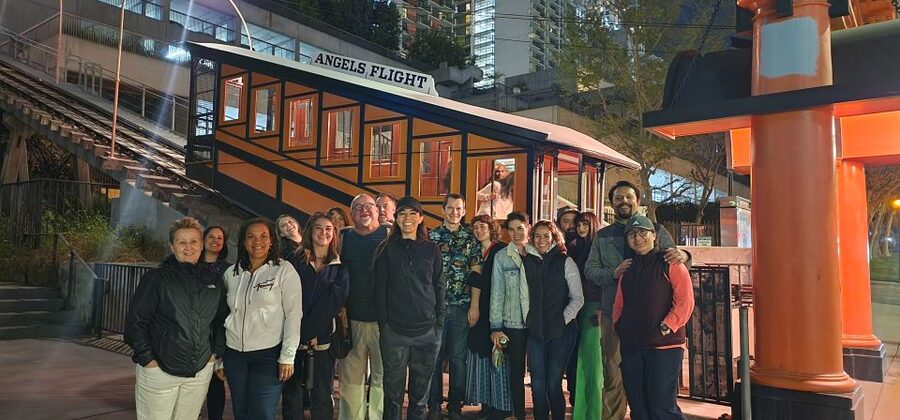
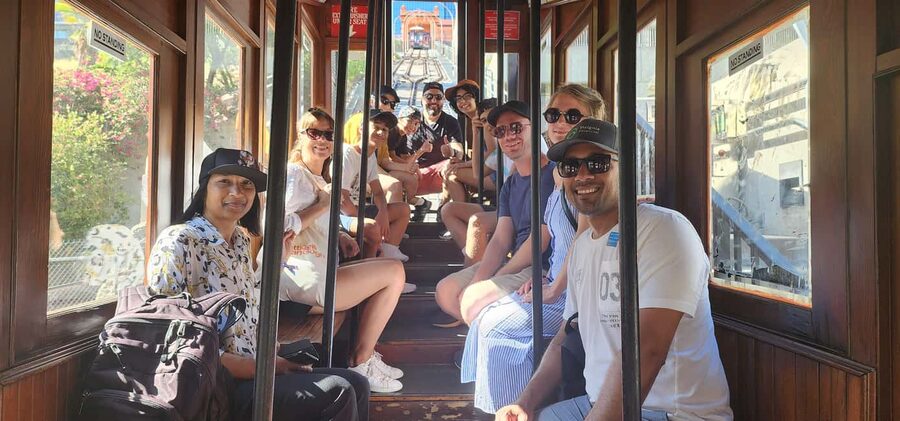
Near the end, you’ll board Angels Flight and ride the 120+ year old funicular. The tour ends back at the meeting area, so this ride functions like both a practical “get back” moment and a nice historical punctuation mark.
This is one of those experiences that feels too small to matter—until you’re actually on it. The ride gives you a quick pause after miles of walking, and it also puts you at the exact point where you started, which makes the whole tour feel tied together instead of scattered.
If you like classic LA oddities, you’ll probably want to photograph it more than once. And if you’re tired, the short ride is a relief that still feels like part of the experience rather than a commute.
Price and Value: Is $49 Worth It?
At $49 per person for a 3-hour guided walking tour, you’re paying for three things: an expert guide, the time investment, and the included taste of Little Tokyo.
What’s included is straightforward: a live English guide plus a mochi sample in Little Tokyo. What’s not included is just as clear: drinks and parking.
Here’s why I think the value can be strong: Downtown LA isn’t “one museum.” You’re moving through multiple neighborhoods and architectural zones, and you’re getting film-location context tied to specific buildings. Without a guide, you can still walk around—but you’ll be guessing what to pay attention to. With the guide, your eyes and ears match up fast.
When $49 might feel less worth it: if you already know Downtown LA inside out, or if you only want a single highlight like the Bradbury Building. This tour works best when you want the full map of the area and you care about how the pieces connect.
What to Bring (And What to Skip)
Wear comfortable shoes. You’ll walk a few miles, and you’ll cover some slight slopes. If your feet hate you, the architecture won’t save you.
Bring a camera (or phone with enough space) and water. The tour is long enough that you’ll appreciate having water on hand.
Skip alcohol and drugs. The tour notes those aren’t allowed, so keep things simple and stick to water and included snacks.
If you want to maximize your experience, also come ready to ask questions. Several guides associated with this tour style have been praised for answering anything about history and architecture—so don’t be shy.
Who This Tour Suits Best
This is an ideal pick if you want more than surface-level sightseeing. You’ll enjoy it if you like architecture, film locations, and walking through a city as it changes block by block.
It also works well if you’re short on time and staying in or near Downtown. One of the practical perks noted is that it’s easy to reach by bus and metro, which matters when Downtown traffic and parking can be a mood.
Best-fit travelers:
- First-time visitors who want a strong orientation to DTLA
- People who like photo-worthy architecture and want context
- Families and groups who enjoy stories tied to real places
Not a fit if:
- You can’t handle a 3-hour walking route with slight slopes
- You need step-free or mobility-access support (the tour says it isn’t suitable for people with mobility impairments)
Practical Tips for a Smooth 3 Hours
Start with logistics that make the tour easier:
- Restroom first: go at Grand Central Market across from the meeting point.
- Bring water: you’ll be moving long enough to want it.
- Plan for short stops: the key sites are time-boxed, so listen closely when the guide talks.
For parking, the tour notes you can find it around Grand Central Market and nearby lots. It typically runs $10–$20/day, so check before you commit if you’re driving in.
If you’re using public transit, you’ll likely find the area easy to reach since Downtown’s routes converge around major hubs. In other words: you might not need your car for most of the day.
And a simple mindset tip: give yourself permission to look up. This is an architecture tour. Your best photos and your best learning will come from slowing down for the details your brain normally skips.
Should You Book This Downtown LA Architecture and History Walking Tour?
I’d book it if you want Downtown LA to make sense fast. For $49, you get a 3-hour walk that links the historic core, Little Tokyo food culture, civic architecture, and movie location clues into one route. That’s a lot of “mental map” for one ticket.
I’d skip it only if you’re looking for a relaxed, low-walking experience or you need mobility-friendly accommodations. The route is meant for people who can handle a few miles and a couple gentle slopes.
If you go, go with comfortable shoes, a camera you actually plan to use, and an appetite for mochi. You’ll leave with Downtown LA feeling less random—and more like a place with a plot.
FAQ
Where do I meet the guide?
Meet at 341 S Hill St at the lower part of Angels Flight. There’s an area with stairs to the left of the train where your guide should be.
How long is the tour?
The tour lasts about 3 hours.
What’s included in the price?
The tour includes a live English guide and a mochi sample in Little Tokyo.
Is parking available nearby?
Yes. There is parking at Grand Central Market and surrounding lots. It usually costs $10–$20/day.
Are there places to use the restroom before the tour starts?
Yes. The tour notes there are restrooms across from the meeting point in Grand Central Market, and you should use them before the tour begins.
What should I bring?
Bring comfortable shoes, a camera, and water.
Is the tour suitable for people with mobility impairments?
No. The tour is listed as not suitable for people with mobility impairments.
What items are not allowed during the tour?
The tour notes alcohol and drugs are not allowed.