REVIEW · MARSEILLE
Marseille Belvedere: The city through architecture
Book on GetYourGuide →Operated by Leroy Louis · Bookable on GetYourGuide
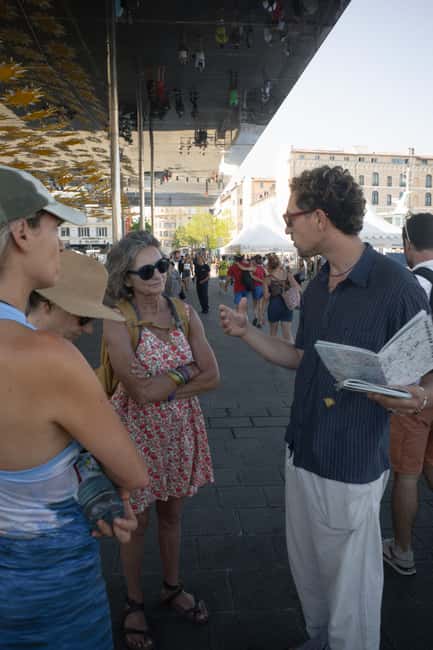
Marseille gets more interesting when you read it like a building. This 3-hour small-group walk, led by architect Louis Leroy, turns architecture into a story you can track step by step. I really like the Belvedere idea (viewpoints as clues), and I love that the guide uses texts, illustrations, and old postcards to make what you see feel connected instead of random.
There is one trade-off: you’ll be doing real walking with several stops, plus time spent reading and analyzing at each point. If you want only photo stops with zero thinking, this may feel like homework.
In This Review
- Key things you’ll do on this architect-led Marseille walk
- Marseille as a building: what a Belvedere tour actually teaches
- Meeting at Vieux-Port: start where Marseille always starts
- Marché aux Poissons to Port Antique: fish market energy, but with purpose
- Marseille Cathedral and City Hall: when scale tells a story
- Saint-Laurent Church, Fort Saint-Jean: defense, movement, and views
- Sainte-Marie Majeur (Vieille Major): the city’s layers keep talking
- La Vieille Charité and the Panier: neighborhood as a living document
- Rue de la République and Cours Belsunce: modern lines meet older traces
- Price and value: does $76 make sense for a 3-hour architecture walk?
- Why Louis Leroy’s guiding style fits curious travelers
- Should you book Marseille Belvedere: The city through architecture?
- FAQ
- Is this tour really a walking tour?
- Where do I meet the guide?
- How long is the experience?
- How much does it cost?
- What languages are available?
- How many people are in the group?
- Is the tour wheelchair accessible?
- What do I receive during the tour?
Key things you’ll do on this architect-led Marseille walk
- Follow “belvederes”: viewpoints used like reading stations, not just pretty overlooks
- Read and analyze on the move: texts plus chosen illustrations tied to what’s in front of you
- Use architecture as evidence: topography, building details, and the surrounding setting all explain the city’s evolution
- Work with archive material: old postcards photographed across different moments in time
- Stay in a small group: limited to 8 participants, which makes Q&A practical
- Walk the most layered parts of the center: from the Old Port area through Panier and on toward Cours Belsunce
Marseille as a building: what a Belvedere tour actually teaches
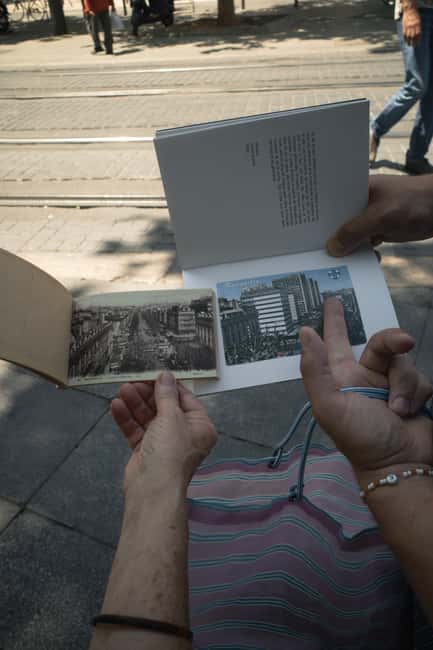
The word belvedere comes from Italian, bello da vedere, meaning what is beautiful to see. Over time, it shifted toward the idea of a promontory or viewpoint. On this tour, you’re not chasing a single landmark. You’re collecting multiple viewpoints that help you understand how Marseille grew, changed, and rebuilt itself.
Louis Leroy’s angle is simple and powerful: architecture is not just decoration. It’s a record. When you slow down enough to look at proportions, materials, and street shape, the city starts to show you why things look the way they do. And since Louis brings a trained architect’s eye, the walk feels less like a lecture and more like guided observation.
What makes it especially useful is the bridge between two kinds of information: written material and images. Instead of only hearing facts, you’re prompted to compare what you read with what you see. That turns your own attention into the main tool.
Meeting at Vieux-Port: start where Marseille always starts
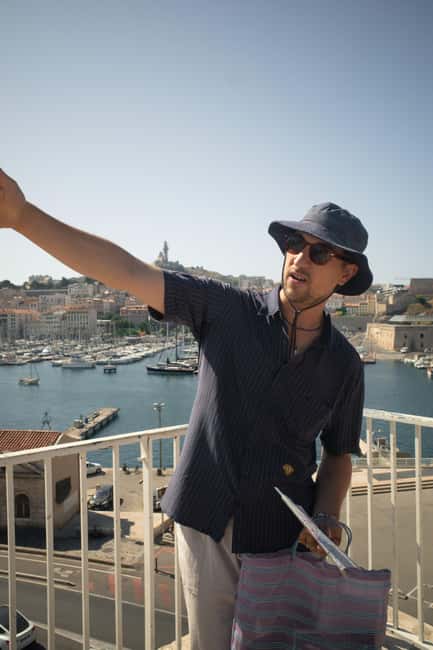
You meet at the Vieux-Port metro exit by the platform, and yes—Louis is easy to spot in his navy blue hat. That matters more than it sounds. In a city like Marseille, “meet in the old port area” can mean a lot of ground. A clear meeting point helps you start calmly and spend the tour looking, not hunting.
Right away, you’re set up for the core method of the tour: each stretch between stops builds context for the next one. You’ll walk out of the “modern first impression” zone and toward places where the city’s older layers show through more clearly.
Also, since it’s a small group limited to 8, you can ask questions without feeling rushed. If you get curious about a façade, a church position, or a street twist, this format makes it easier to follow your curiosity.
Marché aux Poissons to Port Antique: fish market energy, but with purpose
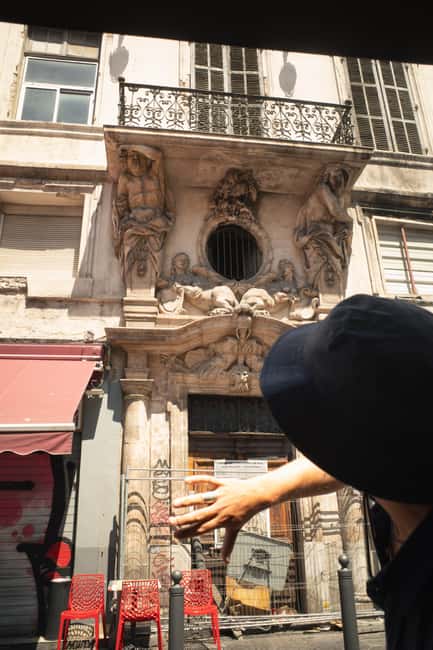
The tour starts at Marché aux Poissons. It’s a great choice because it’s not a museum entrance. It’s a working scene. That gives your perspective a grounding: Marseille isn’t frozen. Even as you learn about evolution, you’re in a place that still functions.
From there, you move on toward the Port Antique area. This is where the “read the city” mindset really takes hold. You’ll take time to notice how the waterfront and the surrounding street pattern interact—how the setting shapes what people could build, connect, and defend.
Practical tip: keep your pace steady but don’t speed past the small details. On this walk, the most valuable moments often come when Louis tells you what to notice before you notice it yourself—like a line of stonework, a view angle, or how the ground rises or falls.
Marseille Cathedral and City Hall: when scale tells a story
Next comes Marseille Cathedral, followed by City Hall as the route continues through the central core. Big civic and religious buildings tend to dominate photographs. On this tour, you’ll look past the obvious wow factor.
Here’s the value: Louis doesn’t treat each stop as a standalone “thing to see.” He treats it as part of a sequence. The cathedral and the civic buildings become anchors you can use to understand how the city organized power and identity over time.
You’ll also get practice using architecture as a language. Instead of memorizing dates, you learn to notice clues—building placement, how openings face streets, and how neighboring structures negotiate space. That’s the kind of skill that keeps paying off even after the 3 hours end.
Saint-Laurent Church, Fort Saint-Jean: defense, movement, and views
One of the most rewarding transitions on the route is the move toward Saint-Laurent Church / Fort Saint-Jean. Forts and churches belong to different worlds, but they share a common theme: position.
A viewpoint is never just a nice place to stand. It’s a strategic decision. As you approach this area, you’re primed to see how topography influences the city’s layout. Louis encourages you to “read” these choices: where people could see, where movement would be easiest, and how the city’s form responds to the setting around it.
If you like architecture for its logic—why things go where they go—this stop delivers. You’ll likely find yourself looking at sightlines and street angles in a new way. It’s less about one photo and more about a pattern you can keep spotting.
Sainte-Marie Majeur (Vieille Major): the city’s layers keep talking
From Fort Saint-Jean, the route continues toward Sainte-Marie Majeur / Vieille Major. This part of the walk is where the “evolution” theme stops being abstract and becomes visible.
Vieille Major gives you a chance to see how older Marseille continues to influence what comes later. Louis’s approach with texts and illustrations helps you connect past and present without locking your viewpoint in place. That matches what you’ll want as a visitor: not just learning facts, but learning a way to keep seeing.
What I like about this method is that it doesn’t ask you to pretend today is the same as yesterday. It teaches you to notice change—what shifts, what stays recognizable, and what becomes a clue to earlier phases.
La Vieille Charité and the Panier: neighborhood as a living document
The route then turns to La Vieille Charité and the Panier neighborhood. This is one of the tour’s strongest story arcs, because neighborhoods show evolution in layers you can actually walk through.
La Vieille Charité offers a good “stop for thinking.” Louis uses the setting and architectural details as prompts, tying what you see to what you read and to images from different moments. Then, as you move toward Panier, you can test that skill: do you start to see streets and building forms as part of a long process? That’s exactly what this tour is built for.
You also get a break time of about 20 minutes in the Panier area. It’s not just a rest. It’s built so you can reset your attention after concentrated reading and visual analysis. If you’re the type who normally needs food to stay sharp, this pause will help you keep your brain switched on for the final stretch.
Practical note: the Panier area can be interesting to wander, but during this guided format, stick with the group and use the break to recharge rather than to “run off and explore.” You’ll get more out of the last two stops if your concentration is intact.
Rue de la République and Cours Belsunce: modern lines meet older traces
On the way to the finish, the itinerary includes Rue de la République, and the tour ends at Cours Belsunce. This is where you see Marseille trying on different ideas about space and movement.
Rue de la République tends to read like a strong statement in urban design. Cours Belsunce helps you slow down again and notice how the city’s older and newer habits overlap rather than fully replace each other. With Louis’s method, you’re encouraged to look for clues in the details: the way streets channel people, the way buildings set edges, and the way the urban fabric holds onto older structures even as it changes.
It’s a useful reminder for visitors: a city is never one style. It’s a stack of decisions made at different times. This final stretch helps that feel real.
Price and value: does $76 make sense for a 3-hour architecture walk?
At $76 per person for 3 hours, the value depends on how you like to travel. If your idea of a great visit is reading nothing and taking quick photos, you might feel the price is high for the “walking with talking” format.
But if you enjoy architecture, urban design, and learning how to notice details, this cost is easier to justify. You’re paying for three things that are hard to recreate alone:
- A trained architect’s way of pointing out what to look at
- An interactive method using texts, illustrations, and old postcards
- A small group size (up to 8) that makes your questions part of the experience
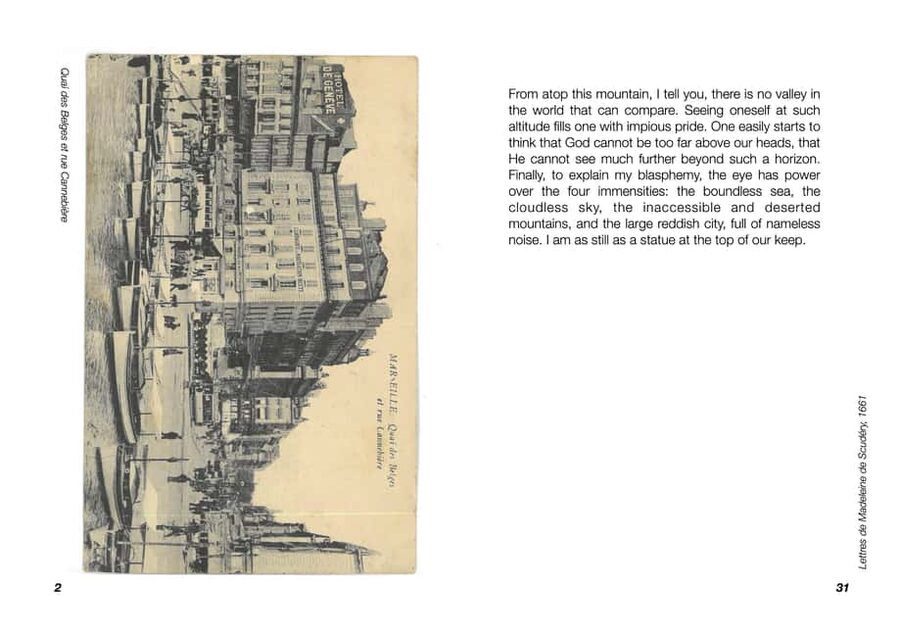
The tour also comes with an illustrated booklet to follow along. That matters more than it sounds. When you’re walking and listening at once, having a take-home visual guide helps you remember what you analyzed when you’re back in your room.
So, my simple rule: if you want to see Marseille as architecture and evidence, $76 is a reasonable “pay for clarity” price.
Why Louis Leroy’s guiding style fits curious travelers
What stands out in the tour’s reviews is Louis’s passion and the way he adapts to your curiosity. The guide doesn’t just deliver a fixed script. He takes questions and steers the walk toward what people are actually interested in—architecture, history, urbanism, and those archive materials that turn the city into a readable set of clues.
A lot of walking tours use old photos as decoration. This one treats them as part of the analysis. You’re guided to compare archive images across time with what you see now. That approach makes the city feel like an ongoing conversation instead of a lecture you forget five minutes later.
And yes, you get both the emotional side and the practical side. Louis’s whole framing—looking at Marseille’s movements past and present without freezing your gaze—pushes you to keep thinking as you walk. That’s exactly what helps you enjoy a city beyond a checklist.
If you’re traveling with a friend who likes architecture but doesn’t want a stiff museum experience, this is a strong compromise: you get structure, but you also get movement through real streets.
Should you book Marseille Belvedere: The city through architecture?
Book it if you want to learn Marseille in a way that stays useful after the tour. This is the kind of experience that teaches you how to look: viewpoints as clues, architecture as evidence, and old postcards as tools for understanding change.
Skip it if you’re trying to maximize photos only, or if reading and close observation sounds like work you don’t want to do while walking.
FAQ
Is this tour really a walking tour?
Yes. The route is built around walking between stops, with multiple segments of about 20 minutes each and a short break in the Panier area.
Where do I meet the guide?
Meet at the Vieux-Port metro exit by the platform.
How long is the experience?
It lasts 3 hours.
How much does it cost?
The price is $76 per person.
What languages are available?
The live tour guide offers French, English, and Italian. Some content may be shown in its original language.
How many people are in the group?
It’s a small group limited to 8 participants.
Is the tour wheelchair accessible?
Yes, wheelchair accessibility is listed.
What do I receive during the tour?
You get an illustrated booklet to follow the urban walk.